
How To Ask For LinkedIn Recommendations After Layoffs

Sarah Mitchell
January 2, 2026
Getting laid off can be tough, but LinkedIn recommendations can help you stand out. These endorsements act as professional testimonials, showcasing your skills and achievements to potential employers. Here's how to make the most of them:
- Timing is key: Ask for recommendations soon after a layoff while your contributions are still fresh in colleagues' minds.
- Prioritize your contacts: Start with recent managers, teammates, or clients who know your work well.
- Personalize your request: Mention specific projects or results you worked on together to make it easier for them to write a meaningful recommendation.
- Follow up politely: If someone doesn’t respond, send a brief follow-up after 2–3 weeks.
- Use recommendations effectively: Highlight them on your LinkedIn profile and incorporate excerpts into resumes or cover letters.
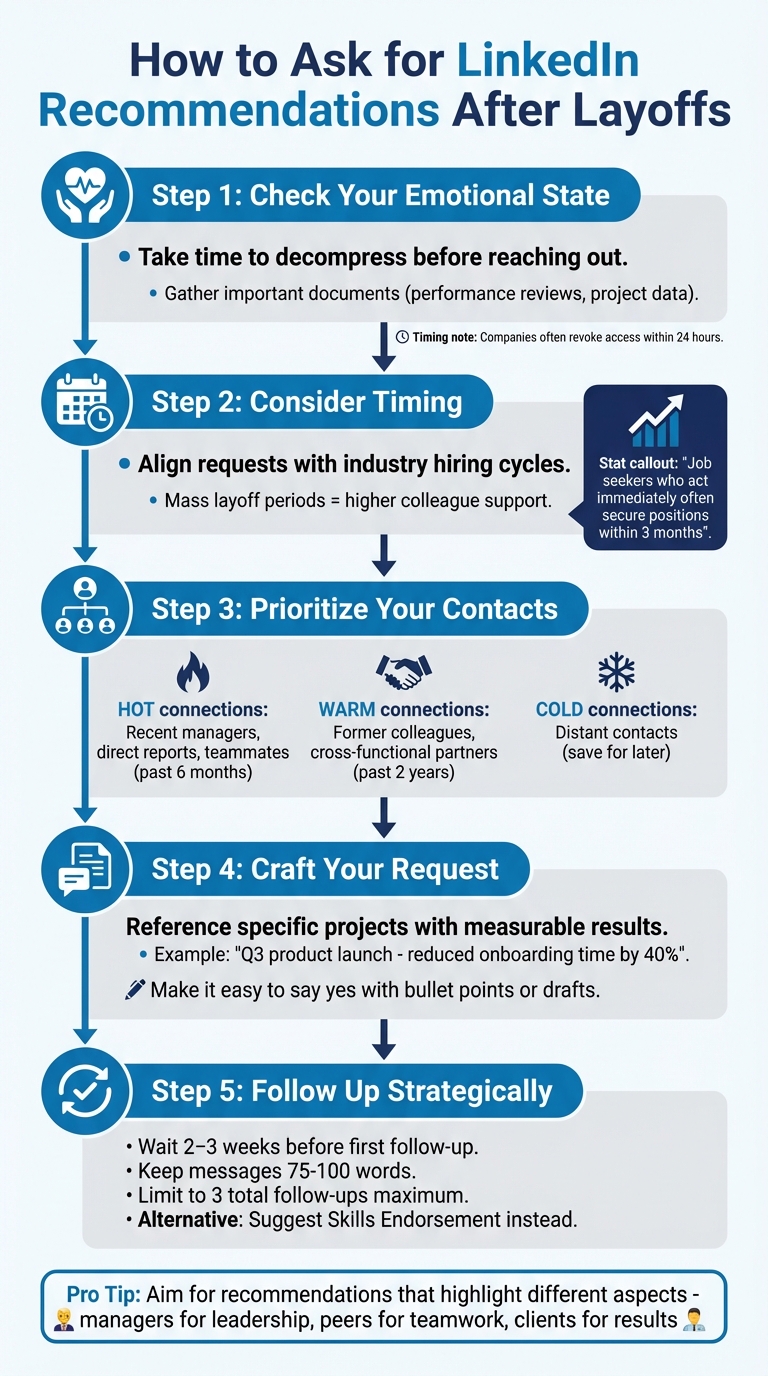
5-Step Process for Requesting LinkedIn Recommendations After Layoffs
When to Ask for LinkedIn Recommendations
Check Your Emotional State First
Before reaching out for LinkedIn recommendations after a layoff, take a moment to address how you're feeling. Losing a job, regardless of the circumstances, can be a deeply emotional experience. Career coach Brie Reynolds explains:
"Losing a job is traumatic, no matter the circumstances, and processing that experience is important to moving on from it."
It's essential to take some time to decompress and lean on trusted friends or mentors for support. This helps you avoid coming across as overly anxious or desperate. Financial advisor Winnie Sun advises:
"Writing things down and having a plan will help you think pragmatically, not emotionally."
Once you feel grounded, gather any important documents - like performance reviews or project data - while you still have access to them. Many companies revoke system access quickly, often within 24 hours. When you're ready, approach former colleagues as equals. By shifting your mindset to one of mutual respect rather than seeking validation, your interactions will not only feel more natural but also more genuine.
After preparing emotionally and organizing your materials, think about the timing of your request in relation to trends in your industry.
Consider Industry Hiring Patterns
Timing is everything when it comes to asking for recommendations. Align your requests with industry hiring cycles to maximize their impact. During mass layoffs, for example, colleagues are often quick to support one another. Many laid-off workers form Slack or WhatsApp groups - what outplacement coach Emily Stark refers to as "cyber huddles" - to share recommendations, job leads, and referrals while the experience is still fresh.
It’s also smart to time your requests to match periods when you’re actively job searching. If your industry has specific hiring seasons, plan your outreach to align with those peaks. Data from outplacement coaching shows that job seekers who take proactive steps with a virtual assistant immediately after a layoff often secure new positions within three months. For example, one attorney who posted on LinkedIn right after a mass layoff received over 30 job opportunities in response.
Who to Ask for Recommendations
Rank Your Contacts by Priority
When it comes to LinkedIn recommendations, not all connections are created equal. To get the best endorsements, it’s smart to prioritize your network. Career coach and senior recruiter Tony Riggins advises focusing on your hot and warm connections first:
"He recommends prioritizing your 'hot' or 'warm' connections - those close, active, or recent relationships - over 'cold' parts of your network that are more distant or cursory."
Start with your hot connections - these are the people you’ve worked closely with in the past six months, like recent managers, direct reports, or teammates. They’re in the best position to speak confidently about your skills and work style. Next, consider your warm connections, such as former colleagues, cross-functional partners, or clients you collaborated with within the last couple of years. Save cold connections - those you haven’t interacted with in years - for later. Reaching out to them is less likely to result in a meaningful or impactful recommendation.
To optimize your LinkedIn profile, aim for recommendations that highlight different aspects of your professional abilities. For instance:
- Managers can emphasize your leadership and business acumen.
- Peers can speak to your teamwork and dependability.
- Clients or external partners can showcase your professionalism and results-driven approach.
By prioritizing thoughtfully, you’ll ensure your recommendations carry weight and reflect the breadth of your abilities.
Assess Your Relationship Quality
After identifying your top-priority contacts, take a moment to evaluate the strength of your relationship with each one. What matters most is the depth of your connection, not the prestige of someone’s title. As 7Sage Admissions explains:
"The cardinal rule of recommendations is this: get an awesome letter, not an important letter writer."
For example, a colleague who worked with you on a six-month project is far more likely to write a compelling recommendation than a senior executive who barely knows you. Choose people who are familiar with your work and enthusiastic about endorsing you.
It’s also important to consider whether your potential recommender is articulate and dependable. A generic or poorly written recommendation could hurt more than help. Recruiters and hiring managers often view your choice of recommenders as a reflection of your judgment. If someone seems hesitant or unsure about writing a recommendation, it’s better to move on and ask someone else who can provide a strong, confident endorsement.
Avoid asking family or close friends for recommendations - they may come across as biased and unprofessional. When you do reach out, make it easy for the person to decline gracefully by acknowledging their busy schedule. This ensures that only those who genuinely want to support you will agree to write a recommendation.
How to Write Your Recommendation Request
Mention the Layoff Briefly and Positively
Keep your mention of the layoff short and optimistic. Think of it as a "job transition" and focus on your achievements. Career coach Brie Reynolds advises against feeling embarrassed about being laid off:
"It's completely normal to feel embarrassed or ashamed after being laid off... but don't. [Your network] can act as a support network to keep you positive as you work to find a new job."
Similarly, Jobscan offers this perspective:
"A layoff isn't just an ending; it's a strategic pause and a rare chance to relaunch your story."
When you approach your request with confidence, you show that you're seeking support as an equal, not validation. Resume expert Robert Henderson emphasizes this point:
"When you stop chasing validation and start acting like a peer, people notice."
Adopt a positive and forward-thinking tone. Mention that you're exploring new opportunities and would appreciate their insights about your work together. To reinforce this, highlight a specific project or accomplishment you shared.
Reference Specific Projects or Results
Generic requests won't cut it. Instead, point to a specific project you worked on together and its measurable outcomes. For example, rather than saying, "We worked well together", try something like, "Could you speak to our Q3 product launch, where we reduced onboarding time by 40% and increased user retention?"
This level of detail not only simplifies the recommender's task but also ensures the recommendation emphasizes the skills and results that align with your next role. If you're aiming for leadership positions, request that they focus on your strategic thinking or team management. For technical roles, guide them to highlight your problem-solving skills or technical expertise. You can even suggest they spotlight a skill not yet endorsed on your profile - if your organizational skills are already well-documented, ask them to discuss your creativity or adaptability. Once you've done this, make the process as seamless as possible for them.
Make It Easy to Say Yes
After sharing specific project details, simplify the process for your recommender. Avoid using LinkedIn's default text; instead, personalize your message. Clearly outline your connection, your timeline, and your current career direction. To make it even easier, provide a draft or bullet points highlighting key accomplishments. This doesn't mean writing the recommendation for them, but giving them a starting point saves time and effort.
You can also offer to write a recommendation for them in return, which may make them more inclined to say yes. Use LinkedIn's "Request a Recommendation" feature directly from their profile and leverage free job application tools to keep everything organized and straightforward. Be concise, respectful of their time, and specific about what you're asking for. A thoughtful, professional message makes it easy for your colleagues to support you. If managing these outreach efforts feels overwhelming, consider using human assistants to handle the heavy lifting of your job search.
5 Tips Easy Tips to Use Linkedin in 2023 (after layoff)
What to Do When People Don't Respond
Even with a solid recommendation request, you might not always get a response. It happens - people are busy, messages get buried, or they just don’t check LinkedIn often. What’s important is how you handle the silence without straining the professional relationships you’ve built.
Send a Polite Follow-Up
After waiting 2–3 weeks, send a short follow-up message. Aim for 75–100 words - concise messages often get better results. Use simple, clear language that’s easy to read and makes it effortless for them to reply.
Make sure to acknowledge their busy schedule and let them know there’s no pressure. As Laura Hannah, Founder of Pitch121, points out:
"LinkedIn's inbox functionality is quite basic, which makes it easy for messages to get buried. Similar to email forwarding, a follow-up message effectively brings your original message back to the top of the recipient's inbox."
Your subject line matters, too. Avoid vague phrases like "Checking in." Instead, use something specific, such as "Recommendation request - [Your Name]" or "Draft for LinkedIn recommendation." A friendly, positive tone can also improve your chances of getting a reply.
If they still don’t respond after your second follow-up, wait another month before sending a final message. This last attempt should be polite and give them an easy way to decline. While persistence can help, limit yourself to three follow-ups to avoid coming across as pushy.
If they remain unresponsive, it’s time to explore job application assistance and other options.
Try Other Options
If your LinkedIn message didn’t get through, try reaching out via email. Sometimes, switching communication channels is all it takes to get a response.
Another idea? Suggest a Skills Endorsement instead. It’s quick and doesn’t require them to write anything, making it a low-effort way for busy contacts to support you. Even a simple skills endorsement can enhance your profile’s credibility.
If multiple people don’t respond, shift your focus to others in your network who’ve worked closely with you and can vouch for your abilities. Also, make sure your "Open to Work" setting is turned on so recruiters know you’re actively job hunting while you wait for recommendations. You can also use an AI resume builder to ensure your profile is ready for new opportunities.
And don’t take an ignored request personally - it doesn’t reflect your professional worth. LinkedIn only allows one recommendation request per connection at a time, so if someone doesn’t reply, move on to others. Keep relationships intact; you never know when you might work with those contacts again.
How to Use Your Recommendations Effectively
Once you've secured strong endorsements, the next step is making the most of them. Your LinkedIn recommendations can play a key role in shaping your professional image, especially during a job search. These endorsements not only highlight your skills but also help you stand out in a competitive market.
Showcase Recommendations Wisely
Take control of how your recommendations are presented on your LinkedIn profile. With the Hide feature, you can decide which endorsements to display. If you're transitioning to a new industry or role, it might be a good idea to hide older recommendations that don't align with your current goals. Focus on showcasing a few detailed, relevant endorsements rather than a long list of generic ones. This thoughtful curation can make your profile more impactful and even serve as a valuable resource for your application materials.
Use Recommendations to Reinforce Applications
Don't limit your recommendations to LinkedIn - they can add weight to your job applications, too. Incorporate excerpts from your endorsements into cover letters, AI-enhanced resumes, and even interview responses. These snippets can serve as third-party validation of your skills and achievements, making your claims more credible.
For instance, you might include a short excerpt from a recommendation in your cover letter to illustrate a specific accomplishment. During interviews, referencing positive feedback from your recommendations can strengthen your answers and demonstrate your value to potential employers.
Using scale.jobs to Support Your Job Search
LinkedIn recommendations are just one piece of the puzzle when it comes to building a strong job search strategy after a layoff. To truly stand out, you need polished application materials, consistent networking efforts, and smart time management. That’s where scale.jobs steps in. Their three-tiered approach - combining free software tools, AI-powered customization, and human assistant services - works hand-in-hand with your LinkedIn profile to speed up your job search. Unlike competitors like findmyprofession.com, scale.jobs integrates software, AI, and human expertise seamlessly, ensuring every aspect of your search is aligned. Here’s how each tier strengthens your job hunt.
Align Resumes and Recommendations with ATS Standards
Your resume and LinkedIn profile should tell the same story, highlighting your strengths consistently. With scale.jobs’ ATS-compliant resume builder, your LinkedIn recommendations are tied directly to measurable achievements. Human assistants take it a step further by syncing your LinkedIn updates with your resume, creating a unified professional brand that leaves a lasting impression on hiring managers.
Cut Down Application Time with AI Tools
Crafting applications can be time-consuming, but scale.jobs’ AI tools help you get the job done faster. The AI Assistant Pro, available for just $9/month during the launch offer, generates personalized cover letters and application responses in one click. This feature has been a game-changer for users like software engineer Aubrey Smith, who relied on it in early 2024 to keep up with applications while working full-time. She shared:
"Applying to each job is such a painful process; sometimes it takes more than 15 minutes for one application. I got tired and demotivated... The team did a great job helping with applications and was always available to talk."
With users reporting 40% less time spent on job searches, this tool ensures you can maintain momentum without burning out.
Human Assistants for LinkedIn Overhauls
To complement its ATS expertise, scale.jobs assigns trained human assistants who specialize in upgrading LinkedIn profiles and handling the administrative side of your job search. These assistants draft customized recommendation requests that highlight specific projects, track your outreach efforts, and follow up politely after 1–2 weeks. The results speak for themselves - users have reported landing offers quickly, with many seeing a 75% salary increase. Shubham Dhakle, Outcome Manager at scale.jobs, sums it up perfectly:
"You should focus on what matters the most - Interview Prep - and let us handle the rest."
Conclusion
Requesting LinkedIn recommendations after a layoff is an important step in rebuilding your professional momentum. To make the most of these endorsements, focus on timing, personalization, and strategic follow-ups. When combined with ATS-optimized resumes, tailored cover letters, and consistent application efforts, recommendations help create a cohesive professional story that catches the attention of hiring managers.
The process, however, isn’t without its challenges. Balancing the emotional toll of a layoff with the logistical demands of a job search - like tracking who you’ve reached out to, ensuring resume keywords align with recommendation highlights, and managing numerous applications - can feel overwhelming. That’s where scale.jobs steps in. Their platform offers free tools, AI-driven customization for just $9/month, and human assistants to simplify your outreach efforts.
With scale.jobs, human assistants help align your LinkedIn profile with your job applications, creating a unified professional brand. They provide recommenders with tailored talking points that match your ATS-friendly resume, track your networking and application progress, and ensure timely follow-ups. Many users have reported saving time and seeing better results in their job searches thanks to these streamlined strategies.
Pairing strong recommendations with effective job search tools can significantly enhance your professional profile. Start today by reaching out to three former managers or project leads. Use the frameworks in this guide to craft personalized requests that highlight your key achievements, and combine those endorsements with the right tools to help you stand out in a competitive job market.
FAQs
How can I manage the emotional impact of being laid off before requesting LinkedIn recommendations?
Being laid off can be a tough experience, and it’s natural to feel a wave of emotions. Before diving into next steps, give yourself the space to process everything. Talk with family, friends, or even a trusted mentor to work through the initial shock and sense of loss. Taking this time to reflect can help you regain your footing emotionally, ensuring that when you do reach out for recommendations, your requests come across as sincere and well-thought-out.
It’s also crucial to remind yourself that a layoff doesn’t define your worth. Your skills, achievements, and professional contributions remain intact. Often, layoffs are tied to external circumstances - budget cuts, restructuring, or shifts in the market - not personal shortcomings. Shifting your mindset in this way can help you rebuild confidence and approach former colleagues with a positive attitude.
When you’re ready to ask for recommendations, having a clear plan can make all the difference. Take a few days to think about what you’d like highlighted - specific skills, key projects, or notable accomplishments. Then, craft a polite and tailored message, clearly outlining your request. By approaching this step with calm and intention, you’ll not only come across as professional but also increase the likelihood of receiving meaningful and supportive recommendations.
What’s the best way to request LinkedIn recommendations after being laid off?
To ask for LinkedIn recommendations after being laid off, it's important to approach the process with care and professionalism. Here’s how to do it effectively:
- Reach out to the right people: Focus on former managers, colleagues, or clients who have a clear understanding of your work and can genuinely vouch for your skills and accomplishments. Their input carries weight because of their direct experience with you.
- Make your request specific and personal: Instead of sending a generic message, tailor your request. Briefly explain what you'd like them to highlight, such as a project you worked on together or a particular skill. For example, you could say, “Would you be able to share your thoughts on the results we achieved with the marketing campaign we collaborated on?” This helps them write something more meaningful and relevant.
- Be mindful of timing: Choose a time when the person is likely to have a lighter workload, such as early in the week. If they don’t respond within a week or two, follow up politely and offer to provide a draft they can edit if that makes it easier for them.
By focusing on personalized and well-thought-out requests, you'll receive recommendations that truly reflect your strengths and help you stand out to potential employers.
How can I effectively use LinkedIn recommendations in my job applications?
If you want to showcase your LinkedIn recommendations, include a link to your LinkedIn profile in your resume or cover letter. You can also pull a specific quote from a recommendation that matches the skills or experiences the job posting emphasizes. These endorsements serve as strong testimonials, offering recruiters a clearer picture of your abilities and professional strengths.