
7 Ways to Confirm H1B Sponsorship Before Applying

Sarah Mitchell
March 25, 2026

Applying for jobs without verifying H1B sponsorship can waste time and lead to missed opportunities. With the introduction of the wage-weighted H1B lottery system in FY2027, the stakes are even higher. Selection rates now vary significantly by wage level - just 8–12% for Level I positions versus 42–48% for Level IV roles. This makes targeting employers with proven sponsorship histories essential for success.
Here are seven actionable methods to confirm H1B sponsorship before applying:
- Search the USCIS H-1B Employer Data Hub: Access detailed company sponsorship histories, including approval rates and petition outcomes.
- Use MyVisaJobs: Analyze sponsorship trends, job titles, and salaries for targeted employers.
- Check the DOL FLAG System: Verify certified Labor Condition Applications (LCAs) for active sponsorship.
- Research on LinkedIn: Connect with employees who have successfully navigated the sponsorship process.
- Review Job Postings and Career Pages: Look for explicit mentions of H1B sponsorship availability.
- Filter H1B Sponsors on Scale.jobs: Use platforms like Scale.jobs for pre-verified sponsorship listings and expert application support.
- Explore Immigration Forums: Gather firsthand insights from community discussions and validate claims with official data.
Platforms like Scale.jobs simplify this process by combining verified sponsorship data with human-assisted application services, offering features like ATS-optimized resumes, real-time updates, and transparent tracking. This ensures every job application is targeted and aligned with visa requirements, unlike fully automated tools such as LazyApply or Simplify.jobs.
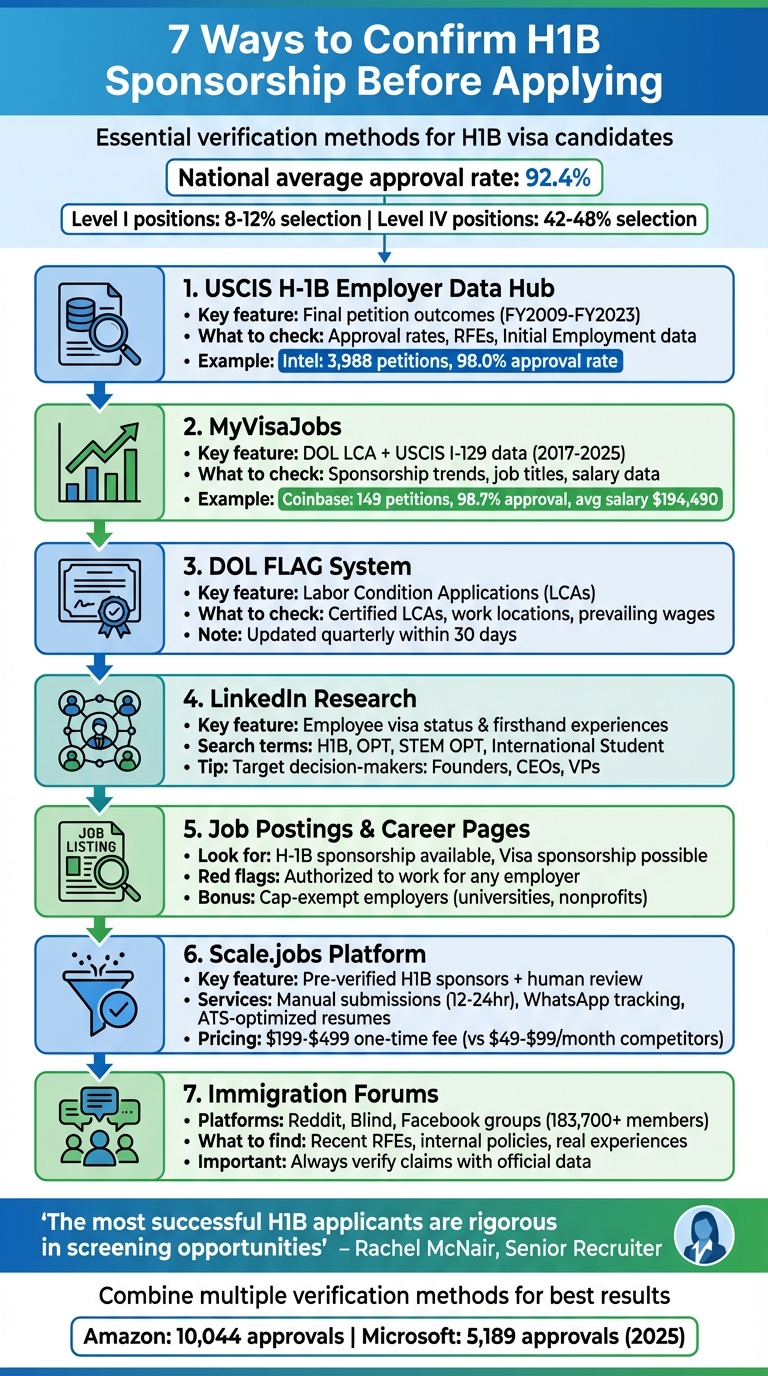
7 Methods to Verify H1B Sponsorship Before Applying
Finding an H1B Sponsor Tips and Tricks | Episode 3 #h1bvisa
1. Search the USCIS H-1B Employer Data Hub
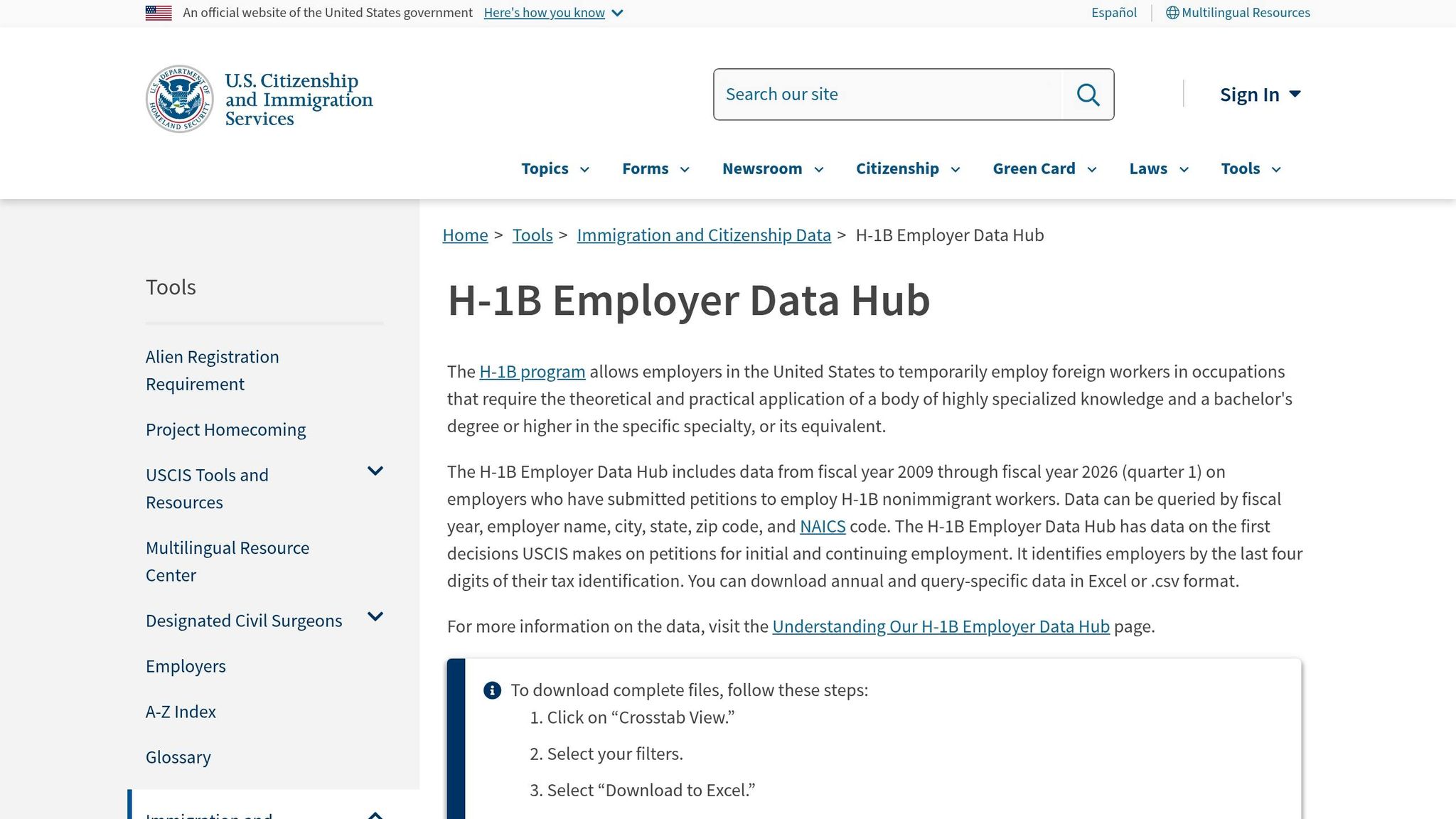
The USCIS H-1B Employer Data Hub is a valuable resource for verifying companies' H-1B filings and their outcomes. Unlike third-party databases that rely on Labor Condition Applications (LCAs) - which only indicate intent to hire - this hub provides final results, including approvals, denials, and Requests for Evidence (RFEs).
By searching an employer's name, you can access their complete H-1B history from FY2009 to FY2023. The data is organized into categories such as Initial Employment (new H-1B petitions), Continuing Employment (extensions), and Change of Employer (transfers). If you're applying for an H-1B for the first time, pay close attention to the "Initial Employment" column to confirm the company sponsors new hires.
For instance, in FY2023, Intel Corporation submitted 3,988 petitions with an impressive 98.0% approval rate. On the other hand, Cognizant Technology Solutions filed 19,025 petitions but had a lower approval rate of 77.5%. Companies with approval rates below 80% may face higher scrutiny from USCIS, which could increase the chances of denial. Since the national average approval rate is 92.4%, employers significantly below this benchmark should be approached with caution.
Additionally, consider RFE rates, as high numbers can signal recurring issues that delay processing or lead to denials. For example, LinkedIn Corporation filed 2,641 petitions in FY2023 with a 99.2% approval rate, showcasing both high volume and strong success in their filings.
Unlike automated tools like LazyApply or Simplify, Scale.jobs blends this verified data with expert guidance to enhance your H-1B application process. Use these insights from the USCIS data hub in combination with Scale.jobs' tailored services to create a strategic and well-informed approach for targeting employers.
2. Use MyVisaJobs for Company Sponsorship Histories
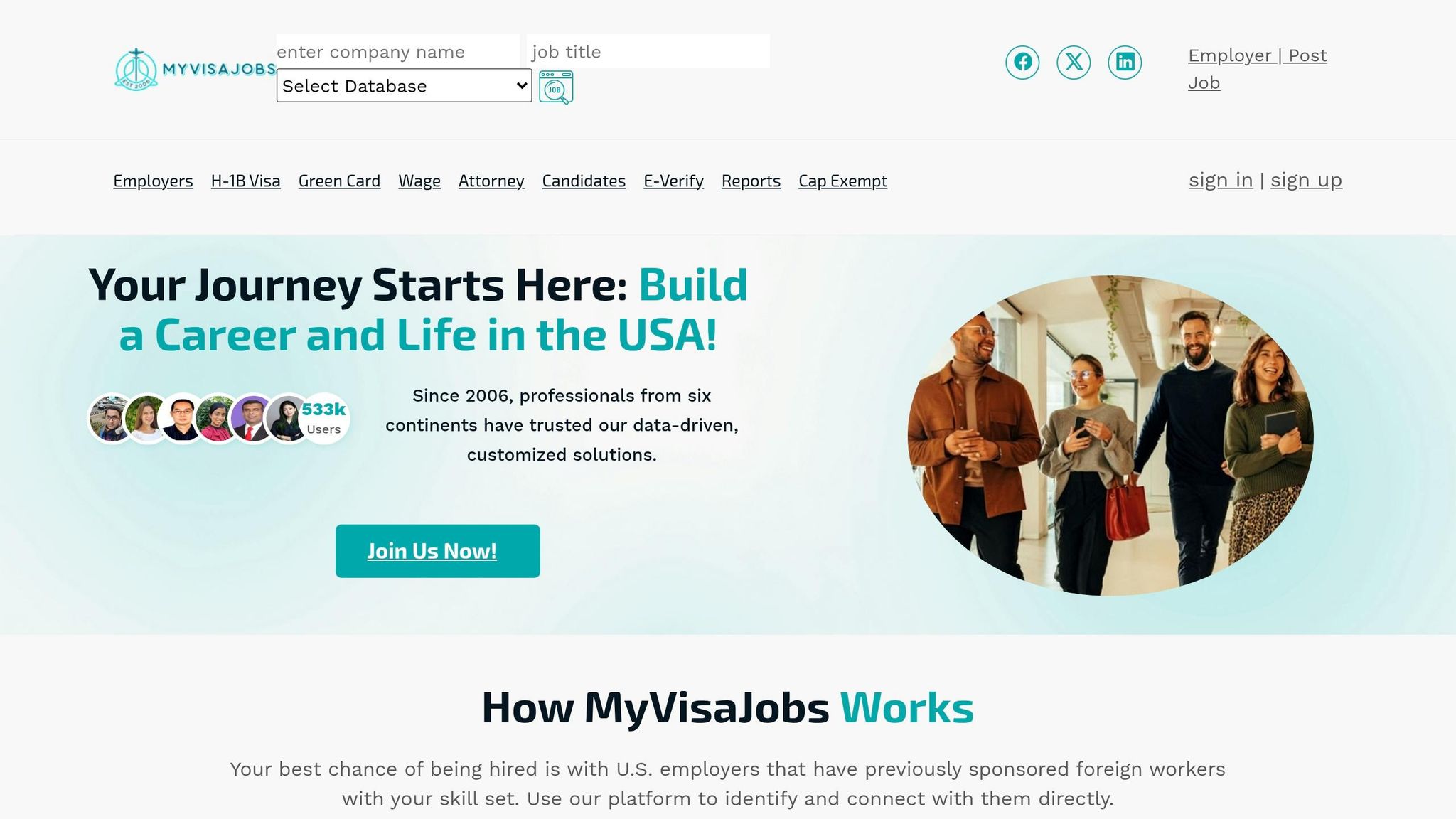
MyVisaJobs compiles H-1B filing data from the Department of Labor's Labor Condition Applications (LCAs) and USCIS Form I-129 petition results, offering insights into a company's sponsorship history. Recently, the platform expanded its scope by including USCIS approval and denial data from 2017 through 2025. This shift provides a clearer picture of actual visa outcomes, rather than just intent-to-hire statistics.
For instance, searching for an employer like Coinbase reveals a detailed breakdown of petition types - such as new employment, continuation, or change of employer. In fiscal year 2025, Coinbase submitted 149 Form I-129 petitions, achieving a 98.7% approval rate with 147 approvals and only 2 denials. The data highlights the most frequently sponsored roles, with "Software Engineer" leading at 95 filings, followed by "Senior Software Engineer" with 75. This information can help job seekers identify positions that companies are most likely to sponsor.
Salary data is another valuable feature. MyVisaJobs reports Coinbase's average proffered base salary for 2025 as $194,490, compared to the prevailing wage of $150,662. Offering higher salaries can influence the wage-weighted selection process in the H-1B lottery. Additionally, users can filter by work site locations to determine if sponsorship is available in their desired city, as some companies limit sponsorship to specific offices or headquarters.
To address gaps left by tools like LazyApply and Simplify, scale.jobs offers a more tailored and human-driven approach for applicants navigating sponsorships. Here's how scale.jobs stands out:
- Personalized Support: Applications are reviewed by experts to create a strategy tailored to your needs.
- ATS-Optimized Resumes: Resumes are customized for roles with proven sponsorship success.
- Transparent Tracking: Every step of your application process is documented and verifiable.
- Real-Time Assistance: Dedicated WhatsApp support provides instant help and advice.
- Fair Pricing: A one-time payment structure ensures no recurring fees or hidden costs.
The data from MyVisaJobs pairs well with additional verification tools like the USCIS Data Hub, reinforcing the value of scale.jobs' personalized and hands-on approach. Up next, learn how the DOL FLAG system adds another layer of validation to sponsorship records.
3. Check the DOL FLAG System for Labor Condition Applications
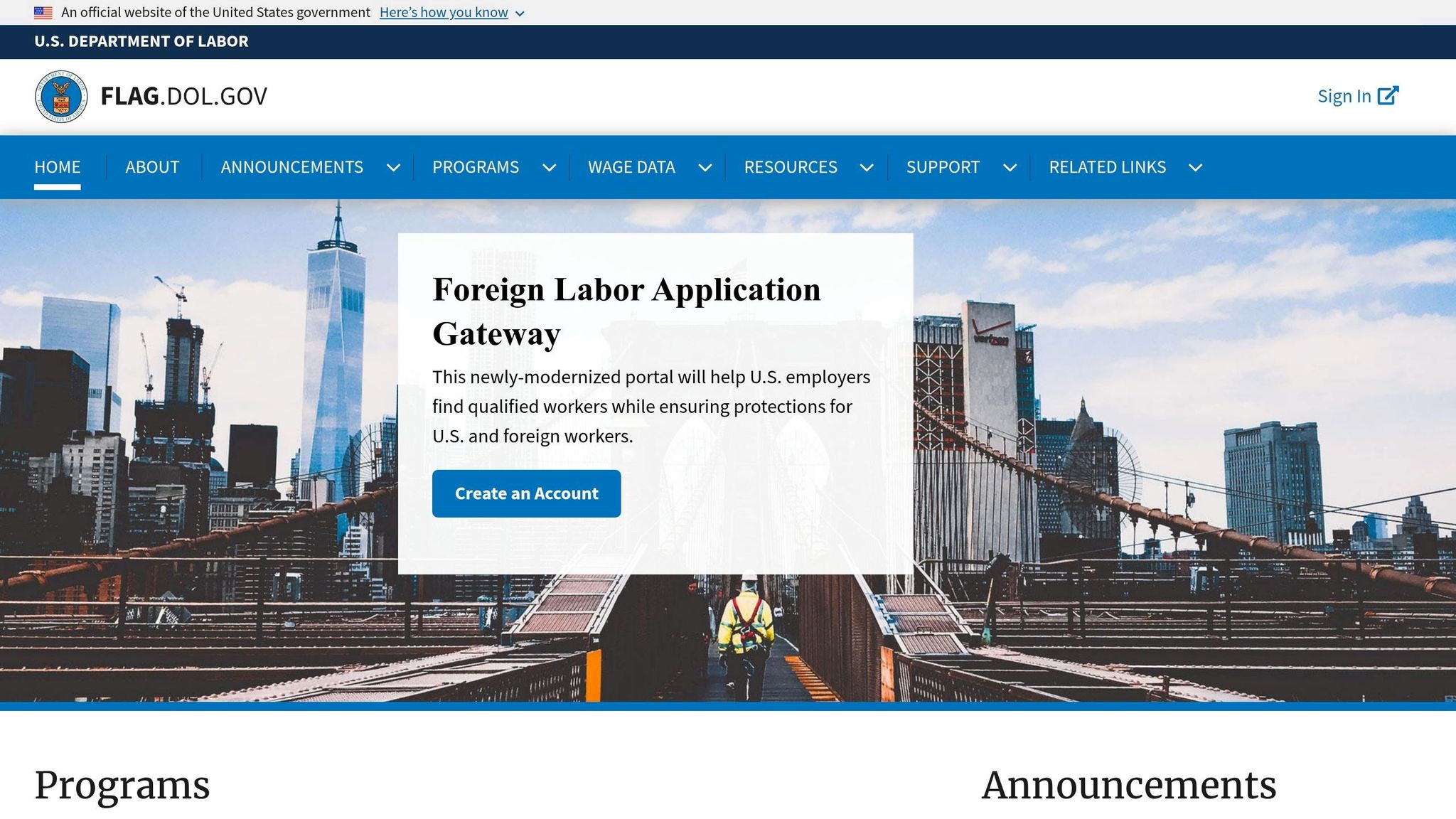
The Department of Labor's Foreign Labor Application Gateway (FLAG) provides disclosure data for every Labor Condition Application (LCA) filed. Filing an LCA is a critical step, as it confirms that the employer agrees to pay prevailing wages and safeguard working conditions for U.S. employees. This data includes details such as the total number of applications submitted, their status (Certified, Denied, Withdrawn), job titles, work locations, and the proposed salaries. This information lays the groundwork for further analysis in later steps.
For example, in FY2025, Cognizant submitted 20,029 LCAs with a 98% approval rate, while Microsoft filed 8,430 LCAs with a perfect 100% approval rate. These figures, derived directly from DOL data, highlight which companies are actively sponsoring visas and how often their applications succeed. Since the DOL updates this data quarterly - usually within 30 days of the quarter's end - it provides a more up-to-date view than annual reports.
Focus on LCAs marked "Certified" as they indicate the employer has met DOL requirements. Additionally, check the "Work Sites" section to confirm whether the company sponsors visas in your desired location. The proffered salary listed in the LCA reflects the base guaranteed pay, excluding bonuses or stock options, helping you evaluate if the offer aligns with your expectations and legal wage standards.
Important Note: LCA data reflects applications filed, not the final decisions made by USCIS. As highlighted by platforms like H1BSignal, the DOL certifies significantly more LCAs than the number of H-1B visas ultimately issued by USCIS. Use LCA data to identify potential employers, but verify the final outcomes through the USCIS Employer Data Hub.
Platforms like H1BSignal and MyVisaJobs simplify the process by organizing DOL data into searchable formats by company name, saving you the hassle of navigating raw government spreadsheets. Unlike fully automated tools, Scale.jobs combines this verified LCA data with human expertise to enhance your job applications. Their offerings include services such as professional resume writing, ATS-optimized materials, tailored application strategies, transparent tracking, and dedicated WhatsApp support - all with a straightforward, one-time payment system.
4. Research LinkedIn for Employee Visa Status Information
LinkedIn stands out as a powerful tool for exploring firsthand experiences related to H1B sponsorship. Unlike automated platforms like LazyApply and Simplify, LinkedIn provides live access to employees who have already navigated the sponsorship process. To begin, search for your target company along with keywords such as "H1B", "OPT", "STEM OPT," or "International Student" in the LinkedIn search bar. Many professionals include their visa status in their profile headlines, making it easier to identify relevant contacts. For example, you might come across headlines like "Software Engineer | H1B" or "Data Analyst | OPT-authorized through Dec 2026."
You can also filter by school to identify alumni from your university. International graduates, in particular, can provide valuable insights into how a company supports visa sponsorship and the typical timelines involved. Look for profiles that list international education backgrounds followed by employment in the U.S., as these often indicate successful sponsorship experiences.
When reaching out to these professionals, focus on building a genuine connection rather than making a transactional request. Personalize your message by referencing shared experiences or interests. For instance: "Hi [Name], I noticed you graduated from [University] and now work at [Company]. I’m currently exploring roles that offer H1B sponsorship and would love to learn about your experience with the company, especially its culture and support for international employees." Instead of immediately asking for a referral, request an informational interview about their career journey.
This personalized approach helps establish meaningful connections, which can be instrumental in validating your H1B sponsorship prospects.
"A recruiter likely won't consider an international applicant… UNLESS someone senior tells them to." - Sam Struan, Recruiter
To maximize your efforts, target decision-makers such as Founders, CEOs, and VPs. These senior leaders are often more open to considering international talent for critical roles compared to recruiters who manage large volumes of applications. Combining effective networking strategies with official sponsorship data ensures you are working with both verified records and real-world employee insights.
Additionally, update your LinkedIn profile headline to clearly communicate your status. For example, a headline like "Full-Stack Developer | React & Node.js | OPT-authorized through Dec 2026" can make your profile more appealing to recruiters and hiring managers looking for candidates with specific visa authorizations.
Scale.jobs offers tools and services that complement your LinkedIn networking efforts. While LinkedIn helps you build connections, professional resume writing services from Scale.jobs provide ATS-optimized documents and human-powered strategies to strengthen your application. Their services include transparent tracking, dedicated WhatsApp support, and tailored outreach, all designed to align with your networking efforts. By combining LinkedIn insights with professional resources like Scale.jobs, you can create a well-rounded strategy for confirming H1B sponsorship opportunities.
5. Review Job Postings and Company Career Pages
When searching for H1B sponsorship opportunities, job postings often provide clear indicators. Look for phrases such as "H-1B sponsorship available", "Visa sponsorship possible," or "New grad/OPT eligible." These signals indicate that the employer is open to filing visa petitions. For instance, in September 2025, Amazon advertised a Software Development Engineer position in Seattle, WA, explicitly stating "H-1B sponsorship available." This demonstrates how companies communicate their willingness to support international candidates. Tools like Scale.jobs can also help identify sponsorship-friendly listings, offering a streamlined way to find these opportunities.
Be cautious when interpreting the phrase "Must be authorized to work in the U.S." While this applies to candidates on OPT (as OPT grants temporary work authorization without requiring the employer to file petitions initially), it often serves as a preliminary filter for candidates requiring future sponsorship. In contrast, "Authorized to work for any employer" typically signals that the employer is not offering sponsorship, as it implies a preference for candidates with permanent work authorization, such as U.S. citizens or green card holders.
Additionally, check company career pages for information tailored to international candidates. Large employers like Amazon, JPMorgan Chase, and Microsoft often include sections like "International Candidates" or FAQs explaining their visa sponsorship policies. Some job postings also feature "Sponsorship Notes" or "Eligibility" sections, clarifying whether they accept candidates on OPT, CPT, or H1B visas.
For cap-exempt employers, such as universities and nonprofit research institutions, job postings may not mention the annual H1B lottery. These organizations can file H1B petitions at any time of the year, offering a more predictable sponsorship process. Look for terms like "university research" or "nonprofit research institution" in job descriptions to identify these opportunities.
If you're looking to enhance your applications for H1B sponsor-friendly roles, consider using professional resume writing services. These services create ATS-optimized resumes tailored to roles that explicitly mention sponsorship. Unlike fully automated tools like LazyApply or Simplify, Scale.jobs combines human expertise with automation to ensure your application aligns with the specific language and criteria used by sponsoring employers. This personalized approach can significantly improve your chances of standing out to potential sponsors.
6. Filter for H1B Sponsors on Scale.jobs
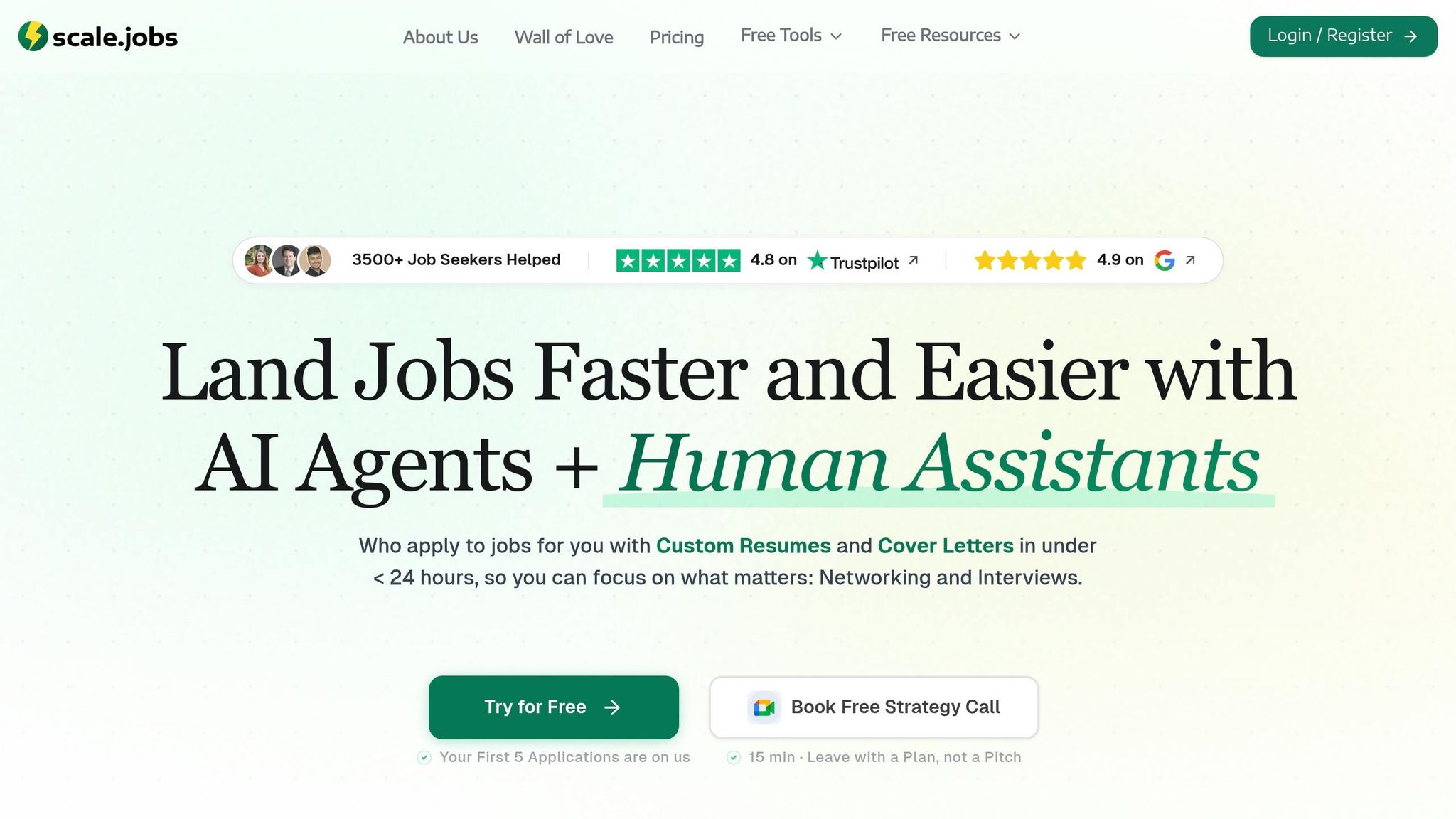
Scale.jobs simplifies the job search for H1B visa candidates by focusing on verified H1B sponsors. Unlike platforms such as LazyApply or Simplify.jobs, which rely on automated keyword matching, Scale.jobs uses a hybrid process. This includes AI technology paired with human review to ensure that listings meet visa sponsorship requirements. The platform pre-filters job postings from verified H1B sponsors and employs trained professionals to oversee each application, making it a more reliable option for those with specific visa needs.
For added flexibility, Scale.jobs also offers filters for cap-exempt employers, such as universities and nonprofits. These employers can file H1B petitions throughout the year without being subject to the lottery cap, making them a great option if you're approaching your 90-day OPT unemployment limit. This feature ensures a more predictable sponsorship process.
In addition to filtering, Scale.jobs ensures that every application is handled with care. After you select the jobs you’re interested in, trained assistants manually submit applications within 12–24 hours. They review critical visa details, such as sponsorship requirements and OPT authorization dates, to avoid errors. Once submitted, you’ll receive timestamped proof of each application via WhatsApp, including screenshots for verification. This real-time communication not only provides transparency but also creates a documented record for OPT/STEM OPT compliance audits.
Scale.jobs operates on a one-time fee model, ranging from $199 to $499, with pro-rata refunds for unused applications. In contrast, LazyApply and Simplify.jobs charge monthly subscriptions of $49–$99. For candidates navigating OPT, H1B, O1, or EB1A processes, Scale.jobs minimizes errors and ensures your sponsorship needs are clearly communicated. If you need an optimized resume tailored for H1B sponsor-friendly roles, Scale.jobs also offers professional resume writing services to enhance your job search.
Who Should Use LazyApply or Simplify.jobs
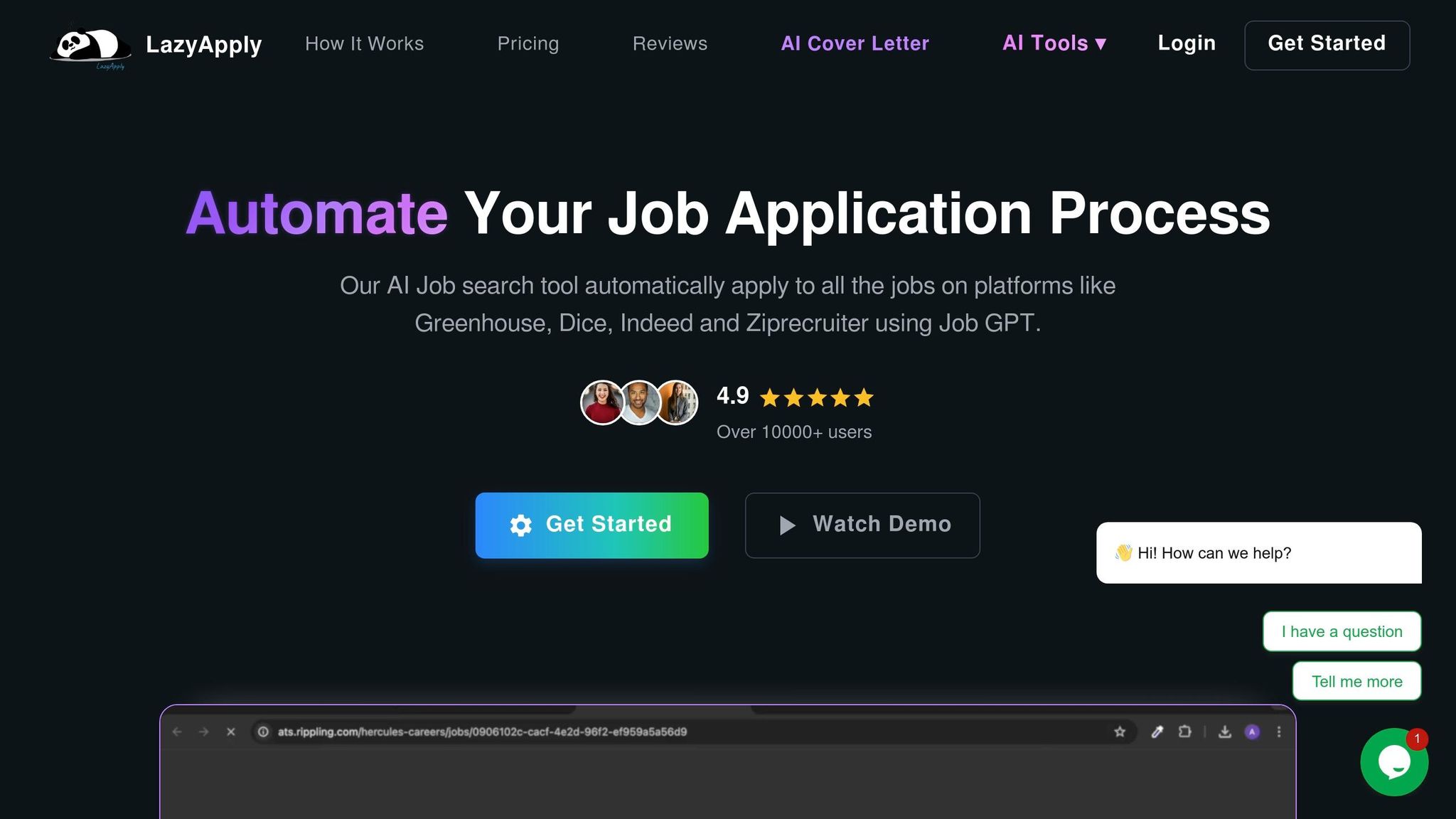
LazyApply and Simplify.jobs are better suited for candidates who:
- Want to apply to a large volume of jobs across general job boards without visa-specific filters.
- Are comfortable manually verifying sponsorship eligibility for each listing.
- Prefer a lower-cost monthly subscription over personalized human support.
- Have straightforward visa situations that don’t require much customization.
Who Should Choose Scale.jobs
Scale.jobs is the right choice for candidates who:
- Need pre-verified H1B sponsors to avoid wasting applications.
- Require human oversight to communicate complex visa statuses like OPT, STEM OPT, or H1B transfers.
- Value transparent proof-of-work documentation for compliance audits.
- Prefer a one-time fee without recurring subscription costs.
- Want real-time support and updates through WhatsApp for application guidance.
Scale.jobs vs. LazyApply/Simplify.jobs: Feature Comparison
| Feature | LazyApply/Simplify.jobs | Scale.jobs |
|---|---|---|
| Human involvement | Fully automated | Trained assistants manually review and submit each application |
| Resume customization | Limited, template-based | ATS-optimized with visa-specific tailoring available |
| ATS handling | Basic keyword matching | Human review ensures accurate visa status communication |
| Application method | Automated bot submissions | Manual submissions with a 12–24-hour turnaround |
| Transparency | Limited tracking dashboards | Timestamped WhatsApp screenshots for every application |
| Pricing | $49–$99/month subscription | $199–$499 one-time fee with pro-rata refunds |
When to Switch to Scale.jobs
You might consider switching from LazyApply or Simplify.jobs to Scale.jobs if:
- You’ve applied to numerous jobs but haven’t confirmed H1B sponsorship eligibility.
- Your OPT unemployment clock is running out, and you need to target cap-exempt employers.
- You require documentation to meet USCIS compliance standards.
- Automated tools have failed to accurately represent your visa status in applications.
- You want human verification to avoid ATS errors and ensure accurate submissions.
Next, learn how immigration forums and recent filing data can add another layer of sponsorship verification to your job search strategy.
7. Check Immigration Forums and Recent Filing Data
Immigration forums can be a treasure trove of information about active sponsorship practices that official databases might not fully capture. Platforms like Reddit, Blind, and Facebook groups - such as the "H1B Visa 2026, 2027 Community, Discussions" with over 183,700 members - host discussions where users share experiences about companies actively sponsoring visas, recent RFE (Request for Evidence) cases, and insights into internal immigration policies. While these platforms provide valuable anecdotal insights, tools like scale.jobs take it a step further by cross-referencing such data with verified H1B filings, ensuring accuracy with the help of human oversight.
For those seeking reliable technical guidance, the Immigration.com forums, managed by the Law Offices of Rajiv S. Khanna, are an excellent resource. They address complex issues like H1B extensions beyond six years or change-of-status concerns. However, while forums can provide helpful tips, it's crucial to validate any claims with official data. For instance, if someone on a forum praises a company's sponsorship process, you can confirm this through platforms like H1BScan or H1BSignal. Take Coinbase as an example: a quick check of their fiscal year 2025 data reveals 149 Form I-129 petitions filed, with 147 approved and 2 denied - an impressive 98.6% approval rate. This approach ensures that anecdotal feedback is backed by hard evidence.
Another useful resource is the RedBus2US Community, particularly for vetting paid sponsorship services. Forum discussions often highlight services like H1Base, which some users have reported as falling short of expectations. This underscores the importance of relying on verified data rather than solely on user reviews.
Forums also allow you to ask questions that official data might not cover, such as whether a company supports immediate green card filing or how responsive their immigration team is. Once you gather this information, verify salary claims against Labor Condition Application (LCA) data to ensure the company complies with prevailing wage requirements. If you're looking to present your visa status effectively in job applications, consider using professional resume writing services to craft documents that clearly communicate your sponsorship needs to employers with proven H1B track records.
Conclusion
Confirming H1B sponsorship before applying isn't as simple as a quick database check - it requires combining multiple strategies to get a full picture. The USCIS H-1B Employer Data Hub offers insights into historical approval rates, while platforms like MyVisaJobs track recent filing trends. The DOL FLAG System ensures active Labor Condition Applications are in place, LinkedIn helps identify employees on work visas, and job postings often provide direct sponsorship details. Immigration forums add a layer of real-world experience, offering personal accounts and advice. Together, these methods minimize the risk of applying to unverified listings or companies that don't support international candidates.
"The most successful H1B applicants are rigorous in screening opportunities, focusing on true sponsors and preparing U.S.-ready applications." - Rachel McNair, Senior Recruiter, STEM Talent Partners
Taking a layered approach not only ensures data accuracy but also provides insight into how well sponsors perform in practice. For instance, if a forum highlights a company’s smooth sponsorship process, you can cross-check this with H1BScan or the USCIS Data Hub. Employers like Amazon, with 10,044 new H1B approvals in 2025, and Microsoft, with 5,189 approvals, demonstrate reliable sponsorship histories. With an overall approval rate of 92.4% across 337,044 tracked employers, individual company rates can vary widely, making careful verification essential.
Platforms like scale.jobs make this process far more manageable. They pre-screen employers with verified H1B filing histories and offer personalized assistance for visa-sensitive applications. Features like real-time WhatsApp updates, timestamped screenshots, and ATS-optimized resumes streamline the application process, ensuring your sponsorship needs are clearly communicated. Unlike competitors such as LazyApply or Simplify.jobs, scale.jobs operates on a one-time fee structure - perfect for those juggling visa timelines and OPT deadlines.
If you need tailored support to position your visa status effectively, explore our professional resume writing services. These services craft resumes that emphasize your technical skills and sponsorship requirements, helping you stand out to H1B-friendly employers.
FAQs
How can I confirm a company sponsors new H-1B hires (not just transfers)?
To determine if a company sponsors new H-1B hires, start with official resources such as the USCIS H-1B Employer Data Hub, which provides details on recent filings and sponsorship trends. You can also explore tools like H1BScan or H1BSignal, which offer insights into sponsorship activity. For a deeper dive, review company histories on platforms like MyVisaJobs, or reach out directly to the company’s HR department to confirm their current sponsorship policies.
What’s the fastest way to verify sponsorship claims with official data?
The fastest way to confirm sponsorship claims is by consulting official databases such as the USCIS H1B Employer Data Hub or the Department of Labor's LCA disclosure data. These platforms offer up-to-date details on approval rates, denial patterns, and sponsorship records, allowing you to verify claims quickly and accurately.
How do wage levels affect my H-1B lottery odds under the FY2027 rules?
Wage levels significantly influence H-1B lottery odds under the FY2027 rules. The updated system gives preference to employers offering higher salaries, meaning applicants with better-paying job offers have improved chances in the wage-weighted lottery. Since only 85,000 visas are issued each year, employer salary data has become a key factor in determining selection probabilities.