
How to Follow Up After Alumni Networking Events

Sarah Mitchell
December 27, 2025
Networking events are just the first step. The key to turning brief introductions into professional relationships is following up effectively. Here’s how to make your follow-up impactful:
- Act quickly: Send your follow-up message within 24 hours while the conversation is still fresh.
- Personalize your outreach: Reference specific details from your conversation to stand out.
- Prioritize connections: Focus on 3–5 key contacts who showed genuine interest or offered help, perhaps with the help of human assistants to manage your outreach.
- Use LinkedIn strategically: Send personalized connection requests and engage with their posts.
- Maintain the relationship: Share updates, offer help, and stay in touch periodically without overwhelming.
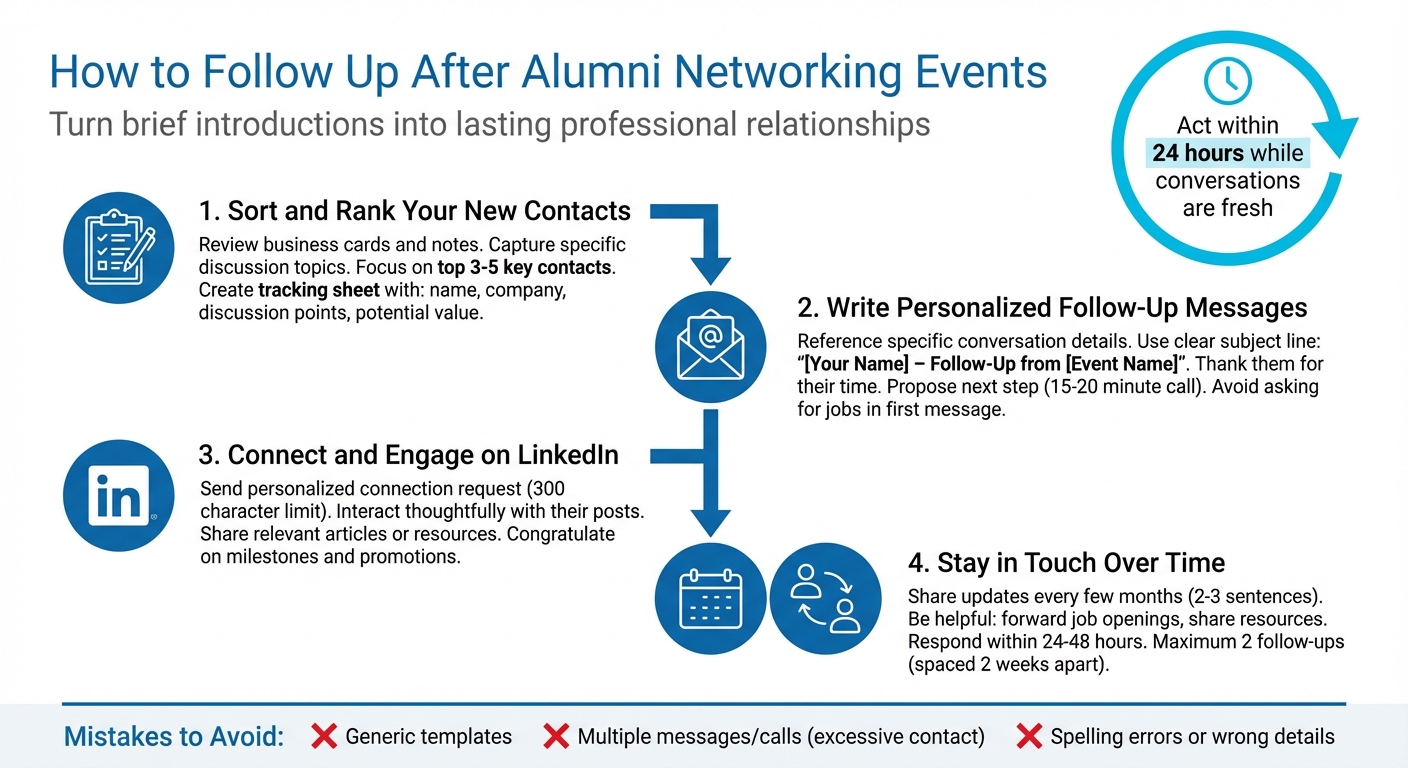
4-Step Process for Following Up After Alumni Networking Events
How to Follow Up after networking/coffee chats (with examples)
Step 1: Sort and Rank Your New Contacts
Take action within 24 hours to keep details fresh in your mind. This step lays the groundwork for effective follow-up and outreach.
Review Your Notes and Business Cards
Go through the business cards and notes you collected to capture key details. Write down specific topics you discussed - like an alum offering advice on breaking into product management. Note any mutual connections, shared interests, or unique insights from your conversations.
As Karen Dankers, Associate Director at Tufts Finance Initiative, suggests: "Review your new contacts while they're still fresh in your mind and jot some notes about what you discussed with whom, mutual friends or interests you may have, and any other information you can use to forge a connection."
If you gathered physical business cards, jot notes directly on the back. Include details such as "mentioned hiring for summer internships" or "offered to introduce me to their manager." These little specifics will be invaluable when crafting personalized follow-up messages.
Pick Your Top 3-5 Alumni Contacts
Narrow your focus to a handful of key connections. Highlight your top 3-5 contacts who stood out during your conversations. These might be alumni who shared meaningful advice, work in your target industry, or are part of companies you're eager to join.
Morgan Stanley's career advice emphasizes: "Put a star next to the names of those with whom you had more meaningful conversations and those you think could be a good resource."
Pay special attention to those who showed genuine interest in helping - whether by inviting you to follow up, offering referrals, or requesting your resume. These are the people most likely to respond. To stay organized, use job search assistance to create a simple tracking sheet with columns for name, company, discussion points, and their potential value as a connection. Once your list is ready, you’ll be set to craft thoughtful, targeted follow-up messages.
Step 2: Write Personalized Follow-Up Messages
Once you've pinpointed your key contacts, the next step is to craft a follow-up message that feels personal and thoughtful. Make sure to send it within 24 hours to keep the connection fresh.
Reference Your Specific Conversation
Start by mentioning where and when you met, and highlight a specific detail from your conversation. Maybe they shared advice about breaking into product management, described their daily responsibilities, or gave a presentation at the event. If you have mutual connections or shared interests, bring those up too - it shows you were paying attention and value the interaction.
Skip the generic introductions. Instead, be specific, like: "It was great meeting you at the alumni mixer and discussing your transition from engineering to product management." If they mentioned a challenge or industry trend, consider sharing a relevant article or resource to keep the conversation going.
As iHire points out: "Networking is a two-way street. Make sure you are offering something of value to give your acquaintance a reason to invest in the relationship."
Write a Clear Subject Line
Your subject line should make it easy for them to recognize you and the context. Include your full name and the event name, such as: "[Your Name] – Follow-Up from [Event Name]." Double-check for any spelling errors - attention to detail matters.
Thank Them and Propose a Next Step
Wrap up your email by thanking them for their time and insights. Then, suggest a clear next step, like a short 15–20 minute call or coffee meeting. Offer specific time options, for example: "Would Tuesday or Wednesday afternoon work for you?" Make it clear that you're flexible and willing to accommodate their schedule.
You can also give them an alternative if they're too busy: "If a call isn’t possible, I’d be happy to email a few quick questions instead."
John Muscarello, Founder of EndlessJobOffers, advises: "By only asking 2-3 questions you're letting them know it will be a quick conversation. Most people have time to answer 2-3 questions."
One important tip: Avoid asking for a job or referral in your first follow-up. Establishing a genuine relationship should always come first.
Step 3: Connect and Engage on LinkedIn
After following up via email, LinkedIn can be a powerful tool to strengthen your connection. These strategies work hand-in-hand with your emails to turn initial alumni interactions into meaningful professional relationships.
Send a Personalized Connection Request
When sending a LinkedIn connection request, always include a short, personalized note. With LinkedIn’s 300-character limit for connection requests, keep your message brief but specific enough to jog their memory. Reference the event name, the date, and a key point from your conversation.
If they gave a presentation, mention something specific about it to show you were paying attention.
As Karen Dankers, Associate Director at Tufts Finance Initiative, advises: "Nothing spoils a first impression like a typo or grammatical error."
Double-check your message for errors before hitting send.
Timing is key. Aim to send your request after a meaningful follow-up, like an email exchange or phone call. This ensures they’re more likely to recognize your name and accept your request.
Interact with Their Posts
Once connected, stay on their radar by engaging with their LinkedIn activity. Like and comment thoughtfully on their posts, especially when they share industry updates or company news. Use LinkedIn notifications to keep track of milestones like promotions or new roles, and send a quick congratulatory message. If you're currently job hunting, consider using job application assistance to refine your outreach strategy.
Your comments should go beyond generic responses like "Great post!" For example, if they share an article about AI in healthcare and you discussed that topic at the event, mention how it ties into your conversation or offer a fresh perspective.
Share Relevant Articles or Resources
Occasionally, share articles or resources that align with their interests. Include a short note explaining why it reminded you of your conversation. It could be a piece on industry trends, news about their sector, or even an introduction to someone in your network who might be helpful to them.
Approach this as a way to contribute, not as a lead-in to asking for favors. The idea is to show that you value their interests and are willing to provide something useful without expecting immediate returns.
Step 4: Stay in Touch Over Time
Building a strong professional connection isn’t just about the initial outreach - it’s about maintaining that relationship over time. The key is to stay on their radar without overwhelming their inbox.
Share Updates Every Few Months
Once you’ve sent your initial follow-ups, keep the connection alive by sharing updates every few months. These updates can be brief - just two or three sentences highlighting your progress, especially if their advice played a role. For example, if an alumnus suggested a company to apply to and you landed an interview there, let them know and thank them for their guidance.
Another great way to reconnect is by optimizing your LinkedIn profile to stay visible. If you see a contact has been promoted or started a new role, send a quick congratulatory message. These moments provide natural opportunities to reach out without making the interaction feel forced. Regular, thoughtful communication like this helps strengthen your relationship and keeps you in mind for future opportunities.
Be Helpful When You Can
Networking is a two-way street. Beyond sharing updates, look for ways to offer value to your contacts. This could mean forwarding job openings that align with their interests, sharing helpful resources, or introducing them to someone in your network who might be a good connection.
Alex Freeburg, Owner of Freeburg Law, shares: "The secret sauce is the follow-up... it's about finding a challenge they mentioned and offering a solution."
If someone you’ve connected with mentioned a professional hurdle, follow up with something useful - whether it’s an article, a resource, or an introduction to someone who can help. These small gestures show you’re paying attention and invested in the relationship.
Respond Quickly and Respect Their Time
When someone takes the time to reply to your message, make sure to respond within 24 to 48 hours. A prompt reply shows professionalism and respect for their time. However, if you don’t hear back after two polite follow-ups (spaced about two weeks apart), it’s okay to let the conversation naturally fade. Not every connection will evolve, and that’s perfectly fine.
Mistakes to Avoid When Following Up
Even the best follow-up can fall flat if you make certain missteps. Here’s what to be mindful of when reaching out to alumni contacts after a networking event.
Avoid Generic Templates
Sending the same message to everyone you met is a quick way to lose credibility. Alumni can easily spot a generic email, and it sends the message that you didn’t value your conversation. Instead, take a moment to personalize your message. Reference something specific from your discussion - whether it’s advice they gave, a company they mentioned, or even a shared interest like running or travel. Not only does this show you were paying attention, but it also helps them recall your interaction in a crowded inbox.
If they mentioned a professional challenge, take it a step further by sharing a relevant article or resource that addresses that issue. This makes your follow-up feel thoughtful and positions you as someone who listens and contributes, rather than someone simply seeking help.
Don’t Overdo the Messages
Persistence is good, but there’s a thin line between being persistent and being overbearing. Bombarding someone with multiple emails, calls, or LinkedIn requests can come across as desperate and unprofessional.
Karen Dankers, Associate Director at Tufts University, explains: “Emailing once is fine. Sending multiple emails, plus phoning, plus making LinkedIn requests is excessive.”
If you don’t get a response after your first email, wait about two weeks before sending a polite follow-up. If there’s still no reply after a second attempt, it’s time to move on.
The Morgan Stanley Recruitment Team advises: “If you still hear radio silence [after a second email], let it go.”
Not every outreach will lead to a connection, and that’s perfectly fine. Focus your time and energy on the contacts who do respond. You can also land jobs faster by using human assistants to handle applications while you focus on these high-value connections.
Double-Check Spelling and Details
Mistakes like misspelling someone’s name or getting their company details wrong can make you look careless. Before you hit send, take a moment to verify all names, titles, and company information. These small details matter and help maintain a professional impression.
Karen Dankers emphasizes: “Nothing spoils a first impression like a typo or grammatical error.”
Also, steer clear of phrases like “Remember me?” or “You might not remember me but…” These suggest a weak connection and can undermine the effort you put into building rapport. Instead, confidently reference your conversation and move forward with your message.
Conclusion: Turn Alumni Connections into Career Opportunities
Following up after an alumni networking event isn’t just about sending a polite thank-you - it’s about creating professional relationships that can lead to opportunities you won’t find on job boards. The connections you make today could become mentors, referral sources, or collaborators who support your career growth for years.
Act quickly - ideally within 24 hours - while the conversation is still fresh. A well-thought-out, personalized follow-up not only reinforces your professional image but also sets you apart from those who never take the next step. As Anjela Mangrum, President of Mangrum Career Solutions, explains: "There's a high chance the new people you meet will forget you if you don't contact them soon enough." A timely follow-up ensures you stay on their radar and keeps the door open for future opportunities.
"The combination of networking and following up is where you'll see the results of your job search efforts." - Steph Cartwright, CPRW and Founder, Off The Clock Resumes
Networking works best when it’s mutually beneficial. By offering value - whether it’s sharing a useful resource, making an introduction, or celebrating someone’s achievements - you build trust and strengthen the relationship. When you consistently show up as someone who listens, contributes, and follows through, you become the go-to person alumni think of when they hear about hidden opportunities or need to recommend someone reliable.
Take time to review your notes the same evening, follow up within 24 hours, and focus on nurturing 3–5 key connections. These small actions can turn brief conversations into lasting professional relationships that help move your career forward.
FAQs
What should I include in a follow-up message after an alumni networking event?
In a follow-up message, aim to reconnect in a way that feels natural and professional. A well-crafted note should remind the recipient who you are, express appreciation for their time, and build on your previous conversation. Here's a helpful outline to guide your message:
- Subject line and greeting: Use a subject like "Enjoyed meeting you at the Alumni Mixer" and greet them by name to make it personal.
- Reintroduce yourself and the context: For instance, "Hi [Their Name], I’m [Your Name], a recent graduate from [University]. We had the chance to chat at the Alumni Networking Event last Tuesday."
- Show gratitude: Acknowledge their time and insights, such as, "Thank you for sharing your advice about [specific topic]. It was incredibly helpful."
- Reference the conversation: Highlight a specific topic or detail you discussed to show you were paying attention, like a project, shared interest, or advice they gave.
- Suggest a next step: Keep it simple and actionable. You could propose a quick coffee meeting, a follow-up call, or even sharing an article or resource related to your conversation.
- Close warmly: Wrap up with a friendly note such as, "Looking forward to staying in touch" and include your contact information to make it easy for them to respond.
This approach ensures your message is clear, thoughtful, and leaves the door open for continued communication.
What’s the best way to maintain professional relationships after following up?
After your initial follow-up, the key is to remain visible and continue adding value to the relationship. Make your interactions personal by referencing past conversations or sharing resources that align with their interests. For example, you could send a quick note like, "I saw this article on [topic] and thought it tied nicely to what we talked about recently." Aim to reconnect every 4–6 weeks to stay on their radar without coming across as pushy.
Engage with their LinkedIn activity by leaving thoughtful comments on their posts or congratulating them on milestones. You can also provide meaningful support - like introducing them to someone in your network, sharing a relevant job lead, or inviting them for a casual virtual coffee chat to talk about industry trends. Keeping these interactions authentic and focused on value goes a long way in building trust.
To stay organized, think of your alumni network as a mini-CRM. Tools like Scale.jobs’ free Job Applications Tracker can help you log your interactions, set follow-up reminders, and keep everything streamlined. Attending alumni events and group activities - like webinars or meet-ups - can also strengthen these connections and ensure they stay active and meaningful.
What mistakes should I avoid when following up after alumni networking events?
Following up after a networking event is crucial for turning brief encounters into meaningful professional relationships. However, there are a few common pitfalls to steer clear of:
- Delaying your follow-up: Aim to reach out within 24 to 48 hours. This keeps the connection fresh and ensures your interaction remains relevant.
- Being too transactional: Don’t dive straight into asking for favors like introductions or referrals. Instead, focus on nurturing rapport and mutual interest.
- Sending generic messages: Personalize your outreach by referencing specific parts of your conversation or shared interests from the event.
- Overloading with details: Keep your message short and direct. Avoid overwhelming the recipient with unnecessary information.
A thoughtful and timely follow-up can transform a brief meeting into a valuable connection, opening doors to mentorship or potential career opportunities.