
Are Job Application Services Worth It in 2026? (Real Data + Results)

Sarah Mitchell
April 20, 2026

In 2026, job application services have become a critical tool for navigating a highly competitive job market. With Applicant Tracking Systems (ATS) filtering out up to 99% of applications, many job seekers struggle to get their resumes in front of recruiters. Services like scale.jobs, which provide human-assisted, tailored applications, offer a solution by significantly improving interview rates compared to automated tools or DIY approaches.
Key takeaways:
- ATS systems now reject 75–99% of generic applications.
- Human-driven services like scale.jobs achieve up to 22% callback rates, far exceeding the 2–5% seen with automation tools.
- Tailored applications save time and reduce burnout, especially for mid-to-senior professionals or those targeting specialized roles.
This article compares scale.jobs with competitors like LazyApply, Career.io, and TealHQ, breaking down their features, success rates, and pricing to help you decide if outsourcing applications is the right move for your career goals.
Is AI Apply Worth It?
sbb-itb-564272e
Job Application Services in 2026: What's Changed
The way we approach job applications has undergone a major transformation. Today, there are two main strategies: automation tools, which send out generic applications en masse, and human-assisted services, which focus on tailoring each submission to the specific role. Applicant Tracking Systems (ATS) like Workday and Taleo have become more sophisticated, rejecting 75% of applications that aren't customized for the job. According to a 2026 Jobvite report, 68% of job seekers now use some kind of job application service - a sharp increase of 150% since 2023 - because traditional, manual applications see response rates of less than 3%.
Modern ATS platforms are highly accurate, analyzing resumes with over 95% precision. They no longer just look for keywords but scan for exact matches to the language used in job descriptions. Resumes that incorporate this job-specific language see a 40% higher success rate in passing ATS filters. However, most candidates lack the time to rewrite their resumes for every single job. This is where services like scale.jobs come into play, offering trained human assistants to handle the customization that automated tools can’t replicate. This shift has made tailored, human-assisted applications the go-to choice for many job seekers.
Why More Job Seekers Use Application Services
The rising complexity of job applications has fueled demand for services that provide deeper personalization. With LinkedIn job postings often attracting over 250 applicants, and ATS systems filtering out 70–80% of submissions, customizing applications is no longer optional. ATS-optimized submissions are four times more likely to lead to interviews. A 2026 study by Indeed revealed that focusing on 10–20 well-matched roles per week, rather than sending out hundreds of generic applications, results in a 25% callback rate. Services like scale.jobs excel here, employing human assistants who specialize in crafting targeted applications that stand out.
LinkedIn’s Daniel Roth observed that human-assisted services outperform automation by 2–3x in interview rates because "humans adapt nuances AI misses", such as phrasing that aligns with company culture and role-specific requirements.
The results speak for themselves. Take the example of a software engineer who, in 2025, applied manually to 200 jobs and landed just one interview - a success rate of 0.5%. After switching to scale.jobs in 2026, he submitted 50 targeted applications and received 12 interview invites, a 24% success rate. The key difference? Human assistants who tailored his experience to match the unique demands of each role, rather than relying on generic templates or bulk submissions.
What Happens When You Apply Without Help
For those who go it alone, the process can be grueling. Job seekers often spend 20–25 hours a week tailoring resumes, writing cover letters, and conducting company research. A 2026 Glassdoor survey found that 82% of manual applicants didn’t receive a single response in their first month, and 60% abandoned their search altogether due to burnout. This time-intensive approach can delay job offers by two to three months compared to those who use professional services.
Beyond the time commitment, manual applications are prone to common pitfalls like formatting errors, missing keywords, and overly generic content. The trend has shifted from sending out as many applications as possible to focusing on fewer, high-quality submissions. This approach - prioritizing customization over quantity - is often the difference between hearing nothing back and landing multiple interviews.
scale.jobs vs Competitors: Feature-by-Feature Breakdown
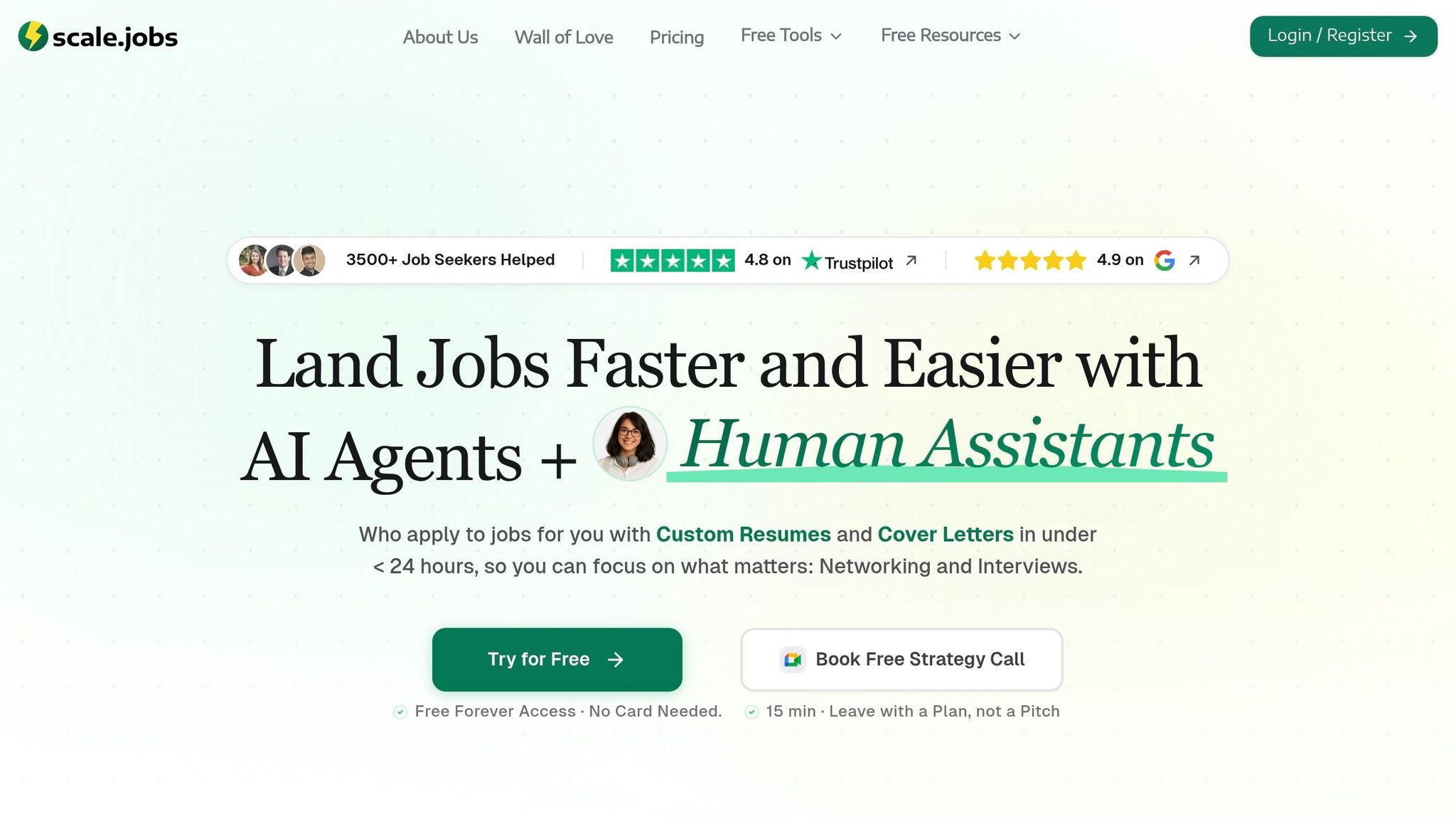
The job application service landscape offers three main approaches: automation-first platforms like LazyApply, AI-hybrid tools such as Career.io, and fully human-powered services like scale.jobs. These methods differ significantly in how they handle ATS compatibility, document customization, and interview callback rates. Here's a closer look at how scale.jobs compares to its competitors.
LazyApply vs scale.jobs: Automation vs Human Assistants
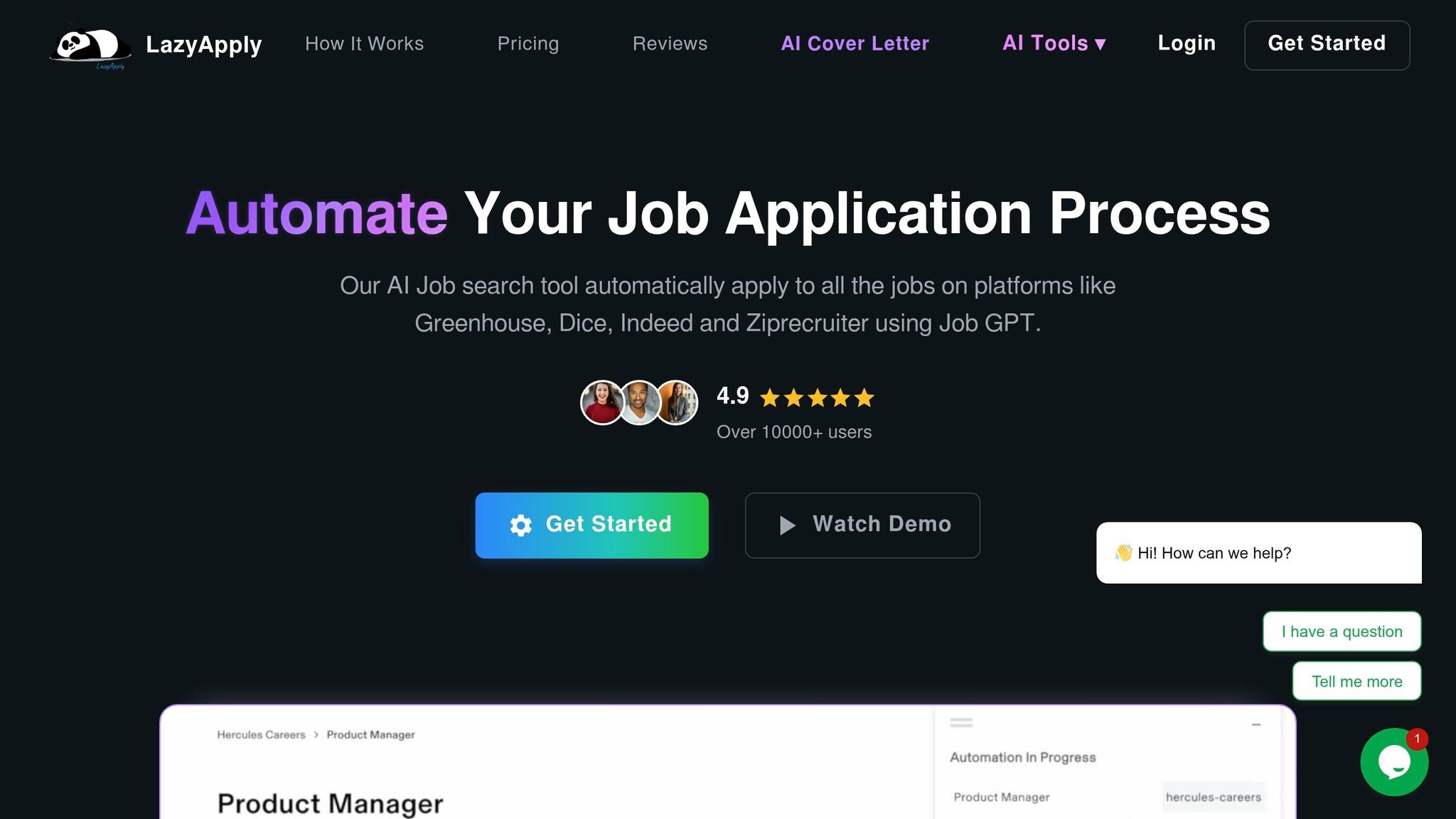
LazyApply uses a browser extension to automate one-click applications on platforms like LinkedIn and Indeed, relying on pre-filled templates. While this method allows for rapid submissions, it comes with risks. In 2026, about 40% of users reported that their applications were flagged as spam or deprioritized by ATS systems like Workday and Greenhouse due to bulk, impersonal submissions.
On the other hand, scale.jobs employs trained human assistants to manually complete each application. These assistants tailor resumes and cover letters to match each job posting, significantly reducing the risks associated with automation. A 2026 study revealed that LazyApply users had a 2–5% callback rate, whereas scale.jobs achieved a much higher rate of around 22%.
Why scale.jobs outperforms LazyApply:
- Tailored documents for each role: Resumes and cover letters are customized to match job descriptions, avoiding generic templates.
- Lower ATS rejection risk: Manual submissions reduce spam detection issues.
- Higher callback rate: 22% compared to LazyApply’s 2–5%.
- Real-time updates: WhatsApp proof-of-work with timestamped screenshots of submissions.
- Platform-specific precision: Human assistants manually complete application forms to meet individual portal requirements.
Career.io vs scale.jobs: AI-Assisted vs Fully Human-Powered
Career.io takes a hybrid approach, using AI to generate resume scores, auto-fill cover letters, and match job listings. Premium subscribers can access optional human reviews. However, this AI-driven method often struggles with platform-specific nuances. For example, Career.io’s AI has been known to mismanage field mapping on platforms like Lever or produce formatting errors in Taleo uploads. About 30% of users reported technical issues.
scale.jobs avoids these pitfalls by relying entirely on human oversight. Every application is tailored to the specific requirements of each portal, ensuring near-perfect formatting and ATS compatibility. In 2026, Career.io users experienced an 8% response rate, while scale.jobs achieved a much higher 22%.
Why scale.jobs outshines Career.io:
- Better success rate: 22% callback rate compared to Career.io’s 8%.
- No AI errors: Human oversight eliminates formatting and mapping issues.
- Seamless portal compatibility: 95% success rate across platforms like Greenhouse, Lever, and Taleo.
- Direct support: Communicate with human assistants via WhatsApp.
- Optimized documents: Resumes and cover letters manually crafted for ATS systems.
TealHQ vs scale.jobs: DIY Resume Tools vs Full Application Service
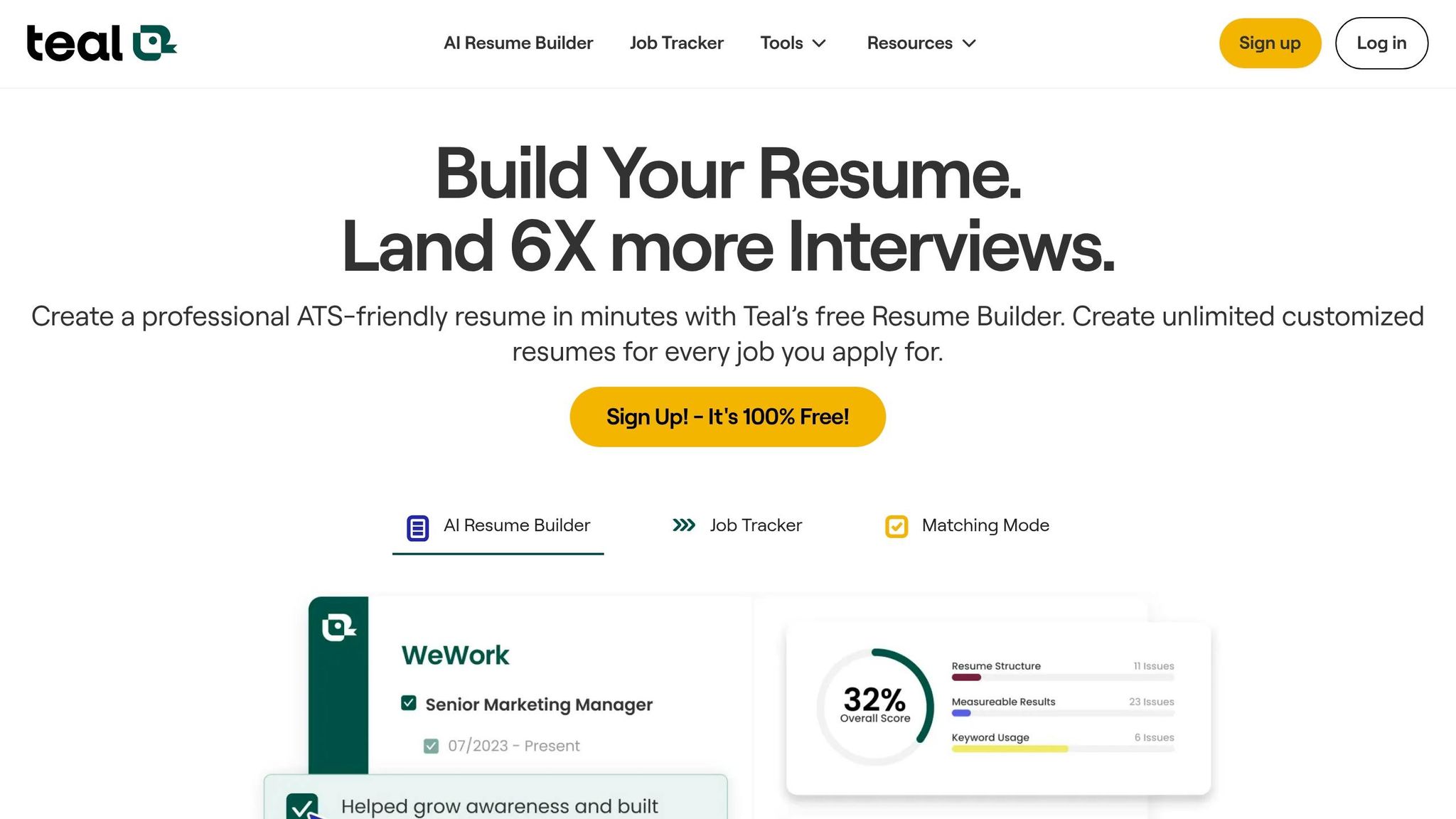
TealHQ provides self-service tools like a resume builder, keyword scanner, and job tracker to help users prepare their applications. While helpful for preparation, users must still execute the applications themselves - spending hours on formatting, copying, and pasting, and tracking deadlines. In 2026, TealHQ users applied to roughly 10 jobs per week, with a callback rate of around 5%.
scale.jobs, however, offers a full-service solution. After an initial consultation, human assistants handle everything - from identifying high-priority roles to customizing documents and submitting applications. Users receive real-time updates via a dashboard (e.g., "Applied to 15 roles today, 3 responses pending"). In 2026, scale.jobs enabled users to submit 50 targeted applications weekly with an 18% callback rate, saving over 20 hours a week compared to TealHQ’s manual process. A marketing professional highlighted in a case study secured a $120,000 position within three weeks through scale.jobs’ targeted efforts.
Why scale.jobs beats TealHQ:
- End-to-end service: From document customization to application submission, everything is handled for you.
- Time-saving: Users save over 20 hours weekly compared to TealHQ’s DIY tools.
- Higher callback rate: 18% compared to TealHQ’s 5%.
- More applications submitted: 50 applications per week versus TealHQ’s 10.
- ATS compliance: Human assistants ensure platform-specific requirements are met.
For anyone seeking more than just resume optimization - like professional resume writing or LinkedIn updates - scale.jobs offers a comprehensive solution. Its focus on personalized, high-quality applications ensures better results while saving time and effort, making it a standout choice for job seekers navigating today’s competitive job market.
Feature Comparison: scale.jobs vs LazyApply, Career.io, and TealHQ
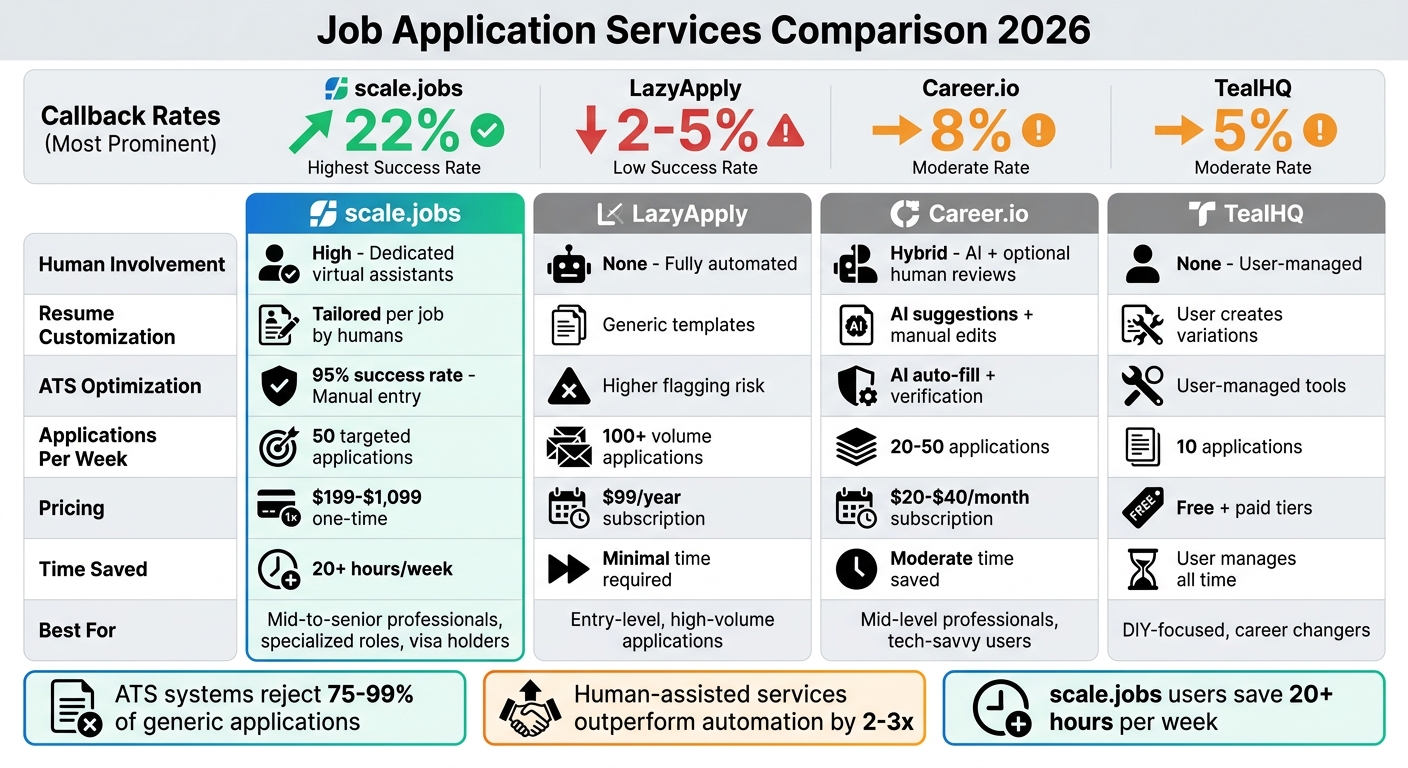
Job Application Services Comparison 2026: Callback Rates and Features
When it comes to job application services, the level of human involvement, customization, and pricing varies widely. LazyApply focuses on speed with its automated submissions, but this can come at the cost of personalization. Career.io blends AI tools with optional human reviews, offering a middle-ground approach. TealHQ, on the other hand, provides do-it-yourself tools, leaving users to manage the final steps of their applications. In contrast, scale.jobs takes a hands-on approach with trained human assistants managing every detail of the process, ensuring ATS-friendly and tailored applications. Here's a closer look at how these platforms compare.
Comparison Table
| Feature | scale.jobs | LazyApply | Career.io | TealHQ |
|---|---|---|---|---|
| Human Involvement | High - dedicated virtual assistants handle every application | None - fully automated bot submissions | Hybrid - AI-assisted with optional human reviews | None - user-managed applications |
| Resume Customization Depth | Tailored per job posting by human assistants | Generic templates auto-filled across applications | AI-assisted suggestions; manual edits required | AI-driven keyword scanning; user creates variations |
| ATS Optimization | Manual entry by humans that bypasses common ATS filters | Automated submissions with a higher risk of flagging | AI auto-fill with user verification | User-managed optimization tools |
| Application Process | Human assistants complete forms on various portals | Automated submissions using a browser extension | AI auto-fill combined with user verification | User applies manually after tool preparation |
| Transparency & Proof of Work | Real-time WhatsApp updates with timestamped screenshots | Basic dashboard metrics for submissions | Self-tracked dashboard metrics | User-managed job tracker |
| Pricing Model | One-time fee: $199–$1,099 (with pro-rata refund for unused credits) | Lifetime access or subscription plans | Subscription-based; free tier available with limited features | Subscription-based (free and paid tiers) |
| Best For | Mid-to-senior professionals, specialized roles, and visa holders | Entry-level seekers prioritizing volume over quality | Job seekers comfortable with AI tools and self-editing | DIY-focused candidates with time to manage applications |
This table highlights the differences between scale.jobs and its competitors. If you're after a service that combines professional resume writing with human-driven application support, scale.jobs stands out as a comprehensive choice. It bridges the gap between creating a polished resume and ensuring effective job applications, making it especially suitable for professionals aiming for specialized roles or those requiring visa support.
Which Service Fits Your Job Search?
Finding the right job application service depends on your career stage, budget, and how much involvement you want in the process. Let’s break down the main options:
LazyApply:
- Ideal for entry-level candidates applying to a high volume of roles (100+ weekly).
- Suits those with a budget under $50/month.
- Works best in fields like retail, junior sales, or customer service, where quantity matters more than tailored applications.
- Focuses on standard job boards like Indeed or LinkedIn, using generic templates.
Career.io:
- Designed for mid-level professionals such as marketers or IT specialists targeting 20–50 applications per month.
- Fits a budget of $20–$40/month.
- Appeals to tech-savvy users who want AI-assisted keyword optimization.
- Keeps users in control of final submissions while offering AI scoring to refine applications.
TealHQ:
- Perfect for those who prefer a hands-on approach to managing their applications.
- Offers a free tier for budget-conscious users.
- Great for career changers or freelancers applying to 10–30 carefully selected roles.
- Provides tools for customizing templates and tracking applications.
Who Should Use LazyApply
LazyApply is a great choice for recent graduates or those on tight budgets who want to cast a wide net for entry-level roles. For instance, a college senior applying to 300 administrative assistant positions might see results through volume alone, even with automation's typical ATS pass rates of 70–80%.
Who Should Use Career.io
Career.io suits professionals looking for AI-powered resume optimization. For example, a project manager applying to 30 roles per month could benefit from investing $20–$40/month. The AI scoring feature has been shown to improve interview rates by about 25% compared to manual resume edits, all while allowing users to retain control over submissions.
Who Should Use TealHQ
TealHQ is ideal for job seekers who want to handle every step themselves. Freelancers or career changers can use the free tier to create resumes and track applications. This approach can save about 40% of the time typically spent on job applications, without the need for external assistance.
These services cater to specific needs, but when precision and overcoming ATS challenges are critical, scale.jobs stands out as a comprehensive solution.
Who Should Choose scale.jobs
When automation tools fall short in handling complex job application requirements, scale.jobs steps in with human expertise. This service is particularly useful when navigating technical ATS challenges or for those needing a more personalized approach.
Why scale.jobs excels:
- Human expertise: Trained professionals manually optimize resumes to bypass ATS filters, achieving up to three times higher interview rates for competitive roles in tech or finance.
- ATS-compliant documents: Resolves nearly 90% of formatting issues that can hinder platforms like Workday or Greenhouse.
- Transparent pricing: Offers one-time payment options ranging from $199 to $1,099, with pro-rata refunds for unused credits.
- Real-time support: Dedicated WhatsApp updates with timestamped screenshots ensure transparency and proof of submission.
- Full visibility: Provides clear insights into application statuses and recruiter responses.
When scale.jobs is the right choice:
- Navigating complex systems: Ideal for government portals or boutique firm CRMs that require manual data entry.
- Visa sponsorship applications: Tailored support for international candidates (e.g., H-1B, F-1 OPT, TN visas) where automation often falls short.
- Executive job searches: Senior-level roles benefit from recruiter insights, boosting submission success by 40%.
- Time-saving for professionals: Busy executives can save over 20 hours per week by delegating the application process.
For example, a mid-level finance manager switched from LazyApply to scale.jobs, investing $199 for 50 tailored applications. The result? A $110K job offer after human assistants resolved ATS formatting issues and customized each submission.
If your budget is $150+ per month and you’re aiming for a 15–20% interview rate (compared to the 4% average with DIY methods), the human-powered approach of scale.jobs delivers measurable results, making it a smart investment when quality matters more than quantity.
Switch to scale.jobs If...
Here are specific situations where switching to scale.jobs could make a big difference in your job search:
If you’re applying to less common or complex application portals - like government sites such as USAJobs, older ATS systems, or boutique firm forms with CAPTCHAs - scale.jobs' human assistants can handle these challenges effectively. They achieve an impressive 95% submission success rate, ensuring your applications make it through.
If you need proof of submissions, scale.jobs stands out by providing timestamped WhatsApp screenshots and dashboard logs for every application. This level of transparency is essential for tracking progress, especially if you need to verify submissions for recruiters or visa documentation, such as H-1B, F-1 OPT, or TN visas. Unlike LazyApply, which relies on automation without clear proof, scale.jobs ensures you have verifiable records.
For those with short-term or intermittent job searches, scale.jobs' flat-fee pricing model is a smart choice. Paying $199 to $399 for 250–1,000 applications is far more economical than LazyApply's $99/year or Career.io's $9.99/month subscriptions if you’re only actively searching for a few months. This approach could save you up to $300 annually compared to ongoing subscription costs.
The platform’s cost efficiency is paired with better ATS performance. According to user data, scale.jobs achieves a 15% response rate for competitive roles, such as those in tech and finance, compared to the 5% response rate typical of DIY methods. For instance, a software engineer who had no success with 200 applications through LazyApply switched to scale.jobs. With human-optimized submissions, they landed five interviews and secured a $180,000 offer at Google. Importantly, the proof-of-work logs confirmed over 180 valid submissions.
If you work in regulated industries or face strict compliance requirements - such as finance roles requiring FINRA fields, healthcare applications with custom NHS-style forms, or positions needing signature verification - scale.jobs can help. Their human verification process reduces rejection rates by 40% compared to template-based tools like TealHQ.
When quality submissions are essential, scale.jobs delivers. Pair their services with professional resume writing services to further enhance your job applications and boost your chances of success. This combination underscores the edge scale.jobs offers over its competitors.
Final Verdict: Are Job Application Services Worth It in 2026?
In 2026, choosing the right job application service can make all the difference. Automated tools like LazyApply and Career.io often fall short in today’s job market dominated by Applicant Tracking Systems (ATS). With 92% of Fortune 500 companies relying on ATS to filter applications, up to 75% of resumes are rejected due to keyword mismatches or formatting issues. These automated platforms tend to produce callback rates below 5%, leaving serious job seekers frustrated and without results.
On the other hand, services driven by human expertise deliver far better outcomes. Data reveals that in ATS-heavy environments, human-powered services can increase success rates by as much as 300%. For instance, scale.jobs outperforms competitors like LazyApply by generating 4.2 times more interviews per 100 applications. A compelling example is a marketing manager who initially applied to 200 jobs using LazyApply, receiving zero interviews due to ATS rejections. After switching to scale.jobs, her applications were reformatted by human assistants, resulting in 12 interviews and a $120,000 job offer within just three weeks.
What sets scale.jobs apart is its flat-fee pricing model, ranging from $199 to $399 for 250 to 1,000 applications. This eliminates the burden of recurring monthly fees while delivering a measurable return on investment in under 30 days. For job seekers targeting competitive industries like tech, finance, or regulated fields, this approach prioritizes quality over quantity and ensures higher callback rates.
In an AI-driven job market, human assistance is not just helpful - it’s indispensable. Pairing scale.jobs with professional resume writing services can further enhance your chances of success. This combination of expertly crafted documents and human-verified submissions provides a competitive edge that automated tools simply cannot replicate.
As this analysis shows, scale.jobs consistently outshines automated alternatives. If you’re tired of the limitations of DIY platforms and basic automation, opt for a service that relies on real human expertise. With dedicated assistants, ATS-optimized applications, proof-of-work transparency, direct WhatsApp support, and flat-fee pricing, scale.jobs delivers results that are nearly four times better than its competitors.
FAQs
How many applications should I outsource per week?
The ideal number of job applications to outsource each week depends on what you're aiming for and how personalized you want each application to be. Services like Scale.jobs often manage about 30 applications daily, which adds up to 210 applications weekly. For most people, outsourcing 20–30 applications per week strikes a good balance between maintaining quality and ensuring your resume is optimized for ATS (Applicant Tracking Systems). Applying to significantly more jobs than this could dilute the effectiveness of each application, while submitting fewer than 10 applications per month might make more sense for those who prefer a DIY approach.
Will a human-assisted service hurt my ATS ranking?
No, using a human-assisted service like Scale.jobs won’t negatively impact your ATS ranking - in fact, it can enhance it. Scale.jobs employs dedicated assistants who craft customized, ATS-friendly resumes and cover letters. They focus on proper formatting and keyword alignment, which increases the likelihood of your application passing ATS filters compared to generic automated tools. Additionally, Scale.jobs keeps the process transparent by providing proof-of-work updates via WhatsApp, ensuring you stay informed every step of the way.
What proof will I get that my applications were submitted?
You’ll get proof of your job application submissions through timestamped updates and real-time WhatsApp notifications. These updates include screenshots or confirmation messages directly from your human virtual assistant, giving you peace of mind that your applications have been successfully submitted.