
How to Monitor Your Online Reputation for Jobs

Sarah Mitchell
January 11, 2026

Hiring managers often Google candidates before interviews, with over 90% of U.S. employers using search engines and 70% checking social media. What they find can impact your chances - either positively or negatively. A poor online presence, inappropriate content, or even no online trace can hurt your job prospects. Here’s how you can take control of your digital reputation:
- Audit Your Online Presence: Search your name in incognito mode, review social media, and check for outdated or unprofessional content.
- Set Up Alerts: Use tools like Google Alerts or Mention to track your name online in real time.
- Clean Up Content: Remove or hide anything unprofessional and create updated, polished profiles.
- Build Positive Content: Share professional articles, insights, or a portfolio to push negative results down. This proactive approach complements effective networking strategies to build a strong professional brand.
- Stay Organized: Use tools like Scale.jobs to track job applications and maintain consistency across profiles.
Step 1: Find Out What Employers See When They Search for You
What Recruiters Look for Online
Did you know that over 90% of employers start their candidate research with a Google search? After that, they often head to LinkedIn to optimize your profile and double-check your qualifications, connections, and endorsements. Then, they’ll likely review your activity on social media platforms like Facebook, Instagram, and X (formerly Twitter) to get a sense of your personality and professionalism.
For more specialized roles, recruiters may also dig deeper. For example, they might review your GitHub repositories if you’re in tech, portfolio websites if you’re in a creative field, or even industry-specific forums where you’ve participated. What are they looking for? Two things: positive signals such as professional blogs, published work, or insightful industry commentary, and negative signs like inappropriate photos, offensive language, or evidence of illegal activity. They may even use your email to track down secondary profiles you thought were hidden.
How to Audit Your Own Online Presence
Now that you know what recruiters are looking for, it’s time to take control of your online image by auditing your digital footprint. Start by using an incognito or private browser to ensure your search results aren’t influenced by your personal history or logged-in accounts. Search your full name in quotes, and try variations that include your city or employer (e.g., "Sarah Johnson Chicago" or "Sarah Johnson Microsoft"). Be thorough - review at least three to four pages of search results.
To stay organized, create a spreadsheet to log the results. Categorize each one as positive, negative, or neutral. Don’t stop with Google - run the same searches on Bing and Yahoo, as they may show different results. Don’t forget to check Google Images, where unflattering or unprofessional photos might surface.
Next, dig into your privacy settings on social platforms. For example, Facebook’s "View As" feature lets you see your profile the way a recruiter would if they aren’t connected to you. Don’t overlook old accounts you haven’t used in years - your MySpace profile or a forgotten college gaming forum account might still be floating around. Delete these outdated profiles or update them to reflect a polished, professional image. Also, review your tags on Instagram and Facebook, and ask friends to remove or untag anything that could harm your reputation.
Extra Steps for International Job Seekers
If you’re an international job seeker navigating visa processes like H-1B, F-1, or EB-1A, it’s critical to check search results in both your home country and the United States. Search engine algorithms often show different results based on location. For example, Google.co.in may display completely different content compared to Google.com. To see what U.S. recruiters might find, use a VPN or adjust your regional search settings.
Also, focus on platforms that are popular in your target country. While LinkedIn reigns supreme in the U.S., other countries might prioritize regional professional networks or industry-specific sites. If you have a common name, consider using your middle initial or full middle name consistently across your resume, LinkedIn, and other profiles. This can help you stand out from others with the same name, especially if they have a less-than-professional reputation.
How Do I Monitor My Professional Online Reputation?
Step 2: Set Up Tools to Monitor Your Online Reputation
After auditing your online presence, the next step is to set up tools that keep you informed whenever your name pops up online. These tools act as your early warning system, helping you catch both positive mentions to highlight and negative ones that may need addressing - ideally before a recruiter sees them. Staying informed is crucial, and these tools make it easy to stay ahead.
Set Up Google Alerts for Your Name
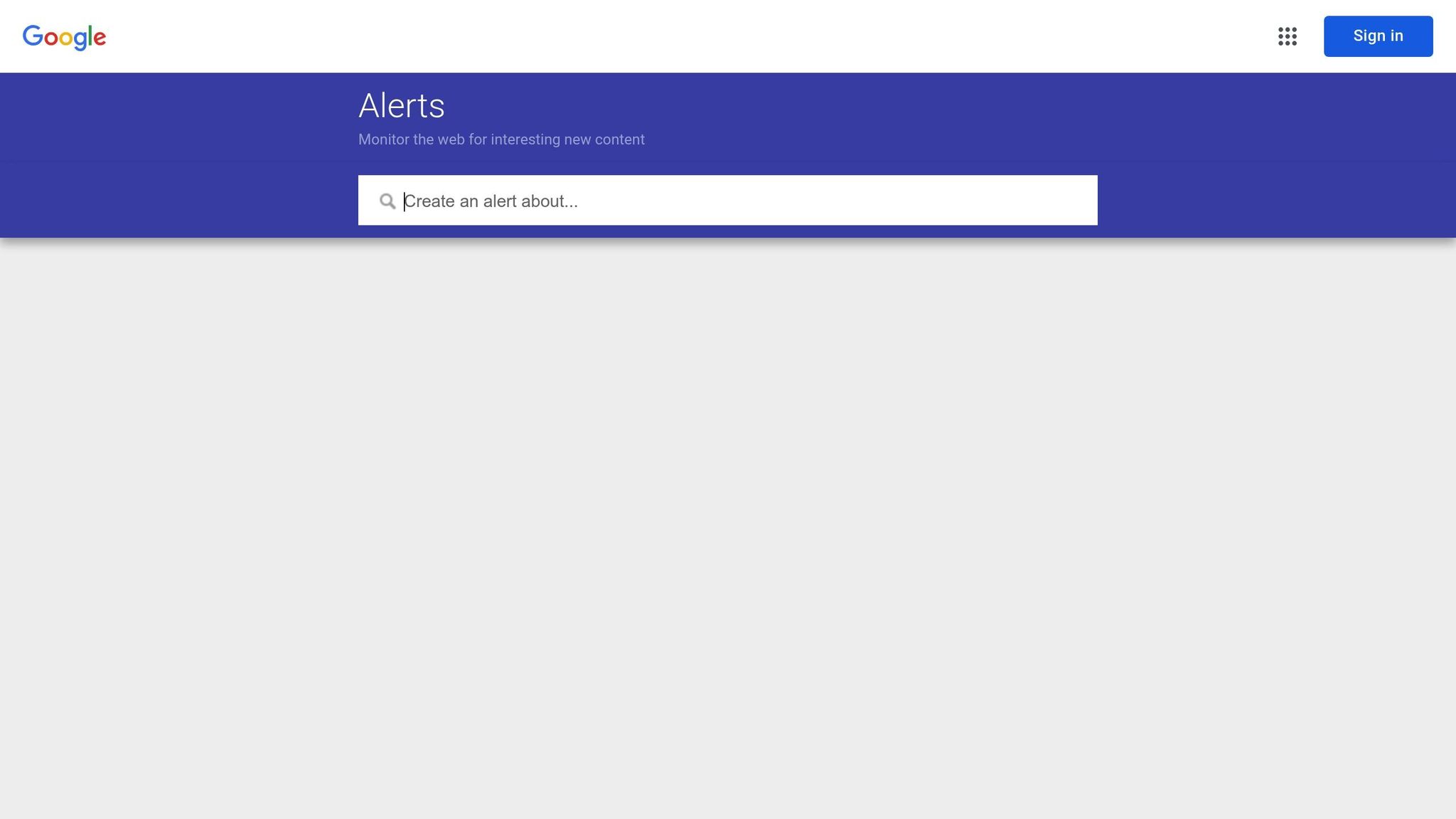
Google Alerts is a straightforward and free tool to get started with. Visit google.com/alerts and enter your name in quotation marks - like "Sarah Johnson" - to ensure Google searches for the exact phrase instead of unrelated mentions of individual words. Set the "Result type" to "Everything" to cover mentions across blogs, news, videos, and websites. Opt for "Once a day" updates to avoid notification overload, and select "Only the best results" to filter out irrelevant content.
To refine your alerts, include variations of your name. For example: "Sarah M. Johnson", "Sarah Johnson Chicago", or even exclusions like "John Doe -musician" if there’s someone famous with your name. If you need to monitor mentions in multiple languages, Talkwalker Alerts is another free option worth considering.
Track Social Media Mentions
Google Alerts doesn’t catch real-time social media activity, so you’ll need to supplement it with platform-specific tools. Start by using the built-in search functions on platforms like LinkedIn, X (formerly Twitter), and Reddit. On LinkedIn, check your notifications for profile views, endorsements, and direct messages. On X, search your name in quotes and save the search for easy weekly reviews. For Reddit, use the search bar to find mentions in industry-related subreddits.
For more comprehensive monitoring, tools like Mention and Hootsuite can track mentions across social media, blogs, and forums. These platforms also offer sentiment analysis, helping you quickly assess whether the buzz around your name is positive, neutral, or negative - an invaluable feature when you’re job hunting.
Keep an Eye on Your Professional Profiles
Your professional profiles, especially LinkedIn, require ongoing attention. Regularly check the "Who's Viewed Your Profile" section to see if recruiters or hiring managers are looking you up. If you have LinkedIn Premium, you’ll gain access to even more detailed insights about your profile views.
Additionally, stay organized with your job applications. When applying to multiple roles, it’s easy to lose track of where and when you’ve sent your resume. Scale.jobs offers a free Job Applications Tracker that provides real-time WhatsApp updates, human-assisted submissions, and tools optimized for applicant tracking systems (ATS). This can be especially helpful compared to tools like Jobscan, which focus primarily on resume scanning.
Step 3: Clean Up and Improve Your Online Presence
Now that you’ve assessed what’s out there, it’s time to take control. Cleaning up your digital footprint is essential to shaping the image you present to potential employers. With 70% of employers using social media to research candidates, this step can make or break your job search.
Remove or Hide Unprofessional Content
Start by combing through all your social media accounts. Check your posts, photos, and tags for anything that could be seen as unprofessional - like content involving illegal activities, offensive language, or anything that clashes with the image you want to project. If you find something questionable, ask friends to untag you or delete the content. Most platforms also offer tools to report and remove content that you don’t control.
For items that can’t be deleted - such as an old news article or blog post - focus on pushing them down in search rankings. How? By creating fresh, positive content. Search engines favor recent, relevant material, so publishing professional content can help bury outdated or negative items. If you're dealing with more serious issues, like old criminal records, you might want to consult a lawyer to explore options for having those records sealed or expunged.
Improve Your LinkedIn and Professional Profiles
LinkedIn is your digital calling card - it’s one of the first things recruiters see when they search for you online. Because LinkedIn ranks high on Google, optimizing your LinkedIn profile is crucial. Use keywords that align with your target job. For example, if you’re aiming for a data analyst role, incorporate terms like "data analysis", "SQL", "Python", and "business intelligence" into your headline, summary, and experience sections.
Consistency is key. Use the same professional name across all platforms, upload a polished headshot, and request endorsements from colleagues. Don’t forget to showcase your best work in your portfolio to leave a lasting impression.
Create Positive Content to Improve Your Search Rankings
To stand out, publish content that highlights your expertise. Write LinkedIn articles about industry trends, share insights from projects you’ve worked on, or even start a blog to demonstrate your knowledge. If you're pursuing roles in fields like marketing, design, or tech, having a visible online presence can also showcase your familiarity with digital tools and your communication skills.
As you build your professional brand, stay organized with your job applications. Tools like Scale.jobs can simplify the process. Their free Job Applications Tracker not only helps you monitor your applications but also offers ATS-optimized resume tools and human-assisted submission options. You can even hire a virtual assistant to manage these tasks for you. Unlike tools that just scan resumes, Scale.jobs combines AI, software, and virtual assistants to streamline your job search - allowing you to focus on crafting content that enhances your reputation and strengthens your chances of landing your next role.
Step 4: Use Reputation Monitoring During Your Job Search
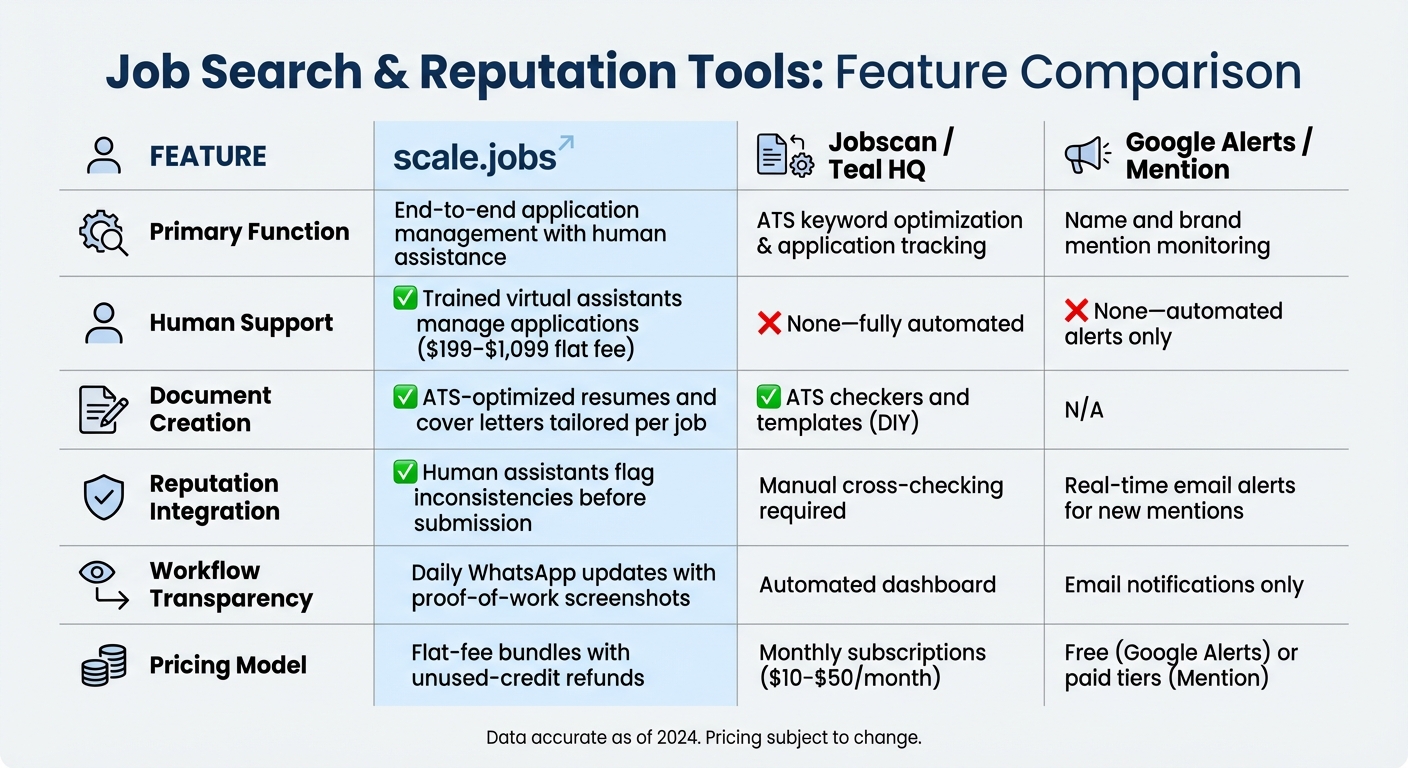
Job Search Tools Comparison: Scale.jobs vs Jobscan vs Google Alerts
As you apply to multiple jobs, it’s crucial to maintain a consistent personal brand. Why? Because nearly every employer Googles candidates before interviews. Every resume, LinkedIn update, and online mention should reinforce the professional image you’ve worked hard to build. This step builds on your earlier efforts to clean up your online presence. Unlike competitors like Jobscan and Teal HQ, scale.jobs stands out by blending automated tools with human oversight to ensure your brand stays consistent at every stage.
Track Your Job Applications
Keeping your digital presence consistent is important, but staying organized during your job search is just as critical. Tracking which resume and cover letter you send to each employer ensures you’re always prepared. However, if you’re applying to 20 or more jobs weekly, spreadsheets can quickly become overwhelming. That’s where a dedicated tracker can save you time and effort.
Scale.jobs offers a free Job Applications Tracker that simplifies the process. It logs all the essential details - like company names, job titles, application dates, submitted materials, and follow-up reminders. Plus, it integrates with their AI resume tools, giving you a clear overview of your progress. If you opt for their human-assisted services (starting at $199 for 250 applications), they’ll handle the tracking for you. You’ll even receive WhatsApp updates with time-stamped screenshots as proof of submission. This level of transparency means you’ll always know which version of your resume was submitted and when.
Let’s dive into how these tools and updates can make your job search more efficient.
Compare Reputation and Job Search Tools
Not all job search platforms help you maintain a cohesive brand. Some focus on maximizing application numbers, while others offer basic resume scanning but leave reputation monitoring entirely up to you. Here’s how scale.jobs stacks up against its competitors:
| Feature | scale.jobs | Jobscan / Teal HQ | Google Alerts / Mention |
|---|---|---|---|
| Primary Function | End-to-end application management with human assistance | ATS keyword optimization & application tracking | Name and brand mention monitoring |
| Human Support | Trained virtual assistants manage applications ($199–$1,099 flat fee) | None - fully automated | None - automated alerts only |
| Document Creation | ATS-optimized resumes and cover letters tailored per job | ATS checkers and templates (DIY) | Not applicable |
| Reputation Integration | Human assistants flag inconsistencies before submission | Manual cross-checking required | Real-time email alerts for new mentions |
| Workflow Transparency | Daily WhatsApp updates with proof-of-work screenshots | Automated dashboard | Email notifications only |
| Pricing Model | Flat-fee bundles with unused-credit refunds | Monthly subscriptions ($10–$50/month) | Free (Google Alerts) or paid tiers (Mention) |
The standout feature of scale.jobs is the human touch. While tools like Jobscan optimize keywords and Google Alerts notify you of mentions, scale.jobs takes it a step further. Their virtual assistants actively review your online profiles and submitted materials for consistency. For example, if your LinkedIn headline says "Marketing Manager" but your resume highlights "Content Strategist", they’ll flag the discrepancy before it reaches a recruiter. This proactive approach can help you avoid the red flags that 57% of employers cite as reasons to reject candidates.
As Susan P. Joyce, Editor and Publisher of Job-Hunt.org, wisely notes:
"You can't repair a problem you don't know you have. Monitoring your online reputation is smart self-defense."
Conclusion: Take Control of Your Online Reputation
Your online reputation plays a major role in shaping your career opportunities. With 90% of employers Googling candidates before interviews, what pops up on that first page of search results can make or break your chances. Here's the game plan: start by auditing your online presence, set up alerts to monitor new mentions, clean up anything unprofessional, and ensure your professional profiles are consistent.
As you refine your digital image, staying organized is key - especially when you're juggling multiple job applications. This is where scale.jobs steps in. Their human virtual assistants review your materials for consistency, flagging issues like mismatched job titles between LinkedIn and your resume. They make sure your profiles, summaries, and job history align perfectly to showcase your expertise.
Unlike subscription-based tools, scale.jobs offers flat-fee packages starting at $199 for 250 applications. You'll get real-time updates via WhatsApp, complete with time-stamped proof of each submission. Plus, they provide free ATS-checking and job tracking tools, so you can keep an eye on your progress and maintain a polished, professional presence throughout the process.
As Dick Bolles, author of What Color Is Your Parachute?, famously said:
"Google is the new resume."
So treat it like one. Set up Google Alerts tonight, review your social media profiles this week, and consider outsourcing the repetitive tasks so you can focus on what truly matters - networking and interview prep. Your reputation is one of your most valuable assets - don’t leave it to chance.
FAQs
How can I make sure my online presence helps my job search?
Your online presence can significantly impact your job search. In fact, more than 70% of hiring managers begin by looking up candidates online. To ensure your digital footprint works in your favor, start with a thorough audit of your online presence. Search your full name on Google and other search engines, and carefully review everything that comes up - social media posts, tagged photos, old comments, and more. If anything could harm your professional image, consider deleting it or switching it to private.
Once you've cleaned things up, it's time to polish and enhance your online profiles. For LinkedIn, focus on creating a professional headline, updating your work experience, and writing a strong, engaging summary. If you have other social media accounts, either make them private or ensure they convey a positive and professional image. To stay on top of things, set up Google Alerts for your name so you can monitor any new mentions online.
Need some extra help? Platforms like scale.jobs offer tools to elevate your professional image. From ATS-friendly resumes to AI-generated documents and personalized assistance, they can help align your online presence with your career goals. By regularly refining and managing your digital footprint, you can turn it into a powerful asset for your job search.
What are the best tools to monitor my online reputation during a job search?
To keep tabs on your online reputation, tools like Google Alerts, SEMrush, and Mention are incredibly useful. These platforms notify you whenever your name or brand pops up online, giving you the chance to stay updated and address any issues before they escalate.
If you're on the job hunt, having a polished online presence is a must. Regularly reviewing your social media profiles and using tools to evaluate your digital footprint can make a big difference. By taking these steps, you ensure that potential employers find a professional and positive version of you when they search online.
How can international job seekers manage their online reputation effectively?
International job seekers should approach their online presence as if it’s their professional handshake. Start by doing a quick search of your name - use quotes - on search engines like Google, Bing, and Yahoo to uncover what potential employers might see. Take a close look at your social media profiles, blog posts, forum comments, and even tagged photos. If you find anything that could be seen as unprofessional or outdated - like party pictures or controversial posts - consider deleting them or switching their visibility to private. On the flip side, make sure your LinkedIn profile, personal website, and portfolio are up-to-date and showcase your accomplishments, especially any experience tied to visa-related work or international opportunities.
To keep tabs on your digital footprint moving forward, set up Google Alerts for your name. For more advanced tracking and job search tools, platforms like scale.jobs can be a game-changer. They provide features to monitor applications, manage documents, and ensure everything aligns with U.S. hiring standards. Their combination of AI-assisted resumes and human-driven reverse recruiting services can help you craft ATS-friendly materials while keeping your search organized and professional. By regularly auditing your online presence and leveraging these tools, you’ll create a polished digital reputation that can give you a real edge in your job hunt.