
How To Prepare For Manufacturing Networking Events

Sarah Mitchell
January 4, 2026
Networking at manufacturing events can significantly boost your career by connecting you with industry leaders, uncovering trends, and creating opportunities. To get the most out of these events, preparation is key. Here's a quick breakdown:
- Research the Event: Review schedules, identify key sessions, and target companies or individuals you want to meet.
- Set Clear Goals: Define specific objectives, like meeting hiring managers or learning about specific advancements.
- Prepare Your Pitch: Craft a concise, 30-second introduction highlighting your skills, achievements, and goals.
- Update Your Materials: Ensure your resume and LinkedIn profile are polished and tailored to manufacturing roles.
- Network Effectively On-Site: Use event apps, start meaningful conversations, and follow professional etiquette.
- Follow Up: Send personalized messages within 48 hours to maintain connections and continue the dialogue.
Preparation and follow-up are what turn casual conversations into lasting professional relationships. With these steps, you can approach any manufacturing networking event with confidence and purpose.
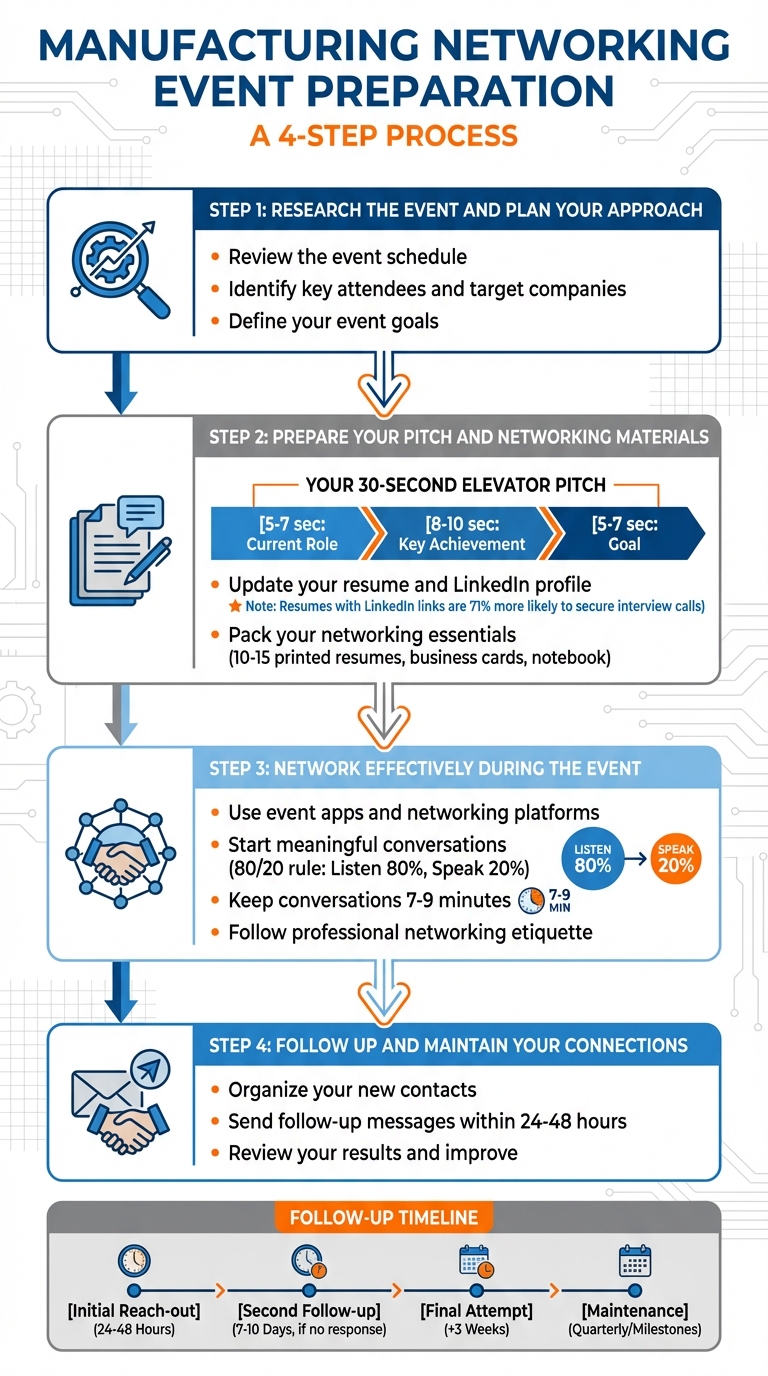
4-Step Guide to Manufacturing Networking Event Preparation
Trade Show Networking Tips from Chris Luecke (Manufacturing Happy Hour)
Step 1: Research the Event and Plan Your Approach
Walking into a manufacturing networking event without preparation is like showing up to a test without studying - it wastes both your time and the time of those you're hoping to connect with. The key to turning an event into a productive experience lies in the groundwork you lay beforehand. Here's how to prepare effectively.
Review the Event Schedule
Start by downloading the event agenda and highlighting sessions that align with your goals. Look for panel discussions on cutting-edge manufacturing technologies, workshops on industry trends, or keynote presentations from companies you're interested in. Pay close attention to the exhibitor list - these companies are there to engage with attendees, making them approachable during the event. Some events even use color-coded name badges to indicate roles (like employer, job seeker, or vendor), which can help you quickly spot decision-makers. Knowing who and what to focus on before you arrive will save you time and effort.
Identify Key Attendees and Target Companies
Create a list of companies and individuals you'd like to connect with. Use platforms like LinkedIn or Facebook to confirm attendee roles and dig into their recent career achievements or projects. These details can serve as conversation starters. To stay updated, set up Google News Alerts for the companies on your radar.
"One useful contact can make the whole event worthwhile!" - Columbia University
With these insights, you can pinpoint key individuals to approach and prepare for meaningful interactions.
Define Your Event Goals
Using your research and target list, set clear objectives for the event. Instead of vague goals like "meet more people", aim for specific outcomes: connect with three hiring managers in the automation sector, learn about advancements in additive manufacturing, or gather insights into a particular company's workplace culture. This kind of focus helps you avoid aimlessly mingling and ensures your conversations are purposeful.
Step 2: Prepare Your Pitch and Networking Materials
Now that you've done your homework, it's time to fine-tune how you present yourself. This step is all about creating a strong first impression by preparing your introduction, updating your professional materials, and gathering the essentials to engage effectively.
Write Your 30-Second Elevator Pitch
An elevator pitch is your quick introduction - a snapshot of who you are, what you do, and what you're aiming for. It’s your go-to answer when someone asks why you’re attending the event. To make it effective, structure it in three parts:
- Start with your current role and expertise (5–7 seconds).
- Highlight a key achievement that shows your value (8–10 seconds).
- End with your goal or ask (5–7 seconds).
For instance, a CNC programmer might say: "I’m a CNC programmer with five years of experience in aerospace manufacturing. Last year, I reduced cycle times by 15% on our production line by optimizing toolpaths. I’m here to connect with companies investing in advanced machining technologies." The key is to practice until it feels natural, so you can deliver it confidently.
Update Your Resume and LinkedIn Profile
Your resume and LinkedIn profile are often the first impression you make, even before a handshake. Make sure both are polished and tailored for manufacturing roles. On your resume, use industry-specific keywords like "Lean Manufacturing", "Six Sigma", or "Supply Chain Management", and ensure it meets ATS (Applicant Tracking System) standards. Tools like scale.jobs can help match your experience with job descriptions using AI and human expertise, offering a smoother alternative to platforms like findmyprofession.com.
For LinkedIn, create a professional URL (e.g., linkedin.com/in/yourname) and rewrite your "About" section to function like an elevator pitch. Kunal Saxena, Founder of 1MillionResume, advises:
"Your summary is your elevator pitch. It should be concise yet detailed enough to give people an idea of who you are, what you do, and what you're looking for."
Add up to 100 skills, including variations of your core competencies, to boost your chances of appearing in recruiter searches. Include your LinkedIn URL on your resume - resumes with LinkedIn links are 71% more likely to secure interview calls. Use the "Featured" section to upload your resume or showcase a project portfolio, making it easy for connections to explore your work after the event.
Pack Your Networking Essentials
Prepare 10–15 printed resumes to share after meaningful conversations. Avoid handing them out immediately; instead, wait until you’ve had a substantial interaction. Business cards are crucial for quick contact exchanges, and you can add a shortened URL (using a service like Bitly) on the back that links to your LinkedIn profile or portfolio. This allows you to track engagement and identify interested contacts after the event.
Carry a small notebook and pen to jot down important details during conversations. Writing quick notes - like "works on automation projects" or "mentioned Ohio facility expansion" - on the back of business cards can help you craft personalized follow-up messages later. To stay mobile and approachable, check your coat and bags so you always have a free hand for handshakes and exchanging materials. Next, we’ll dive into how to use these materials effectively while networking.
Step 3: Network Effectively During the Event
With your materials and pitch ready, it's time to strike a balance between leveraging digital tools and engaging in genuine, face-to-face interactions.
Use Event Apps and Networking Platforms
Many manufacturing events now come with their own mobile apps or networking platforms. These tools let you browse the RSVP list and identify key attendees - whether it's a hiring manager from a specific company or a potential mentor in your field. If the event offers matchmaking software, take advantage of it to filter attendees by job role or industry focus. This helps you prioritize your time and connect with the right people.
The LinkedIn mobile app's QR code feature is a game-changer. Instead of juggling business cards, simply scan someone’s QR code to connect instantly. Make sure you optimize your LinkedIn profile: include a professional headshot, a headline packed with relevant manufacturing terms like "Lean Manufacturing" or "Quality Control", and an "About" section that highlights your expertise. A strong digital first impression can be just as impactful as your in-person one.
If you're actively job hunting, consider using networking strategies for job seekers and platforms like scale.jobs. These tools integrate networking support with your job search, helping you track connections and follow-ups seamlessly. To prep for conversations, set up Google News Alerts for your target companies a week before the event. This way, you can reference their latest projects or expansions and show you're informed.
Start Meaningful Conversations
The best conversations often happen naturally. Use situational cues to break the ice - comment on a speaker's presentation, ask about the venue, or approach someone standing alone at the refreshment table. When you meet someone, repeat their name right after the introduction and use it a couple of times during the conversation. This not only helps you remember their name but also builds rapport.
Follow the 80/20 rule: listen 80% of the time and speak 20%. Ask thoughtful questions about manufacturing trends, challenges their team is facing, or upcoming projects. Showing genuine interest can uncover opportunities you might not have expected. Aim to keep conversations between 7–9 minutes - this sweet spot leaves a positive impression without overstaying your welcome.
After each interaction, jot down a quick note on their business card about something specific you discussed, like "expanding Ohio facility" or "interested in automation ROI." These details will be invaluable for follow-ups.
Follow Professional Networking Etiquette
Your body language can speak volumes. Stand tall, make eye contact, and keep your arms open to convey confidence and approachability. Start with a firm handshake and keep one hand free by putting away your coat or bag.
Know when it’s time to wrap up. Look for subtle cues like someone glancing at their watch, giving shorter responses, or stepping back. When you spot these signs, thank them for their time, suggest connecting on LinkedIn, exchange contact information, and close with a professional goodbye. As G2 aptly puts it:
"Networking is all about making a genuine connection."
If you’re attending with colleagues, split up to meet new people. Sticking with your group can create an invisible barrier that discourages others from approaching. Instead, make an effort to speak with solo attendees - they’re often the most open to new conversations and can turn into valuable contacts. As Columbia University notes:
"One useful contact can make the whole event worthwhile!"
Step 4: Follow Up and Maintain Your Connections
The real effort kicks in once you've gathered those business cards and LinkedIn connections. Without a good follow-up plan, even the most engaging conversations can lose their spark.
Organize Your New Contacts
After meaningful conversations, take time to organize your new contacts promptly. Aim to transfer your notes that evening or the next morning while the details are still fresh in your mind. Did someone mention they're expanding their operations in Ohio or express interest in improving automation ROI? Jot it all down.
Use tags in your contact management system to group people by event or topic. For instance, you could tag someone as "Manufacturing Expo 2026 – Automation" or "Quality Control Leads." If you're job hunting, tools like scale.jobs' Job Applications Tracker can help you store contact details, conversation notes, and even reminders for follow-ups in one convenient spot.
Stay updated on their professional activities through LinkedIn or Google News Alerts. This gives you natural opportunities to reconnect - like when their company announces a new product or expansion. If you shared resources during your initial conversation, such as an article or your portfolio, consider tracking engagement with a URL shortener like Bitly. This can help you gauge their interest before reaching out again.
Send Follow-Up Messages Within 48 Hours
Timing matters. Aim to send a follow-up email or LinkedIn message within 24–48 hours while your discussion is still fresh in their mind. Avoid generic messages - make it personal by referencing a shared interest or a specific topic you discussed.
A strong follow-up message should include these four elements:
- Context reminder: Reintroduce yourself and reference the event.
- Specific reference: Show you were paying attention to the conversation.
- Action item: Suggest a reason to stay in touch or collaborate.
- Clear next step: Propose a future interaction.
For example:
"It was a pleasure discussing manufacturing automation at the Expo yesterday. Your thoughts on Midwest supply chain resilience were insightful. I've attached the white paper on robotics we talked about. Would you have 15 minutes for a virtual coffee next Tuesday?"
If you don’t hear back, give it 7–10 days before sending a second follow-up. Use this opportunity to reiterate your interest or share a promised resource. If needed, send a final message a few weeks later before shifting the contact to a "keep in touch" list for long-term networking. Always respect professional boundaries.
Once your follow-ups are sent, take time to assess your approach and refine it for future interactions.
Review Your Results and Improve
After the event, evaluate how well you met your networking goals. Did you connect with the key individuals you aimed for? Were you able to schedule any follow-up meetings? Review your conversation notes for recurring themes - maybe topics like supply chain challenges led to more engaging discussions. Use these insights to fine-tune your strategy for future events.
Set aside 30 minutes each week to stay in touch with your network. Congratulate contacts on recent achievements, share relevant industry updates, or simply check in. These small gestures go a long way in maintaining strong professional relationships.
Here’s a quick timeline to guide your follow-up process:
| Follow-up Stage | Timing | Purpose |
|---|---|---|
| Initial Reach-out | 24–48 Hours | Thank them for their time and reference a specific conversation point |
| Second Follow-up | 7–10 Days | Reiterate interest or provide a promised resource if no response received |
| Final Attempt | +3 Weeks | A final check-in before moving the contact to a long-term "keep in touch" list |
| Maintenance | Quarterly/Milestones | Congratulate on achievements or share relevant industry news |
Conclusion: Making the Most of Manufacturing Networking Events
Manufacturing networking events can open doors to career growth - but success hinges on preparation and thoughtful follow-up. Start by researching the event, crafting a strong elevator pitch, and arriving ready to engage in meaningful conversations. As Laura Katen, President of Katen Consulting, explains:
"Networking is about much more than just showing up... It's about meeting people, sharing who you are and what you do, and gaining some valuable contacts."
Listening actively is key. By understanding what your contacts truly need, you can tailor your follow-ups to be more relevant and impactful.
For those job hunting while networking, scale.jobs can help you save time by handling application tasks. Their human virtual assistants submit up to 30 applications daily, freeing up over 20 hours a week for more important activities - like attending events, refining your pitch, and sending personalized follow-ups within the crucial 24–48 hour window.
What makes scale.jobs stand out?
- Human assistants offering tailored support
- ATS-optimized resumes to improve application success
- One-time payment with no recurring fees
- Dedicated WhatsApp support for quick communication
- Clear proof-of-work for transparency
Their Job Applications Tracker helps you stay organized, while the Portfolio Website Generator creates a professional landing page you can share on LinkedIn or via QR codes at events. These tools ensure you're ready to make a lasting impression and nurture professional relationships.
Building strong connections takes more than exchanging business cards. Dedicate 30 minutes weekly to staying in touch - congratulate achievements, share useful articles, or simply check in. Genuine engagement keeps relationships alive and opens the door to future opportunities.
Manufacturing networking is about creating meaningful, mutually beneficial relationships. With solid preparation, thoughtful follow-ups, and tools like scale.jobs, you can turn every event into a stepping stone toward your next career milestone.
FAQs
What’s the best way to research and connect with attendees at a manufacturing networking event?
Preparation can make all the difference when attending a manufacturing networking event. Start by checking if the event organizer provides an attendee list or a lineup of speakers - this is often available. Use this information to pinpoint key individuals or companies that align with your career goals. If no list is provided, dig into the event’s website, speaker bios, or promotional materials to identify potential contacts.
Once you’ve identified who you want to meet, dig deeper. LinkedIn is a great tool to explore their roles, recent projects, or mutual connections. For companies, check out press releases or news articles to get a sense of their recent initiatives or challenges. Focus on decision-makers or influencers, and prepare a brief, tailored elevator pitch that highlights how your skills or experience could be valuable to them.
To keep everything organized, create a simple cheat sheet with essential details about your targets. Tools like Scale.jobs’ free Job Applications Tracker can also help you manage follow-ups effectively. With the right research and a clear strategy, you’ll be ready to turn introductions into meaningful conversations.
What should I include in a concise elevator pitch for a manufacturing networking event?
Crafting a compelling 30-second elevator pitch is all about clarity and impact. It should quickly convey who you are, what you do, the value you bring to manufacturing, and what you're hoping to achieve at the event. The key is to keep it short, interesting, and tailored to the people you're speaking with.
Here’s a straightforward way to structure it:
- Start with an introduction: Share your name and current role. For example, "I’m Alex Miller, a process engineer at XYZ Machining."
- Showcase your expertise: Highlight a key skill or accomplishment that ties into manufacturing. Something like, "I specialize in lean optimization and recently reduced cycle time by 15% on a high-volume CNC line."
- Identify the problem you solve: Frame it as a challenge common in the industry. For instance, "Many plants face significant downtime due to inefficient changeovers."
- Explain your solution: Offer a brief insight into how you tackle this issue. For example, "I develop programs that cut setup time in half, minimizing downtime and boosting productivity."
- Wrap up with a clear goal: Let them know what you're seeking. You could say, "I’m looking to connect with plant managers who are focused on improving their changeover processes."
Make sure your pitch feels natural and stays under 30 seconds. To keep the conversation flowing, end with a question or an invitation to chat further. For example, "What strategies have you found effective in reducing downtime?"
When is the best time to follow up with someone after a networking event?
Following up within 24–48 hours after the event is ideal since the interaction will still be fresh for both of you. Make your message personal and meaningful by referencing something specific from your conversation - this shows you were genuinely engaged. A heartfelt thank-you paired with a mention of staying connected can make a strong impression and help nurture a lasting relationship.