
5 Countries American Grads Are Moving to After Graduation

Sarah Mitchell
March 6, 2026

With the U.S. job market tightening for entry-level roles, more graduates are exploring opportunities overseas. Countries like Canada, Germany, Australia, Portugal, and Mexico are becoming top destinations, offering affordable living, thriving job markets, and clear visa pathways. These destinations not only provide better career prospects but also a healthier work-life balance compared to the high-pressure culture in the U.S.
Key Highlights:
- Canada: High demand for healthcare and tech roles, streamlined visa options like Express Entry, and affordable living compared to U.S. cities.
- Germany: Over 750,000 job vacancies, strong demand in IT, engineering, and healthcare, and visa pathways like the EU Blue Card and Opportunity Card.
- Australia: Growing tech and healthcare sectors, high wages, and flexible visa options for skilled graduates.
- Portugal: Affordable living, emerging tech and renewable energy sectors, and visa programs like the Digital Nomad Visa and Skilled Job Seeker Visa.
- Mexico: Proximity to the U.S., nearshoring-driven job growth, and cost-effective living for graduates managing student loans.
Securing a job abroad requires more than just sending applications. Tailoring resumes for international markets and navigating applicant tracking systems (ATS) are essential. Platforms like Scale.jobs simplify this process by offering personalized, ATS-optimized applications with real-time updates, outperforming automated tools like LazyApply and Simplify.jobs.
Quick Comparison:
| Country | Key Industries | Average Salaries (USD) | Visa Options | Cost of Living Compared to U.S. |
|---|---|---|---|---|
| Canada | Healthcare, Tech, Engineering | $65,000–$100,000+ | Express Entry, CUSMA, IEC | 50% lower in major cities |
| Germany | IT, Engineering, Healthcare | $52,000–$71,000 (entry-level) | EU Blue Card, Skilled Worker Visa | 12.7% lower overall |
| Australia | Tech, Healthcare, Renewable Energy | $104,000–$153,750 (tech) | Work & Holiday, Skills in Demand | Comparable to U.S. |
| Portugal | IT, Renewable Energy, Tourism | $24,000–$50,000 | Digital Nomad, Skilled Job Seeker | 39% lower overall |
| Mexico | IT, Business, Tourism | $25,000–$60,000 | USMCA, Temporary Resident Visa | 39% lower overall |
Graduates should focus on crafting ATS-friendly resumes and understanding visa requirements to stand out in these competitive markets. Platforms like Scale.jobs provide tailored support, ensuring your applications meet local standards and increase your chances of landing a job.
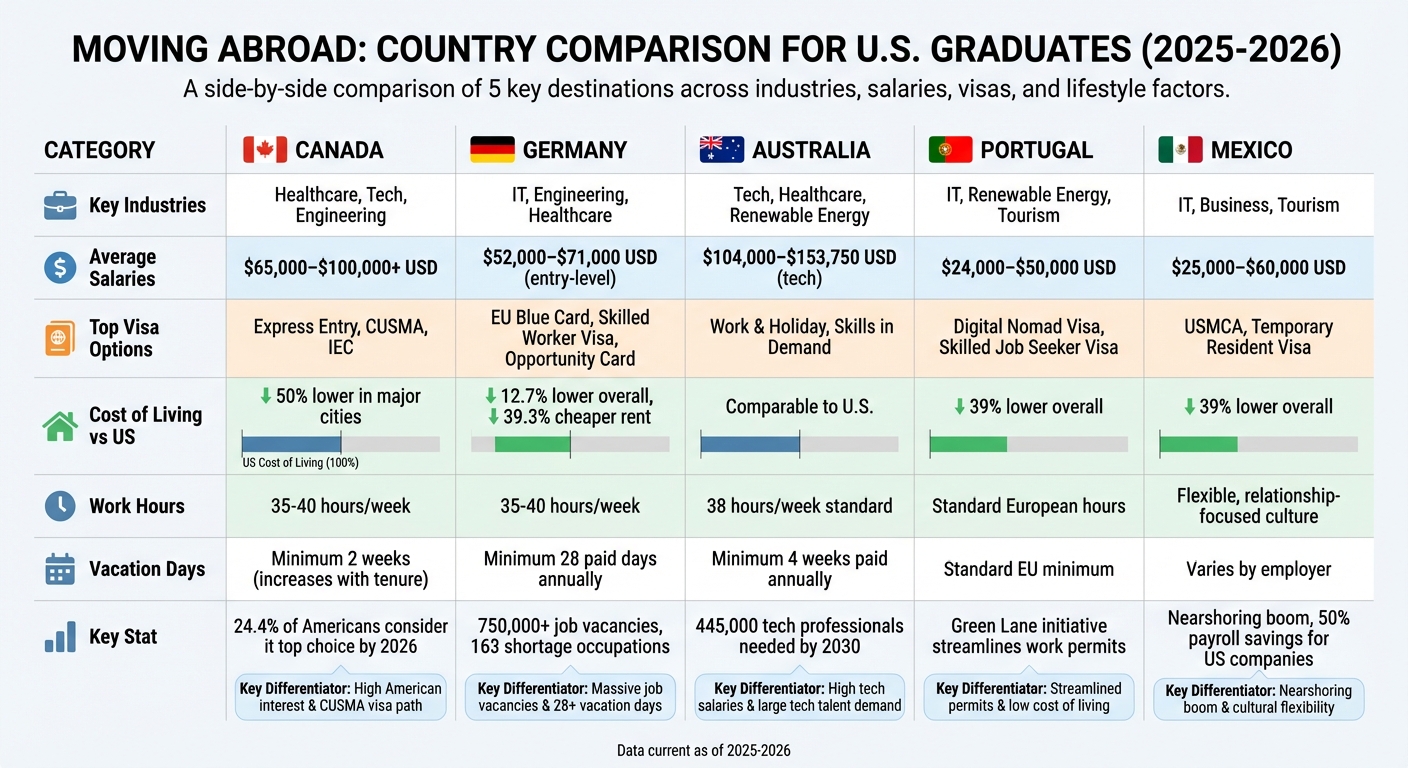
Top 5 Countries for American Graduates: Jobs, Salaries, Visas & Cost of Living Comparison
1. Canada
Job Market Opportunities
Canada’s job market actively seeks American graduates, especially in fields experiencing workforce shortages. Unlike automated tools like LazyApply, Scale.jobs provides tailored support, ensuring your credentials stand out with ATS-optimized documents and real-time WhatsApp updates. The healthcare sector is particularly in demand, driven by an aging population. For instance, Registered Nurses in Canada earn between $80,000–$120,000 CAD annually. The technology sector is also booming, with Software Engineers earning $90,000–$130,000 CAD and AI Specialists commanding salaries from $100,000–$150,000 CAD. Other fields, such as finance, accounting, and skilled trades, continue to hire consistently due to corporate compliance needs and infrastructure projects.
Canada’s Express Entry system prioritizes graduates in healthcare, STEM, trades, transport, and agriculture, making permanent residency more accessible. Toronto and Vancouver are hotspots for tech and AI roles, Montreal specializes in data science, and cities like Calgary and Edmonton offer strong prospects in engineering and finance.
Visa Options for Graduates
Securing the appropriate visa is a key step for American graduates entering Canada’s workforce. Several fast-track options are available:
- CUSMA Professionals Permit: Under the Canada-United States-Mexico Agreement, this permit covers over 60 professions, including engineers, accountants, and scientists, and bypasses the need for a Labour Market Impact Assessment (LMIA). U.S. citizens can often apply directly at Canadian ports of entry with a valid job offer for immediate processing.
- International Experience Canada (IEC) Working Holiday: Open to individuals aged 18–35 who are students or recent graduates, this program offers a 12-month open work permit.
- Global Talent Stream: This program accelerates visa processing for highly skilled tech workers, with approvals typically completed in just two weeks.
Canada is an increasingly popular destination, with 24.4% of Americans considering it their top choice by 2026. Each year, over 10,000 U.S. citizens make the move.
How Scale.jobs simplifies visa applications:
- Personalized guidance from recruiters familiar with Canadian immigration requirements
- ATS-optimized resumes tailored to Canadian employer expectations, offering a competitive edge over generic automated submissions
"Canada is a multicultural country that welcomes individuals with different cultural backgrounds. The country offers a good, clear, and fast residency path." - Reyhaneh Mansouri, Career Expert, Jobseeker
Cost of Living
Canada’s lower living costs and focus on work-life balance make it an appealing destination for recent graduates. For example, maintaining the same standard of living costs almost half as much in Toronto compared to New York City. Rent is a major factor, with a one-bedroom apartment in Toronto’s city center averaging $1,200 USD monthly, compared to $2,800 USD in Manhattan.
Healthcare and childcare savings further enhance financial predictability. Canadians pay around $940 USD annually out-of-pocket for healthcare, compared to $3,400 USD for Americans. Additionally, Canada’s $10-a-day childcare initiative can save families up to $16,000 USD per child each year. While salaries in Canada tend to be lower than in the U.S., these cost savings make a significant difference. Cities like Calgary or Montreal, with price-to-income ratios of 5.8 and 7.2, respectively, offer more affordable housing options compared to Vancouver (13.5) or Toronto (10.9).
For job seekers, Scale.jobs provides ATS-optimized, region-specific resumes that help you stand out in the competitive Canadian market - far more effective than generic outputs from some competitors.
Work-Life Balance
Canada’s workplace culture prioritizes sustainability and balance. Most professionals work standard 35–40 hour weeks, with statutory vacation starting at two weeks annually and increasing with tenure. Efficient public transit in major cities reduces personal transport costs, while Canada’s lower crime rate - 1.9 homicides per 100,000 people compared to 5.7 in the U.S. - is another factor that contributes to its quality of life.
When applying to Canadian employers, it’s essential to highlight measurable achievements and adhere to local resume standards. Networking on platforms like LinkedIn also plays a significant role in securing opportunities.
Canada’s attractive job market and quality of life set the stage for further exploration of how Scale.jobs continues to outperform competitors in supporting job seekers. Stay tuned as we examine other destinations.
2. Germany
Job Market Opportunities
Germany, much like Canada, offers tailored career opportunities and a streamlined visa process, making it an appealing choice for American graduates. As of early 2026, the country faces over 750,000 job vacancies, with 163 occupations experiencing shortages of qualified workers. Notably, fields like Information Technology (IT) and Engineering are in high demand. IT roles, including software developers, data scientists, and AI specialists, offer annual salaries ranging from €48,000–€60,000 ($52,000–$65,000) in cities like Berlin and Hamburg. Engineering roles, particularly in mechanical, electrical, and automotive sectors, typically pay between €52,000–€58,000 ($56,000–$63,000) for entry-level positions. Meanwhile, healthcare continues to recruit actively, with resident doctors (Assistenzarzt) earning between €55,000–€65,000 ($60,000–$71,000) and nursing positions facing over 160,000 vacancies.
Blue-collar roles also face significant shortages, with over 600,000 open positions. These include 220,000 vacancies in construction, 110,000 for heavy goods vehicle (HGV) drivers, 55,000 for electricians, and 45,000 for welders. Opportunities are also growing in the renewable energy sector, thanks to Germany's push for green energy, particularly in wind and solar technologies. Additionally, Frankfurt's fintech sector is booming, with entry-level roles in compliance and digital financial services offering salaries between €48,000 and €80,000.
Scale.jobs provides personalized support tailored to Germany's job market, including help with credential recognition and crafting ATS-optimized resumes. While platforms like Simplify and LazyApply focus on automated application processes, they may lack the localized expertise needed for navigating Germany's unique requirements, such as those listed on the official "Make it in Germany" portal.
Why choose scale.jobs over automated platforms?
- Dedicated human support for Germany-specific job market needs
- Custom ATS-optimized resumes tailored to regional standards
- Real-time WhatsApp assistance for personalized guidance
- A one-time payment model with proven results
With demand spanning multiple sectors, understanding Germany's visa process is essential for a successful move.
Visa Options for Graduates
U.S. citizens can enter Germany without a visa and apply for a residence permit at the local Foreigners Office (Ausländerbehörde) after arrival. The EU Blue Card is a popular option for highly skilled graduates. To qualify, you need a recognized degree and a job offer meeting a salary threshold of €50,700 ($55,000), or €45,934 ($50,000) for bottleneck professions in IT, STEM, and healthcare. Blue Card holders can apply for permanent residency after just 21 months, provided they achieve B1-level German language proficiency.
The Opportunity Card offers another route, allowing graduates to search for jobs in Germany for up to one year using a points-based system. Alternatively, the Skilled Worker Visa is available for those with recognized qualifications, even if the job isn't directly related to their degree. Visa application fees are €75 ($82), and residence permits cost between €96–€100 ($105–$109).
To ensure your U.S. degree is recognized, consult the Central Office for Foreign Education (ZAB) or the Anabin database. Scale.jobs can guide you through this process, simplifying your visa application journey. Once your visa is sorted, evaluating Germany's cost of living can help you plan your next steps.
Cost of Living
Living costs in Germany are notably lower than in the U.S., with overall expenses about 12.7% less and rent approximately 39.3% cheaper. A one-bedroom apartment in a city center costs around $943 per month in Germany, compared to $1,667 in the U.S., while outside the city center, the costs are $732 versus $1,353. Even in Munich, Germany's priciest city, consumer prices are 32.5% lower than in New York City and 14% lower than in Los Angeles. Groceries are about 12.7% cheaper, and mobile phone plans average $28 compared to $61 in the U.S.
Monthly living expenses for a single person in Germany range from €1,000–€2,000 ($1,090–$2,180), significantly less than the $2,000–$3,500 range in the U.S. The Deutschlandticket, which offers unlimited local and regional public transportation, costs €58–€63 ($63–$69) per month, reducing the need for a car. Public university semester fees are typically between €250–€350 ($272–$381) and often include a transit pass.
Although average take-home pay in Germany is about 20.1% lower than in the U.S. (monthly net pay of $3,452 compared to $4,319), the reduced living costs and social benefits can lead to greater financial stability. Cities in Eastern Germany, such as Leipzig, Dresden, and Halle, offer even lower costs than hubs like Munich or Frankfurt.
When applying for jobs in Germany, consider investing in professional resume services that specialize in local formatting. Scale.jobs delivers customized, region-specific resumes with clear proof of work, unlike AI-driven platforms such as Rezi and Resume Worded, which may overlook local nuances.
Work-Life Balance
Germany is renowned for its excellent work-life balance, with standard workweeks of 35–40 hours and a legal minimum of 28 paid vacation days annually. There is no cap on sick leave, and many companies are experimenting with 4-day workweeks to attract global talent. Efficient public transportation and a robust social safety net further enhance the quality of life.
Improving your German language skills to at least B1 or B2 levels can significantly enhance job prospects, especially in healthcare and customer service roles. However, many tech positions operate in English. For regulated professions like medicine or teaching, start the credential recognition process early, as it can take 6–12 months.
Scale.jobs offers personalized WhatsApp support and application assistance to help you navigate Germany's work environment and local expectations. This human-centric approach provides insights that automated platforms like Jobright and Sonara cannot match.
Comparison and Decision Summary
| Feature | Scale.jobs | Competitors (e.g., Simplify, Rezi, Jobright) |
|---|---|---|
| Human Involvement | Dedicated human recruiters with personalized WhatsApp support | Primarily automated with limited human oversight |
| Customization | ATS-optimized, region-specific, proof-of-work verified | Generic, AI-generated outputs |
| ATS Handling | Tailored guidance for local German requirements | Standard algorithms that may overlook local nuances |
| Execution Method | One-on-one guided process with transparent support | Bulk or automated submissions |
| Transparency | Clear proof-of-work with personal follow-ups | Less transparency in the automated process |
| Pricing | One-time payment for comprehensive service | Subscription-based or per-application fees |
Who Should Use Competitor Tools
- You prefer fast, fully automated processes without personalized guidance
- You're comfortable with generic, one-size-fits-all application approaches
- You need to submit high volumes of applications quickly across multiple countries
- Budget constraints require the lowest upfront cost option
Who Should Choose scale.jobs

- You need personalized guidance for Germany's complex job market and visa requirements
- You value ATS-optimized, region-specific resume customization over generic templates
- You prefer transparent proof-of-work with dedicated WhatsApp support
- You want human expertise to navigate credential recognition and local employer expectations
- You prefer a one-time payment model over ongoing subscription fees
Switch to scale.jobs if…
- You need tailored support for Germany's credential recognition and visa processes
- Generic automated applications aren't generating interview callbacks
- You require ATS-optimized documents that meet local German employer standards
- You value transparent proof-of-work and real-time human assistance
- You prefer a one-time payment over recurring subscription fees
Decision Summary:
Automated platforms are ideal for those prioritizing speed and volume. For those seeking detailed, personalized guidance and transparent, human-driven support to navigate Germany's job market, scale.jobs is the clear choice.
3. Australia
Job Market Opportunities
Australia offers a wealth of job opportunities for American graduates, particularly in sectors experiencing rapid growth. The technology sector, for example, contributes AUD $167 billion to the economy and faces a critical shortage of skilled workers. By 2030, an additional 445,000 tech professionals will be needed, with software engineering roles alone projected to grow by 27% in the next five years. Salaries in this field range from AUD $68,000 to $100,000 (approximately US $104,000–$153,750). Cybersecurity is another booming area, with the market expected to grow from US $8.85 billion in 2025 to US $16.68 billion by 2030, creating significant demand for specialists.
The healthcare and social assistance sector is Australia's largest employer, with a workforce expected to reach 2.2 million by 2026 and a projected growth of 12.5% through 2029. Registered nurses earn between AUD $65,000 and $100,000 annually, while general practitioners can earn as much as AUD $150,000–$250,000. Additionally, the renewable energy sector is expanding rapidly, requiring 40,000 new workers by 2030 to meet the country's net-zero emissions target. Roles like power system engineers and renewable energy consultants offer salaries ranging from AUD $85,000 to $200,000.
"The clean energy workforce needs 40,000 more workers by 2030 to support the energy transition." - Clean Energy Council
For graduates willing to explore regional areas, opportunities are even more abundant. Regional job fill rates are lower (64.3%) compared to metropolitan areas (71.6%), and these areas often offer faster visa processing and higher salary incentives. Platforms like Scale.jobs provide tailored support for navigating Australia's job market, offering ATS-optimized resumes designed for Australian employers. Unlike automated platforms, Scale.jobs focuses on personalized insights, which are particularly valuable in sectors like tech and healthcare, where credential recognition and understanding of local employer expectations are key.
Why Scale.jobs Stands Out
- Expert recruiters familiar with Australia's skills assessments and regional job markets
- Resumes tailored to Australian formatting and industry-specific needs
- Transparent tracking of job applications and outcomes
- One-time payment model instead of recurring fees
- Real-time WhatsApp support for navigating credential recognition and visa pathways
Visa Options for Graduates
American graduates aged 18–31 can take advantage of the Work and Holiday Visa (Subclass 462), which allows a one-year stay with full work rights - a popular option for recent U.S. graduates. For those seeking longer-term opportunities, the Skills in Demand Visa (Subclass 482) is a primary pathway. This visa includes a "Core Skills" stream for roles offering salaries between AUD $70,000 and $135,000. However, most professional roles require a positive skills assessment before applying.
For example:
- Engineers need certification from Engineers Australia
- IT professionals require approval from the Australian Computer Society (ACS)
- Healthcare workers must register with AHPRA
Graduates should ensure their degrees align with the updated Core Skills Occupation List (CSOL), which replaced older priority lists in 2024. Platforms like Scale.jobs assist with the skills assessment process and help identify visa-sponsored roles, offering a more personalized approach compared to automated services like Jobright and Sonara.
Cost of Living
Australia's cost of living is generally comparable to the U.S., with some advantages in specific areas. Monthly expenses typically range from AUD $2,000–$3,000 (around US $1,300–$2,000), compared to US $2,000–$3,500 in the U.S. One key advantage is Australia's higher minimum wage - AUD $24.95 per hour, significantly more than the U.S. federal minimum of $7.25 (approximately AUD $11.10). Healthcare costs are also lower, with mandatory health insurance for international residents (OSHC) costing AUD $500–800 per year, compared to U.S. plans that often range from $1,200–$2,500.
Housing is the largest expense, with city-center rents in Sydney averaging over AUD $2,500 monthly, comparable to cities like Los Angeles but more affordable than New York or San Francisco. Melbourne offers slightly lower costs, while cities like Adelaide and Perth are more budget-friendly.
| City | Monthly Rent (AUD) | Monthly Total Cost (AUD) |
|---|---|---|
| Sydney | $1,733–$2,383 | $1,800–$2,200 |
| Melbourne | $1,517–$2,167 | $1,600–$1,900 |
| Brisbane | $1,300–$1,950 | $1,400–$1,700 |
| Adelaide | $1,083–$1,733 | $1,200–$1,500 |
| Perth | $1,213–$1,820 | $1,300–$1,600 |
| Canberra | $1,387–$1,950 | $1,400–$1,700 |
(Source: AEC Overseas, 2025)
Sharing accommodations can cut housing costs significantly, with shared apartments costing around AUD $700–1,000 monthly. Public transport passes with graduate concessions are another way to save, costing AUD $60–80 monthly in cities like Adelaide or Perth. Grocery bills can range from AUD $300–600 monthly, while dining out for a casual meal costs approximately AUD $15–25.
Work-Life Balance
Australia's emphasis on work-life balance is another draw for graduates. The standard workweek is 38 hours, and employees are entitled to at least four weeks of paid annual leave, fostering a healthier lifestyle compared to many U.S. workplaces. Approximately 73% of Australians aged 15 to 64 hold paid positions, and the universal healthcare system (Medicare) adds financial security.
"People are looking for flexibility, options for remote working and a way to have a work-life balance while keeping a high quality of life." - Reyhaneh Mansouri, Career Expert, Jobseeker
Australian employers value skills like adaptability, teamwork, and critical thinking. For graduates in fields like engineering or data analytics, showcasing expertise in sustainability can be a major advantage, especially in the growing renewable energy sector.
Comparison and Decision Summary
| Feature | Scale.jobs | Competitors (e.g., LazyApply, Simplify, Jobright) |
|---|---|---|
| Human Involvement | Dedicated recruiters with local expertise | Automated matching, minimal human interaction |
| Customization | ATS-optimized, region-specific resumes | Generic AI-generated applications |
| ATS Handling | Tailored for Australian employer standards | Standard algorithms, no local adjustments |
| Execution Method | One-on-one guidance with tracking | Bulk automated submissions |
| Transparency | Clear proof-of-work and personal follow-ups | Limited visibility |
| Pricing | One-time payment | Subscription-based or per-application fees |
When Competitors May Be a Better Fit:
- You need a fully automated, high-volume application process
- You’re applying across multiple countries with no specific regional focus
- Budget constraints make the lowest-cost option more appealing
Why Scale.jobs Could Be Your Best Choice:
- You need personalized guidance for Australia's skills assessments and visa pathways
- You prioritize tailored, ATS-optimized resumes over generic templates
- Transparent proof-of-work and real-time WhatsApp support are important to you
- You want expert help navigating credential recognition and regional job markets
- A one-time payment model aligns better with your financial plans
Consider Switching to Scale.jobs If:
- Automated applications haven’t led to interviews with Australian employers
- You need resumes tailored to Australian standards and employer expectations
- You want dedicated support for navigating skills assessments and visa processes
Practical Guide on How to Get a Full-Time Job After Graduation in Australia
4. Portugal
Portugal presents a compelling opportunity for American graduates, offering a blend of professional growth and a vibrant lifestyle.
Job Market Opportunities
Portugal has become a welcoming destination for English-speaking graduates, especially in cities like Lisbon, Porto, and Braga. Key industries such as customer service, sales, and technical support often serve as entry points for newcomers.
The Green Lane (Via Verde) initiative, introduced in April 2025, has streamlined the process of obtaining work permits for roles in high-demand sectors like IT, healthcare, and renewable energy. For instance, software developers can expect monthly salaries ranging from €2,200 to €4,200, while cybersecurity analysts earn between €2,800 and €5,000. In renewable energy, positions such as solar installers and wind turbine technicians offer pay between €1,600 and €2,700.
"The Green Lane has fundamentally changed how fast-growing companies hire in Portugal... transforming hiring from an unpredictable waiting game into a process that can be planned weeks in advance."
– Claudio Barreiros, Jobbatical
Teaching English remains a popular option for American graduates, typically requiring a bachelor's degree and TEFL certification. These positions are concentrated in cities like Lisbon, Porto, Coimbra, and Braga. Additionally, the government's Programa Integrar, launched in 2024, supports foreign workers by offering training and job placement to ease their entry into the local workforce.
| Thriving Industry | Key In-Demand Roles |
|---|---|
| IT & Digital | Software Developers, DevOps, Cybersecurity Analysts, Data Scientists |
| Tourism & Hospitality | Chefs, Hotel Management, Multilingual Guest Services |
| Renewable Energy | Solar Installers, Wind Turbine Technicians, Energy Efficiency Experts |
| Business Services | Sales Representatives, Digital Marketing Specialists, Customer Support |
| Healthcare | Specialist Nurses, General Practitioners |
Is LazyApply Worth It? Why Scale.jobs Wins for Portugal
LazyApply focuses on automating bulk applications across job boards, which might suit those casting a wide net. However, Portugal's job market, especially for Green Lane roles and multilingual positions, demands a more tailored approach. Employers often require applications that address specific criteria, such as NIF documentation and skills relevant to shortage occupations. While LazyApply emphasizes speed, it lacks the personalized support needed to navigate these requirements.
Why Scale.jobs Stands Out for Portugal:
- Access to recruiters familiar with Green Lane processes and shortage occupation criteria
- Custom resumes designed for Portuguese ATS systems and language needs
- Help with obtaining a NIF and leveraging Programa Integrar resources
- One-time payment structure, avoiding recurring fees
- Transparent tracking for applications aimed at specific companies in key cities like Lisbon and Porto
Visa Options for Graduates
The Skilled Job Seeker Visa allows American graduates with technical skills to enter Portugal for a 120-day period (extendable by 60 days) to search for employment. This visa gives applicants time to network, attend interviews, and secure job offers before transitioning to a work permit. Scale.jobs can simplify this process by ensuring applications meet Portuguese standards.
For remote workers employed by U.S. companies, the Digital Nomad Visa (D8) is another option. It offers two pathways: "D8 Lite" for a one-year permit and "D8 Plus" for a renewable two-year residence. Both options require proof of remote employment and meeting income thresholds. Graduates targeting shortage occupations benefit from waived labor market tests and expedited processing through the Green Lane system. Securing a Número de Identificação Fiscal (NIF) is essential for starting work or earning income, and this can be arranged through Portuguese consulates in the U.S. or online before arriving in Portugal.
Cost of Living
Portugal offers a lower cost of living compared to the U.S., making it an attractive choice for graduates managing student loans. The national minimum wage ranges between €910 and €1,000 per month, while the average full-time salary in 2024 was approximately €24,800 annually (around €2,070 monthly before taxes).
This affordability, coupled with the tailored support offered by Scale.jobs, makes Portugal a practical and appealing destination for graduates seeking professional opportunities and a comfortable lifestyle.
Work-Life Balance
Portugal is known for its relaxed yet effective work culture, with teamwork being a core value. Each region offers unique characteristics: Lisbon leads in finance, technology, and corporate roles; Porto is a center for manufacturing and commerce; and the Algarve thrives on seasonal tourism. In 2025, international visitor spending in tourism reached record levels of €31–33 billion, reflecting the sector's vitality.
"People are looking for flexibility, options for remote working and a way to have a work-life balance while keeping a high quality of life."
– Reyhaneh Mansouri, Career Expert, Jobseeker
Comparison and Decision Summary
| Feature | Scale.jobs | LazyApply |
|---|---|---|
| Human Involvement | Dedicated human guidance | Fully automated |
| Customization | Tailored for Green Lane and multilingual roles | Generic templates |
| ATS Handling | Optimized for Portuguese systems | Standard algorithms |
| Execution Method | Strategic applications with NIF guidance | High-volume automated submissions |
| Transparency | Clear proof-of-work | Limited visibility |
| Pricing | One-time payment | Monthly subscription |
When LazyApply Might Work Best:
- You need to apply to a large number of jobs across multiple countries quickly.
- Cost is a major concern, and you're seeking the lowest upfront expense.
- You're comfortable managing NIF documentation and visa processes independently.
Why Scale.jobs Could Be the Smarter Choice:
- You need expert guidance for Green Lane processes and shortage occupation roles.
- Tailored resumes for multilingual and ATS-optimized applications are critical.
- You want support obtaining a NIF and accessing Programa Integrar resources.
- A one-time payment structure aligns better with your financial plans.
Consider Switching to Scale.jobs If:
- Bulk applications haven’t resulted in interviews with Portuguese employers.
- You need resumes highlighting multilingual skills and shortage occupation qualifications.
- You want help with Job Seeker Visa planning and Green Lane navigation.
- You're targeting specific companies in Lisbon, Porto, or Braga and need strategic applications.
- You prefer working with professional resume writers familiar with Portugal's hiring landscape.
Decision Summary:
For graduates who value personalized application support and detailed guidance - especially for Portugal's specific job market needs - Scale.jobs offers a tailored solution. LazyApply, on the other hand, is better suited for those seeking a high-volume, low-cost option and are confident handling the finer details independently.
5. Mexico
Mexico provides American graduates with the advantage of proximity, a range of career opportunities, and a more affordable cost of living compared to the U.S.
Job Market Opportunities
Cities like Mexico City, Monterrey, and Guadalajara are home to numerous multinational companies actively seeking American graduates for roles in management, finance, marketing, and human resources. The tech industry is particularly strong, with IT professionals earning around MXN 1,012,000 (USD $55,000) annually, while business and finance positions can pay up to MXN 1,100,000 (USD $60,000) per year.
"Mexico's growing tech industry offers opportunities for software developers, IT managers, cybersecurity experts, and data analysts. American tech professionals are in demand due to their expertise and experience."
– Martin Lee, Content Creator, Pacific Prime
The trend of nearshoring has further expanded job opportunities. Many U.S. companies are shifting operations to Mexico to take advantage of time zone alignment and cost savings - payroll expenses can be reduced by as much as 50%. This shift creates demand for roles in IT, engineering, and customer support. For example, in March 2026, Johnson & Johnson advertised 36 openings in Mexico, including Leadership Development Programs for graduates with three-to-eight years of experience. Positions ranged from Business Development Executive roles in Mexico City to Senior Automation Engineers in Ciudad Juarez.
Teaching English is another reliable entry point, offering monthly salaries between MXN 10,000 and MXN 50,000 (USD $550–$2,750). Graduates with TEFL/TESOL certifications often secure higher-paying positions in private schools. Additionally, tourism hubs like Cancun, Playa del Carmen, and Puerto Vallarta offer opportunities in hotel management, event planning, and real estate catering to the expat community.
| Career Path | Average Monthly Income (MXN) | Average Monthly Income (USD) | Key Qualifications |
|---|---|---|---|
| Business & Finance | 46,000 – 110,000 | $2,500 – $6,000 | Degree in business/finance; bilingual skills preferred |
| IT & Tech | 46,000 – 92,000 | $2,500 – $5,000 | CS/IT degree; technical certifications |
| Real Estate | 28,000 – 93,000 | $1,500 – $5,000 | Sales experience; local market knowledge |
| Tourism & Hospitality | 15,000 – 37,000+ | $800 – $2,000+ | Bilingual skills; customer service experience |
| English Teaching | 10,000 – 50,000 | $550 – $2,750 | Bachelor's degree; TEFL/TESOL certification |
Unlike competitors like Simplify.jobs, which focus on automated processes, scale.jobs emphasizes tailored, human-guided support to meet the specific needs of Mexico's job market.
Stop Using Simplify.jobs Until You Read This: Why Scale.jobs Wins for Mexico
Simplify.jobs offers automated application services, which can work for high-volume job searches. However, Mexico's market - especially for nearshoring roles and USMCA Professional Visa positions - requires applications that are customized to meet employer-specific expectations, including bilingual qualifications and localized documentation. Simplify.jobs often falls short in providing the personalized support needed to navigate these unique challenges.
Why Scale.jobs Stands Out for Mexico:
- Human recruiters with expertise in nearshoring and USMCA roles
- Resumes optimized for Mexico’s ATS systems and tailored for specific industries
- One-time payment with ongoing WhatsApp support
- Transparent tracking of application progress
- Assistance with Temporary Resident Visa documentation
Visa Options for Graduates
Understanding Mexico's visa options is essential for securing employment.
The USMCA Professional Visa (formerly NAFTA) is available to U.S. citizens in 63 professional categories, including IT specialists, engineers, and scientists. This visa requires a job offer from a Mexican employer and provides a one-year permit that can be renewed indefinitely. The application process is straightforward, with a consular fee of $54 USD and processing times ranging from 2 to 10 business days.
For longer-term roles, the Temporary Resident Visa with Work Permission is valid for one to four years. Employers initiate the application process with Mexico’s National Immigration Institute (INM) before the applicant enters the country.
"U.S. citizens are now eligible to obtain Mexican work permits valid for up to four years, eliminating the need to renew work permits annually."
– U.S. Mission to Mexico
Remote workers employed by U.S. companies can apply for a Temporary Resident Visa for Remote Work, provided they meet monthly income requirements of $1,500 to $2,600 USD. Entry visas must be exchanged for a Temporary Resident Card within 30 days of arrival. Graduates should ensure their diplomas and professional licenses are legalized or apostilled and translated into Spanish by certified translators in Mexico.
Cost of Living
Mexico’s cost of living is about 39% lower than in the U.S., making it an appealing option for graduates managing student loans. A single person can live comfortably on $600 to $2,000 per month, depending on the location and lifestyle.
Housing costs vary widely: one-bedroom apartments in large cities can cost up to $1,000 per month, while in smaller cities like Mérida or Puerto Vallarta, they average around $600. Utilities for a 915-square-foot apartment cost about $72 monthly, compared to over $200 in the U.S. High-speed internet is affordable, ranging from $25 to $40 per month.
Daily expenses are also lower. A meal at an inexpensive restaurant costs about $9.45, while street food is typically under $10. Public transportation is budget-friendly too; a metro ticket in Mexico City costs $0.25, a fraction of the $2.90 fare in New York City.
"Lower expenses mean greater freedom, whether that is retiring earlier, working less, or simply enjoying life without the constant pressure of financial stress."
– SDC International Shipping
Work-Life Balance
Mexico’s work culture prioritizes relationships and flexibility, offering graduates a better balance between professional and personal life. The nearshoring boom has created opportunities that combine career growth with lifestyle perks, such as proximity to the U.S. for easier travel.
"The convergence of geographical proximity, time zone alignment, and a deep pool of skilled professionals makes Mexico a powerhouse for nearshore expansion."
– Eric Tabone, Nearshore Business Solutions
Regions like Jalisco, often called the "Mexican Silicon Valley", are hubs for IT roles, while the Bajío region (including Querétaro and Guanajuato) is a center for automotive and aerospace industries. Major cities provide a multicultural environment, clear residency pathways, and strong support networks for American expats.
Comparison and Decision Summary
| Feature | Scale.jobs | Simplify.jobs |
|---|---|---|
| Human Involvement | Dedicated human guidance | Automated with limited support |
| Customization | Tailored for nearshoring and USMCA roles | Generic templates |
| ATS Handling | Optimized for Mexican systems | Standard algorithms |
| Execution Method | Strategic applications with visa guidance | High-volume automated submissions |
| Transparency | Clear proof-of-work tracking | Application tracking dashboard |
| Pricing | One-time payment | Monthly subscription |
When Simplify.jobs Might Work Best:
- You’re applying to hundreds of jobs across multiple countries
- You’re comfortable managing USMCA documentation on your own
- You prefer a lower monthly cost and can customize applications yourself
Why Scale.jobs Could Be the Smarter Choice:
- You need guidance for USMCA Professional Visa roles and nearshoring opportunities
- Custom resumes emphasizing bilingual and Mexico-specific qualifications are essential
- Support for securing job offers that meet visa requirements is a priority
- A one-time payment aligns better with your budget
- You value human-assisted oversight and transparent progress tracking
Switch to Scale.jobs If:
- Automated applications haven’t led to interviews with Mexican employers
- You need resumes tailored to highlight bilingual skills and nearshoring qualifications
- Expert help navigating USMCA visa categories and Temporary Resident Visa documentation is critical
- You’re targeting specific companies in Mexico City, Monterrey, or Guadalajara and need strategic applications
- You prefer working with recruiters who understand Mexico’s hiring landscape
Conclusion
American graduates now have a wealth of opportunities to build careers abroad in countries that offer better affordability, work–life balance, and professional growth compared to many U.S. cities. Canada stands out with its fast work permits, multicultural environment, and smooth cultural transition. Germany boasts a strong economy, low unemployment rates, and its Opportunity Card program. Australia appeals with higher wages in sectors like healthcare and trades, along with accessible visa pathways. Portugal is a favorite for remote workers thanks to its affordable living costs and the D7 visa. Finally, Mexico offers close proximity to the U.S., lower living expenses, and roles in remote work and ESL teaching.
Applying for jobs internationally, however, requires more than just generic resumes and automated tools. Unlike platforms like LazyApply and Simplify.jobs, Scale.jobs offers personalized, human-driven support. Employers in these countries often expect application documents tailored to local standards and optimized for applicant tracking systems (ATS). Scale.jobs addresses this by providing human virtual assistants who manually customize resumes, submit applications, and even share real-time updates via WhatsApp, complete with timestamped proof-of-work screenshots.
The platform’s flat-fee pricing - starting at $199 for 250 applications - eliminates the hassle of recurring subscriptions. Most users secure roles within three months, cutting job search times by an average of 40%. This efficiency is invaluable for graduates juggling visa applications, student loans, and relocation planning, as it frees up time for networking and interview preparation.
Whether you’re considering Mexico’s Temporary Resident/Work Visa, Germany’s Blue Card, or Australia’s Skills in Demand pathway, Scale.jobs provides tailored support for your international job search. Additional features like a Chrome extension for one-click job selection and dedicated client managers ensure a seamless application process. For those needing extra guidance, their professional resume writing services help craft documents that meet international employer standards.
With an estimated 9 million Americans already living abroad, it’s clear that building a career overseas is not only possible but increasingly popular. Choose the market that aligns with your career aspirations and let Scale.jobs handle the heavy lifting - so you can focus on securing visas, preparing for interviews, and landing the job that takes your career global.
FAQs
Which country is easiest to move to as a new grad?
Germany is often regarded as one of the easiest countries for new graduates to relocate to, largely due to its well-structured residency options. These include accessible student visas and defined pathways to secure permanent residency. Portugal is another attractive destination, offering straightforward visa procedures paired with a high quality of life. Mexico stands out for its proximity to the U.S. and flexible residency options, making it a practical choice for many. Additionally, Costa Rica and Panama are known for their welcoming visa policies, making them appealing choices for those seeking a smooth transition to a new country.
What’s the fastest visa path for each country?
Portugal and Mexico stand out for their relatively fast visa processes, enabling residents to secure passports in just five years. In 2023, Spain launched a digital nomad visa, which U.S. residents can apply for, making it an appealing option for remote workers. Additionally, several European nations offer straightforward student visa opportunities for Americans, providing a practical route for graduates aiming to relocate more quickly.
How much savings do I need before relocating?
Relocating abroad requires careful financial planning, as the amount you'll need depends largely on your destination, lifestyle, and personal situation. As a rough estimate, you might need around $5,000 to $8,000 per person to cover initial expenses such as visas, travel, and housing deposits. Beyond that, it’s wise to have savings that can sustain you for 3 to 6 months, covering essentials like rent, insurance, and day-to-day expenses. To avoid surprises, thoroughly research the cost of living in your destination country and create a budget that ensures you're financially prepared for the move.