
H-1B Extension (2026): When to File, How Long It Takes and the 6-Year Limit

Sarah Mitchell
November 9, 2026
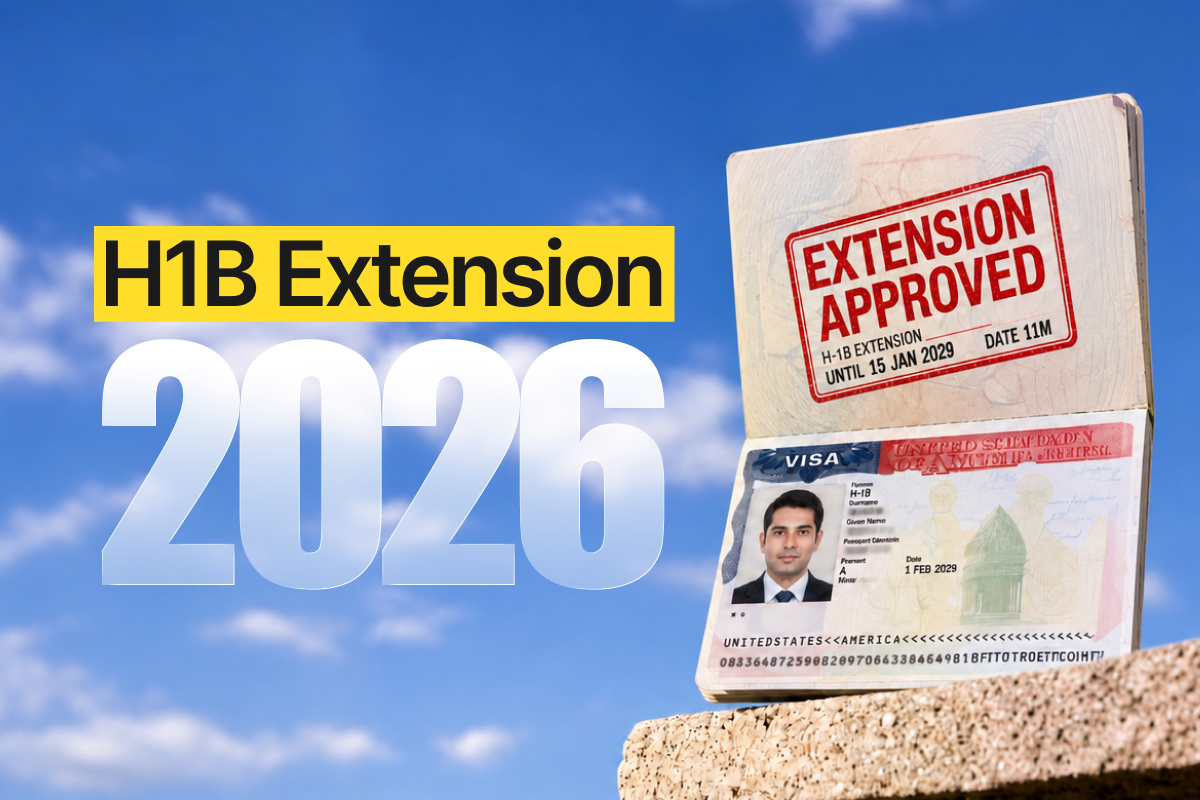
Your H-1B approval is getting close to its expiration date. Now you need to figure out when your employer should file the extension, how long USCIS might take, and whether you can keep working while the petition is pending.
The good news is that most H-1B workers can request an extension through their employer. But timing matters. A late filing, an expiring I-94, or a misunderstanding of the six-year limit can complicate your plans.
Here's what you need to know about the H-1B extension process in 2026, including the filing timeline, processing options, the 240-day rule, and ways some workers can extend their stay beyond six years.
What Is an H-1B Extension?
An H-1B extension allows an eligible worker to continue working in the United States in H-1B status beyond their current authorized period. The employer generally requests the extension by filing Form I-129, Petition for a Nonimmigrant Worker, with U.S. Citizenship and Immigration Services (USCIS).
Most H-1B workers receive an initial period of up to three years. Eligible workers can generally request another period of up to three years, subject to the overall six-year limit and any applicable exceptions.
Your employer handles the petition. You will need to provide information and documents, but you cannot independently file an employment-based H-1B extension for yourself.
An extension with your current employer is also different from moving to a new employer. If you're changing jobs, the new employer generally needs to file a separate H-1B petition.
Official source: USCIS H-1B guidance
When Should You File an H-1B Extension?
Start talking to your employer's immigration team well before your current authorization expires. Gathering documents, preparing the Labor Condition Application (LCA), and completing the petition takes coordination. Leaving everything until the final weeks can create unnecessary pressure.
Before planning the filing date, check three things:
- Your current approval notice: Check the validity dates on your Form I-797 approval notice.
- Your I-94 record: Your authorized stay may depend on the I-94 record, so do not rely on the approval notice alone.
- Your employer's filing timeline: Ask when the immigration team plans to prepare and submit the extension petition.
What happens before the petition is filed?
Your employer generally needs a certified LCA from the Department of Labor before submitting the H-1B petition to USCIS. The LCA covers employment conditions such as the offered wage and work location.
The employer then prepares Form I-129 and the required supporting evidence. USCIS reviews the petition and decides whether to grant the requested extension.
The LCA has its own timing rules, including a restriction on submitting it more than six months before the employment period begins. Do not assume this automatically establishes the earliest permissible filing date for every extension petition. Ask the employer's immigration counsel to confirm the applicable filing window.
Your next step: Contact your employer's immigration team, confirm the expiration dates on your documents, and agree on a filing timeline before your current authorization runs out.
Official sources: Department of Labor H-1B program and USCIS Form I-129.
How Long Does an H-1B Extension Take in 2026?
H-1B extension processing time depends on USCIS workload, the petition category, and whether you request premium processing.
USCIS's historical national median data for fiscal year 2026, through August 30, 2026, reported the following times for Form I-129:
- Regular processing: 5.1 months.
- Premium processing: 0.6 months.
These are historical medians across the listed I-129 processing categories, not guaranteed timelines for an individual H-1B extension. Your case may take less or more time.
For the latest estimate, use the USCIS Case Processing Times tool. Select the appropriate form and category, and use the information on your receipt notice when checking your case.
Is premium processing worth it?
Premium processing is an optional service that requires an additional fee. It gives USCIS a shorter, defined timeframe to take qualifying action on a petition.
It can be useful when an employer needs a faster decision, but it does not guarantee approval. USCIS may approve the petition, deny it, or take another qualifying action under the applicable rules.
The fee and processing timeframe can change, so confirm the current requirements directly through USCIS premium processing.
One important point: faster processing and permission to keep working are two different questions. If your current authorization is close to expiring, ask your employer's immigration team about both.
What Is the 240-Day Rule for H-1B Extensions?
The 240-day rule can help eligible H-1B workers continue working for their current employer while a timely filed extension is pending.
Under the applicable rule, an employee whose employer files a qualifying extension before the current authorized period expires may generally continue working for that same employer for up to 240 days after the previous authorized period expires, or until USCIS decides the petition, whichever comes first.
For example, imagine your current authorized period expires on December 31 and your employer properly files the extension before that date. If the rule applies to your case, you may be able to continue working while USCIS processes the petition, even if the decision arrives after December 31.
But there are important limits.
- The extension must be filed on time and meet the applicable requirements.
- The rule does not guarantee that USCIS will approve the extension.
- If USCIS denies the petition, employment authorization under this rule ends when the denial is communicated.
- The rule is not a blanket extension of every aspect of your immigration status.
Do not assume that the 240-day period applies to a late filing, a different employer, or every unusual immigration situation. If your circumstances have changed, get advice from qualified immigration counsel.
Official source: USCIS nonimmigrant services guidance.
Can You Extend an H-1B Beyond Six Years?
For most H-1B workers, the general maximum period is six years. But some workers may qualify for additional time under provisions of the American Competitiveness in the Twenty-First Century Act (AC21).
Eligibility depends on the details of your employment-based immigration process. Having an approved I-140, for example, does not automatically mean that every worker qualifies for an extension beyond six years.
One-year extensions under AC21
Some workers may qualify for extensions in one-year increments if a qualifying labor-certification application or employment-based immigrant petition was filed at least 365 days before the relevant six-year limit.
These extensions can allow eligible workers to remain in H-1B status while their employment-based permanent residence process continues.
Three-year extensions under AC21
Certain workers may qualify for extensions in three-year increments when they have an approved I-140 immigrant petition but cannot proceed to permanent residence because an immigrant visa number is unavailable.
The exact requirements matter. The worker's petition history, visa availability, and other eligibility conditions need to be reviewed.
Can time outside the United States count toward an extension?
Potentially. Qualifying time spent physically outside the United States may be recaptured rather than counted toward the six-year maximum. This depends on the person's travel history and applicable rules.
Keep records of your trips, including dates of departure and return. Your employer's immigration team can assess whether the time may be recaptured and what evidence is needed.
If you are approaching your six-year limit, do not wait until your last few months to explore your options. Ask an immigration attorney to review your eligibility and timing.
Official source: USCIS employment-based immigration reference guide.
How Much Does an H-1B Extension Cost in 2026?
There is no single filing total that applies to every H-1B extension. The amount depends on the petition and the employer's circumstances, including applicable statutory fees and exemptions. Premium processing is an additional optional cost.
Your employer should confirm the applicable charges using the current USCIS Form I-129 instructions and fee schedule before submitting the petition.
There is also an important 2026 change to understand. A federal rule effective in September 2026 expanded the 9/11 Response and Biometric Entry-Exit Fee requirement to cover H-1B extension-of-status petitions, including some extensions that do not involve a change of employer. Whether a particular fee applies depends on the petition and the relevant rules.
Do not automatically add the separate $100,000 H-1B payment discussed in recent policy coverage to the cost of an ordinary extension. Its scope and current legal status need to be assessed separately, based on the latest official rules and court orders.
For current fee information, check USCIS filing fees and Form I-129. You can also read our existing H-1B $100,000 fee guide for background.
What If You're Changing Employers Instead?
An H-1B extension with your current employer is not the same as moving to a new company. A new employer generally needs to file its own H-1B petition, and different rules may govern when you can start the new job.
If you're searching for a new role while your current H-1B is approaching expiration, do not assume that an extension filed by your existing employer will cover your future employment with another company.
Read our guide to H-1B transfers while job searching for more on the process.
Frequently Asked Questions About H-1B Extensions
How early can you file an H-1B extension?
Start preparing with your employer well before your current authorized stay expires. The employer must follow the applicable petition and LCA filing rules. Confirm the earliest permissible filing date with the employer's immigration counsel rather than relying on a general six-month rule without checking your circumstances.
Can you keep working while an H-1B extension is pending?
Eligible workers may generally continue working for the same employer for up to 240 days after their current authorized period expires if the employer timely files a qualifying extension. The rule has conditions and does not guarantee approval.
Does an H-1B extension require a new lottery?
A typical extension with the same employer for a worker already counted against the H-1B cap generally does not require a new lottery selection. Different rules may apply in other situations, including certain changes in employment circumstances.
Can you extend an H-1B with an approved I-140?
An approved I-140 may help certain workers qualify for extensions beyond the usual six-year limit if the applicable requirements are met. Approval alone does not automatically establish eligibility.
What happens if USCIS denies your H-1B extension?
The consequences depend on your circumstances and the decision. If you were relying on the 240-day rule, your employment authorization under that rule ends when the denial is communicated. Contact your employer's immigration counsel promptly to understand the implications for your work and status.
Plan Before Your H-1B Expires
An H-1B extension is easier to manage when you understand your dates, coordinate with your employer early, and know whether the 240-day rule or an exception to the six-year limit may apply.
Check your current approval and I-94, ask your employer about the filing schedule, and confirm current fees and processing times through USCIS.
This article provides general information, not legal advice. Immigration rules and individual circumstances vary. Consult a qualified immigration attorney for advice about your case.