
Top In-Demand Skills of 2026 (Tech + Soft Skills)

Sarah Mitchell
April 20, 2026

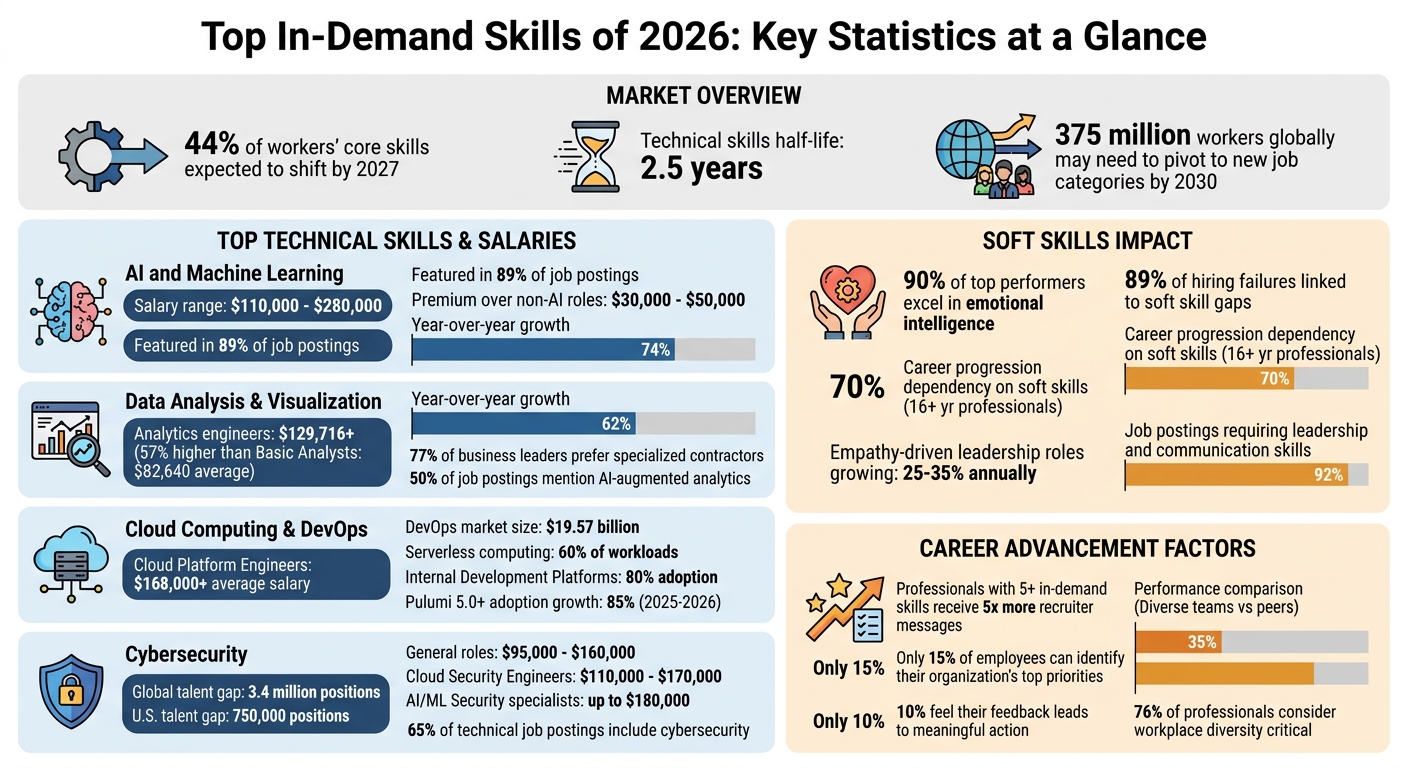
By 2026, the job market is transforming at an unprecedented pace, with nearly half of workers' core skills expected to shift by 2027. To remain competitive, professionals must focus on acquiring both technical and soft skills that align with emerging trends. Key highlights include:
- AI and Machine Learning (AI/ML): Featured in 89% of job postings, with salaries $30,000–$50,000 higher than non-AI roles.
- Data Analysis and Visualization: Advanced analytics roles command 57% higher pay than basic analyst positions.
- Cloud Computing and DevOps: Cloud engineers earn over $168,000 annually, driven by multi-cloud expertise and automation tools.
- Cybersecurity: A 3.4 million global talent gap creates demand for roles paying up to $180,000.
- Soft Skills: Emotional intelligence, critical thinking, and digital communication are essential for leadership and collaboration.
Continuous learning is crucial as technical skills have a half-life of just 2.5 years. Platforms like Scale.jobs offer human-assisted resume services to help professionals showcase their expertise effectively. Whether you're targeting technical roles or leadership positions, aligning your skills with these trends is key to thriving in the evolving job market.
Top In-Demand Skills 2026: Salary Comparison and Market Growth Statistics
1. Artificial Intelligence and Machine Learning
Why AI/ML Skills Command Premium Salaries in 2026
In 2026, expertise in artificial intelligence (AI) and machine learning (ML) stands out as one of the most lucrative skill sets in the job market. Professionals in AI/ML roles are earning impressive salaries ranging from $110,000 to $280,000, which is up to $50,000 higher than comparable non-AI roles. With a 74% year-over-year growth in these positions, the demand for AI/ML specialists has reached extraordinary levels.
Employers are increasingly looking for AI engineers who can adapt pre-trained models for practical, production-ready applications. The focus has shifted from traditional ML engineering to creating systems that leverage existing models effectively. Skills in areas like Retrieval-Augmented Generation (RAG) systems, agent pipelines, and evaluation frameworks are particularly in demand. Companies need professionals who can validate, manage, and ethically oversee AI outputs, rather than simply generate them.
One of the most critical abilities in the field is refining and verifying AI-generated code to ensure security and high performance. As AI takes on more coding tasks, the ability to analyze, validate, and enhance that output has become a highly sought-after skill. To stand out, consider building a portfolio that highlights functional RAG systems or agents integrated with Model Context Protocol (MCP) on GitHub - these are exactly the kinds of projects hiring managers want to see.
If you're just starting, courses like Andrew Ng's Machine Learning Specialization or Fast.ai's Practical Deep Learning can provide a solid foundation. Focus on mastering Python libraries such as TensorFlow and PyTorch, along with complementary tools like SQL and Docker. While you can begin experimenting with AI projects early on, it typically takes around 6–9 months to establish a strong grasp of the fundamentals.
When preparing to transition into AI roles, make sure your portfolio and resume showcase these skills effectively. Services like the Virtual Assistant for Job Applications can help tailor your resume to highlight your expertise and make you stand out in this competitive field. Up next, we’ll delve into how advanced data analysis skills can further transform your career in 2026.
sbb-itb-564272e
2. Data Analysis and Visualization
Why Analytics Engineers Earn Approximately 57% More Than Basic Analysts
The field of data analysis has evolved far beyond spreadsheets and static reports. Employers now seek professionals capable of building scalable data pipelines, a shift reflected in the growing demand for analytics engineers. With Data Science and Analytics roles experiencing a 62% year-over-year growth as of 2026, the market has split into two distinct tiers. Basic analysts earn an average of $82,640 annually, while analytics engineers command salaries of $129,716 or more. This significant pay gap underscores the premium placed on expertise in managing large-scale data systems.
Today’s employers prioritize skills in tools like Snowflake, dbt, Spark, and Airflow, as automation increasingly handles basic dashboard creation. High-earning analytics professionals stand out by framing business challenges, coding analytical pipelines, and translating complex datasets into actionable insights for non-technical stakeholders. These capabilities are replacing the traditional drag-and-drop dashboard roles that once dominated the field.
Adding to this, the rise of fractional talent is reshaping hiring practices. A staggering 77% of business leaders now prefer hiring specialized contractors for data projects over generalist full-time employees. This trend presents opportunities for professionals who cultivate deep expertise in a specific tool, such as Python or Tableau, while maintaining a working knowledge of adjacent areas like product analytics or cloud infrastructure. Additionally, nearly 50% of data-related job postings now mention AI-augmented analytics platforms, emphasizing the need for candidates skilled in tools that detect anomalies and forecast trends automatically.
To stand out, build a GitHub portfolio showcasing end-to-end projects like predictive models, recommendation systems, A/B testing, and real-time dashboards. Make sure to include measurable business impact, such as reducing customer churn or driving strategic decisions. For those looking to refine their resumes, scale.jobs offers human-assisted services, including ATS-optimized documents and dedicated WhatsApp support - features that elevate it above competitors like LazyApply and FindMyProfession.
While certifications from platforms like Coursera Plus ($399/year) can provide structure, employers value demonstrable problem-solving skills even more. Highlight how you've used AI tools to automate data cleaning, enabling more time for strategic analysis - this is the skill that separates six-figure analytics engineers from entry-level analysts.
Looking ahead, understanding the intersection of cloud computing and DevOps will be essential for technical roles. Platforms like scale.jobs provide tailored support to help professionals navigate these shifts, offering services that outperform alternatives like LazyApply and FindMyProfession.
3. Cloud Computing and DevOps
Why Cloud Platform Engineers Command $168,000+ in 2026
The role of Cloud Platform Engineers is becoming one of the most sought-after in the tech world, with salaries surpassing $168,000 by 2026. This demand stems from the fusion of cloud architecture and DevOps expertise, as businesses increasingly rely on advanced cloud computing to stay competitive. With the global DevOps market projected to hit $19.57 billion, professionals adept at managing cloud infrastructure and automating workflows are earning far more than those sticking to outdated IT methods.
To thrive in this field, multi-cloud expertise is now a baseline requirement. Engineers are expected to navigate at least two major platforms like AWS, Azure, or Google Cloud. Serverless computing is also reshaping the landscape, with platforms such as AWS Fargate and Google Cloud Run handling 60% of workloads. Additionally, Internal Development Platforms (IDPs) have become mainstream, adopted by 80% of software organizations to improve developer efficiency. For example, Goldman Sachs leverages GitOps principles to manage over 5,000 microservices across multiple clouds, completing upwards of 2,000 deployments daily with an impressive 99.97% success rate.
Programming skills are now non-negotiable in this space. Languages like Python and Go are essential for writing infrastructure code and creating automation scripts. Tools like Pulumi and OpenTofu have revolutionized infrastructure deployment. Pulumi 5.0+ adoption grew by 85% between 2025 and 2026, while OpenTofu captured 40% of the market after changes to Terraform's licensing. Employers now seek engineers who can script, automate, and scale infrastructure with precision.
Certifications remain a powerful way to boost earning potential, provided they are backed by real-world skills. For instance, professionals holding the AWS Solutions Architect – Associate certification (costing $150) typically earn 20–25% more. Kubernetes certifications, such as CKA and CKAD, are also highly valued, with adoption rates surging by 68%. Pulumi 5.0+ is another standout, seeing an 85% increase in usage. Emerging AI-focused certifications, like the AWS Certified AI Practitioner, are becoming key differentiators in the job market. A structured 90-day learning plan could include mastering Kubernetes in the first month, focusing on Platform Engineering or Cloud Security in the second, and completing a portfolio project in the third.
For those transitioning into cloud roles or upgrading their credentials, presenting your skills effectively is crucial. Tailored resume writing services can help highlight your cloud certifications, GitHub projects, and deployment successes in a way that resonates with hiring managers. Unlike automated tools, these services ensure your expertise is showcased for maximum impact in today’s rapidly evolving tech industry.
Up next, we’ll dive into how cybersecurity builds on cloud computing skills to protect modern infrastructures.
4. Cybersecurity
Why Cybersecurity Roles Command Premium Salaries Amid a 3.4 Million Talent Gap
Cybersecurity is no longer just a technical field - it’s a critical business function. By 2026, 65% of technical job postings will include cybersecurity as a core skill. Yet, the industry faces a staggering shortage of talent, with 3.4 million positions unfilled globally, including 750,000 in the U.S. alone. This imbalance creates immense opportunities for professionals with expertise in areas like cloud security, incident response, and zero-trust architecture. These skills not only drive higher salaries but also demand precision in how job seekers present their credentials. Platforms like Scale.jobs excel in this area, offering human-assisted resume services that outperform automated tools like LazyApply.
Salary Trends in Cybersecurity
The talent shortage has pushed salaries to impressive levels. General cybersecurity roles typically pay between $95,000 and $160,000, while specialists, such as Cloud Security Engineers, earn $110,000 to $170,000. For professionals focusing on AI and Machine Learning Security - addressing challenges like prompt injection and training data poisoning - salaries can climb to $180,000, with demand in this niche growing 74% year-over-year. Those combining cloud expertise with DevSecOps skills often see a 20%–35% salary boost compared to standard DevOps roles.
Building a Strong Foundation: Certifications and Skills
Breaking into cybersecurity starts with essential certifications. Foundational credentials such as CompTIA Security+ (around $350–$500 per exam) or ISC2 Certified in Cybersecurity (CC) are ideal for beginners. For cloud-focused roles, certifications like AWS Security or Azure Security Engineer are highly sought after. Advanced professionals often pursue CISSP for architecture-related roles or OSCP for penetration testing.
Key technical skills include proficiency in tools like Splunk for incident response and programming languages such as Python, Linux, and SQL. Additionally, familiarity with the OWASP Top 10 for LLM Applications is becoming essential as AI systems introduce new security challenges. Platforms like Scale.jobs help cybersecurity professionals highlight these credentials effectively, ensuring their resumes align with employer expectations and pass ATS filters.
Emerging Trends in Cybersecurity
Employers are increasingly prioritizing expertise in regulatory compliance. Professionals familiar with frameworks like GDPR, SOC 2, and ISO 27001 are in high demand as global data protection laws tighten. Meanwhile, the shift toward zero-trust architecture - which assumes no user or system is inherently trusted - has become a cornerstone of modern cybersecurity strategies. With identity compromise now the leading attack vector, organizations are adopting phishing-resistant multi-factor authentication methods such as FIDO2 and passkeys.
Stand Out in the Cybersecurity Job Market
For those transitioning into cybersecurity or enhancing their credentials, it’s crucial to map certifications, lab experience, and real-world incident response work to employer needs. Scale.jobs specializes in creating tailored, human-assisted resumes that effectively translate technical achievements into recruiter-friendly language. Whether you’ve implemented zero-trust policies or managed complex security incidents, their services ensure your resume stands out and meets ATS requirements.
Why Choose Scale.jobs for Cybersecurity Resumes?
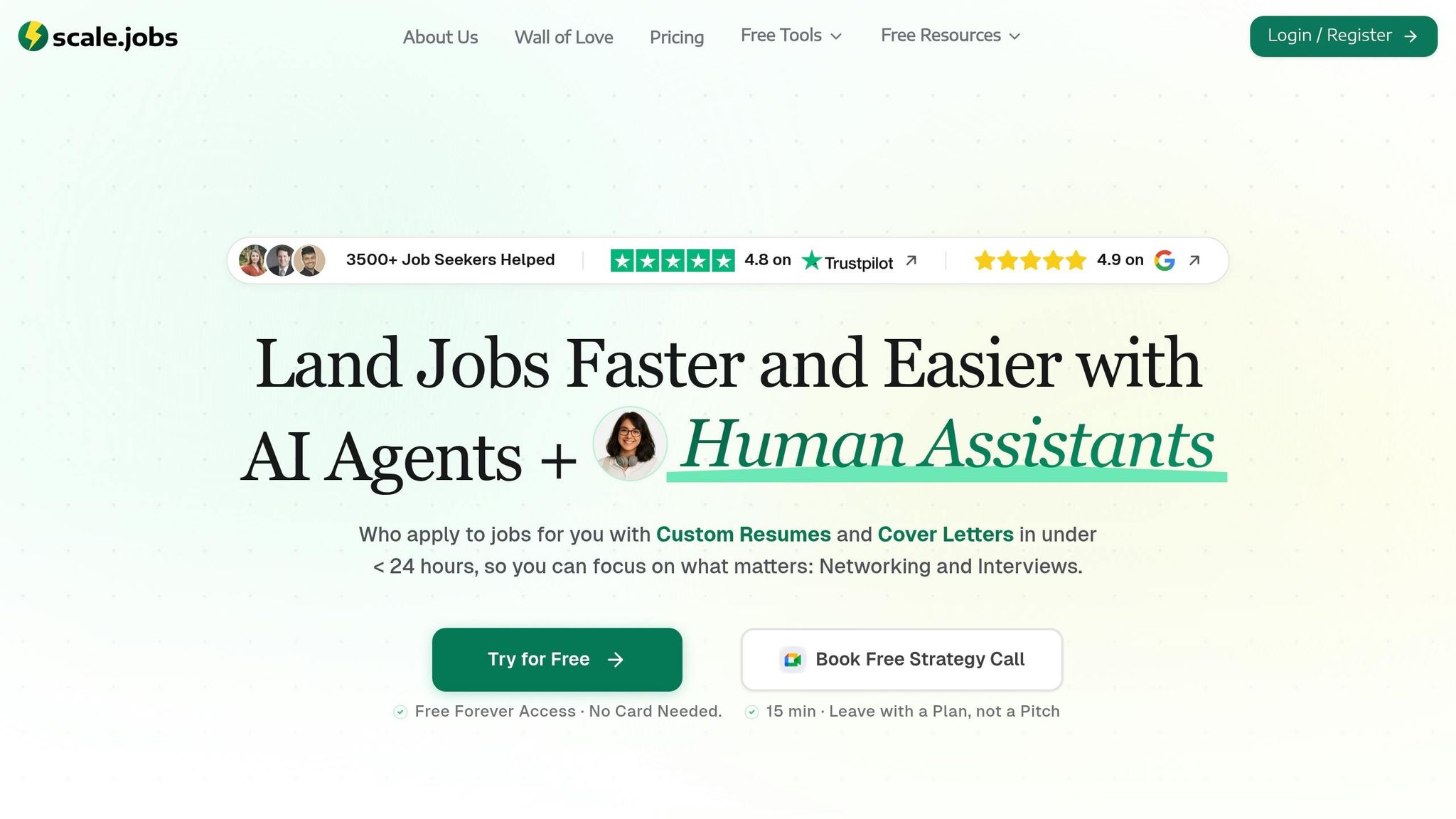
- Human-assisted customization to present cybersecurity credentials effectively
- ATS-optimized resumes for better application outcomes
- One-time payment model with dedicated WhatsApp support
- Clear focus on showcasing technical projects like incident response
- Expertise in translating technical jargon into language that resonates with hiring managers
If you're ready to elevate your cybersecurity career, ensuring your resume highlights the right skills and achievements is critical. Platforms like Scale.jobs can give you a competitive edge in this rapidly evolving field.
5. Adaptability and Resilience
Why Learning Agility Now Matters More Than Years of Experience
The workplace is changing at a pace that’s hard to ignore. By 2027, 44% of workers' core skills will undergo significant shifts, and by 2030, 375 million workers globally may need to pivot to entirely new job categories due to automation. In this landscape, adaptability has become the ultimate career survival skill. Employers increasingly value learning agility - the ability to quickly acquire new skills and embrace change - over traditional markers like years of experience in legacy systems. For instance, professionals who showcase five or more in-demand skills on their LinkedIn profiles are receiving five times more recruiter messages. This trend highlights the growing demand for individuals who can navigate shifting priorities, adopt new technologies, and deliver results even in uncertain environments.
Resilience isn’t just about weathering challenges; it’s about actively stepping out of your comfort zone. Whether it’s an introvert tackling public speaking or a technical expert leading cross-functional teams, these experiences build the mental flexibility that today’s employers are looking for. Simple practices like regularly altering your daily routines or reading outside your primary field can spark new mental connections, improving your ability to solve problems in ambiguous situations. A structured approach, like the IDEAL Method - Identify the problem, Define goals, Explore solutions, Act, and Look back to learn - can help you navigate challenges more effectively while showcasing your adaptability.
When it comes to demonstrating adaptability, your resume can be a powerful tool. Unlike platforms like LazyApply that rely heavily on automation, Scale.jobs integrates human expertise to create ATS-optimized resumes. These resumes highlight how you’ve embraced change and achieved measurable outcomes, making your learning agility stand out to potential employers. As we approach 2026, the job market increasingly favors professionals who combine deep technical skills with the ability to adapt across digital tools and interpersonal challenges.
Seeking continuous feedback is another way to build resilience. Implementing insights from 360-degree feedback loops not only accelerates personal growth but also signals to employers your willingness to evolve. In industries constantly reshaped by technology, the ability to transition from simply executing tasks to making decisions that address "messy real-world constraints" - issues that AI can’t fully resolve - can set you apart. This blend of adaptability, leadership, and collaboration skills is becoming essential for thriving in today’s ever-evolving work environment.
6. Emotional Intelligence
Why EQ Is the Leadership Differentiator in 2026
By 2026, emotional intelligence (EQ) has become a game-changer in leadership and career growth. While technical skills are crucial for getting hired, it’s EQ that determines long-term success. Research shows that 90% of top performers excel in emotional intelligence, making it an essential skill for career advancement. As AI takes over routine tasks like coding and data analysis, the ability to manage relationships, resolve conflicts, and build trust has become the hallmark of effective leaders.
Interestingly, 89% of hiring failures are linked to gaps in soft skills rather than technical expertise. For seasoned professionals with 16+ years of experience, soft skills, including emotional intelligence, account for 70% of career progression. The rise of People and Culture Leadership roles, growing at 25% to 35% annually, underscores the demand for empathy-driven leadership in what some call the "Empathy Economy." Unlike LazyApply's automated methods, Scale.jobs emphasizes human-assisted resume customization to highlight the EQ skills that hiring managers value most.
"The most effective leaders are all alike in one crucial way: They all have a high degree of what has come to be known as emotional intelligence. It's not that IQ and technical skills are irrelevant... they are the entry-level requirements for executive positions."
Practical Steps to Develop EQ
Developing emotional intelligence starts with intentional practice. Focus on these five key areas: self-awareness, self-regulation, internal motivation, empathy, and social skills. Here are some actionable ways to strengthen your EQ:
- Daily mindfulness practice: Spend 10 minutes meditating each day to enhance self-awareness and better manage emotional triggers.
- Reflective journaling: Document your reactions to workplace interactions, especially in remote settings where tone can be easily misinterpreted in emails or Slack messages.
- The "Digital Pause": Before responding to a message that seems curt, pause to consider whether the tone is being misread due to the lack of non-verbal cues.
Another effective method is seeking 360-degree feedback. Ask colleagues targeted questions like, "How have my actions impacted you?" to gain deeper insights into your social interactions. Leaders who excel in empathy are shown to perform 40% better in areas like coaching, decision-making, and team engagement. In hybrid work environments, take the extra step to ask the "second question." For example, if a teammate seems off during a virtual meeting, follow up with a more specific and empathetic inquiry to build trust.
Showcasing EQ in Job Applications
Highlighting your emotional intelligence in job applications can set you apart. Consider working with professional resume writers who know how to translate soft skills into measurable achievements that resonate with recruiters. Scale.jobs stands out from competitors like LazyApply by ensuring EQ-related accomplishments are clearly communicated in resumes. This human-driven approach ensures your interpersonal strengths are effectively showcased.
Scale.jobs vs. LazyApply for EQ-Focused Roles
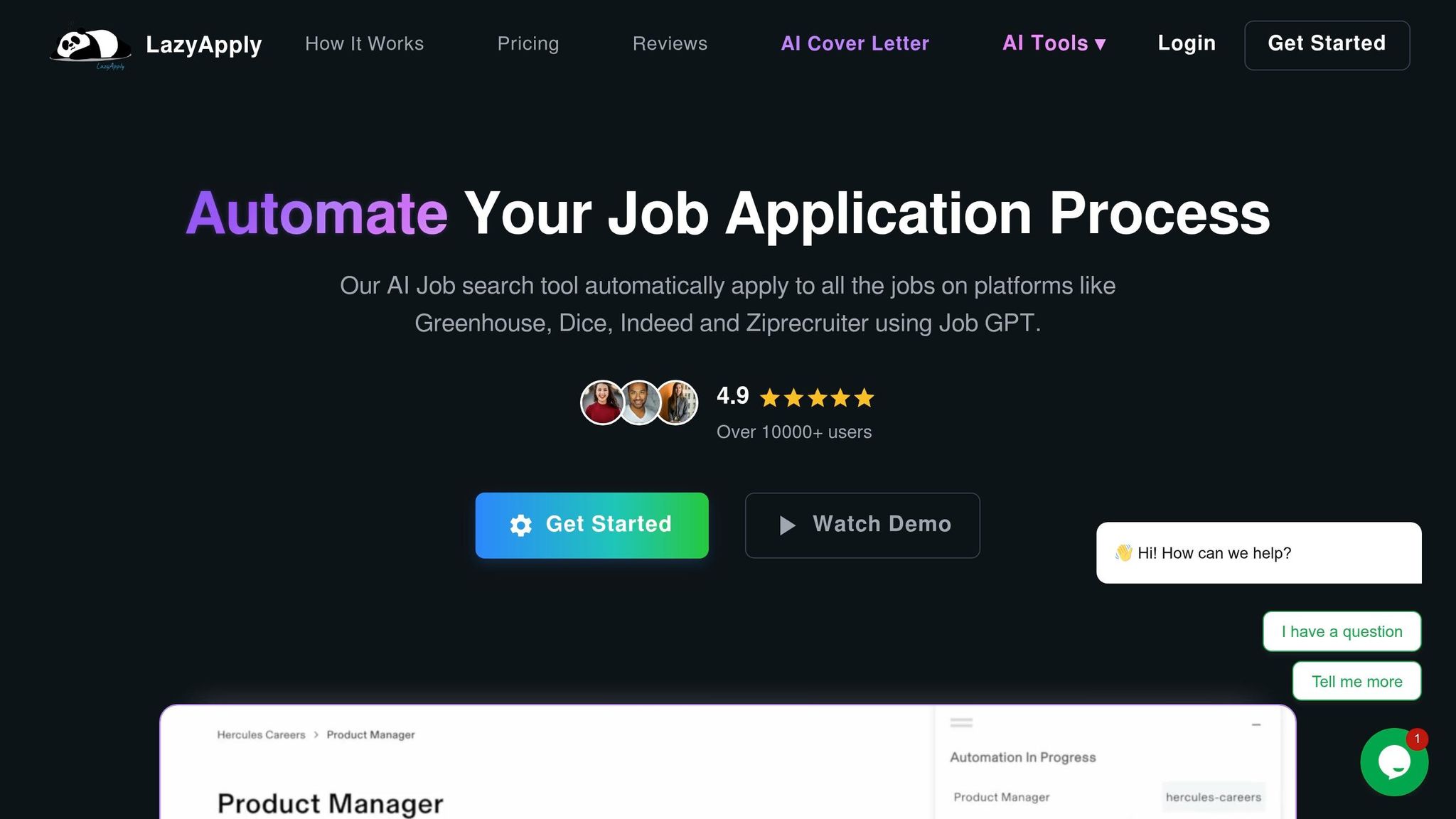
Here’s how Scale.jobs compares to LazyApply when it comes to emphasizing emotional intelligence in job applications:
- Human expertise: Scale.jobs uses professional writers to craft resumes that reflect nuanced EQ skills, while LazyApply relies on automation.
- Tailored customization: Human-assisted services highlight soft skill achievements, whereas automated templates often miss critical context.
- ATS optimization: Scale.jobs provides ATS-friendly resumes that retain EQ accomplishments while passing applicant tracking system filters.
- Pricing: Scale.jobs offers a one-time payment model with dedicated WhatsApp support, compared to LazyApply’s recurring subscription fees.
- Transparency: Scale.jobs provides clear documentation of every customization, unlike LazyApply’s automated, less transparent process.
Mastering emotional intelligence not only enhances interpersonal relationships but also positions you as a stronger leader. This skill is increasingly crucial for fostering collaboration and driving team success, as we’ll explore further in the next section.
7. Leadership and Team Collaboration
Why Leadership Shifted from Control to Connection
In 2026, leadership has evolved far beyond the traditional command-and-control model. Today, it’s about connection, clarity, and building momentum, particularly in complex and distributed work environments. This shift reflects the need for leaders to align teams around critical goals while fostering trust and collaboration. Surprisingly, only 15% of employees can identify their organization’s top priorities, and just 10% feel their feedback leads to meaningful action. These gaps highlight the importance of leaders who can bridge these divides effectively.
Unlike LazyApply’s automated resume templates, which often fail to capture the depth of leadership achievements, Scale.jobs focuses on human-assisted, ATS-optimized resumes that highlight your ability to lead and collaborate. This approach ensures your leadership qualities - like fostering team connection and delivering measurable results - stand out in a competitive job market.
The rise of Democratic Leadership is central to this transformation. By emphasizing shared ownership and collective intelligence over top-down decision-making, this style is particularly suited to hybrid and remote work environments. When leaders create a culture of psychological safety - where team members feel comfortable admitting mistakes and offering ideas without fear - collaboration and performance soar.
"While it's important to be visionary, inspiring, bold, clear and so forth - people often underestimate the simple power of kindness." - Richard Branson, Founder of Virgin Group
Practical Leadership Tactics for 2026
Creating high-performing teams requires more than just vision - it demands actionable strategies. Here are a few techniques leaders can use to enhance collaboration and drive results:
- "Stinky Fish" Technique: Use this exercise in team meetings to surface hidden concerns or unresolved issues, addressing them before they escalate.
- "Two-Way Door" Decisions: Differentiate between reversible and irreversible decisions, empowering teams to act quickly when decisions can be adjusted later.
- Ask Instead of Tell: Replace advice-giving with questions like, "What outcome are you aiming for?" or "What’s one obstacle in your way?" to encourage ownership and problem-solving.
- Accountability Check-ins: Regularly review commitments and track progress using visible scoreboards. Research indicates that employees who set at least four daily goals per week are 34% more likely to hit their targets.
- Asynchronous Work Optimization: In remote settings, prioritize focused work time and leverage digital tools for feedback, avoiding constant status updates.
Showcasing Leadership in Your Job Search
If you’re aiming for leadership roles, your resume must highlight measurable team contributions and collaboration. As organizations increasingly value distributed decision-making and lateral leadership - where influence extends beyond formal authority - your ability to showcase these traits becomes crucial.
While LazyApply’s automated tools offer basic resume edits, Scale.jobs provides tailored, human-driven services that emphasize leadership impact. Lateral leadership, a skill essential in flat organizational structures, often goes unnoticed in generic templates. Considering that 92% of job postings require leadership and communication skills, it’s vital to position these abilities prominently in your application.
LazyApply vs. Scale.jobs: Leadership Resume Comparison
| Feature | LazyApply | Scale.jobs |
|---|---|---|
| Human Involvement | Automated templates with minimal customization | Dedicated human assistants craft each resume |
| Resume Customization Depth | Generic edits; overlooks nuanced leadership achievements | Deep customization highlighting lateral leadership, team impact, and measurable outcomes |
| ATS Handling | Basic keyword insertion | ATS-optimized documents with strategic keyword placement |
| Application Execution Method | Mass automation with limited personalization | Human-powered application with tailored positioning |
| Transparency and Proof of Work | Limited visibility into process | Complete proof-of-work documentation for every service |
| Pricing Model | Recurring subscription fees | One-time payment with dedicated WhatsApp support |
Why Scale.jobs Wins for Leadership Roles
- Human expertise ensures your leadership achievements are translated into language that resonates with recruiters.
- ATS-optimized resumes showcase your collaboration and leadership impact while passing screening systems.
- Dedicated support via WhatsApp offers real-time guidance for presenting your leadership experience effectively.
- Transparent process provides clear documentation of how your resume is tailored to highlight your strengths.
- One-time payment eliminates ongoing costs, delivering premium customization without recurring fees.
Who Should Use LazyApply
LazyApply could be a fit for:
- Entry-level candidates applying to high-volume, non-leadership positions.
- Job seekers focused on sending out a large number of applications quickly.
- Individuals with straightforward resumes that don’t require in-depth customization.
Who Should Choose Scale.jobs
Scale.jobs is better suited for:
- Mid-to-senior professionals targeting leadership or management roles.
- Candidates with complex achievements in team collaboration and lateral leadership.
- Those transitioning into leadership positions who need strategic resume positioning.
- Professionals who value human expertise for critical career advancements.
Switch to Scale.jobs If…
- Your leadership achievements aren’t leading to interview invitations.
- You need to highlight lateral leadership or influence without formal authority.
- You’re applying for roles where collaboration and Democratic Leadership are priorities.
- You want ATS optimization that retains the depth of your leadership story.
- You prefer a transparent, human-assisted approach over automated systems.
With leadership skills well-positioned on your resume, the next section will explore how mastering critical thinking can further elevate your career prospects.
8. Critical Thinking and Problem Solving
Why Critical Thinking Stood Out in 2026
As automation reshaped the job market, critical thinking and problem-solving became essential skills for career longevity. While AI efficiently handles routine tasks, it lacks the human capacity for strategic decision-making, especially in areas involving social, emotional, and ethical considerations. Google's Project Oxygen highlighted critical thinking as the top predictor of employee success. With 44% of workers' core skills expected to shift by 2027, the ability to address complex challenges remains irreplaceable.
However, an over-reliance on AI has contributed to a decline in independent thinking. This highlights the importance of honing analytical skills. Dennis Berry, Founder of Elite Leaders, aptly noted:
"While technology can accelerate movement, only thinking can determine direction."
This distinction separates professionals who rely solely on automated outputs from those who apply thoughtful, strategic reasoning to their work.
Strategies to Enhance Problem-Solving
Structured methods can help professionals tackle challenges more effectively. Techniques like the IDEAL Method and the Five Whys allow individuals to dig deeper into issues, uncovering actionable solutions. For instance, a vague problem like "sales are down" can be reframed into a specific issue, such as a "pricing mismatch with competitors." This approach not only benefits workplace problem-solving but also strengthens resumes, making them stand out in competitive job markets. Tools like scale.jobs specialize in showcasing these skills through tailored resume customization.
Highlighting Critical Thinking on Your Resume
For positions that require strategic thinking, your resume should clearly illustrate your ability to analyze and resolve complex challenges. Unlike automated platforms like Simplify.jobs, professional services ensure your achievements are articulated in a way that resonates with applicant tracking systems (ATS). This is crucial, as 89% of hiring mistakes are linked to soft skill deficiencies rather than technical gaps.
scale.jobs excels at highlighting critical thinking by crafting resumes that showcase your ability to tackle ambiguity, identify root causes, and deliver impactful solutions. With a transparent process and a one-time payment model, they provide a personalized alternative to subscription-based, automated services.
Why scale.jobs Outperforms Simplify.jobs
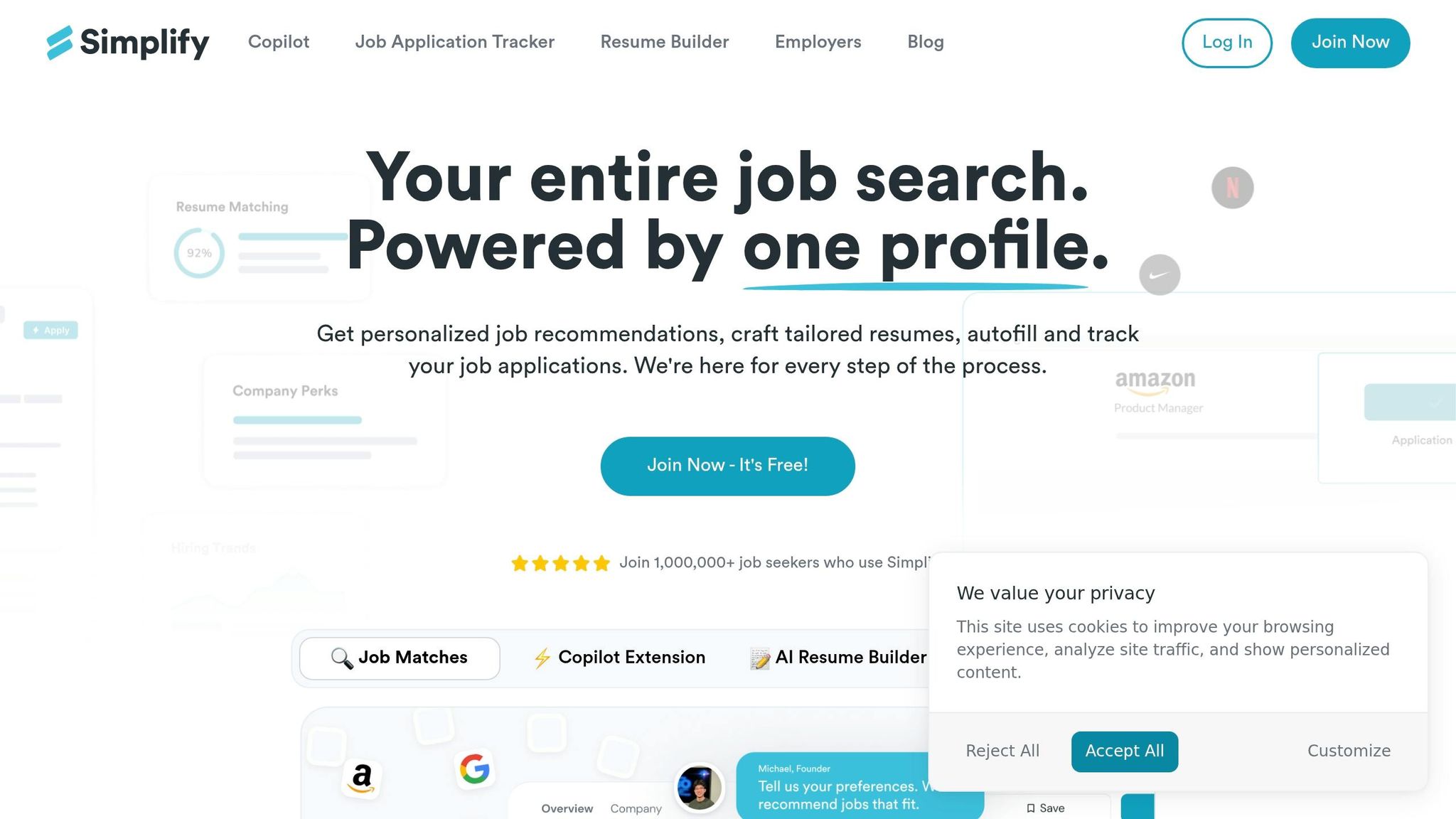
- Human Expertise: Dedicated professionals craft resumes that emphasize strategic thinking and problem-solving.
- ATS-Optimized Content: Resumes are tailored to meet ATS requirements, ensuring better visibility.
- Clear Documentation: Proof-of-work highlights your accomplishments transparently.
- One-Time Payment: Avoid recurring subscription fees with a straightforward pricing structure.
- Personalized Support: Get direct assistance via WhatsApp for any resume-related needs.
Simplify.jobs vs. scale.jobs: Who Should Choose What?
- Simplify.jobs: Best for those comfortable with automation and seeking standard resume formats.
- scale.jobs: Ideal for professionals targeting roles that require customized resumes emphasizing soft skills and critical thinking.
Comparison Table: scale.jobs vs. Simplify.jobs
| Feature | scale.jobs | Simplify.jobs |
|---|---|---|
| Human Expertise | In-depth, human-assisted customization | Automated process |
| Customization Depth | Tailored to highlight strategic skills | Basic, generic output |
| ATS Optimization | Expertly crafted for ATS | Standard ATS handling |
| Execution | Handcrafted resumes with strategic insights | Automated submissions |
| Transparency | Detailed, documented proof | Limited visibility |
| Pricing | One-time payment | Recurring subscription |
Why Choose scale.jobs?
- You need a resume that emphasizes strategic problem-solving and critical thinking.
- Automated tools don’t effectively capture the nuances of your achievements.
- You value clear documentation and human oversight.
- A one-time payment option aligns better with your budget.
- Dedicated, personalized support is essential to your job application process.
Final Thoughts
For roles demanding advanced critical thinking and problem-solving, scale.jobs offers a tailored, human-assisted resume service that ensures your skills shine. If your needs are more straightforward, Simplify.jobs may be a suitable automated option. Consider the complexity of your target roles and the level of customization you require when choosing between these platforms.
9. Digital Communication
Why Digital Communication Became Non-Negotiable in 2026
With remote and hybrid work environments becoming the norm in the U.S., digital communication has shifted from being a nice-to-have skill to a critical professional requirement. The stakes are clear: poor communication costs large companies $62.4 million annually in lost productivity and operational errors[1]. This financial impact highlights why employers increasingly value candidates who can distill complex ideas into clear, actionable insights, particularly for non-technical stakeholders. This shift sets the stage for examining how different industries prioritize communication skills.
Industries Leading the Digital Communication Demand
Different industries rely on specific communication strategies tailored to their operational needs. For example:
- Financial Services and Insurance: These sectors demand communication that ensures compliance and leverages AI-powered self-service tools and secure portals.
- Digital Marketing: Teams focus on hyper-personalized messaging and partnerships with creators, often through short-form video or AR/VR tools.
- Tech and Software: Professionals in these fields must excel in technical writing and cross-cultural collaboration, often using platforms like GitHub and specialized documentation tools.
One standout skill is "data storytelling", where professionals turn raw metrics from tools like Power BI or SQL into compelling narratives for stakeholders. This ability to connect technical data with business strategies has become indispensable, especially as 88% of companies integrated AI into at least one business function by 2025[2].
Showcasing Digital Communication on Your Resume
If you're targeting roles that emphasize digital communication, your resume should clearly demonstrate how you've simplified complexity and delivered clarity. Unlike the generic templates offered by LazyApply, using a professional resume service ensures your achievements are framed in ways that resonate with both ATS systems and hiring managers. For instance, instead of merely claiming "excellent communication skills", highlight specific accomplishments like creating technical documentation that reduced stakeholder confusion.
scale.jobs specializes in crafting resumes that emphasize digital communication skills through concrete examples and measurable results. Their approach ensures your expertise in managing remote teams, navigating multi-channel communication, and delivering presentations is presented with precision, backed by clear proof-of-work.
Why scale.jobs Outperforms LazyApply
- Human Oversight: Professional writers ensure your communication achievements are presented for maximum impact, unlike automated templates.
- Industry-Specific Keywords: Resumes are optimized with terms that pass ATS screening.
- Measurable Outcomes: Successes are detailed with specific, quantifiable results.
- One-Time Payment: Straightforward pricing with no recurring fees.
- Direct WhatsApp Support: Real-time access to resume specialists.
LazyApply vs. scale.jobs: Who Should Choose What?
- LazyApply: Best for candidates seeking high-volume, automated applications with minimal customization.
- scale.jobs: Ideal for professionals whose digital communication skills are central to their roles and require a tailored presentation.
Comparison Table: scale.jobs vs. LazyApply
| Feature | scale.jobs | LazyApply |
|---|---|---|
| Human Involvement | Specialists craft each resume | Automated process |
| Customization Depth | Tailored communication emphasis | Generic templates |
| ATS Handling | Industry keyword optimization | Basic compliance |
| Application Method | Hand-executed with context | Bot-driven mass applications |
| Transparency | Time-stamped proof screenshots | Limited visibility |
| Pricing | One-time campaign fees | Monthly subscription |
This table highlights how scale.jobs provides a more precise and personalized approach to showcasing digital communication skills.
Switch to scale.jobs If…
- Your target roles require proven expertise in multi-channel digital communication.
- Automated tools fail to effectively capture how you simplify technical concepts for business audiences.
- You need resumes that emphasize measurable communication outcomes.
- A transparent, human-assisted process aligns with your professional goals.
- You prefer one-time pricing over monthly subscription costs.
Decision Summary
For professionals whose digital communication skills are a key differentiator, scale.jobs offers customized resumes that highlight these abilities with clarity and precision. On the other hand, if your focus is on volume over depth, LazyApply's automated approach may meet your needs. The decision ultimately depends on whether your target roles prioritize communication depth or application quantity. Tailored resume strategies, combined with strong digital communication skills, can significantly enhance your career prospects in today’s competitive job market.
10. Cultural Competence
Why Cultural Competence Became a Business Imperative
In 2026, cultural competence has emerged as a key factor in business success, sitting alongside the technical and interpersonal skills that are reshaping the job market. Companies now assess "inclusion capacity", a measure of how well teams can adapt to diverse cultural norms without compromising productivity or trust. The financial benefits are clear: businesses with racially and ethnically diverse teams outperform their peers by up to 35%. Additionally, 76% of professionals now consider workplace diversity a critical factor when deciding on job offers. This trend signals a shift from basic diversity training to integrating cultural intelligence into everyday workflows, reflecting the increasing importance of global collaboration.
Industries Where Cultural Competence Drives Career Growth
Cultural competence plays a pivotal role across various industries, each with unique applications:
- Technology and Design: UX/UI professionals must create products that are inclusive and accessible for a global audience.
- Healthcare: Roles such as Registered Nurses and Medical Assistants rely on cultural awareness to educate diverse patient groups and guide families through complex medical decisions.
- Marketing and Creative Services: Success in these fields hinges on understanding cultural nuances to craft brand identities and customer experiences that resonate with diverse audiences.
In fact, 73% of executives say that cultural understanding is more critical today than it was three years ago. Highlighting this skill effectively on a resume is essential, and platforms like scale.jobs excel at showcasing such competencies in a way that stands out to employers.
Showcasing Cultural Competence on Your Resume
For roles requiring global collaboration or engagement with diverse populations, your resume must go beyond listing "cultural competence" as a skill. It’s about demonstrating how this ability has led to tangible results. Generic resume builders, such as Resume.io, often fail to capture this depth, offering only surface-level mentions of cultural awareness.
On the other hand, professional services like scale.jobs focus on translating your experiences into impactful resume language. For instance, they can highlight how you managed cross-cultural teams, minimized miscommunication, or developed solutions tailored to multicultural audiences. With their human-assisted approach, ATS-friendly formatting, and industry-specific keywords, scale.jobs ensures your accomplishments are presented with clarity and precision.
Resume.io vs. scale.jobs: Comparison
| Feature | scale.jobs | Resume.io |
|---|---|---|
| Human Involvement | Specialists craft each resume | Template-based builder |
| Customization Depth | Highlights measurable outcomes of cultural competence | Generic skill listings |
| ATS Handling | Optimized for industry-specific keywords | Basic formatting compliance |
| Application Method | Hand-executed with context | DIY self-service |
| Transparency | Time-stamped proof-of-work | No proof-of-work |
| Pricing | One-time campaign fees | Monthly subscription |
Who Should Use Resume.io vs. scale.jobs
Resume.io is a good fit for entry-level candidates or those comfortable drafting their own resumes using templates. It works well for roles where cultural competence isn't a primary focus.
scale.jobs, however, is ideal for professionals whose roles demand a strong emphasis on cultural intelligence. This includes global team leaders, UX designers creating for diverse markets, healthcare providers serving multicultural communities, and marketers crafting inclusive campaigns. Their human-assisted, one-time pricing model delivers tailored resumes that effectively communicate these skills.
Switch to scale.jobs If…
- Your target roles involve managing cross-cultural teams or stakeholders.
- Automated tools fail to capture the real-world impact of your cultural intelligence.
- You want measurable outcomes from inclusive practices highlighted on your resume.
- You prefer human oversight and transparency over automated templates.
- A one-time payment structure suits your budget better than recurring subscriptions.
Decision Summary
For professionals whose career success hinges on cultural competence, scale.jobs offers a personalized approach to resume writing, showcasing this vital skill with concrete examples and industry-specific framing. If your needs are more basic and you’re comfortable handling your own content, Resume.io may suffice. Ultimately, the choice depends on whether your next role requires a deep demonstration of cultural intelligence or a simple acknowledgment of diversity awareness. As the job market evolves, cultural competence is increasingly essential for staying competitive in 2026 and beyond.
LinkedIn Unveils Most In-Demand Jobs Skills in 2026
Conclusion
The job market of 2026 is shaping up to reward professionals who combine technical expertise with well-developed interpersonal skills. High-demand areas like AI/ML, cloud computing, and cybersecurity are offering salaries that outpace non-specialized roles by $30,000–$50,000. However, technical skills alone won't guarantee success. Research shows that 89% of hiring failures are due to gaps in soft skills, and 70% of career advancement for senior professionals hinges on their ability to connect and collaborate effectively.
The pace of change is accelerating. By 2027, 44% of workers' core skills will face disruption, and the half-life of technical skills has dropped to just 2.5 years. This underscores the importance of adaptability and continuous learning over relying solely on certifications. For example, professionals with five or more sought-after skills on their profiles are five times more likely to be contacted by recruiters - but only if those skills are demonstrated through tangible achievements rather than generic buzzwords. Leveraging human-assisted resume tools can make a significant difference in showcasing these outcomes effectively.
Now is the time to act. Consider earning micro-credentials through platforms like Coursera Plus (at $399 annually) or take advantage of Udemy's frequent sales, where courses range from $10 to $15. Certifications such as AWS Certified Cloud Practitioner, CompTIA Security+, or Google Data Analytics can validate your expertise and help you stand out. Set quarterly goals to audit and refine your skills based on job postings, and use the STAR method (Situation, Task, Action, Result) to document your professional growth.
As the job market evolves, your resume needs to evolve with it. Standard templates won't capture the nuances of your achievements, such as how you've applied cultural intelligence to solve business challenges or how your AI expertise has led to measurable results. For this, human-assisted, ATS-optimized services like scale.jobs can give you a competitive edge over automated tools like LazyApply and Simplify.jobs. These services ensure your resume reflects both technical depth and human-centric skills, making it a powerful tool for your next career move.
Rather than shrinking, the job market is restructuring. While automation is reducing roles in some areas, companies are aggressively hiring in fields like AI/ML, cybersecurity, and platform engineering. To remain competitive, position yourself at the intersection of technical expertise and soft skills. If you’re looking for a resume service that prioritizes human oversight, clear results, and a one-time payment model over subscription-based alternatives, scale.jobs offers a compelling solution. By aligning your skills and resume with these market demands, you’ll be well-prepared to thrive in this rapidly changing landscape.
FAQs
Which skill should I learn first for 2026?
When considering the best skill to develop for 2026, it largely depends on your career aspirations. However, fields like AI and data analysis stand out as key areas to prioritize. Gaining proficiency in AI literacy, generative AI, and essential tools like SQL and Python can position you for success. Foundational skills such as prompt engineering and model fine-tuning are particularly sought after, as they align with the increasing demand for AI expertise and provide a solid foundation for job security in an AI-dominated landscape.
How can I showcase these skills on my resume?
When presenting your skills, it's crucial to focus on measurable achievements, relevant certifications, and hands-on experience. Employers value candidates who can demonstrate their abilities through tangible results and practical examples.
Highlight Measurable Achievements
Instead of listing duties, emphasize what you’ve accomplished. For instance, if you managed a project, mention how it impacted the company. Did you improve efficiency by 25%? Increase revenue by $50,000? Numbers make your claims more compelling.
Include Relevant Certifications
Certifications can set you apart, especially in technical roles. Credentials like AWS Certified Solutions Architect, Certified ScrumMaster, or Python Institute Certifications show your commitment to mastering industry tools and practices. These certifications not only validate your expertise but also align with what many employers are seeking.
Showcase Practical Experience
Tie your experience to real-world outcomes. For example, mention specific projects you’ve worked on, such as developing a machine learning model that improved prediction accuracy by 15% or leading a team to deliver a software product ahead of schedule. Mentioning results makes your experience relatable and impactful.
Soft Skills Matter, Too
Don’t overlook soft skills - they’re often what make you stand out. Provide examples that illustrate your strengths, like leading a team through a challenging transition, adapting to a new role quickly, or collaborating across departments to achieve a shared goal.
Use Job-Specific Keywords
Tailor your resume or profile to the job description by naturally integrating relevant keywords. If the role prioritizes skills like "data analysis", "cloud computing", or "project management", ensure these terms appear seamlessly within your descriptions.
Add a Portfolio or GitHub Link
Nothing speaks louder than proof. Include links to your portfolio, GitHub, or other platforms where recruiters can see your work firsthand. Whether it’s a design portfolio, a coding repository, or a case study, these examples provide concrete evidence of your skills and achievements.
By combining measurable results, certifications, and examples of both hard and soft skills, you’ll create a compelling narrative that resonates with hiring managers. This approach not only highlights your expertise but also demonstrates your readiness to contribute meaningfully to their team. For additional support, consider tools like an AI resume builder or a job search virtual assistant to refine your application materials.
Are certifications worth it in 2026?
Certifications continue to hold value in 2026, particularly in areas like AI, cloud computing, cybersecurity, and data analysis. They serve as proof of proficiency in cutting-edge technologies, giving professionals an edge in competitive job markets. That said, their true impact lies in being combined with hands-on experience and a solid portfolio. While practical skills often outweigh traditional degrees, certifications remain a smart way to demonstrate expertise and align your career with future industry demands.