
Is Simplify.Jobs Worth the MONEY? Scale.Jobs Alternative

Sarah Mitchell
May 15, 2025
Looking for an easy way to apply for jobs? Here’s the quick answer:
Simplify.jobs uses AI for automation, while Scale.jobs relies on human assistants for a personalized touch. Each has its pros and cons, but Scale.jobs stands out for its hands-on service and high success rate (93% of users land jobs in 3 months).
Key Takeaways:
-
Simplify.jobs:
- AI-powered tools for autofilling applications and resume building.
- Free and premium subscription options.
- Best for budget-conscious users who are comfortable with automation.
-
Scale.jobs:
- Real humans handle applications, resumes, and cover letters.
- One-time payment starting at $199.
- Ideal for those who value personalized service and measurable results.
Quick Comparison:
| Feature | Simplify.jobs | Scale.jobs |
|---|---|---|
| Application Process | AI automation | Human assistants |
| Pricing Model | Free & subscription (Simplify+) | One-time payment ($199-$1,099) |
| Success Rate | Not disclosed | 93% secure jobs in 3 months |
| Application Limit | Unlimited (premium) | 250-1,000 (based on plan) |
| Support | Email/FAQ | Real-time WhatsApp updates |
| Refund Policy | Not specified | 70% refund if no job in 30 days |
Bottom Line:
Choose Simplify.jobs for a low-cost, automated solution. Opt for Scale.jobs if you want personalized service and higher success rates.
What Simplify.jobs Offers
Main Tools and Features
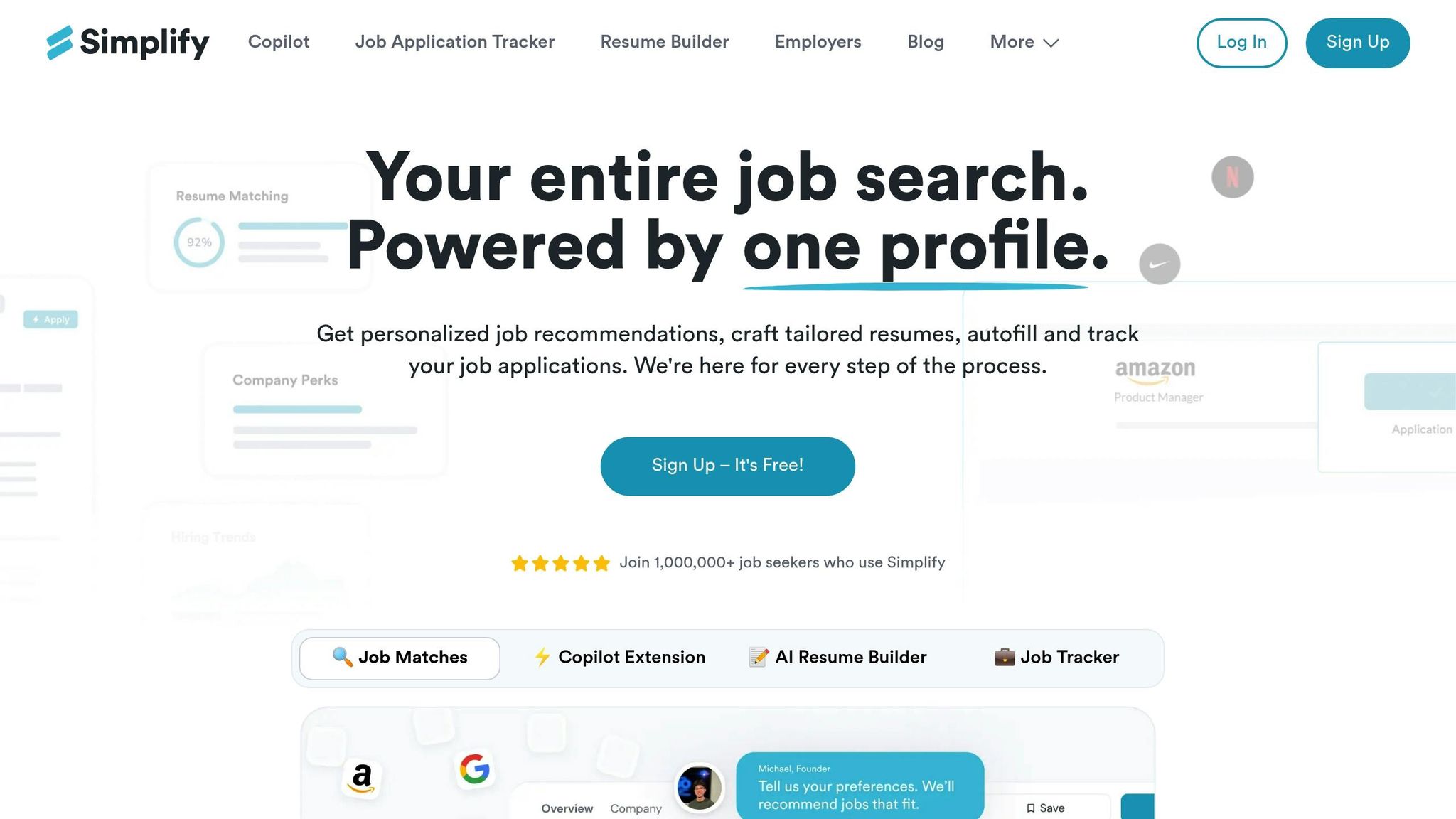
Simplify.jobs provides a suite of AI-driven tools designed to streamline the job application process. One standout feature is the Simplify Copilot Chrome extension, which automates applications on popular job boards. Another key tool is the AI resume builder, which optimizes resumes for Applicant Tracking Systems (ATS) by focusing on keyword alignment and proper formatting.
"Get personalized job recommendations, craft tailored resumes, autofill and track your job applications. We're here for every step of the process." - Simplify
The platform also includes a job tracking system that consolidates applications from over 20,000 company career pages into a single, easy-to-use dashboard. Other helpful tools include an ATS score checker, a cover letter generator, and networking resources.
Monthly Cost Analysis
Simplify.jobs offers a free base version, which includes unlimited job tracking. For those seeking advanced features, there’s the premium Simplify+ subscription. Pricing details can be found directly on their website.
Known Problems
No major issues have been widely reported. Many users praise the platform for its time-saving capabilities. One user shared:
"I've saved hours of time that I would've spent re-typing my resume on job applications." - Rio, Business Analyst
These features and tools position Simplify.jobs as a strong option for job seekers, setting the groundwork for a comparison with scale.jobs’s human-focused approach.
Apply to Jobs Faster with Simplify jobs (Job Search Hack 2025)
Scale.jobs: A Better Choice
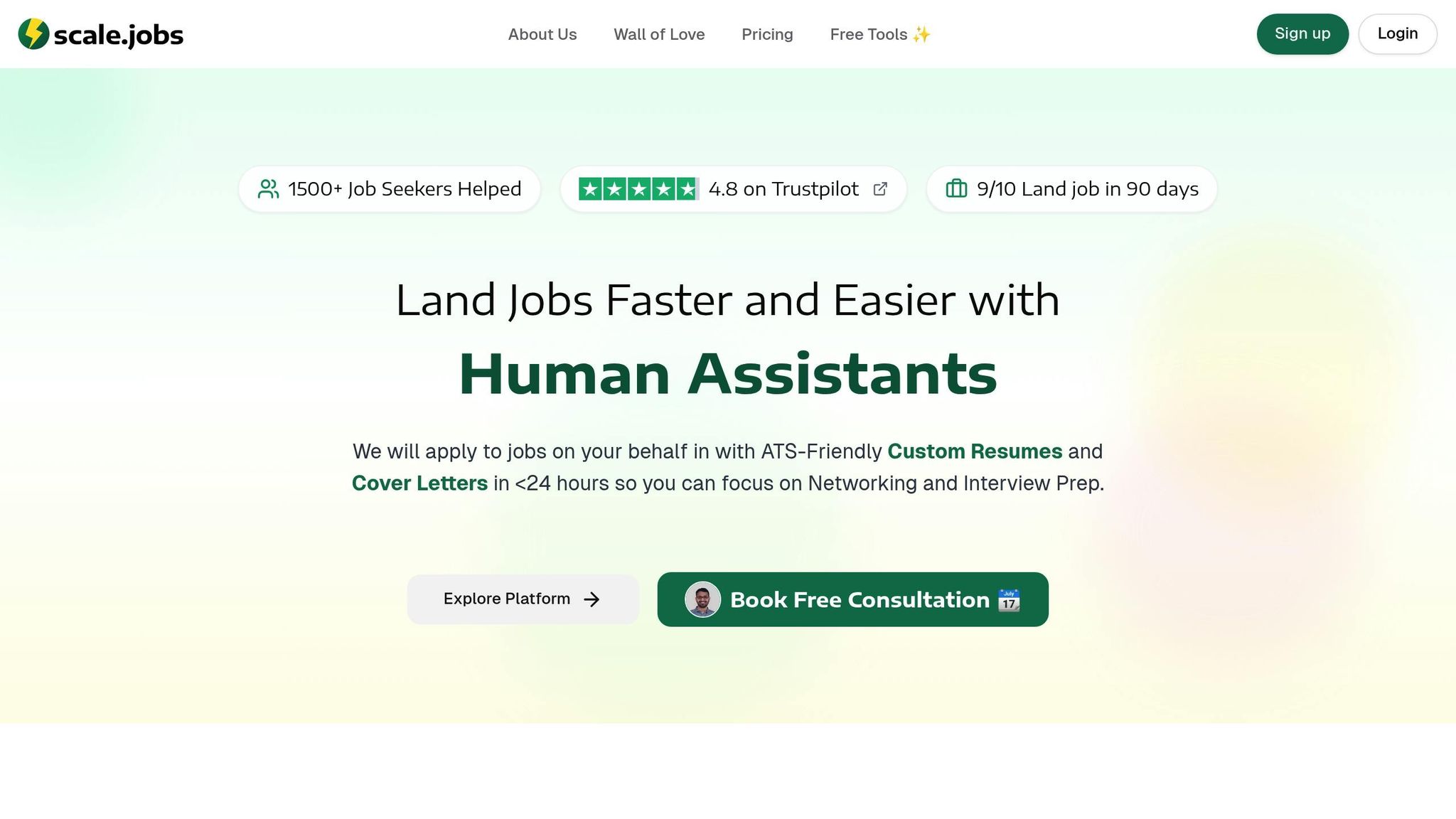
While Simplify.jobs relies on automated tools, Scale.jobs takes a different route by offering human-powered job application services. This hands-on approach significantly boosts the chances of landing a job.
Real People Handle Your Applications
At Scale.jobs, trained human assistants personally manage every step of your job application process. Unlike AI-driven platforms, these professionals craft customized resumes and cover letters for each position, ensuring a level of precision and personalization that automated tools simply can't achieve.
According to Scale.jobs, 93% of their users secure jobs within three months. This impressive success rate highlights the strength of their tailored, human-first approach compared to automated systems. But there's more - Scale.jobs also ensures transparency throughout the process with real-time updates.
Clear Progress Updates
With Scale.jobs, you’re never left wondering about the status of your applications. They keep you informed with:
- Real-time WhatsApp notifications
- Screenshot confirmations for each application
- Direct communication with your dedicated assistant
"As I work full time and couldn't spare much time for applying jobs. Applying each job is such a painful process - sometimes it takes more than 15 minutes for one application... The team did a great job applying for jobs and was always available to talk. They followed my priorities in applying for jobs as well." - Aubrey Smith, Software Engineer
This level of transparency and accessibility makes the process not only efficient but also stress-free. And when it comes to pricing, Scale.jobs offers a straightforward model that eliminates the hassle of recurring charges.
One-Time Payment vs. Subscription
Unlike Simplify.jobs, which operates on a subscription basis, Scale.jobs opts for a one-time payment system, making it a performance-driven and budget-friendly option.
| Feature | Scale.jobs | Traditional Subscription Services |
|---|---|---|
| Payment Type | One-time fee | Monthly recurring charges |
| Basic Plan Cost | $199 flat fee | Ongoing monthly payments |
| Refund Policy | Money-back if no job within 30 days | Usually non-refundable |
| Application Limit | 250 applications included | Often tiered or limited |
| Support | Dedicated WhatsApp assistance | Typically email/ticket-based |
sbb-itb-564272e
Direct Feature Comparison
Here's a side-by-side look at the main features of Simplify.jobs and Scale.jobs:
| Feature Category | Simplify.jobs | Scale.jobs |
|---|---|---|
| Application Process | AI-powered automation tools | Human virtual assistants |
| Document Customization | Generic AI-generated content | Custom resumes and cover letters per job |
| Pricing Model | Monthly subscription | One-time payment ($199–$1,099) |
| Application Limit | Unlimited with premium | 250–1,000 applications based on plan |
| Support System | FAQ section, email support | Dedicated WhatsApp assistance |
| Progress Tracking | Basic application tracking | Real-time updates with screenshots |
| Success Rate | Not publicly disclosed | 93% success within 3 months |
| Money-Back Guarantee | Not specified | 70% refund within 30 days |
These features highlight the contrasting strategies of both platforms. Simplify.jobs leans on AI-powered tools for automation, while Scale.jobs opts for a hands-on, human-driven approach. The standout difference lies in how each platform handles application quality and customization.
Application Quality and Customization
Scale.jobs sets itself apart with its human-crafted, ATS-friendly resumes and tailored cover letters. This ensures every application is personalized and avoids the common pitfalls of automated solutions.
Transparency and Support
Scale.jobs also shines in transparency. Users receive real-time updates through WhatsApp, complete with screenshot evidence, offering a clear view of the entire process.
Success Metrics
With a reported 93% success rate within three months, Scale.jobs demonstrates a strong track record of delivering results.
Value Proposition
Simplify.jobs offers a free version alongside its premium subscription plan, making it appealing for budget-conscious users. On the other hand, Scale.jobs provides a one-time payment model, which can be more cost-effective for those seeking a comprehensive, tailored service.
In essence, Scale.jobs' human-centric approach provides a more personalized and transparent experience, making it an attractive choice for job seekers looking for tangible results.
Which Service Fits Your Needs
Let's dive deeper into how these platforms align with different job search requirements.
When to Use Simplify.jobs
Simplify.jobs is a solid choice for job seekers who:
- Manage Multiple Applications: It provides essential tools to keep track of numerous applications efficiently.
- Embrace AI Technology: Perfect for users who are comfortable relying on AI for resume optimization and job matching.
- Work Within a Tight Budget: The free tier covers core features, while advanced AI functionalities are available through the Simplify+ subscription.
Rio, a Business Analyst, shared their experience:
"I've saved hours of time that I would've spent re-typing my resume on job applications".
When to Use Scale.jobs
If you’re looking for a hands-on, human-driven approach, Scale.jobs might be your best bet. It’s tailored for job seekers who:
- Prioritize Personal Assistance: Virtual assistants take care of your entire application process from start to finish.
- Require Visa Guidance: Offers expert support for navigating visa-related complexities.
-
Want All-Inclusive Services: Includes:
- Custom ATS-friendly resumes for each job
- Personalized cover letters
- 24-hour turnaround for applications
- Real-time updates via WhatsApp, complete with screenshots
- Support across all major job portals
- Expect Measurable Results: With 9 out of 10 users landing jobs within 90 days and 47% of successful placements coming from direct applications, Scale.jobs delivers proven outcomes.
Pricing for Scale.jobs starts at $199 for a one-time service and goes up to $1,099 for 250–1,000 applications, making it a cost-effective option for intensive job searches. The Standard plan, priced at $299, covers 500 applications and includes dedicated human support.
These differences highlight how each platform caters to distinct needs, setting the stage for a deeper evaluation of their overall value.
Final Verdict on Simplify.jobs
Simplify.jobs provides reasonable value for job seekers through its free tier, offering features like job tracking and autofill. However, when compared to Scale.jobs, its automated system falls short in several areas. Here's why Scale.jobs stands out with its human-driven approach.
Scale.jobs excels in five key ways:
- Human virtual assistants: Unlike automation, Scale.jobs relies on real people to handle applications, ensuring a personal touch.
- Real-time WhatsApp support: Instead of basic automated assistance, Scale.jobs provides immediate, human-led help via WhatsApp.
- Transparent pricing: A one-time flat fee replaces flat-fee job-search services instead of recurring subscriptions, making costs more predictable.
- Time-stamped screenshots: Proof of application submission adds a layer of accountability.
- Custom ATS-optimized resumes: Each application includes a resume tailored specifically to the job, improving chances of success.
Simplify.jobs may boost response rates through its automated system, but it lacks the personalized service that Scale.jobs offers. With dedicated assistants, Scale.jobs ensures applications are carefully crafted and submitted across various job portals, backed by tangible results.
Another big advantage is pricing. Scale.jobs charges a flat fee starting at $199, which is often more economical than Simplify.jobs' ongoing subscription model. This structure appeals to serious job seekers who prefer clear, upfront costs when investing in their career.
For those needing visa guidance or specialized support, Scale.jobs' human expertise is invaluable. Its fast 24-hour turnaround and tailored documentation showcase a commitment to helping users navigate even the most complex application processes.
FAQs
How does Scale.jobs' success rate compare to Simplify.jobs, and why does it matter?
Scale.jobs has an outstanding track record, with 93% of users securing a job within three months. Even more impressive, nearly half of these placements come directly through their application services. On the other hand, Simplify.jobs doesn't prominently share detailed success rate data, making it tougher to gauge how it stacks up in comparison.
Why do these numbers matter? Because they show how effectively a platform delivers on its promise - helping users land jobs quickly. A higher success rate not only saves you time but also boosts your chances of finding the right position, making your investment in the service well worth it.
What makes using human assistants for job applications at Scale.jobs a smart choice?
Using human assistants at Scale.jobs can make a big difference in your job search journey. Here's why: these assistants fine-tune your resumes and cover letters for every application. They don't just focus on making them look good - they also ensure they're optimized for Applicant Tracking Systems (ATS) and specifically tailored to the job you're targeting. This tailored approach can boost your chances of catching a recruiter's attention.
On top of that, they save you a lot of time. By taking over the application process, they free you up to focus on what really matters - like networking and getting ready for interviews.
Another standout feature? Scale.jobs boasts an impressive track record, with 93% of users landing jobs within 1 to 3 months. Human assistants also keep everything organized by meticulously tracking your applications, deadlines, and follow-ups, so you never miss a chance. They even handle direct communication with recruiters, such as scheduling interviews and sending follow-up messages. This ensures your interactions stay professional and timely, giving you a polished edge throughout the hiring process.
When is Simplify.jobs a better option than Scale.jobs?
Simplify.jobs is a solid option for those who need to apply to a large number of jobs in a short amount of time. Its automated application feature lets users autofill applications quickly, which can be especially helpful for entry-level candidates or anyone navigating a competitive job market where applying in volume matters.
If you’re someone who prefers a no-fuss, hands-off experience without the need for personalized support or human interaction, Simplify.jobs offers a practical, time-saving solution. It’s a great match for job seekers who prioritize efficiency and convenience over tailored advice or customization.