
Mobile Developer Resume Examples, Templates & Writing Guide

Written by: Scale.jobs EditorialLast updated: May 1, 2026







Introduction
Create a polished mobile developer resume that showcases your expertise in native and cross-platform app development, performance optimization, and delivering seamless user experiences across iOS and Android.
This guide walks you through every major section of a mobile developer resume, with practical tips you can apply today.
- How to present native and cross-platform mobile development skills with portfolio evidence
- Key frameworks and languages that hiring managers expect mobile developer candidates to master
- Strategies for quantifying app performance improvements using download counts and crash rates
- Proven methods for demonstrating full lifecycle mobile development from concept to App Store release
- Techniques for optimizing your resume format and keywords for modern applicant tracking systems
- How to differentiate your candidacy by highlighting published applications and user engagement metrics
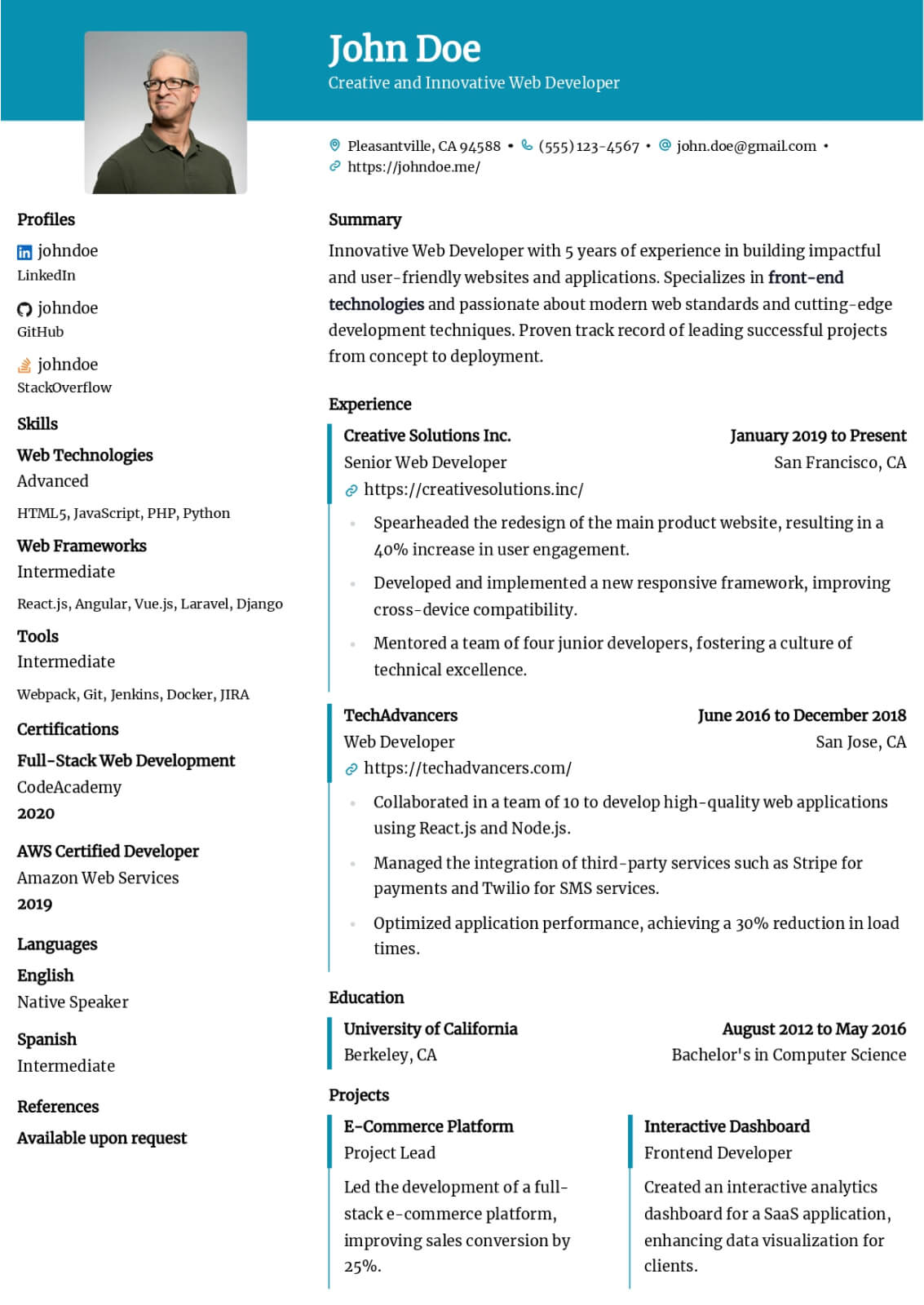
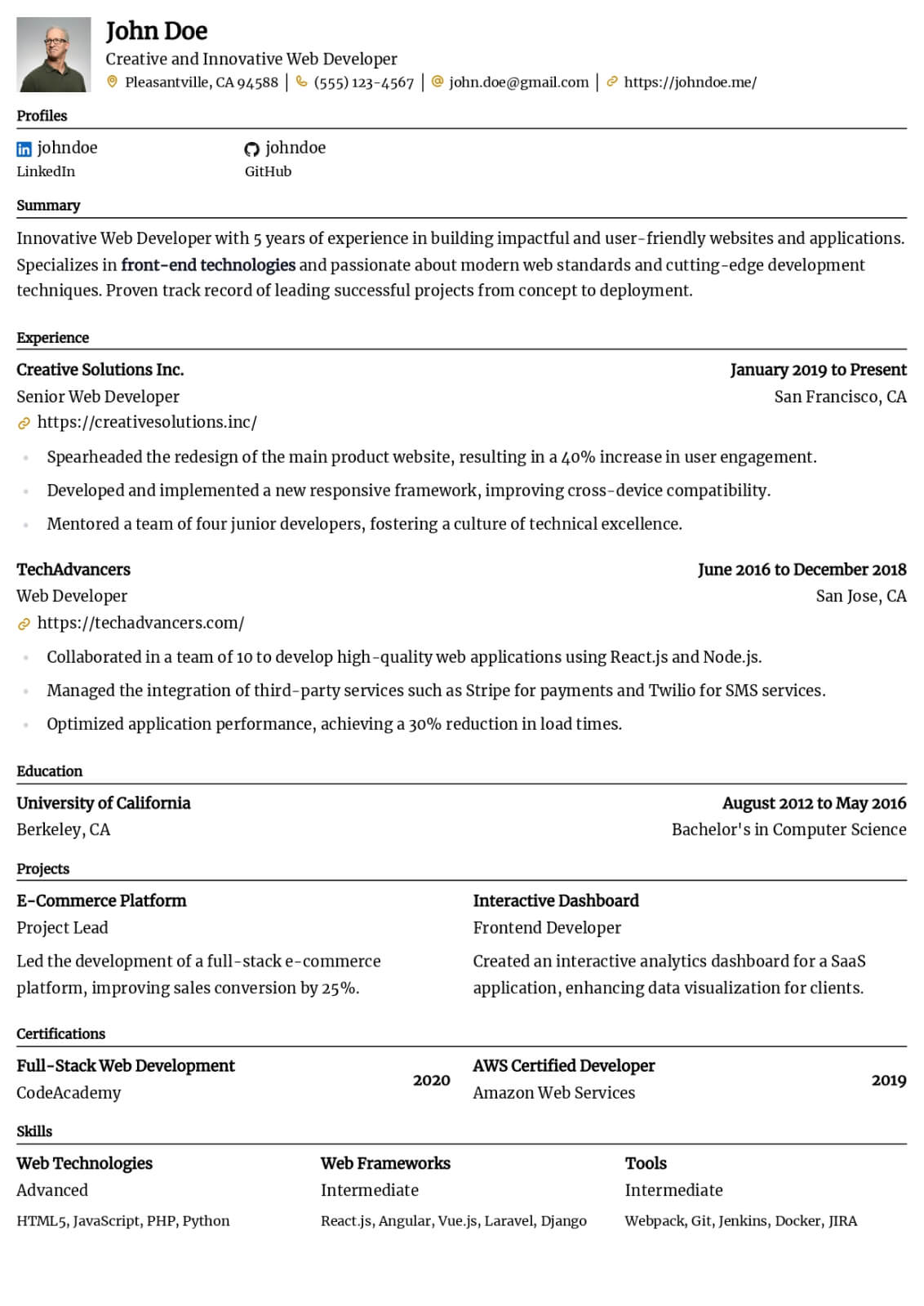
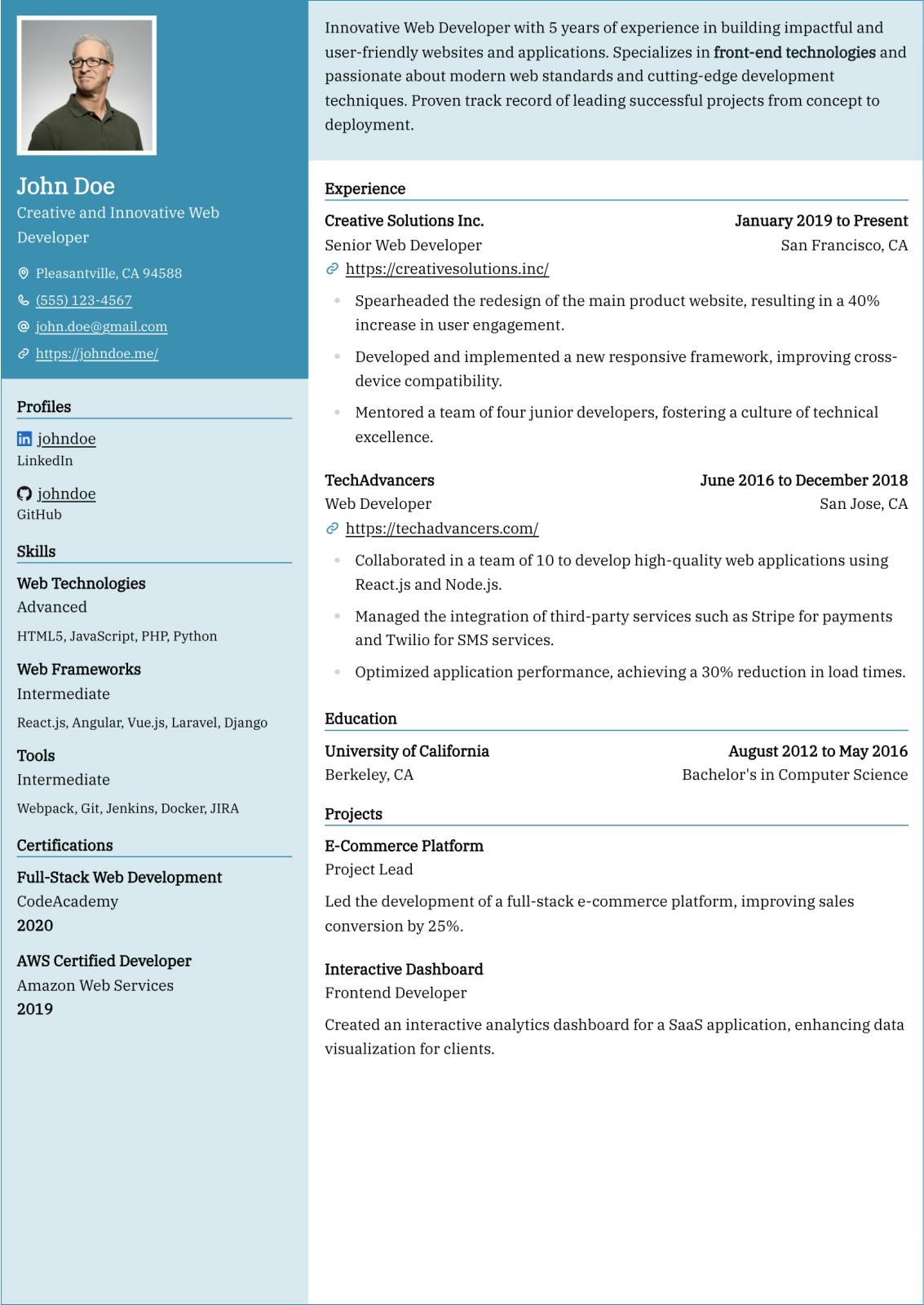
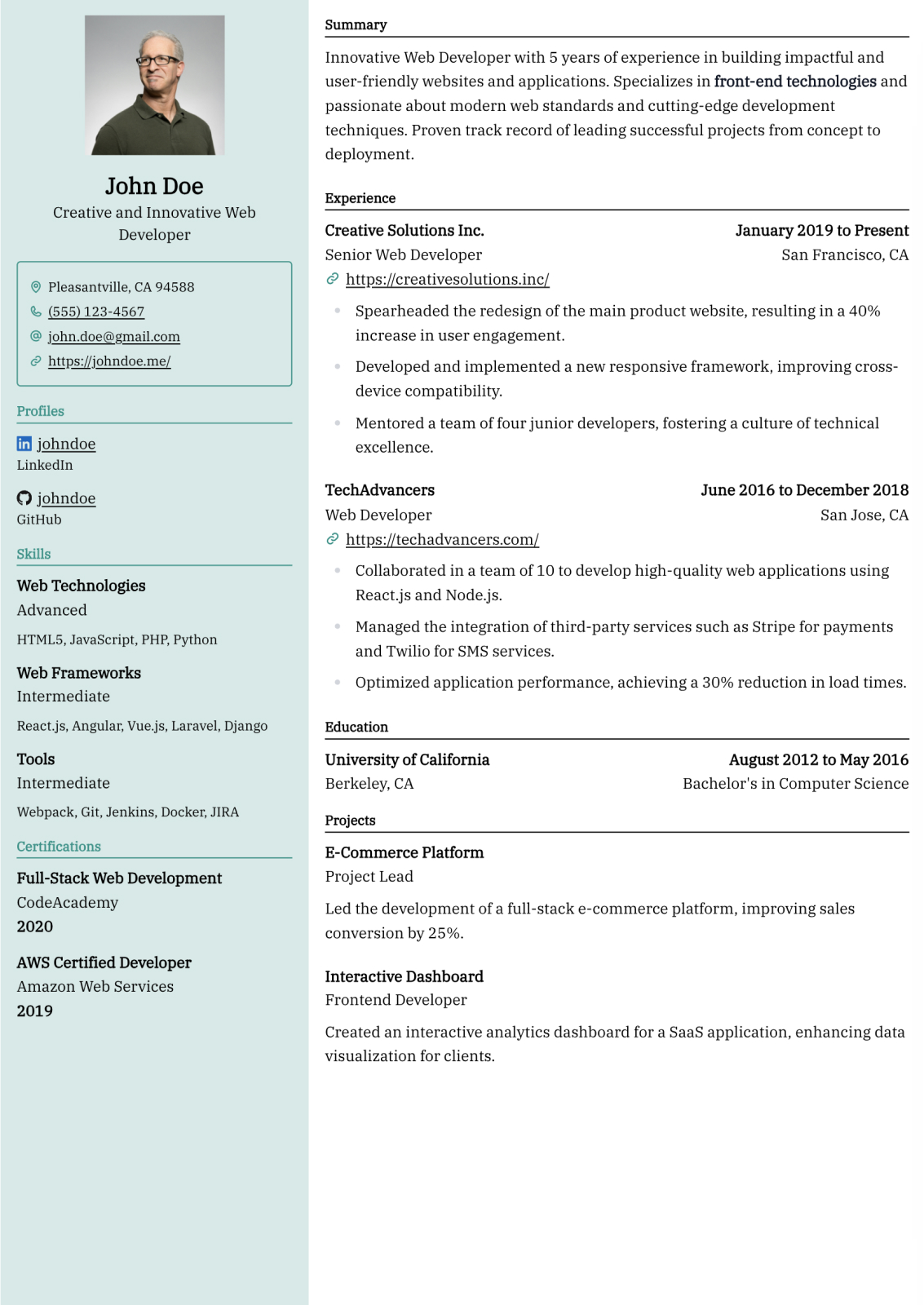
Mobile Developer resume guide
Below, you will find section-by-section guidance for your mobile developer resume — from your opening summary through skills and experience. Tailor every line to the job you want.
Professional Summary
Your professional summary should immediately establish you as a mobile developer with expertise in specific platforms and a track record of delivering production applications. Open with a positioning statement that identifies your primary platform focus, whether iOS, Android, or cross-platform development using React Native or Flutter. Mention your years of experience and two to three core technologies that align with the target role. Include a quantified achievement such as stating that you developed a consumer application reaching over five hundred thousand downloads with a four point seven star rating. Tailor terminology to mirror the job description so your summary performs well with both human reviewers and automated keyword filters. Keep the summary between three and five sentences to maximize impact without overloading the reader with unnecessary detail.
Work Experience
Structure your work experience in reverse-chronological order with clear job titles, company names, and dates for each position. Write four to six bullet points per role beginning with action verbs like developed, architected, optimized, or shipped. Each bullet should tie a technical action to a measurable result, for example stating that you reduced app crash rate from two point three percent to zero point four percent by refactoring memory management and implementing structured error handling. Demonstrate breadth across the mobile development lifecycle by referencing design collaboration, API integration, offline-first architecture, and App Store or Play Store submission processes. If you contributed to open-source mobile libraries or published technical articles, mention these contributions as they signal community engagement. Avoid listing generic programming duties without connecting them to user-facing outcomes or business value.
Skills
Build a skills section with eight to twelve technical competencies and six to eight soft skills aligned to the target job requirements. On the technical side, list programming languages such as Swift, Kotlin, Dart, TypeScript, and Java alongside frameworks like SwiftUI, Jetpack Compose, React Native, and Flutter. Include platform-specific tools such as Xcode, Android Studio, and Firebase alongside CI/CD services like Fastlane, Bitrise, or GitHub Actions. Add capabilities like RESTful API integration, local storage management with Core Data or Room, push notification implementation, and accessibility compliance. For soft skills, emphasize user-centric thinking, cross-functional teamwork, iterative design collaboration, and clear written communication. Only list technologies you can demonstrate proficiency with during a live coding assessment or portfolio walkthrough.
Published Applications & Key Projects
A projects section is critical for mobile developers because published applications serve as tangible proof of your capabilities. For each application, describe the problem it solves, the technology stack used, the platforms supported, and quantified success metrics like download counts, user retention rates, or revenue generated. A compelling entry might state that you architected and launched a fintech mobile application using React Native serving over two hundred thousand active users with ninety-nine point five percent crash-free sessions. Include links to App Store or Play Store listings when possible, as reviewers frequently verify published work. Personal or open-source projects also belong here if they demonstrate technical depth or emerging technology adoption.
Certifications & Professional Development
List relevant certifications such as Google Associate Android Developer, Apple Certified iOS Developer, or AWS Certified Developer Associate if you work with cloud-connected mobile backends. Include the issuing organization and the date earned for each credential. Platform-specific certifications validate that you have met a vendor-defined competency standard, which carries weight with hiring managers at companies deeply invested in one ecosystem. If you are actively pursuing a certification, include it with the expected completion date to signal ongoing professional growth. Conference talks, published technical articles, or contributions to popular mobile development open-source projects also belong in this section.
Education
List your highest relevant degree, the institution name, and graduation year. Mobile developer roles commonly accept degrees in computer science, software engineering, information technology, or related technical disciplines. If you graduated within the last five years, consider adding relevant coursework such as mobile application development, human-computer interaction, data structures, or distributed systems. Academic honors or capstone projects involving mobile app design strengthen your candidacy when work experience is limited. For experienced professionals with extensive published applications, keep education concise and let your portfolio and professional accomplishments carry the primary weight of your application.
Resume layout and formatting
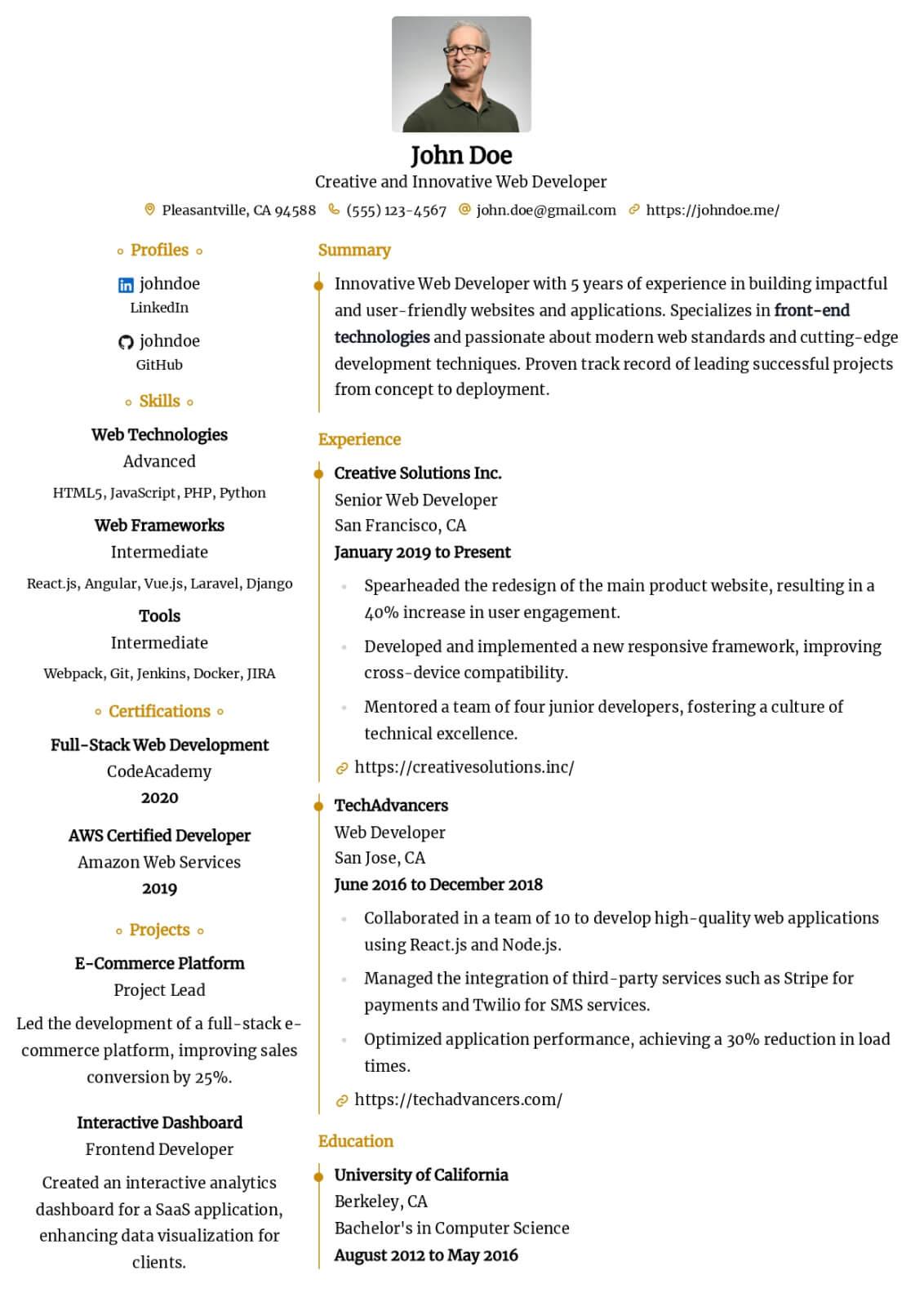
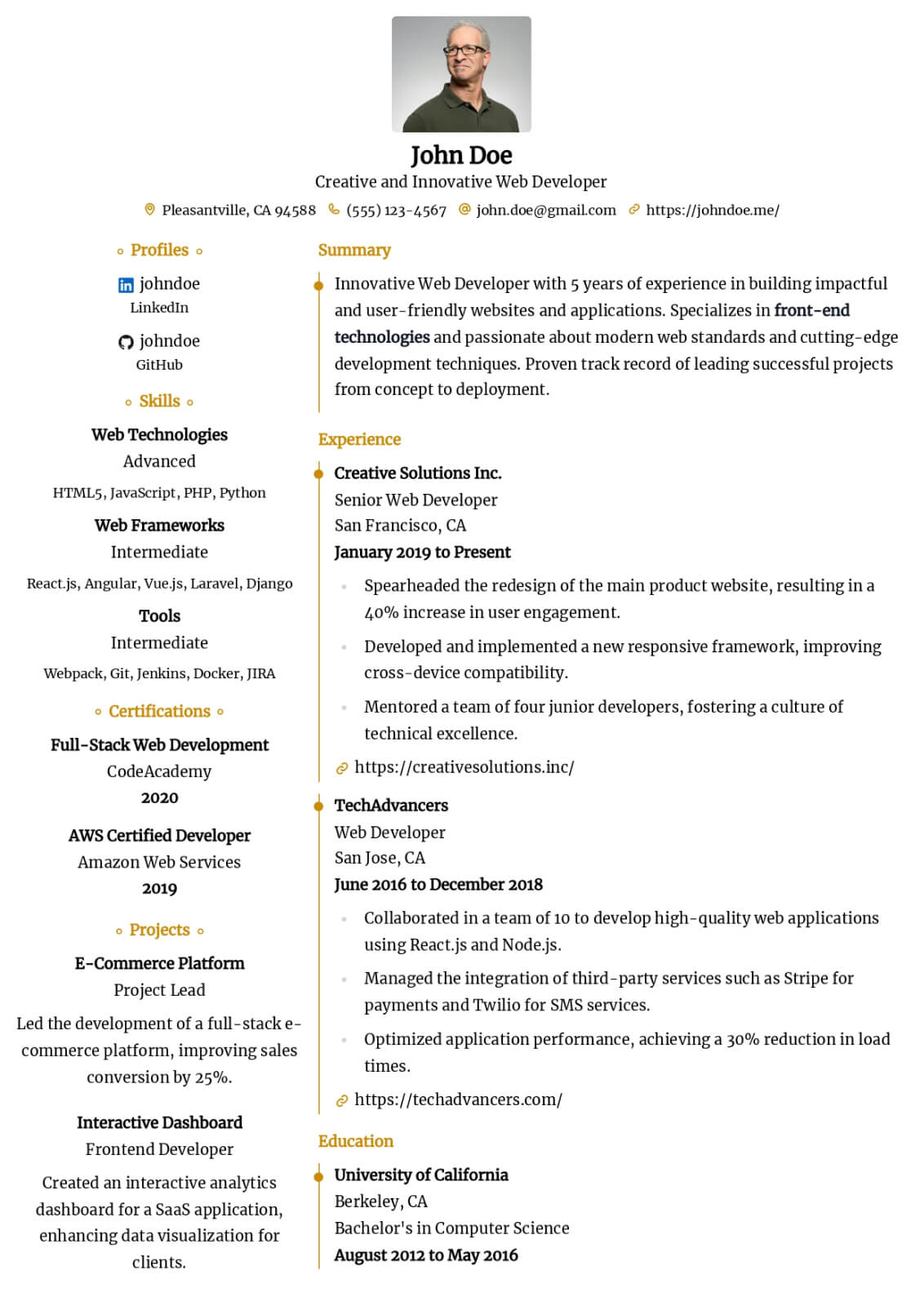
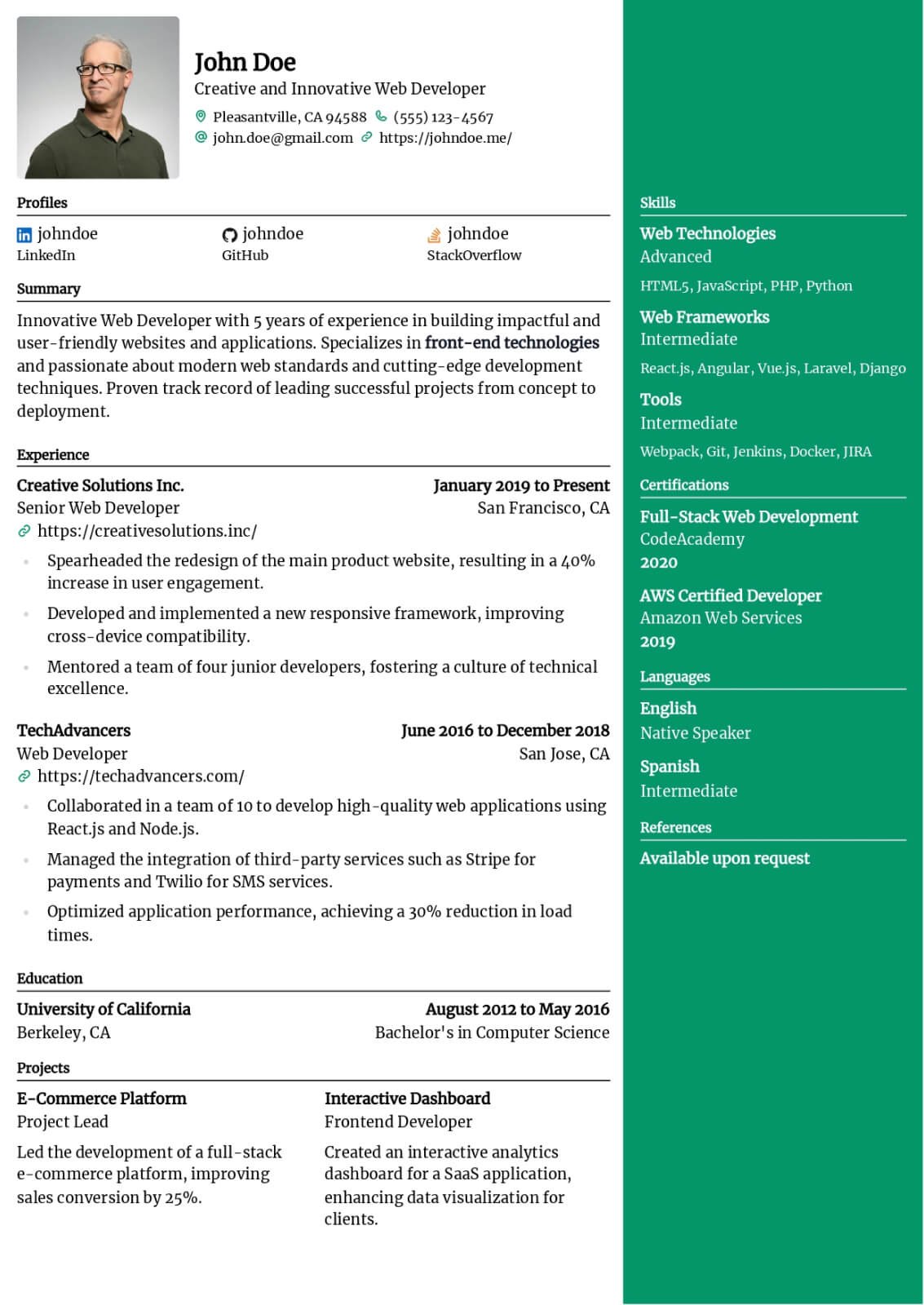
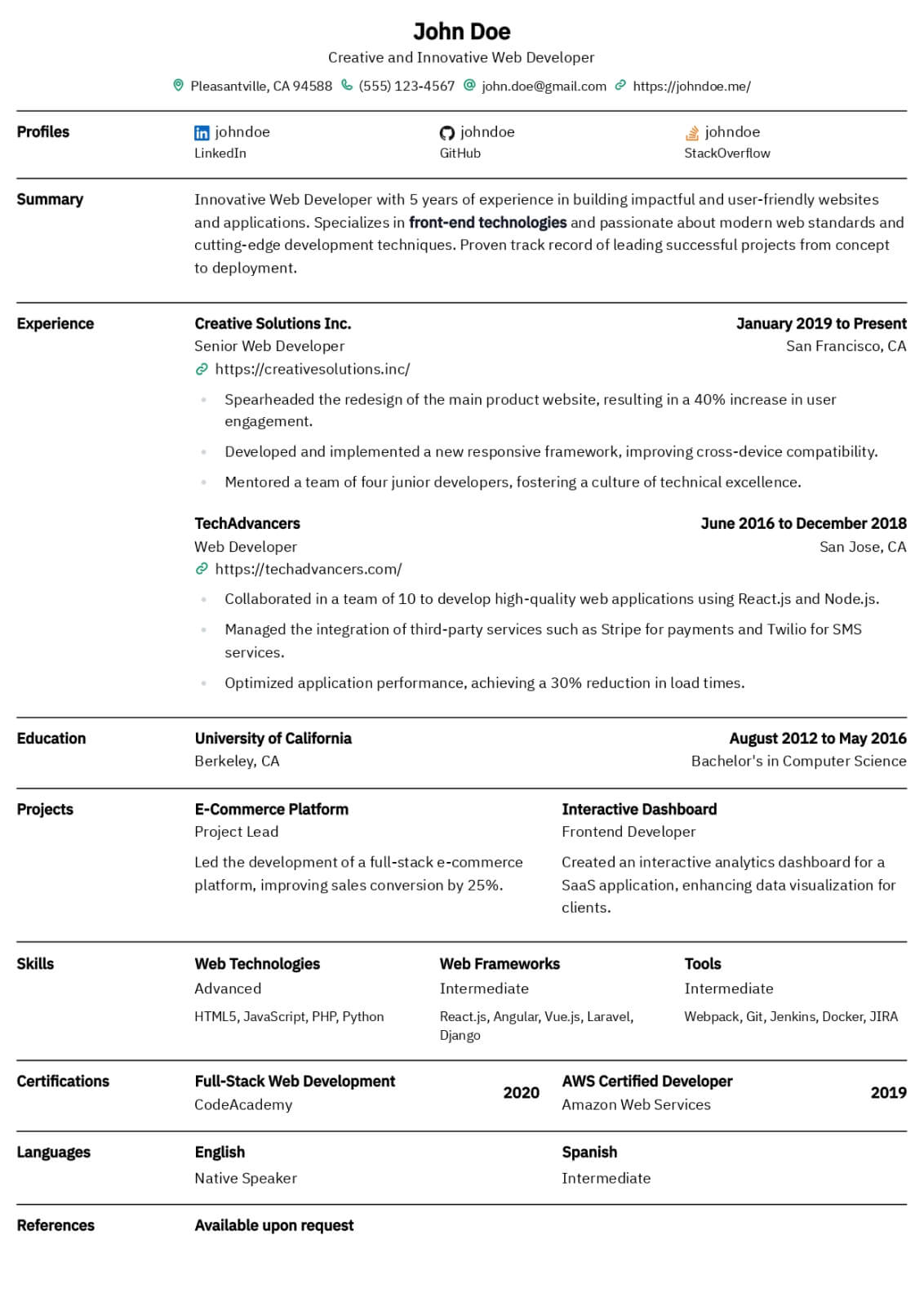
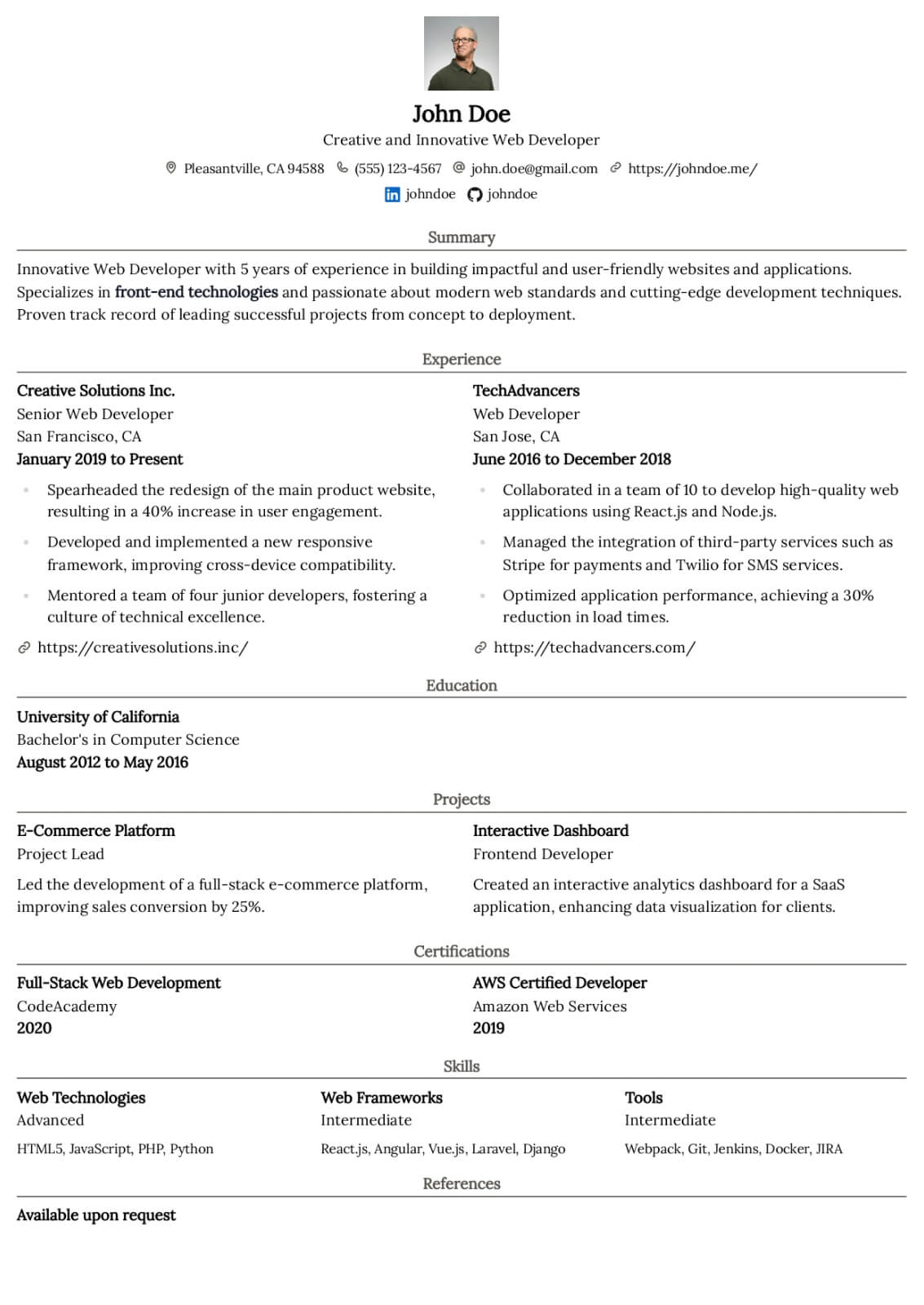
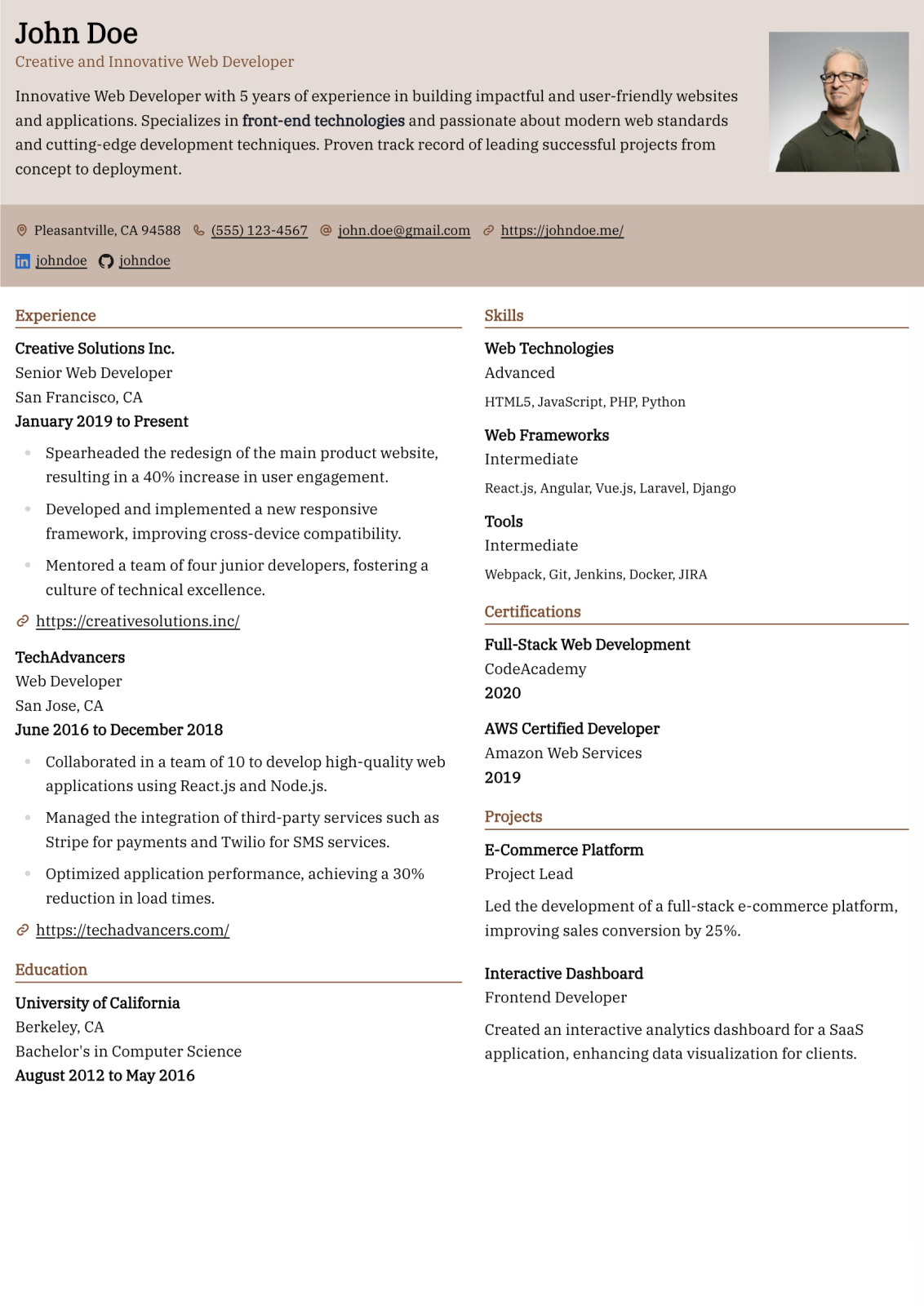
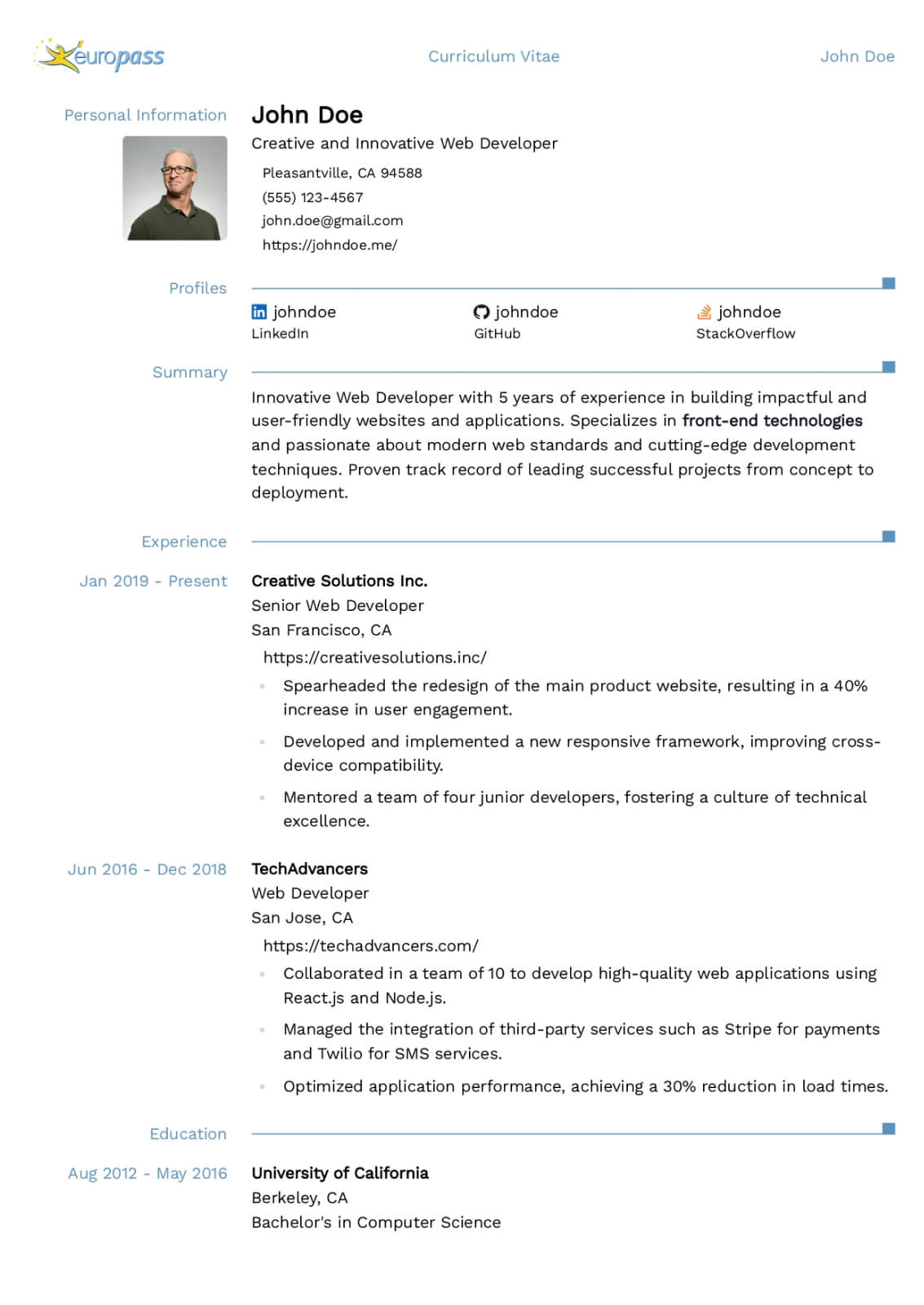
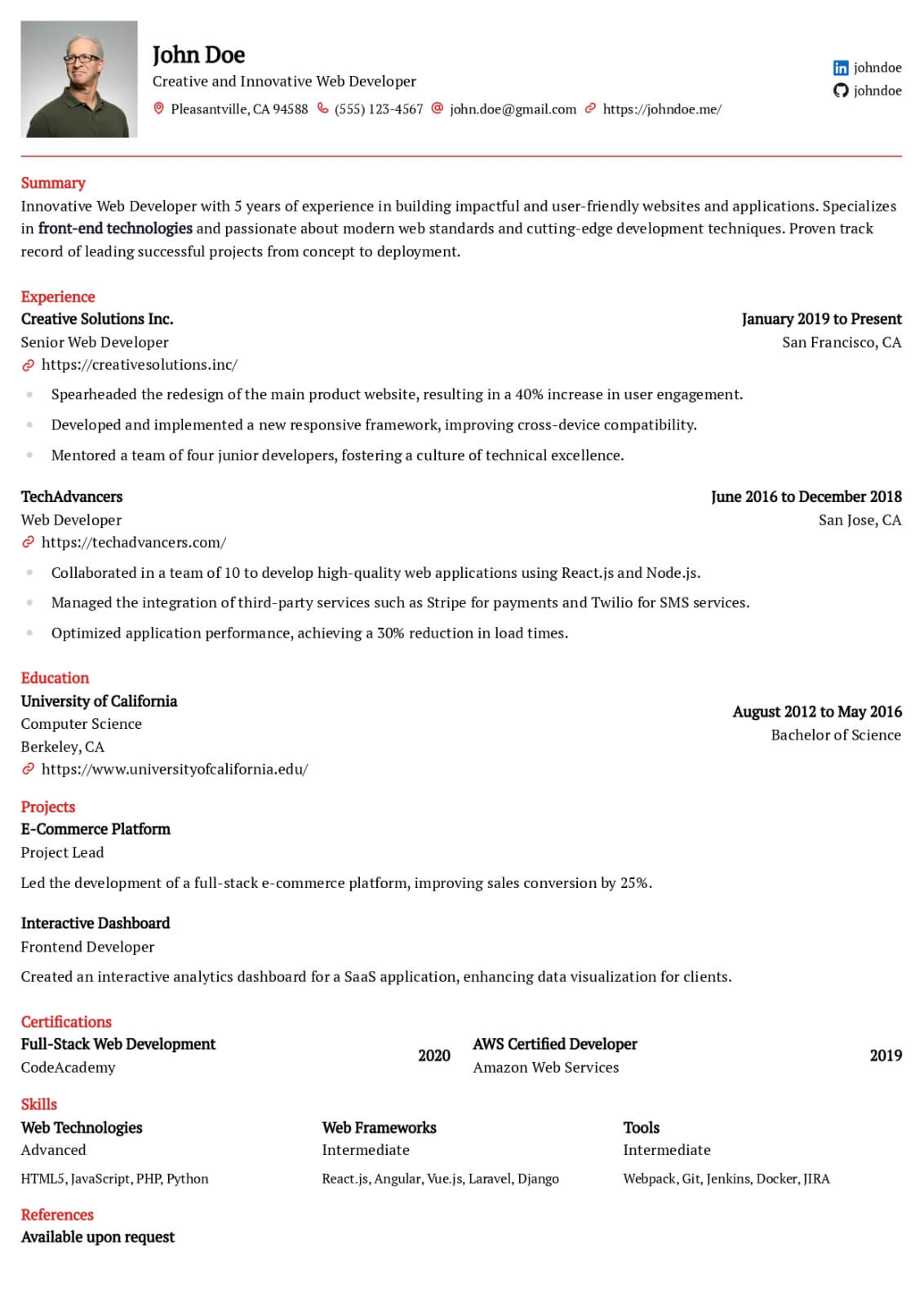
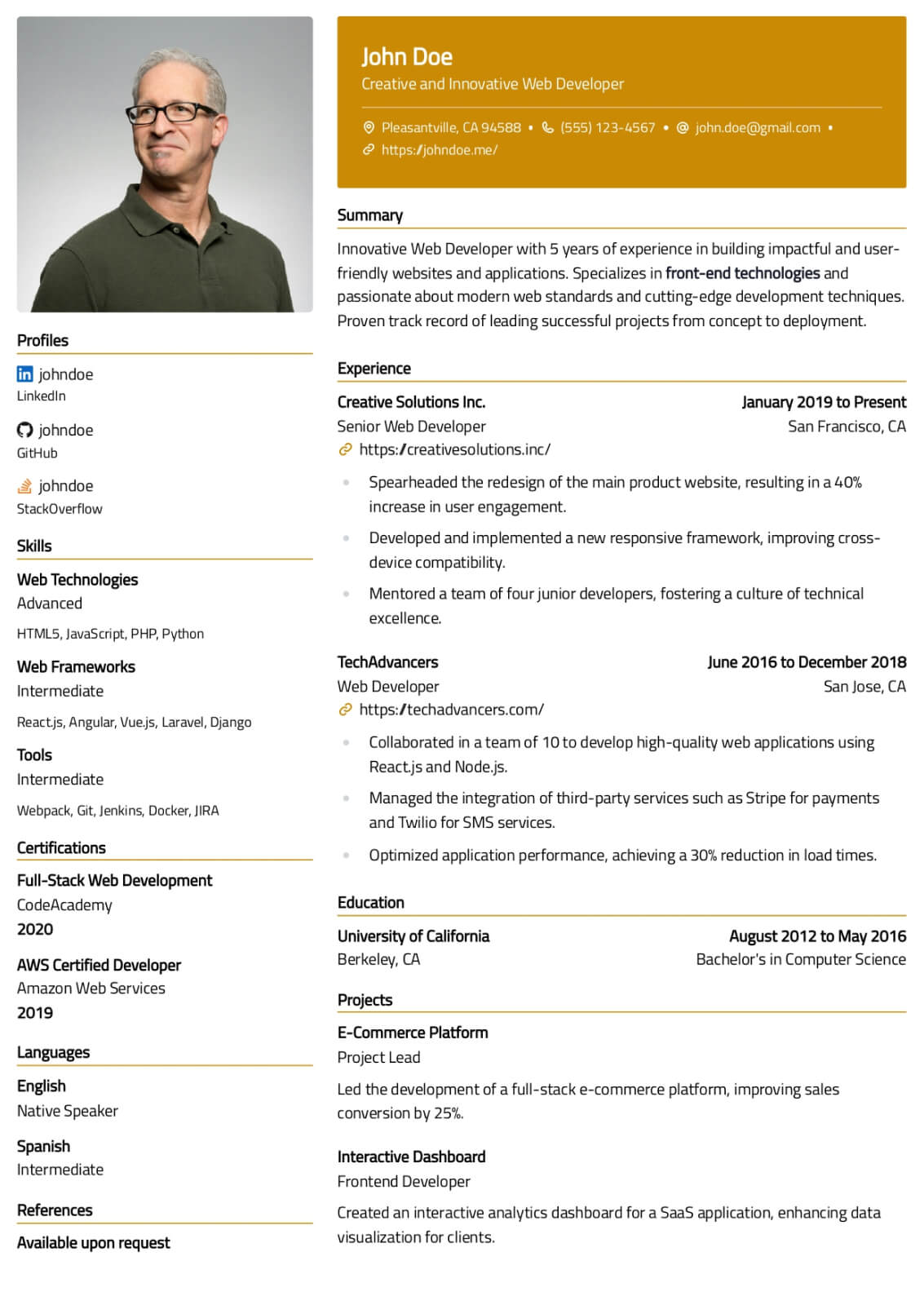
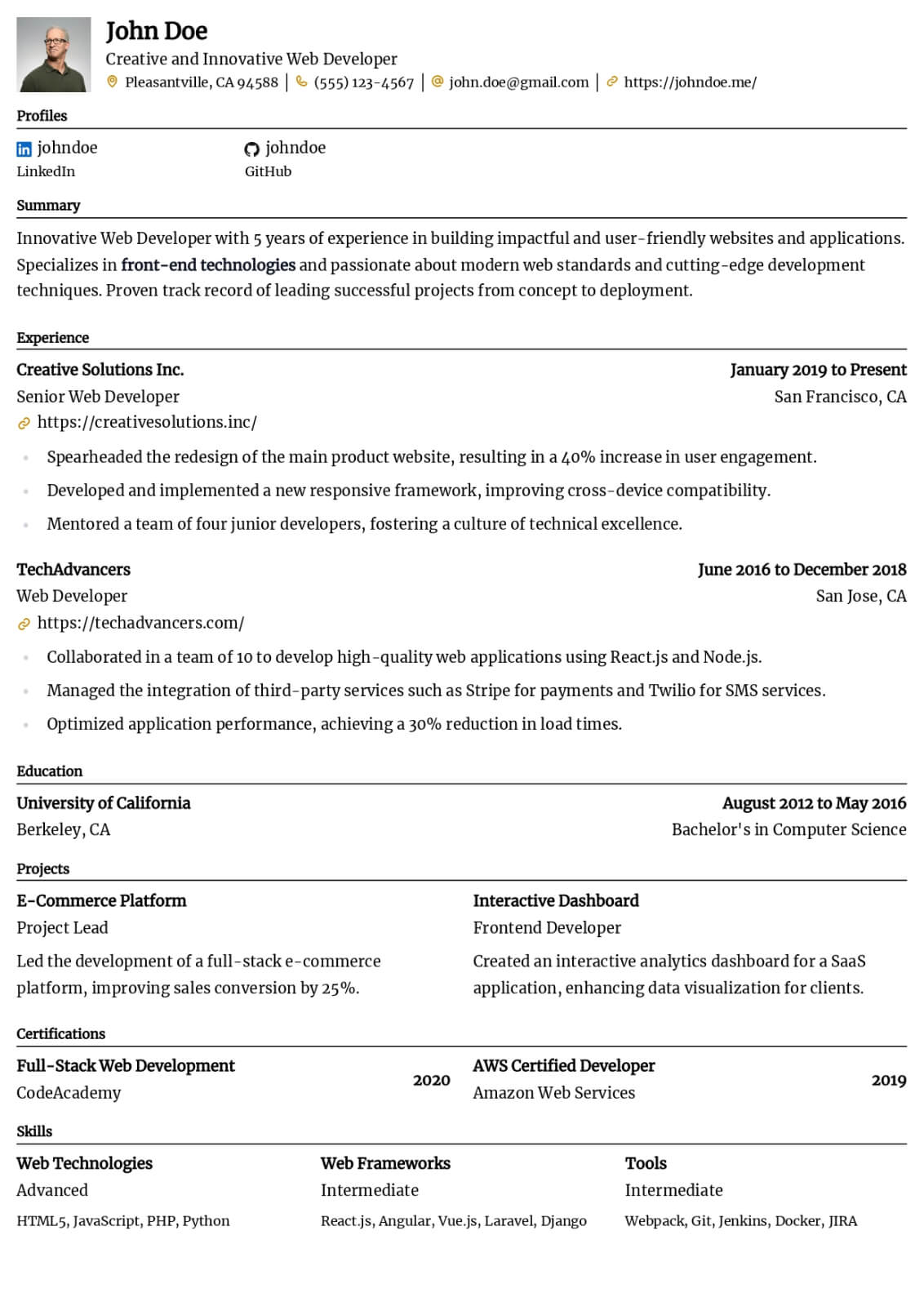
Use a clean, single-column layout with clear section headings and plenty of white space. Lead with technical strengths such as Swift & SwiftUI (iOS), Kotlin & Jetpack Compose (Android), React Native & TypeScript, Flutter & Dart, RESTful API Integration, Firebase & Cloud Backend Services, then reinforce interpersonal strengths like User-Centric Design Thinking, Cross-Functional Collaboration, Iterative Problem Solving, Clear Written Communication. Keep fonts standard (e.g., Arial or Calibri) at 10–12pt body size so your resume stays ATS-friendly and easy to scan.
Key takeaways
- Lead your summary with specific mobile platforms and quantified app success metrics
- Attach download counts, crash rates, or retention figures to every experience bullet
- Mirror keywords from the job posting to maximize automated screening compatibility
- Showcase published applications with store links and measurable user engagement data
- List only frameworks and languages you can confidently demonstrate in technical interviews
- Maintain clean formatting with consistent section headings and logical information flow
Build your Mobile Developer resume with Scale
Lead your summary with specific mobile platforms and quantified app success metrics
Use This Template
Professional Templates That Make You Stand Out
Browse modern, ATS-friendly resume designs crafted to impress recruiters. Customize any template and download it as a Word or PDF file.
Listen What Our Users Have to Say

Rohan Sen
I am very happy with the team's quick turnaround time - any query is responded at utmost priority. Shoutout to my client manager, Anub Biju - very helpful.

Gael L
Service and communication is great, cover letters are non-ai sounding and well tailored. Just have a lot of communication and review with your staff!

Jonathan Parry
Wow - don't tell your peers! Wow, I can't recommend scale.jobs enough - it's so good I am not sharing with my peers. Applications at scale that get through filters. Thank you!

Cynthia Zhu
Great service! The scale.jobs team was very responsible and managed to apply tons of jobs for me in a very tight deadline to help me secure interviews quickly. Highly recommend to anyone who needs help applying to jobs!

Yash Yenugu
Save your fingers. Saved me from a thumb cramp because we're expected to effortlessly apply to jobs during these times.

Cian O'Driscoll
Clever service. Takes the hard effort out of applying for jobs with an intuitive dashboard and attention to detail. A great asset to job seekers. :-)
Frequently asked questions
What should a mobile developer resume emphasize in 2026?
A strong mobile developer resume in 2026 should emphasize cross-platform proficiency alongside native platform expertise, as many employers now require React Native or Flutter experience. Demonstrating published applications with real user metrics such as downloads, ratings, and crash-free session percentages is essential for credibility. Employers also value experience with CI/CD pipelines tailored for mobile deployment and familiarity with modern declarative UI frameworks like SwiftUI and Jetpack Compose.
Should I include links to my published apps on my resume?
Absolutely, linking to App Store or Play Store listings provides verifiable evidence of your development capabilities that no amount of written description can match. Reviewers frequently check published apps to evaluate code quality, user experience polish, and download traction. If the app is no longer live, consider including screenshots or a portfolio website instead. Even personal side projects with modest user numbers demonstrate initiative and end-to-end delivery capability.
How do I quantify my impact as a mobile developer on my resume?
Quantify impact by attaching specific numbers to your contributions throughout the experience section. Reference app download counts, daily active user figures, crash rate reductions, load time improvements measured in milliseconds, and App Store rating increases. Pull these metrics from analytics platforms like Firebase Analytics, Mixpanel, or App Store Connect. Hiring managers evaluate mobile developers based on the measurable quality and reach of the applications they have shipped.
Is it better to specialize in iOS or Android, or show cross-platform skills?
The optimal approach depends on the target role, but most employers in 2026 value candidates who demonstrate primary depth in one platform while showing working proficiency in cross-platform frameworks. Specialization in iOS with Swift or Android with Kotlin commands premium salaries at platform-focused companies. Meanwhile, cross-platform skills with React Native or Flutter are essential at startups and mid-size companies that ship to both platforms from a single codebase.
How long should a mobile developer resume be?
Target a single-page resume unless you have more than ten years of relevant mobile development experience with multiple shipped applications. A well-structured two-page resume is appropriate for senior engineers who have led mobile teams or architected large-scale applications. Every line should deliver measurable value rather than describe routine development tasks. Remove early-career web development roles that do not directly relate to mobile engineering unless they demonstrate transferable architectural skills.
What mistakes should mobile developers avoid on their resumes?
The most common mistake is listing programming languages and frameworks without connecting them to shipped products or measurable outcomes. Another frequent error is failing to mention published applications when you have them available for review. Avoid using generic software engineering language that does not reflect mobile-specific challenges like platform fragmentation, offline capabilities, and app lifecycle management. Neglecting to tailor your resume to each specific job posting also reduces your chances significantly.
Related Resume Guides
Frontend Developer
Build a standout frontend developer resume that demonstrates your mastery of modern JavaScript frameworks, responsive design, and performance optimization for user-facing web applications.
Software Engineer
Craft a compelling software engineer resume that highlights your technical depth, system design expertise, and measurable contributions to production software used by millions of users worldwide.
Full Stack Developer
Craft a compelling full stack developer resume that demonstrates your ability to build end-to-end web applications spanning frontend interfaces, backend APIs, databases, and cloud deployment.
UI/UX Designer
Craft a compelling UI/UX designer resume that demonstrates your ability to translate user research into intuitive interfaces, backed by portfolio evidence and measurable usability improvements.