
Frontend Developer Resume Examples, Templates & Writing Guide

Written by: Scale.jobs EditorialLast updated: May 1, 2026







Introduction
Build a standout frontend developer resume that demonstrates your mastery of modern JavaScript frameworks, responsive design, and performance optimization for user-facing web applications.
This guide walks you through every major section of a frontend developer resume, with practical tips you can apply today.
- How to demonstrate proficiency in React, Vue, or Angular with real project examples
- Strategies for showcasing web performance optimizations using Core Web Vitals metrics
- Techniques for presenting responsive design and cross-browser compatibility achievements
- Best practices for highlighting component library development and design system contributions
- Methods for quantifying user experience improvements through conversion and engagement data
- How to structure your portfolio links and live demos alongside your resume
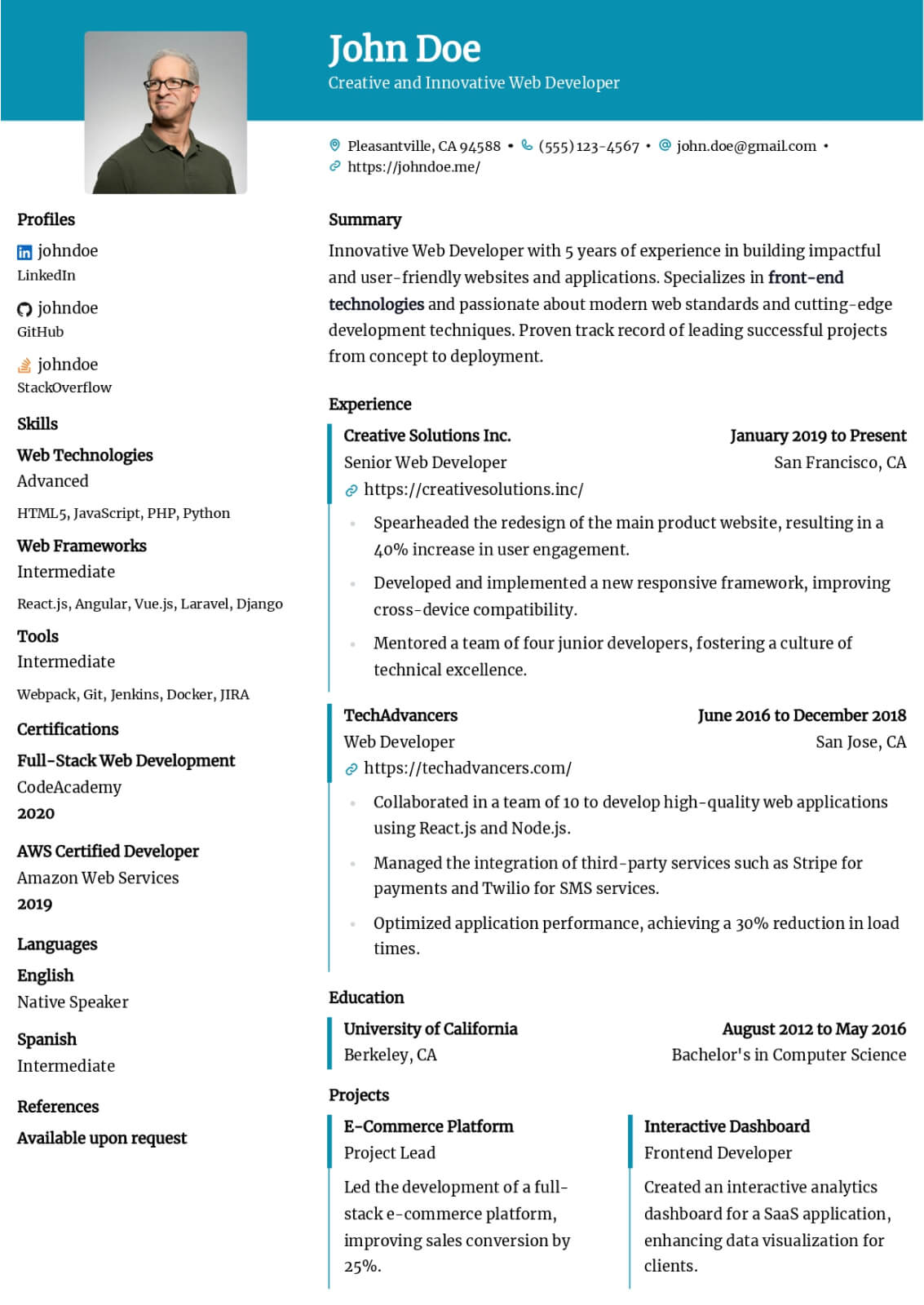
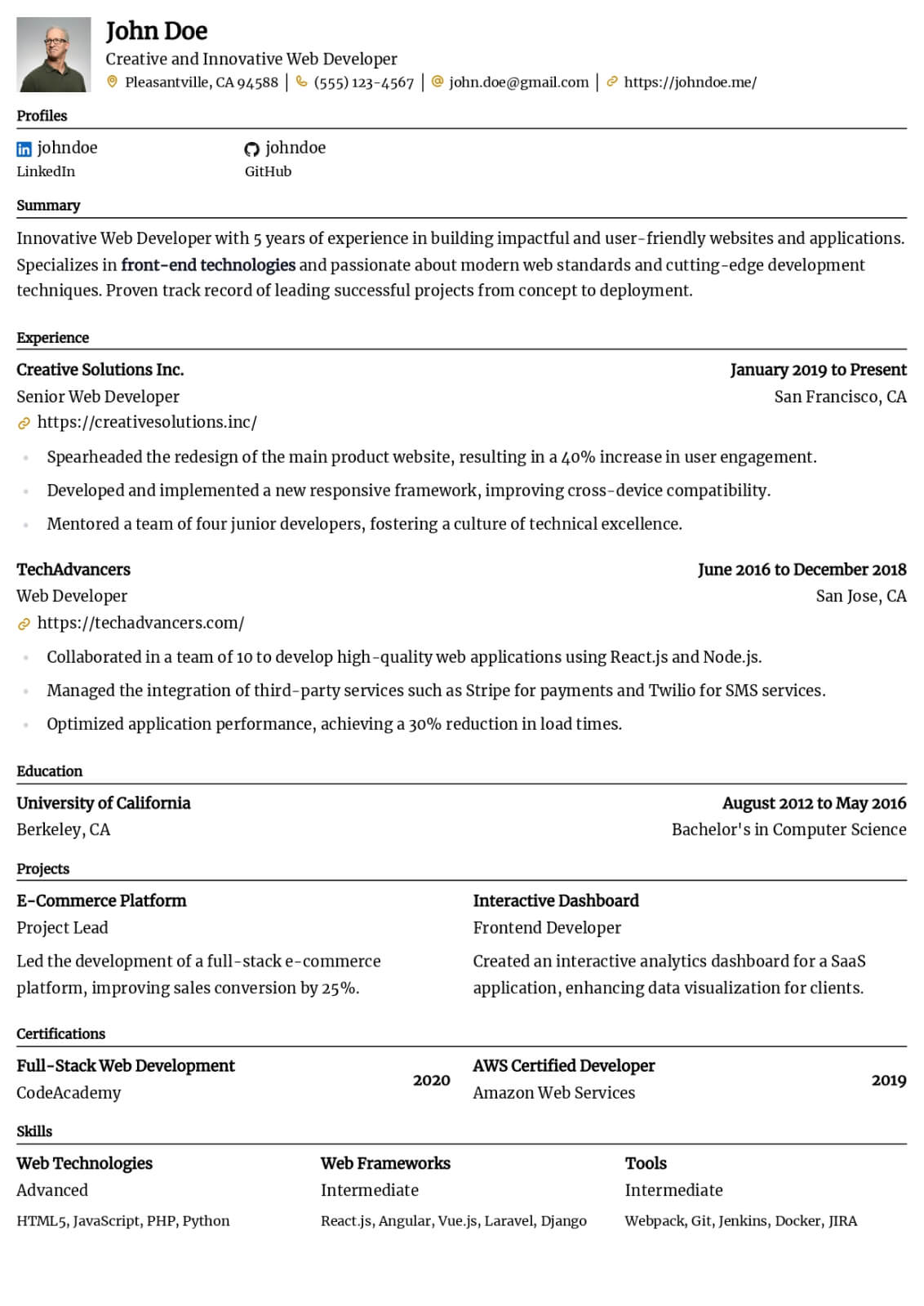
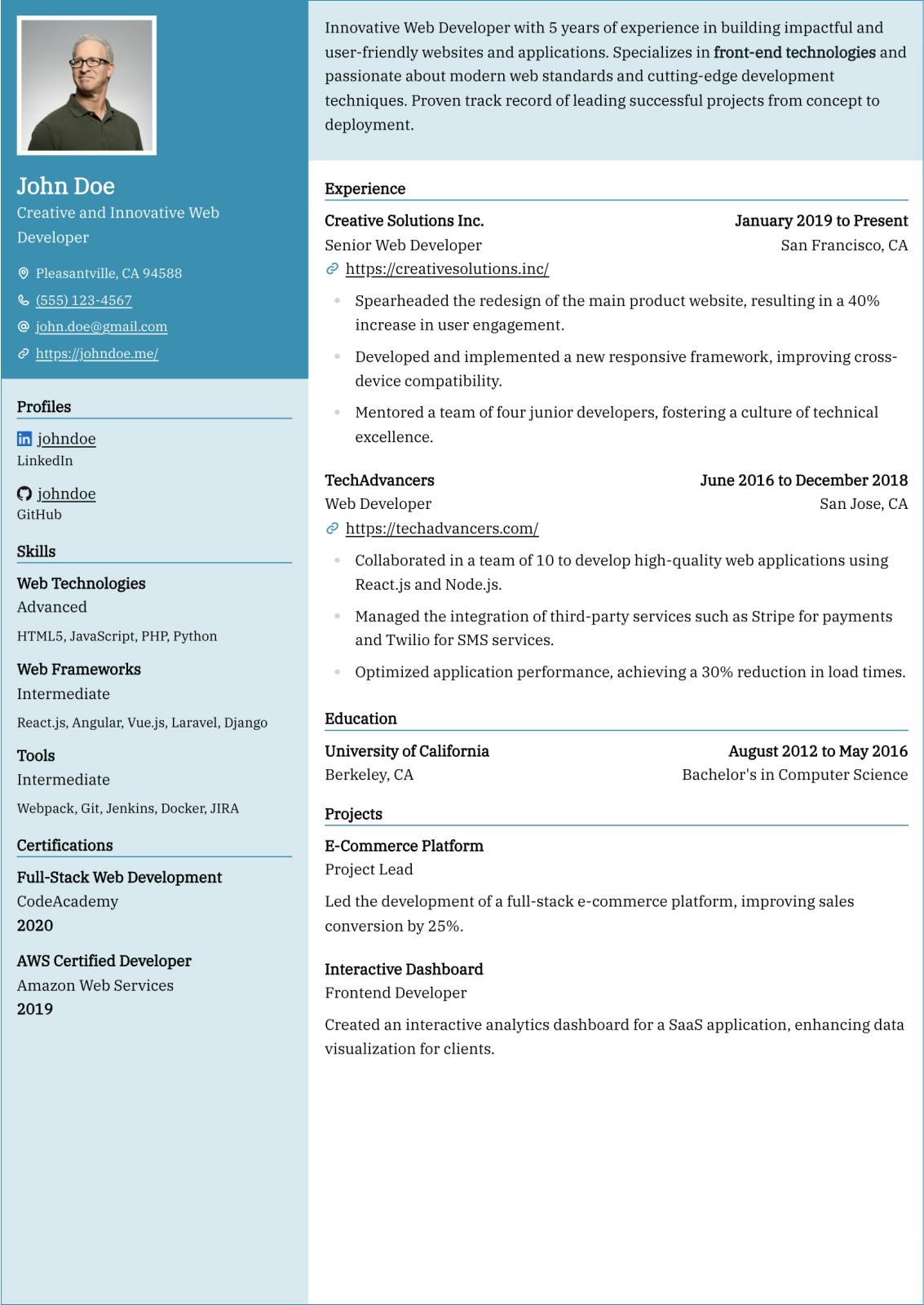
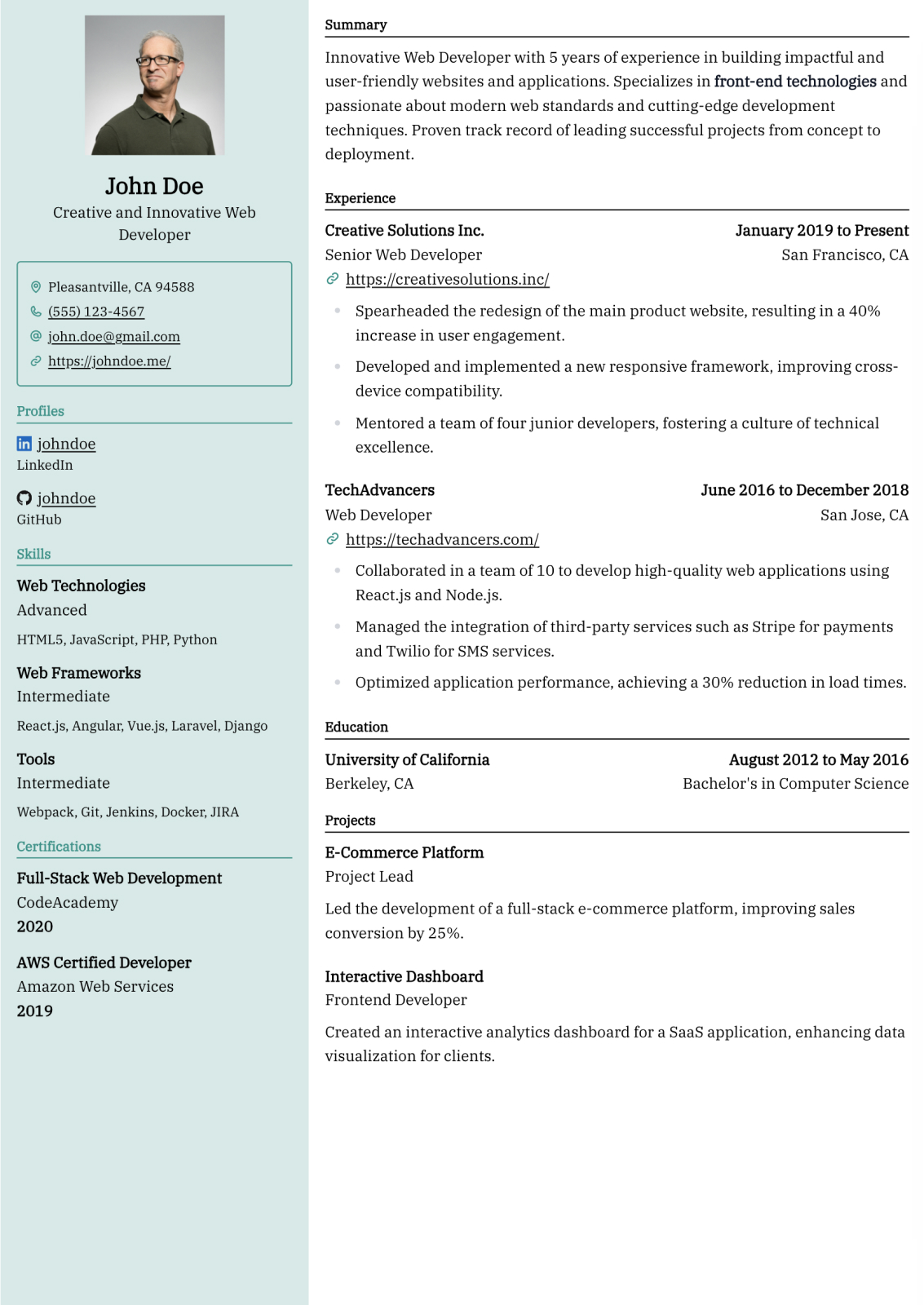
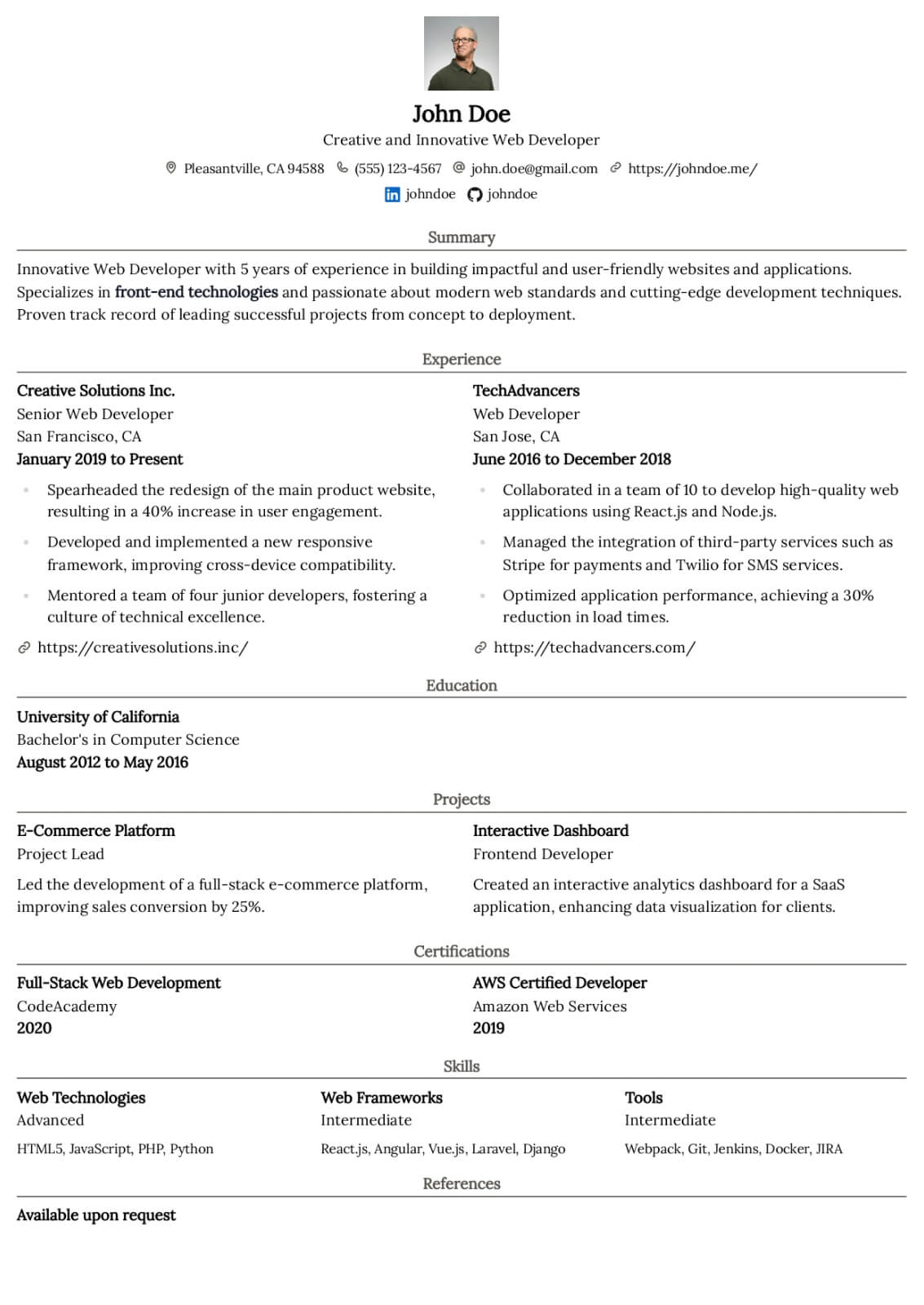
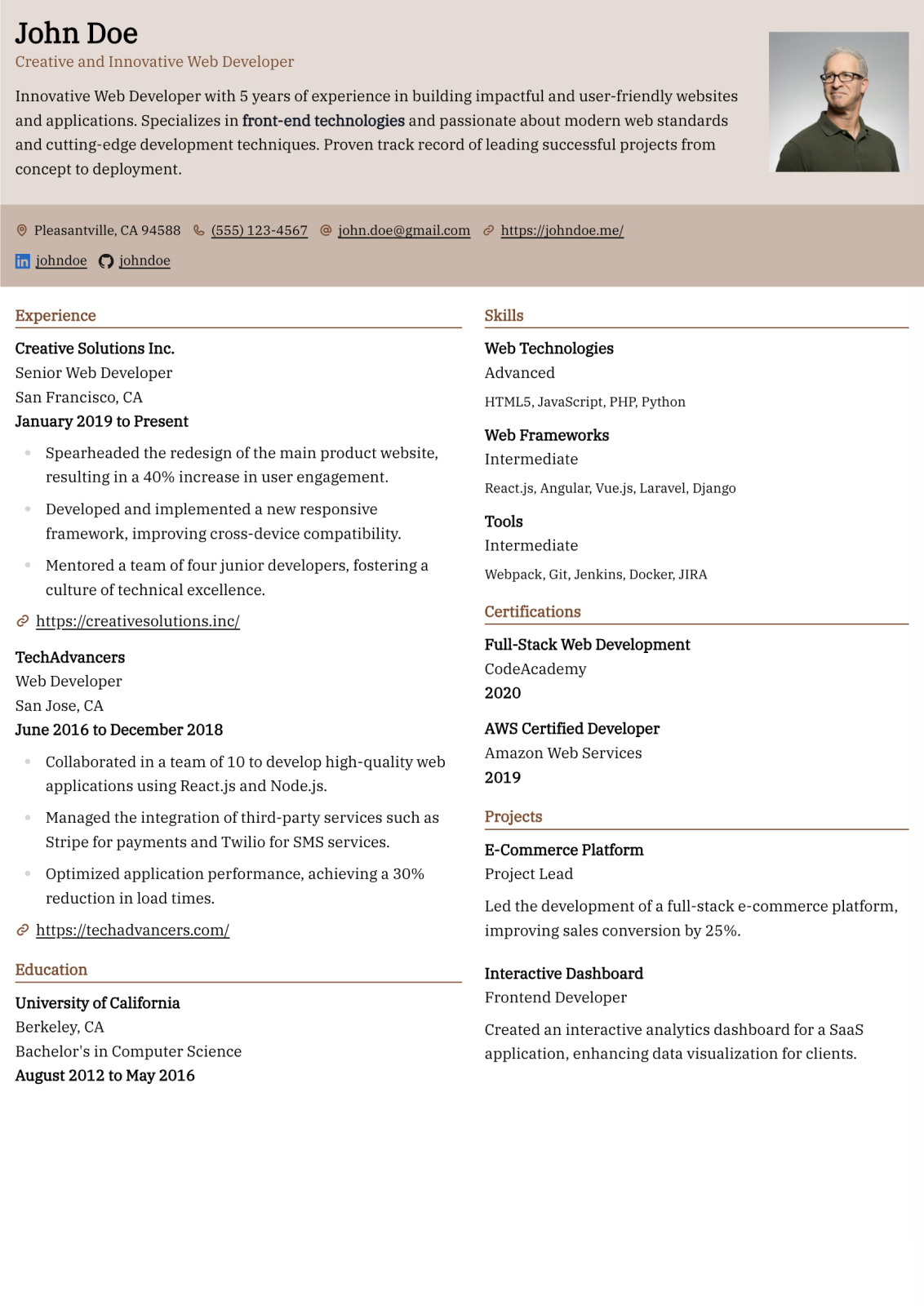
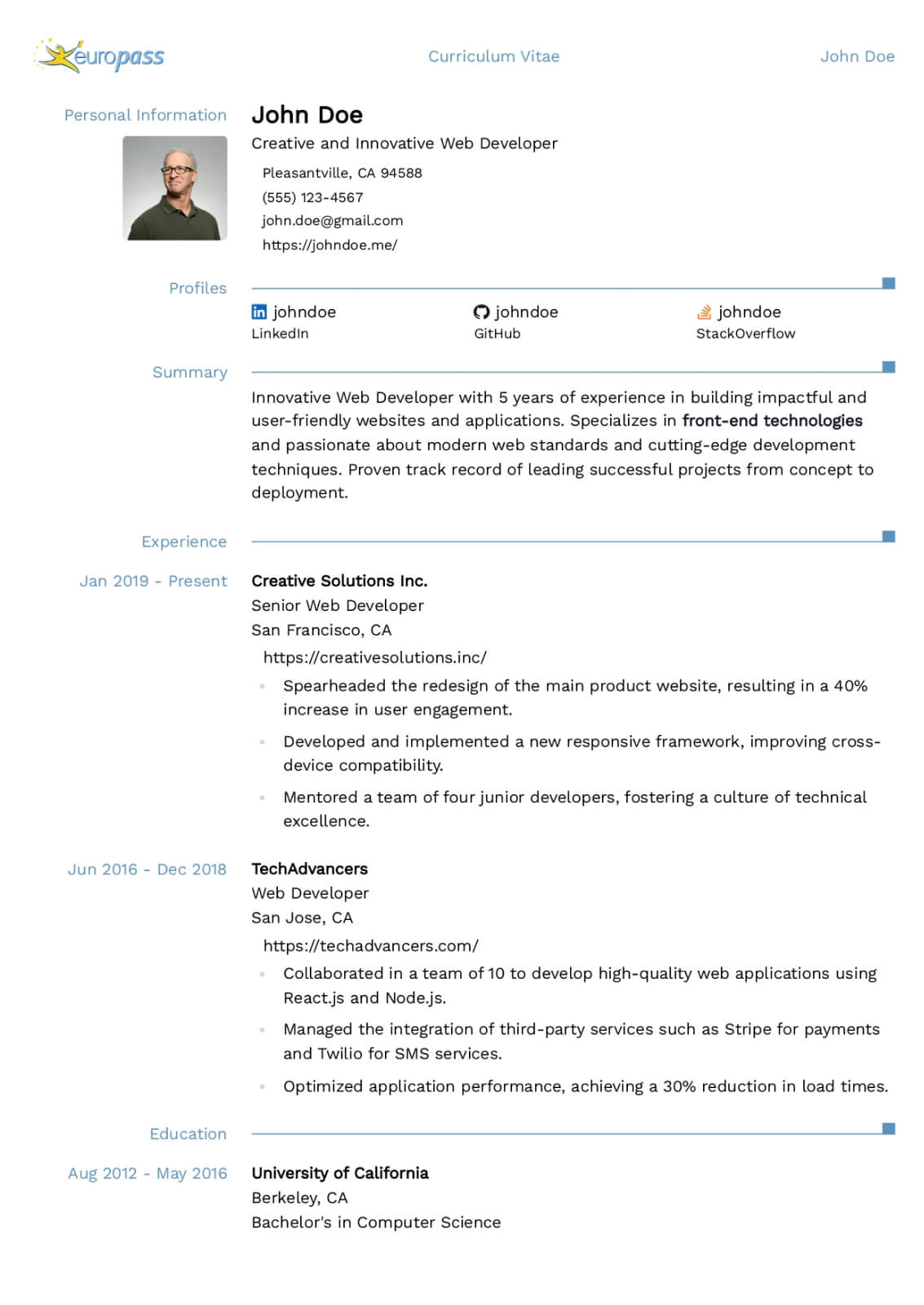
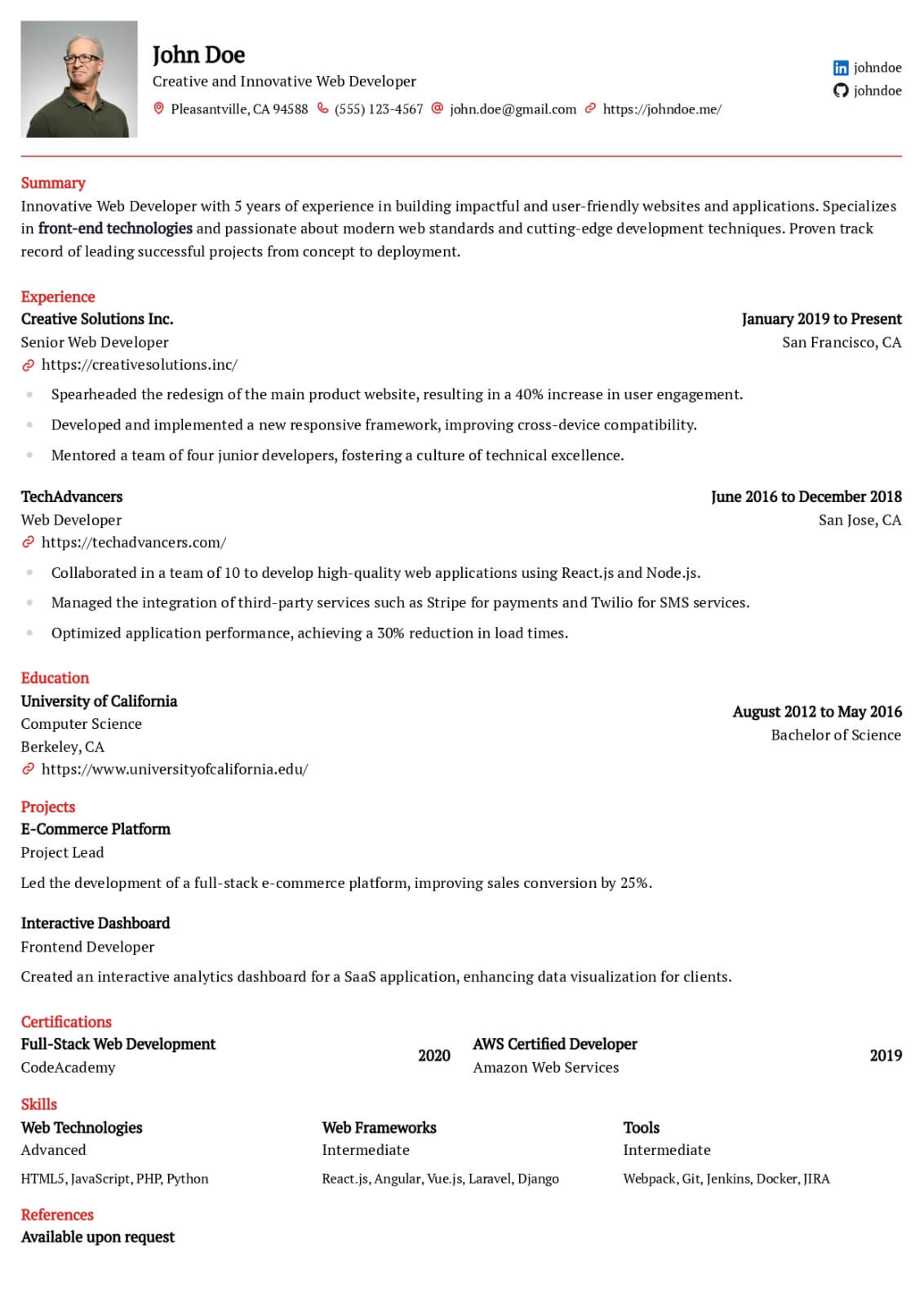
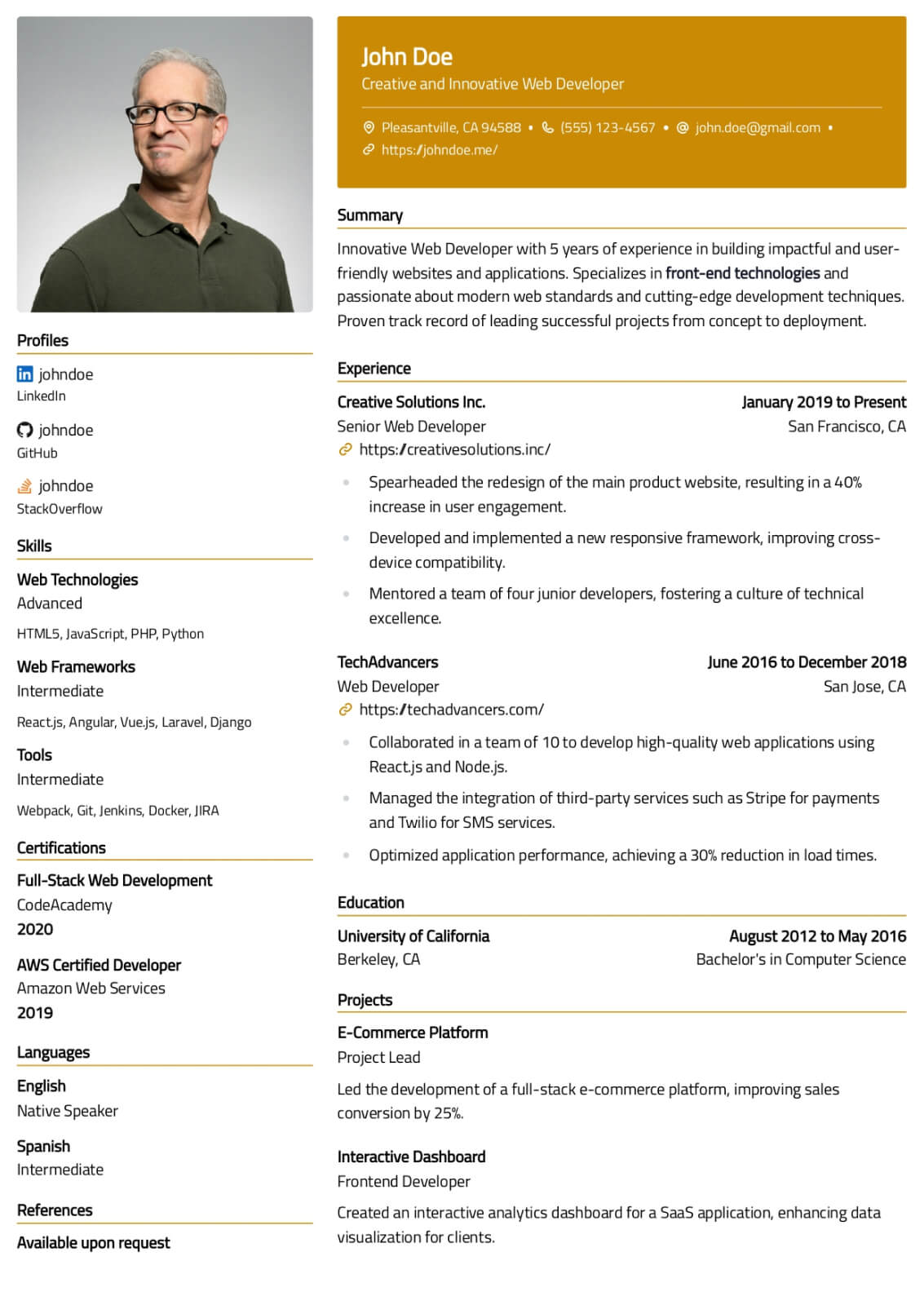
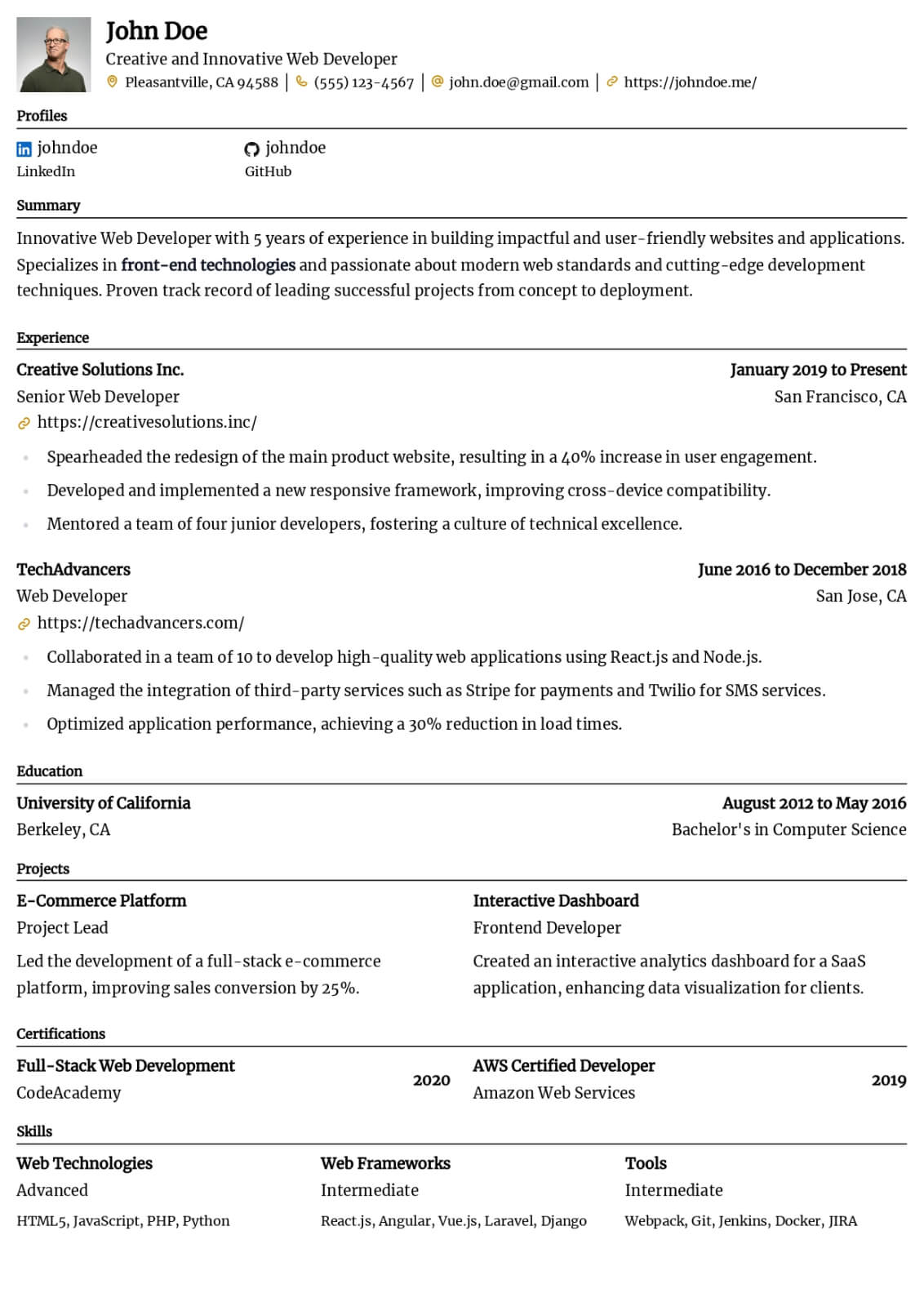
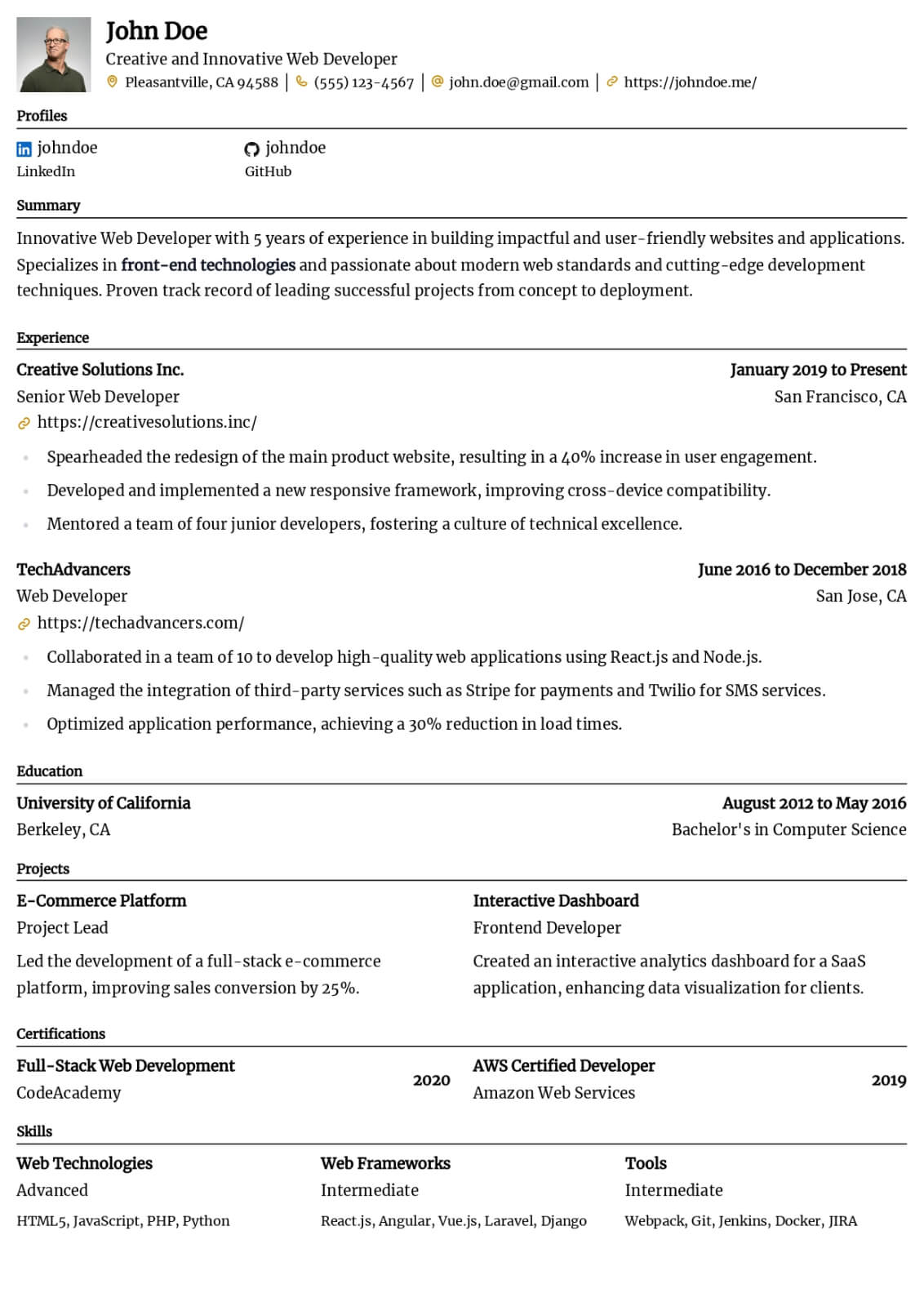
Frontend Developer resume guide
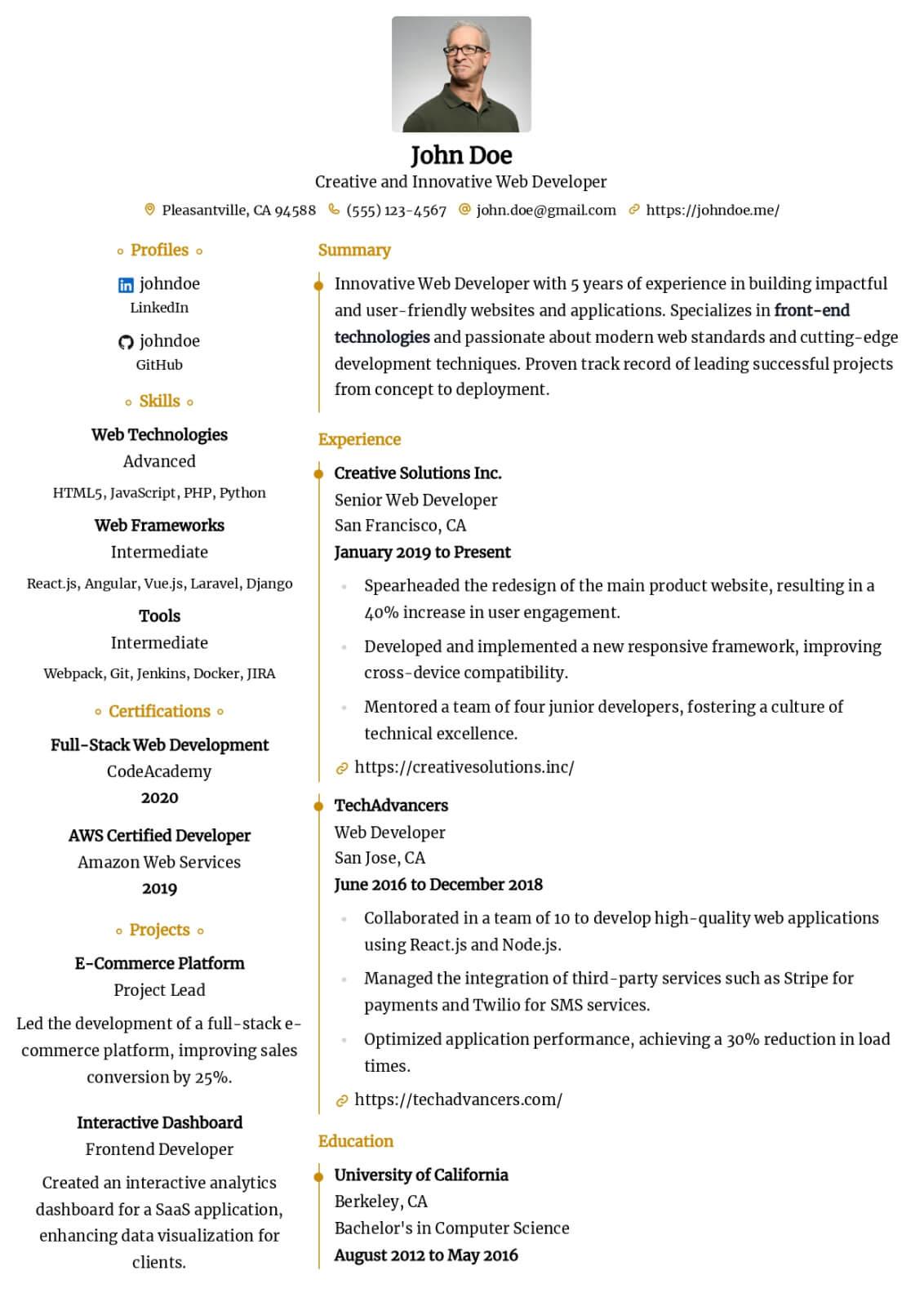
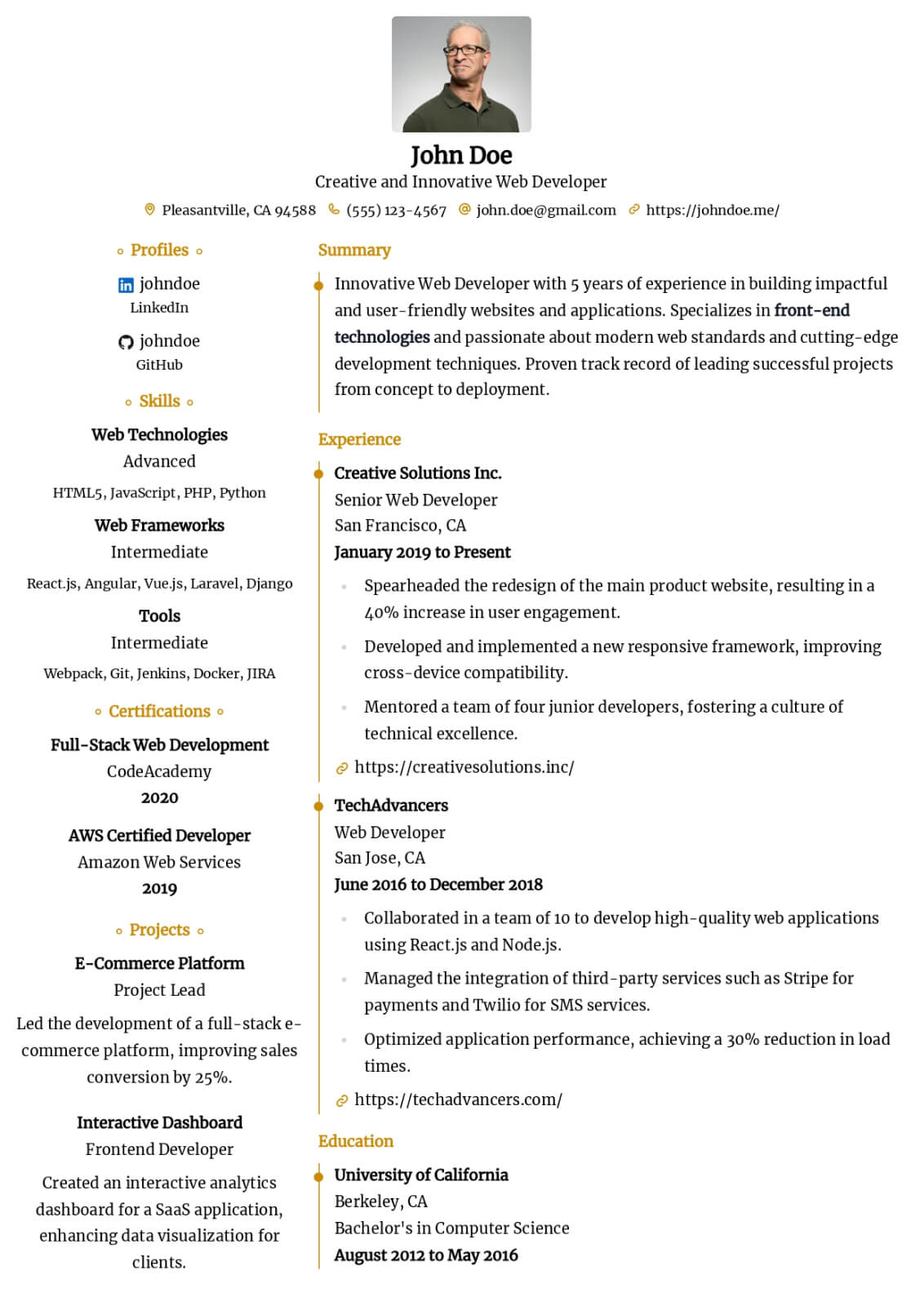
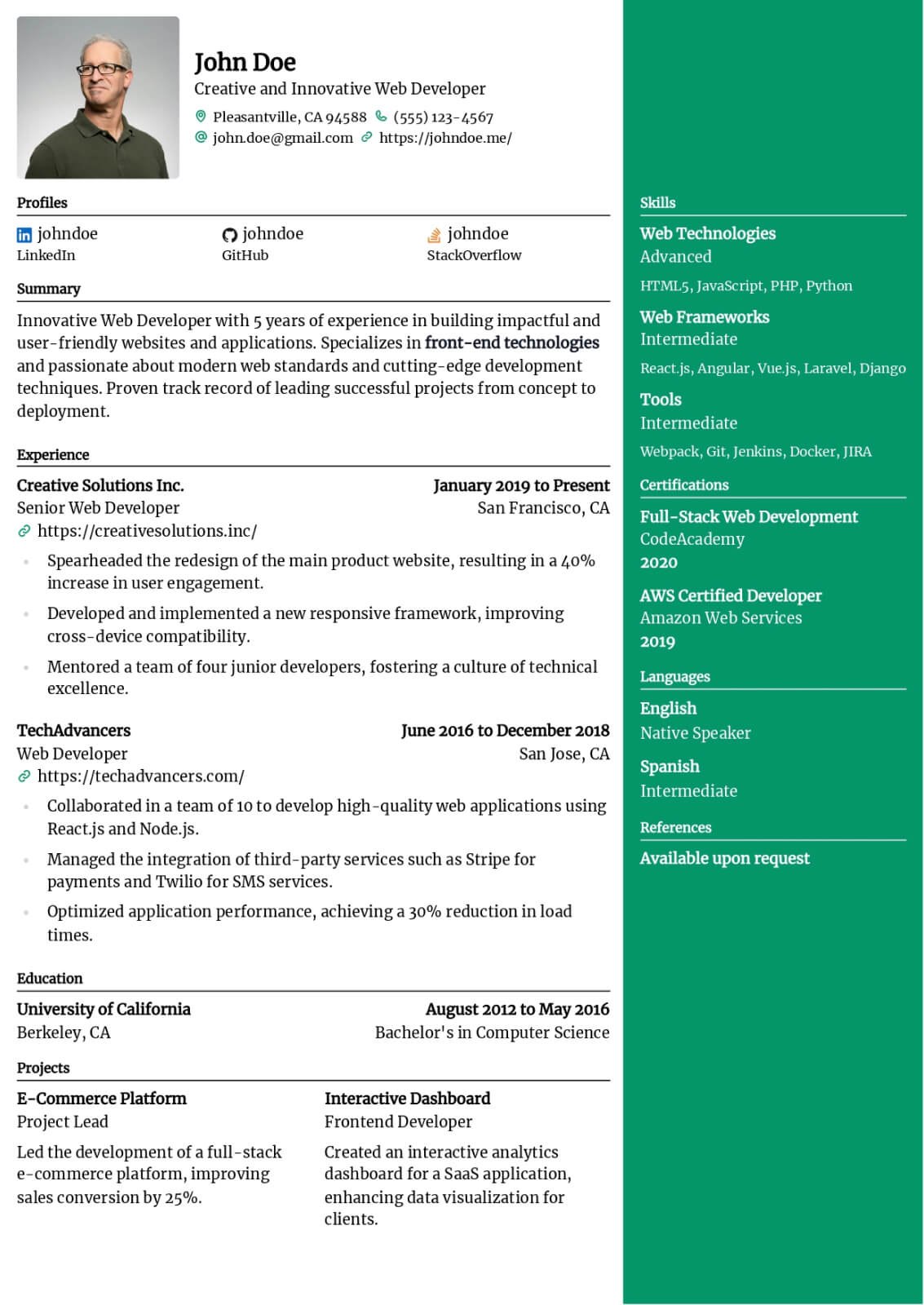
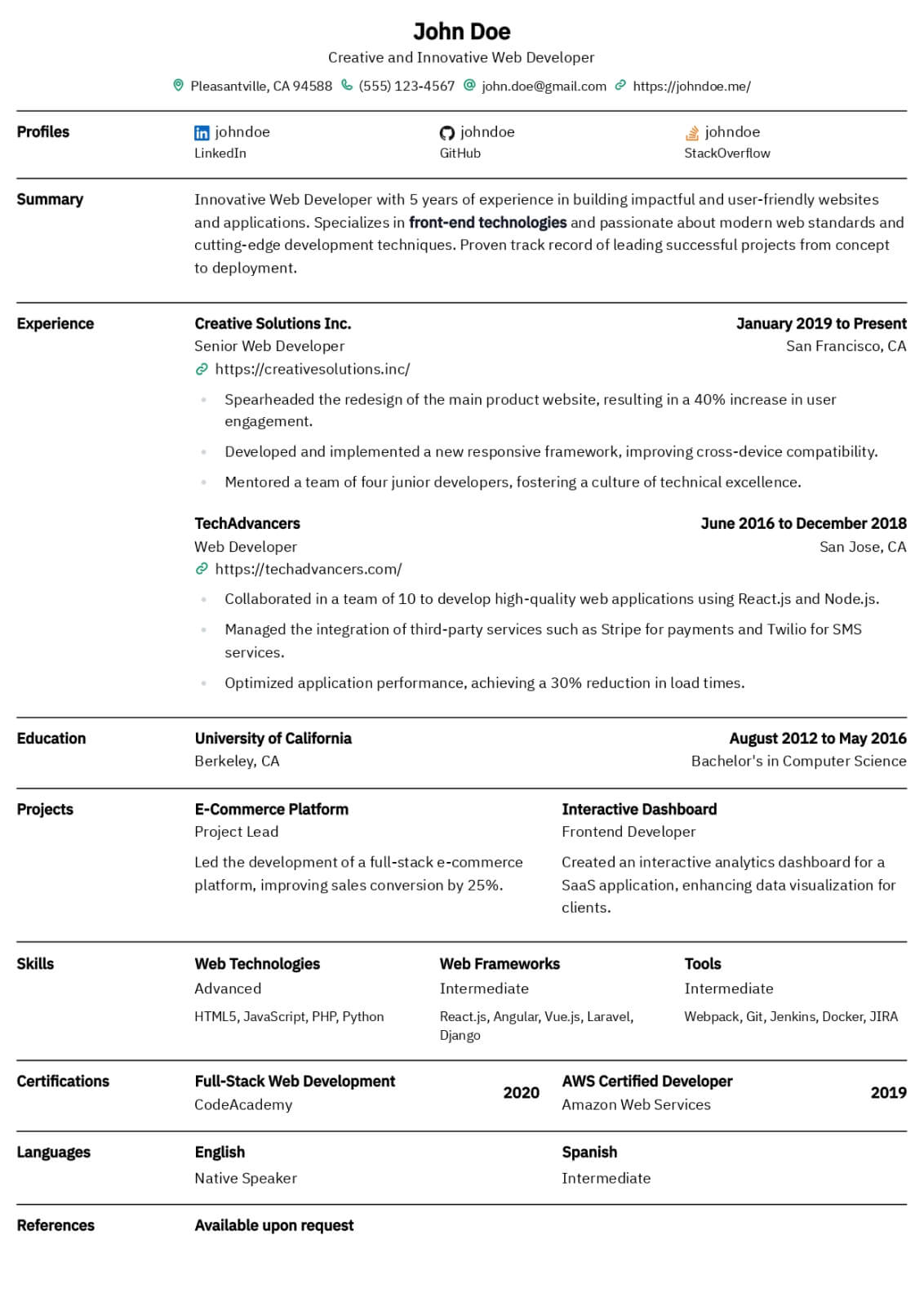
Below, you will find section-by-section guidance for your frontend developer resume — from your opening summary through skills and experience. Tailor every line to the job you want.
Professional Summary
Open your summary by identifying yourself as a frontend developer with a specific number of years building production web applications. Name your primary framework such as React, Vue, or Angular along with TypeScript as a core competency since it dominates modern frontend toolchains. Reference the scale of products you have worked on, whether consumer-facing applications with millions of monthly visitors or enterprise dashboards serving thousands of internal users. Include a flagship achievement like improving Largest Contentful Paint by forty percent or building a shared component library adopted across five product teams. Mention your collaboration style, such as working closely with designers in Figma to translate pixel-perfect mockups into accessible, responsive interfaces. Close with the type of frontend challenge that excites you, signaling enthusiasm and alignment with the hiring team's mission.
Work Experience
Present each role with clear titles, company names, and employment dates in reverse chronological order. Write four to six bullet points per role that begin with action verbs like implemented, architected, optimized, refactored, or launched. Connect each action to a measurable outcome whenever possible: reduced bundle size by thirty-five percent through code splitting and lazy loading, resulting in a twenty percent improvement in mobile page speed scores. Describe your work with specific technologies in context, for example stating that you migrated a legacy jQuery application to React with TypeScript, reducing bug reports by fifty percent over six months. Highlight collaboration with UX designers, backend engineers, and product managers to show that you operate effectively within cross-functional teams. Mention accessibility improvements such as achieving WCAG 2.1 AA compliance across all customer-facing pages, as accessibility is a growing priority for employers.
Technical Skills
Structure your skills into categories such as languages, frameworks, styling, testing, build tools, and design tools. Under languages list JavaScript, TypeScript, HTML5, and CSS3 as foundational competencies. For frameworks include React, Next.js, Vue, Nuxt, or Angular depending on your experience, along with state management libraries like Redux, Zustand, or Pinia. Styling tools should cover CSS Modules, Tailwind CSS, Styled Components, or Sass depending on your stack. List testing frameworks like Jest, Vitest, React Testing Library, Playwright, or Cypress that you use regularly. Include build and bundling tools such as Vite, Webpack, or Turbopack and version control with Git. Add design collaboration tools like Figma or Storybook to demonstrate your ability to bridge design and engineering workflows effectively.
Portfolio & Projects
Frontend developers benefit enormously from a visible portfolio that hiring managers can interact with directly. Include two to four projects with live URLs, GitHub repository links, and brief descriptions covering the problem solved, technologies used, and measurable outcomes. A strong portfolio entry might describe a progressive web application built with Next.js and Tailwind CSS that achieved a Lighthouse performance score of ninety-eight and served ten thousand monthly active users. Mention any component libraries or design systems you created, specifying the number of components, adoption across teams, and documentation quality. If your professional work is under NDA, create polished personal projects that demonstrate equivalent technical depth. Recruiters frequently evaluate frontend candidates by browsing live projects before deciding to schedule an interview.
Certifications & Education
List relevant certifications such as AWS Certified Cloud Practitioner, Google UX Design Certificate, or Meta Front-End Developer Professional Certificate alongside the issuing body and completion year. While certifications carry less weight than portfolio quality in frontend hiring, they demonstrate structured learning and commitment to the craft. In the education section include your degree, institution, and graduation year. Computer science degrees are common but not required, as many successful frontend developers come from bootcamps, design backgrounds, or self-directed learning paths. If you attended a recognized bootcamp program, list it with the curriculum focus and completion date. Senior developers should keep this section concise and let professional accomplishments and portfolio quality drive their candidacy.
Layout & ATS Compatibility
Use a single-column layout with clear section headings and consistent typography to ensure both human readers and ATS parsers can process your resume accurately. Avoid creative multi-column designs or infographic-style resumes despite the temptation to showcase visual skills, as these often break when parsed by applicant tracking systems. Embed relevant keywords from the job description naturally within your experience bullets and skills section, targeting terms like React, TypeScript, responsive design, and accessibility. Save as PDF unless otherwise specified by the employer. Include hyperlinks to your portfolio, GitHub profile, and LinkedIn but ensure they are plain text URLs that remain functional when printed. One page is recommended for candidates with fewer than seven years of experience.
Resume layout and formatting
Use a clean, single-column layout with clear section headings and plenty of white space. Lead with technical strengths such as JavaScript & TypeScript, React / Next.js, HTML5 & Semantic Markup, CSS3, Tailwind CSS & Styled Components, RESTful APIs & GraphQL Consumption, Jest / Vitest & React Testing Library, then reinforce interpersonal strengths like Design-Engineering Collaboration, Attention to Visual Detail, User Empathy, Clear Technical Communication. Keep fonts standard (e.g., Arial or Calibri) at 10–12pt body size so your resume stays ATS-friendly and easy to scan.
Key takeaways
- Lead with your primary framework and TypeScript experience in the summary
- Quantify frontend impact using performance scores, conversion lifts, and bundle reductions
- Include live portfolio links so hiring managers can evaluate your work directly
- Highlight accessibility compliance and responsive design as differentiating strengths
- Mirror exact technology names from job descriptions to boost ATS match rates
- Keep your resume to one page unless you have seven or more years of experience
Build your Frontend Developer resume with Scale
Lead with your primary framework and TypeScript experience in the summary
Use This Template
Professional Templates That Make You Stand Out
Browse modern, ATS-friendly resume designs crafted to impress recruiters. Customize any template and download it as a Word or PDF file.
Listen What Our Users Have to Say

Rohan Sen
I am very happy with the team's quick turnaround time - any query is responded at utmost priority. Shoutout to my client manager, Anub Biju - very helpful.

Gael L
Service and communication is great, cover letters are non-ai sounding and well tailored. Just have a lot of communication and review with your staff!

Jonathan Parry
Wow - don't tell your peers! Wow, I can't recommend scale.jobs enough - it's so good I am not sharing with my peers. Applications at scale that get through filters. Thank you!

Cynthia Zhu
Great service! The scale.jobs team was very responsible and managed to apply tons of jobs for me in a very tight deadline to help me secure interviews quickly. Highly recommend to anyone who needs help applying to jobs!

Yash Yenugu
Save your fingers. Saved me from a thumb cramp because we're expected to effortlessly apply to jobs during these times.

Cian O'Driscoll
Clever service. Takes the hard effort out of applying for jobs with an intuitive dashboard and attention to detail. A great asset to job seekers. :-)
Frequently asked questions
What skills should a frontend developer highlight on their resume?
Prioritize JavaScript, TypeScript, and your primary framework such as React or Vue. Include styling tools like Tailwind CSS, testing libraries like Jest, and build tools like Vite. Accessibility knowledge and performance optimization experience are increasingly valued by employers. Only list skills you can confidently demonstrate during a technical assessment or live coding interview.
How important is a portfolio for frontend developer job applications?
A portfolio is one of the most powerful assets a frontend developer can have. Recruiters and hiring managers frequently visit live project links before deciding to schedule interviews. Include two to four polished projects with source code and live demos. Even if your professional work is under NDA, personal projects demonstrating equivalent technical sophistication will strengthen your application significantly.
Should I include design skills on my frontend resume?
Including Figma proficiency and design system experience is valuable because it signals that you collaborate effectively with designers. However, avoid positioning yourself as a designer unless the role explicitly requires it. Mention skills like translating Figma mockups to pixel-perfect implementations, contributing to shared component libraries, or maintaining Storybook documentation for design-engineering alignment.
How do I quantify achievements as a frontend developer?
Track metrics like Lighthouse performance scores, Largest Contentful Paint improvements, bundle size reductions, conversion rate increases, and accessibility audit pass rates. For example, state that you reduced First Input Delay by sixty percent through strategic code splitting. Numbers transform generic descriptions into compelling evidence of your engineering impact on real users.
Is TypeScript required for frontend roles in 2026?
TypeScript has become the industry standard for professional frontend development. Most major companies and open-source frameworks have adopted it as the default language for new projects. While some roles still accept JavaScript-only experience, listing TypeScript proficiency significantly expands your job opportunities. Invest time in demonstrating TypeScript competence through projects and work experience on your resume.
How do I handle framework experience when switching from Angular to React?
List both frameworks in your skills section with honest proficiency levels. In your experience bullets, emphasize transferable concepts like component architecture, state management patterns, and testing strategies that apply across frameworks. Highlight any migration projects you participated in, as cross-framework experience demonstrates architectural flexibility. Build one or two React side projects to provide tangible evidence of your new framework competence.
Related Resume Guides
Software Engineer
Craft a compelling software engineer resume that highlights your technical depth, system design expertise, and measurable contributions to production software used by millions of users worldwide.
Full Stack Developer
Craft a compelling full stack developer resume that demonstrates your ability to build end-to-end web applications spanning frontend interfaces, backend APIs, databases, and cloud deployment.
UI/UX Designer
Craft a compelling UI/UX designer resume that demonstrates your ability to translate user research into intuitive interfaces, backed by portfolio evidence and measurable usability improvements.
Mobile Developer
Create a polished mobile developer resume that showcases your expertise in native and cross-platform app development, performance optimization, and delivering seamless user experiences across iOS and Android.
Backend Developer
Create a powerful backend developer resume that showcases your expertise in server-side architecture, database optimization, API design, and building reliable distributed systems at scale.