
Solutions Architect Resume Examples, Templates & Writing Guide

Written by: Scale.jobs EditorialLast updated: May 1, 2026







Introduction
Build a compelling solutions architect resume that demonstrates your ability to design scalable system architectures, align technical solutions with business requirements, and lead enterprise-level technology transformations.
This guide walks you through every major section of a solutions architect resume, with practical tips you can apply today.
- How to present enterprise architecture expertise with quantified scalability and cost optimization outcomes
- Key cloud certifications and platforms hiring managers expect solutions architect candidates to demonstrate
- Strategies for communicating complex architectural decisions in business-accessible language on resumes
- Proven methods for quantifying architecture impact through system uptime, cost reduction, and throughput metrics
- Techniques for tailoring your resume keywords to pass automated applicant tracking system screening
- How to differentiate your candidacy by showcasing multi-cloud and hybrid architecture design experience
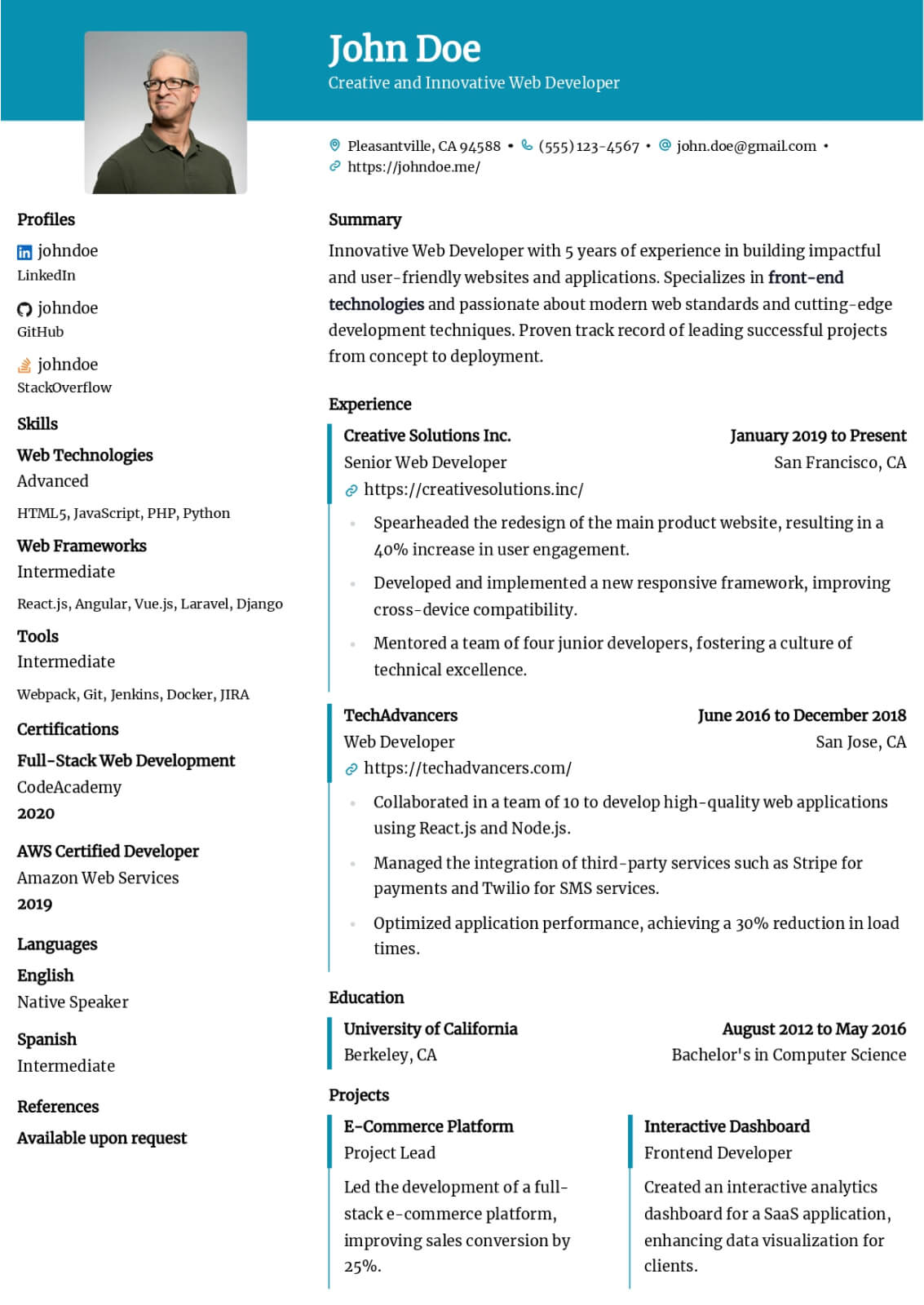
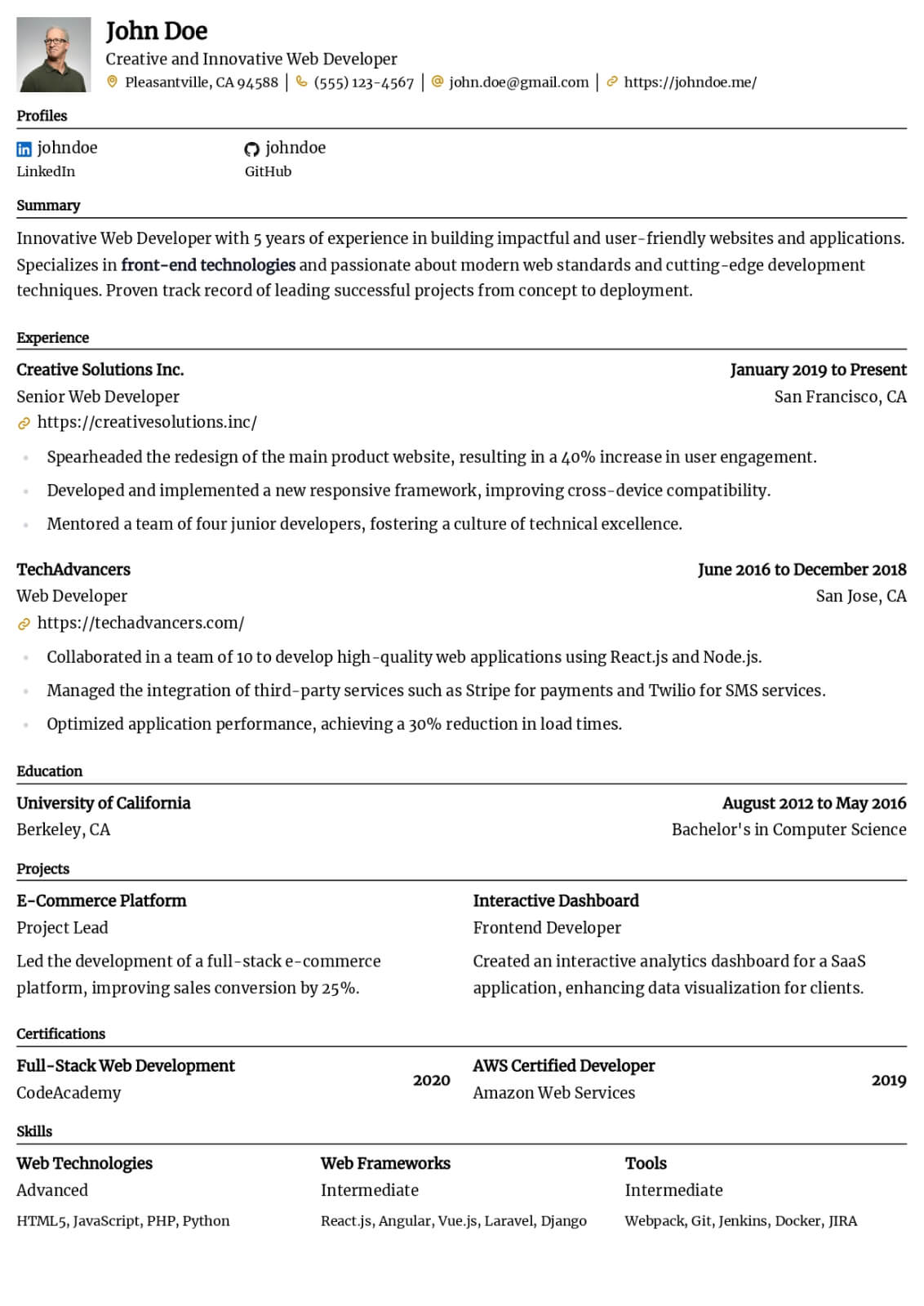
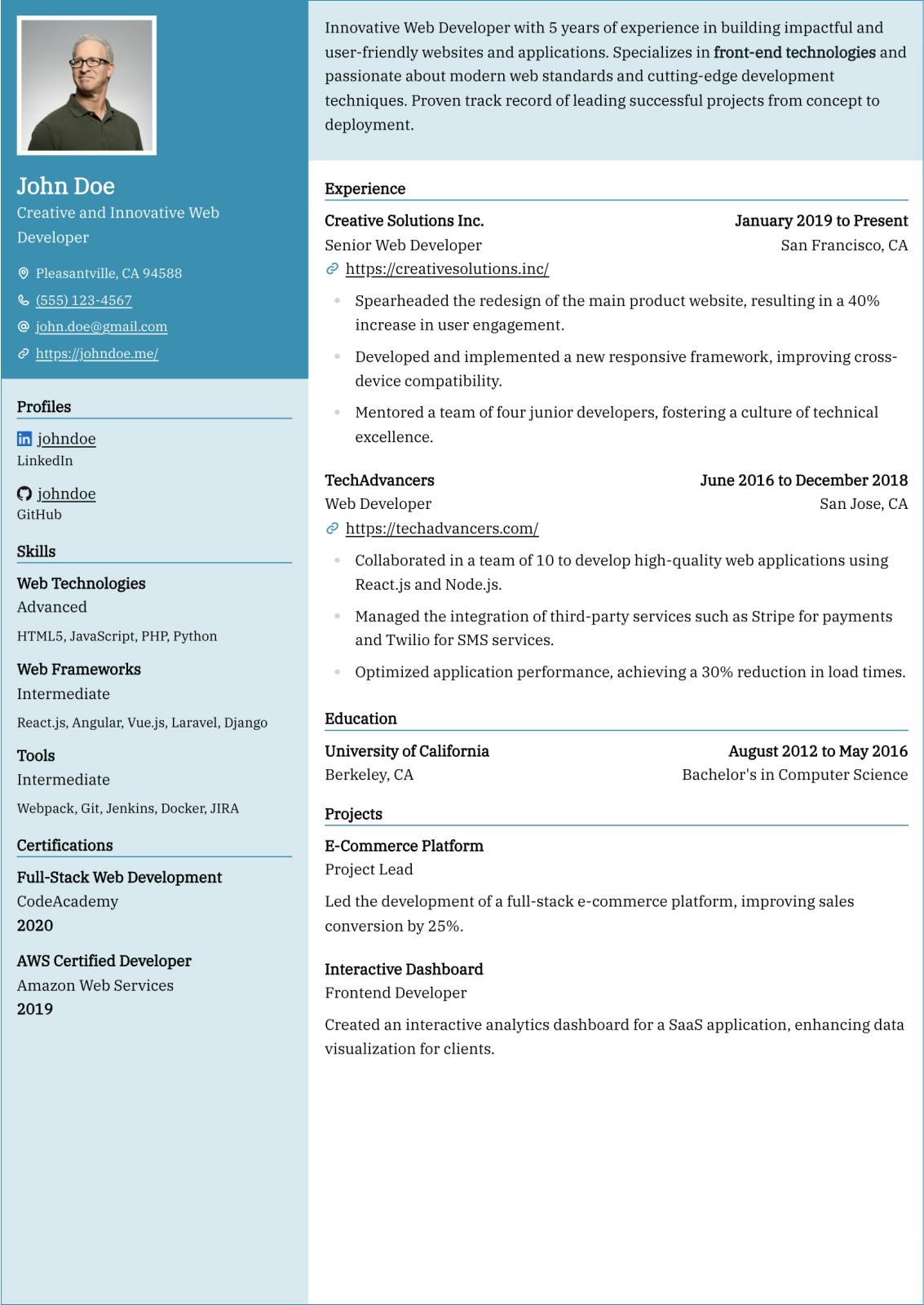
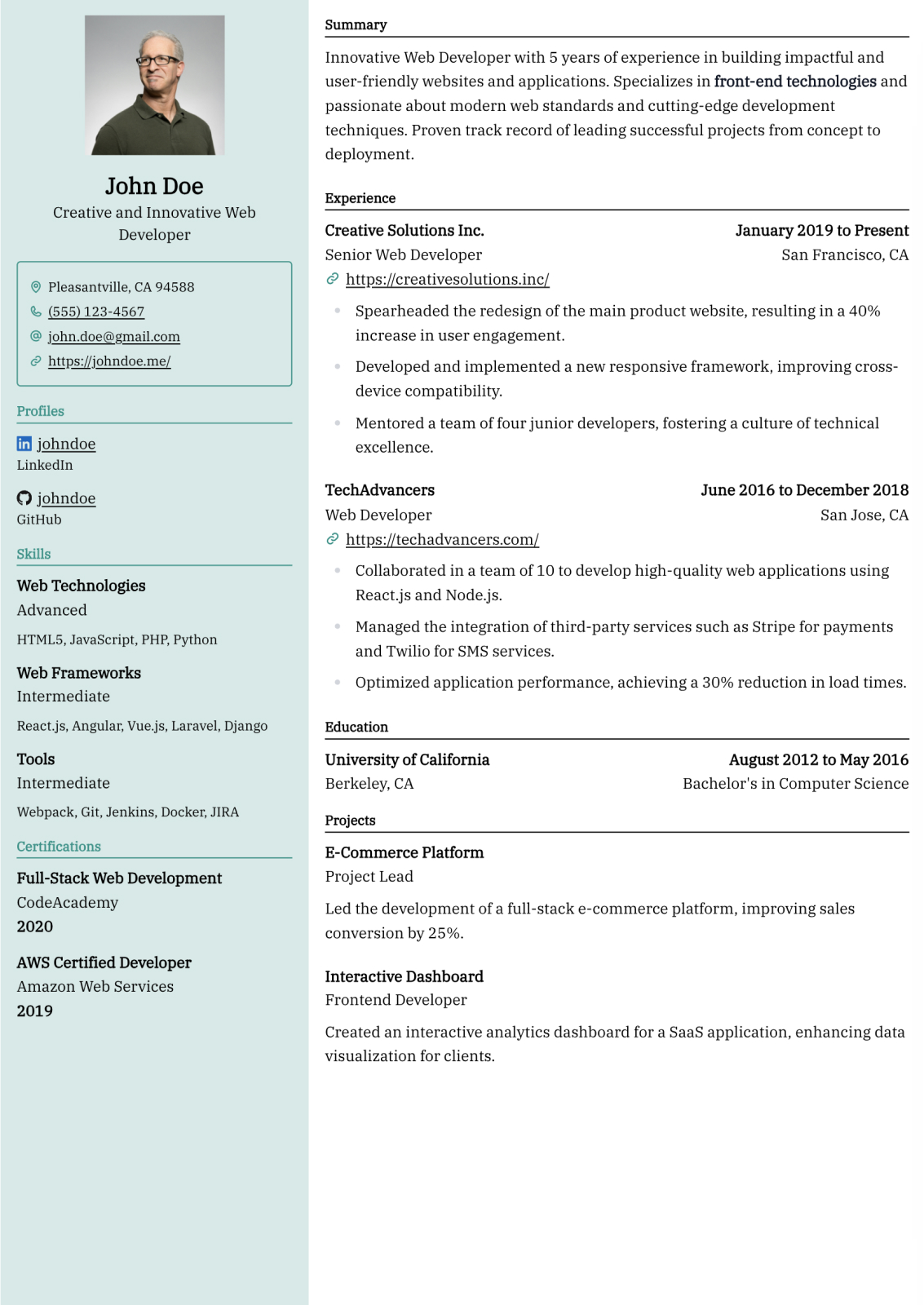
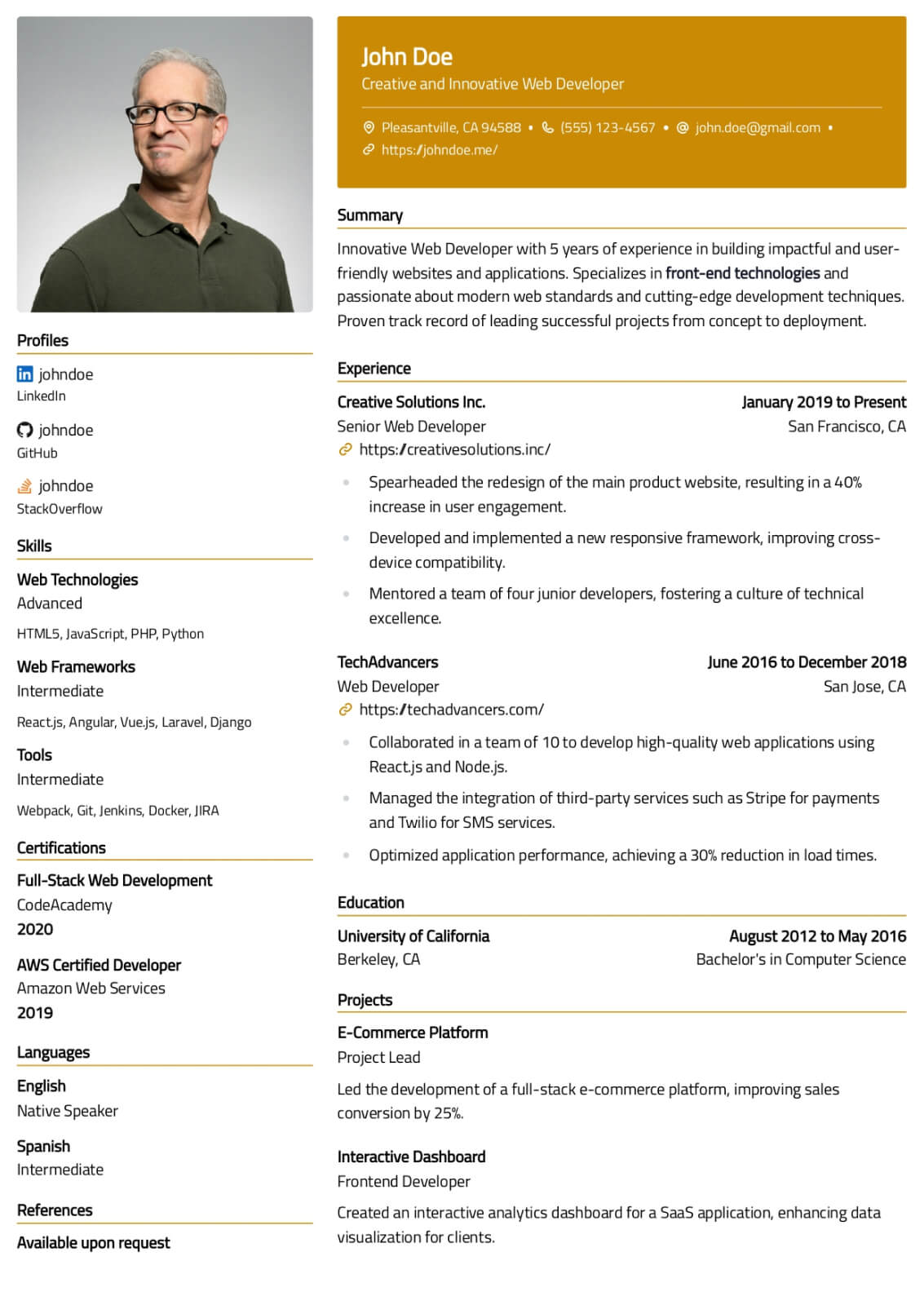
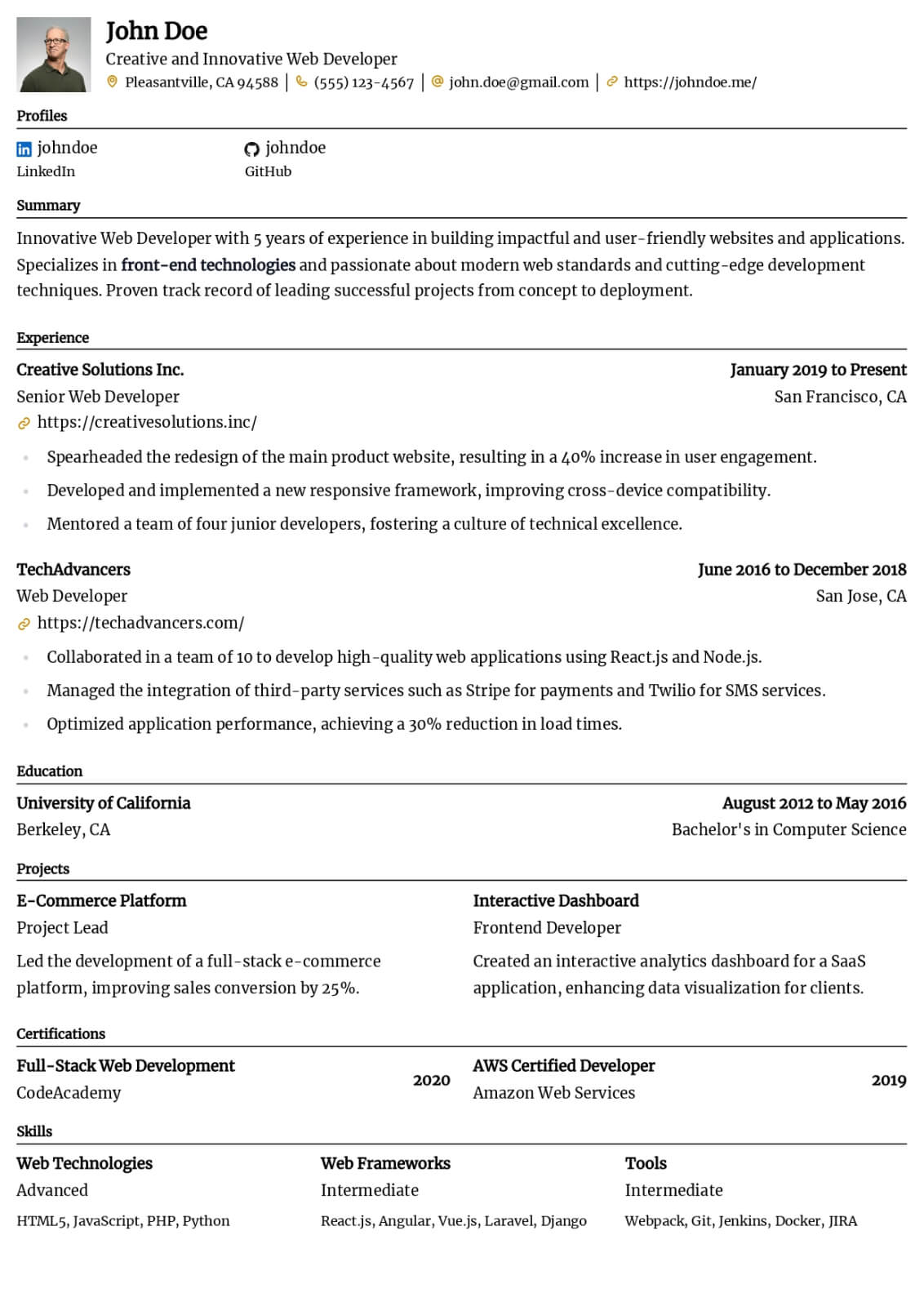
Solutions Architect resume guide
Below, you will find section-by-section guidance for your solutions architect resume — from your opening summary through skills and experience. Tailor every line to the job you want.
Professional Summary
Your professional summary should position you as an architect who bridges business requirements and technical implementation to deliver scalable, cost-effective enterprise solutions. Open with a statement identifying your architectural focus, whether cloud-native design, microservices migration, or hybrid infrastructure, alongside your years of experience. Reference two to three core platforms such as AWS, Azure, or Google Cloud Platform that align with the target role. Include a quantified achievement, for instance stating that you designed a microservices architecture handling fifteen million daily transactions while reducing infrastructure costs by thirty-two percent. Align your terminology with the job description to optimize for both technical reviewers and automated keyword matching. Keep the summary between three and five sentences to establish credibility and strategic impact without overwhelming the reader.
Work Experience
Present your work experience in reverse-chronological order with clear titles, company names, and dates for each position. Write four to six bullet points per role beginning with action verbs like designed, architected, evaluated, migrated, or standardized. Each bullet should connect an architectural decision to a measurable business outcome, such as stating that you architected a multi-region disaster recovery solution achieving a recovery time objective of under fifteen minutes and saving the organization one point two million dollars annually in downtime costs. Demonstrate breadth across architecture activities including requirements gathering, technology evaluation, proof-of-concept development, stakeholder presentations, and post-deployment optimization. Reference the scale of systems you have designed in terms of transaction volume, user count, or data throughput. Avoid listing technologies without explaining how your architectural decisions delivered measurable business value.
Skills
Build a skills section with eight to twelve technical architecture competencies and six to eight leadership and communication skills matched to the target position. On the technical side, include cloud platforms such as AWS, Azure, and Google Cloud alongside architectural patterns like microservices, event-driven architecture, and serverless computing. Add infrastructure-as-code tools like Terraform and CloudFormation, container orchestration with Kubernetes, and integration technologies such as API gateways and message queues. Include security architecture principles, cost optimization strategies, and performance engineering capabilities. For interpersonal skills, emphasize stakeholder communication, technical mentorship, vendor evaluation, and the ability to translate complex technical concepts into business-oriented presentations. Only list skills that you can substantiate with architectural decisions documented in your experience section.
Architecture Case Studies
Dedicate a section to two to four architecture engagements where you designed solutions that delivered transformative business outcomes. For each case study, describe the business challenge, the architectural approach you designed, the technology stack selected, and the quantified results after implementation. A compelling entry might state that you designed a cloud-native e-commerce platform on AWS handling two hundred thousand concurrent users with ninety-nine point ninety-nine percent availability, reducing page load times by fifty-five percent and increasing revenue by eight hundred thousand dollars annually. Architecture case studies demonstrate strategic thinking and technical depth that standard experience bullets may not fully convey, making them particularly valuable for senior-level candidacies. Including architecture diagrams or links to published technical blog posts further strengthens these entries by providing reviewers with visual evidence of your design capabilities.
Certifications & Professional Development
Cloud and architecture certifications carry significant weight in solutions architect hiring because they provide vendor-validated proof of design competency. List credentials such as AWS Certified Solutions Architect Professional, Microsoft Certified Azure Solutions Architect Expert, or Google Cloud Professional Cloud Architect with the issuing organization and completion date. The TOGAF certification from The Open Group validates enterprise architecture methodology knowledge. If you hold multiple cloud certifications, organize them by platform for clarity. Include certifications in progress with expected completion dates to demonstrate ongoing investment in your professional development and staying current with rapidly evolving cloud architectures.
Education
Include your highest relevant degree, the institution name, and graduation year. Solutions architect positions commonly accept degrees in computer science, computer engineering, information systems, or related technical fields. An advanced degree in computer science or an MBA with a technology concentration can strengthen candidacy for principal or chief architect positions. If you graduated within the last five years, add relevant coursework in distributed systems, cloud computing, software architecture, or network design. For senior architects with extensive design portfolios and multiple cloud certifications, keep education concise and let your architecture track record carry the primary weight of your application.
Resume layout and formatting
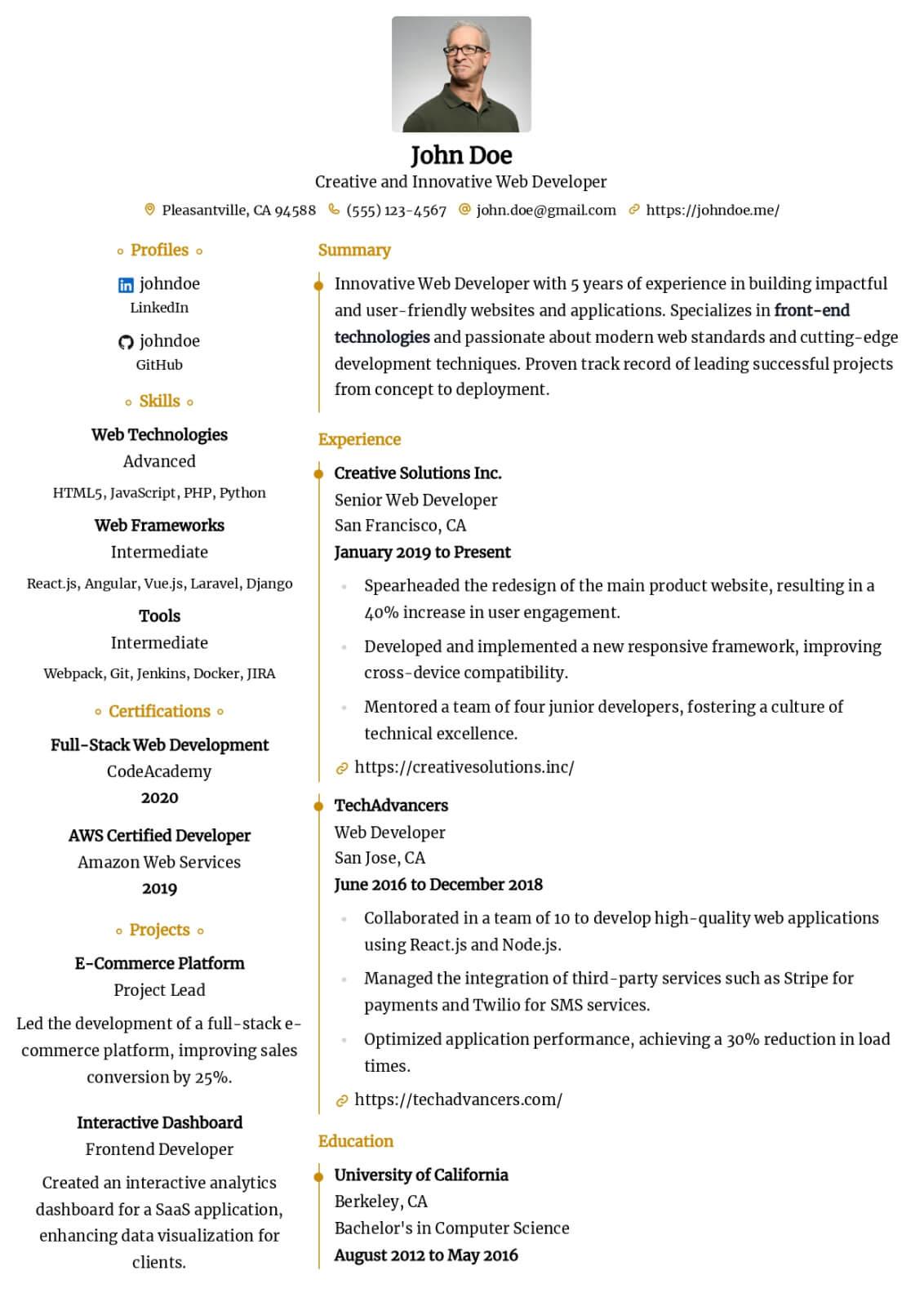
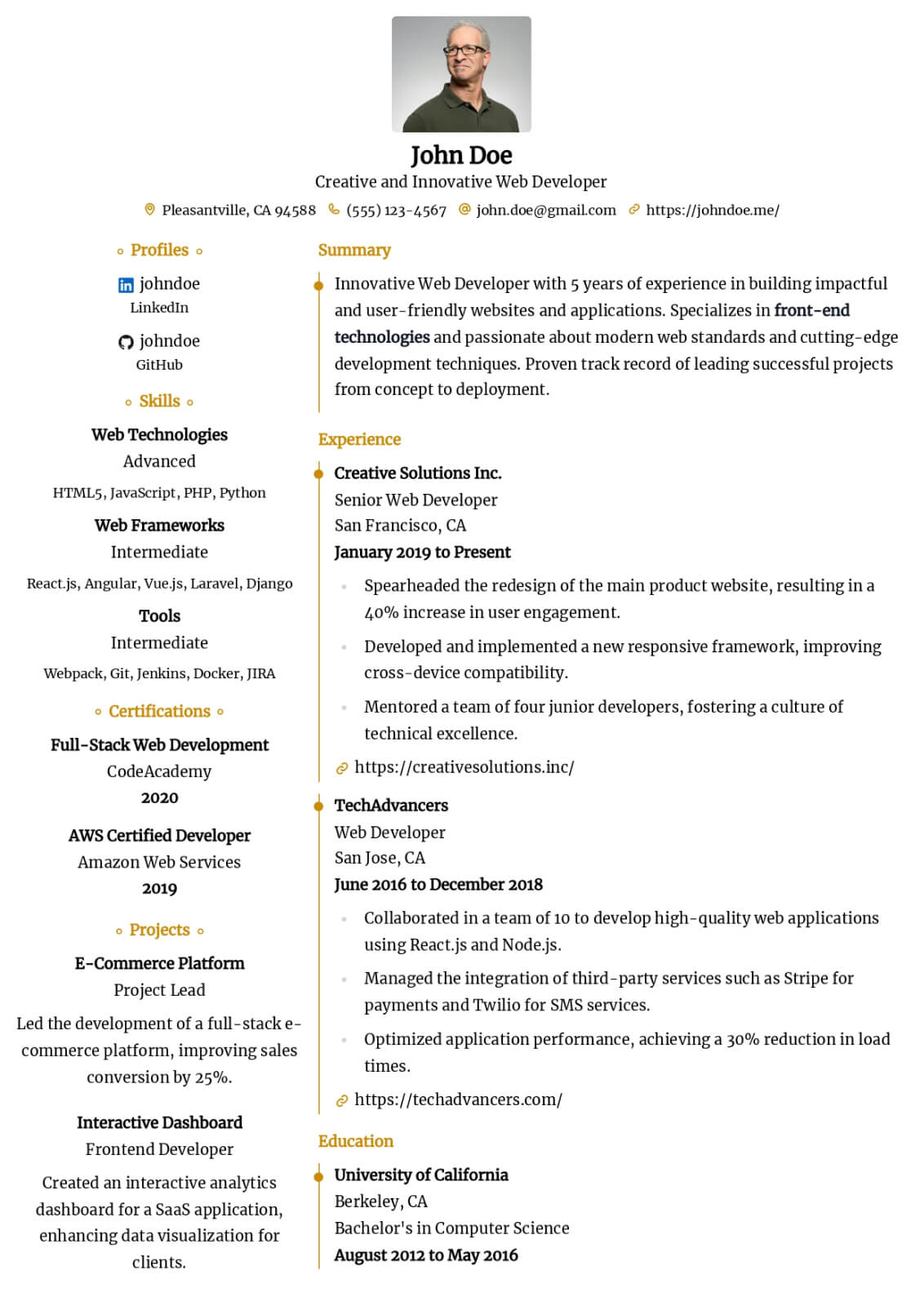
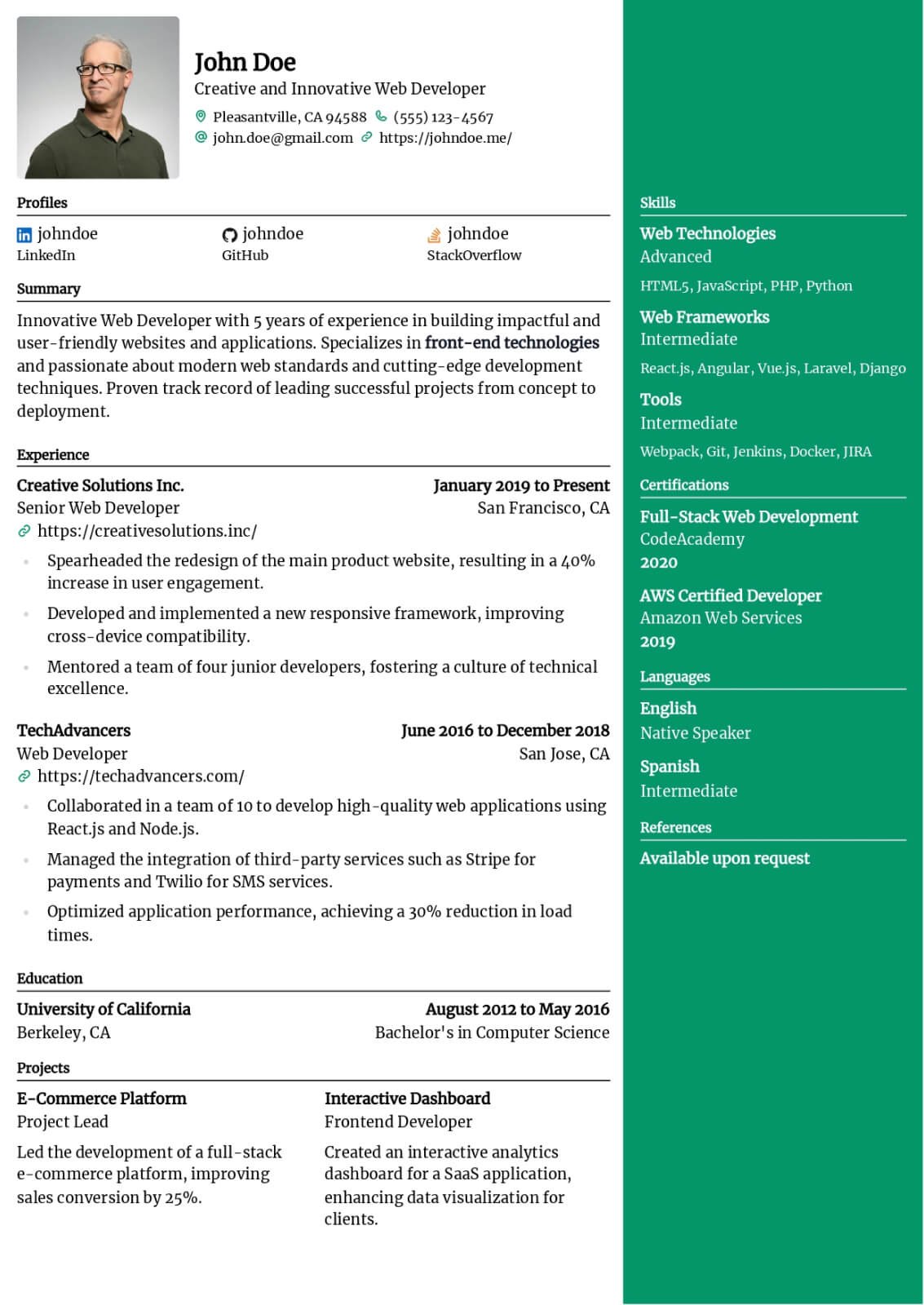
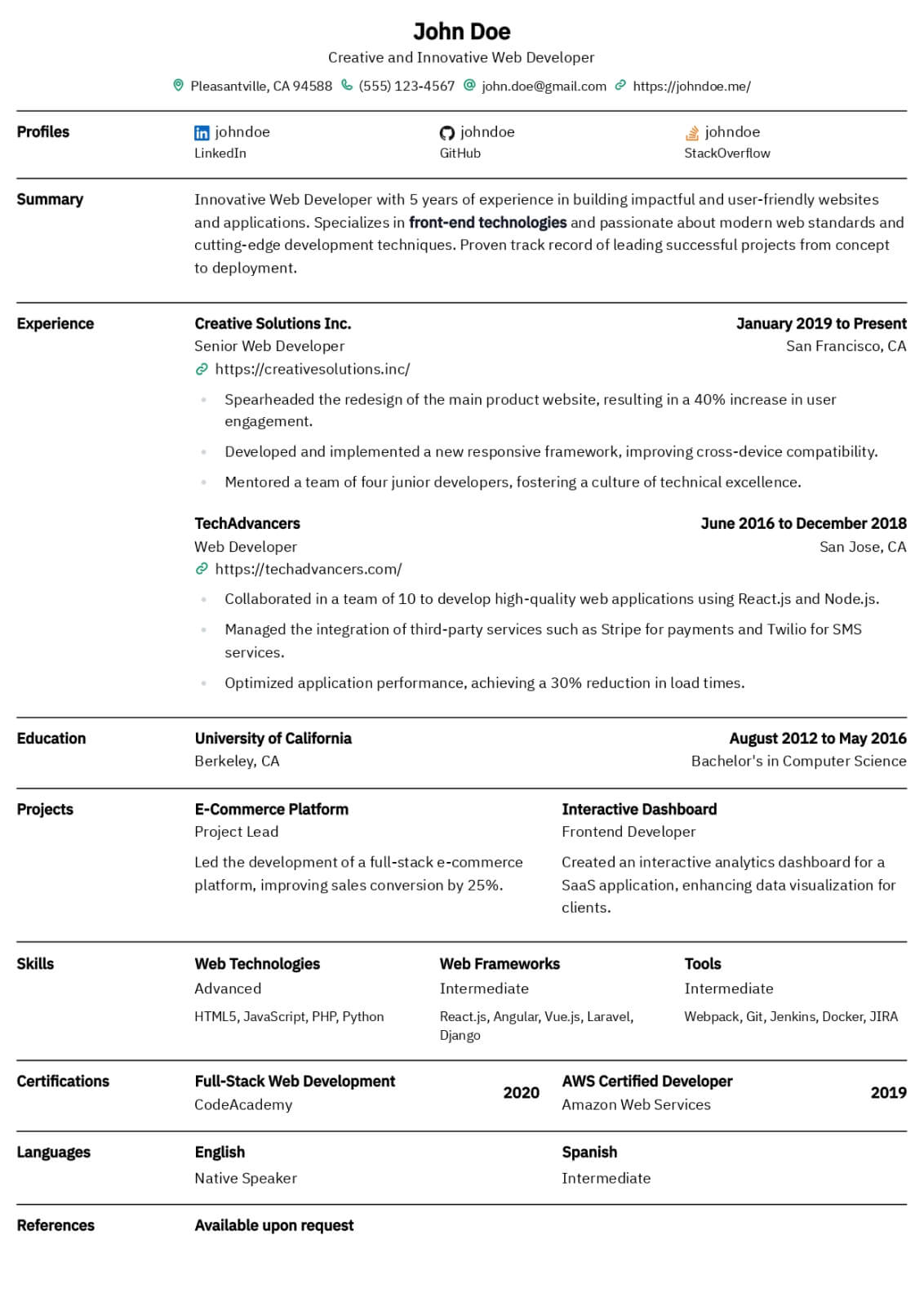
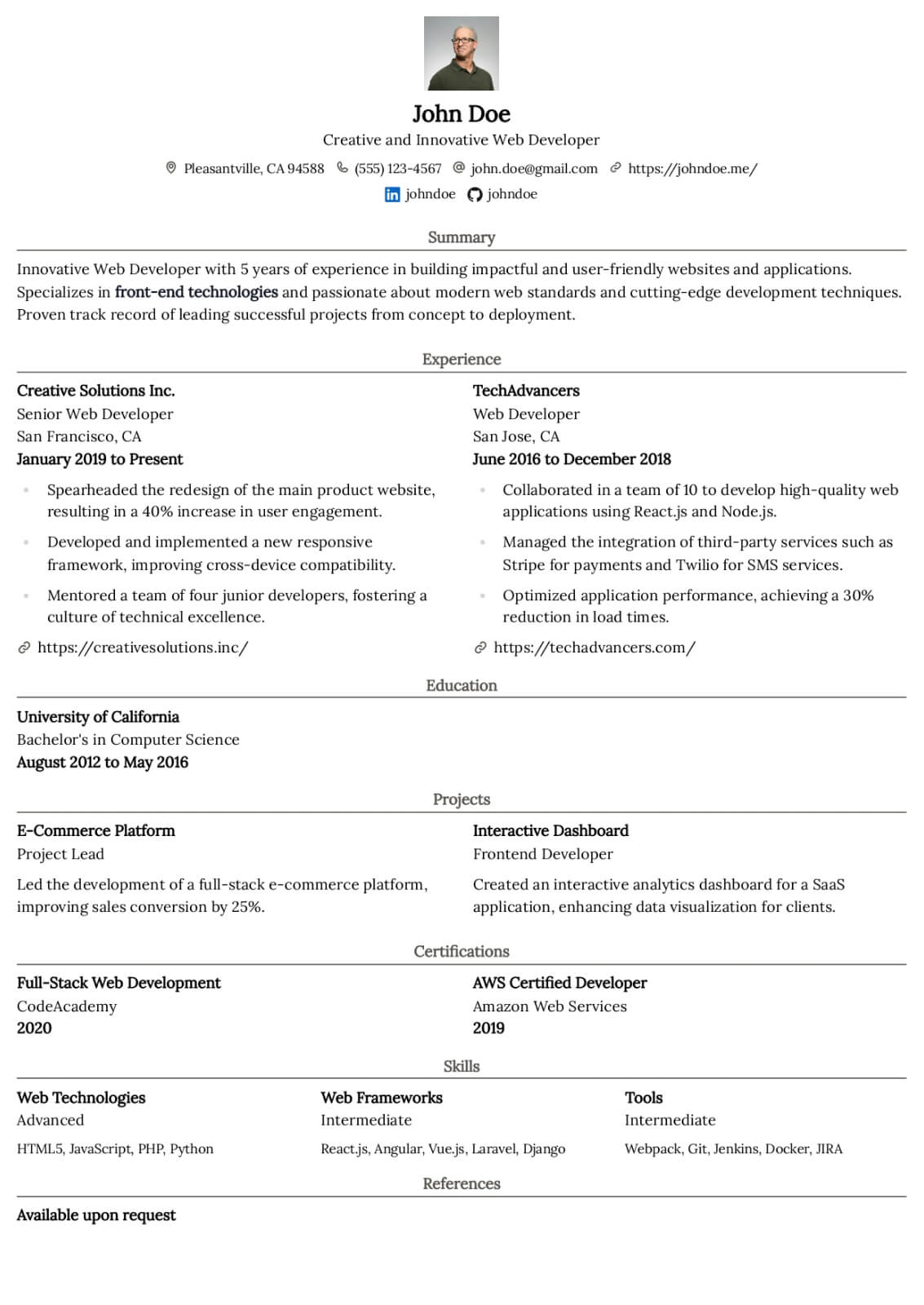
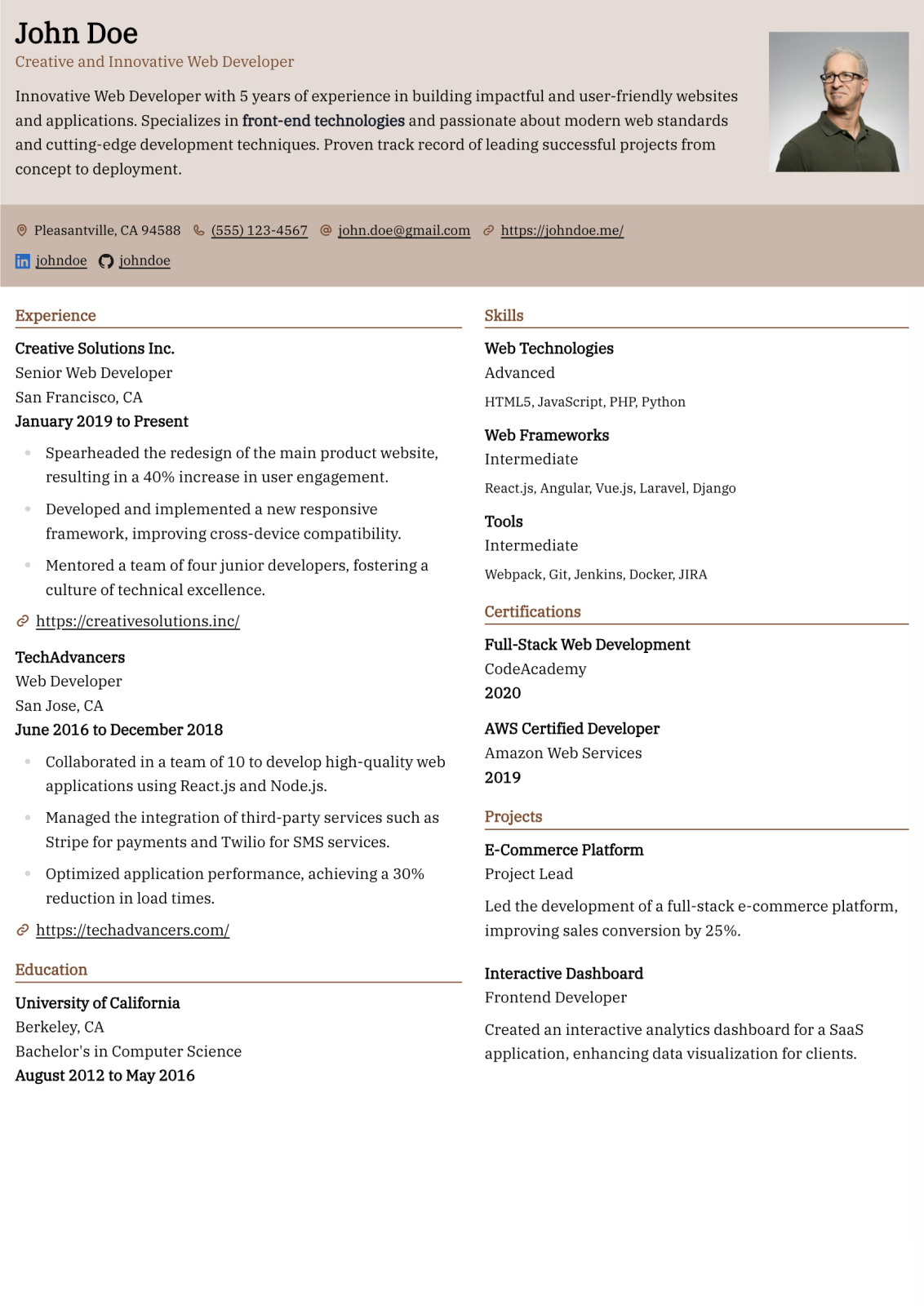
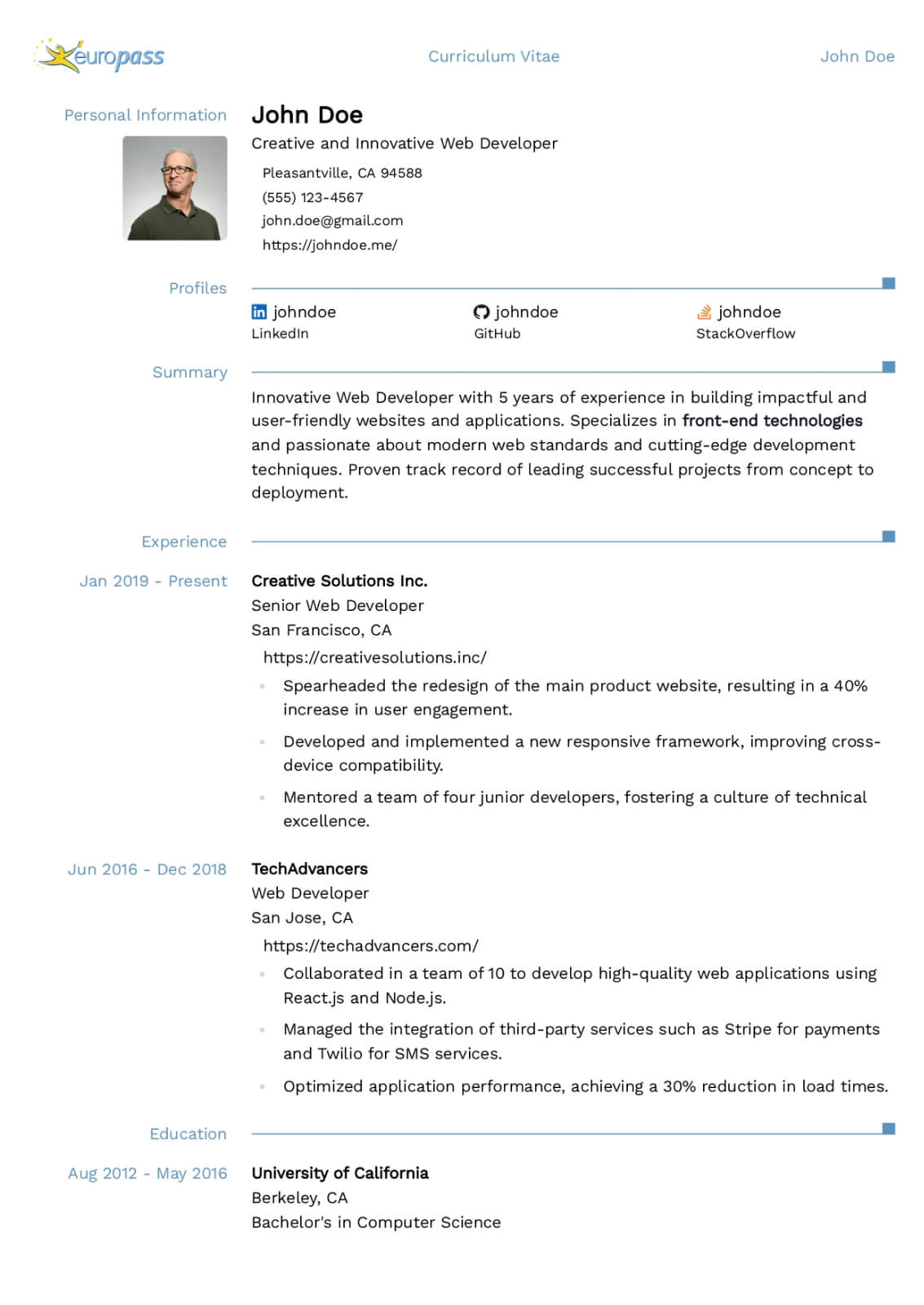
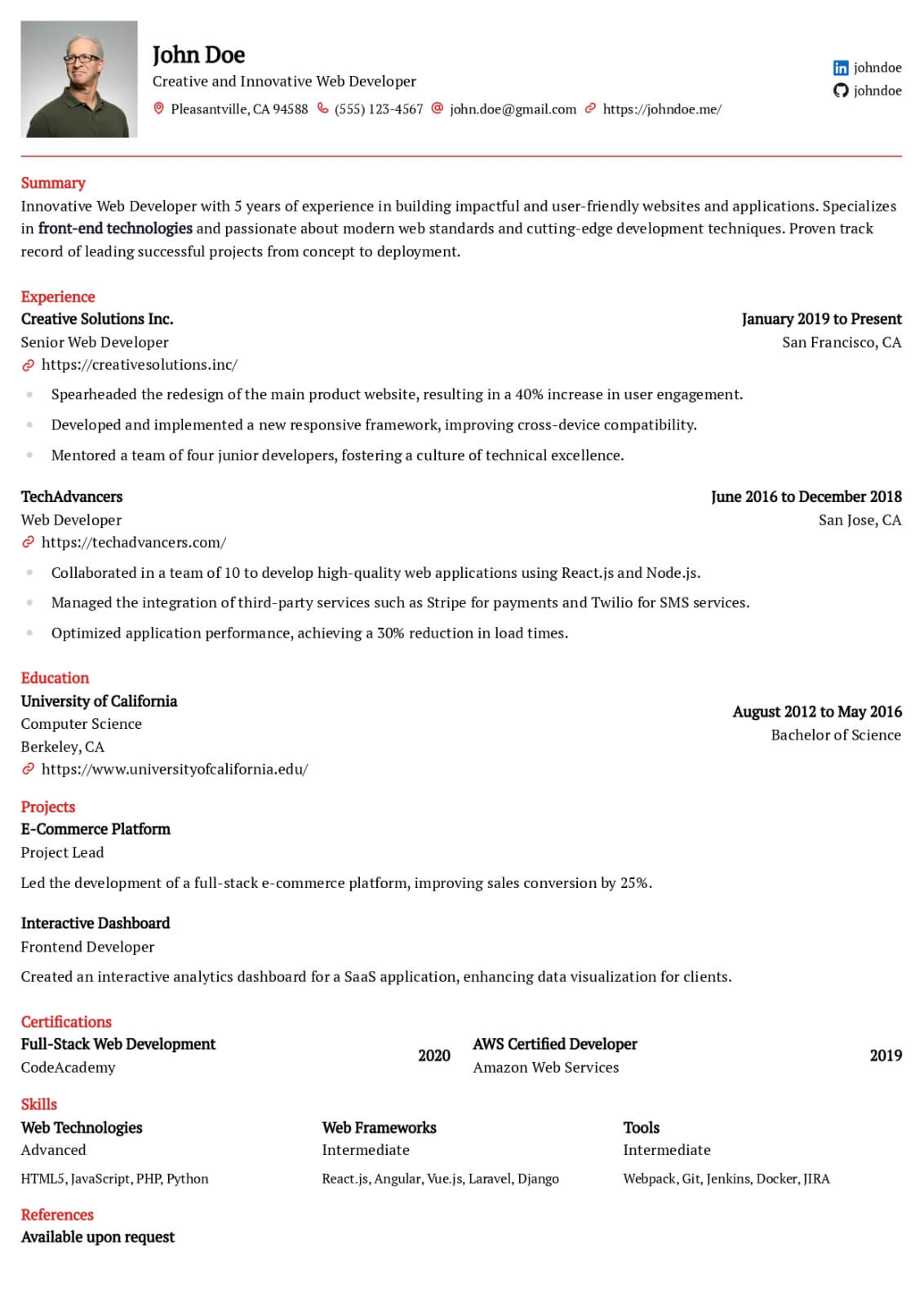
Use a clean, single-column layout with clear section headings and plenty of white space. Lead with technical strengths such as AWS, Azure & Google Cloud Platform, Microservices & Event-Driven Architecture, Infrastructure as Code (Terraform, CloudFormation), Kubernetes & Container Orchestration, API Gateway & Integration Design, Security Architecture & Zero Trust, then reinforce interpersonal strengths like Stakeholder Communication, Technical Mentorship, Vendor Evaluation & Selection, Executive Presentation Skills. Keep fonts standard (e.g., Arial or Calibri) at 10–12pt body size so your resume stays ATS-friendly and easy to scan.
Key takeaways
- Lead your summary with architectural specialization and a quantified scalability or cost outcome
- Connect every architectural decision to measurable business results like uptime or cost savings
- Mirror cloud platform terminology from job postings to maximize ATS keyword compatibility
- Add an architecture case studies section to demonstrate end-to-end design and delivery capability
- List cloud certifications prominently as many postings require AWS or Azure architect credentials
- Keep formatting structured to reflect the systematic thinking expected from architecture professionals
Build your Solutions Architect resume with Scale
Lead your summary with architectural specialization and a quantified scalability or cost outcome
Use This Template
Professional Templates That Make You Stand Out
Browse modern, ATS-friendly resume designs crafted to impress recruiters. Customize any template and download it as a Word or PDF file.
Listen What Our Users Have to Say

Rohan Sen
I am very happy with the team's quick turnaround time - any query is responded at utmost priority. Shoutout to my client manager, Anub Biju - very helpful.

Gael L
Service and communication is great, cover letters are non-ai sounding and well tailored. Just have a lot of communication and review with your staff!

Jonathan Parry
Wow - don't tell your peers! Wow, I can't recommend scale.jobs enough - it's so good I am not sharing with my peers. Applications at scale that get through filters. Thank you!

Cynthia Zhu
Great service! The scale.jobs team was very responsible and managed to apply tons of jobs for me in a very tight deadline to help me secure interviews quickly. Highly recommend to anyone who needs help applying to jobs!

Yash Yenugu
Save your fingers. Saved me from a thumb cramp because we're expected to effortlessly apply to jobs during these times.

Cian O'Driscoll
Clever service. Takes the hard effort out of applying for jobs with an intuitive dashboard and attention to detail. A great asset to job seekers. :-)
Frequently asked questions
What should a solutions architect resume emphasize in 2026?
A competitive solutions architect resume in 2026 should emphasize cloud-native design expertise, multi-cloud strategy experience, and cost optimization capabilities. Employers increasingly expect architects to demonstrate FinOps awareness alongside pure technical design skills. Quantified outcomes showing scalability improvements, infrastructure cost reductions, and availability achievements differentiate strong candidates. Cloud certifications from AWS, Azure, or Google Cloud remain essential qualifiers for most enterprise architecture positions.
How do I quantify my impact as a solutions architect on my resume?
Quantify architectural impact by referencing system availability percentages, transaction throughput capacity, infrastructure cost reductions, migration timelines completed, and performance improvement metrics. For example, state that your redesigned architecture handles ten times the original transaction volume while reducing monthly infrastructure spend by thirty-five percent. Pull figures from monitoring dashboards, cloud billing reports, and post-implementation reviews. Concrete metrics transform architectural descriptions into evidence of strategic business value.
Which cloud certifications matter most for solutions architect roles?
AWS Certified Solutions Architect Professional is the most widely requested credential for cloud architecture positions. Microsoft Certified Azure Solutions Architect Expert holds equivalent weight in Microsoft-centric organizations. Google Cloud Professional Cloud Architect validates design competency on the Google platform. Holding certifications across multiple cloud providers demonstrates versatility and is particularly valued by consulting firms and enterprises operating multi-cloud environments.
Should I include hands-on coding experience on an architect resume?
Demonstrating that you can build proof-of-concept implementations and evaluate technologies hands-on strengthens your credibility as an architect rather than positioning you as a purely theoretical designer. Reference prototyping work, infrastructure-as-code development, or performance benchmarking you have conducted personally. The depth of coding detail should be proportionate to the target role, with customer-facing pre-sales architects needing less depth than those embedded with engineering teams.
How long should a solutions architect resume be?
Most solutions architects should target a two-page resume given the breadth of systems, platforms, and business contexts they need to communicate. However, every line must deliver architectural impact rather than list technologies or describe routine design activities. Junior architects with fewer than eight years of experience should aim for a single focused page. Prioritize your most complex and impactful architecture engagements to maintain reader attention during initial screening.
What common mistakes should solutions architects avoid on their resumes?
The most frequent mistake is listing cloud services and technologies without explaining the architectural decisions that drove their selection or the business outcomes they produced. Another common error is neglecting to communicate the scale and complexity of systems you have designed in concrete terms. Avoid positioning yourself as solely a technical implementer when architect roles require business alignment and stakeholder communication. Failing to include relevant cloud certifications when the job posting requires them also limits your candidacy.
Related Resume Guides
Cloud Engineer
Create a powerful cloud engineer resume that demonstrates your expertise in designing, deploying, and managing cloud infrastructure across AWS, Azure, or GCP with reliability and cost efficiency.
Software Engineer
Craft a compelling software engineer resume that highlights your technical depth, system design expertise, and measurable contributions to production software used by millions of users worldwide.
DevOps Engineer
Build an impactful DevOps engineer resume that highlights your expertise in CI/CD pipelines, infrastructure as code, container orchestration, and reliable production system operations at scale.
Network Engineer
Create a powerful network engineer resume that demonstrates your expertise in designing, implementing, and troubleshooting enterprise network architectures across LAN, WAN, and cloud environments.