
How to Build a Consistent Job Search Routine That Actually Works

Sarah Mitchell
April 29, 2026

Finding a job today can be overwhelming, especially with longer hiring processes and inactive job postings. To stand out, you need a structured job search routine that focuses on consistency, quality applications, and strategic use of tools. Here's how you can create a system that works:
Key Takeaways:
- Set SMART Goals: Define clear, specific objectives like applying to 10 tailored roles weekly or networking with three professionals daily.
- Create a Schedule: Allocate time for core activities such as customizing resumes, networking, and researching companies. Use methods like the Pomodoro Technique to stay focused.
- Use the Right Tools: Platforms like Scale.jobs offer human-assisted, tailored applications, while tools like Trello and Notion help track your progress.
- Track Progress and Adjust: Use trackers to monitor applications, response rates, and follow-ups. Review weekly to refine your approach.
- Beat Procrastination: Start with small tasks, log your accomplishments, and consider external accountability like a virtual assistant to streamline your search.
Why Scale.jobs Stands Out:
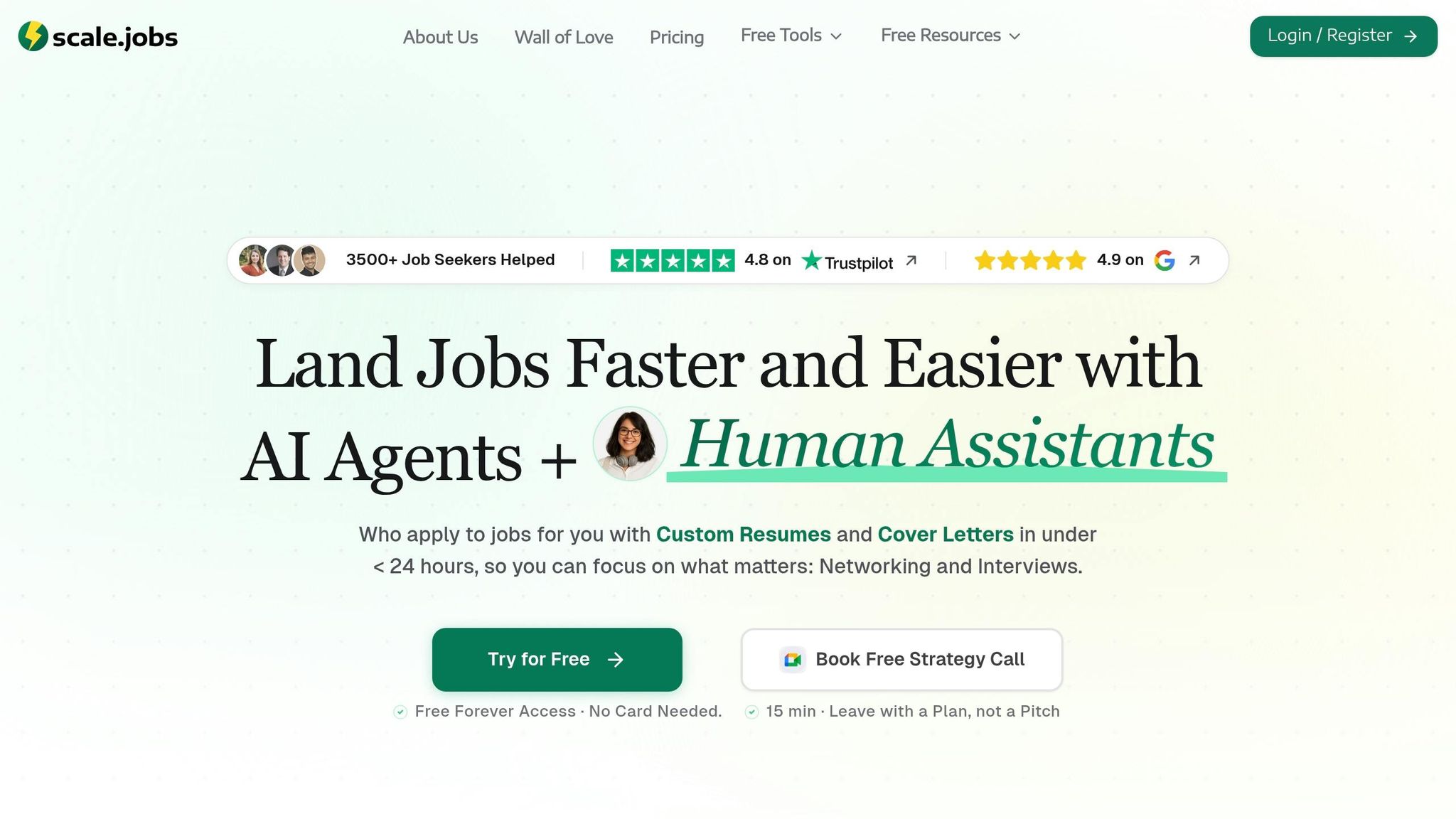
Unlike automated tools like LazyApply or Simplify.jobs, Scale.jobs provides human-assisted, personalized applications. This approach improves response rates and ensures ATS compliance, making it ideal for competitive roles.
By building a consistent routine, using effective tools, and tracking your progress, you can turn your job search into a manageable and productive process.
How to Use Your Job Search Time Wisely
sbb-itb-564272e
Step 1: Review Your Current Job Search and Set Clear Goals
Before establishing a job search routine, take a moment to evaluate your efforts over the past 30 days. Understanding what worked - and what didn’t - can save you from repeating ineffective strategies. Tools like scale.jobs' free Job Applications Tracker provide a structured way to analyze your approach, offering more precision than alternatives like LazyApply or Simplify.jobs.
Review Your Application History
Start by reflecting on your recent application activity. Ask yourself: How many jobs did you apply to? Were your applications customized for each role? What was your response rate? If you’ve been sending out a large number of generic resumes and hearing little back, it’s time to focus on quality over quantity.
Track your weekly applications, networking efforts, and recruiter responses. Using a job application tracker can help you uncover trends, such as whether you’re targeting positions that align with your skills and experience. This insight is invaluable for refining your strategy.
Set SMART Job Search Goals
Avoid vague objectives like "apply to more jobs." Instead, establish specific, actionable goals that align with your career aspirations. For instance, if remote work is your priority, aim to send 5–10 tailored applications weekly through platforms like FlexJobs, rather than flooding Indeed with 50 generic resumes. If you're interested in startups, set a goal to reach out to three professionals daily on AngelList and apply to five relevant openings each week.
Leverage LinkedIn’s “Open to Work” feature to discreetly signal your availability to recruiters, and set up job alerts on platforms like Indeed or Glassdoor to stay updated on new opportunities. For hourly roles - keeping in mind that over 70% of workers under 30 earn hourly wages - platforms like Snagajob can help you focus your efforts effectively.
The key is to align your goals with what truly matters to you. Chasing volume for the sake of it often leads to burnout and poor results. Instead, use these focused goals to guide your daily actions. With a clear plan in place, you’ll be ready to create a structured job search schedule in Step 2.
Step 2: Build a Job Search Schedule That Works for You
Now that you’ve set your goals in Step 1, a well-structured schedule helps turn those goals into actionable steps. Studies highlight that networking leads to success 60-65% of the time, compared to a 20-30% success rate from responding to job ads. Your schedule should reflect these statistics, prioritizing high-impact activities.
Block Time for Core Activities
Plan your week by assigning specific time blocks to essential tasks. For instance:
- Dedicate 60 minutes daily to tailoring resumes and cover letters, ensuring they pass ATS (Applicant Tracking System) checks.
-
Allocate 30 minutes for LinkedIn outreach, focusing on building genuine professional relationships. As Dan Mian, Founder of Gradvance, advises:
"A common networking mistake is to jump straight into the DM's and ask for a job. That is NEVER going to work."
- Spend 45 minutes on company research, using the 3-5 Rule: identify 3 industries of interest and select 5 target companies within each. This focused approach can significantly boost your chances of securing interviews, with application success rates potentially jumping from 20% to 90%.
- Incorporate 30-minute breaks for physical activity to manage stress and keep your energy levels up.
If customizing resumes feels daunting, you might explore working with professional resume writing services. They can optimize your resumes for ATS, freeing up more time for networking and other critical tasks. Once your schedule is set, stick to focused work sessions to make the most of each time block.
Use the Pomodoro Technique to Stay Focused
Once your schedule is in place, the Pomodoro Technique can help you stay productive during these focused intervals. This method involves breaking tasks into 25-minute work sessions, followed by 5-minute breaks, to maintain concentration and avoid burnout. It’s especially handy for detailed tasks like customizing cover letters or researching company information.
To make this process even more engaging, you can use tools like Focus Traveller (free, with a premium option at $0.99/month), which gamifies productivity by rewarding you for staying off distractions like your phone. Kirsti Lang, Senior Content Writer at Buffer, shares how time-tracking boosts her focus:
"Hitting the start button on a time-tracking task is like an instant productivity boost for me. Because my time is being recorded, I'm way less likely to bounce between tasks or fall down a TikTok rabbit hole."
Visualize your schedule with tools like Sunsama ($16/month annually) or Todoist (which offers a free plan). Job seekers who set clear weekly goals and track their outcomes are shown to be twice as likely to receive job offers within 60 days compared to those who apply inconsistently.
Step 3: Choose the Right Job Search Tools
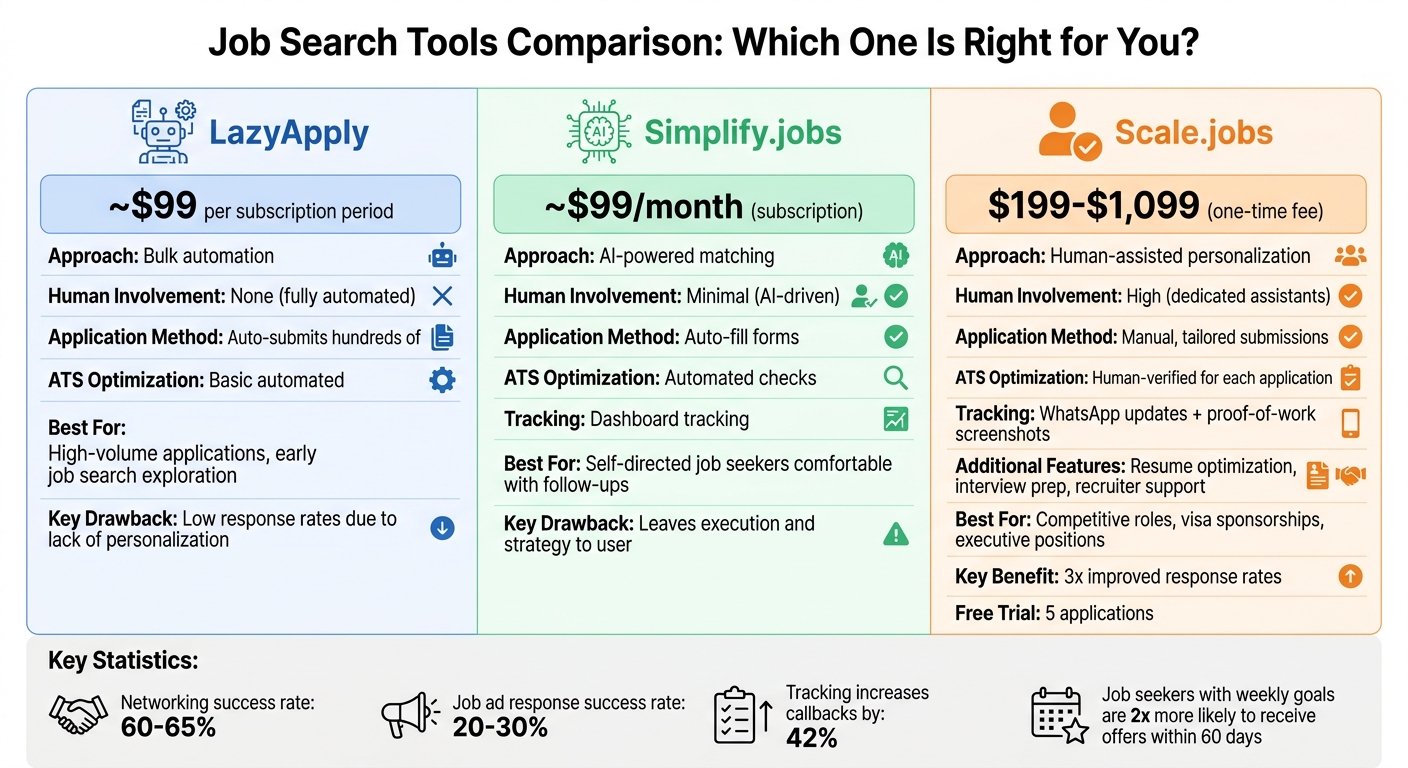
Job Search Tools Comparison: LazyApply vs Simplify.jobs vs Scale.jobs
Once you've established a schedule, the next step is selecting tools that streamline your efforts. Using the wrong platform can lead to wasted time on ineffective applications, while the right one can help you focus on opportunities that matter. If you're weighing options like LazyApply or Simplify.jobs, here's how scale.jobs offers an alternative for those prioritizing quality over quantity.
LazyApply vs scale.jobs: Bulk Automation vs Personalized Precision
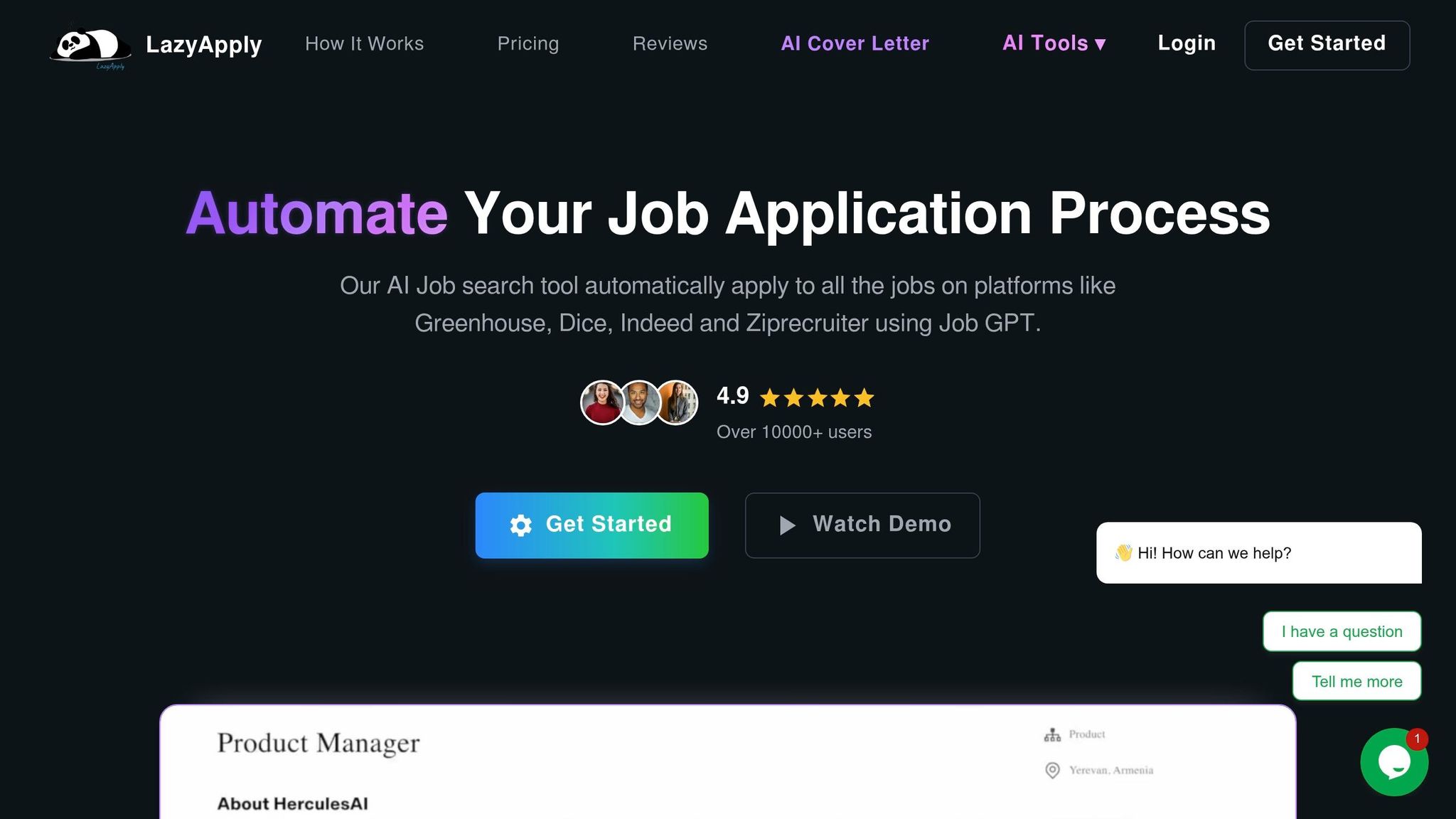
LazyApply automates the application process by submitting hundreds of forms on platforms like LinkedIn and Indeed using your uploaded resume. It costs around $99 per subscription period and appeals to those seeking speed and high-volume applications. However, many users report low response rates, as this method often sacrifices personalization.
On the other hand, scale.jobs employs human assistants to craft tailored resumes, write customized cover letters, and manually submit applications. The service includes time-stamped proof-of-work screenshots, real-time updates via WhatsApp, and a flat fee starting at $199 for 250 applications. This personalized approach has reportedly improved response rates by as much as three times in some cases.
Who should use LazyApply: Ideal for those exploring a wide range of roles and prioritizing speed over customization, or for individuals at the beginning of their job search journey.
Who should choose scale.jobs: A better fit for job seekers targeting competitive roles that require ATS-optimized applications, such as executive positions or opportunities involving visa sponsorships, where accuracy and customization are key.
If you're considering other tools like Simplify.jobs, here's how it compares to scale.jobs.
Simplify.jobs vs scale.jobs: AI-Powered Matching or Comprehensive Support?
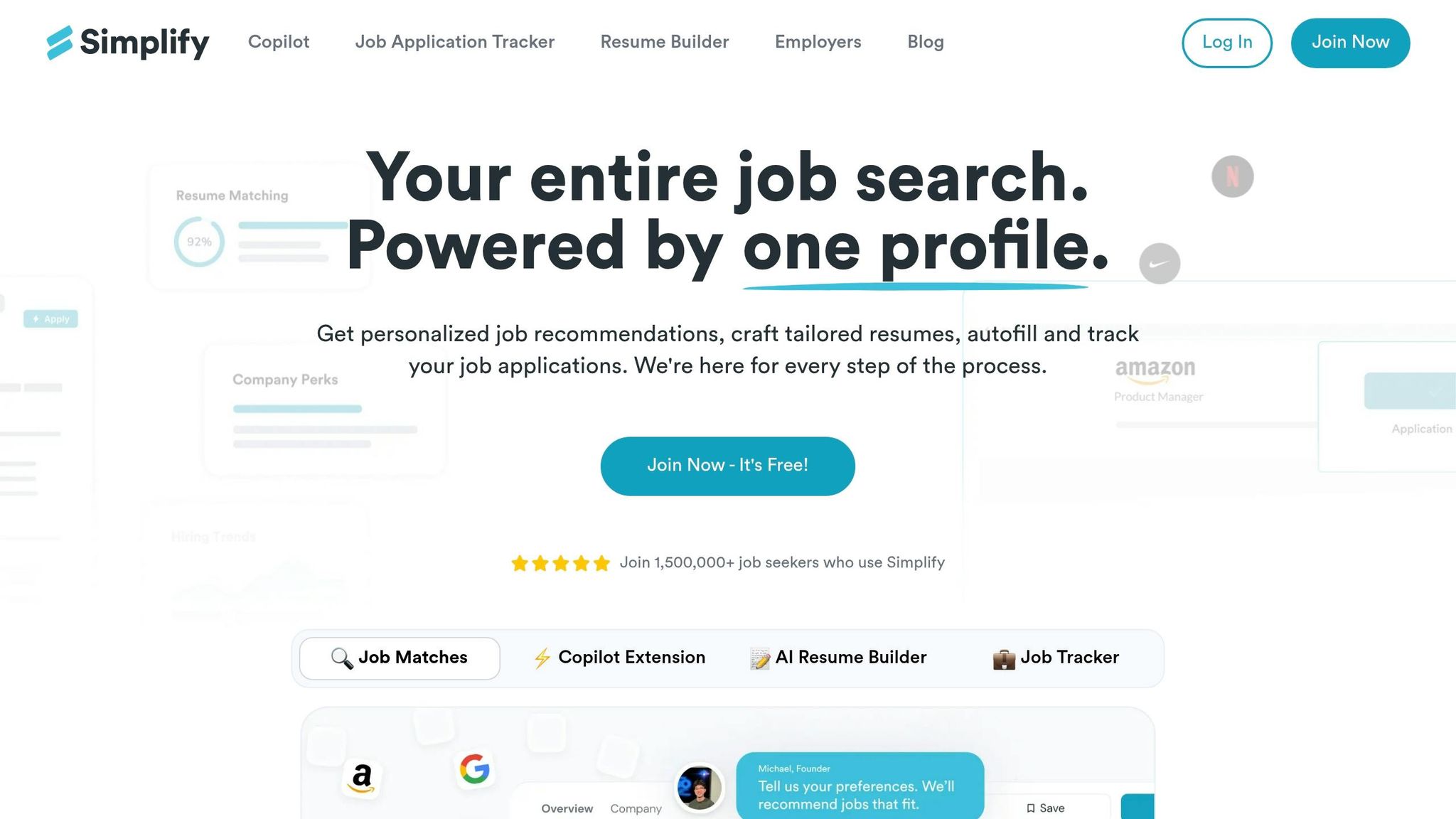
Simplify.jobs uses AI to analyze your profile, recommend roles, auto-fill application forms, and track progress. Priced at approximately $99 per month, it emphasizes convenience and speed in finding relevant openings. However, the platform leaves the execution of applications, follow-ups, and broader strategy up to you.
Scale.jobs offers a more hands-on approach, with human assistants managing every step of the process. This includes tailoring resumes, handling follow-ups, and even preparing you for interviews. The one-time payment structure (starting at $199) includes a free trial for the first five applications, allowing you to evaluate the service without commitment.
| Feature | Simplify.jobs | scale.jobs |
|---|---|---|
| Human Involvement | Minimal (AI-driven features) | High (dedicated human support) |
| Application Execution | Automated form filling | Manual, tailored submissions |
| ATS Optimization | Automated checks | Human-verified for each application |
| Pricing | Subscription (~$99/month) | One-time fee (e.g., $199–$1,099) |
| Transparency | Dashboard tracking | WhatsApp updates, proof-of-work screenshots |
Who should use Simplify.jobs: Best for individuals comfortable managing follow-ups and seeking AI-driven tools for discovering job opportunities.
Who should choose scale.jobs: Ideal for those requiring human oversight, verifiable application submissions, and tailored materials for competitive or complex roles.
What Makes scale.jobs Stand Out?
Scale.jobs blends human expertise with a transparent process. Each application is manually handled by a dedicated assistant, ensuring ATS compliance and personalized submissions. You’ll receive real-time updates and screenshots verifying each application, giving you peace of mind. With flat pricing starting at $199 for 250 applications, there are no recurring fees, and unused credits are refundable. The free trial (five applications) allows you to test the service before committing. Additional features, like LinkedIn profile optimization and personal recruiter support, make it a comprehensive solution.
When to Switch to scale.jobs
- You’re applying for specialized or competitive roles where generic submissions won’t suffice.
- You need human oversight to navigate ATS systems or visa sponsorship requirements.
- You want detailed proof-of-work with real-time updates and screenshots for every application.
- You prefer a one-time payment model over monthly subscriptions.
- You aim to save time for networking and other high-value activities while ensuring application quality.
Choosing the right tools is a critical step in your job search. With the right platform, like scale.jobs, you can enhance your efforts and focus on landing the role you want. Up next, refine your tracking and accountability methods to keep your job search on course.
Step 4: Track Applications and Stay Accountable
Once you've established a structured schedule, the next step is to track your job applications systematically. Without a reliable system, it's easy to lose track of where you’ve applied, miss follow-up opportunities, or forget which version of your resume you used. A well-organized tracker turns a chaotic process into a clear path toward your career goals.
Set Up Your Job Application Tracker
A good tracker includes fields that help you stay organized and measure progress. Consider adding the following:
- Job Title
- Company
- Application Date (MM/DD/YYYY)
- Job URL
- Resume/Cover Letter Version Used
- Application Status (e.g., Applied, Phone Screened, Interviewed, Rejected, Offer)
- Follow-Up Date
- Response/Notes
This setup allows you to spot trends, like whether personalized cover letters improve your response rate compared to generic ones.
Here are a few tools that can help:
- Trello: Ideal for visual thinkers, Trello lets you create lists like "To Apply", "Applied", "Interviewing", and "Offers/Rejects." You can move cards between lists as your application progresses, attach resume versions, and set reminders for follow-ups (typically 7–10 days after applying). Trello’s free plan is sufficient for most users, with optional Calendar view add-ons.
- Notion: For those who prefer more customization, Notion offers advanced database features. You can create fields like Status, Application Date, Skills Matched, and Follow-Up Date. Use a Kanban view for tracking statuses, a Calendar view for follow-ups, and a Table view sorted by dates. The free personal plan is often enough, but the Plus plan ($8/user/month) adds extra functionality.
- Scale.jobs' Free Job Applications Tracker: This tool simplifies the process by auto-importing jobs via URL, setting follow-up reminders based on company norms, and analyzing your success rates. If you’re using their human assistant service, every application is logged with time-stamped screenshots, offering verifiable proof of submission. This level of accuracy helps avoid the parsing errors common in some automated tools.
For example, a tech job seeker using Trello set weekly goals, followed up on 80% of applications within five days, and secured an offer in just six weeks. Tracking like this can lead to up to 42% more callbacks and reduce the job search time by 20–30%.
Weekly Review: Analyze Metrics and Adjust Your Approach
Once your tracker is up and running, commit to a weekly review. Spend 30 minutes every Sunday evening analyzing your progress. Here are some key metrics to track:
- Response Rate: Divide the number of responses by the total applications, then multiply by 100. A typical benchmark is around 20%. If yours is lower, it might indicate issues with your resume, cover letter, or job targeting.
- Time-to-Response and Conversion Rate: These metrics help you refine your follow-up timing and identify which roles are worth pursuing.
- Application Volume: Instead of submitting dozens of rushed applications, aim for 10–15 high-quality ones each week.
Use tools like Trello’s color-coding (e.g., green for interviews, red for rejections) or Notion toggles for quick reference. Set phone reminders to follow up professionally, aiming for 3–5 follow-ups per week to balance effectiveness with your schedule.
Another helpful strategy is the "three-bucket audit" during your reviews:
- Keep: Focus on companies or roles with high response rates.
- Improve: Tweak your approach for opportunities that seem promising but haven’t yielded results.
- Remove: Stop investing time in applications that haven’t received responses after two follow-ups.
If your efforts aren’t yielding results, it might be time to seek professional assistance. Services like resume writing or a job search virtual assistant can help refine your materials or manage submissions, giving you more time to focus on networking.
Weekly reviews also keep you motivated. Celebrate small wins - whether it’s submitting 12 applications or scheduling a phone screen - to maintain momentum.
For those using scale.jobs' human assistant service, this process becomes even easier. You can check WhatsApp for real-time updates and screenshots of submitted applications, then export your dashboard data to track patterns. This eliminates the uncertainty of whether your applications were submitted correctly or flagged by ATS systems, a common issue with some automation tools.
Step 5: Beat Procrastination and Build Momentum
Job hunting can feel like an uphill battle, especially when applications go unanswered and procrastination sets in. To break this cycle, focus on two strategies: starting with smaller, manageable tasks and creating external accountability to keep yourself on track.
Start Small and Track Your Wins
Instead of pressuring yourself to submit dozens of applications in a week, begin with tiny, actionable steps. For example, update a single resume bullet, save one job posting, or draft a paragraph of a cover letter. This method aligns with the two-minute rule, which helps you overcome the initial resistance to starting. Small tasks feel less daunting and build momentum more effectively than ambitious goals that can leave you feeling overwhelmed.
As you complete these micro-tasks, log each accomplishment in a simple tracker that includes the date, the task completed, and how you felt afterward. This tracker can complement your main application system, giving you a clear view of your progress. After a week or so, you’ll notice a streak forming, which your brain interprets as success. This sense of achievement releases dopamine, making it easier to stay consistent. Research supports this approach, showing that small, steady actions significantly improve success rates. In fact, job seekers who log their daily wins are 2.5 times more likely to maintain their routines compared to those working without a system.
From here, you can gradually scale up: start with one bullet point, then move to one full application, and eventually aim for three per week. The trick is to keep tasks so small that skipping them feels harder than completing them.
Once you’ve built a foundation of small wins, external support can help you maintain your momentum.
Use Human Support to Stay on Track
While personal tracking is essential, external accountability takes it a step further. When someone else is monitoring your progress and providing updates, procrastination becomes less of an issue. Scale.jobs offers human assistants who handle your applications and send regular updates via WhatsApp. These updates include time-stamped screenshots of submitted applications, tailored resumes uploaded to applicant tracking systems, and confirmation of responses.
This level of transparency eliminates uncertainty and provides tangible proof of your efforts. For example, receiving a message like, "12 applications submitted this week - here’s the proof", reinforces your progress and keeps you motivated. Studies show that having an accountability partner can increase goal adherence by 65%, and services like this replicate that dynamic without putting the burden on your friends or family.
For those who struggle to stay consistent, delegating bulk applications early in the week (e.g., Monday through Wednesday) and receiving updates by Thursday can establish a predictable rhythm. This frees up time - 5 to 10 hours weekly - for higher-value activities like networking or preparing for interviews. If you’re still struggling to see results, consider using a professional resume writing service to ensure your materials are strong enough to stand out. After all, momentum is fueled by results, not just effort.
Finally, monitor your weekly application counts and daily motivation levels on a simple 1–10 scale. If you notice a dip in motivation on certain days, adjust your schedule to focus on easier tasks during those times. Combining small wins with human-supported updates creates a sustainable system that drives consistent results. These strategies not only help you stay on track but also ensure your efforts translate into tangible outcomes.
Conclusion: Build a Routine That Gets Results
When comparing tools like LazyApply and Simplify.jobs, it becomes evident that a human-assisted approach, such as the one offered by Scale.jobs, stands out. Unlike automation-focused platforms, Scale.jobs emphasizes tailored, human-supported applications that yield better outcomes. To get started, evaluate your application history and establish SMART goals - specific, measurable, achievable, relevant, and time-bound - that align with your career aspirations. Create a consistent schedule with dedicated time blocks, whether early mornings or afternoons, and consider techniques like the Pomodoro Method to stay focused.
Select tools that complement your workflow. Platforms like Trello or Notion can help you stay organized, while Scale.jobs provides human-powered application support, ensuring your submissions bypass automation flags and include proof-of-work screenshots sent directly via WhatsApp. While other tools might prioritize speed, Scale.jobs blends human expertise with ATS-optimized documents, ensuring your applications are both personalized and competitive. Following a structured routine and conducting regular reviews can significantly improve your interview rate - by as much as 42%. Start with 10–15 applications weekly and adjust based on your response rate, aiming for a realistic callback rate of 10–15%. If your results fall short, consider partnering with a professional resume writing service to refine your materials before scaling your efforts further.
Once your schedule and tracking system are in place, tackling procrastination becomes the next challenge. Break tasks into smaller steps - update one resume bullet, save three job postings, or draft a single paragraph of a cover letter. Celebrate these small victories daily to build momentum. When you're ready to take things further, Scale.jobs' human support can reduce procrastination by 40%, managing 15–20 applications weekly while you focus on networking and preparing for interviews. This combination of personal tracking and professional assistance creates a sustainable approach to job searching.
Take the first step with Scale.jobs today - set aside one hour, define a SMART goal, and achieve your first win. Consistency, not intensity, is what transforms job searching from a daunting task into a manageable, results-oriented process.
FAQs
How do I pick weekly goals that won’t burn me out?
Creating achievable goals is key to staying productive without overwhelming yourself. Start by figuring out how much time you can realistically dedicate each week to your job search or career development. Once you’ve set that limit, stick to it.
Break larger tasks into smaller, actionable steps. For instance, aim to apply to 3-5 jobs each week or spend a set amount of time practicing interview techniques. This makes your goals feel more manageable and less daunting.
It’s also important to revisit and adjust your goals regularly. Life happens, and it’s okay to adapt your plan as needed. Don’t forget to schedule time for breaks and self-care. Whether it’s a short walk, a hobby, or just relaxing, these moments help keep you motivated and prevent burnout. By balancing effort with rest, you can maintain consistency and energy in the long run.
What should I do if my response rate stays low?
If you're not getting many responses to your job applications, it might be time to refine your approach. Start by tailoring each application to the specific role you're applying for, making sure your resume and cover letter are aligned with the job description. It's also important to ensure your documents are Applicant Tracking System (ATS)-friendly, as many companies use these systems to filter applications.
You might want to explore services that combine human expertise with automation to create more personalized and optimized applications. Look for platforms that offer features like proof of application and manual submissions to boost your chances of success. Additionally, keep a close eye on the progress of your applications. Regularly review and adjust your resume or cover letter based on feedback or lack of responses. Using tools that provide clear insights into your application process can help pinpoint where improvements are needed.
How can I keep networking consistent without feeling awkward?
Networking doesn’t have to feel forced or uncomfortable. The key is to approach it as a way to build real connections through regular, low-pressure interactions. Set aside time for simple gestures, like sharing updates, making a quick call, or catching up over coffee. Focus on meaningful conversations that align with your personal or professional goals. Think of networking as a continuous process of nurturing relationships, rather than a one-off task. With consistency and intention, it will gradually become a more natural part of your routine.