
What 10 hot jobs really pay and how to negotiate

Sarah Mitchell
June 3, 2026

When considering a job offer, understanding salary ranges and negotiation strategies is essential. In 2026, in-demand roles like software developers, data scientists, and nurse practitioners offer competitive pay, but many professionals leave money on the table by not negotiating. For example, 59% of U.S. employees accept the first offer, even though most employers are willing to increase it by 5–10%.
This guide breaks down salary ranges for 10 high-demand jobs, explains factors influencing pay (like location and skills), and offers tailored negotiation tips. Additionally, it compares tools like Jobscan, Teal, and scale.jobs to help you maximize your job search and earnings. Whether you're targeting six-figure roles or navigating offers with bonuses and equity, preparation and strategy are key to securing the compensation you deserve.
Key Takeaways:
- Salary Ranges (2026): Software developers can earn $150K–$260K total, while nurse practitioners range from $135K–$175K.
- Negotiation Tip: Use measurable achievements (e.g., cost savings or revenue growth) to justify your ask.
- Tools: Platforms like scale.jobs focus on high-paying opportunities and personalized applications, while Jobscan optimizes resumes for ATS but lacks salary targeting.
For more details on how to apply for jobs or use a job application service, read on.
How to Negotiate a Higher Salary: 3 Evidence-Based Tips!
Why Knowing Salary Data Is Not Enough
Salary data offers a glimpse of the possibilities - for instance, discovering that senior software engineers in Austin earn between $160,000 and $220,000. But knowing the range doesn’t guarantee you’ll land at the higher end. The real drivers behind those numbers are your role choices, the strength of your resume, and your negotiation skills. Without a clear strategy tying these elements together, salary data remains just that - data. This is where targeted approaches and tools like scale.jobs can make a difference.
The gap between understanding a salary range and actually achieving the top figure often depends on how you choose roles. Many job seekers cast a wide net, applying to any position that matches their title, without considering compensation signals like company size, funding stage, or seniority level. For example, a mid-level data analyst might send out 80 generic applications and end up with offers averaging $82,000. On the other hand, a focused approach targeting analytics engineer roles at high-growth tech or healthcare companies could result in offers between $110,000 and $125,000. Clearly, a thoughtful job search strategy is essential.
Jobscan vs. scale.jobs: Where Salary Optimization Falls Short
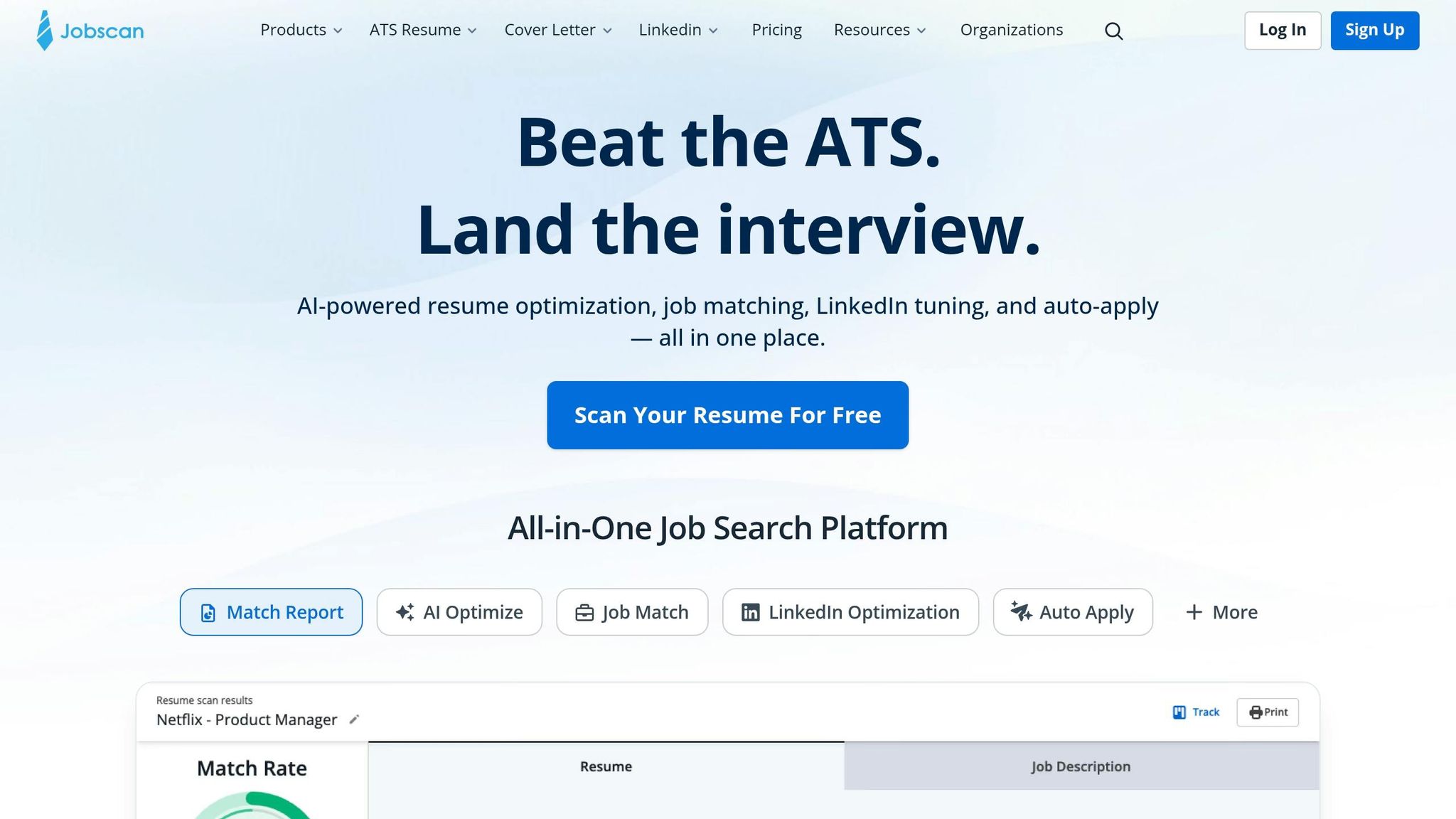
Jobscan is a helpful tool for improving your resume’s ATS (Applicant Tracking System) compatibility. It ensures your resume aligns with job descriptions, increasing your chances of getting past automated screenings. However, Jobscan doesn’t consider compensation potential. A $75,000 job and a $225,000 job are treated equally, with no guidance on targeting opportunities that align with your salary goals. It won’t help you identify employers with higher salary bands, roles where your experience commands top-tier compensation, or strategies for leveraging competing offers. Even with a perfectly tailored resume, applying to low-paying companies will still result in average offers.
In contrast, scale.jobs takes a different approach. Their human assistants start by focusing on your salary goals - say, $150,000+ for a remote product management role - and work backward to identify positions where that number is realistic. They filter opportunities based on salary ranges, company type, and seniority before submitting applications. This results in a smaller but more targeted list of opportunities. If you’re ready for this kind of personalized support, scale.jobs provides services like professional resume building, ensuring your application not only passes ATS screenings but also positions you for higher pay.
While tools like Jobscan address resume optimization, automation-only platforms often fall short when it comes to maximizing salary potential.
Why Automation-Only Tools Miss the Negotiation Step
Platforms like LazyApply and LoopCV prioritize speed, automating the application process to submit hundreds of applications weekly. While this can increase your application volume, it doesn’t address salary targeting - and that’s a costly oversight.
When applications are sent in bulk without filtering by compensation, interviews often cluster around mid-range employers. For instance, a marketing manager using an auto-apply tool might secure 15 interviews, only to find offers consistently hovering around $78,000. Why? Because the tool didn’t prioritize high-paying opportunities. Negotiation won’t solve this issue, either - you can’t negotiate a top-tier salary at a company that doesn’t pay at that level. This is why the pre-application phase - choosing roles, aligning with the right seniority level, and targeting companies known for competitive pay - sets the ceiling for your salary negotiations before you even step into an interview.
What 10 In-Demand U.S. Jobs Actually Pay in 2026
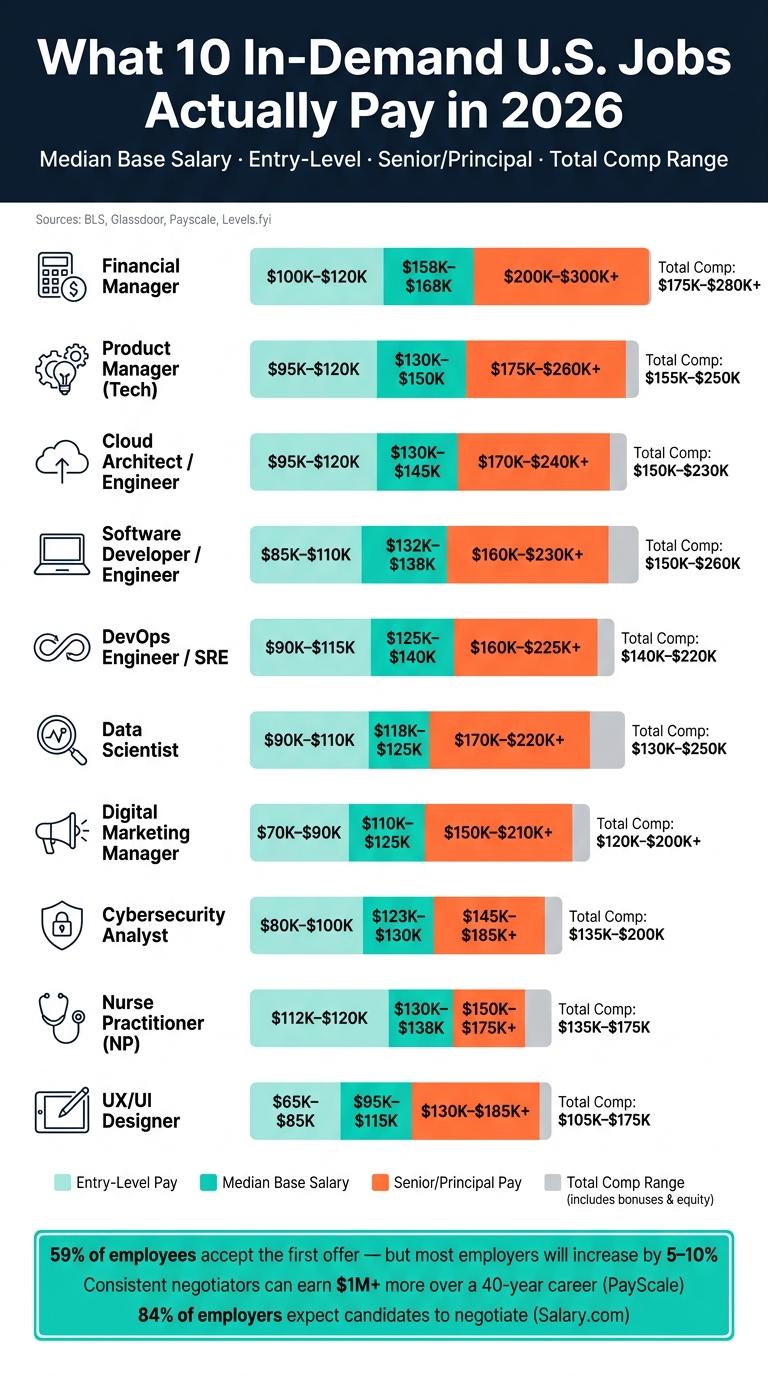
Top 10 High-Paying Jobs in 2026: Salary Ranges & Negotiation Guide
Understanding salary trends is crucial when navigating job opportunities or negotiating offers. Here's a detailed look at projected earnings for some of the most sought-after roles in 2026.
Salary Snapshots for 10 In-Demand Roles
Based on projections from the BLS, Glassdoor, Payscale, and Levels.fyi (factoring in a modest 3–5% annual increase), here’s what to expect for key roles:
| Role | Median Base Salary | Typical Total Comp Range | Entry-Level | Senior/Principal |
|---|---|---|---|---|
| Software Developer / Engineer | $132,000–$138,000 | $150,000–$260,000 | $85,000–$110,000 | $160,000–$230,000+ |
| Data Scientist | $118,000–$125,000 | $130,000–$250,000 | $90,000–$110,000 | $170,000–$220,000+ |
| Cybersecurity Analyst | $123,000–$130,000 | $135,000–$200,000 | $80,000–$100,000 | $145,000–$185,000+ |
| Cloud Architect / Engineer | $130,000–$145,000 | $150,000–$230,000 | $95,000–$120,000 | $170,000–$240,000+ |
| Product Manager (Tech) | $130,000–$150,000 | $155,000–$250,000 | $95,000–$120,000 | $175,000–$260,000+ |
| DevOps Engineer / SRE | $125,000–$140,000 | $140,000–$220,000 | $90,000–$115,000 | $160,000–$225,000+ |
| UX/UI Designer | $95,000–$115,000 | $105,000–$175,000 | $65,000–$85,000 | $130,000–$185,000+ |
| Digital Marketing Manager | $110,000–$125,000 | $120,000–$200,000+ | $70,000–$90,000 | $150,000–$210,000+ |
| Nurse Practitioner (NP) | $130,000–$138,000 | $135,000–$175,000 | $112,000–$120,000 | $150,000–$175,000+ |
| Financial Manager | $158,000–$168,000 | $175,000–$280,000+ | $100,000–$120,000 | $200,000–$300,000+ |
Key Insight: Total compensation often surpasses base salary. For instance, a mid-level software developer in a major tech hub may earn a base of $145,000, but with bonuses and equity, their total package could exceed $220,000. While BLS data focuses on base wages, platforms like Glassdoor and Levels.fyi provide a broader view, including equity and signing bonuses.
Factors That Influence Pay Across Roles
Several factors significantly impact earning potential. Here are four key drivers:
1. Experience and Specialized Skills
Experience and expertise can dramatically shift compensation. For example, a data scientist advancing to a senior role could see their total earnings jump from $110,000 to $185,000 or more. Similarly, professionals with niche skills - like Kubernetes for DevOps engineers or certifications like CISSP for cybersecurity analysts - often secure offers at the upper end of the salary spectrum.
2. Location
Geography remains a critical factor, even with the rise of remote work. A cybersecurity analyst in areas like San Francisco or Washington, D.C., might earn 20–40% more than the national average, while the same role in smaller cities could start closer to $85,000–$105,000. States with pay transparency laws, such as California and New York, also provide clear salary ranges, which can be invaluable during negotiations.
3. Industry and Company Stage
The type of company and its growth stage play a major role in compensation. For instance, a product manager at a fast-growing SaaS company might receive equity and bonuses worth an additional $50,000–$80,000 compared to a similar role at a traditional corporation. Similarly, nurse practitioners in states with full practice authority, like California, often earn higher wages than those in states with more restrictions.
4. Crafting the Right Application Materials
Your application materials can directly impact your salary band. If your resume or cover letter doesn’t highlight your specialized skills or relevant experience, you risk being placed in lower pay brackets. Using a job application service to create ATS-friendly, role-specific materials can help ensure you’re positioned for top-tier compensation from the start.
sbb-itb-564272e
How to Negotiate Your Salary for Each of These 10 Roles
Use these salary ranges as a starting point. The difference between a median offer and a top-tier one often depends on your negotiation strategy and whether you present the right evidence. Tools like scale.jobs can help ensure your resume and application strategy set you up for stronger negotiations before you even reach the offer stage.
Negotiation Tactics by Role
Each role benefits from a tailored negotiation approach, but one principle applies across all: lead with a measurable achievement, then tie your request to a market-backed figure.
Software Engineers and DevOps/SRE
Highlight technical contributions with financial or operational impact. For instance: "I redesigned our payments service, reducing latency by 40% and cutting AWS costs by 18%, saving ~$240K annually. I'm targeting total compensation of $185K–$210K." Don’t forget to negotiate for equity, signing bonuses, or level adjustments.
Data Scientists and Cloud Architects
Quantify your impact in terms of revenue or cost savings. For example, if a churn model you developed helped retain $1.1M in annual revenue, make that the centerpiece of your negotiation.
Cybersecurity Analysts
Emphasize scarcity and risk-reduction metrics. A statement like, "After deploying our new monitoring stack, critical incidents dropped 60%, and time-to-remediate shrank from days to hours", paired with data on high market demand, strengthens your case.
Product Managers
Tie your request to measurable business outcomes like ARR or conversion rates. For instance: "I increased new-user activation by 22%, contributing ~$600K in incremental ARR. I'm targeting a base salary of $175K–$190K in a major market."
Digital Marketing Managers
Use performance metrics to anchor your request. Examples include a 28% drop in CAC or a 40% increase in qualified leads.
UX/UI Designers
Position design work as a revenue driver. For example: "The checkout redesign I led improved conversion by 15%, adding ~$300K in monthly revenue."
Nurse Practitioners
Consider your state’s practice authority, patient volume, and certifications. For example, in states like California with full-practice authority, a high caseload can justify $10,000–$20,000 above the national median.
Financial Managers
Anchor your request to the size of the portfolio you manage, cost savings achieved, or direct revenue impacts under your leadership.
Regardless of the role, always request the full offer details in writing before preparing a counter. Typically, counter with 10–15% above the initial offer, supported by solid market data. If base salary adjustments are limited, focus on other elements like sign-on bonuses, equity, an accelerated review cycle, or flexible work arrangements.
Remember, the roles you target during your job search determine the ceiling for negotiation before any conversation even begins.
How scale.jobs Prepares You for Negotiations
Preparation is more than just knowing negotiation tactics - it starts with how you position yourself through your resume and application strategy.
Your leverage in negotiations begins long before the offer stage. If your resume fails to highlight your impact or positions you for a lower job band, your potential for negotiation is already limited.
scale.jobs connects you with a professional writer via Zoom to craft ATS-optimized resumes that highlight your achievements in ways that resonate with hiring managers and compensation teams. Unlike automated tools like Resume.io or Rezi, scale.jobs provides tailored guidance on which metrics to emphasize for a Staff Engineer versus a Senior Product Manager, or how to present a cybersecurity success for a SaaS startup versus a financial services firm.
Additionally, scale.jobs goes beyond resumes. Their team of human assistants applies to roles on your behalf - manually, not through bots - and keeps you updated via WhatsApp. This real-time support allows you to flag company pay bands, get feedback on counteroffers, and manage multiple applications across industries with confidence. With this level of preparation, you’ll step into negotiations fully equipped to succeed.
scale.jobs vs Jobscan, Teal, and LazyApply: Which Tool Fits a High-Pay Job Search
Understanding the earning potential for roles like Staff Engineer or Senior Product Manager is only part of the equation. The real challenge lies in positioning your application to land offers at the top of the salary range. The tool you choose to assist with your job search can make a significant difference in whether you secure an average offer or something closer to the ceiling. This comparison highlights how selecting the right platform can bridge the gap between crafting a competitive resume and obtaining top-tier salary offers.
Feature Comparison: scale.jobs vs Jobscan and Others
| Feature | scale.jobs | Jobscan | Teal | LazyApply |
|---|---|---|---|---|
| Human involvement | High - real humans apply and tailor per role | None - fully self-serve | None - user-driven | None - bot-automated |
| Resume customization depth | Per-application, role- and company-specific | Keyword suggestions only; user implements | User-built variants with AI prompts | Standard, non-tailored templates across all applications |
| ATS handling | ATS-compliant formatting + strategic keyword placement by humans | Core strength - keyword scoring against JD | ATS-friendly templates and suggestions | Form-filling automation; ATS optimization not a focus |
| Application method | Human assistants apply manually across any portal | User applies manually after optimizing | User manages and submits manually | Bot auto-submits at volume (300–500/day) |
| Proof of work | Time-stamped screenshots, WhatsApp updates, application dashboard | No application tracking | Kanban-style pipeline tracker | No per-application transparency |
| Pricing model | Flat-fee, one-time project bundles; no recurring subscription | Monthly/annual subscription | Freemium + monthly/annual subscription | One-time or lifetime access fee |
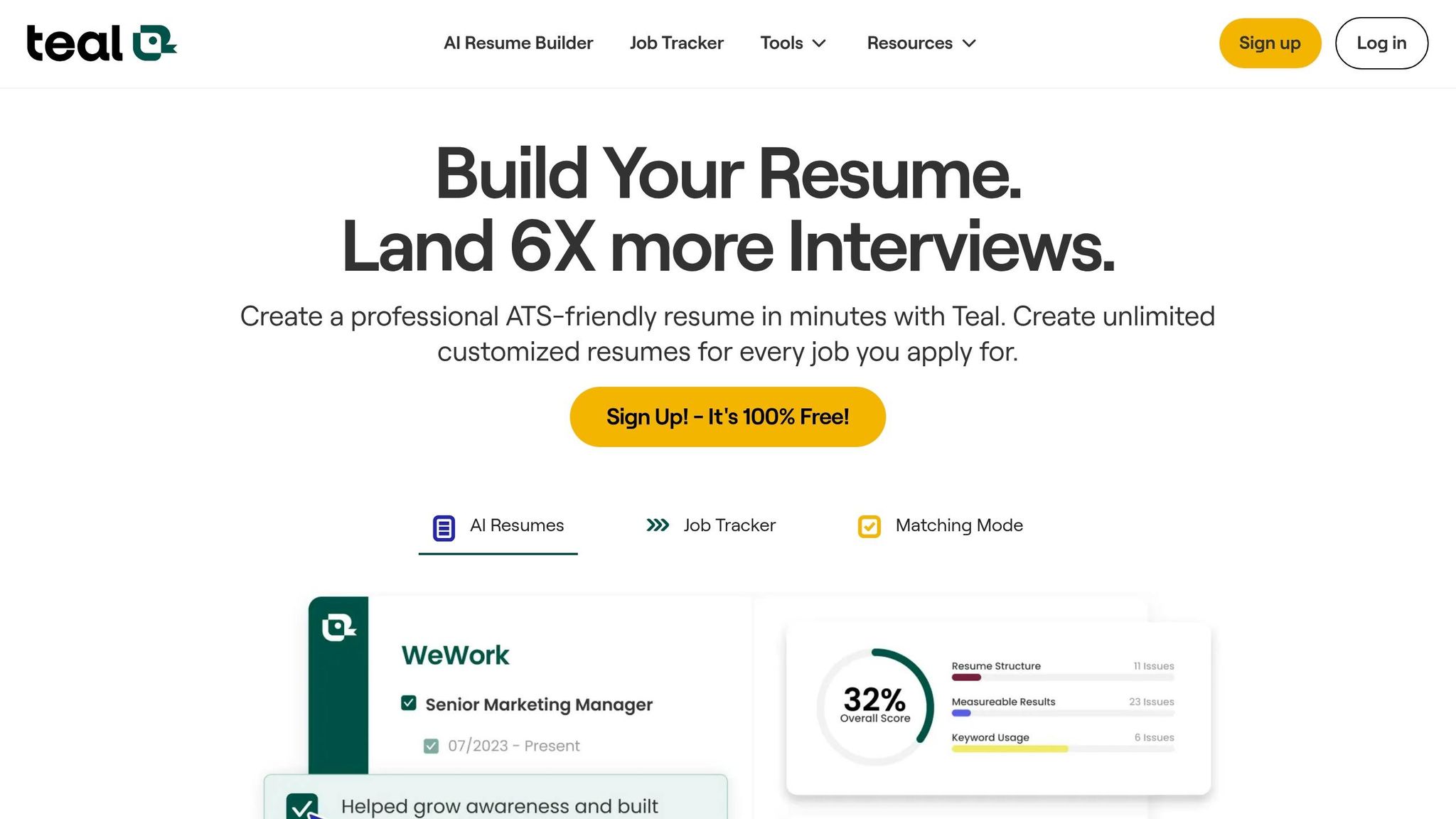
Jobscan excels at optimizing resumes for Applicant Tracking Systems (ATS), helping candidates pass initial screenings. However, it doesn’t address the critical need for personalized strategies that can lead to higher salary offers. Teal offers a structured way to manage applications, which is a step up from traditional spreadsheets. These features are useful, but they fall short when the focus shifts to securing top-tier offers. For those aiming to negotiate better salaries, tools like scale.jobs, which offer tailored applications and strategic positioning, provide a distinct advantage.
Who Should Use Jobscan or Teal
These platforms are ideal for job seekers who:
- Are comfortable managing their own job search process.
- Aim for roles with minimal salary variation.
- Are early in their careers, where ATS keyword alignment is often the main hurdle.
- Are not ready to invest in human-assisted application services.
- Prefer cost-effective, self-serve tools and have the time to fine-tune each application.
Who Should Use LazyApply
LazyApply is best suited for:
- Candidates applying to entry-level or high-volume roles where speed is more critical than customization.
- Job seekers in markets where salary differences between offers are relatively minor.
Who Should Choose scale.jobs
For those aiming to maximize their earning potential, scale.jobs offers a human-driven approach that provides a significant edge.
- Professionals targeting mid-to-senior roles, such as Senior Engineer, Director of Product, or Cloud Architect, where improving an offer by $10,000–$30,000 is realistic.
- Job seekers who want real-time updates and transparency, with human assistants handling applications on their behalf.
- Candidates needing professionally written, ATS-optimized resumes and cover letters to position themselves at the top of the salary range.
- Those who prefer a one-time, flat-fee investment instead of ongoing subscription costs.
- Applicants whose seniority level requires tailored strategies, as generic applications may hinder their chances.
Switch to scale.jobs If You Want to Target Higher Offers
If your goal is to secure roles with salaries ranging from $120,000 to $250,000 or more, scale.jobs provides the tools and strategies to achieve that. Consider switching to scale.jobs if:
- Your current tools, like Jobscan or Teal, help with resume formatting but fall short of boosting your compensation potential.
- You’ve hit a plateau with median offers or are struggling to convert interviews into offers at your desired salary level.
- You’re using LazyApply but receiving a high volume of low-quality responses, indicating that mass automation isn’t suitable for your seniority.
- You want tailored applications for hundreds of roles without dedicating 20+ hours each week to the task.
- You value a one-time, flat-fee model over recurring subscriptions, especially when a single improved offer can offset the cost multiple times.
Decision Summary: Choose Jobscan or Teal if you’re handling your own job search and need better tools for resume optimization. Opt for scale.jobs if you want a hands-off approach with human experts managing your applications while you focus on acing interviews and negotiating offers.
Conclusion: Use the Right Tools and Strategies to Get Paid What You Are Worth
The salary figures for these 10 roles provide a helpful benchmark, but they won't automatically increase your paycheck. What truly makes a difference is entering salary negotiations with a clear, data-driven ask at the right point in the hiring process. A survey by Salary.com revealed that 84% of employers expect candidates to negotiate, yet fewer than 60% actually do. This hesitation leaves a significant amount of potential earnings untouched.
To maximize your chances, research the salary range for your role, determine your walk-away number, and anchor your counteroffer in market data rather than personal circumstances. PayScale's analysis shows that individuals who consistently negotiate can earn over $1 million more across a 40-year career compared to those who don't. This is especially true in industries like tech, healthcare, and finance, where the roles discussed here are concentrated. These findings highlight the importance of a well-thought-out, role-specific negotiation strategy.
If you're looking for tools to elevate your job search and salary positioning, consider how scale.jobs stands out from competitors. While platforms like Jobscan and Teal focus on optimizing and organizing your applications, scale.jobs takes a different approach - targeting higher-paying opportunities and positioning you for top-tier offers from the outset:
- Human assistants submit personalized, high-quality applications.
- ATS-optimized documents designed to support negotiation success.
- Flat-fee pricing with dedicated WhatsApp support.
- Real-time updates for complete transparency throughout the process.
For those seeking expert guidance, scale.jobs' resume writing services offer a focused, hands-on approach to help you stand out.
Take advantage of scale.jobs' free tools - such as the salary predictor, ATS resume checker, and job tracker - to refine your strategy at no cost. If you're aiming for roles with salaries between $120K and $250K+, the difference between an average offer and a top-of-range offer often comes down to preparation, targeted applications, and the right support system.
Quick Decision Guide: Choose Jobscan or Teal for self-service tools suited to lower-stakes roles. Opt for scale.jobs if you're pursuing high-paying positions and need personalized, human-driven support for maximum impact.
FAQs
How do I estimate my total compensation (base, bonus, equity)?
To get a clear picture of your total compensation, start by researching the salary range for your specific role and industry. Tools like salary calculators or market benchmarks can provide helpful insights. Be sure to account for all components of your earnings, including your base salary, performance-based bonuses, and any equity packages offered.
For executive-level positions, it might be worthwhile to explore professional services, such as negotiation coaching or market alignment consultations. These experts can help you better understand your worth, align your expectations with market trends, and navigate compensation discussions confidently.
What’s a good counteroffer percentage for my role?
A counteroffer typically falls between 10% and 20% of your base salary, though the exact percentage can vary based on factors like your market value, industry norms, and the specifics of the competing offer. It’s important to approach this strategically.
Platforms such as Scale.jobs excel in creating ATS-optimized resumes and personalized job application documents, while services like Find My Profession may provide support with executive-level negotiation strategies. To strengthen your counteroffer, rely on role-specific benchmarks and align your request with current market standards for your position.
How can I find high-paying roles before applying?
To pinpoint roles with higher salaries, leverage platforms that provide predictive salary data and insights into the job market. For example, Scale.jobs offers a salary predictor tool, enabling you to compare roles with industry benchmarks effectively. Similarly, services like Find My Profession offer executive-level coaching and guidance on salary negotiations. With the Scale.jobs dashboard, you can also manage your applications and focus on opportunities that align with your financial objectives.