
Best AI Tools for Job Search (Resume, Apply, Outreach)

Sarah Mitchell
May 3, 2026

Navigating the job market in 2026 can be daunting, with advanced ATS systems, "ghost jobs", and the need for tailored applications. This guide compares five tools - scale.jobs, Jobscan, LazyApply, Teal, and LoopCV - to help you find the best AI tools for job applications. Here’s a quick overview:
- scale.jobs: Human-powered application submissions, ATS-ready resumes, and transparent one-time pricing ($199–$499). Ideal for precision and quality.
- Jobscan: Keyword-focused resume optimization for older ATS systems. Subscription starts at $49.95/month.
- LazyApply: Automates high-volume applications but lacks personalization and proof of submission.
- Teal: Offers a robust application tracker and AI resume tools. Subscription starts at $9/month.
- LoopCV: Automates job matching and applications but struggles with incomplete submissions.
Quick Tip: If you’re applying to companies using modern ATS systems like Greenhouse, or need human oversight for applications, scale.jobs stands out as a reliable choice. For more details, read on to see how these platforms compare in features, pricing, and use cases.
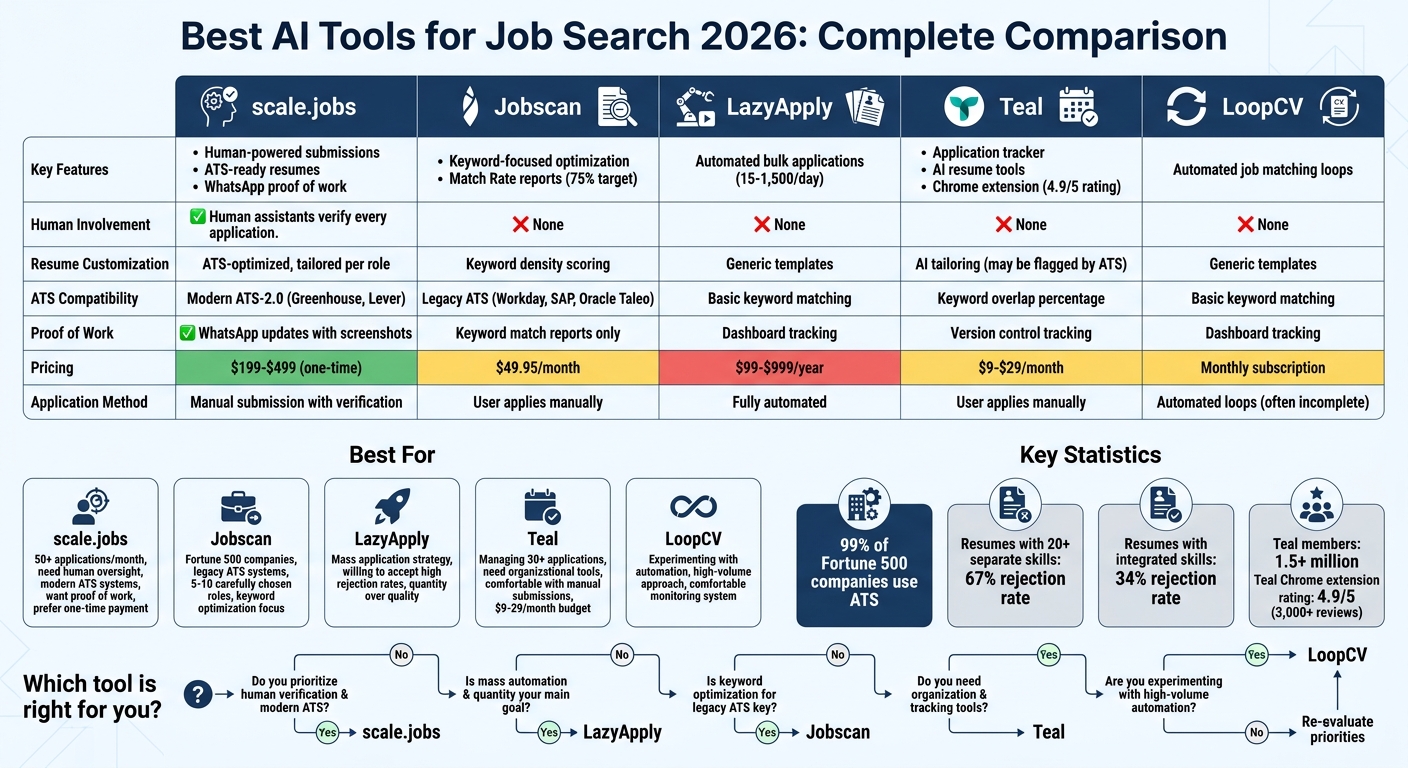
AI Job Search Tools Comparison: Features, Pricing & Best Use Cases
Find & Apply to 1000+ Jobs With AI (Like ChatGPT but BETTER)
sbb-itb-564272e
1. scale.jobs
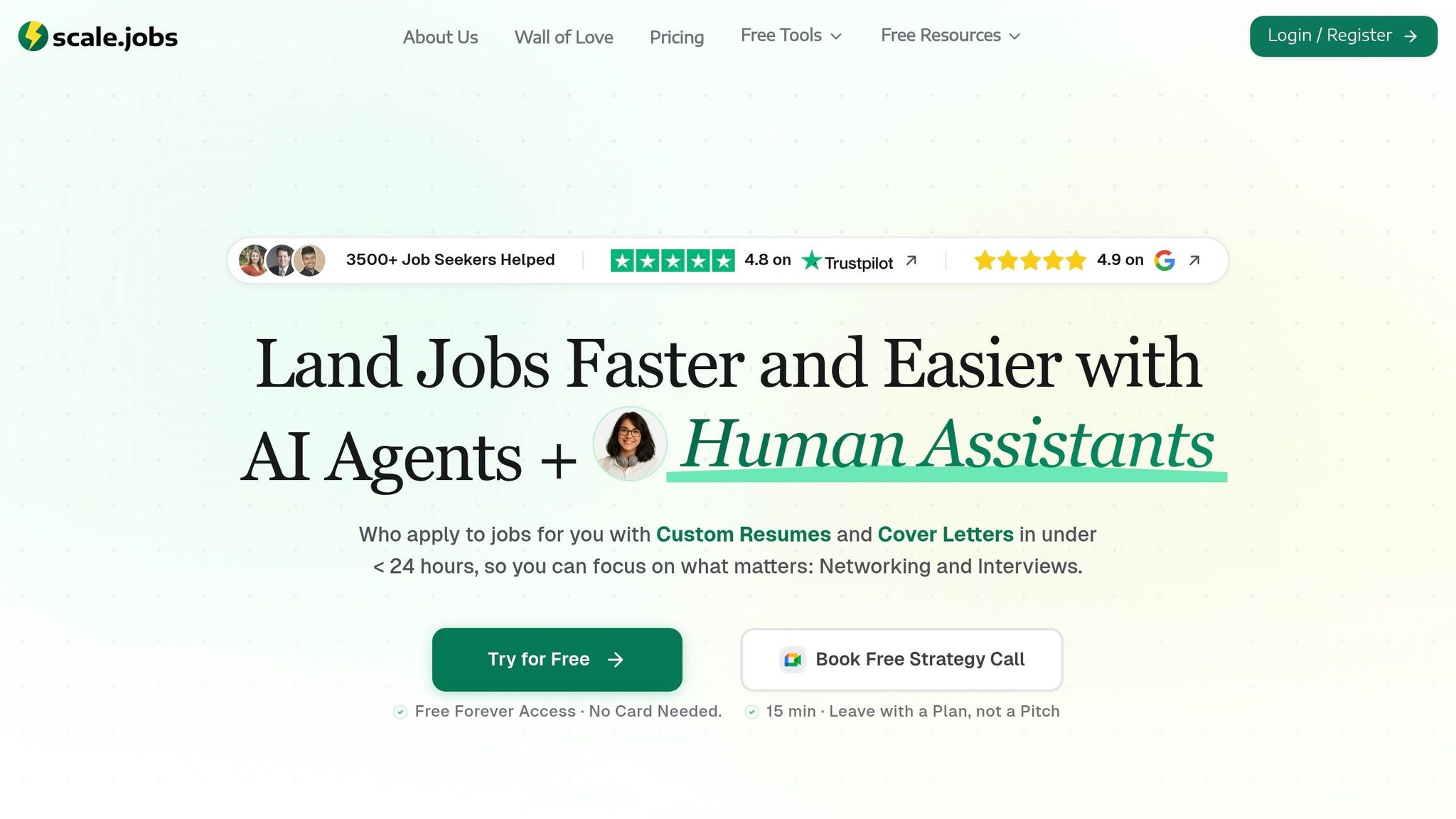
scale.jobs offers a unique blend of human expertise and ATS-optimized resume services to manage your job applications from start to finish. Instead of relying on outdated keyword algorithms, the platform uses trained virtual assistants to manually handle applications across platforms like Greenhouse, Lever, and niche job boards. Unlike Jobscan, which leans heavily on automated keyword scoring, scale.jobs combines human oversight with ATS-optimized resumes, ensuring applications are tailored and submitted with precision. Resumes are delivered within 24 hours, reducing the chances of triggering automated detection systems.
Resume Optimization
scale.jobs focuses on creating resumes that comply with ATS standards while avoiding keyword stuffing. Research shows resumes listing over 20 separate skills face a 67% rejection rate compared to 34% when skills are naturally integrated into work history. With this in mind, human reviewers at scale.jobs craft resumes that seamlessly weave qualifications into your professional experience. The result is a polished, professional document designed to pass both ATS parsing and human scrutiny. This approach also reduces common formatting issues that can lead to rejections.
For those starting from scratch, the platform offers the option to pair its application service with professional resume writing services. This ensures your foundational document meets ATS-2.0 standards before virtual assistants tailor it to specific job postings. This combination of expert writing and human-driven application management sets scale.jobs apart from automated-only competitors.
Application Management
Beyond resume creation, scale.jobs simplifies every step of the application process. Human assistants manage tasks like filling out forms, uploading documents, and answering application questions. You’ll receive real-time updates via WhatsApp and time-stamped proofs for every submission. The platform’s dashboard tracks which resume version was sent to each employer, follow-up statuses, and progress across more than 30 active applications. This level of transparency, combined with detailed proof of work, ensures you stay informed at every stage.
Pricing and Value
scale.jobs offers competitive, one-time payment options that contrast with the recurring fees of many subscription-based tools. Packages range from $199 for 250 applications to $399 for 1,000 applications, and any unused credits are refundable. For those wanting to test the service, a free tier provides access to job boards, application tracking, and two AI-tailored resumes daily. This pricing model delivers long-term value without the burden of monthly fees, making it an attractive choice for job seekers.
2. Jobscan
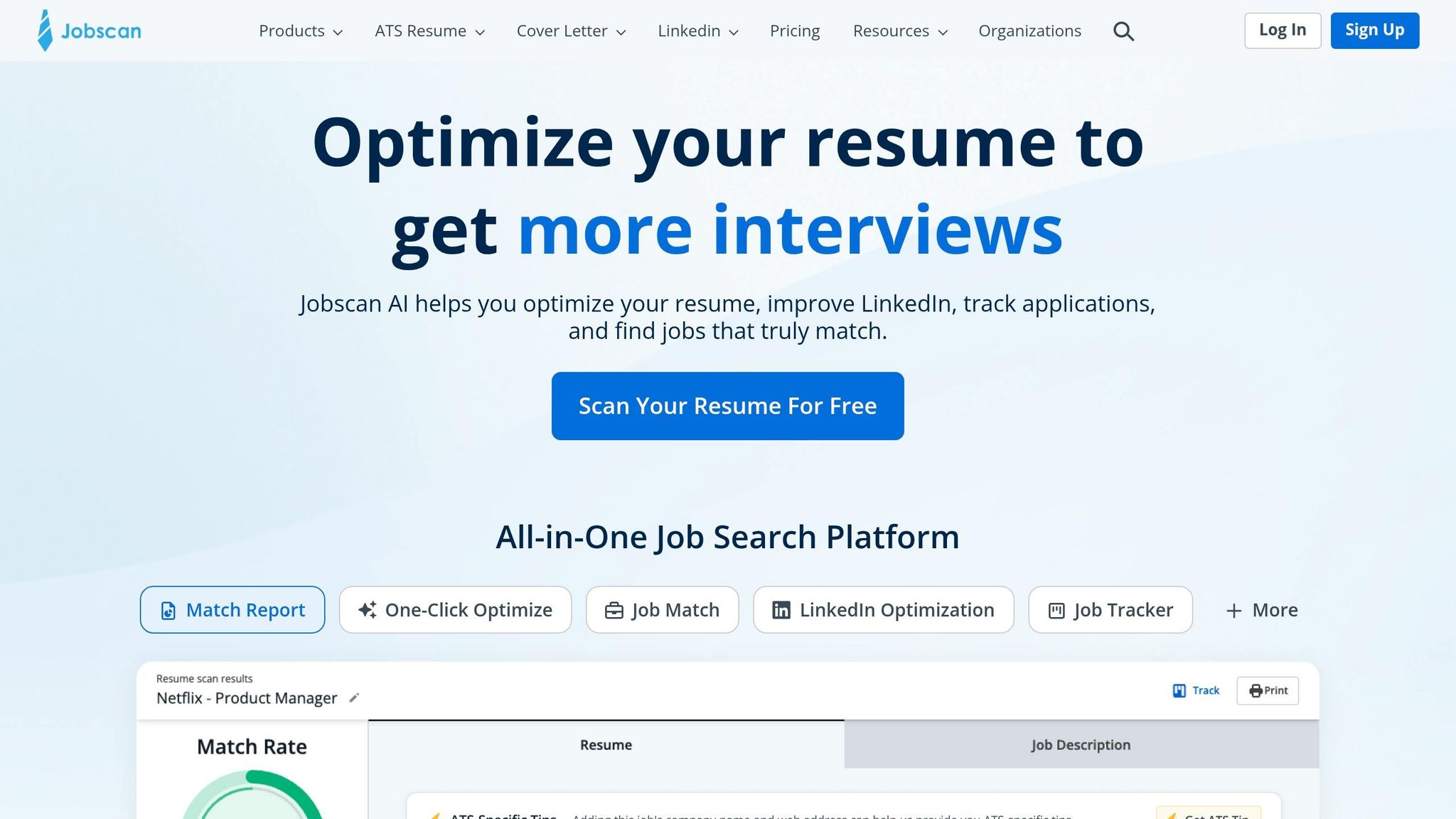
Jobscan focuses on helping job seekers optimize their resumes for Applicant Tracking Systems (ATS). It generates a Match Rate report by comparing your resume against specific job descriptions, aiming for a 75% match score. The analysis prioritizes hard skills, education requirements, job titles, and soft skills in that order. While 99% of Fortune 500 companies rely on ATS to filter candidates, Jobscan's method works best with older systems like Workday, SAP SuccessFactors, and Oracle Taleo. However, it may struggle with newer semantic-matching platforms such as Greenhouse and Lever, which are more common in 2026.
Why scale.jobs stands out compared to Jobscan:
- Human-driven application submissions instead of manual processes
- Tailored, ATS-optimized resumes rather than rigid keyword scoring
- One-time payment structure versus recurring subscription costs
- WhatsApp support and proof-of-work for added transparency
- Compatibility with modern ATS-2.0 systems, unlike Jobscan's focus on legacy platforms
Resume Optimization
Jobscan's algorithm pinpoints missing keywords and highlights formatting issues - such as tables or graphics - that could interfere with ATS parsing. It advises users to upload resumes in .docx format and warns against exceeding a 75% match score to avoid keyword stuffing, which can appear unnatural to recruiters.
However, modern ATS-2.0 systems prioritize semantic understanding over keyword density. As The AI Career Lab explains:
"Jobscan's scoring algorithm rewards keyword density. That worked against pre-2025 ATS systems. The 2026 ATS-2.0 stack... uses semantic embedding."
This shift means that optimizing solely for Jobscan's metrics could reduce your chances with companies using advanced recruitment platforms. For those targeting startups or tech firms, it might be wise to combine Jobscan's insights with services like resume writing services and AI builders, which balance keyword integration with natural language flow.
Application Management
Jobscan also offers a Kanban-style job tracker to organize resumes, job descriptions, and application statuses. Its Chrome extension can save job listings directly from sites like LinkedIn, Indeed, and Glassdoor, automatically capturing details such as job titles, salaries, and URLs. Each application card displays your match rate, making it easy to assess your alignment with the role. The tracker also includes features like interview scheduling and calendar reminders.
While the tracker has a 4.4/5 rating on the Chrome Web Store, it serves mainly as an organizational tool. Unlike scale.jobs, where human assistants handle both application submissions and proof of work, Jobscan requires users to manually apply after reviewing their match scores. For those juggling dozens of applications, this manual workflow can quickly become a bottleneck compared to platforms that streamline both optimization and submission processes.
Pricing and Value
Jobscan's pricing starts at $49.95 per month for unlimited scans and advanced features, or $29.98 per month when billed quarterly at $89.95. The free plan limits users to just five resume scans. Compared to competitors like Teal ($9–$29/month) and Huntr ($4–$13/month), Jobscan is significantly more expensive. Its pricing reflects its niche focus on enterprise ATS keyword scoring, but experts in 2026 often recommend against it for most job seekers. This is especially true for those applying to companies using modern ATS systems, where contextual relevance outweighs keyword density.
Who Should Use Each Tool
Jobscan is ideal for: Applicants targeting large corporations that rely on older ATS systems like Workday or SAP SuccessFactors. These users benefit from keyword-density optimization and have the time to manually submit applications.
scale.jobs is better suited for: Job seekers aiming for companies with modern ATS-2.0 systems. It provides human-powered application submissions, personalized resumes, transparent proof of work, and a one-time payment option, eliminating ongoing subscription fees.
These contrasts in pricing, functionality, and focus highlight the distinct strengths and limitations of each platform.
3. LazyApply
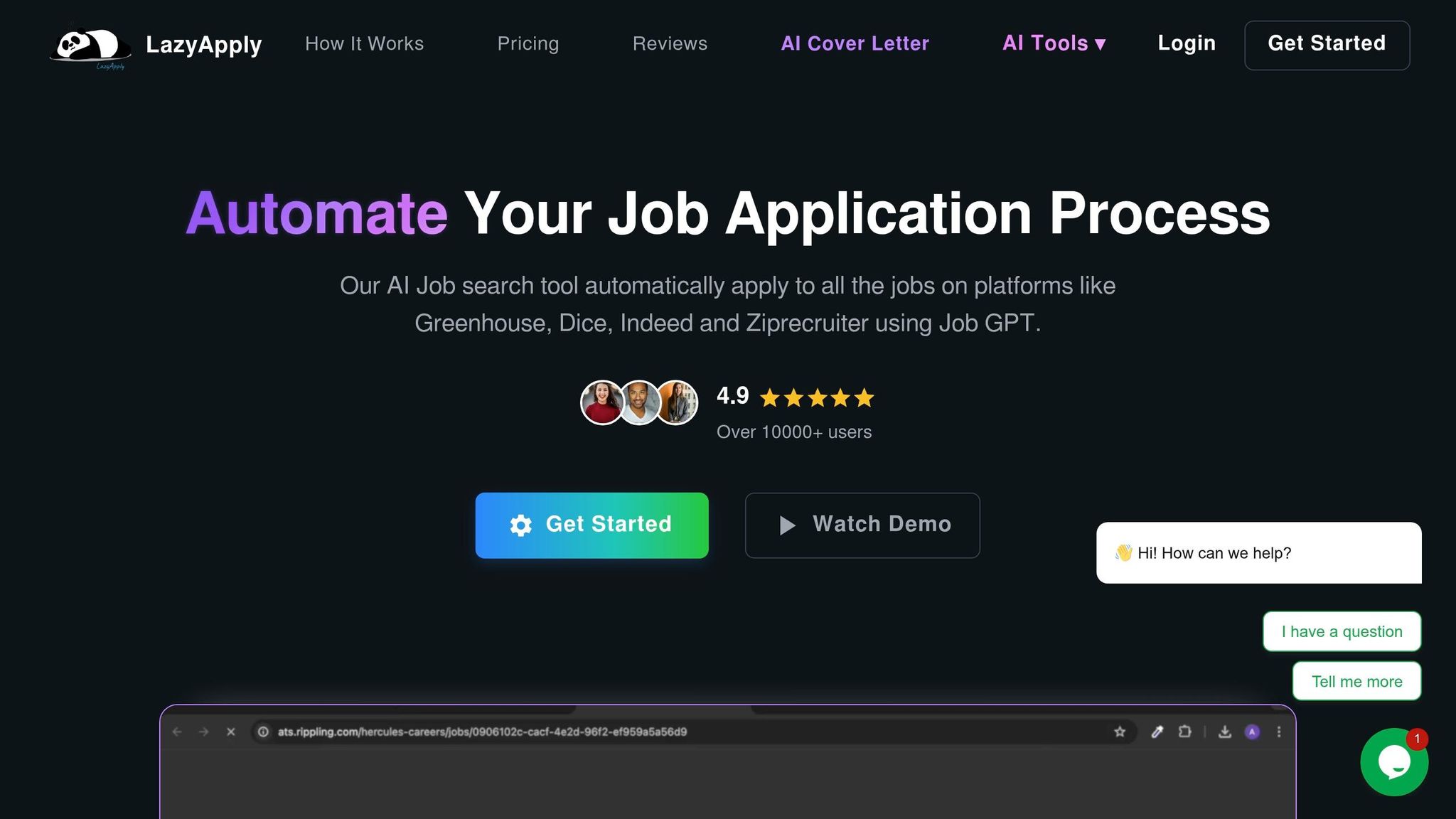
Let’s dive deeper into how LazyApply’s mass-application approach compares to scale.jobs’ more personalized, human-driven strategy.
LazyApply focuses on automating job applications on a large scale, enabling users to submit anywhere from 15 to 1,500 applications daily. This approach caters to those who prefer mass-applying - sending resumes to a broad range of positions without taking the time to tailor each submission. While it’s undeniably fast, this method often leads to a flood of rejections. For instance, one user reportedly submitted 14,000 applications through LazyApply, only to face hundreds of rejections due to mismatched skills.
How scale.jobs Stands Out Against LazyApply
- Human-assisted application submissions replace generic, automated bulk submissions for a more targeted approach.
- Customized, role-specific resumes ensure better alignment with job requirements instead of relying on one-size-fits-all templates.
- One-time payment structure eliminates the need for recurring fees, which can go as high as $999 annually with LazyApply.
- Transparent application tracking via WhatsApp updates, offering real-time proof of work rather than automated confirmations.
- Enhanced ATS compatibility through modern tools that focus on semantic matching, steering clear of outdated keyword-stuffing methods.
scale.jobs prioritizes precision and personalization, offering services like human-verified applications, ATS-optimized resumes, and a transparent payment model - qualities that align well with the needs of today’s job seekers.
Application Management
LazyApply automates the job application process on platforms such as LinkedIn, Indeed, and Glassdoor. However, users have reported technical glitches, such as incorrect form entries, missing fields, and compatibility issues with certain systems. The platform’s ratings reflect these challenges, with a 2.5/5 on Trustpilot and 3.4/5 on the Chrome Web Store. Common complaints include sluggish customer support and difficulties with refunds, even though a 30-day guarantee is offered.
Another drawback is the platform’s limited filtering capabilities, which can result in applications being submitted to roles outside the user’s expertise. Modern ATS systems, which many companies rely on, emphasize semantic understanding over basic keyword matching. This renders high-volume, generic submissions less effective in securing interviews.
Resume Optimization
LazyApply offers tools like "Resume Builder" and "Resume GPT", but the level of customization depends on the pricing plan. For example, the Basic plan at $99/year supports only one resume profile, while the Ultimate plan at $999/year allows up to 20 profiles. Users are advised to avoid multi-column templates or custom fonts, as these can create parsing issues with ATS systems. Additionally, since the platform occasionally inputs incorrect information into applications, periodic manual reviews are necessary to maintain data accuracy.
Given these limitations, the value of LazyApply’s resume services largely hinges on its pricing structure.
Pricing and Value
Let’s break down LazyApply’s pricing tiers:
- Basic Plan: $99/year for 15 applications per day and 1 resume profile.
- Premium Plan: $149/year for 150 applications per day and 5 resume profiles.
- Ultimate Plan: $999/year for 1,500 applications per day, 20 resume profiles, and detailed application tracking.
While the high-volume approach might attract certain users, the overall cost-effectiveness - measured by the number of quality interviews secured - remains a concern.
LazyApply works best for: Job seekers who prioritize quantity over quality. This tool is suitable for those willing to manually audit their submissions and accept higher rejection rates as part of the process.
scale.jobs is better suited for: Candidates aiming for precision in their job search. It’s ideal for individuals targeting specific roles, especially at companies using modern ATS systems, who value human oversight, personalized resumes, and a transparent, one-time payment model.
4. Teal
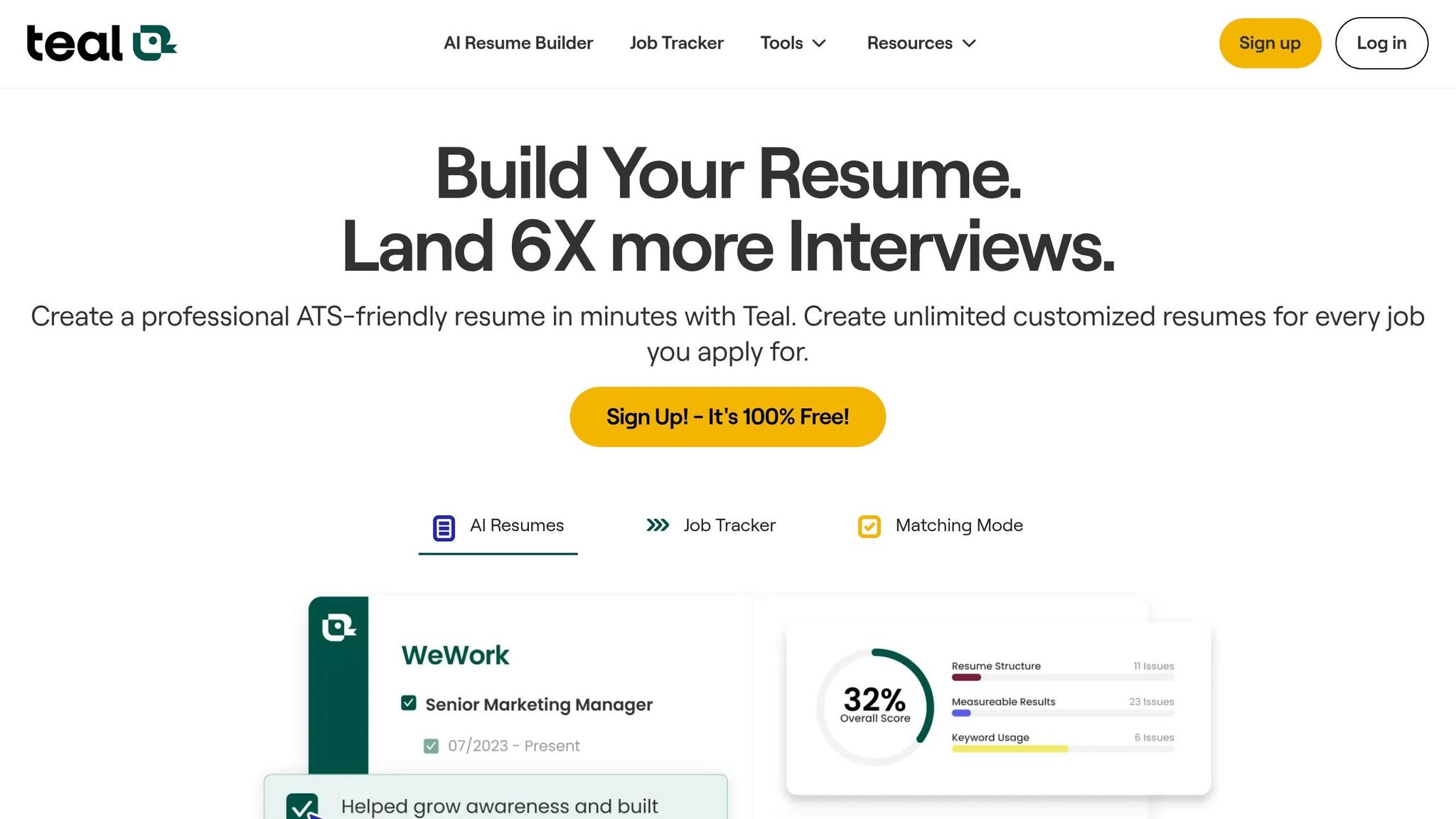
Teal serves as a comprehensive job search command center, boasting over 1.5 million members and a Chrome extension with an impressive 4.9/5-star rating from more than 3,000 reviews. It's particularly known for its ability to track applications at scale. But how does it stack up against scale.jobs, especially when weighing automated tools against human-assisted services?
Resume Optimization
Teal’s resume builder is centered around keyword matching and version control. The platform allows users to create unlimited resume variations tailored to specific job descriptions. Its "Matching Mode" evaluates job postings, highlights the top five keywords to include, and calculates a Match Score based on keyword overlap.
However, this Match Score approach relies on older models of ATS systems, which primarily focused on keyword density. Modern ATS systems like Greenhouse, Lever, and Ashby now lean on semantic matching, which evaluates the overall meaning of content rather than simple keyword repetition. As a result, even a high Match Score from Teal might not guarantee success, especially if AI-generated language raises red flags.
"Teal is a great application tracker... Skip the AI features; the tracker is the value." - The AI Career Lab
Teal’s AI tool often produces phrases like "leverage" and "robust", which can be flagged by updated ATS systems. If you're applying to tech companies or Fortune 500 firms, you may need to manually refine AI-generated content or consider working with professional resume writers who specialize in crafting ATS-friendly documents.
Why scale.jobs stands out:
- Human-reviewed resumes designed for modern semantic ATS systems, avoiding outdated keyword-focused methods.
- Expertly crafted content that steers clear of language flagged by AI detectors.
- ATS-optimized documents tailored to current parsing technologies.
- One-time payment model - no recurring fees or subscriptions.
- Transparent process updates through WhatsApp for every application submission.
This personalized resume strategy ensures that your applications are optimized for success, without relying solely on automated tools.
Application Management
Teal shines in application tracking with its Kanban-style system. Each application is represented as a card that includes the job description, the resume version submitted, the application date, and follow-up status. Its Chrome extension integrates with over 40 job boards - like LinkedIn, Indeed, and Greenhouse - allowing users to import job postings with a single click.
For job seekers juggling 30 or more applications, Teal’s organizational features are highly useful. You can compare tailored resume versions, set automated follow-up reminders, and maintain momentum across multiple opportunities. However, its AI-powered autofill feature, currently in beta, has been reported to encounter issues like incorrect entries and compatibility problems.
scale.jobs takes a different route by eliminating the need for manual tracking. Instead of organizing applications, the service handles submissions directly through human assistants who verify accuracy before sending. Clients receive WhatsApp updates with proof of work, ensuring every application is handled correctly without the need for constant management or error-checking.
Outreach and Networking
Teal provides a Job Search CRM that helps users track professional contacts, companies, and networking follow-ups. It includes email templates for various scenarios - such as outreach, thank-you notes, and follow-ups - integrated into the workflow. Automated reminders help users stay on top of networking efforts.
However, Teal doesn’t offer a dedicated platform for outreach. Users still need to rely on tools like LinkedIn or email to execute their networking strategies. While its templates provide structure, personalization and sending messages remain the user’s responsibility.
scale.jobs focuses solely on application execution, making it a better fit for those prioritizing efficient submissions over networking tools.
Pricing and Value
| Feature | Teal Free | Teal+ ($29/month) | scale.jobs |
|---|---|---|---|
| Resume Versions | Unlimited | Unlimited | Custom per role |
| Application Tracking | Unlimited | Unlimited | WhatsApp proof-of-work |
| AI Generation | Limited (10 bullets, 2 summaries) | Unlimited | Human-written content |
| Keyword Matching | Top 5 per job | Real-time scoring | Semantic optimization |
| Payment Model | Free / Subscription | Subscription | One-time payment |
Teal’s free tier offers unlimited job tracking, basic resume building, and access to its Chrome extension. The premium Teal+ plan, priced at $9/week, $29/month, or $179/quarter, unlocks unlimited AI tools, advanced analytics, and email templates. While its pricing is lower than competitors like Jobscan, it requires ongoing subscription payments. Many users find the $9/month tier sufficient if they primarily need tracking features and avoid AI tools.
In contrast, scale.jobs provides a one-time payment model, eliminating recurring fees while delivering high-quality, human-assisted services.
Who Should Use Each Tool
Teal is ideal for: Job seekers managing a large volume of applications who need a robust tracking system and are comfortable handling submissions and refining AI-generated content themselves. It’s particularly suited for those who prefer subscription-based tools with strong organizational features.
scale.jobs is better for: Candidates seeking human-verified applications, ATS-optimized resumes designed for modern systems, and transparent proof of work without the hassle of ongoing fees. If you’d rather delegate the entire application process and focus on quality over quantity, scale.jobs is the way to go.
Switch to scale.jobs if…
- You’re frustrated with manually reviewing AI-generated resume content for ATS compatibility.
- You want proof of work for every application, not just a tracking tool.
- You’re applying to companies using semantic ATS systems like Greenhouse or Lever.
- You prefer a one-time payment over recurring subscription costs.
- You need human assistants to handle submissions, ensuring accuracy and professionalism.
5. LoopCV
LoopCV is an AI-powered platform designed to automate job applications by scanning job boards and submitting applications on behalf of users. The system operates through "loops", which are automated search sequences based on user-defined preferences like job title, location, and salary range. While the concept of automation sounds appealing, how does LoopCV's high-volume strategy stack up against scale.jobs, which emphasizes human oversight? Let’s break it down and see why scale.jobs might offer a more reliable alternative.
Application Management
The standout feature of LoopCV is its automated application loop. Once configured, the system continuously searches for job matches and submits applications based on your criteria. Users can track these matches and monitor application statuses through a centralized dashboard.
However, automation comes with its own set of challenges. Some users have reported that LoopCV's system fails to complete submissions, even after identifying hundreds - or sometimes thousands - of matches. For instance, there are cases where users reached over 1,800 matches without a single successful application being submitted. This raises concerns about the reliability of such automation.
Why scale.jobs stands out:
- Human verification for every submission: Every application is reviewed and submitted manually, ensuring it reaches the employer.
- Proof of delivery via WhatsApp: Real-time updates with time-stamped screenshots confirm successful submissions.
- Focused quality over quantity: Instead of mass applications, the service targets opportunities that align with your career goals.
- Tailored resumes for each role: Resumes are optimized for ATS systems and customized for specific job requirements.
- No recurring fees: A one-time payment covers all services, eliminating the need for ongoing subscriptions.
For job seekers, the distinction between finding job matches and ensuring applications are actually delivered can make all the difference. Many candidates also benefit from services like professional resume writing, which combine document preparation with verified application submission.
These operational differences set the stage for evaluating the pricing and overall value of LoopCV versus scale.jobs.
Pricing and Value
LoopCV operates on a subscription model, requiring monthly payments to maintain access to its automated loops. While it can process large volumes of job opportunities quickly, the reported issues with incomplete submissions call its value into question. Paying for matches that fail to convert into real applications might feel like paying for a search tool rather than a reliable job application service.
scale.jobs offers a more dependable alternative: With a one-time payment, you receive human-verified applications, tailored resumes, and documented proof of delivery. Instead of relying on automation that may or may not work, scale.jobs ensures accuracy and completion, making it a reliable investment for serious job seekers.
| Feature | LoopCV | scale.jobs |
|---|---|---|
| Human involvement | None (fully automated) | Human assistants verify every application |
| Resume customization depth | Generic templates | ATS-optimized, tailored to each role |
| ATS handling | Basic keyword matching | Advanced semantic optimization |
| Application execution method | Automated loops (often incomplete) | Manual submission with verification |
| Transparency and proof of work | Dashboard tracking only | WhatsApp updates with screenshots |
| Pricing model | Monthly subscription | One-time payment ($199–$499) |
Who LoopCV is for: Those experimenting with mass auto-apply strategies and willing to monitor the system closely to ensure applications are submitted. It works best for users who are comfortable with recurring subscription fees and less concerned about personalized applications.
Who scale.jobs is for: Candidates who prioritize verified, high-quality submissions and want transparent proof of work. If you're applying to competitive roles or have been let down by automation tools, scale.jobs provides the reliability and human oversight that automated systems often lack.
Switch to scale.jobs if…
If you've been frustrated by the limitations of automated systems, scale.jobs' human-focused approach might be the solution you need.
- You've experienced tools that match jobs but fail to complete applications.
- Proof of submission is important to you, and you want every application documented.
- Monthly subscriptions for unreliable tools have left you dissatisfied.
- You value human oversight over AI-only processes that can sometimes falter.
- You're targeting roles where personalized, ATS-optimized resumes matter more than sheer volume.
When automation falls short, scale.jobs steps in to ensure your job application process is thorough, reliable, and results-driven.
Strengths and Weaknesses
Every job search tool has its own approach to addressing common challenges, and understanding their strengths and limitations can help you decide whether to opt for a human-powered solution like scale.jobs.
scale.jobs prioritizes accuracy and accountability with its human-verified application submissions. Each application is manually reviewed, ensuring they meet the required standards. The flat-fee pricing, ranging from $199 to $399, avoids the need for recurring subscriptions, and users receive real-time updates through WhatsApp, complete with time-stamped screenshots. This makes it ideal for those who prefer a managed service, though it may not suit candidates who like to fine-tune every resume detail themselves.
Jobscan, on the other hand, focuses on optimizing resumes for older ATS systems like Workday, SAP SuccessFactors, and Oracle Taleo. It uses a scoring system (0–100%) based on keyword matching, which can be helpful for these platforms. However, as newer ATS systems like Greenhouse and Lever shift to semantic embedding, over-optimizing for keyword density can backfire. As The AI Career Lab points out:
"Jobscan's scoring algorithm rewards keyword density... optimizing for Jobscan's score can hurt you because the resulting language reads as keyword-stuffed."
Its $49.95/month subscription may also feel expensive compared to other tools that cater to modern ATS systems.
LazyApply takes a different route with full automation for application submissions. While this speeds up the process, the lack of human oversight means there’s no guarantee that applications are correctly completed or delivered. The monthly subscription model can also become costly over time, especially since it doesn’t include proof of submission.
Teal excels in tracking applications effectively, earning a 4.9/5 rating on the Chrome Web Store with over 3,000 reviews. Its dashboard for version control and contact management is especially helpful for managing more than 30 active applications. However, its AI rewriting feature has faced criticism for producing language flagged by modern ATS detectors, often using overused terms like "leverage" or "robust." As The AI Career Lab suggests:
"The tracker is the value. Skip the AI features."
Lastly, LoopCV automates the job search process with its "loops", but the absence of human oversight can result in incomplete submissions. Without transparent proof of work, users may find it challenging to confirm whether their applications were successfully submitted.
Comparing Key Features Across Platforms
Here’s a quick look at how these tools stack up against each other:
| Feature | scale.jobs | Jobscan | LazyApply | Teal | LoopCV |
|---|---|---|---|---|---|
| Human involvement | Human assistants verify every application | None | None | None | None |
| Resume customization depth | ATS-optimized, tailored to each role | Keyword density scoring | Generic templates | AI tailoring (flagged by ATS) | Generic templates |
| ATS handling | Broad ATS compatibility | Focus on legacy ATS (Workday/SAP) | Basic keyword matching | Keyword overlap percentage | Basic keyword matching |
| Application execution method | Manual submission with verification | User applies manually | Fully automated | User applies manually | Automated loops (often incomplete) |
| Transparency and proof of work | Real-time WhatsApp updates with screenshots | Detailed keyword match reports | Dashboard tracking | Version control and state tracking | Dashboard tracking |
| Pricing model | One-time payment ($199–$399) | $49.95/month | Monthly subscription | $9–$29/month | Monthly subscription |
This overview highlights why scale.jobs is often a more dependable option for candidates seeking a managed, human-powered approach to job applications.
Which Tool Fits Your Job Search
Let’s match each tool to specific job search needs, considering factors like application volume, budget, and how much manual effort you're willing to invest.
scale.jobs: Who Should Choose It
scale.jobs is the go-to option for job seekers applying to 50+ positions monthly who want to save time and ensure accuracy. For a flat fee ($199–$399), it handles everything from creating ATS-optimized resumes to manually submitting applications. Plus, you get WhatsApp updates with proof of work. It’s especially helpful if you’re balancing interviews, networking, or tight visa timelines and can’t dedicate 20+ hours a week to applications. A great pick for those who value human oversight and detailed tracking.
Jobscan: Who Should Use It
Jobscan is ideal for targeting Fortune 500 companies that rely on older ATS platforms like Workday, SAP SuccessFactors, or Oracle Taleo. These systems prioritize keyword density, and Jobscan’s scoring system (0–100%) helps you tailor resumes accordingly. However, it’s less effective for modern ATS like Greenhouse or Lever, used by many startups. At $49.95/month, it’s best for low-volume searches, where you’re applying to 5–10 carefully chosen roles.
Why scale.jobs outshines Jobscan:
- Human-powered application submissions versus manual self-application
- Tailored, ATS-friendly resumes for modern hiring systems
- Real-time WhatsApp proof of work for transparency
- One-time flat fee instead of ongoing monthly costs
- Compatibility with advanced ATS systems, not just legacy platforms
Teal: Who Should Use It
Teal is a great choice for job seekers managing 30+ active applications and needing a centralized tool to track resumes and application statuses. Its Chrome extension, rated 4.9/5 from over 3,000 reviews, highlights its organizational strength. Subscriptions range from $9–$29/month, making it a solid option for those handling submissions manually and running a high-volume search.
Why scale.jobs beats Teal:
- Human assistants manage submissions, eliminating manual effort
- Professionally written resumes instead of AI-generated ones flagged by ATS
- Proof of submission via WhatsApp, not just a tracking dashboard
- One-time payment with no recurring fees
- Focuses on quality submissions over organizational features
LazyApply and LoopCV: Who Should Use Them
LazyApply and LoopCV cater to those who prefer automated, mass-application approaches. However, without human oversight, there’s a risk of incomplete submissions and no proof of delivery. These tools work well if you’re playing the numbers game but may fall short when precision and tailoring are needed.
Why scale.jobs excels over LazyApply and LoopCV:
- Human verification ensures complete, accurate applications
- Resumes tailored to each role instead of generic templates
- Real-time updates with time-stamped screenshots via WhatsApp
- One-time pricing versus monthly subscriptions
- Emphasis on quality over sheer application volume
For a more strategic approach, consider pairing software tools with professional resume writing services that include application support.
Comparison Table
| Feature | scale.jobs | Jobscan | LazyApply | Teal | LoopCV |
|---|---|---|---|---|---|
| Human involvement | Human assistants verify every application | None | None | None | None |
| Resume customization depth | ATS-optimized, tailored to each role | Keyword density scoring | Generic templates | AI tailoring (flagged by ATS) | Generic templates |
| ATS handling | Broad ATS-2.0 compatibility | Focus on legacy ATS (Workday/SAP) | Basic keyword matching | Keyword overlap percentage | Basic keyword matching |
| Application execution method | Manual submission with verification | User applies manually | Fully automated | User applies manually | Automated loops (often incomplete) |
| Transparency and proof of work | Real-time WhatsApp updates with screenshots | Detailed keyword match reports | Dashboard tracking | Version control and state tracking | Dashboard tracking |
| Pricing model | One-time payment ($199–$399) | $49.95/month | Monthly subscription | $9–$29/month | Monthly subscription |
Switch to scale.jobs if…
- You’re applying to 50+ roles monthly and want to save 20+ hours each week
- You need human oversight to ensure accurate, complete applications
- Your target companies use modern ATS systems like Greenhouse or Lever
- You value transparent proof of work, including time-stamped screenshots
- You prefer a one-time payment over recurring subscription fees
Decision Summary
- Choose scale.jobs for managed application services with human oversight, proof of work, and flat-rate pricing.
- Opt for Jobscan if you’re focusing on legacy ATS systems at large companies with a low-volume, keyword-driven approach.
- Use Teal if you need help organizing 30+ applications but prefer handling submissions yourself.
- Consider LazyApply or LoopCV only if you’re comfortable with fully automated, high-volume strategies that prioritize speed over precision.
FAQs
How can I tell if a company uses a modern ATS?
To figure out if a company uses a modern Applicant Tracking System (ATS), look for features like automated resume scanning during the application process. These systems often analyze resumes for keywords, formatting, and overall relevance to the job description. Many modern ATS platforms include keyword matching and parsing capabilities, making them efficient for sorting through applications. If you're unsure how your resume stacks up, tools like Jobscan or Resume Worded can help simulate an ATS scan and provide insights on how well your resume aligns with these systems.
Will auto-apply tools hurt my interview rate?
Auto-apply tools can be a double-edged sword when it comes to job applications. While they can save time, relying solely on them may hurt your chances of landing interviews if the applications they generate are generic or poorly tailored. Automated tools often struggle with creating resumes that are optimized for Applicant Tracking Systems (ATS), which could mean your application gets overlooked.
To get better results, it's worth combining automation with a human touch. Adding personalized edits and ensuring ATS-friendly formatting can significantly improve your chances. Tools designed to incorporate human involvement and customization strike a better balance, helping you maintain - or even increase - your interview opportunities compared to fully automated options.
What proof should I expect after an application is submitted?
After sending in a job application, it's crucial to have confirmation that it was successfully submitted. This could come in various forms, such as real-time updates through WhatsApp, notifications about your application status, or even a confirmation receipt showing proof of submission. These updates not only provide peace of mind but also allow you to monitor the progress of your applications with ease.