
8 Ways To Set Up Smart Job Alerts That Actually Work in 2026

Sarah Mitchell
April 10, 2026

- LinkedIn: Use targeted keywords in your profile and refine "Open to Work" settings for precision.
- Google Jobs: Create free alerts with specific keywords and locations, then refine results manually.
- Simplify.jobs: Consolidate alerts and streamline applications with one-click tools.
- LoopCV: Automate job searches and applications with customizable filters.
- Teal HQ: Manage and organize your job search with a pipeline tool and follow-up reminders.
- Sonara.ai: Leverage AI-driven alerts and automated applications with optional human oversight.
- Jobscan: Focus on ATS-friendly resumes and job matches, but applications remain manual.
- Scale.jobs: Combine human expertise with automation for tailored resumes, verified applications, and real-time updates.
Each tool offers unique benefits, whether you prefer automation, manual control, or human assistance. Platforms like Scale.jobs stand out by blending personalized support with advanced automation, making it a strong choice for those managing complex job searches, such as visa sponsorships or high-volume applications.
For a deeper dive into these platforms and step-by-step guidance on setting up effective job alerts, read on.
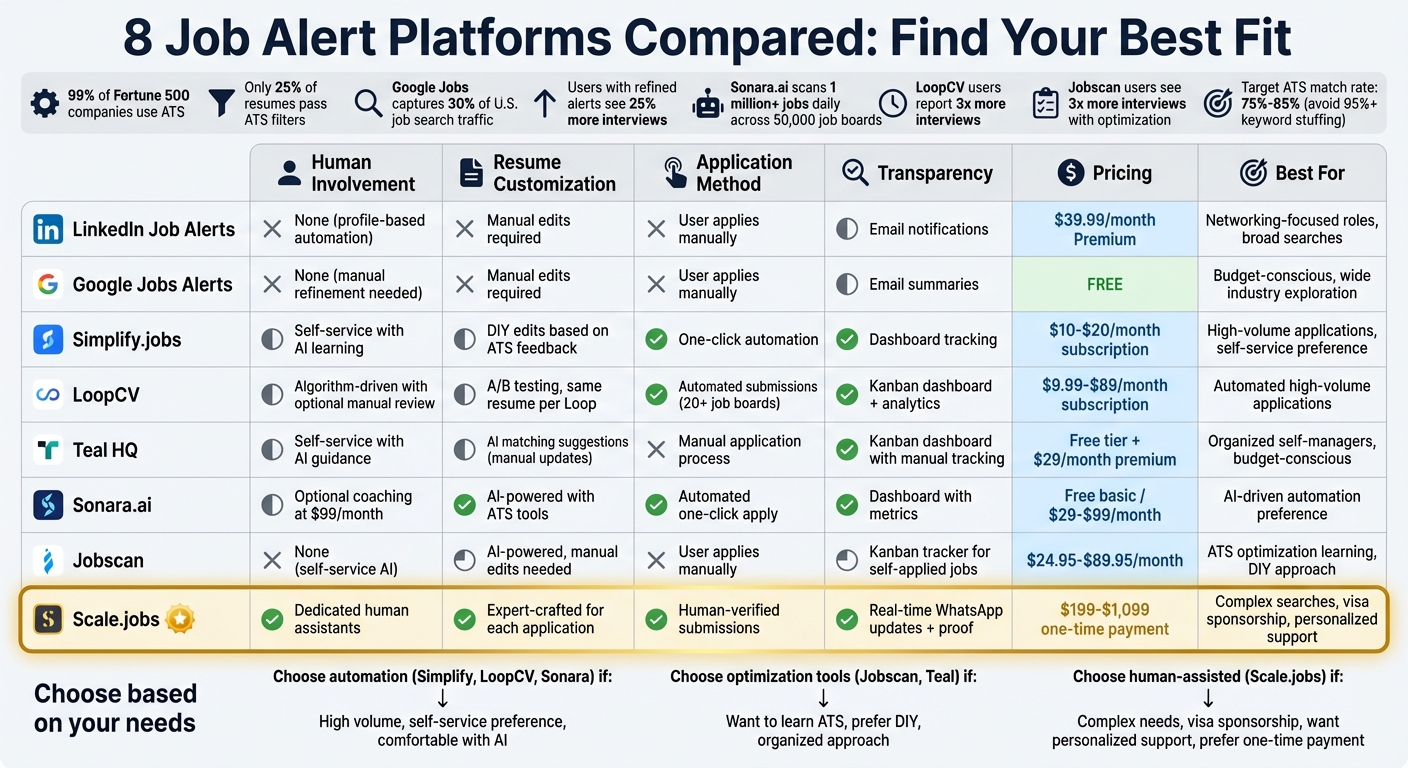
Job Alert Platforms Comparison: Features, Pricing, and Human Involvement
How to Set Up Google Alerts for New Jobs 🔔 | Get Notified ASAP
1. LinkedIn Job Alerts

Making the most of LinkedIn job alerts starts with fine-tuning your profile to align with your career aspirations. Unlike platforms like Scale.jobs, which combine AI-driven matching with human review, LinkedIn relies heavily on how well your profile is optimized. To enhance your chances, incorporate 8–12 targeted keywords from job descriptions into your About, Experience, and Skills sections. For example, if you're aiming for senior product management roles, phrases like "product roadmap", "stakeholder alignment", and "go-to-market strategy" can help you appear in more recruiter searches.
It’s also important to standardize your job titles. Creative titles like "Growth Hacker" or "Customer Success Ninja" might be fun, but switching to more conventional terms such as "Marketing Manager" or "Account Manager" can increase your visibility in job matches.
Lastly, pay close attention to your "Open to Work" settings. Instead of selecting broad categories, focus on specific roles, such as "Senior Marketing Manager" or "Director of Demand Generation." This approach helps LinkedIn deliver job alerts that are more tailored to your goals.
Next, we’ll look at how platforms like Google Jobs and Scale.jobs can further improve the accuracy of job alerts.
2. Google Jobs Alerts
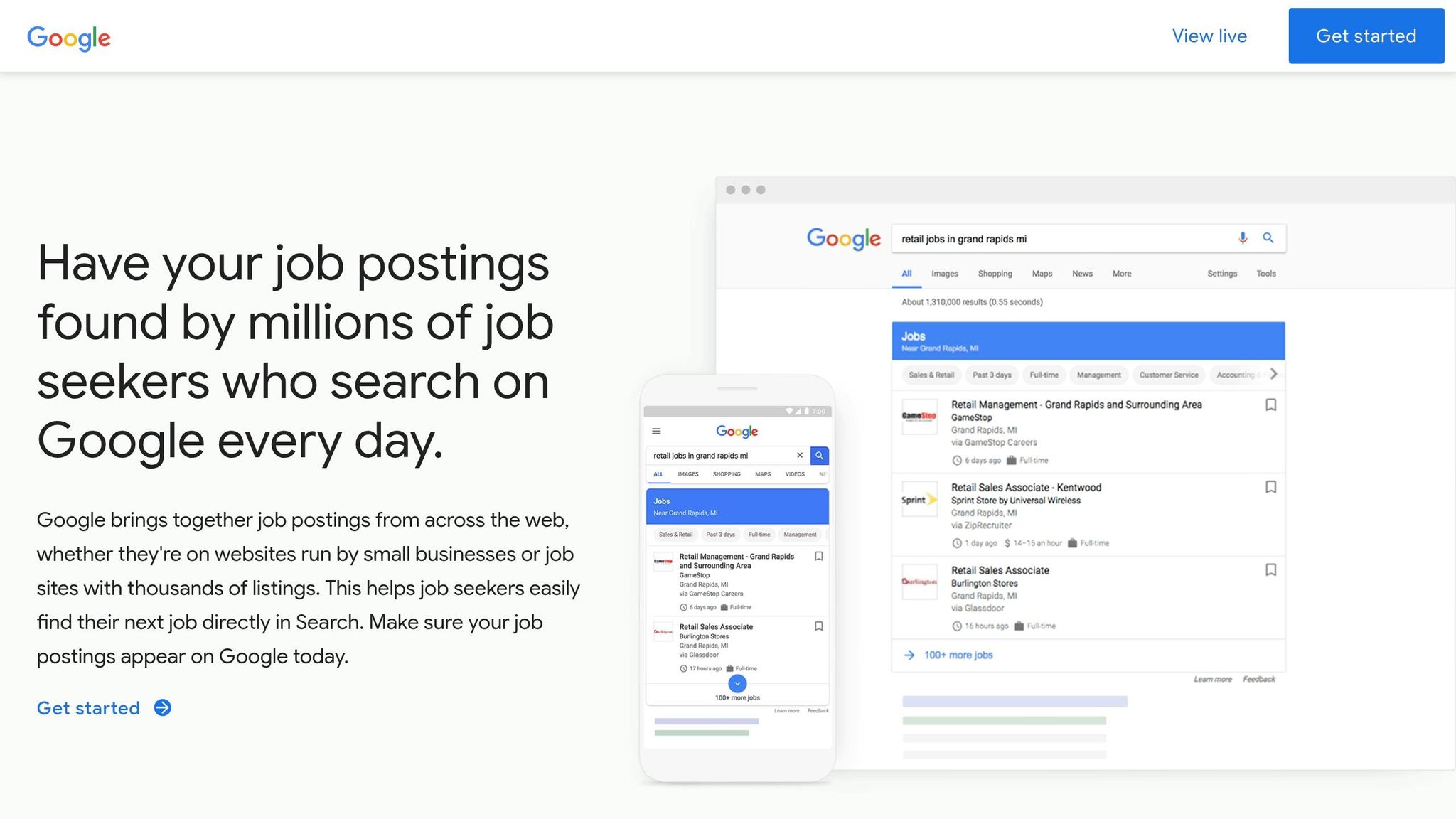
Google Jobs compiles listings from over 100 platforms, delivering free daily or weekly job alerts. Unlike LinkedIn, which relies on your profile for recommendations, or Scale.jobs, which uses human-assisted methods, Google directly integrates postings from applicant tracking systems and job boards into its search results. To set up alerts, head to google.com/jobs, enter keywords and a location, and click on Create job alert. You’ll then receive emails tailored to your preferences, complete with salary details (in dollars) and distances (in miles).
This service is entirely free, making it an excellent option for those on a tight budget. Forbes even calls Google for Jobs the "top-ranked job search engine for timely alerts", noting it captures about 30% of U.S. job search traffic. A 2025 LinkedIn study revealed that users who refined their Google job alerts achieved 25% more interviews compared to those using basic Indeed notifications.
Human Involvement in Job Alert Refinement
Google’s system requires some manual effort to maintain accuracy. Once you start receiving alerts, you can refine them by clicking Edit, adjusting keywords, and marking irrelevant listings as "Not interested." Career experts at The Muse suggest starting with broad terms like "marketing jobs" and narrowing them over a couple of weeks based on the results. This strategy can improve the relevance of your alerts by 20–30%. While this hands-on approach offers flexibility, it differs from Scale.jobs’ automated human review process, which streamlines relevance without requiring user input. This is one of the many ways human assistants streamline your job hunt by handling the heavy lifting.
Pricing Model and Cost-Effectiveness
Google Jobs Alerts is completely free - no subscriptions, no hidden fees. You can set up as many alerts as you need without any financial commitment. For job seekers who want broad coverage without spending a dime, this is a great starting point. However, if you’re looking for advanced customization, Google Alerts can be paired with premium services for a more tailored experience. It’s worth noting that Google’s manual refinement process stands in contrast to platforms like Scale.jobs, which provide human-assisted alert optimization for greater convenience.
Why Scale.jobs Wins Over Google Jobs
- Curated alerts for better matches: Scale.jobs assigns dedicated assistants to sort and prioritize job opportunities, saving you from constant manual adjustments.
- All-in-one application support: With ATS-optimized resumes and application execution included, Scale.jobs simplifies the entire process in one package.
- Real-time updates and transparency: Dedicated WhatsApp support and proof-of-work confirmations let you track every application, unlike Google’s automated summaries.
Who Should Use Google Jobs Alerts vs. Scale.jobs?
Google Jobs Alerts might be right for you if:
- You prefer managing and refining your job search independently.
- You’re exploring a wide range of industries or locations without a specific focus.
- You need a free tool and have time to manually filter through results.
Scale.jobs is a better fit if:
- You want human oversight to ensure high-quality matches without constant adjustments.
- You’re looking for ATS-optimized resumes and direct application support, not just job notifications.
- You value real-time updates, proof-of-work transparency, and dedicated customer support.
3. Simplify.jobs Alerts
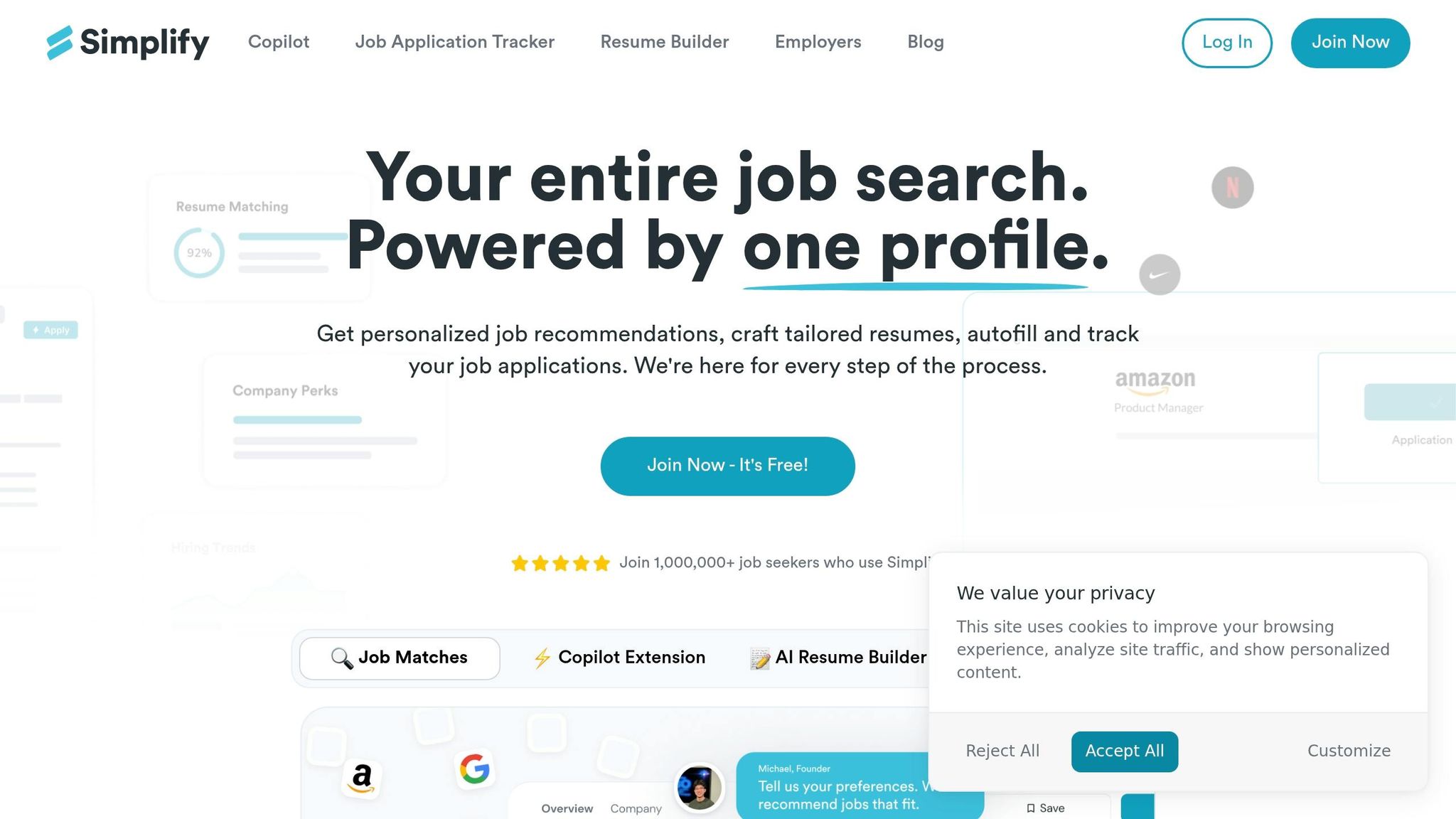
Simplify.jobs combines real-time job alerts with one-click applications from major platforms like LinkedIn, Indeed, Glassdoor, ZipRecruiter, and niche job boards. Unlike Google Jobs' notifications or LinkedIn's profile-based suggestions, Simplify.jobs offers a consolidated dashboard for managing job listings. Users can customize alert frequency - daily, weekly, or real-time - and set filters for job title, location, company size, salary range, and remote work preferences.
The platform's free tier provides basic alerts with limited monthly applications, while premium plans ($10–$20/month) offer unlimited applications, advanced filters, and improved ATS optimization. For those conducting intensive job searches, this pricing can save time compared to manual submissions. However, Scale.jobs stands apart by offering human-led services like ATS-optimized resumes, personalized application handling, and a one-time payment model. While Simplify.jobs' automation is efficient, it requires regular fine-tuning, unlike Scale.jobs' hands-on approach.
Human Involvement in Job Alert Refinement
Simplify.jobs relies on user-controlled settings rather than human oversight. You can adjust filters for job title, location, and experience level to refine your alerts. Over time, the platform's AI learns from your application activity to improve recommendations. However, this process takes a few weeks of trial and error to reduce irrelevant notifications. Career experts suggest creating 3–5 distinct alert profiles tailored to different job types instead of relying on one broad alert.
ATS Optimization and Resume Customization
Simplify.jobs includes tools to analyze your resume against job descriptions, highlighting keyword gaps and ATS compatibility issues. While it identifies areas for improvement, it’s up to you to make the necessary updates. For those seeking professional help, professional resume writing services offer tailored, human-crafted resumes optimized for ATS systems. Simplify.jobs simplifies tracking progress, but resume customization remains a manual task.
Transparency in Job Application Tracking
The platform provides a centralized dashboard to track applications, their statuses, and response rates. You can monitor which applications have been viewed, are pending, or have resulted in rejections or interviews. This feature helps you spot trends and adjust your job search strategy. However, Simplify.jobs lacks features like real-time WhatsApp updates or proof-of-work confirmations, which Scale.jobs includes to ensure transparency and accountability in the application process.
Why Scale.jobs Wins Over Simplify.jobs
| Feature | Simplify.jobs | Scale.jobs |
|---|---|---|
| Human Involvement | Self-service with AI learning | Dedicated human assistants review and prioritize matches |
| Resume Customization | DIY edits based on ATS feedback | ATS-optimized resumes created by professionals for each application |
| Application Execution | One-click automation | Human-powered application with quality checks |
| Transparency | Dashboard tracking | WhatsApp updates + proof-of-work confirmations |
| Pricing Model | $10–$20/month subscription | One-time payment |
Simplify.jobs is ideal if:
- You prefer to manage job alert settings and applications independently.
- You want to apply to a large number of jobs quickly without focusing on individual customization.
- You’re comfortable with a monthly subscription model and a self-service approach.
Scale.jobs is a better fit if:
- You value human expertise for refining job alerts and ensuring high-quality applications.
- You need professionally tailored, ATS-optimized resumes for each application.
- You prefer a one-time payment model and want dedicated support with proof of application submissions.
4. LoopCV Alerts
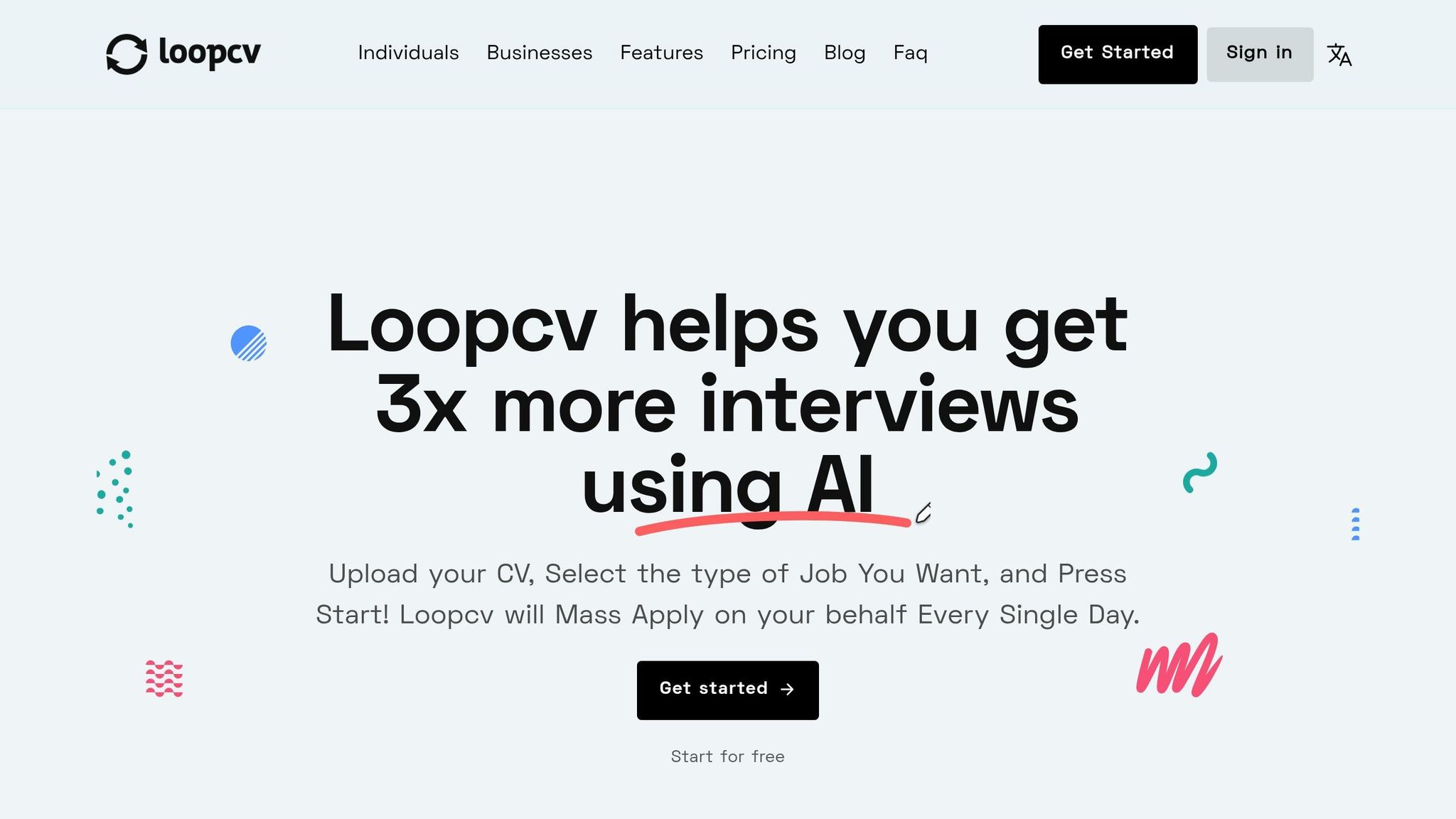
LoopCV simplifies the job search process by automating job alerts through "Loops." These Loops are essentially automated searches that scan more than 20 job boards and company career pages every hour, identifying new openings that match your criteria. You can set filters for job title and location, and the platform not only finds these roles but also applies to them on your behalf. For those who prefer more control, there’s an optional manual review mode where you can approve jobs before applications are submitted. Once set up, LoopCV keeps running in the background, sending out applications automatically.
The platform shines in its ability to handle a large volume of applications quickly. Users often report seeing three times more interviews compared to traditional, manual job applications. However, its automation-first approach might feel less personalized compared to services that involve human oversight. While LoopCV includes A/B testing for resumes to optimize performance, it doesn’t customize resumes for individual jobs, which is something Scale.jobs does well. Let’s take a closer look at how LoopCV handles human interaction and customization compared to manual methods.
Human Involvement in Job Alert Refinement
LoopCV primarily relies on automation, but it does offer some flexibility. You can switch between full automation and a manual review mode, where you approve job matches before applications are sent. While this adds a layer of control, it doesn’t include the kind of personalized guidance or strategy updates that come with human involvement. The platform tracks metrics like email opens, recruiter responses, and CV performance, but it’s up to you to tweak your Loops based on this data.
ATS Optimization and Resume Customization
LoopCV allows users to upload multiple versions of their resumes and track which ones perform best in terms of recruiter responses. This feature can help you identify what works and what doesn’t. However, it doesn’t go as far as crafting resumes tailored to each job posting. Instead, the same resume is used for all applications within a Loop. In contrast, Scale.jobs employs human assistants to create ATS-optimized resumes tailored for every individual application, offering a more personalized approach.
Transparency in Job Application Tracking
LoopCV also provides a comprehensive application tracking system. It features a Kanban-style dashboard that organizes your applications into stages like Applied, Interview, Offer, and Hired. Applications submitted through Loops are automatically added to the board, and you can also manually include applications from outside the platform to keep everything in one place. Each application card shows details such as the job title, company name, application date, and whether the submission was automated or manual. Additionally, the platform tracks email opens and recruiter responses, giving you insights into which applications are gaining traction. However, unlike Scale.jobs, which provides real-time updates via WhatsApp and proof-of-work confirmations, LoopCV’s transparency is limited to its dashboard without live notifications.
Pricing Model and Cost-Effectiveness
LoopCV focuses on high-volume automation, setting it apart from tools like Scale.jobs that integrate AI with human expertise.
| Feature | LoopCV | Scale.jobs |
|---|---|---|
| Human Involvement | Algorithm-driven with optional manual review | Dedicated human assistants for every application |
| Resume Customization | A/B testing with same resume per Loop | ATS-optimized resumes tailored for each job |
| Application Execution | Automated submissions | Human-powered, quality-checked applications |
| Transparency | Kanban dashboard + performance analytics | WhatsApp updates + proof-of-work confirmations |
| Pricing Model | $9.99 – $89/month subscription | One-time payment |
LoopCV might be the right choice if:
- You’re looking for an automated solution to apply across 20+ job boards without requiring daily input.
- You’re comfortable managing your own resume versions and analyzing performance metrics.
- You enjoy experimenting with different search settings and refining your strategy based on data.
Scale.jobs could be a better fit if:
- You value human expertise to fine-tune job alerts and focus on quality over quantity.
- You need custom, ATS-optimized resumes tailored to each job application.
- You prefer a one-time payment model, along with dedicated WhatsApp support and proof of every job submission.
5. Teal HQ Job Tracking Alerts
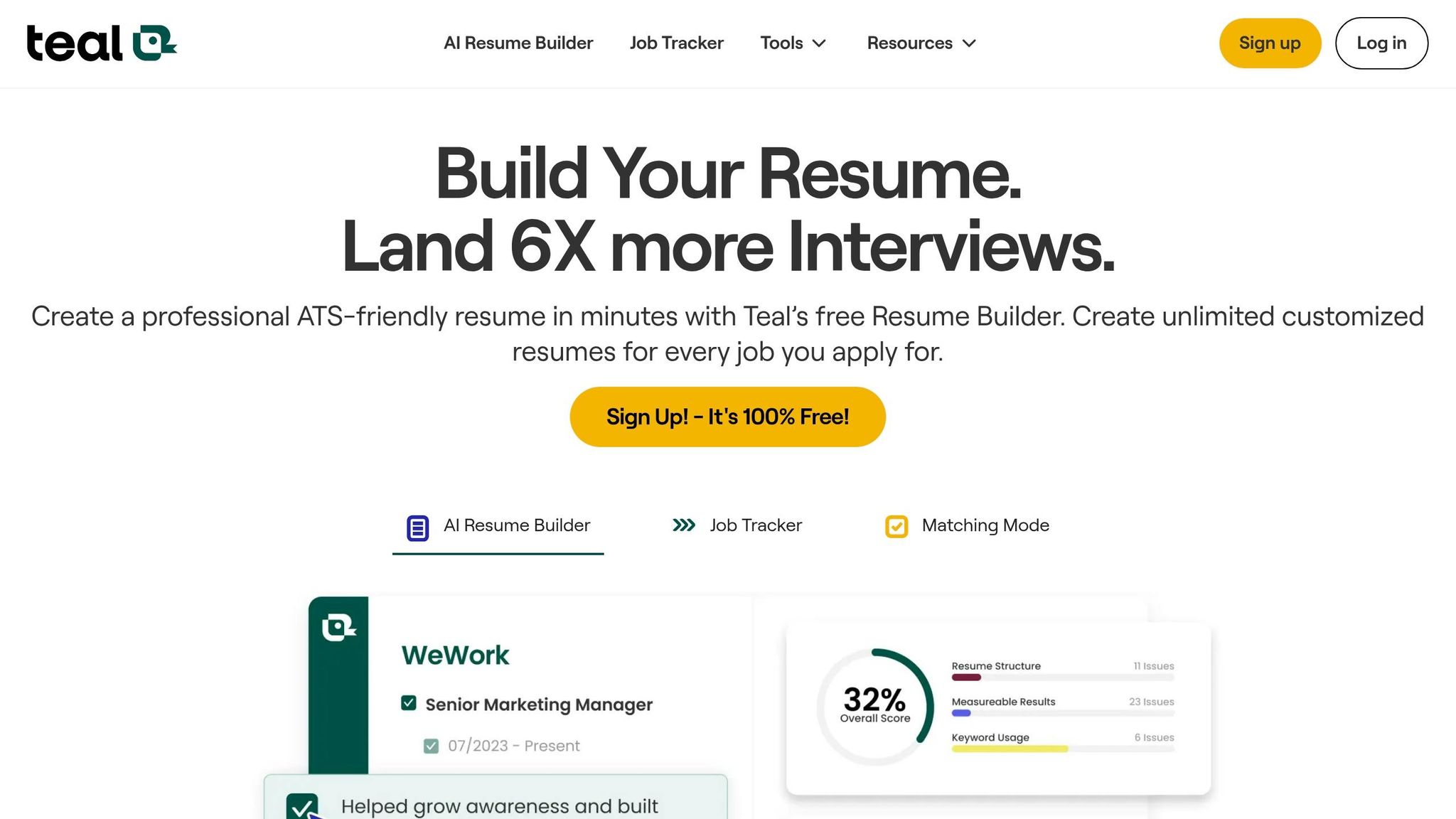
Teal HQ takes a unique approach to job alerts by focusing on organizing and tracking your job search rather than automating application submissions. This platform serves as a comprehensive management tool where you can bookmark jobs from various sources and organize them within a pipeline featuring seven stages: Bookmarked, Applying, Applied, Interviewing, Negotiating, Accepted, and Closed. Each stage is equipped with tools and recommendations to help you move forward while keeping you in control of the process.
This platform is particularly helpful for managing multiple applications across different job boards. Teal HQ offers follow-up reminders and provides templates for follow-ups and thank-you notes. However, it does not automatically submit applications or tailor your resume for specific roles. In contrast, Scale.jobs provides human-powered assistance for resume customization and application submission.
Human Involvement in Job Alert Refinement
Teal HQ operates as a self-service platform, relying on AI tools to provide stage-specific recommendations. For example, during the "Applying" stage, it may suggest identifying recruiters, while the "Negotiating" stage includes pre-written negotiation scripts. These insights are generated by algorithms, without the personalized touch of career experts. On the other hand, Scale.jobs assigns dedicated human assistants to provide tailored resume customization and manage the application process from start to finish.
ATS Optimization and Resume Customization
Teal HQ offers a "Match & Analysis" tool to evaluate how well your resume aligns with a job description, highlighting missing skills or keywords. You can attach different versions of your resume to each job entry, allowing you to track submissions. However, this process requires manual updates. In contrast, Scale.jobs eliminates the need for manual revisions by having human experts optimize resumes for Applicant Tracking Systems (ATS) and tailor them for each application.
Transparency in Job Application Tracking
Teal HQ uses a Kanban-style dashboard to visually organize your job search progress. Applications are sorted into categories like "Applied" or "Interviewing", and follow-up reminders are sent at intervals (e.g., one week, two weeks, and three weeks). Each job entry displays the application date, the resume version used, and the Match & Analysis score. Users can also track details like hiring managers or referrals and categorize closed applications with reasons such as "Not Selected" or "No Response."
By comparison, Scale.jobs offers real-time WhatsApp updates and proof-of-work confirmations for every application submitted, adding a layer of transparency and accountability that Teal HQ lacks.
Comparison: Teal HQ vs. Scale.jobs
| Feature | Teal HQ | Scale.jobs |
|---|---|---|
| Human Involvement | Self-service with AI guidance | Dedicated human assistants managing every step |
| Resume Customization | AI-powered matching suggestions (manual updates required) | ATS-optimized resumes tailored for each application |
| Application Execution | Manual application process | Human-powered, quality-checked applications |
| Transparency | Kanban dashboard with manual tracking | Real-time WhatsApp updates and proof-of-work confirmations |
| Pricing Model | Free tier + $29/month premium | One-time payment |
Teal HQ might be the right choice if:
- You want to maintain full control over your job search while using tools to stay organized.
- You don’t mind manually customizing your resume with AI-generated suggestions.
- You’re looking for a free or low-cost solution to manage your applications.
Scale.jobs could be a better fit if:
- You prefer having human experts tailor your resume and manage the application process.
- You need real-time updates and verified proof of application submissions.
- You value personalized support and a streamlined process that eliminates manual tasks.
Switch to scale.jobs if…
- You want human assistance for resume customization instead of relying solely on AI tools.
- You prefer real-time updates via WhatsApp over manually tracking progress on a dashboard.
- You’d rather pay a one-time fee than commit to a subscription model.
- You’re looking for end-to-end application management with a focus on quality and personalization.
6. Sonara.ai Smart Alerts
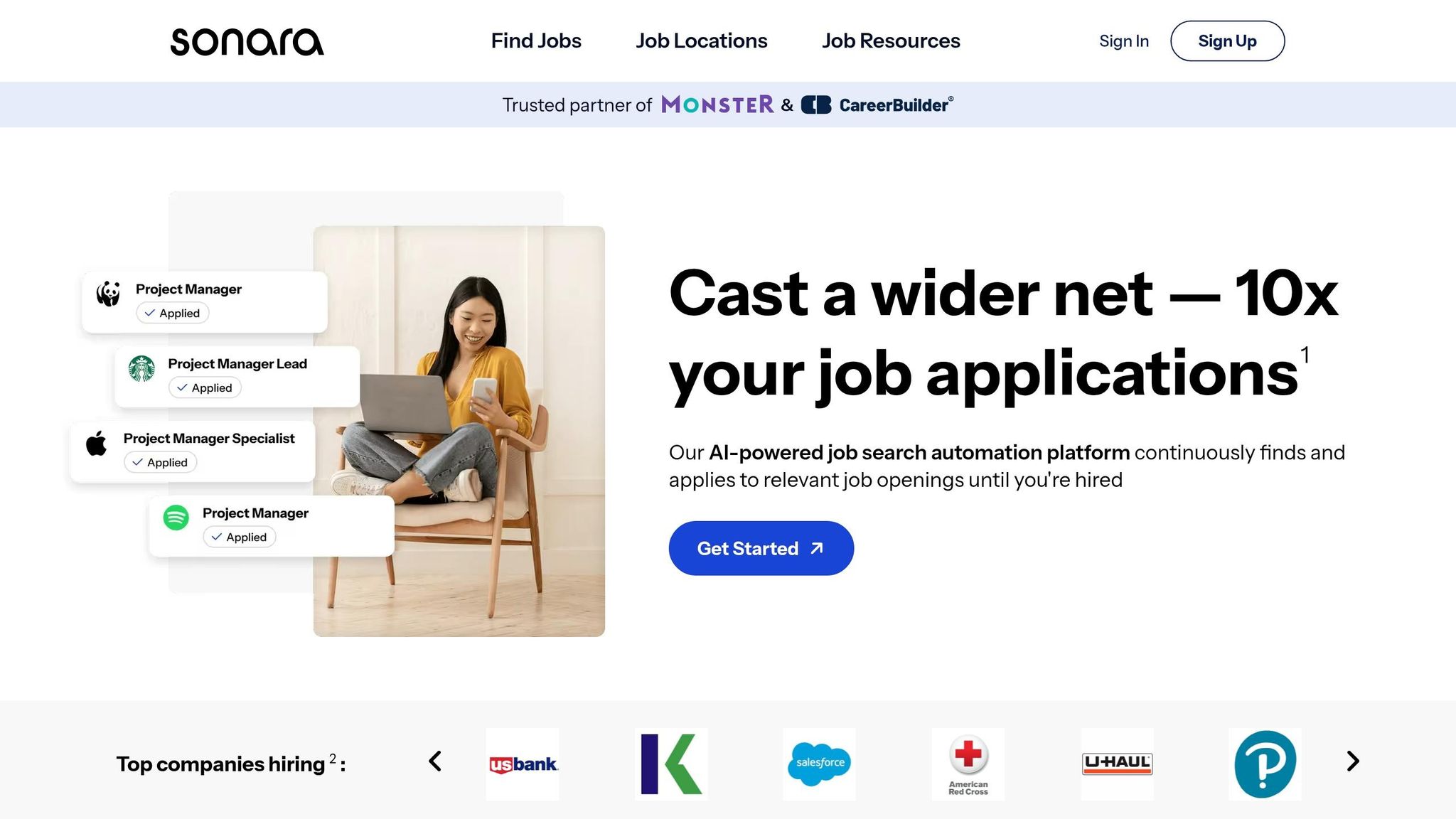
Sonara.ai markets itself as an AI-driven job search platform, scanning over 1 million jobs daily across 50,000 job boards. It delivers 5–10 highly targeted job matches weekly straight to your inbox or app. Unlike standard job alerts that rely on simple keyword matches, Sonara employs natural language processing to interpret nuanced skills and predict new opportunities. It also offers a one-click application feature with automated resume customization, speeding up the process. However, this automation-heavy system may lack the tailored adjustments provided by scale.jobs, which uses human assistants to manage applications with a personal touch.
Human Involvement in Job Search Refinement
Sonara.ai primarily operates through AI automation, though it includes an option for human oversight through its Enterprise plan, priced at $99/month. This plan provides access to career coaches who review AI-generated alerts, improving match accuracy by about 20%. Weekly human-vetted summaries help users fine-tune criteria like salary expectations (e.g., $80,000–$120,000) or remote work preferences. In comparison, scale.jobs integrates human involvement from the start, offering personalized assistance for every user. This distinction creates a more customized experience for job seekers with scale.jobs.
Resume Customization and ATS Optimization
When it comes to resumes, Sonara.ai uses AI to analyze ATS requirements and recommend real-time updates, boasting a 35% improvement in match rates. Its one-click application feature automates resume customization for each job, but this approach may fall short for highly competitive roles that demand more detailed adjustments. On the other hand, scale.jobs relies on human experts to craft tailored resumes for every application, ensuring a higher level of precision and personalization.
Tracking Job Applications with Transparency
Sonara.ai provides a dashboard for tracking application statuses, showing metrics such as open rates (90% for new alerts), response times (averaging 3 days), and feedback from employers, including rejection reasons. Meanwhile, scale.jobs offers real-time updates via WhatsApp, complete with proof-of-work such as screenshots or confirmation receipts to verify that a human submitted your application. Users can monitor over 100 applications with visual progress bars and exportable reports to prepare for interviews.
Pricing and Cost Considerations
Sonara.ai offers a free basic plan (up to 5 matches per week), a Pro plan at $29/month with unlimited alerts and ATS tools, and an Enterprise plan at $99/month that includes human coaching. Users have reported landing jobs up to 40% faster, potentially saving $500 per month in recruiter fees. However, the subscription-based pricing may not appeal to users who prefer a one-time investment. By contrast, scale.jobs uses a one-time payment model, which can be more economical for job seekers who secure roles quickly or want to avoid ongoing fees.
| Feature | Sonara.ai | Scale.jobs |
|---|---|---|
| Human Involvement | Optional coaching at $99/month | Dedicated human assistants for all users |
| Resume Customization | AI-powered with ATS tools | Expert-crafted for each application |
| Application Execution | Automated one-click apply | Human-verified submissions |
| Transparency | Dashboard with metrics and tracking | Real-time WhatsApp updates with proof |
| Pricing Model | Free basic / $29–$99/month | One-time payment |
Sonara.ai might suit you if:
- You want AI automation to manage a high volume of applications across multiple job boards.
- You prefer a hands-off system that applies to jobs on your behalf.
- You are comfortable with AI-driven resume adjustments without human input.
- You’re open to a subscription model for ongoing access to advanced features.
Scale.jobs could be a better choice if:
- You prefer human experts to handle resume customization and application management.
- You value real-time updates via WhatsApp and verified proof of application submissions.
- You lean toward a one-time payment over recurring monthly subscriptions.
- You prioritize personalized service and quality-checked applications over volume.
Consider switching to scale.jobs if…
- You’re worried that automated applications might lack the personal touch needed to stand out in competitive fields.
- You want human verification for each application instead of relying solely on AI.
- You prefer a one-time payment model.
- You need tailored support from real assistants who understand your specific career goals.
- You’ve experienced poor response rates with automated tools and want a more hands-on approach.
Next, we’ll explore additional tools and how they compare to scale.jobs' human-focused method.
7. Jobscan Matching Alerts
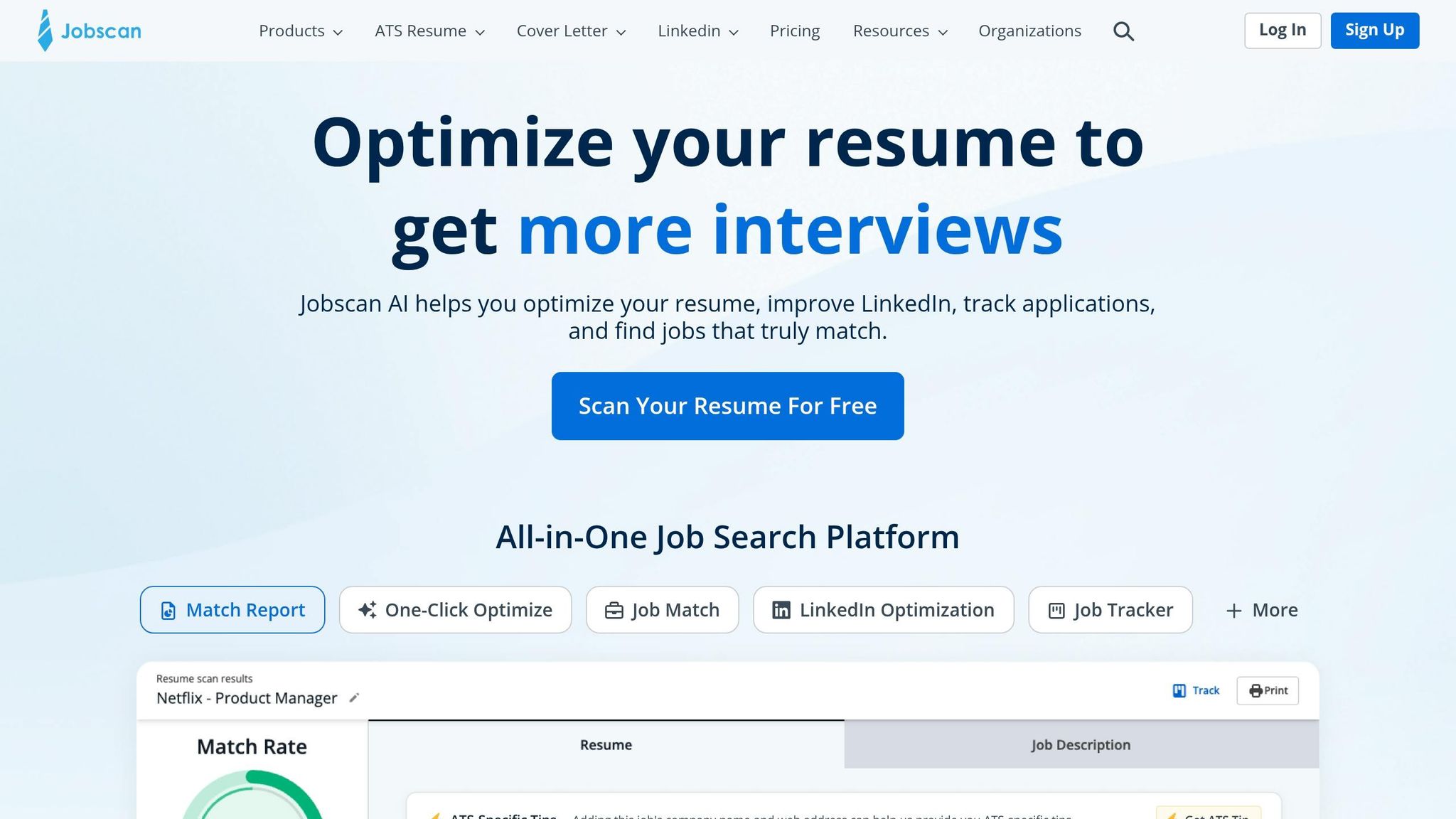
Jobscan focuses on helping job seekers navigate Applicant Tracking Systems (ATS) by analyzing popular platforms like Taleo, Greenhouse, Workday, and iCIMS. It evaluates over 30 factors - including hard and soft skills, formatting, and searchability - to ensure resumes pass ATS filters. Additionally, Jobscan provides alerts when new job postings align with your optimized profile. This tool is particularly helpful given that nearly 99% of Fortune 500 companies use ATS, but only about 25% of resumes make it through these systems to a recruiter.
Why scale.jobs stands out compared to Jobscan:
- Human-driven application process: Scale.jobs employs dedicated assistants to manage and submit error-free applications, not just optimize resumes.
- Tailored resumes for every job: Experts create ATS-friendly resumes customized for specific roles, rather than relying on AI-generated suggestions.
- Verified application updates: Real-time WhatsApp notifications include screenshots and submission confirmations, ensuring transparency.
ATS Optimization and Resume Customization
Jobscan offers a robust ATS simulation tool, using GPT-4 for its "One-Click AI Optimization." However, users must manually review and refine the AI's suggestions to avoid overly generic or repetitive phrasing that could deter recruiters. According to Jobscan, users see three times as many interviews when implementing its recommendations. The platform aims for match rates of 75%-85%, cautioning against exceeding 95% to avoid keyword stuffing that appears unprofessional. By contrast, scale.jobs employs human experts to craft resumes that balance ATS compatibility with a natural, polished tone. If you're looking for professional resume writing services vs. AI builders, this human-centered approach often yields better results.
Human Involvement in Job Alert Refinement
While Jobscan provides AI-driven tools, it operates as a self-service platform, leaving users to interpret and apply feedback on their own. Even with its Premium+ plan, priced at $89.95/month, there’s no personal guidance from a career coach. This absence of human oversight creates a gap, as highlighted by an HR professional from a Fortune 500 company:
"I've never rejected a candidate purely because of ATS scores. I search by keywords, yes, but I still read every resume that comes up."
This underscores a key limitation: Jobscan focuses on ATS optimization but doesn’t address the human element. Scale.jobs, however, bridges this gap by offering human assistants who understand both ATS requirements and what recruiters value.
Transparency in Job Application Tracking
Jobscan includes a Kanban-style tracker that helps users organize their job applications with tags, notes, and reminders. However, it only tracks jobs you've applied to manually and doesn’t provide evidence of submissions. Scale.jobs, on the other hand, delivers real-time WhatsApp updates, complete with screenshots and confirmation receipts, ensuring every application is verified and accounted for.
Pricing Model and Cost-Effectiveness
Jobscan’s free plan allows for five resume scans per month, but most users will need the Premium plan at $49.95/month (or $24.95/month when billed annually at $299.40/year). For additional templates and priority support, the Premium+ plan costs $89.95/month. While Jobscan offers a comprehensive suite of tools for resumes, cover letters, LinkedIn profiles, and tracking, its subscription fees can add up over time. Scale.jobs uses a one-time payment model, which can be more budget-friendly for those aiming to secure a role quickly without ongoing costs.
The table below compares key features of Jobscan and scale.jobs:
| Feature | Jobscan Premium | Scale.jobs |
|---|---|---|
| Human Involvement | None (self-service AI) | Dedicated human assistants |
| Resume Customization | AI-powered, manual edits needed | Expert-crafted for each application |
| Application Execution | User applies manually | Human-verified submissions |
| Transparency | Kanban tracker for self-applied jobs | Real-time WhatsApp updates with proof |
| Pricing Model | $24.95–$89.95/month | One-time payment |
Who Benefits Most from Each Option?
Jobscan may work best if:
- You want to understand how ATS systems work and prefer to optimize your own resume.
- You’re comfortable manually applying to jobs after making improvements.
- You need an all-in-one tool for resumes, LinkedIn profiles, and cover letters.
- You’re interested in learning how to refine your application materials independently.
Scale.jobs might be a better fit if:
- You want experts to handle both resume customization and application submissions.
- Real-time updates and verified proof of applications are important to you.
- You prefer a one-time payment over recurring subscription fees.
- You value personalized assistance rather than relying on AI-driven tools.
Consider switching to scale.jobs if…
- Despite optimizing your resume with Jobscan, you’re still not landing interviews, suggesting the issue lies beyond ATS compatibility.
- You’re spending too much time manually applying to jobs and need someone to take over the process.
- You want a one-time payment model instead of ongoing monthly costs.
- You value human oversight and personalized support to align your applications with your career goals.
Next, we’ll explore how scale.jobs’ alert system measures up against competing platforms.
8. scale.jobs Platform Alerts
Unlike most platforms that simply notify you of job openings, scale.jobs takes it a step further by combining alerts with hands-on application support. When a job that matches your preferences is found, your dedicated assistant not only alerts you but also submits tailored applications on your behalf. Plus, you’ll receive real-time updates via WhatsApp, complete with screenshots as proof of submission. This blend of automation and human effort makes scale.jobs stand out.
Personalized Job Alerts Through Human Assistance
Scale.jobs assigns trained virtual assistants who fine-tune your job search settings through direct communication on WhatsApp. This personalized touch ensures that your career goals, visa needs (like H1B, F1, CPT, TN, O1), and industry preferences are always reflected in your alerts. This level of customization is especially beneficial for those navigating layoffs, visa sponsorship challenges, or career changes where small details can make a big difference.
The platform offers a free tier with basic job board access and an application tracker. For more advanced features, the AI Assistant Pro plan is available at $9/month during its launch period (regularly $19/month), offering unlimited AI-generated resumes and cover letters. Human Assistant plans begin at $199 for 250 applications, with an option for up to 1,000 applications at $399. These are one-time payments, so you won’t face recurring charges once your job search ends.
Tailored Resumes and ATS-Friendly Applications
Every application submitted through scale.jobs includes a resume customized specifically for that job. Human assistants carefully review job descriptions, adjusting keywords, formatting, and content to meet Applicant Tracking System (ATS) requirements while maintaining a natural tone that appeals to recruiters. This level of detail is something automated platforms like Simplify.jobs, LoopCV, and Jobscan can’t replicate. Applications are processed and submitted within 24 hours.
For those who prefer handling their own applications but need professional resume support, scale.jobs also offers resume writing services starting at $199. This package includes three job applications handled by the team. For a more comprehensive solution, the $399 Entire Toolkit Bundle adds LinkedIn profile optimization, a cover letter, and 25 applications.
Transparent Job Tracking
Scale.jobs emphasizes transparency in the application process. With every submission, you’ll receive time-stamped WhatsApp updates and screenshots confirming the application details. This creates a verifiable record, which is something most fully automated platforms don’t provide. Additionally, the platform’s dashboard helps you track application statuses, interview invitations, and response rates. If you land a job before using all your credits, any remaining balance is refunded.
| Feature | LinkedIn Alerts | Simplify.jobs | LoopCV | Jobscan | scale.jobs |
|---|---|---|---|---|---|
| Human Involvement | None | None | None | None | Dedicated assistants |
| Resume Customization | Manual edits | AI templates | AI-generated | AI suggestions + manual review | Human-crafted per job |
| Application Execution | User applies | One-click automation | Automated | User applies | Human-verified submissions |
| Transparency | Email notifications | Dashboard tracking | Email updates | Self-tracking | WhatsApp screenshots + proof |
| Pricing Model | $39.99/month Premium | $30/month Pro | €14.99–€99.99/month | $24.95–$89.95/month | $199–$1,099 one-time |
Why Switch to scale.jobs?
- You’re overwhelmed by managing alerts and applications on your own and need expert help.
- You want verified, real-time proof of every job application submission.
- You prefer a one-time payment instead of ongoing subscription fees.
- You have complex job search needs, such as visa sponsorship or a career transition.
- You’ve tried automated tools but aren’t getting interviews.
Summary of Options
Platforms like LinkedIn, Google Jobs, Simplify.jobs, LoopCV, Jobscan, or Sonara.ai are great if you want full control over your applications, enjoy optimizing your own materials, and are applying to fewer than 50 jobs where manual work is manageable. However, if you’re looking for personalized support, custom resumes, verified application tracking, and a one-time payment model, scale.jobs is the better choice - especially for those with more complex job search requirements.
Conclusion
Navigating smart job alerts in 2026 requires a thoughtful mix of automation and personal oversight. Platforms like LinkedIn and Google Jobs are ideal for broad searches, while Simplify.jobs and LoopCV excel at automating high-volume applications. Tools such as Jobscan and Teal HQ refine your application materials, and Sonara.ai leverages AI to match you with roles. Each tool plays a unique role in the job search process.
The challenge lies in selecting tools that align with your needs. For those targeting 20–30 specific roles each month and preferring to craft tailored applications, free alerts and manual submissions may suffice. However, if you're managing visa sponsorships, recovering from a layoff, or applying to hundreds of positions, automation combined with human oversight becomes essential. This is where scale.jobs stands out, offering a blend of automated alerts and dedicated assistants who customize resumes, submit applications manually, and provide proof of every submission via WhatsApp - all starting at a one-time fee of $199.
When choosing, consider how each platform fits your job search strategy compared to scale.jobs' personalized, ATS-friendly approach. As highlighted in earlier comparisons, each tool has its strengths, but scale.jobs uniquely combines human assistance with verified submissions.
Take time this week to refine your job alerts. Remove filters that no longer serve you, set accurate USD salary ranges, and ensure precise location preferences. Experiment with two or three platforms simultaneously - perhaps LinkedIn for networking-focused roles and Sonara.ai for AI-driven matching. Review your results weekly and tweak your filters as needed.
A successful job search in 2026 hinges on combining accurate alerts with consistent follow-up. By setting up effective alerts and adjusting your approach based on responses, you’ll quickly connect with relevant opportunities. Whether you lean toward fully automated tools or platforms with human support, the ultimate goal is to streamline the process so you can focus on landing interviews and securing the right role.
Take the first step today by aligning your needs with the platform that offers the right mix of automation and personal attention.
FAQs
How many job alerts should I run at once?
Running job alerts across various platforms can open up more opportunities, but it’s important to keep things under control. Regularly tweak your filters to fine-tune results and set alert frequencies - daily or weekly - based on what works best for your schedule. This approach helps you stay organized while ensuring you receive relevant job matches without feeling swamped.
Which filters reduce irrelevant alerts the most?
Using targeted filters such as exact job titles, preferred locations, and role-specific keywords is a smart way to cut down on irrelevant job alerts. By fine-tuning these settings, you can make sure your notifications align closely with your career aspirations.
When should I use human-assisted applying?
For mid-to-senior positions, career transitions, or roles requiring a more personalized touch, human-assisted job application services can be a game-changer. These services specialize in crafting tailored, ATS-compliant applications, ensuring each submission aligns with the specific role. With manual submissions and proof of work provided, they significantly improve callback rates.
While AI tools offer speed and efficiency for entry-level or high-volume applications, they often fall short on customization. This lack of detail can lead to higher rejection rates by ATS systems. Human-assisted approaches, on the other hand, focus on precision and transparency, making them the preferred choice for competitive roles where every detail matters.