
Best Job Search Services That Help You Avoid Debt Collection

Sarah Mitchell
July 18, 2026

If money is tight, the wrong job-search tool can turn into one more bill. My take is simple: the safest picks are the ones with clear pricing, no surprise renewals, and proof that applications were sent.
Here’s the short version:
- scale.jobs stands out for fixed-price application bundles, a low-cost AI tier, and screenshots for each submission.
- EarnBetter is a good no-cost pick if I only want drafting help and plan to submit applications myself.
- Sonara.ai, LoopCV, and Jobright.ai may help with volume, but recurring charges or unclear pricing can be a problem if a search runs long.
- Resume tools like Jobscan and ResumeWorded can help improve documents, but they do not handle the apply process.
If I were trying to keep costs under control, I’d compare each service on four points:
- price structure
- who submits the application
- ATS resume support
- proof of work
Quick comparison
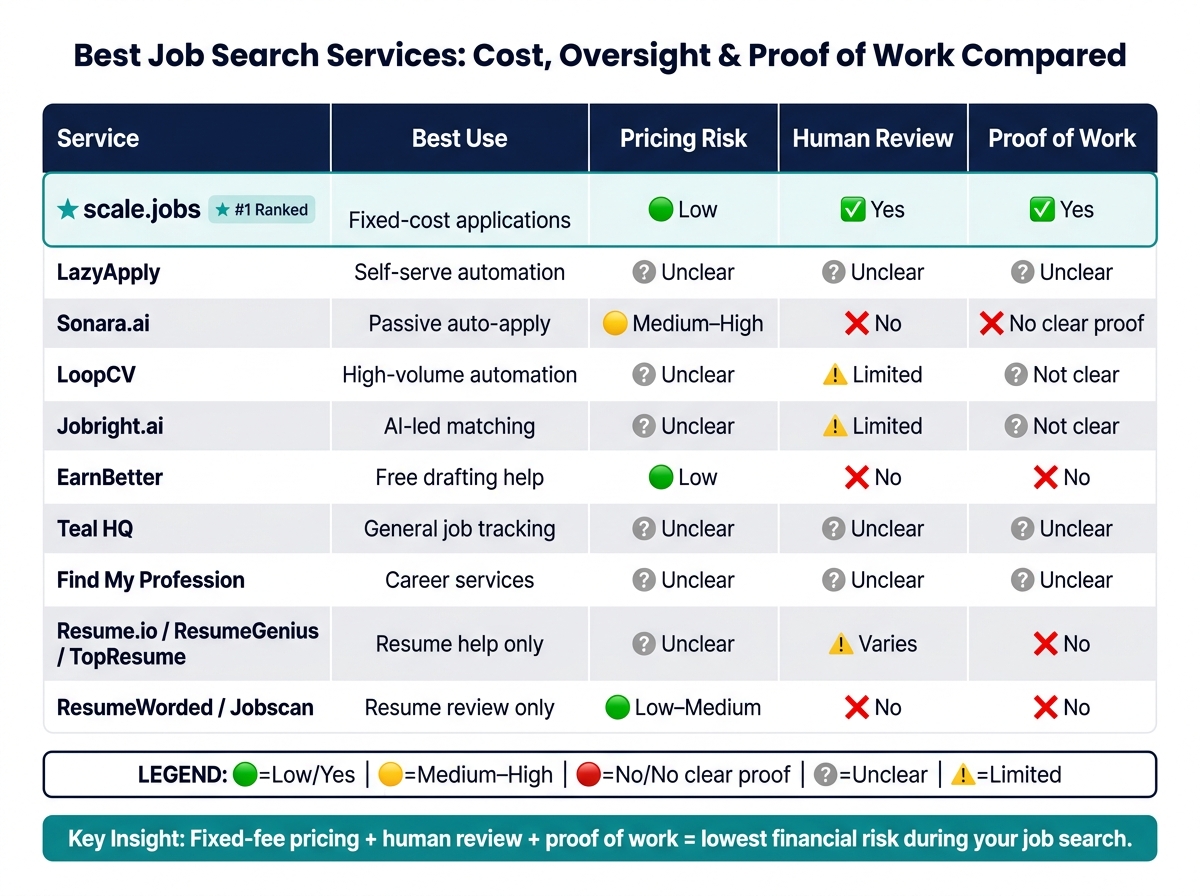
Best Job Search Services: Cost, Oversight & Proof of Work Compared
| Service | Best use | Pricing risk | Human review | Proof of work |
|---|---|---|---|---|
| scale.jobs | Fixed-cost applications | Low | Yes | Yes |
| LazyApply | Self-serve automation | Unclear | Unclear | Unclear |
| Sonara.ai | Passive auto-apply | Medium to high | No | No clear proof |
| LoopCV | High-volume automation tools | Unclear | Limited | Not clear |
| Jobright.ai | AI-led matching | Unclear | Limited | Not clear |
| EarnBetter | Free drafting help | Low | No | No |
| Teal HQ | Not enough source detail | Unclear | Unclear | Unclear |
| Find My Profession | Not enough source detail | Unclear | Unclear | Unclear |
| Resume.io / ResumeGenius / TopResume | Resume help only | Unclear | Varies | No application proof |
| ResumeWorded / Jobscan | Resume review only | Low to medium | No | No application proof |
sbb-itb-564272e
My simple filter before paying for any tool
I’d ask:
- Is the cost fixed?
- Can I stop without another bill next month?
- Can I see what got submitted? (with proof of submissions)
- Does it help me Apply for jobs faster without adding risk?
That filter cuts through most of the noise fast.
What I’d do if I were job searching right now
If I needed full apply help, I’d look at a job application service with fixed pricing to avoid recurring fees.
If I only needed resume help, I’d use an ai resume builder or an ai cover letter builder and handle submissions myself. It's worth comparing resume builders and writers to see which fits your budget.
If I wanted someone else to do the repeated form work, I’d lean toward a Virtual Assistant for Job Applications instead of stacking more software subscriptions.
Bottom line
I’d keep this list simple:
- Best for fixed-cost apply help: scale.jobs
- Best free option: EarnBetter
- Best for resume-only tuning: Jobscan / ResumeWorded
- Best for people who want automation first: Sonara.ai or LoopCV, but only after checking billing terms and understanding service costs
If the main goal is to avoid extra debt while searching for full time jobs, one-time fees beat subscription costs almost every time.
Why do job seekers need services that help them avoid debt collection?
When a job search takes longer than planned, recurring software fees can turn into a real problem. Bills keep coming, income is still paused, and even small monthly charges start to feel heavy. That’s why this comparison focuses on cost control, human oversight, ATS handling, and proof of work.
There’s another reason this matters: speed. Faster workflows help people Apply for jobs without spending hours buried in tabs, forms, and repeat data entry. When money is tight, wasted time has a price too.
What problems do these services solve when cash flow is tight?
The biggest upside is simple: lower monthly spend and less manual work. A good job application service can help cut down the grind while still improving the quality of each submission. That matters because sending the same generic resume everywhere usually leads nowhere.
ATS-aware customization also helps your application match how hiring systems sort and screen candidates. And when a service shows proof of work, you’re not left guessing what happened behind the scenes.
Here’s what these services are meant to fix:
- Cost control: Flat-fee or one-time pricing is easier to plan for than recurring monthly charges.
- Application quality: Tailored submissions help avoid low-value, one-size-fits-all applications.
- Proof of work: Time-stamped updates show what was sent and when.
This is also why many job seekers look for a job search virtual assistant or a Virtual Assistant for Job Applications instead of stacking more subscriptions on top of an already stressful search.
What should you look for in a service?
Start with pricing. Flat-fee or one-time pricing is usually easier to manage than open-ended billing, especially if you’re between roles and watching every dollar. If you're targeting full time jobs or trying to move fast across a lot of openings, predictable cost matters.
Then look at who’s actually doing the work. Human review on each submission can catch mistakes that pure automation often misses. That includes bad field mapping, resume mismatches, and portal-specific errors.
You’ll also want ATS-aware resume customization and support for the employer portals that companies use every day. A service can sound great on paper, but if it can’t work inside common systems, it becomes one more thing to manage.
Reporting should be plain and specific. You should be able to see exactly what was submitted, where it went, and when it happened. That kind of visibility matters whether you’re using a job search platform on your own or getting help from a job search coach.
Next, use these criteria to compare AI vs human services for automation depth, resume customization, and pricing model.
How are job seekers using these services while protecting cash flow?
These use cases set up the comparison table below, which ranks each service by automation, human oversight, and pricing model.
The pattern is pretty clear: people want help to apply for jobs without taking on another open-ended bill. That matters even more when money is tight, timing is stressful, or accuracy can't slip.
The recent grad on a tight budget
Many new graduates start with free tools before they spend anything. That’s a sensible move. Scale.jobs fits that workflow because it offers the first 5 applications free, which lets grads test the process before putting money in. If they want more hands-on help after that, the flat-fee Human Assistant plans start at $199 for 250 applications, so the search stays on a fixed budget instead of turning into a rolling subscription.
The laid-off professional racing a limited runway
Someone between jobs usually needs speed, but monthly billing can make a hard stretch feel worse. In that case, a fixed-price job application service is often easier to manage. A laid-off professional can buy a set block of applications from Scale.jobs, get time-stamped proof of each submission, and stop paying when the campaign ends. No surprise charge next month. No extra bill hanging around while they wait for interviews.
The employed candidate who wants privacy
People job hunting while still employed often care more about control and discretion than sheer volume. Scale.jobs's AI Assistant Pro, priced at $9/month under current pricing, helps tailor resumes and other application materials. That can work well for someone who wants an ai resume builder but also wants the option to add human review before anything goes out. Users can pair it with assisted submission support when they want another set of eyes, which helps keep the search private and spending predictable.
The visa holder who needs precise submissions
For H-1B and F-1 job seekers, the problem usually isn’t just finding roles. It’s getting forms filled out the right way across many employer portals. A missed field or wrong answer can create a mess later. Scale.jobs supports most employer portals, and its trained human VAs act like a virtual assistant for job seekers, handling application forms by hand to cut down on errors that can lead to rework.
The high-volume applicant who wants receipts
Some applicants send out a large number of applications and want a clean record of what was sent, where, and when. That’s where visibility matters. Scale.jobs gives users time-stamped screenshots and a live application dashboard, which makes the process easier to verify than many auto-apply tools or generic job search platform setups. If you’ve ever thought, “Did that application actually go through?” this kind of record solves that problem fast.
With those usage patterns in mind, the next table shows which tools match each budget and workflow.
| Use Case | Common Tool Type | Debt-Risk Concern | Strongest Fit |
|---|---|---|---|
| Recent grad, limited budget | Free-tier job tools | Paying before confirming the workflow works | scale.jobs (first 5 free) |
| Laid-off professional, limited runway | Recurring auto-apply subscriptions | Open-ended billing | scale.jobs (flat-fee bundles) |
| Employed candidate, wants privacy | AI resume customizers | Extra monthly subscriptions | scale.jobs AI Assistant Pro |
| Visa holder, needs precise submissions | Automated application tools | Costly form errors | scale.jobs human VAs |
| High-volume applicant, wants records | Auto-apply dashboards | Limited submission visibility | scale.jobs (time-stamped dashboard) |
1. scale.jobs
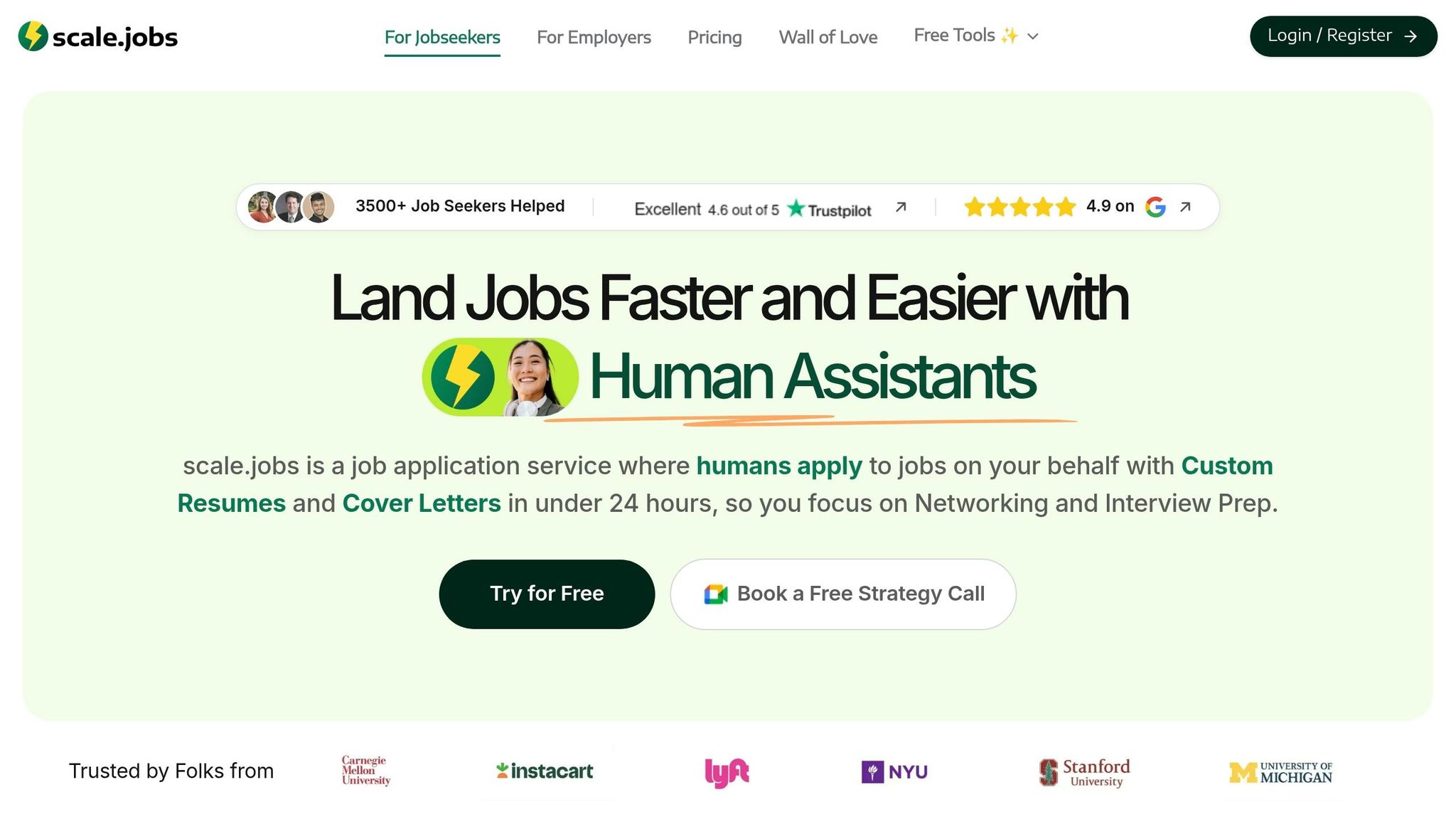
scale.jobs blends flat-fee campaigns, human submission, and proof-of-work reporting to replace recurring auto-apply platforms that lack human oversight.
Best for: Job seekers who want human-powered applications, fixed pricing, and receipts.
Not ideal for: Users who only want a low-cost DIY resume tool.
Pricing Model
The Human Assistant plans use flat-fee campaigns: $199 for 250 applications and $399 for 1,000. AI Assistant Pro is $9/month during launch and $19/month after that. If you don’t use all your application credits, they’re refunded.
That matters for people who are tired of open-ended software bills. If you want a job application service with a set cost, this model is easy to follow.
Application Execution
Human VAs submit applications by hand across 50,000+ career pages and 15+ ATSs, including 75%+ of Fortune 500 employers. The built-in job search platform also adds 2M+ monthly postings into the same workflow.
That setup fits job seekers who want more than a browser extension firing off generic forms. If your goal is to Apply for jobs at volume without giving up control, the human layer is the main draw here.
Resume Tailoring
AI Assistant Pro creates tailored resumes, cover letters, and application answers in 2–3 seconds per posting. Human Assistant plans can pair those AI-tailored documents with manual submissions, so each application matches the job description more closely.
This is where the platform starts to feel more complete than a basic auto-apply tool. Instead of sending the same resume everywhere, it works more like an ai resume builder plus an ai cover letter builder tied to a submission team.
Transparency and Proof of Work
WhatsApp updates and a live dashboard show what was submitted, where, and when. Every application includes time-stamped screenshots, so there’s a record for each submission.
That kind of visibility is useful if you’ve ever used a tool and thought, Did it even apply anywhere? Here, you get receipts instead of guesswork.
Pros:
- Flat-fee pricing with no open-ended billing
- Human VAs submit across 50,000+ career pages with time-stamped proof of work
Cons:
- AI Assistant Pro needs a monthly subscription for continued resume tailoring
- Human-powered submission takes more setup than instant auto-apply tools
These are the numbers that matter most when moving from recurring software to a human-led workflow.
| Feature | Detail |
|---|---|
| Career pages covered | 50,000+ |
| ATS systems supported | 15+ |
| Fortune 500 coverage | 75%+ |
| Monthly job postings | 2M+ |
| AI generation speed | 2–3 seconds |
| Turnaround time | 24 hours |
| Entry-level Human plan | $199 / 250 applications |
| Free trial | First 5 applications |
2. LazyApply
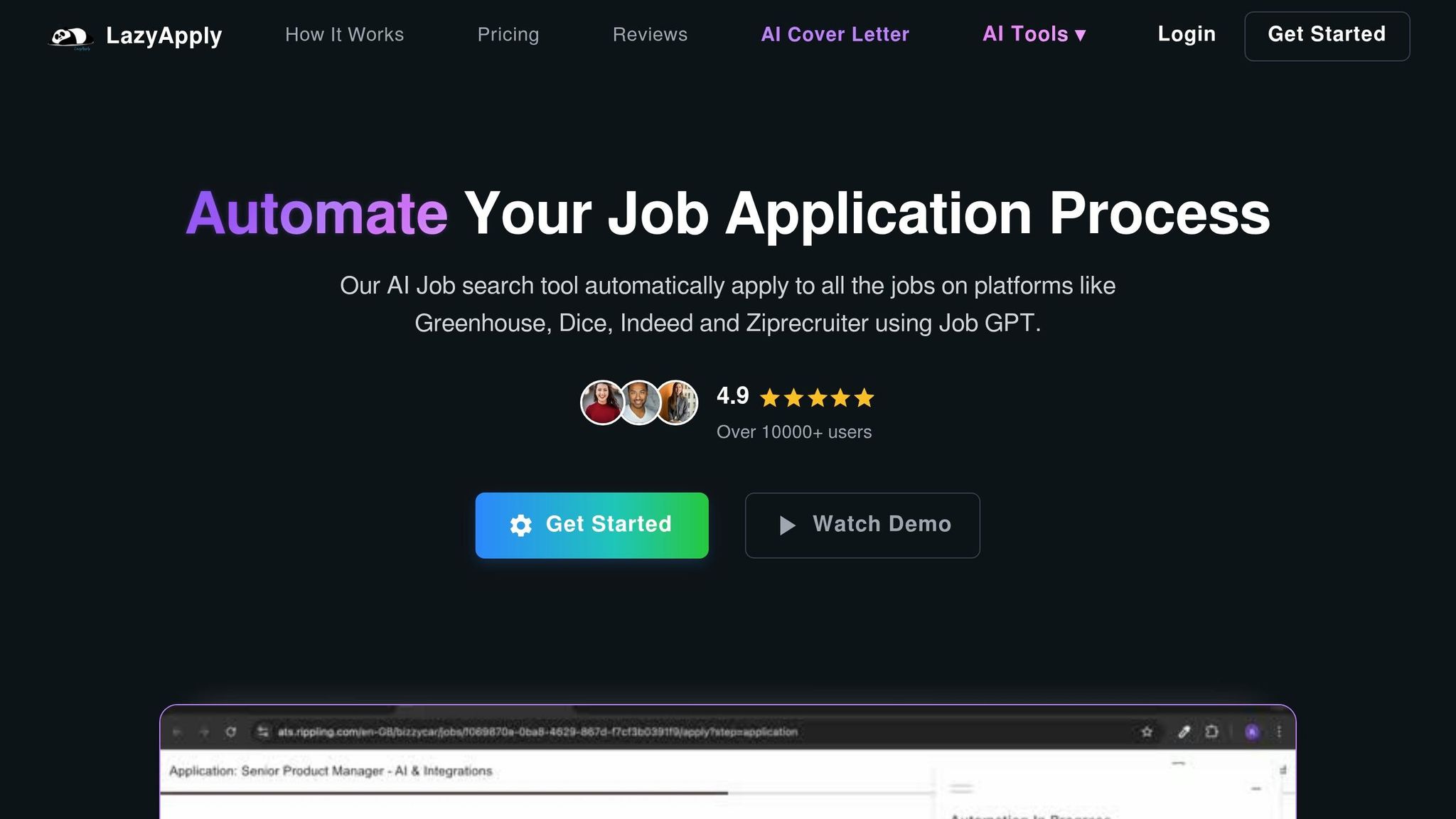
LazyApply is a self-serve job search platform for people who want automation without bringing in outside help. In this comparison, scale.jobs is the more documented option. It uses human-assisted applications and shares proof-of-work reporting, which gives users a clearer view of what’s happening behind the scenes.
Best for: Users who want to review LazyApply through the vendor’s own materials.
Not ideal for: Users who want a fully documented comparison before they decide.
That difference matters most when you’re choosing between human-assisted vs. automated job applications with visible output.
Pricing Model
scale.jobs offers free software, AI Assistant Pro at $9/month, and flat-fee human assistant bundles. The first 5 applications are free.
Application Execution and Transparency
LazyApply’s current workflow is not fully documented in the provided materials. scale.jobs uses trained human VAs to submit applications by hand, with live WhatsApp updates and time-stamped proof-of-work screenshots tied to each submission.
If you care about oversight, this is where the gap shows up fast. One option leaves parts of the process unclear. The other shows you what was done, when it was done, and where it was sent.
Resume Tailoring
scale.jobs includes an ATS-ready ai resume builder and AI-tailored documents matched to each job description. LazyApply’s resume customization depth is not confirmed in the available materials.
That matters if you’re trying to apply for jobs at scale without sending the exact same resume everywhere. A small tweak can change whether your application gets filtered out or moved forward.
The table below shows where the two tools differ on oversight, ATS handling, execution, and pricing.
| Feature | LazyApply | scale.jobs |
|---|---|---|
| Human involvement | Not confirmed | Trained human VAs and reverse recruiters |
| Resume customization depth | Not confirmed | ATS-ready base resumes and AI-tailored docs |
| ATS handling | Not confirmed | ATS checker and ATS-ready resume builder |
| Application execution method | Not confirmed | Human-submitted applications |
| Transparency and proof of work | Not confirmed | WhatsApp updates and proof-of-work screenshots |
| Pricing model | Not confirmed | Free software, $9/month AI tier, flat-fee bundles |
If the table makes you stop and think about control and visibility, that’s the point. When you’re trusting a tool with your job application service process, vague details can become a problem fast.
Why scale.jobs wins against LazyApply
scale.jobs ranks higher here for a few plain reasons:
- Human-submitted applications with trained VA oversight across 50,000+ career pages
- Time-stamped proof-of-work screenshots for every submission
- Flat-fee bundles with no open-ended billing
LazyApply vs Scale.jobs
LazyApply leans toward self-serve automation. scale.jobs leans toward a human-led workflow with receipts, updates, and ATS-focused documents. If you want a system that feels more like “set it and hope,” LazyApply may fit. If you want a virtual assistant for job seekers model with visible output, scale.jobs is easier to verify.
Is LazyApply Worth It?
It may be worth a look if you prefer reviewing the product straight from the vendor and are comfortable confirming the current workflow yourself. But if you want documented execution, fixed-cost pricing, and a process you can track, scale.jobs makes the safer case on the materials provided here.
Who should use LazyApply: Users who want to review the product directly through the vendor's current materials.
Who should choose scale.jobs: Users who want human-assisted applications, ATS-ready documents, and visible proof of work.
Decision Summary: Choose LazyApply only after confirming its current workflow and pricing directly; choose scale.jobs for a documented human-assisted process with fixed-cost options.
Switch to scale.jobs if…
- You want human-submitted applications instead of automated form-filling
- You want time-stamped proof-of-work receipts for every submission
- You want fixed-cost campaign pricing with no recurring renewal risk
- You want ATS-ready documents tailored to each job posting
3. Sonara.ai
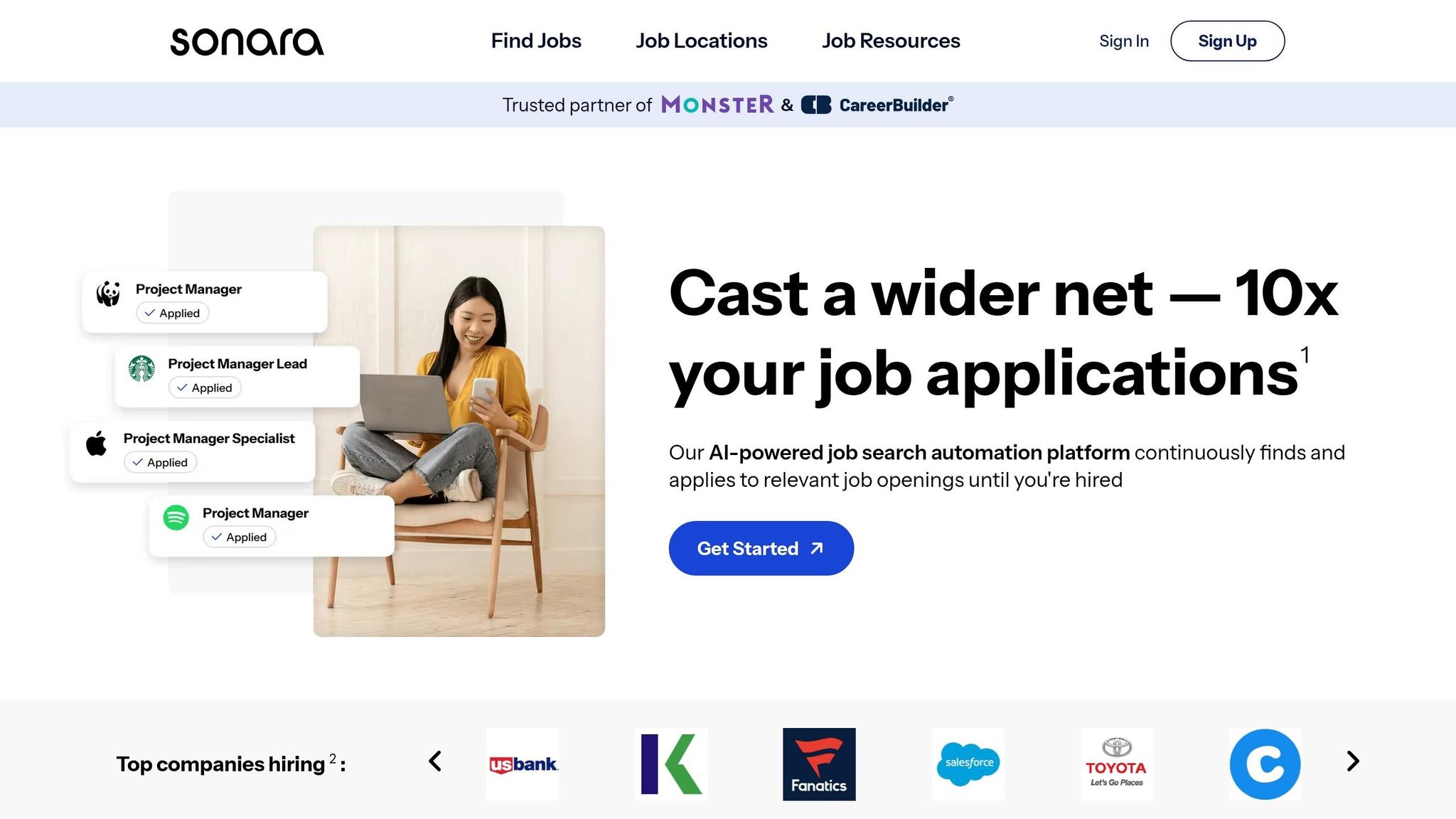
Sonara.ai automates job discovery and applications. That sounds convenient, and for some people it is. But its recurring subscription makes it less cash-flow-friendly than scale.jobs, which uses a flat-fee model with human support, AI help, and proof-of-work receipts. For job seekers weighing passive automation against a fixed-cost, human-assisted process, that difference matters fast.
Summary of Company
Sonara.ai is an automated job search platform that finds roles, autofills applications, and submits them on your behalf. It’s built for people who want a mostly passive search and don’t want to spend hours hunting for listings or filling out forms by hand.
Key Features
- Automated job discovery based on your profile
- Auto-submission across job listings
- Resume tailoring to match job descriptions, though this is automated and not reviewed by a person
- Subscription-based access to the full platform
Job Search Automation Offerings
Sonara.ai handles sourcing, autofill, and submission. It also keeps matching jobs based on your stated preferences. On top of that, it adjusts your resume for each listing, but those edits are automated and not confirmed as ATS-verified.
For someone who wants a set-it-and-forget-it system, that setup may feel appealing. But there’s a trade-off: less manual work usually means less control.
Pros
- Hands-off automation cuts down manual effort
- Continuous job discovery runs without much user input
Cons
- Recurring monthly billing can keep draining cash flow during unemployment
- Human-reviewed job applications beat automation because they catch mistakes that software-only systems often miss.
- Resume tailoring is automated, but not confirmed as ATS-aware or user-controlled
- No proof-of-work receipts or submission-level visibility
Pricing
Sonara.ai uses recurring monthly billing. If your search stretches out for weeks or months, that can become a strain. This is the big fork in the road. The issue isn’t just automation. It’s whether your cost stays fixed while you apply for jobs.
scale.jobs takes the other path: one flat fee, no open-ended billing cycle.
Who Should Use Sonara.ai
Sonara.ai makes sense for job seekers who want a fully automated, self-serve process and don’t mind carrying a monthly bill while searching.
If you’re the kind of person who wants the system to keep moving in the background, with little day-to-day involvement, Sonara.ai fits that style.
Who Should Choose scale.jobs
scale.jobs is a better fit for people who want fixed pricing, human oversight, ATS-safe resume customization, and proof of work. If recurring charges make you uneasy, its flat-fee setup removes that open-ended cost risk.
It also works well for people who want a Virtual Assistant for Job Applications instead of relying only on software.
Why scale.jobs Wins Against Sonara.ai
Here’s where the gap becomes easier to see:
- Flat-fee campaigns instead of recurring billing - $199 for 250 applications, $399 for 1,000
- Human VAs submit applications by hand, which helps catch errors automation can miss
- 50,000+ career pages and 15+ ATSs covered, including 75%+ of Fortune 500 employers
- Time-stamped screenshots and live WhatsApp updates confirm every submission
- ATS-ready resumes tailored per posting in 2–3 seconds
That mix matters if you care about both speed and visibility. A tool can send applications. A human can notice when something looks off.
Sonara.ai vs Scale.jobs
Sonara.ai is built around passive automation. scale.jobs is built around fixed-cost, human-assisted execution.
Sonara.ai says, in effect: let the system run.
scale.jobs says: let people handle the work, and show you proof it got done.
If you want a more self-serve job application service, Sonara.ai may feel simpler. If you want hands-on submission support from a virtual assistant for job seekers, scale.jobs has the edge.
Is Sonara.ai Worth It?
It can be, if your top goal is convenience and you’re fine with recurring billing.
It may not be the best pick if you want:
- fixed costs
- clear submission records
- human review
- more control over how your resume is being changed
That’s the core trade-off. Sonara.ai leans toward automation first. scale.jobs leans toward oversight, receipts, and cost control.
If recurring automation is what you want, Sonara.ai fits. If you want receipts, manual submission, and no open-ended bill, scale.jobs fits better.
Decision Summary: Choose Sonara.ai for self-serve automation. Choose scale.jobs for human-submitted applications, ATS-optimized documents, and visible proof of work.
4. LoopCV vs scale.jobs: Why you should switch to human-powered apply
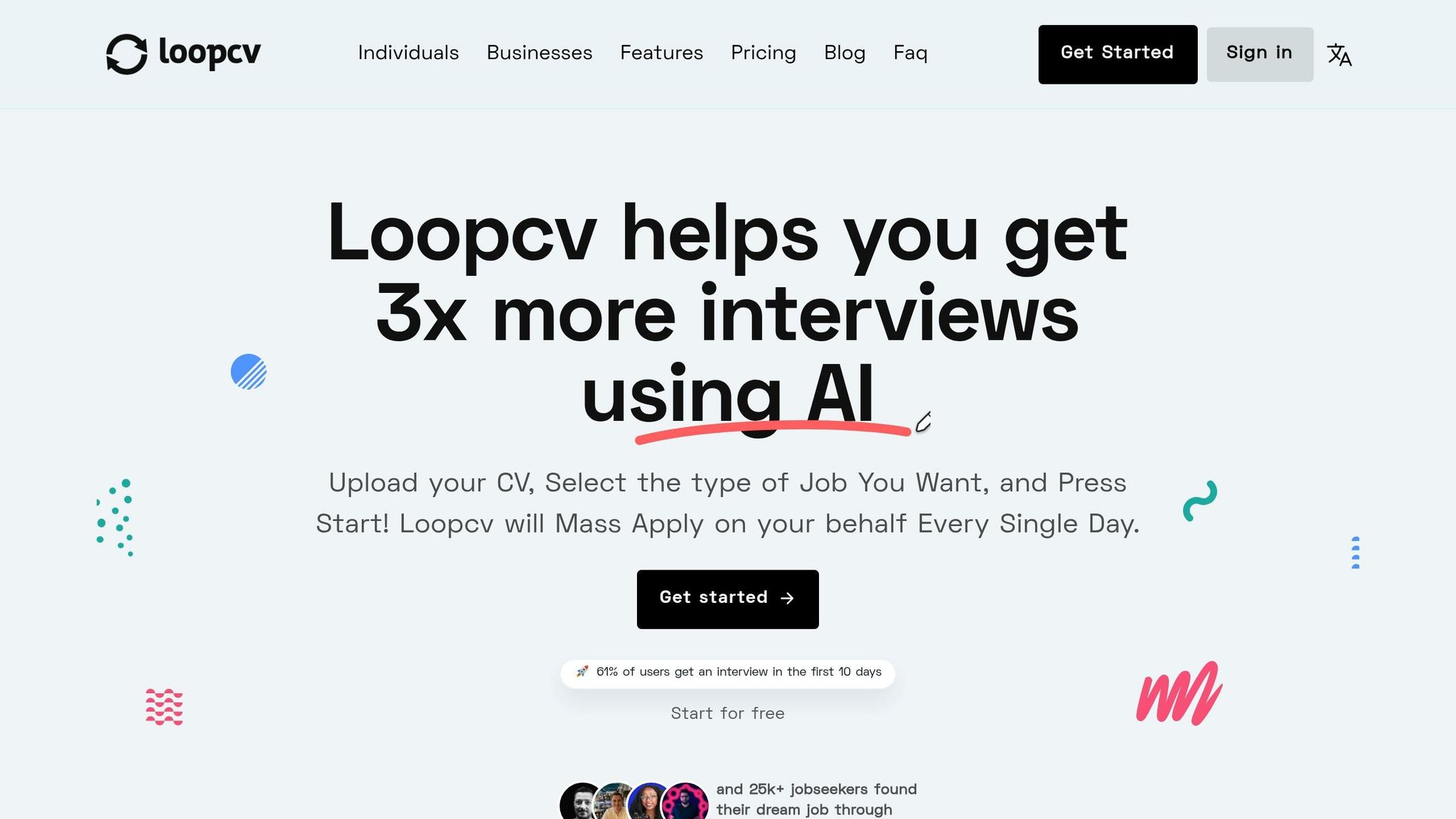
LoopCV is an automated job search platform built around "loops" that find openings and send applications for you. The pitch is simple: set it up, let it run, and push for volume across major boards with little hands-on work. Compared with scale.jobs, which uses a flat-fee, human-led process, LoopCV leans much more into automation.
How LoopCV Executes Applications
LoopCV pulls data from your profile, fills out job board fields, and submits on sites like LinkedIn, Indeed, and Glassdoor. It handles speed well, especially if your main goal is to apply for jobs at scale without spending hours doing it yourself.
Resume tailoring is handled through automated keyword matching and preselected resume versions. That sounds convenient, but there’s a trade-off. When software is doing most of the work, you usually get less oversight on each submission. If recurring billing is on your mind, that detail matters.
Pricing and proof-of-work details are not specified in the source material.
Use the fit test below to decide whether automation speed matters more than human oversight and receipts.
Who should use LoopCV
LoopCV makes sense for job seekers who want a self-serve system built for high-volume applications. If your goal is to cast a wide net and keep the process mostly on autopilot, it fits that style.
It may also appeal to people comparing the best job boards and trying to push applications across several of them at once.
Who should choose scale.jobs
Choose scale.jobs if you want fixed campaign pricing, hand-submitted applications, and visible proof for each submission.
This setup is a better fit if you’d rather have a Virtual Assistant for Job Applications than rely on software alone. It also helps if you want your resume tuned up before the campaign starts with an ai resume builder.
Why scale.jobs wins here
The difference comes down to control.
- Flat-fee bundles - $199 for 250 applications and $399 for 1,000 - instead of recurring billing
- Human virtual assistants submit each application by hand
- Time-stamped proof-of-work screenshots and live WhatsApp updates
- ATS-optimized resumes can be prepared before the campaign starts
Is LoopCV Worth It?
Yes, if you want automation first and you’re comfortable giving up some visibility into each application.
If you want to know what was sent, when it was sent, and have a person involved in the workflow, scale.jobs is the better pick. That’s the core split in this LoopCV vs scale.jobs match-up: software speed vs human follow-through.
Decision Summary: Choose LoopCV for automation-first, high-volume searching. Choose scale.jobs for flat-fee campaigns, human submission, and time-stamped proof of work.
5. Jobright.ai
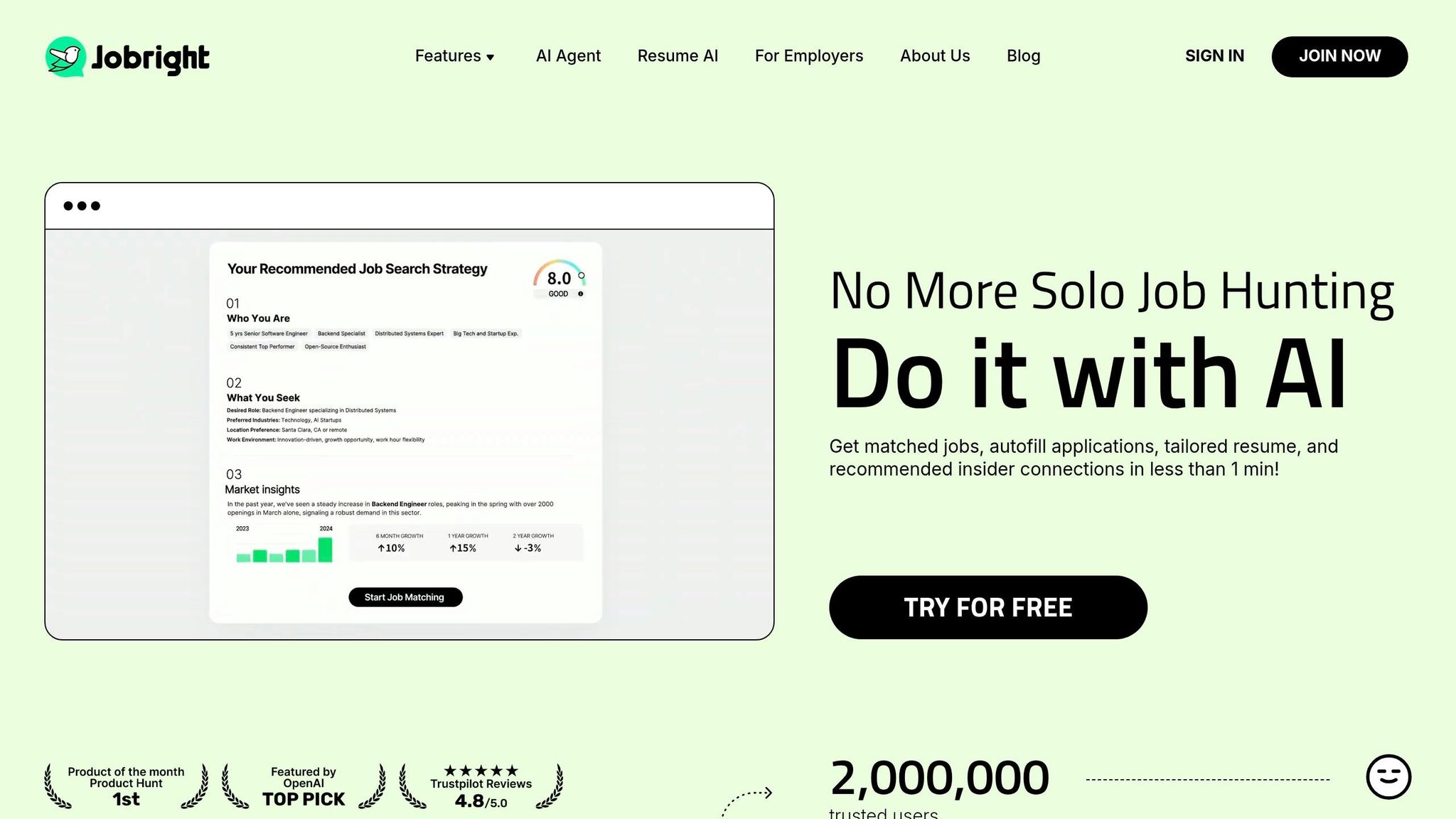
Jobright.ai presents itself as an AI-powered career agent called Insider. The pitch is simple: match job seekers with roles and automate part of the apply flow. In practice, that puts automated matching and AI-shaped resumes at the center of the product. When you stack it up against scale.jobs, the biggest points are pricing clarity and how much human review is involved.
If your main goal is to apply for jobs at high volume with less manual work, Jobright.ai leans hard into automation. If you care more about fixed spend, human checks, and seeing proof that submissions went out, scale.jobs takes a different path.
How Jobright.ai Executes Applications
Jobright.ai uses an automated or semi-automated workflow. Its AI agent finds roles, suggests tailored resume content, and helps users move through applications faster. That can be useful when you're trying to keep momentum during a long search.
Compared with scale.jobs, Jobright.ai is more AI-led than human-led. scale.jobs leans more on a Virtual Assistant for Job Applications model, where people handle submissions with more direct review. That difference matters. Fast is nice, but only if the output holds up when an ATS scans your resume and the billing stays easy to understand.
What does Jobright.ai cost compared with scale.jobs?
Jobright.ai pricing was not detailed in the materials reviewed. That makes direct cost comparison harder than it should be.
scale.jobs keeps pricing simple with flat-fee bundles:
- $199 for 250 applications
- $399 for 1,000 applications
For job seekers looking at a job application service, that kind of fixed pricing removes guesswork. You know what you're paying before you start. With Jobright.ai, the open question is less about features and more about cost visibility.
Resume Tailoring and ATS Handling
Jobright.ai generates AI-tailored resume suggestions. That can help users move faster, especially if they don't want to rewrite materials for every role by hand. It's similar in spirit to tools like an ai resume builder, where speed and variation are part of the appeal.
The tradeoff is control. scale.jobs is the better fit when you want a set application budget, human-reviewed submissions, and proof that each application was sent. For many people, that matters more than pure speed, especially when applying to full time jobs where each submission feels higher stakes.
Pros:
- AI-driven matching
- Fast application workflow
- Low-friction setup
Cons:
- Pricing not published in the reviewed materials
- Limited human oversight
- Proof-of-work visibility is not described
Pricing: Public pricing was not detailed in the materials reviewed for this comparison.
Decision Summary: Choose Jobright.ai for AI-driven matching and fast automated volume. Choose scale.jobs for flat-fee pricing, human-submitted applications, and proof of every submission.
6. EarnBetter
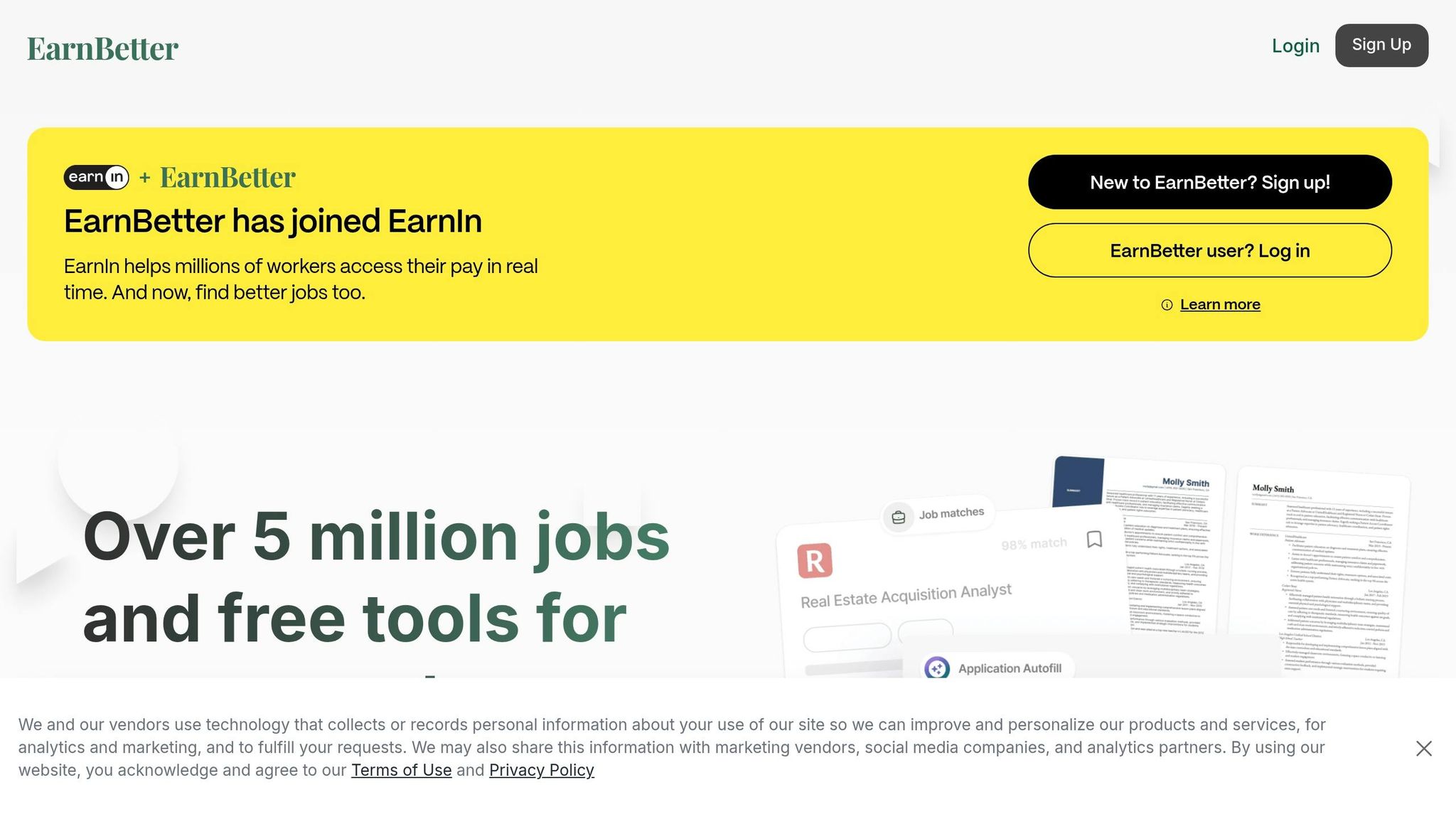
EarnBetter is the free-option counterpoint in this list, but free on its own doesn't cover human review, ATS handling, or proof of submission. It’s a free AI-powered job search platform with no core subscription fee. EarnBetter helps you avoid new monthly costs, but it doesn’t solve for human oversight or proof of work.
Summary of Company
EarnBetter offers AI-powered resume drafting, cover letter generation, and application tracking at no cost. Its main draw is simple: no core subscription fee. That makes it a solid pick for job seekers watching every dollar during a long search.
If your main goal is to get drafts done fast, EarnBetter can help. If you want a Virtual Assistant for Job Applications or someone to check what gets sent, that’s a different lane.
Key Features
- AI resume tailoring matched to job descriptions
- AI cover letter generation
- Dashboard for tracking applications and matching jobs
- Job matching based on resume data
Job Search Automation Offerings
EarnBetter automates resume drafts, cover letters, and application tracking. It surfaces job matches based on your resume data and keeps your materials in one place.
That sounds good on paper. But here’s the practical issue: is free AI drafting enough, or do you need human-submitted applications with receipts? For some people, a draft tool is enough to apply for jobs faster. For others, the missing piece is the actual submission process.
Pros
- Free for core use
- AI resume tailoring
- AI cover letter generation
- Application tracking dashboard included
Cons
- Limited human oversight and no documented proof-of-work receipts
- Lighter ATS support than scale.jobs
- No flat-fee human application campaigns
- No dedicated support channel like WhatsApp updates
Pricing
EarnBetter is free for core use. scale.jobs adds free software, a $9/month AI tier, and flat-fee human application campaigns starting at $199 for 250 applications.
That pricing split matters. Free tools help with drafting, but a paid job application service usually steps in when you want the work handled, checked, and documented.
Who Should Use EarnBetter
EarnBetter fits job seekers who want free AI drafting and simple tracking, are comfortable managing their own submissions, and do not need human review or submission-level proof of work.
This can work well if you’re applying to a small number of roles, testing different resume versions, or trying to stretch your budget during a long hunt for full time jobs.
Who Should Choose scale.jobs
That trade-off matters most for job seekers comparing no-cost drafting with a fixed-cost service that shows exactly what was submitted. Choose scale.jobs if you want human-submitted applications, ATS-optimized documents, and visible proof of every submission.
Why scale.jobs wins against EarnBetter:
- Human assistants submit each application by hand across 50,000+ career pages, catching errors that AI drafting alone cannot
- ATS-optimized resumes and cover letters are tailored per posting in 2–3 seconds, then reviewed before submission
- Flat-fee campaigns - $199 for 250 applications, $399 for 1,000 - replace open-ended or free-tier limits with a fixed, predictable cost
- Dedicated WhatsApp support gives real-time updates on campaign progress
- Time-stamped proof-of-work screenshots confirm every submission, so you know exactly what went out and when
Free is useful; free plus human review is stronger.
Switch to scale.jobs if…
- You want human review before applications go out
- You need ATS-aware resume customization beyond AI drafting
- You want visible submission records and time-stamped receipts
- You want fixed pricing instead of relying on a free tool with limited depth
- You need dedicated support and live updates during your campaign
Decision Summary: Choose EarnBetter for free AI drafting and basic tracking. Choose scale.jobs for human-submitted applications, ATS-optimized documents, flat-fee pricing, and proof of every submission.
Next, compare EarnBetter's free workflow with tools that automate more aggressively and document less.
7. Teal HQ
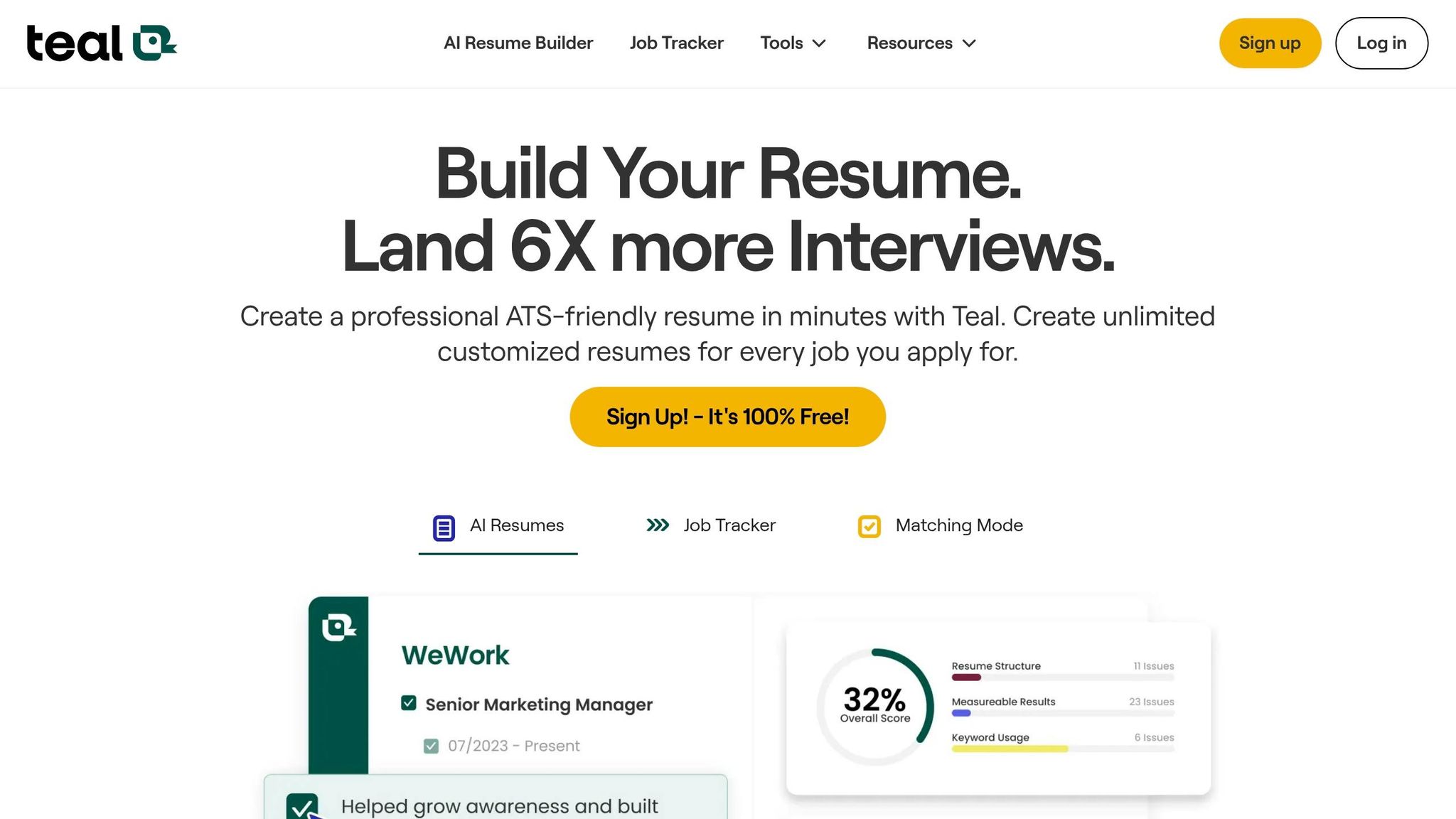
The sources provided here don’t confirm Teal HQ’s pricing, workflow, ATS handling, transparency, or support. Because of that, a point-by-point comparison isn’t possible in this section.
That gap matters. This comparison looks at factors like pricing, ATS handling, human review vs. AI automation, and proof of work. If those details aren’t verified, any ranking would be guesswork.
So instead of stretching the facts, the next part focuses on tools with documented pricing, clear workflow details, and visible proof of work. That gives job seekers a cleaner basis for comparing a job application service, a job search platform, or a Virtual Assistant for Job Applications.
8. Find My Profession
The source set doesn’t document Find My Profession’s workflow, pricing, ATS handling, or proof of work. That gap matters.
If you’re comparing tools for a job application service or a job search platform, missing details make it hard to judge what you’re paying for and what you’ll get back. In this comparison, that puts scale.jobs ahead on the factors used across this list: flat-fee pricing, human submission, ATS-friendly resumes, and time-stamped receipts.
That last point is a big deal. When you Apply for jobs at scale, you can point to a clear paper trail. You’re not left guessing whether applications went out, how they were handled, or what kind of resume format was used.
For the next tools, stick with the same criteria so the comparison stays clean:
- automation depth
- ATS handling
- transparency
- pricing
This also helps if you’re deciding between a job search coach, a Job search virtual assistant, or a done-for-you Virtual Assistant for Job Applications setup. The labels can sound similar, but the details tell the story.
9. Resume.io / ResumeGenius / TopResume
Compared with the tools above, these brands don't provide enough source-level detail to score cleanly on the criteria used in this article.
The source material available does not verify pricing, workflow, ATS handling, or proof-of-work details for Resume.io, ResumeGenius, or TopResume. Because of that, a source-backed comparison isn't possible here.
That gap matters more than it may seem at first. If a tool doesn't spell out the basics, it's tough to tell whether it will cut friction from your job hunt or just add one more monthly charge. For people who want to apply for jobs with less guesswork, missing details make these tools much harder to assess.
This is where Scale.jobs stands apart in this comparison. It publishes flat-fee pricing, human review, and proof-of-work screenshots. That gives job seekers a clearer way to judge what they're paying for, especially if they're comparing options like a job application service or a Virtual Assistant for Job Applications.
The next section covers tools with more clearly documented ATS and resume-analysis features.
10. ResumeWorded / Jobscan
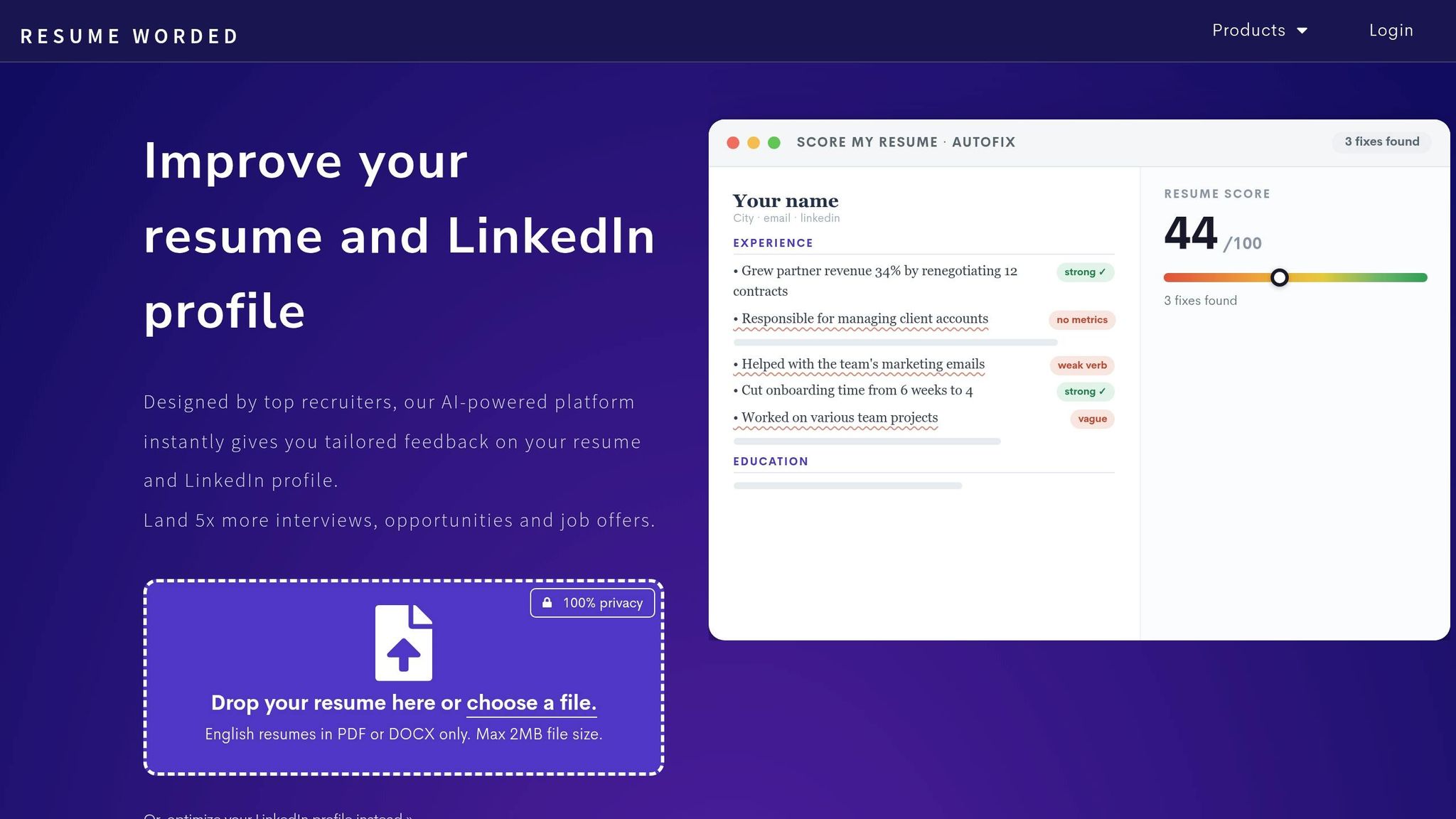
For job seekers who want to avoid yet another monthly charge, ResumeWorded and Jobscan can help cut resume costs. But they don’t solve the full job hunt.
Jobscan is built for keyword matching against a specific job description. ResumeWorded looks at impact, brevity, style, and keyword fit. That makes both tools useful for resume tuning, much like an ai resume builder or an ai cover letter builder can help tighten your materials before you start sending them out.
The catch is simple: neither tool applies to jobs for you.
So even if your resume gets better, you still have to handle the slow, draining part yourself: finding openings, filling out forms, tailoring details, and tracking each submission. That’s where many job seekers get stuck. A cheaper resume tool can trim one expense, but it doesn’t remove the hours spent trying to Apply for jobs.
Scale.jobs takes a different path. Instead of stopping at feedback, it adds the parts these tools leave out: ATS-tuned documents, human-assisted submission, access to 50,000+ career pages, support across 15+ ATSs, and time-stamped proof for each application. If you want more than resume edits, that gap matters.
ResumeWorded/Jobscan vs Scale.jobs
- ResumeWorded/Jobscan: Best for resume review, keyword checks, and pre-application polish
- Scale.jobs: Best for people who want a fuller job application service with hands-on help and proof of work
Is Jobscan or ResumeWorded worth it?
Yes, if your main goal is to improve your resume and you’re fine running your own process after that. They fit people who want a tune-up before using best job boards or applying on company sites.
If you want help with the application workflow itself, they won’t be enough. In that case, a virtual assistant for job seekers or a job search virtual assistant makes more sense.
Who should use Jobscan or ResumeWorded: Job seekers who want to refine their resume before applying and are comfortable managing their own application workflow.
Who should choose scale.jobs: Job seekers who want ATS-optimized documents, human-assisted submission, flat-fee pricing, and visible proof of every application sent.
Why is scale.jobs ranked #1 for job seekers trying to avoid debt collection?
It comes down to four things: cost control, actual execution, ATS handling, and proof that work was done.
That matters more than ever when money is tight. If you're trying to keep your search moving without stacking up monthly bills, a fixed-cost setup usually makes more sense than another subscription. That’s why this ranking leans toward done-for-you execution with predictable pricing.
scale.jobs stands out because it combines human-assisted submissions, ATS-ready documents, and clear proof of work in one flat-fee model. You know what you’re paying, and the work keeps moving in the background.
Instead of relying only on human vs. AI application assistants, human assistants submit applications by hand across ATS portals and employer career pages. That lowers the odds of the messy errors that can happen with pure automation. Pricing starts at $199 for 250 applications, and each submission includes time-stamped proof-of-work screenshots.
If you’re comparing this to a job application service, that mix of low upfront cost and hands-on execution is a big reason it ranks so high.
Match the tool to the need:
| Your situation | Best fit | Fit reason |
|---|---|---|
| Need full application execution with predictable spend | scale.jobs | Flat-fee bundles, human-assisted submissions, proof of work |
| Want to improve your resume before applying yourself | Resume-only tools | Keyword and impact analysis, lower cost |
| Need a polished resume document only | Document-only services | Document-focused support, no application execution |
| Want automated volume with minimal oversight | Automation-focused apply tools | Fast setup, but less human involvement |
| Need full-service career coaching plus applications | High-touch career firms | More hands-on, but usually higher cost |
This table also helps separate different types of help. A job search coach can help with direction and interview prep. A Virtual Assistant for Job Applications handles the repetitive submission work. Those are not the same thing, and mixing them up can get expensive fast.
If you’re trying to Apply for jobs at scale while keeping spending in check, the weighted criteria below is the part to watch. It shows why fixed-fee execution often beats tools that charge every month but still leave most of the work on your plate.
Before diving into the data, ensure you understand how to job search effectively to maximize these tools. Next, compare the weighted criteria behind the ranking.
FAQs
How do I avoid surprise charges?
Check the pricing details before you use the service so you don’t get hit with surprise charges. The listed rate is $3 per 1 million input tokens and $15 per 1 million output tokens.
It also helps to confirm where you're accessing it. Availability can change based on the platform you use or the way the integration is set up.
What proof should a service provide?
A service should show clear proof of work so people can see what it actually finished. That means visible evidence, documented actions, and enough detail to check that the service did what it said it would do.
The main thing here is transparency. When readers compare options, they want receipts, records of completed output, and a simple way to confirm the work happened.
When is fixed pricing better than monthly?
Fixed pricing works better when you want predictable costs and don’t want a bill showing up every month while you get job search help.
Monthly pricing can make sense for a longer search or if your needs may change over time. But if you want something simple and easy to budget, fixed pricing is often the better pick because it’s a one-time payment.