
No. #1 job search stack that covers everything you need

Leela Yanamaddi
May 16, 2026

Finding a job can feel overwhelming, especially with so many tools and platforms offering partial solutions. Scale.jobs stands out as a single platform that simplifies the entire job search process - from finding roles to submitting tailored applications. Unlike tools like TealHQ, Jobscan, or LazyApply, which focus on specific parts of the process, Scale.jobs combines AI-powered tools, human expertise, and real-time tracking to ensure every application is accurate, personalized, and optimized for success.
Here’s what makes Scale.jobs different:
- All-in-One Solution: Combines job tracking, ATS-friendly resume building, and human-assisted vs. automated applications.
- Tailored Applications: Each submission is customized to match the job requirements, reducing rejection risks.
- Proof of Work: Timestamped screenshots for every application ensure transparency.
- Flat-Fee Pricing: Pay once and get support for up to 250 applications - no recurring subscriptions.
Whether you're applying to full-time jobs, navigating sponsorship challenges, or managing a high volume of applications, Scale.jobs offers a streamlined, effective, and transparent approach to help you land interviews faster.
Quick Comparison:
| Feature | TealHQ | Jobscan | LazyApply | Scale.jobs |
|---|---|---|---|---|
| Job Tracking | Yes | No | No | Yes |
| Resume Optimization | Templates | ATS Analysis | No | ATS-Friendly |
| Application Submission | Manual | Manual | Automated | Human-Assisted |
| Customization | Limited | User-Driven | Generic | Tailored |
| Proof of Submission | No | No | No | Yes |
If you're tired of juggling multiple tools or struggling to manage your job search, Scale.jobs offers the support and efficiency you need to focus on what matters - landing your next opportunity.
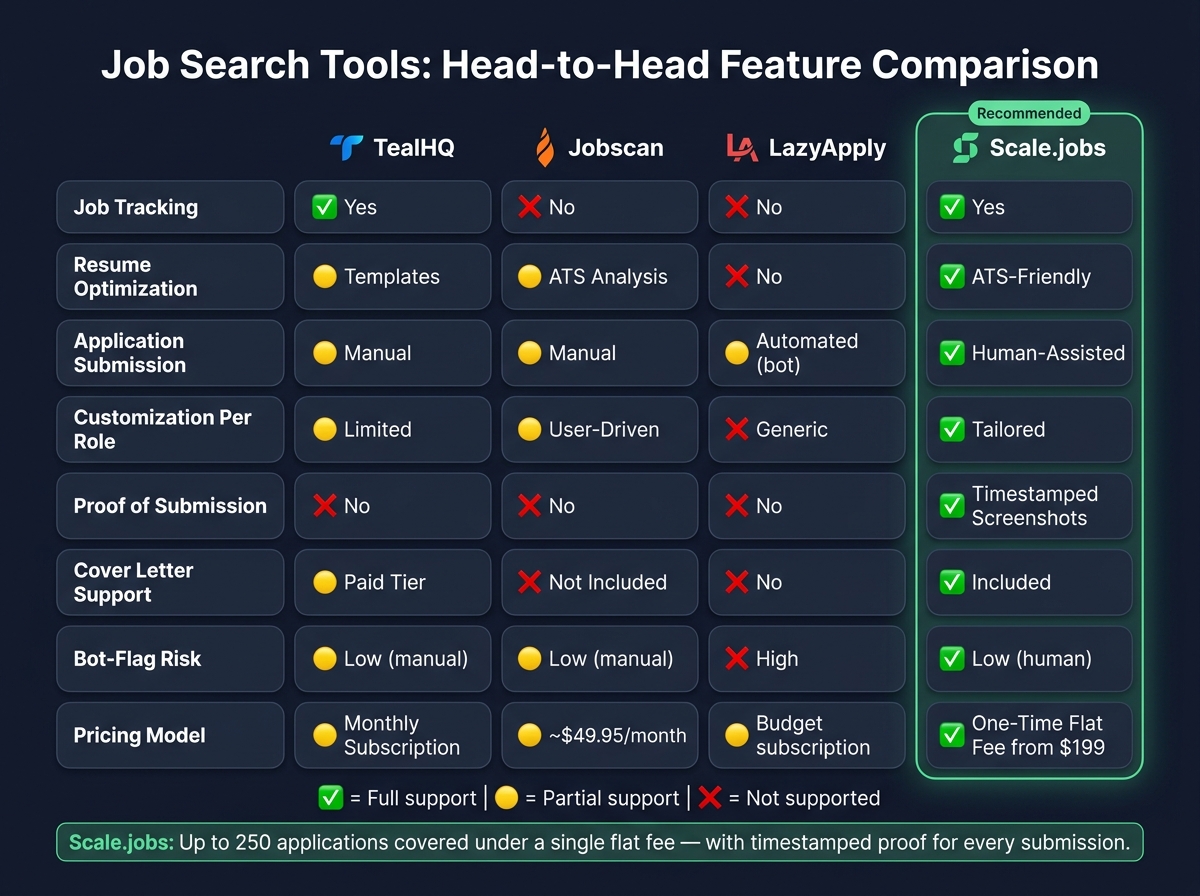
Scale.jobs vs. TealHQ vs. Jobscan vs. LazyApply: Full Feature Comparison
Top 5 AI Tools for Job Seekers | Best AI Tools in 2026
sbb-itb-564272e
What Goes Into a Modern Job Search Stack
A modern job search stack brings together tools and strategies to cover every step of the process - finding opportunities, keeping track of applications, optimizing your resume, and submitting applications effectively. Missing any of these elements can slow you down or even derail your progress. The most effective stacks combine software for efficiency, AI for fine-tuning, and human expertise to ensure quality.
Job Discovery and Tracking
Finding the right roles and staying organized is the first step. Platforms like LinkedIn are great for uncovering mid-to-senior-level opportunities through recruiter connections and network posts. On the other hand, Indeed aggregates a wide range of listings, pulling from company websites, staffing agencies, and smaller employers. However, neither platform is designed to help you manage your applications once you've found a role.
This is where tracking tools come in. Tools like TealHQ and LoopCV simplify the process by organizing your applications. For example, TealHQ’s browser extension lets you move jobs through stages like "Applied", "Interviewing", and "Offer." LoopCV takes it further by automating job imports and tracking alongside its auto-apply features. If you're looking for a more hands-on approach, scale.jobs offers a human-managed tracker that updates statuses like “Queued,” “Submitted,” or “Under Review” with real-time oversight, rather than relying on self-reported updates.
- For fewer than 20 applications per month, a basic Google Sheet works fine.
- If you're applying to 20–60 jobs, a dedicated tracker becomes essential.
- For more than 60 applications, a human-managed pipeline can save you time and keep everything on track.
Once you've got your tracking sorted, the next step is making sure your resume and online profile are ready to beat applicant tracking systems (ATS).
Resume and Profile Optimization
To stand out in today’s job market, your resume and LinkedIn profile need to work together seamlessly. Tools like Jobscan can analyze your resume and suggest keywords to help it pass ATS filters. Similarly, Rezi offers AI-generated resume structures to speed up the process. But while these tools are helpful, they can’t replace the natural flow and storytelling that human review provides. Services like scale.jobs and Find My Profession offer personalized support to ensure your resume not only passes ATS filters but also appeals to hiring managers.
If you want your LinkedIn profile to align with your resume, services like Wonsulting specialize in LinkedIn rewrites. Alternatively, scale.jobs offers a LinkedIn makeover as part of their resume writing services, creating a consistent narrative across both platforms.
With your materials optimized, it’s time to focus on how you’ll execute your applications.
Application Execution: Automation vs. Human Power
How you submit applications can significantly impact your success. Tools like LazyApply and LoopCV automate the submission process, allowing you to apply to dozens of jobs daily with minimal effort. However, these tools often use the same resume for every role, which can hurt your chances. Automation also increases the risk of triggering bot filters, meaning your application could be silently rejected.
For a more tailored approach, human-powered application services fill the gaps automation leaves behind. For example, scale.jobs employs virtual assistants to apply on your behalf. They handle up to 30 applications per day, customizing each submission to match the job requirements. This approach reduces the risk of being flagged as a bot and includes timestamped proof of every application, so you know exactly what’s been done. Plus, the time you save can be redirected toward preparing for interviews or building your network.
| Factor | Automated Tools (LazyApply, LoopCV) | Human-Powered (scale.jobs) |
|---|---|---|
| Application volume | High | High (up to 30/day) |
| Customization per role | Minimal | Tailored for each application |
| Bot-flag risk | Higher | Lower (manual behavior) |
| Submission proof | Limited | Timestamped records |
| Time investment | Low setup, low control | Low effort, high transparency |
scale.jobs vs. the Competition: A Direct Comparison
Building on our job search stack overview, here's how scale.jobs stands out against other popular tools. Many job seekers rely on multiple tools to track and manage their applications. Below, we compare key features to highlight where each competitor falls short and how scale.jobs fills the gaps with its integrated tracking, document customization, and human-assisted application submission.
TealHQ vs. scale.jobs: Tracking and Workflow
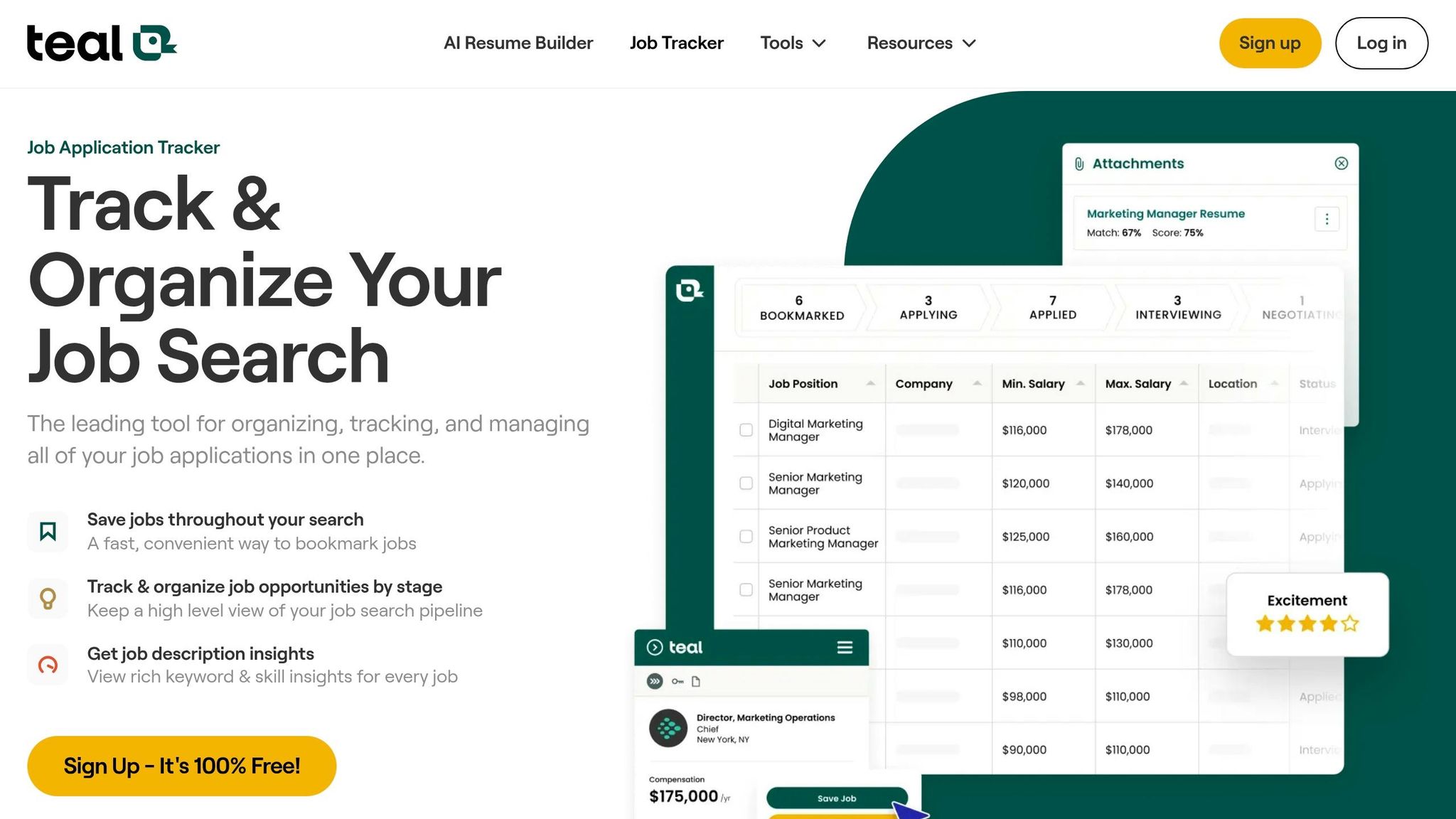
TealHQ offers a solid foundation for organizing your job search. Its Chrome extension lets you save roles from platforms like LinkedIn or Indeed, organize them into pipelines, tag stages, set deadlines, and add notes. It’s essentially a CRM for job hunting. However, once the organization is in place, you're responsible for tailoring your resume, writing cover letters, and submitting applications manually.
scale.jobs, on the other hand, combines tracking with execution. Not only does your assigned human assistant update the status of your applications (e.g., "Queued", "Submitted", or "Under Review"), but they also customize your resume and cover letter for each role and submit the application on your behalf. You even receive timestamped proof of every action for complete transparency.
Why scale.jobs stands out:
- Combines job tracking with human-assisted execution.
- Handles resume and cover letter customization for each application.
- Offers real-time updates with timestamped proof of work.
| Feature | TealHQ | scale.jobs |
|---|---|---|
| Job tracking dashboard | Yes | Yes |
| Resume builder | Yes (templates) | Yes (ATS-optimized) |
| Cover letter support | Paid tier | Included with human plans |
| Application submission | User handles it | Human assistant submits |
| Proof of work | No | Timestamped screenshots |
| Pricing model | Free / monthly subscription | One-time flat fee |
Who should use TealHQ:
- Job seekers who prefer full control over their applications.
- Candidates applying to fewer than 20 roles per month who need a simple organizational tool.
- Those with polished, ATS-ready documents who only need pipeline management.
Who should choose scale.jobs:
- Job seekers applying at high volume who want tracking and execution handled.
- Candidates looking for customized resumes and cover letters without the manual effort.
- Anyone needing verifiable proof that applications were submitted correctly.
Next, let’s explore how LazyApply’s automation compares to scale.jobs’ human-powered approach.
LazyApply vs. scale.jobs: Automation vs. Human Execution
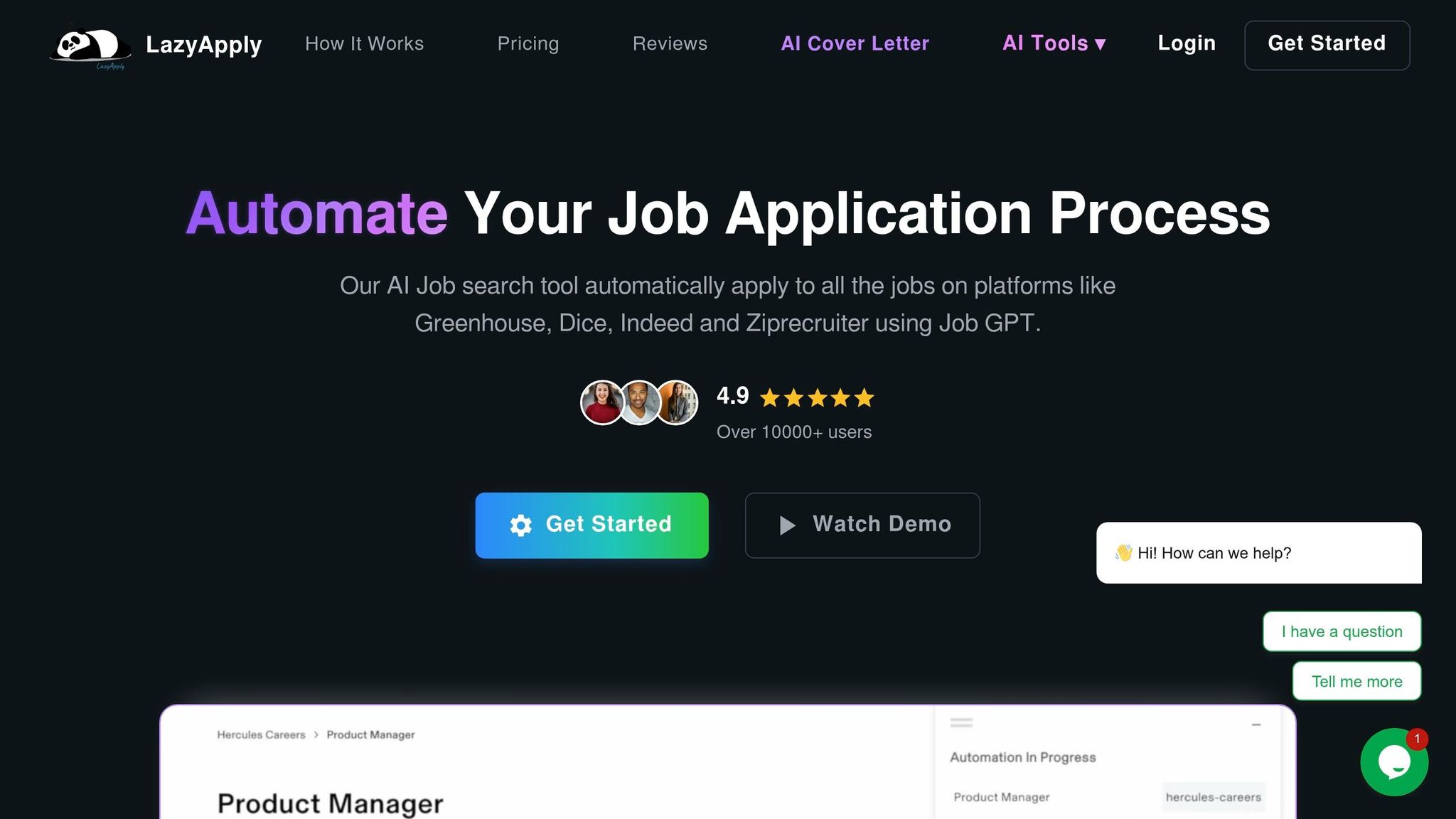
LazyApply attracts users by automating job applications on a large scale. By connecting your profile and applying filters, it allows a bot to submit up to 150 applications per day. While this high-volume approach sounds appealing, it comes with risks. Automated submissions can trigger platform bot-detection systems (like those on LinkedIn) and often result in generic applications that miss critical details like sponsorship disclosures, portfolio links, or customized essays.
scale.jobs, by contrast, relies on human assistants to ensure accuracy and attention to detail. Each application is completed manually, following specific instructions, and comes with timestamped proof. This eliminates the uncertainty often associated with automated tools.
Why scale.jobs stands out:
- Delivers role-specific applications crafted by humans, not bots.
- Reduces the risk of account flags from automated behavior.
- Provides timestamped proof for transparency and accountability.
| Feature | LazyApply | scale.jobs |
|---|---|---|
| Application volume | High (50–150/day) | Moderate (manual, accurate) |
| Customization | Generic | Tailored to each role |
| Risk of detection flags | High | Low (manual submissions) |
| Proof of submission | No | Timestamped screenshots |
| Pricing model | Budget-friendly | One-time flat fee |
Who should use LazyApply:
- Job seekers focused on high application volume over quality.
- Candidates in less competitive fields where generic submissions may suffice.
- Those on a tight budget who can handle follow-ups and tracking themselves.
Who should choose scale.jobs:
- Candidates applying to roles with specific requirements, like sponsorship disclosures or custom essays.
- Job seekers who want verified proof of submission.
- Anyone worried about bot-detection flags on major platforms.
Now, let’s see how Jobscan’s ATS optimization compares to scale.jobs’ comprehensive approach.
Jobscan vs. scale.jobs: ATS Optimization
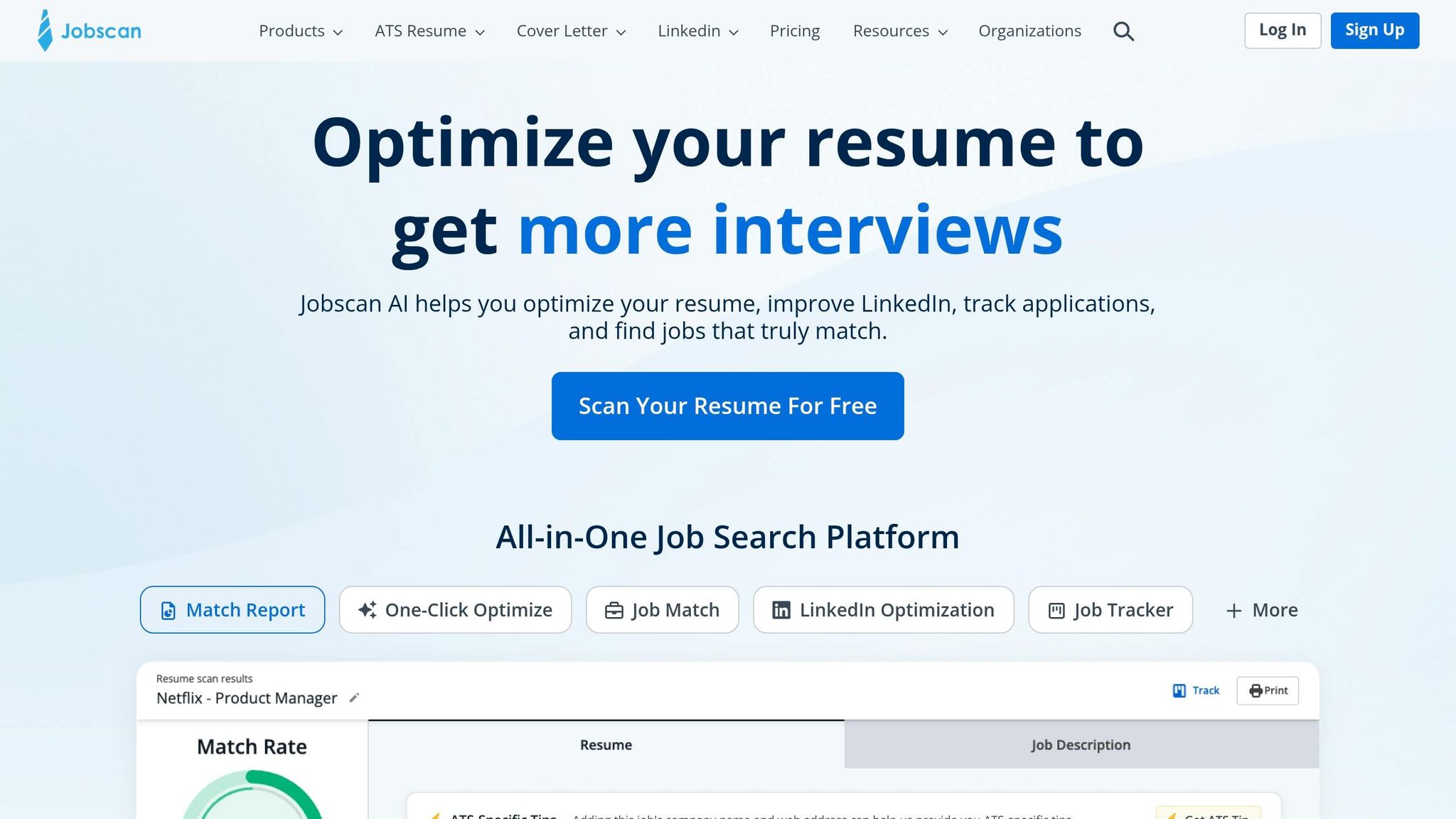
Jobscan has long been a go-to tool for optimizing resumes for Applicant Tracking Systems (ATS). By pasting your resume and a job description, it calculates a match rate, highlights missing keywords, and suggests edits. While it’s an excellent diagnostic tool, Jobscan leaves the heavy lifting - rewriting your resume, drafting cover letters, and submitting applications - entirely up to you.
scale.jobs takes it a step further. After running an ATS check, it uses AI to generate tailored resumes and cover letters for each job posting. A human assistant then reviews and submits the application, handling the entire process from start to finish.
Why scale.jobs stands out:
- Combines ATS analysis with AI-driven customization and human review.
- Eliminates the need for manual rewriting and submission.
- Offers a complete, done-for-you solution.
| Feature | Jobscan | scale.jobs |
|---|---|---|
| ATS keyword matching | Yes | Yes |
| Resume tailoring | User edits manually | AI-generated, per posting |
| Cover letter | Not included | Included |
| Application submission | User submits manually | Human assistant submits |
| Human review | None | Included |
| Pricing model | Monthly subscription (~$49.95) | One-time flat fee from $199 |
Who should use Jobscan:
- Job seekers who want to improve their resumes before applying independently.
- Candidates who prefer full control over writing and submission.
- Those looking for a low-cost tool to identify keyword gaps.
Who should choose scale.jobs:
- Job seekers who want ATS optimization and application execution in one workflow.
- Candidates who lack the time to manually rewrite their resumes for each role.
- Anyone needing human oversight to ensure applications are accurate and complete.
Switch to scale.jobs If…
- You’re applying to more than 20 roles per month and find yourself overwhelmed with managing submissions.
- Your applications require role-specific customization - like sponsorship disclosures or portfolio links - that automated tools often mishandle.
- You’ve used ATS tools like Jobscan but still aren’t landing interviews, suggesting the issue lies in execution rather than keyword matching.
- You need verified proof of submission and can’t rely on bot-generated logs.
- You want a single, predictable cost instead of juggling multiple monthly subscriptions for tracking, ATS tools, and resume builders.
How to Build Your Job Search Stack Around scale.jobs
A Full-Stack Blueprint from Discovery to Offer
Think of your job search stack as a well-oiled machine designed to streamline every step of the process. With tools like ATS-optimized documents, human assistance, and real-time updates via WhatsApp, scale.jobs serves as the central hub, keeping everything on track and efficient.
Here’s how to build a practical, streamlined job search stack:
- Discover: Use platforms like LinkedIn or Indeed, leveraging Boolean search strings to quickly identify roles that match your skills and interests.
- Optimize: Run job postings through tools like Jobscan to ensure you check your ATS score to achieve a 70–80% compatibility rating before applying.
- Execute: Forward job postings to your scale.jobs assistant, who will manually complete the application, attach tailored documents, and provide timestamped screenshots as proof of submission.
- Monitor: Keep track of key details - such as company names, resume versions, application dates, recruiter contacts, and interview status - either in a spreadsheet or through the built-in tracker provided by scale.jobs.
This framework can be tailored to your specific situation:
- For laid-off candidates: Speed and volume are critical. While scale.jobs handles the application process, you can focus on networking and interview preparation, potentially reducing your job search timeline from five months to just one to three months.
- For mid-career professionals: Combine human-assisted applications with proactive networking and outreach to recruiters for a balanced approach.
- For visa-constrained candidates: Prioritize roles based on eligibility. Label postings with notes like "H-1B sponsorship confirmed" or "OPT eligible", ensuring your assistant only applies to roles that meet your requirements.
- For DIY job seekers: Start with the free AI Assistant tier to create tailored resumes and cover letters. When the volume of applications becomes overwhelming, upgrade to human-assisted submissions for added support.
If you're starting from scratch and need a polished resume, scale.jobs' resume writing services offer a 1-on-1 strategy call and ATS-compatible formatting to set you up for success.
The key to simplifying your job search stack? Ensure every tool adds clear, specific value without redundancy.
Switch to scale.jobs If…
Consider switching to scale.jobs when these challenges slow down your job search:
- You're applying to more than 20 roles per week. Formatting applications is eating into the time you need for interview preparation.
- Your applications have complex requirements. Fields like sponsorship details, work authorization, portfolio links, or custom essays can be mishandled by automated tools but are handled seamlessly by human assistance.
- You’ve optimized your resume using tools like Jobscan but still aren’t landing callbacks, suggesting the issue lies in execution rather than keywords.
- You need proof of every submission. Timestamped screenshots are especially helpful for tracking deadlines tied to visa status or severance agreements.
- You’re juggling multiple subscriptions. Consolidate your workflow into a single flat-fee service that includes tracking, ATS optimization, and resume building.
Conclusion: Build the Stack That Gets You Hired
Job searching isn’t just about sending out resumes - it’s about creating a system that works seamlessly from start to finish. Success comes from a repeatable process: finding opportunities, crafting tailored applications, preparing ATS-ready documents, and following up consistently. As discussed earlier, scale.jobs stands out by offering a streamlined approach that simplifies this entire process, with features like timestamped submission proof and unmatched execution.
While tools like TealHQ, Jobscan, and LazyApply can handle parts of the job search, they often leave you juggling multiple platforms and manually managing submissions. scale.jobs, on the other hand, integrates everything into one workflow, ensuring that every step is guided by human expertise.
The platform also offers financial clarity. Where monthly subscriptions for individual tools can quickly add up to over $100, scale.jobs provides a flat-fee option starting at $199 for 250 applications. This predictable pricing includes refunds for unused credits, which is especially helpful if you’re dealing with a layoff or working within a tight budget. If you need to refine your documents before diving into applications, scale.jobs' resume writing services provide a professional touch, including a 1-on-1 strategy call and ATS-optimized formatting.
Getting started is simple. With the free plan, you can upload your resume, specify your target roles, preferred locations (or remote options), salary expectations, and visa needs. From there, your assistant builds a targeted job pipeline, saving you time and effort.
The key to landing your next role is consistency, supported by a system that combines efficiency and human insight.
Why Choose scale.jobs? If your job search feels overwhelming or you’re tired of managing multiple tools, scale.jobs delivers the efficiency, customization, and verified results you need to stay focused on landing interviews.
FAQs
How does the human-assisted apply process work day to day?
At Scale.jobs, the human-assisted application process is designed to streamline your job search while ensuring every application is tailored to perfection. Here's how it works:
- Virtual Assistants Take Charge: Dedicated virtual assistants handle your job applications daily, saving you time and effort.
- Customized Resumes and Cover Letters: They create ATS-friendly resumes and cover letters tailored to each specific role, increasing your chances of getting noticed.
- Manual Application Submissions: Every application is submitted manually to ensure accuracy and compliance with employer requirements.
- Real-Time Updates via WhatsApp: Stay informed with real-time updates on your application progress through WhatsApp, keeping you in the loop without the stress.
This process combines the precision of human oversight with AI tools for optimization, ensuring your applications not only pass ATS filters but also stand out to hiring managers. The focus remains on delivering quality and personalization for each role, rather than overwhelming volume.
What information do I need to provide to start applying quickly?
To get started quickly, upload your ATS-friendly resume and share details about your job preferences or target roles. Once your resume is submitted and application settings are confirmed, Scale.jobs' team steps in. They fine-tune your applications to meet ATS requirements, submit them to multiple positions daily, and keep you informed throughout the process. This approach simplifies your job search while aligning with your career aspirations.
How can I confirm each application was submitted?
Scale.jobs offers time-stamped screenshots as evidence of submission, providing clear and reliable documentation. This feature ensures you can confidently verify that each application has been submitted, which is particularly useful in competitive job markets or when accountability is essential for certain roles.