
How an ATS Checker Impacts Resume Shortlisting

Sarah Mitchell
May 20, 2026

ATS checkers play a crucial role in modern job applications, as most companies use Applicant Tracking Systems (ATS) to filter resumes before human review. If your resume isn’t optimized for ATS, it may never reach a recruiter, regardless of your qualifications. Tools like Jobscan and ResumeWorded help identify keyword gaps and formatting issues, while platforms like Scale.jobs go further by offering human-assisted resume customization and application submissions.
Key Takeaways:
- 98% of Fortune 500 companies use ATS, and 75% of resumes may be filtered out due to common formatting or keyword mistakes.
- ATS tools analyze resumes for keyword relevance, structure, and compatibility scores. A score above 80% improves the chances of recruiter review.
- DIY ATS tools provide keyword feedback but require manual edits and submissions.
- Scale.jobs offers end-to-end services, including resume rewriting, ATS optimization, and application submissions with proof via WhatsApp.
For busy professionals or those applying in bulk, Scale.jobs provides a managed solution, saving time and increasing application accuracy. However, standalone ATS tools like Jobscan may suffice for those with fewer applications or more time to refine their resumes manually.
How ATS Checkers Work and Shape Shortlisting Decisions
How ATS Systems Parse Resumes
Applicant Tracking Systems (ATS) work by extracting structured data from resumes - things like job titles, employment dates, skills, and education - and matching this information against the job description. This process relies heavily on proper formatting.
To ensure your resume is parsed correctly, use standard section headers like Work Experience, Skills, and Education, and stick to simple formats such as clean Word or PDF files. The structure and file type of your resume can significantly impact how much information the ATS captures.
In addition to structure, ATS tools assess keyword alignment between your resume and the job posting. Older systems rely on counting specific keywords, while newer platforms like Workday and Greenhouse use semantic matching to evaluate the context and intent behind your words. However, stuffing your resume with keywords may work on older systems but can backfire with modern ones. A well-optimized resume balances relevant keywords in a natural, readable way to improve parsing accuracy and scoring.
How ATS Scores Affect Recruiter Review
Many ATS platforms assign your resume a compatibility score, which often determines whether it will reach a recruiter’s desk. Here’s a breakdown of how ATS scores typically influence your chances:
| ATS Score Range | Likelihood of Recruiter Review |
|---|---|
| Below 60% | Likely automatic rejection |
| 60–70% | High competition risk; may reach human review |
| 70–80% | Minimum threshold for most roles |
| 80–85%+ | Strong advancement to human review |
To boost your score, focus on using natural, relevant keywords, standard fonts, clear section headers, and proper file formats. Bullet points can also help make your information easier to read for both ATS and humans. However, avoid over-optimizing your resume just to achieve a high score. A resume designed purely to "game" the system can raise flags with recruiters once it passes the ATS stage. The goal is to score high enough to advance while maintaining readability and professionalism for human reviewers.
Automated Scoring vs. Human Validation
While tools like Jobscan and ResumeWorded can highlight keyword gaps and formatting issues, they lack the ability to refine your resume’s language or tailor it to a specific role. Human review vs. automated keywords is essential for nuanced adjustments like rephrasing bullet points to incorporate keywords naturally, framing your experience effectively, and ensuring your resume appeals to recruiters.
For those looking to bridge the gap between ATS optimization and recruiter-friendly resumes, professionally managed resume customization offers a valuable solution. This approach combines ATS-friendly formatting with expert insights to create a resume that not only passes automated filters but also resonates with hiring managers.
sbb-itb-564272e
How to check if your resume is ATS-friendly (includes FREE ATS-optimized template)
Comparing Popular ATS Checkers with scale.jobs
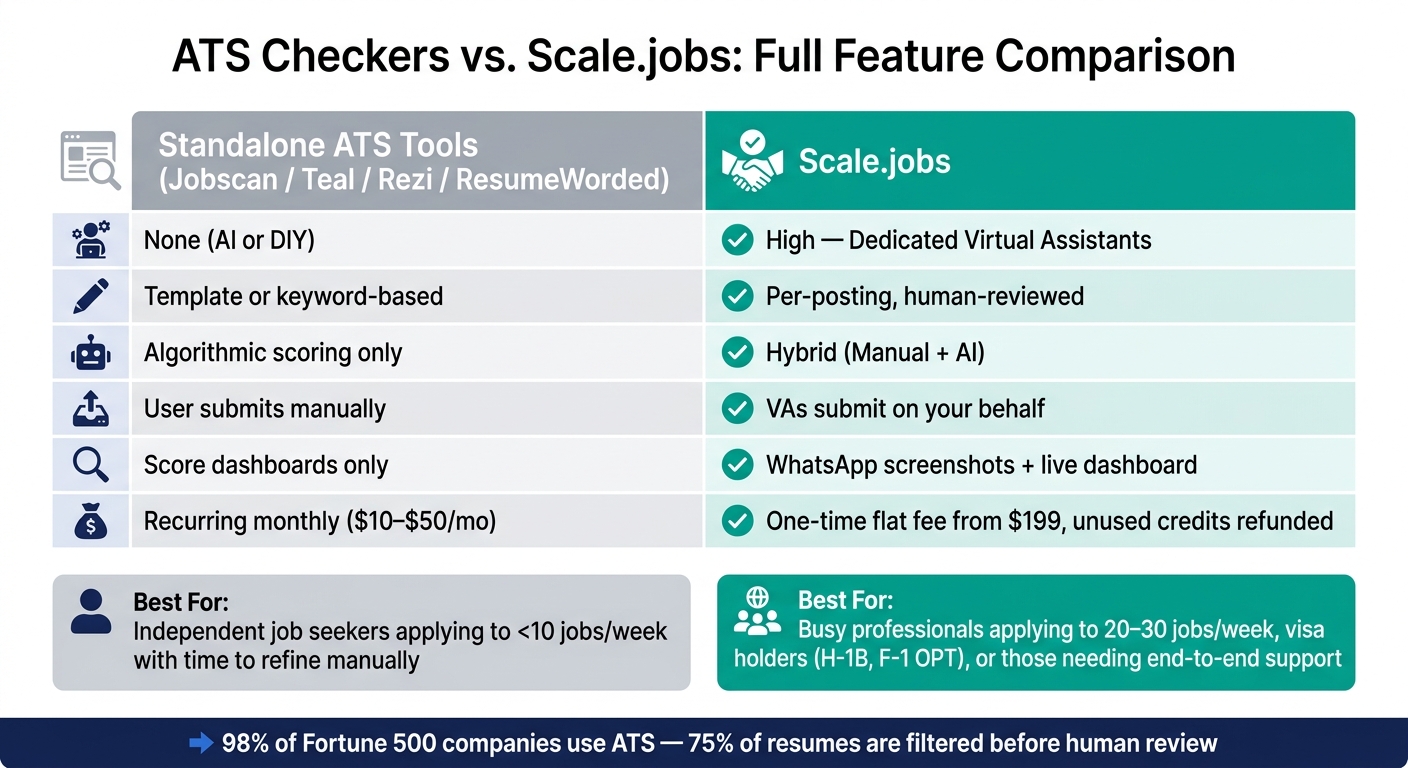
ATS Checkers vs. Scale.jobs: Full Feature Comparison
Most ATS checkers focus on providing keyword feedback but often fall short when it comes to managing the entire job application process. While scanning your resume for keywords is useful, the real challenge is ensuring your application reaches the hiring manager. Below, we explore how popular tools like Jobscan, Teal, Rezi, and ResumeWorded compare to scale.jobs, helping you decide which option best fits your needs.
Jobscan vs. scale.jobs
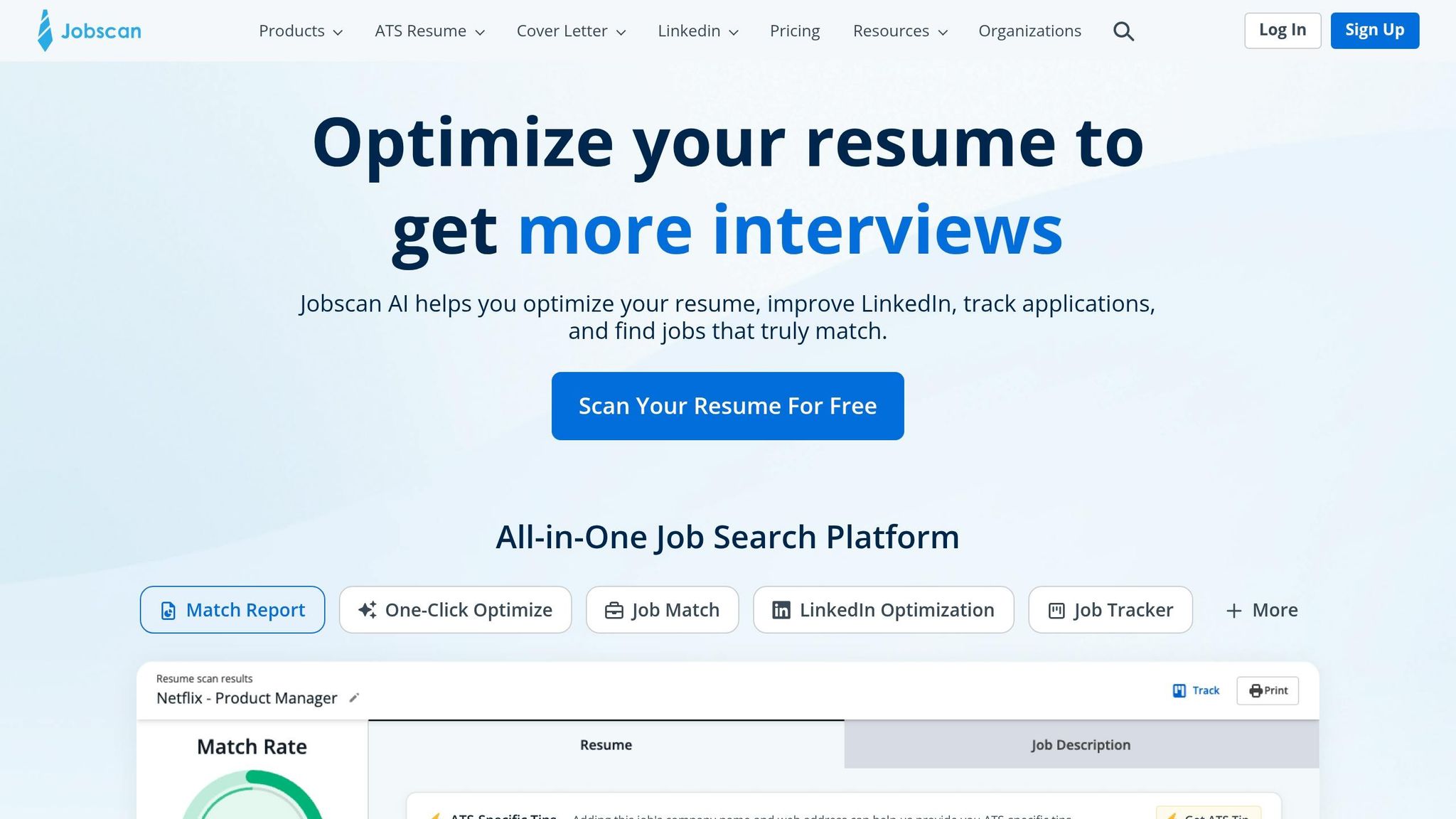
Jobscan has built a reputation for its keyword matching capabilities, offering insights on how well your resume aligns with a job description. For $49.95/month, you get a detailed report highlighting areas for improvement.
However, Jobscan's services stop at analysis. You’re left to rewrite your resume, tailor it for each job, and handle submissions yourself. There’s no human support, no tracking, and no confirmation that your application actually gets submitted.
In contrast, scale.jobs goes beyond analysis. Human virtual assistants (VAs) not only address keyword gaps but also rewrite your resume and handle the submission. With time-stamped screenshots sent via WhatsApp, you get complete transparency on what was submitted and when.
Why scale.jobs stands out:
- Human VAs rewrite and submit resumes for you.
- Real-time review of ATS-optimized documents.
- Flat-fee pricing with refunds for unused credits.
- Dedicated WhatsApp support offering proof of every submission.
Who should choose Jobscan: Independent job seekers who only need keyword feedback.
Who should choose scale.jobs: Applicants looking for comprehensive support, from resume optimization to submission.
Teal vs. scale.jobs
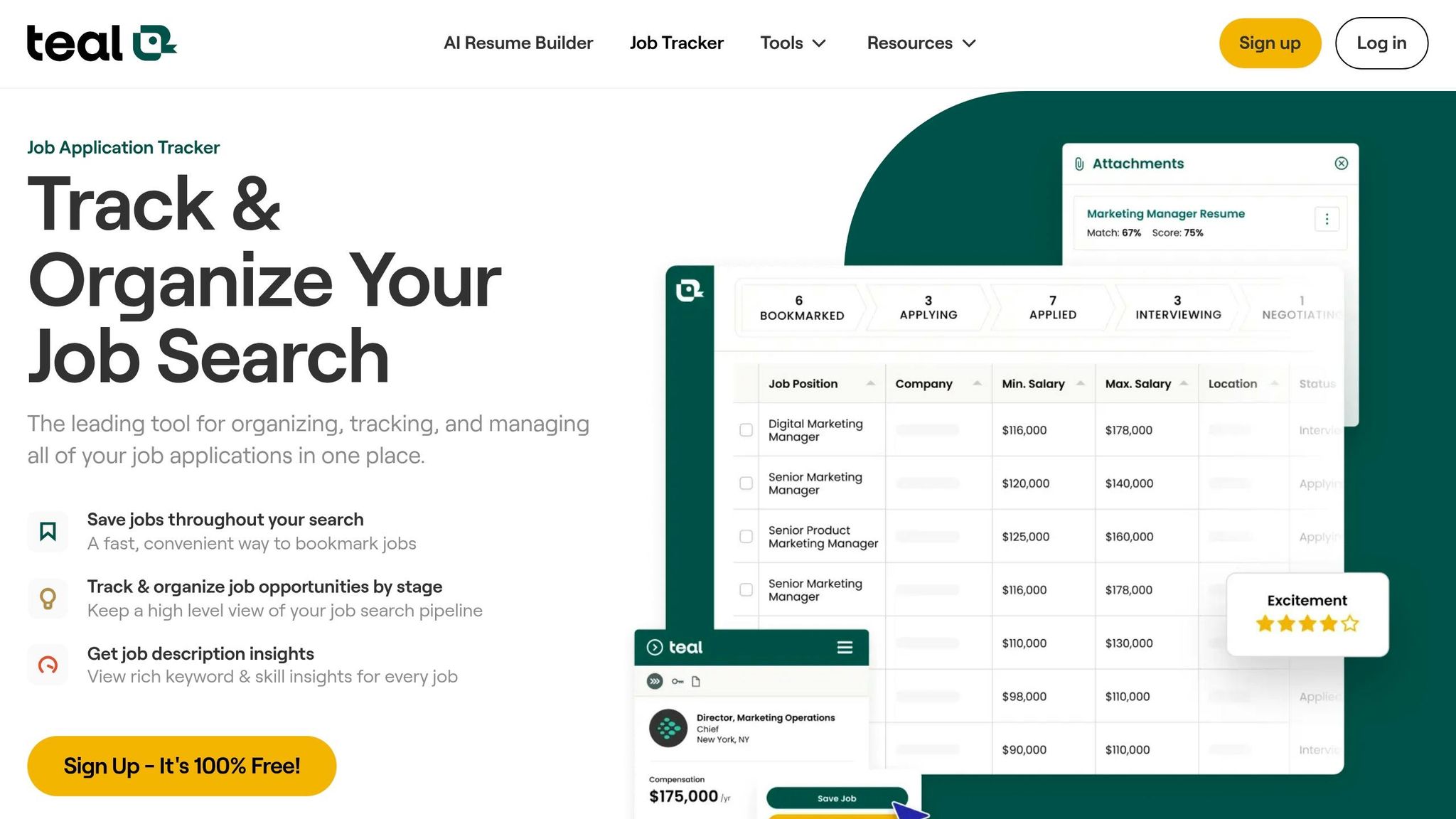
Teal offers tools like a job tracker and Chrome extension, making it easier to save postings, track application progress, and autofill resume fields. It's a helpful organizational tool for those managing multiple applications.
However, Teal leaves the heavy lifting - like tailoring resumes and submitting applications - entirely up to you. For busy professionals, this can quickly become overwhelming.
scale.jobs caters to those with limited time. Its VAs ensure a 24-hour turnaround for tailored resumes and cover letters, submitting them across various platforms, including corporate ATS systems and niche job boards. Starting at $199 for 250 applications, scale.jobs eliminates the hassle of recurring monthly fees.
Why scale.jobs stands out:
- VAs handle the entire application process, from tailoring to submission.
- Real-time review of ATS-optimized documents.
- Transparent pricing with refunds for unused credits.
- WhatsApp support with time-stamped proof of submissions.
Who should choose Teal: Organized job seekers who prefer to manage their own applications.
Who should choose scale.jobs: Those who need end-to-end application management, especially professionals juggling full-time jobs or navigating visa complexities like H-1B or F-1.
Rezi vs. scale.jobs
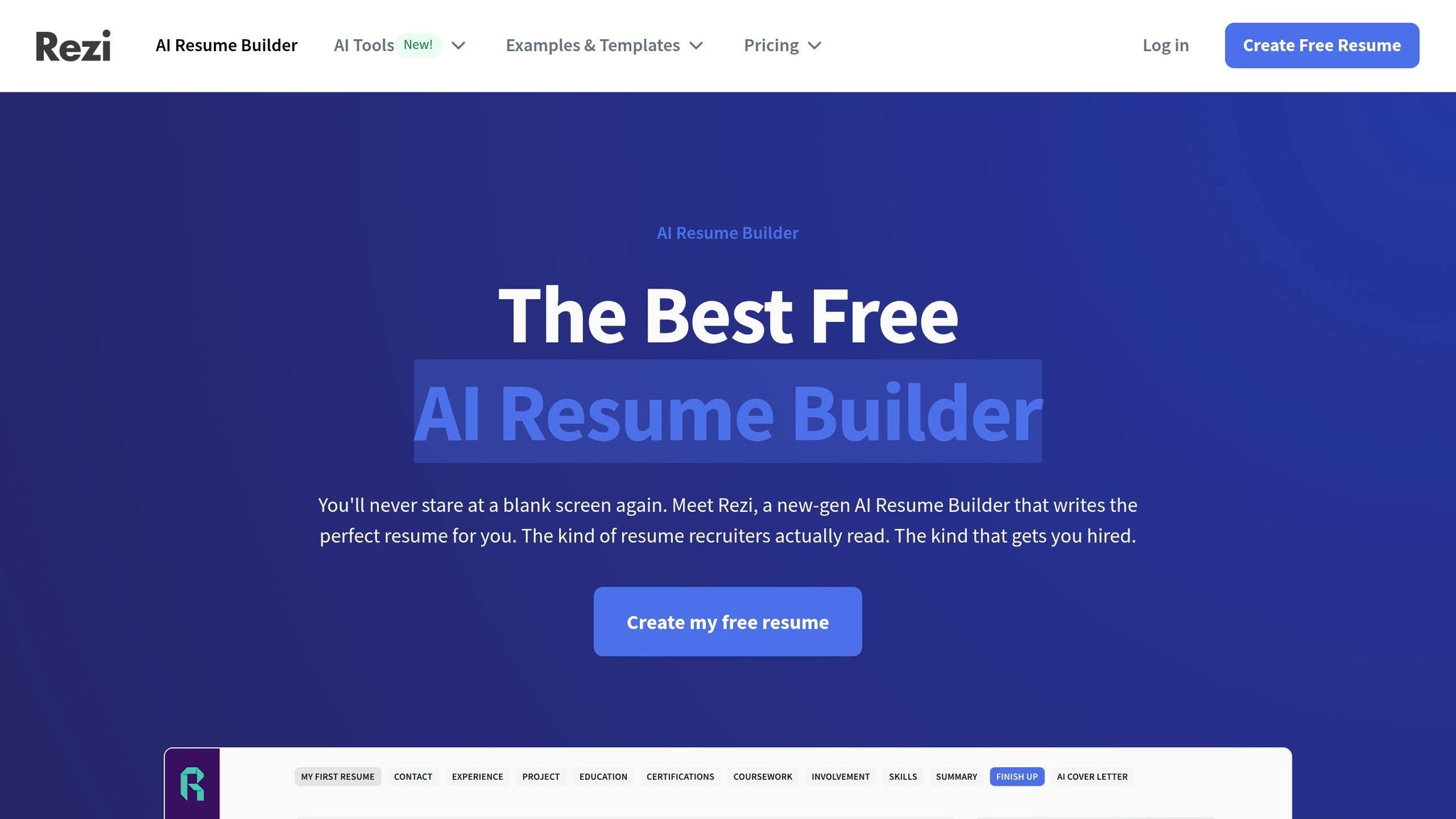
Rezi is known for its AI-driven resume builder, which creates ATS-compliant templates quickly. It’s a convenient option if you need a formatted resume in under an hour, and its AI suggestions can help refine your experience.
However, Rezi’s approach is template-based. The AI generates content without fully understanding the nuances of your target role or company priorities. This often leaves job seekers needing to make additional edits to ensure their resume resonates with recruiters.
scale.jobs combines AI technology with human expertise. VAs tailor each resume to the specific job posting, adjusting phrasing, structure, and content to align with recruiter expectations. For job seekers wanting a personalized touch, scale.jobs' resume writing services provide a comprehensive solution.
Why scale.jobs stands out:
- Resumes tailored to specific roles by human VAs.
- Real-time review of ATS-optimized documents.
- Flat-fee pricing with refunds for unused credits.
- WhatsApp support with time-stamped proof of submissions.
Who should choose Rezi: Applicants who need a quick, ATS-friendly resume and are comfortable refining it themselves.
Who should choose scale.jobs: Those who prefer personalized, role-specific resumes crafted by professionals.
ResumeWorded vs. scale.jobs
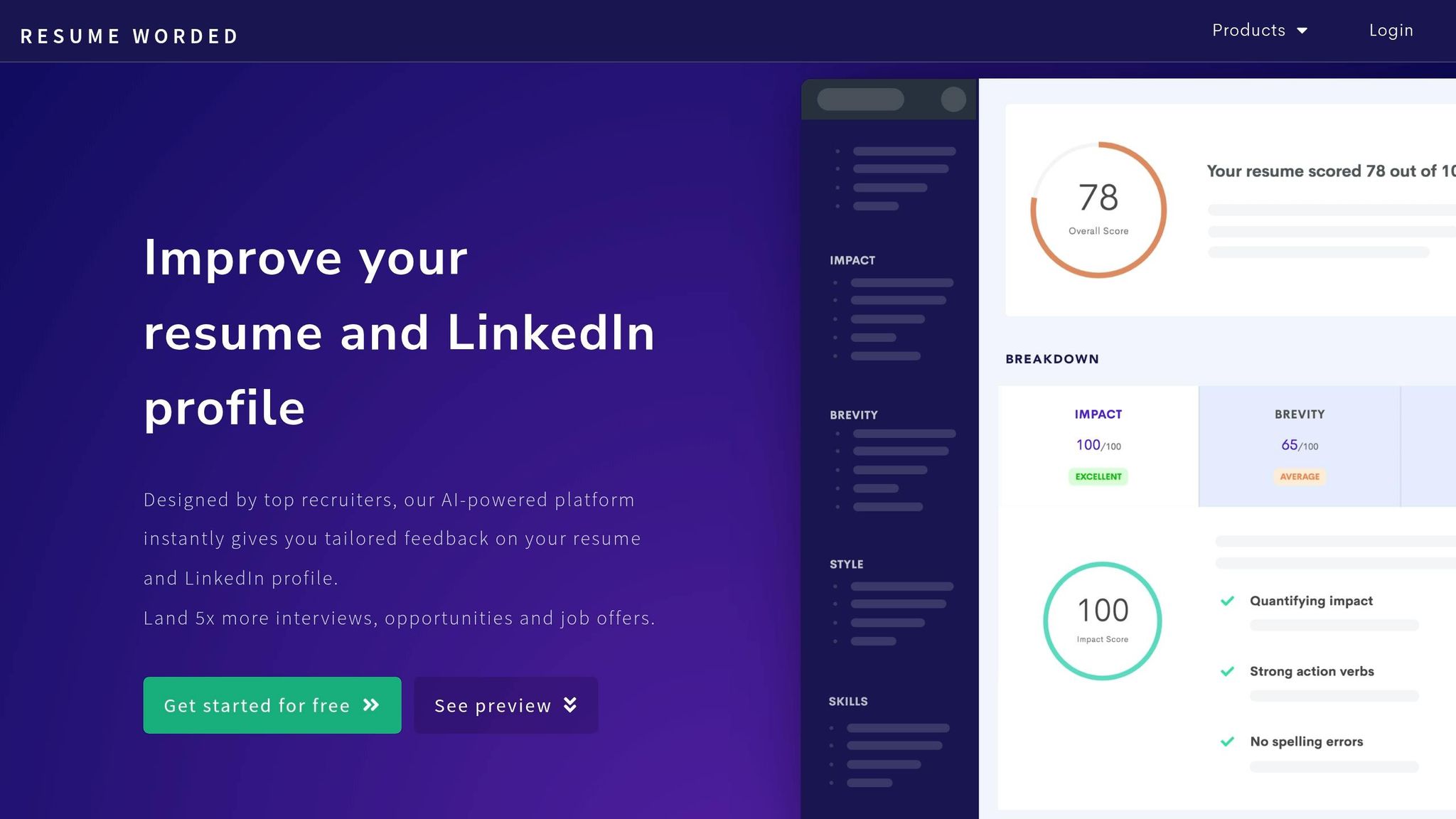
ResumeWorded provides detailed feedback on resumes, focusing on word choice, achievement quantification, and ATS compatibility. It’s an effective tool for those who want to understand why their resume might be underperforming.
However, ResumeWorded is entirely self-service. You upload your resume, receive feedback, and make revisions on your own. This iterative process can be time-consuming and doesn’t guarantee that your changes will resonate with recruiters.
scale.jobs bridges this gap by combining AI optimization with human review. Resumes are checked against both algorithmic standards and recruiter expectations before submission. With a live dashboard and WhatsApp updates, scale.jobs offers a level of transparency and accountability that ResumeWorded lacks.
Why scale.jobs stands out:
- Resumes validated by human VAs to meet recruiter expectations.
- Real-time review of ATS-optimized documents.
- Flat-fee pricing with refunds for unused credits.
- WhatsApp support with time-stamped proof of submissions.
Who should choose ResumeWorded: Self-motivated candidates comfortable with a DIY approach to resume improvement.
Who should choose scale.jobs: Job seekers who want the entire process managed, from optimization to submission, with human oversight.
Comparison Table
| Feature | Jobscan / Teal / Rezi / ResumeWorded | scale.jobs |
|---|---|---|
| Human involvement | None (AI or DIY) | High - dedicated VAs |
| Resume customization depth | Template or keyword-based | Per-posting, human-reviewed |
| ATS handling | Algorithmic scoring | Hybrid (Manual + AI) |
| Application execution | User submits manually | VAs submit on your behalf |
| Transparency & proof of work | Score dashboards | WhatsApp screenshots + live dashboard |
| Pricing model | Recurring monthly subscriptions | One-time flat fee, unused credits refunded |
Why Switch to scale.jobs?
- Time-saving: Ideal for those who can’t manage manual applications.
- Tailored approach: Resumes are customized for each role, not just optimized for ATS.
- Human oversight: Avoid the limitations of fully automated tools.
- Transparency: Get time-stamped proof of submissions and track progress via a live dashboard.
- Complex job searches: Perfect for navigating visa requirements or applying across multiple industries.
If managing your job search feels overwhelming, scale.jobs offers the comprehensive support you need to stay ahead.
Step-by-Step: Using ATS Checkers to Improve Your Shortlisting Odds
Building Your Base Resume
Before you even think about running an ATS check, you’ll need a resume that’s easy for these systems to read. Start with a simple, single-column layout and stick to standard fonts like Arial or Calibri (10–12 pt). Use clear section headings such as "Summary", "Experience", "Education", and "Skills." Avoid using tables, graphics, or text boxes - these can confuse ATS software. Save your file as a .docx format, as it’s the most widely accepted by applicant tracking systems.
For U.S.-based roles, your contact details should follow local conventions. For instance, include a U.S. phone number like (555) 123-4567, list your location as "Austin, TX", and format dates as "Jan 2022 – Mar 2024." When describing your achievements, quantify them in U.S. formats, such as "reduced processing time by 30%" or "managed a $1,200,000 annual budget." If this feels overwhelming, tools like scale.jobs’ ATS-compliant resume builder can help ensure your formatting meets these standards and flag any issues before you proceed. Once you’ve got your base resume ready, it’s time to see how ATS checks can highlight areas for improvement.
Running ATS Checks and Reading the Results
After creating your base resume, upload it - along with the job description - into an ATS checker like Jobscan, ResumeWorded, or the scale.jobs keyword optimizer. These tools typically provide three key insights: an overall match score, a list of keyword gaps, and section-specific feedback.
Start by reviewing the keyword gap list. Pay close attention to hard skills listed in the job posting under "Requirements" or "Qualifications" - these are non-negotiables. For example, skills like "Salesforce", "Kubernetes", or "GA4" should be included if they’re relevant to your experience. Secondary terms from "Nice to Have" sections are less critical but still worth noting. Experts often recommend aiming for a 70–80%+ match score, but don’t rely solely on the score. Even if your match score is high, a weak summary or lack of measurable results in your experience section can hurt your chances. Tools like scale.jobs streamline this process, offering actionable feedback to help you refine your resume efficiently.
Tailoring Resumes and Submitting Applications
Once you’ve identified the gaps, focus on integrating missing keywords naturally into your resume. Use bullet points to weave these terms into your accomplishments instead of simply listing them. For instance, instead of just adding "Agile" under skills, write something like: "Led agile sprint planning for a 10-person engineering team, boosting on-time delivery from 70% to 92%." Be specific and use the employer’s exact wording where applicable. If the job title says "Business Development Representative (BDR)", include that term instead of a generic "Sales Rep."
After making these edits, run another ATS scan to verify your improvements. Repeat this process for each application to ensure your resume is tailored to the specific role. However, if you’re applying to multiple jobs - say, 10–15 in a week - this process can become time-intensive. That’s where scale.jobs’ virtual assistants come in. They can handle resume customization for each role, apply ATS-informed edits, and even submit your applications through various portals. You’ll receive time-stamped proof of submission via WhatsApp. And if you’re starting from scratch, scale.jobs' resume writing service can create a professional, ATS-friendly resume as a foundation for all your applications.
| Action | Impact on ATS Score |
|---|---|
| Match 80%+ of job description keywords naturally | +25–35 points |
| Use standard fonts and single-column layout | +15–20 points |
| Include standard section headers | +10–15 points |
| Submit as .docx or clean PDF | +10–12 points |
| Replace paragraphs with quantified bullet points | +8–12 points |
Common ATS Checker Mistakes and How to Avoid Them
Over-Optimizing for Keywords
Trying too hard to pack in keywords can backfire when it comes to Applicant Tracking Systems (ATS). This often happens in resumes where the skills section becomes overloaded with repetitive phrases like "project management", "agile project management", and "scrum project management." Even worse, some job seekers attempt to hide keyword blocks in white text on a white background, but modern ATS platforms are savvy enough to detect this trick and flag it as manipulative.
A study by Ladders revealed that recruiters spend an average of 7.4 seconds on an initial resume scan, focusing on key details like job titles, company names, and dates. If your resume is cluttered with keywords that make it hard to skim, it could be ignored - even if it scores well in the ATS. Instead, focus on integrating keywords naturally into accomplishment-based statements. For instance: "Improved Salesforce pipeline management process, increasing qualified B2B leads by 35% over two quarters." Tools like scale.jobs can help you identify overused terms and suggest more effective phrasing to strike a balance between ATS compatibility and recruiter readability. Next, let’s talk about why relying solely on ATS scores can be misleading.
Trusting ATS Scores Too Much
An ATS match score of 85/100 might show alignment with a job description, but it doesn’t guarantee that your resume will stand out to a recruiter. It doesn’t evaluate the strength of your achievements or how you compare to other applicants. Many job seekers waste precious time trying to boost their scores to an arbitrary number, like 90%, only to miss out on opportunities as roles fill quickly.
It’s also important to note that ATS scores from third-party tools are only approximations. Real ATS platforms like Workday, Greenhouse, Taleo, and Lever use unique parsing algorithms and weighting systems that no public tool can fully replicate. As highlighted earlier, ATS systems often rank candidates rather than automatically reject them, leaving the final decision to a human recruiter. This means your resume should not only align with ATS requirements but also tell a compelling story. A human review ensures your resume follows U.S.-specific norms - such as keeping it to 1–2 pages and avoiding photos - and highlights your career progression effectively. If you’re starting from scratch or want a polished resume that’s ATS-ready, consider using professional resume writing services to save time and avoid guesswork. Now, let’s examine how formatting errors can derail your application.
Formatting Errors and Generic Templates
Fancy templates might look impressive on your screen, but they can wreak havoc on ATS parsing. Features like multi-column layouts, icons for skill ratings, or contact details placed in headers or footers often confuse ATS software, which reads resumes linearly from top to bottom. This can result in merged or missing sections. To avoid this, stick to a single-column layout with standard section headers. It’s the most reliable way to ensure your resume is parsed correctly.
| Format Element | ATS-Friendly | Unsuitable for ATS |
|---|---|---|
| Layout | Single-column, plain text | Multi-column, tables, text boxes |
| Section titles | Work Experience, Skills, Education | My Journey, Career Highlights, About Me |
| File format | .docx or selectable PDF | Scanned PDF, JPG, image-based exports |
| Visuals | White background, no images | Colored backgrounds, headshots, skill dials |
| Fonts | Arial, Calibri, Times New Roman | Decorative or custom fonts |
Generic templates can make things worse by encouraging vague, placeholder language like "responsible for managing projects and collaborating with stakeholders." These phrases don’t stand out to ATS or recruiters. To test your formatting, paste your resume into a plain text editor. If the sections are jumbled or content is missing, your formatting may cause issues during submission. Tools like scale.jobs can help verify that your titles, dates, and skills are correctly formatted before you submit your application.
Decision Summary: When to Use scale.jobs vs. Standalone ATS Tools
Who Should Use Standalone ATS Checkers
Standalone tools like Jobscan, Teal, and ResumeWorded are ideal for those applying to a limited number of jobs each week and who have the time to fine-tune their resumes manually. These tools work best if you're confident in your writing skills, already familiar with your industry, and just need assistance in optimizing keyword usage or ensuring ATS-friendly formatting. If your weekly applications are under 10 and you prefer hands-on control over every aspect of your job search, these tools are a cost-effective choice. For example, Teal offers a free tier, while ResumeWorded provides a $29/month plan, both of which can meet your needs without additional expenses.
However, there are areas where scale.jobs stands out compared to these standalone options:
- Human-powered resume customization: Virtual assistants tailor each resume specifically to the job posting, going beyond basic keyword optimization.
- Managed application submissions: Human assistants handle the submission process and provide time-stamped screenshots as proof of submission.
- Quick turnaround: Dedicated support ensures resume tailoring and submissions are completed within 24 hours, saving you time and effort.
- Dual-layered document optimization: Resumes are reviewed for ATS compatibility and recruiter expectations before submission.
- Flat-fee pricing: No monthly subscriptions - unused credits are refundable.
Who Should Choose scale.jobs
scale.jobs is a better fit if your challenge isn't knowledge but time and execution. If you're aiming to apply to 20–30 jobs weekly, juggling a full-time job, or working against tight deadlines like an OPT expiration or a layoff, manually customizing each application can become overwhelming. scale.jobs combines a free ATS checker with the support of human virtual assistants who manage resume tailoring, cover letters, and even application submissions through platforms like Workday, Taleo, and Greenhouse. They ensure submissions avoid bot filters and provide real-time updates via WhatsApp, along with time-stamped screenshots for transparency. This service is especially valuable for candidates navigating visa timelines like H-1B, F-1 OPT, or TN, where speed and accuracy are critical. Additionally, if you need to polish your resume before scaling up your applications, their resume writing services can help you get started.
Key features of scale.jobs include:
- Dedicated human virtual assistants to handle the entire application process.
- Job-specific resume customization for each application - no cookie-cutter templates.
- Proof of work through time-stamped screenshots and a live dashboard.
- Real-time WhatsApp support for instant updates and communication.
- Flat-fee pricing starting at $199, with refunds for unused credits.
These features make scale.jobs an excellent choice for candidates needing efficient, end-to-end support.
Switch to scale.jobs If...
If your ATS scores are consistently high (above 80%) but you're not hearing back from recruiters, it may indicate an issue with execution or resume tailoring rather than keyword optimization. Below are additional scenarios where scale.jobs provides better value:
- You're dedicating over 2–3 hours daily to applications but still falling short of your target.
- You require documented proof of your job search efforts for unemployment benefits, visa compliance, or structured planning.
- You're applying for similar roles and need tailored resumes at scale, rather than relying on a single, generic resume.
| Factor | Standalone ATS Checkers | scale.jobs |
|---|---|---|
| Human involvement | None | Dedicated VAs + reverse recruiter |
| Resume customization | User-driven, manual | Job-specific tailoring per application |
| ATS handling | Score + suggestions only | ATS-optimized docs + human submission |
| Application execution | Manual by candidate | Managed by human assistants |
| Proof of work | None | Time-stamped screenshots + dashboard |
| Pricing model | Recurring subscription ($10–$50/mo) | One-time flat fee (starting at $199) |
This comparison highlights when transitioning to scale.jobs becomes the more effective strategy for your job search needs.
FAQs
What ATS score should I aim for?
To improve your chances of landing interviews, aim for an ATS (Applicant Tracking System) score of at least 80%. While scores above 85% are excellent, try not to go beyond 90%, as excessive keyword usage can negatively impact your application.
Should I submit my resume as a .docx or PDF?
When submitting your resume, use a .docx file or a text-based PDF to ensure compatibility with Applicant Tracking Systems (ATS). Make sure the text is selectable, utilizes standard fonts like Arial or Times New Roman, and includes clear, labeled headers for sections such as "Work Experience" or "Education." Avoid submitting image-based PDFs, as ATS software often cannot process or read them, which could hurt your chances of being considered.
How do I add keywords without keyword stuffing?
To keep your resume both effective and professional, incorporate keywords naturally from the job description into sections like your work experience, skills, and achievements. Instead of overusing terms like "project management", highlight how you applied it to deliver measurable results. For instance, describe leading a team to complete a project ahead of schedule or under budget. By embedding keywords into specific, quantifiable accomplishments, you’ll enhance clarity and make your resume appealing to both ATS systems and human recruiters.