
Best Resources for Job Seekers Facing Loan Repayments

Sarah Mitchell
July 17, 2026

If I had loan bills due and needed work fast, I’d pick based on three things: who submits applications, how much it costs, and whether I can track the work.
Here’s the short version:
- Scale.jobs fits people who want done-for-you applications, ATS-focused documents, and fixed-cost bundles.
- Jobscan fits people who want resume match feedback but will still do the applying themselves.
- Teal fits people who need tracking and search organization.
- LazyApply, Simplify.jobs, and LoopCV fit people who want more automation, but with less human review.
- Find My Profession fits people who want career guidance and resume help at a much higher price point.
- Rezi fits people who mostly need resume support.
For borrowers, the main issue is simple: a long job search gets expensive fast. Missing even 2 to 4 weeks of income can put more pressure on loan payments, rent, and credit card balances. So I’d focus less on feature lists and more on time saved per week, upfront cost, and how much manual work is left.
Quick comparison
| Tool | Best for | Human help | Submission help | Pricing style |
|---|---|---|---|---|
| Scale.jobs | Done-for-you applications | Yes | Yes | Free tier + $199 one-time bundles |
| Find My Profession | Career support | Yes | Limited/indirect | Starts around $3,000+ |
| Jobscan | ATS resume matching | No | No | Monthly subscription |
| Teal | Tracking and planning | No | No | Free + paid plan |
| LazyApply | Bulk autofill | No | Bot-based | Not clearly listed |
| Simplify.jobs | ATS form autofill | No | Limited autofill | Subscription/free core tools |
| LoopCV | Automated search cycles | No | Automated | Not clearly listed |
| Rezi | Resume writing support | No | No | Not verified here |
sbb-itb-564272e
My take
If you need hands-off help, go with a job application service. If your resume is weak, fix that first with an ai resume builder or an ai cover letter builder. If you’re still early in your search, a job search platform or tracker may be enough.
Below, I break down when each option makes sense, where each one stops, and how I’d choose if cash flow was tight.
Why do job seekers with loan payments need dedicated job search resources?
When loan payments hit every month, a slow job search can cost you fast. In that situation, workflow matters more than a long feature list. If you're comparing Scale.jobs with other options, the main question is simple: which tool helps you apply for jobs faster?
That matters because delay adds pressure. A week of friction in your process can mean missed paychecks, late payments, or more stress than you already need.
Separate tools make that worse. You update your resume in one place, look through roles on another site, save notes in a spreadsheet, and track submissions effectively somewhere else. It sounds manageable at first. In practice, it turns into handoffs, tab overload, and mistakes. You end up applying with the wrong resume version, skipping salary filters, or losing track of where you've already applied.
Dedicated job search resources cut through that mess by keeping the core parts of the process together: ATS-optimized resume data, job matches, and application tracking. When those pieces live in one system, your target roles, minimum salary, and application history stay lined up. That’s a big reason borrowers compare Scale.jobs with lighter tools - not just on features, but on how much time they save during an urgent search.
If you’re weighing a job search platform against a patchwork of tools, this is the tradeoff to watch. The same goes for people looking at a job application service, a job search coach, or a Virtual Assistant for Job Applications. The best fit is usually the one that removes steps, not the one with the most buttons.
For many job seekers, that also means pairing speed with better documents. A built-in ai resume builder or ai cover letter builder can help cut down rewrite time, especially when you’re applying across many roles and need to move NOW.
These needs break down into a few specific problems borrowers need to solve.
What problems do these job search resources solve for borrowers?
For borrowers, the biggest problem usually isn't effort. It's coordination, speed, and timing.
When bills are due and loan payments are hanging over your head, a slow or messy job hunt can turn into a money problem fast. You don't just need to Apply for jobs more often. You need a process that helps you move fast, stay organized, and keep each application tied to the right deadline.
These tools help solve five urgent problems:
- Speeding up applications - cutting the time between finding an opening and sending it in, which matters when every week without income adds more pressure
- Keeping ATS-friendly documents aligned - making sure resume versions and cover letters match each role without doing a full rewrite every time; this matters whether you use an ai resume builder or an ai cover letter builder
- Tracking submissions - keeping a clean record of where you've applied, which version you sent, and what still needs attention inside a job search platform
- Following up on applications - stopping good applications from going cold because outreach got scattered or forgotten, a common issue a job search virtual assistant can help manage
- Avoiding surprise costs - keeping pricing predictable so spending on a job application service doesn't add more stress to an already tight budget
Those are the standards used below to compare each tool.
What should borrowers look for when choosing a job search resource?
Borrowers need job search tools that save time, cut manual work, and keep costs easy to plan. That narrows the field fast.
When you compare job search automation tools, four filters matter most.
1. Automation depth - How much of the application process the tool can handle from start to finish.
2. Human support - Whether trained people step in when automation hits a wall. That matters more than it sounds. Some employers use odd portals, extra forms, and custom screening questions. A tool without human backup can stall right there. If you're using a job search virtual assistant or a Virtual Assistant for Job Applications, this is one of the first things to check.
3. ATS optimization - How well the tool tailors your resume, cover letter, and application responses to each role instead of pushing the same generic version every time. This is where tools tied to an ai resume builder or ai cover letter builder can help, but only if the output matches the posting.
4. Pricing model - Whether the cost stays steady during a long search. Flat-fee or one-time payment options are easier to budget for and help borrowers avoid piling on monthly subscription charges. That can make a big difference if you're trying to Apply for jobs over several weeks or months.
These four criteria shape the ranking below, with pricing carrying the most weight for borrowers. The ranked tools below are measured against those standards.
How are job seekers using these resources when loan payments are due?
These choices look different depending on the borrower. When student loan bills are back on the calendar, the right setup often comes down to one thing: how much time, money, and effort a person can spare right now.
Laid-off professionals who need to move quickly
A layoff turns the job hunt into a cash-flow issue almost overnight. In that situation, speed matters. So does consistency. You can’t afford to spend half the day opening portals, filling the same fields again and again, and tracking passwords.
That’s where the Human Assistant Basic plan from scale.jobs fits. It uses trained human VAs to submit applications by hand across portals for $199 for 250 applications. For people trying to Apply for jobs at volume without getting buried in admin work, this setup keeps the search moving.
If the budget is tighter, the lighter AI option makes more sense.
Recent graduates balancing loan payments and a limited budget
New grads are often in a tricky spot. They need to keep momentum, but they also need to watch every monthly charge. A tool that helps without adding much overhead tends to be the safer choice.
scale.jobs’ free tier covers ATS-ready tools, and AI Assistant Pro adds more tailoring for higher-priority applications at $19/month. For someone who needs an ai resume builder and an ai cover letter builder without jumping straight into a high-cost service, that can be a practical middle ground.
Borrowers targeting high-fit roles
Not everyone is blasting out applications. Some borrowers are aiming at a short list of roles that line up well with their background, pay needs, or location. In that case, volume matters less than match quality.
Under time pressure, each application has to reflect the posting closely. AI Assistant Pro helps with that through single-click tailored resumes and cover letters. If someone is using a job application service for select roles instead of a broad spray-and-pray approach, this is usually the kind of support they want.
When the search shifts from applying to repositioning, a different kind of help starts to matter.
Career changers who need to rebuild their resume
Changing fields is a different problem. It’s not just about sending more applications. It’s about telling a better story fast enough to stay in the market.
A borrower moving into a new function may need more than edits. They may need a reframed resume, stronger LinkedIn positioning, and cover letter support that explains the shift without sounding forced. scale.jobs’ resume writing services for career switchers cover that gap. For job seekers who need a job search coach style of direction or a virtual assistant for job seekers to take work off their plate, this kind of support can help during the messy middle of a career pivot.
Cost-conscious applicants avoiding subscription stacking
When loan payments hit, recurring software costs are often the first line item people cut. It’s not hard to see why. A few small subscriptions can quietly pile up and turn into a monthly drain.
scale.jobs leans on one-time bundles instead of stacking recurring charges, which makes spending easier to predict month to month. For applicants comparing best job boards, tools, and support options, that kind of pricing can feel a lot easier to manage when cash is tight.
1. scale.jobs
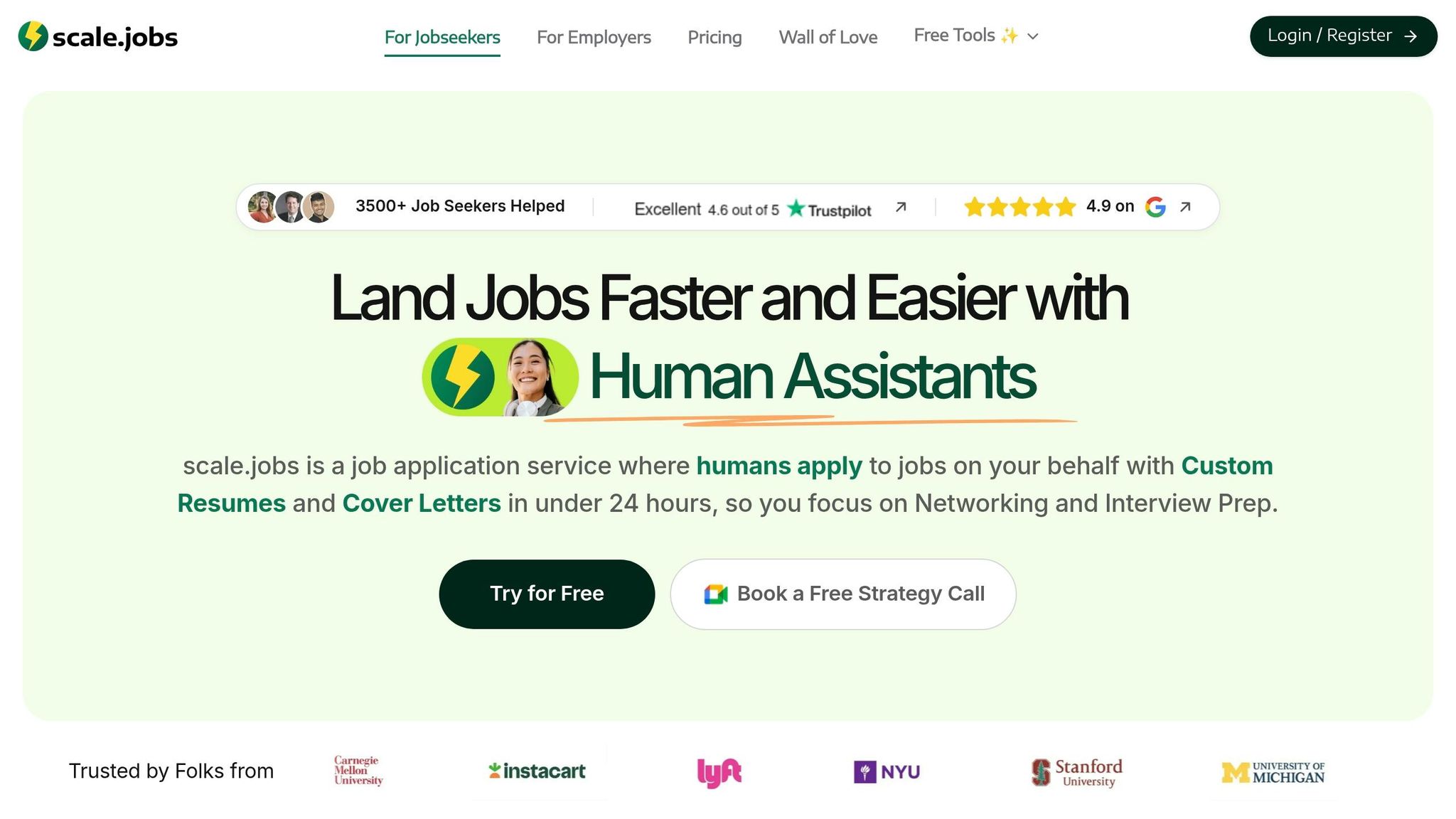
scale.jobs ranks #1 for borrowers because it pairs human-led application work with ATS-ready documents and a one-time pricing model. That mix cuts down the manual grind and keeps costs easy to plan. If you're trying to apply for jobs at scale without juggling three different tools, that setup stands out fast.
Summary of company: scale.jobs combines human-assisted applications, ATS-ready documents, and one-time pricing.
Automation depth and human support
scale.jobs does not rely only on bots or auto-fill shortcuts. It uses trained human virtual assistants to complete application forms manually. That matters more than it may seem. A lot of job portals are clunky, inconsistent, or full of little fields that break simple automation.
On Human Assistant plans, users get real-time WhatsApp updates and timestamped screenshots of completed applications. That gives you a clear paper trail of what was done and when. For people who want a hands-off job application service, this can remove a big chunk of daily admin work.
The execution layer is a big part of the value here because each submission still needs role-specific documents. A system can move fast, sure, but if the resume and cover letter don't match the role, speed alone won't help much. That's where the human support side makes the process feel more grounded.
ATS optimization and resume quality
The platform includes an ATS-ready ai resume builder plus role-specific resume and cover letter tailoring. Custom materials come with a 24-hour turnaround. That's a solid fit for job seekers who need to move fast on new openings, including full time jobs and niche roles posted across different sites.
scale.jobs is built to work across corporate ATS portals and niche job boards. So instead of using one tool for documents, another for tracking, and another for submissions, users can keep the work in one place. That makes it a strong option for anyone looking for a job search platform with both document support and execution help.
If you like doing everything yourself, the AI tools may be enough. If you want a virtual assistant for job seekers to handle the repetitive part, the human plans do that.
Pricing model
Human Assistant plans use one-time payment instead of a recurring subscription. For borrowers trying to control spending, that's a big reason scale.jobs leads this ranking. You pay once, know the cost upfront, and don't have to watch another monthly charge stack up.
The AI Assistant Pro tier starts at introductory pricing, then moves to $19/month. The free tier includes an ATS-ready resume builder, a job tracker, and limited daily AI outputs for people who want to test the system before paying.
Here’s the pricing breakdown:
| Plan | Price | Applications | Human VAs |
|---|---|---|---|
| AI Assistant Pro | $9/mo | Self-managed | None |
| Human Basic | $199 one-time | 250 | 1 |
| Human Standard | $299 one-time | 500 | 2 |
| Human Best Value | $399 one-time | 1,000 | 2 |
| Ultimate Bundle | $1,099 one-time | 1,000 | 2 + Personal Recruiter |
Pros: One-time pricing, human-handled applications, real-time WhatsApp updates, timestamped screenshots of completed applications, ATS-ready tools in the same platform
Cons: Human Assistant plans require upfront payment, and users who want a fully self-managed workflow may prefer a different tool
2. Find My Profession
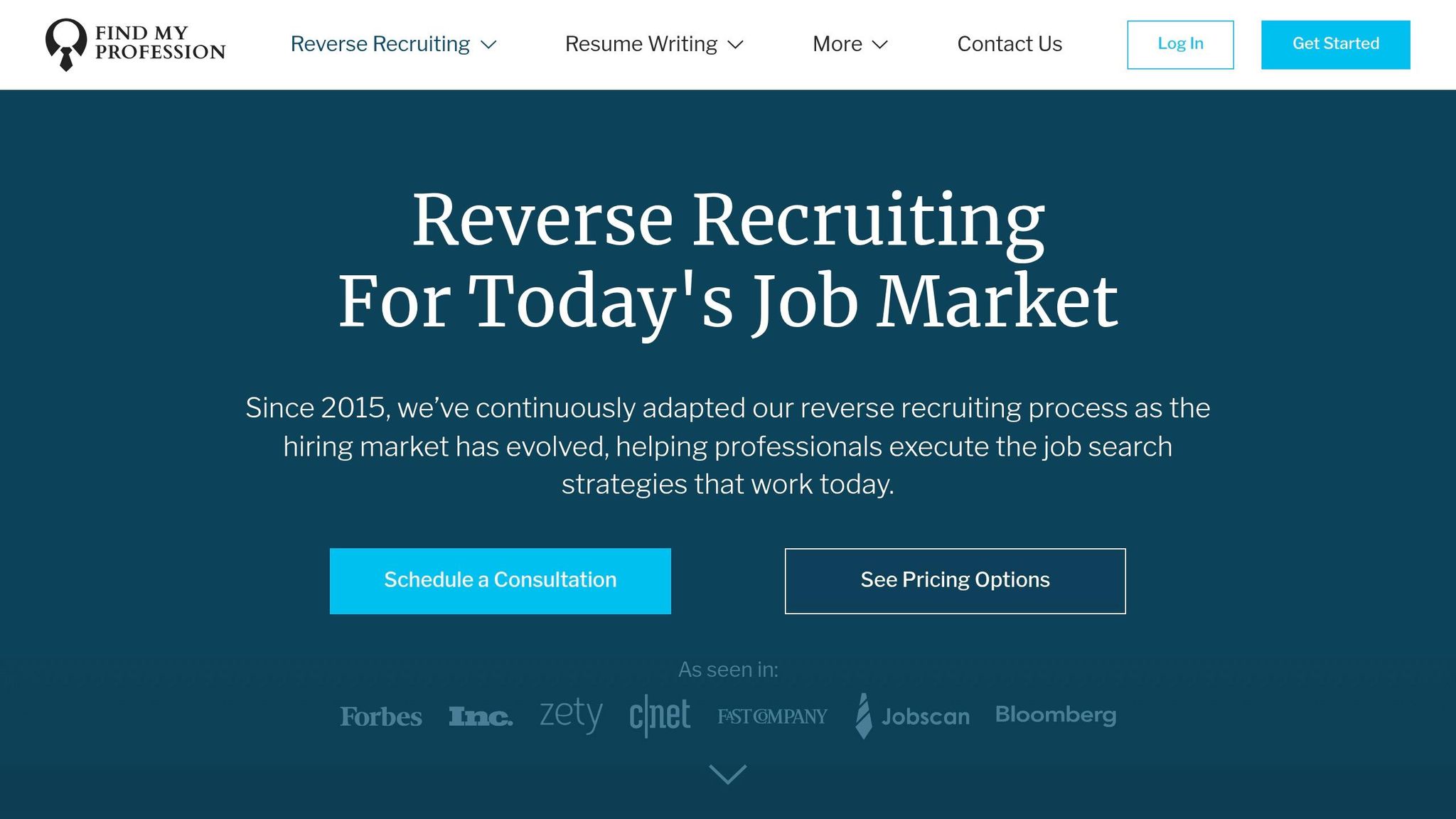
Find My Profession vs. Scale.jobs: which job search service fits borrowers with loan payments?
Find My Profession works better for borrowers who want guided career support and resume help, but not a full done-for-you application process. Scale.jobs is stronger if you need actual execution and want to see proof that the work happened.
That’s the main split.
If you want help shaping your story, Find My Profession has a clear place in the market. If you need someone to apply for jobs for you, especially across messy employer portals, the difference shows up fast.
Summary of company: Find My Profession offers managed job search help, including resume writing and recruiter outreach, for mid-to-senior professionals.
Genuine strengths:
- Dedicated career managers who guide the search plan
- Resume writing support from professionals with industry-specific experience
Why Scale.jobs wins for borrowers with loan payments
For someone managing monthly bills and trying to keep a job search from turning into another large expense, pricing and execution matter more than nice-sounding support.
Scale.jobs stands out because it uses trained human VAs to submit applications manually. That matters when company portals are clunky, long, or simply break standard automation tools. Find My Profession does not offer that same hands-on application execution.
There’s also a visibility gap. Scale.jobs gives timestamped screenshots and real-time WhatsApp updates as proof of work. You can see what got submitted and when. Find My Profession does not offer that same submission-level visibility.
Cost is another big factor. Scale.jobs starts at $199 one-time for 250 applications, which is much easier to plan around if you’re watching cash flow. Find My Profession’s managed services start around $3,000+ and usually come with higher project-based or recurring costs.
Scale.jobs also includes ATS-ready resume and cover letter tailoring in the same system, which is useful if you want one place for both execution and document edits. If you're comparing tools with an ai resume builder or an ai cover letter builder, that bundled setup can save time and cut extra back-and-forth. Find My Profession’s resume help is sold as a separate engagement.
For borrowers, that pricing model matters. One-time bundles are easier to budget for than services that keep adding monthly charges.
Who should use Find My Profession
Find My Profession makes sense for mid-to-senior professionals who want strategic guidance, recruiter outreach support, and resume writing help.
It’s a better fit if your main need is positioning. Maybe you already know how to use the best job boards, or you don’t mind handling applications yourself, but you want a sharper pitch and stronger materials. In that case, this service can help.
Who should choose Scale.jobs
Scale.jobs is the better pick for borrowers who need speed, proof, and fixed pricing.
If you want a job application service that goes beyond advice and actually handles submissions, this is where Scale.jobs pulls ahead. It fits job seekers who need help with volume, whether they’re targeting full time jobs, searching for Part time jobs near me, or using a job search platform to keep everything moving.
It also makes sense if you want a Virtual Assistant for Job Applications instead of a strategy-first service.
Pricing
Find My Profession’s managed job search plans start around $3,000+.
Scale.jobs Human Basic starts at $199 one-time for 250 applications.
### Is Find My Profession worth it?
Yes, for the right person.
If you want career guidance, recruiter outreach help, and resume writing, Find My Profession can be worth the spend. But if your main problem is not what to say and is instead how to get more applications out the door, it’s a weaker fit.
That’s where Scale.jobs has the edge. It behaves more like a job search virtual assistant service built for execution, not just planning.
Next: Jobscan, which focuses more on ATS matching than hands-on application execution.
3. Jobscan
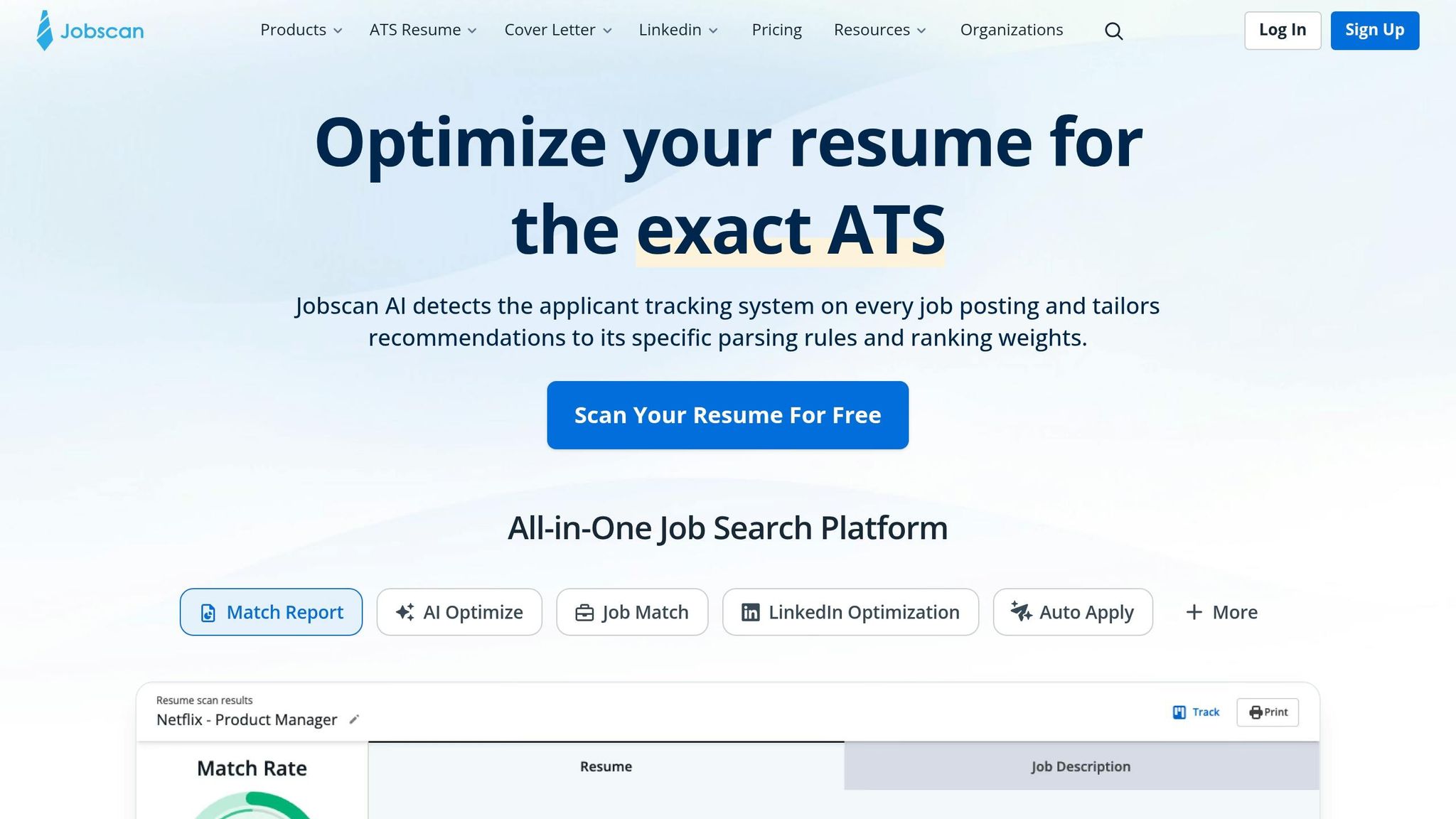
Jobscan vs. Scale.jobs: does ATS optimization alone help when loan payments are due?
Jobscan helps borrowers improve ATS fit before they apply for jobs, but the actual submission work still falls on the user. That makes it a fair comparison for people trying to decide whether resume optimization by itself is enough.
Jobscan is built to help you look better on paper. Scale.jobs goes a step further and handles the labor of sending applications out. If you're dealing with loan payments and a tight timeline, that difference can hit hard.
Genuine strengths:
- Resume match scoring against specific job postings
- LinkedIn profile optimization
- Cover letter analysis
These tools can help you line up your resume with a role. That matters. But here's the catch: a better match score doesn't send the application for you. You still need to fill out forms, upload files, answer screening questions, and work through each ATS one by one.
Where Jobscan stops
Jobscan's workflow is built for prep, not submission. It does not submit applications or manage portals. For job seekers with time pressure, that's a real gap.
Think of it this way: Jobscan helps you sharpen the arrow. It doesn't shoot it.
If you're managing a busy schedule, chasing full time jobs, or trying to stay on top of dozens of openings across different systems, manual submission can become the bottleneck fast.
Why Scale.jobs wins for borrowers with loan payments
This is where Scale.jobs pulls ahead. Instead of stopping at optimization, it adds human-led execution.
Human assistants submit applications by hand across corporate ATS platforms and niche boards. You get real-time WhatsApp updates and timestamped proof screenshots, so you can see that the work is happening. That mix of ATS tailoring and hands-on submission is a better fit for people who need momentum, not just polish.
For someone comparing a resume tool with a job application service, the split is simple: Jobscan helps you prepare, while Scale.jobs helps you prepare and get the applications out the door.
Who should use Jobscan
Jobscan makes sense for job seekers who want to improve their resumes, LinkedIn profiles, and cover letters before applying. It's also a good fit if you're fine handling submissions yourself and want a tool closer to an ai resume builder than a done-for-you service.
Who should choose Scale.jobs
Scale.jobs is the better pick if you want applications submitted for you, need proof that the work is being done, and prefer a flat-fee setup over a monthly subscription.
It's also a stronger choice if you're looking for a Virtual Assistant for Job Applications or a job search virtual assistant instead of another dashboard to manage on your own.
Pricing
Jobscan: subscription-based; check current tiers on Jobscan.
Scale.jobs Human Basic starts at $199 one-time for 250 applications - a fixed cost instead of an ongoing monthly charge.
Next: Teal, which focuses on job tracking and resume building but also stops short of application execution.
4. Teal
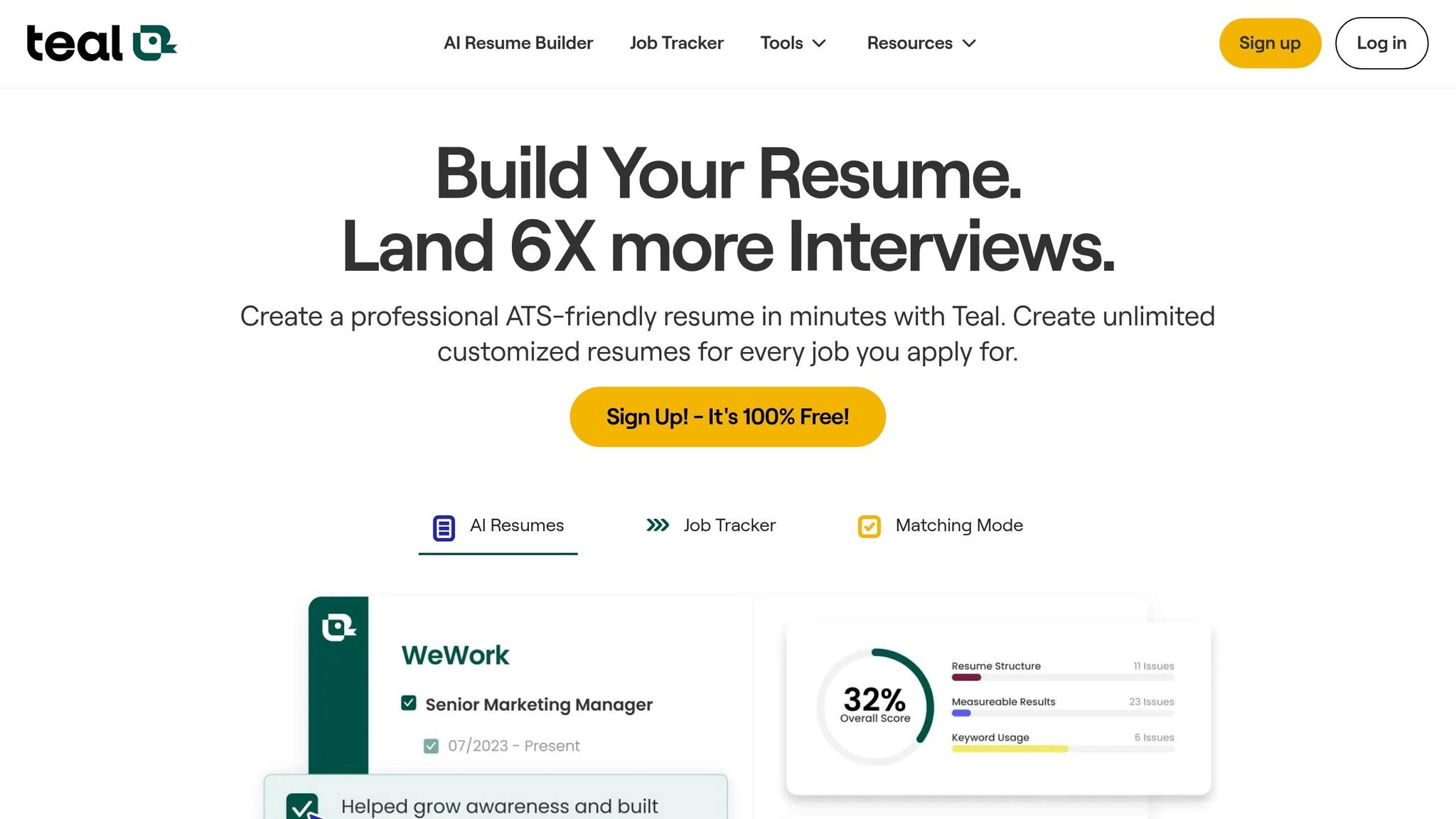
If Jobscan is mainly about ATS prep, Teal leans more into tracking and staying organized. That can help, but the actual work still sits on the user. You still have to log in, fill out forms, and submit each application yourself. So while Teal is useful as a job search platform, it doesn’t replace a done-for-you job application service. For borrowers who need hands-on help, that gap matters.
Summary of company: Teal is a job search management platform that combines a resume builder, job tracker, and application organizer in one dashboard.
Key features:
- Resume builder with ATS-friendly formatting and keyword suggestions
- Job tracker that pulls saved roles into a centralized board
- Chrome extension for saving job postings directly from job boards
Job search automation offerings:
- Automated job saving from external sites via browser extension
- Resume tailoring suggestions based on job description keywords
- Application status tracking across saved roles
Pros: Free tier available, clean interface, solid resume and tracking tools in one place
Cons: No application submission, no human support, no proof of work - users still handle every portal manually
Pricing: Free tier available; Teal+ paid plan available; check current pricing on Teal's website.
Why Scale.jobs wins for borrowers with loan payments
Teal helps you keep your search in order. It does not apply for roles on your behalf. If you're dealing with loan payments and tight deadlines, that's a big difference.
Scale.jobs covers the part Teal leaves to you: human VAs who submit applications by hand, WhatsApp updates in real time, and timestamped screenshots that show the work was done. You also get ATS-ready resumes and cover letters in one place, which makes it more than just an organizer. It works more like a job search virtual assistant paired with execution.
There’s also the cost angle. Teal uses a subscription model for paid access. Scale.jobs uses one-time pricing, which can be easier to plan around when cash flow is tight.
If your main problem is staying organized, Teal can do the job. If your main problem is getting applications out fast, Scale.jobs is the better fit.
Who should use Teal
Teal makes sense for job seekers who want free AI job search tools and a structured system for managing their search. It’s a good match for people who are fine handling their own submissions and just want a cleaner way to track roles, tailor resumes, and keep tabs on progress.
It can also work well if you’re comparing openings across the best job boards and want one dashboard to keep everything in check.
Who should choose Scale.jobs
Scale.jobs is the stronger choice for borrowers who need speed, proof of work, and costs they can plan for. If you want a Virtual Assistant for Job Applications that submits roles instead of only tracking them, Scale.jobs fills that need directly.
It also fits people who are trying to Apply for jobs at volume without spending hours every day in job portals.
Next: LazyApply, which automates application submissions but relies on bots rather than human assistants.
5. LazyApply
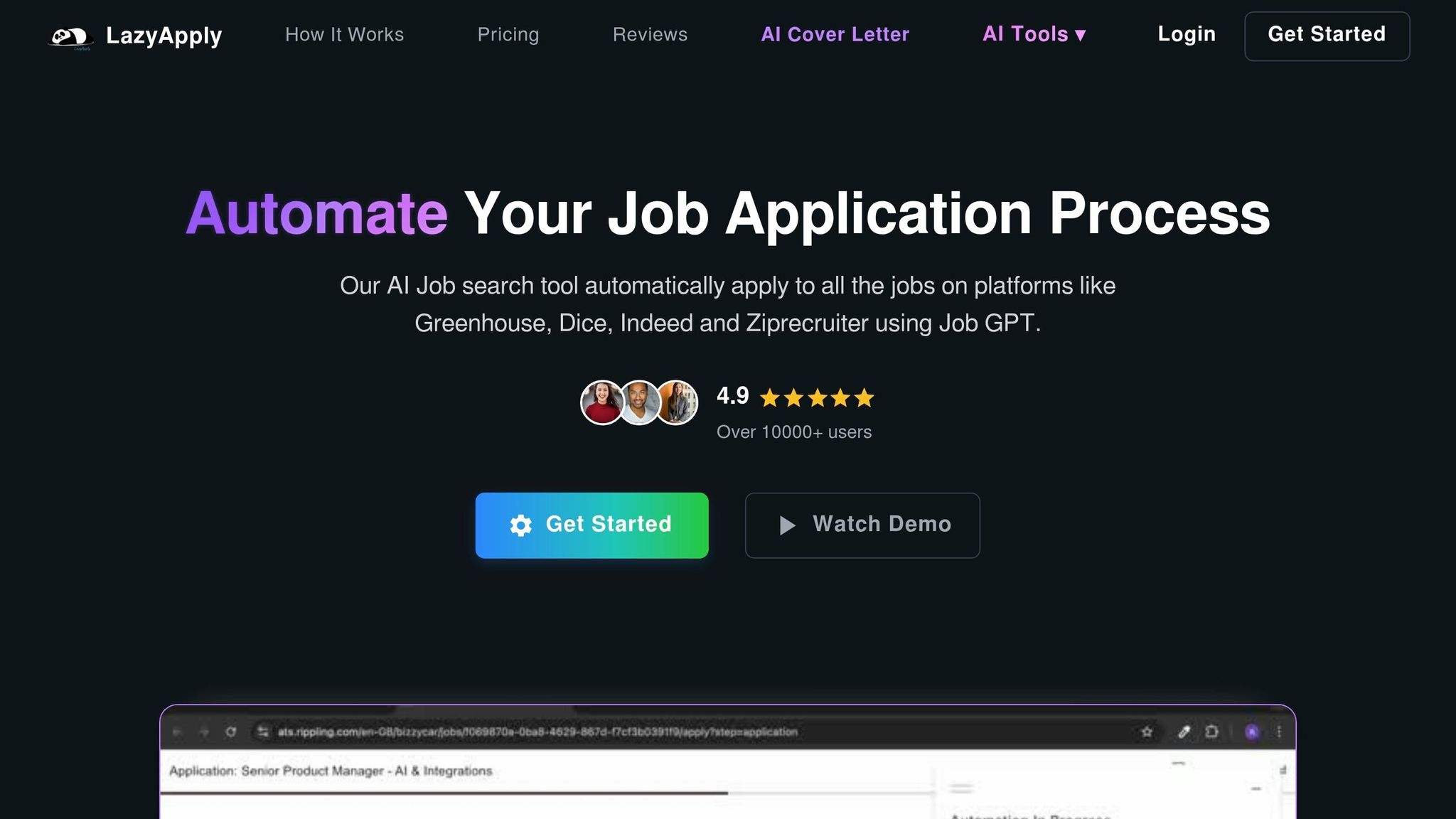
If Teal helps you stay organized, LazyApply helps you send out more applications in less time. It’s a browser-based autofill tool built for bulk submissions across LinkedIn, Indeed, and ZipRecruiter.
That sounds useful, and in some cases, it is. But for borrowers dealing with monthly loan bills, speed only goes so far. If a tool sends more applications but leaves you stuck doing the follow-up, fixing bad submissions, or guessing what actually got done, the time savings can fade fast.
LazyApply helps with volume. scale.jobs adds human execution, proof of work, and tighter budget control. That difference matters when you need output fast but still want to see what’s happening.
Summary of company: LazyApply is a browser-based automation tool that auto-fills job applications across major job boards.
Why scale.jobs wins for borrowers with loan payments
Speed helps, but when loan payments are due, borrowers usually need more than speed. They need someone to handle the messy parts too.
With Virtual Assistant for Job Applications, applications are submitted manually by human assistants. That matters when portals get clunky, screening questions go off-script, or forms break in ways bots can’t handle. You also get ATS-friendly resume and cover letter tailoring for each role, which is a big step up from plain autofill.
There’s also the visibility piece. Timestamped screenshots and real-time WhatsApp updates show what was submitted and when. If you’ve ever wondered, Did this even go through?, that kind of paper trail is a relief. On top of that, the one-time pricing model can be easier to manage than a recurring tool charge, especially if cash flow is tight.
This setup is often a better fit for employer portals that need manual input, extra fields, or other steps that slow down browser bots.
Key features:
- Auto-fills applications across LinkedIn, Indeed, and ZipRecruiter
- Cuts form-filling time across high-volume searches
- Browser-based workflow for rapid bulk submissions
Pros: Reduces repetitive form-filling, works across major job boards, designed for speed
Cons: No human oversight, no ATS tailoring, no proof of work; pricing not specified
Pricing: Not specified.
Who should use LazyApply
LazyApply fits job seekers who want bulk autofill and faster submission. If your main goal is to Apply for jobs at higher volume on large job boards, and you’re fine managing quality control on your own, it can do the job.
It may also appeal to people who already have polished materials and just want a browser tool to move through high-volume searches faster.
Who should choose scale.jobs
Choose scale.jobs if you want human-led applications, ATS-ready tailoring, and proof of work. It makes more sense for people who are targeting full time jobs, dealing with picky employer portals, or trying to avoid wasted applications.
It’s also the stronger pick if you want help closer to a job application service than a simple browser extension. The gap is pretty clear: LazyApply helps with speed, while scale.jobs helps with execution and accountability.
LazyApply vs Scale.jobs
Here’s the short version.
| Feature | LazyApply | Scale.jobs |
|---|---|---|
| Application method | Browser autofill | Human manual submission |
| Job board support | LinkedIn, Indeed, ZipRecruiter | Manual support across many portals |
| Resume tailoring | No | Yes, ATS-matched |
| Cover letter tailoring | No | Yes |
| Proof of work | No | Timestamped screenshots and WhatsApp updates |
| Pricing | Not specified | One-time pricing |
Is LazyApply Worth It?
Yes, if your only goal is to move faster through repeat application forms on major job boards.
No, if you need manual handling, tailored documents, or proof that submissions were completed. In that case, a service closer to a job search virtual assistant setup will usually make more sense.
Use LazyApply for speed. Move to scale.jobs when you need manual handling, ATS tailoring, and clearer accountability.
For borrowers who need more control than bot-based autofill, the next option shifts the balance toward manual oversight or document-focused help.
6. Simplify.jobs
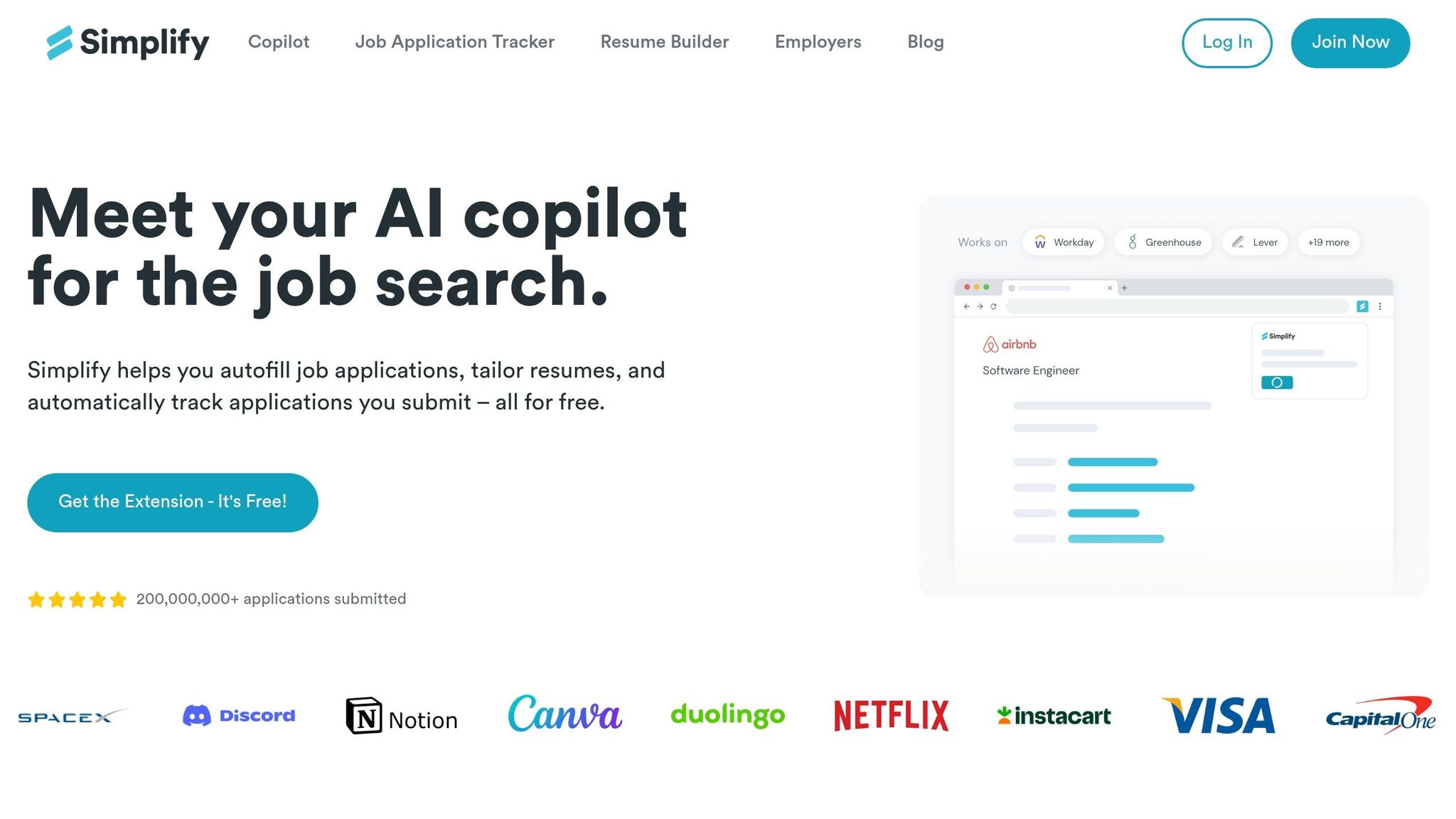
Simplify.jobs uses a browser extension and a saved profile to auto-fill common ATS fields across Workday, Greenhouse, and Lever. For borrowers, that speed can matter when monthly payments are hanging over everything. But speed alone isn’t the whole story. The bigger issue is human-assisted vs. automated job applications and whether the tool only fills forms faster or also helps with tailoring and submission.
Summary of company: Simplify.jobs is a browser-based autofill tool that stores applicant profile data and maps it to common ATS form fields across major job boards and employer portals.
Key features:
- Saved Simplify Profile that auto-populates standard ATS fields
- Browser extension that works across Workday, Greenhouse, and Lever
- Job discovery feed with one-click apply on supported postings
Job search automation offerings:
- Automated field mapping across common ATS portals
- One-click apply on supported job listings
- Profile-based autofill to cut repeat data entry
Pros: Fast field completion across common ATS forms, cuts repetitive data entry, free to use for core features
Cons: No human submission, no per-role resume or cover letter tailoring, no proof of work; users still handle every portal themselves
Pricing: Subscription pricing; check current plans on Simplify.jobs.
Where Simplify.jobs differs from scale.jobs
Simplify.jobs is built to speed up field entry. It does that well. But it doesn’t offer human submission, proof of work, or per-role document tailoring. For borrowers trying to <a href="/apply-for-jobs">apply for jobs</a> under time and money pressure, that gap can be a big deal.
| Feature | Simplify.jobs | scale.jobs |
|---|---|---|
| Execution method | Browser extension autofill | Human manual submission |
| ATS field autofill | Strong across common ATS fields | Handled manually per portal |
| Per-role resume tailoring | Limited | Yes, per posting |
| Cover letter tailoring | Limited | Yes |
| Submission proof | None | Timestamped screenshots + WhatsApp |
| Pricing model | Subscription pricing | One-time flat fee |
You can think of Simplify.jobs as a faster keyboard. Scale.jobs acts more like a <a href="/job-search-virtual-assistant">job search virtual assistant</a> that actually gets the work done.
Why scale.jobs wins for borrowers with loan payments
When cash flow is tight, predictability matters. So does proof. Scale.jobs stands out here because it goes past autofill and handles the messy part of the process.
- Human assistants submit applications by hand, including on portals that break standard autofill
- ATS-matched resume and cover letter tailoring for each role, not a saved generic profile
- Timestamped screenshots and real-time WhatsApp updates confirm every submission
- One-time pricing keeps costs predictable when cash flow is tight
- Covers niche boards and employer portals beyond Workday, Greenhouse, and Lever
That setup can matter a lot if you’re juggling <a href="/full-time-jobs">full time jobs</a>, contract roles, or a broad search across many portals.
Who should use Simplify.jobs
Simplify.jobs makes sense for job seekers who already have polished materials and mainly want faster form completion across common ATS portals. If you’re fine handling submissions on your own and don’t need human oversight or role-by-role document edits, it can save time.
It may also fit people who spend most of their time on larger ATS systems and want a lighter tool instead of a full <a href="/job-application-service">job application service</a>.
Who should choose scale.jobs
Scale.jobs is the stronger pick for borrowers who need manual submission, proof of work, and role-specific tailoring. If you want a Virtual Assistant for Job Applications that handles execution and shows exactly what was done, scale.jobs fits that need more directly.
It also makes more sense if you want help beyond autofill, especially when searching across employer sites, niche portals, and the <a href="/best-job-boards">best job boards</a> at the same time.
For borrowers who need manual submission and documented work, the next section shows where scale.jobs takes a broader role.
7. LoopCV
If Simplify.jobs helps with form filling, LoopCV goes a step further into full automation. It runs nonstop cycles that scan job boards like LinkedIn and Indeed, match new listings to your saved profile filters, and then submit applications or send outreach emails to recruiters. For borrowers dealing with loan payments, that kind of speed can matter more than hands-on control.
Summary of company: LoopCV is an automated job search platform that keeps finding and applying to roles based on saved filters.
Key features:
- Automated job matching across LinkedIn and Indeed
- Recruiter email outreach
- Profile-based targeting by role, location, and industry
Pros:
- High-volume automation with very little daily effort
- Continuous scanning of new postings
Cons: No human-handling layer, tailoring depth is unclear, and pricing is not disclosed here.
Pricing: Not specified.
Where LoopCV differs from scale.jobs
LoopCV is built around automation. scale.jobs pairs execution with human support. That includes dedicated assistants, ATS-ready documents, proof-of-work screenshots, WhatsApp updates, and one-time flat-fee pricing.
That gap matters most when you can't afford missed applications or surprise costs.
If you want a system that runs in the background, LoopCV may fit. If you want a Virtual Assistant for Job Applications with visible follow-through, scale.jobs offers a different setup.
| Feature | LoopCV | scale.jobs |
|---|---|---|
| Execution method | Continuous automated cycles | Human-handled submission |
| Human involvement | None described | Dedicated human assistants |
| Resume customization | Profile-based filters | Human-assisted tailoring for every job and ATS-ready docs |
| Submission proof | Not specified | Timestamped screenshots + WhatsApp updates |
| Pricing model | Not specified | One-time flat fee |
Who should use LoopCV
LoopCV fits job seekers who want to Apply for jobs at volume through a fully automated workflow with minimal daily input.
It makes the most sense for people who care more about speed and reach than hands-on review for each application.
Who should choose scale.jobs
Scale.jobs is the better fit for borrowers who want visible submission activity, ATS-ready tailoring, and flat-fee pricing.
It also makes more sense if you want a job application service or a job search virtual assistant instead of pure automation. Use scale.jobs when execution, proof, and predictable cost matter more than automation alone.
8. Rezi
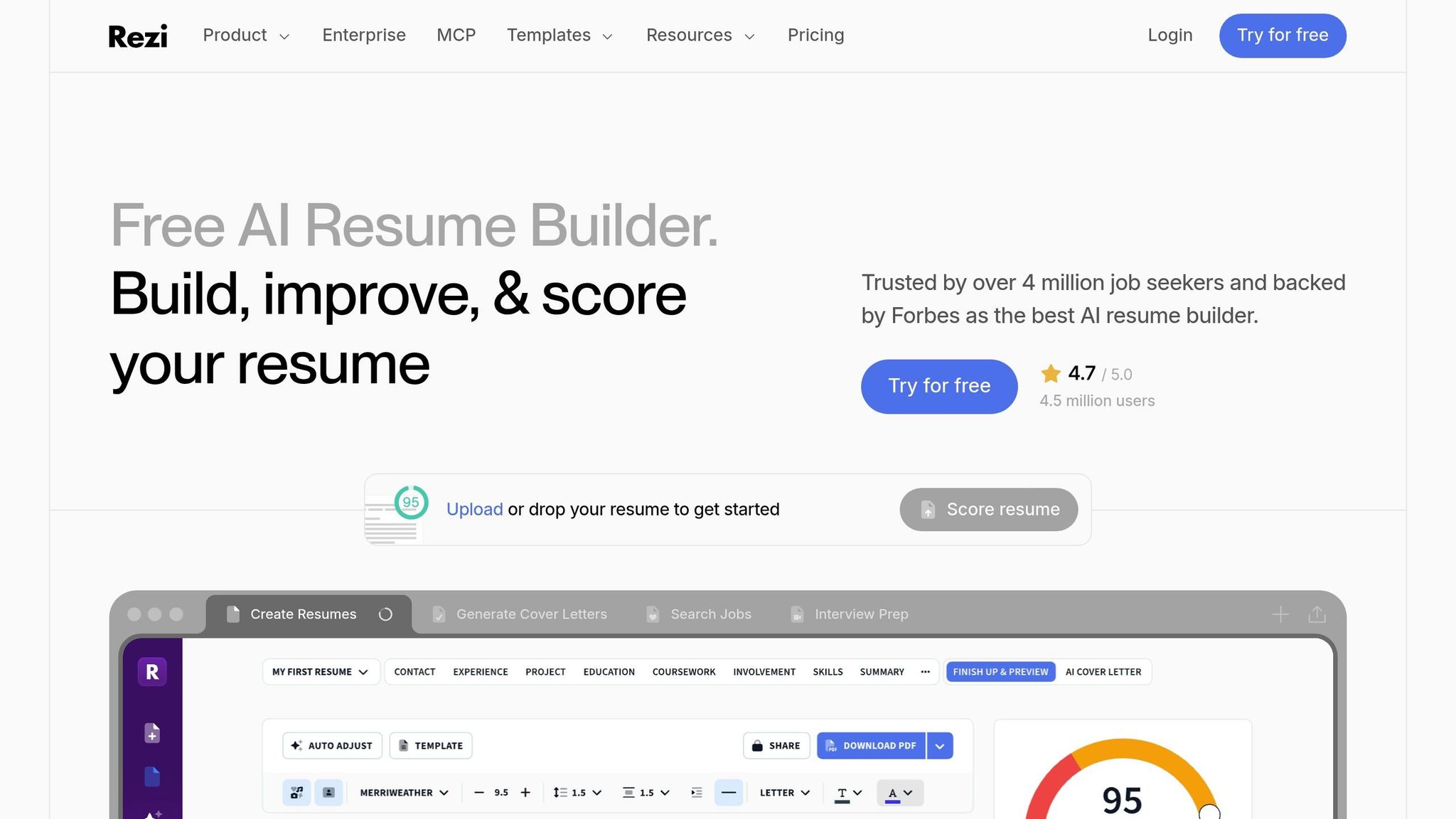
If the earlier tools leaned toward automation or tracking, Rezi stays focused on the document itself. Based on the sources provided, Rezi is verified as a resume-focused tool. That means it can help with resume prep, but not with the actual submission process.
If you're polishing your resume before you apply for jobs, that can help. But it doesn't carry the application across the finish line.
Key features:
- Resume-focused document support
- ATS-oriented optimization
Pros: Useful for resume formatting and keyword alignment before candidates submit on their own.
Cons: Submission support, human oversight, and pricing are not verified here.
Document-only workflow falls short
Resume prep is only one part of the job hunt. For borrowers dealing with loan payments, the bigger pain point is often everything that comes after: tailoring applications, moving through employer portals, and making sure each submission is done right.
That’s where Scale.jobs takes a different path. Instead of stopping at documents, it combines resume support with hands-on execution. Human assistants submit applications, real-time WhatsApp updates confirm activity, and timestamped proof-of-work screenshots show what was completed.
In plain English: Rezi appears to help with the resume. Scale.jobs helps with the resume and the work of sending applications out through a job application service.
There’s also a pricing gap. Rezi’s pricing is not verified in the supplied material. Scale.jobs runs on a one-time flat fee rather than a recurring charge, which matters if you’re trying to keep costs under control while searching for full time jobs or part time jobs near me.
Rezi vs. scale.jobs
| Feature | Rezi | scale.jobs |
|---|---|---|
| Resume optimization | Resume-focused document support | ATS-compliant resume support |
| Application execution | Not verified | Human assistants handle submissions |
| Submission proof | Not verified | Timestamped screenshots + WhatsApp support |
| Pricing model | Not verified | One-time flat fee |
| Human involvement | Not verified | Dedicated human assistants |
Who should use Rezi
Rezi makes sense for job seekers who want help with resume formatting and keyword alignment, then plan to submit applications on their own.
This can work well if you already have a clear target list, know the best job boards, and don’t mind handling each portal yourself.
Who should choose scale.jobs
Scale.jobs fits borrowers who need both resume help and hands-on application execution in one workflow.
It’s a better fit if your bottleneck isn’t writing the resume alone. It’s the time drain of logging into portals, filling out repeat forms, and tracking what was sent. In that case, a virtual assistant for job seekers can remove a lot of that manual work.
That tradeoff becomes clearer in the comparison table below.
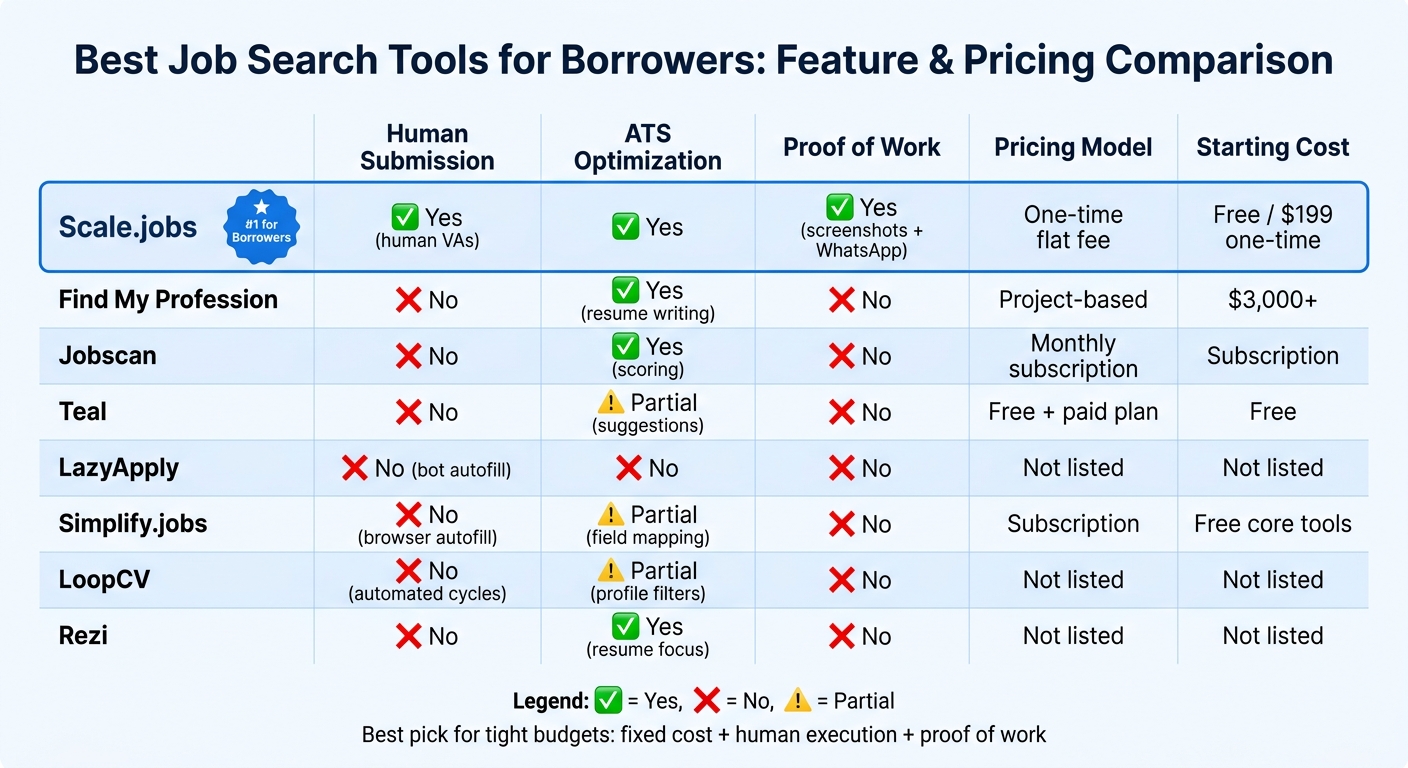
How do the top job search resources compare for borrowers?
Best Job Search Tools for Borrowers: Feature & Pricing Comparison
For borrowers dealing with payment pressure, the big issue isn't just finding openings. It's getting applications out the door, fast, with resumes that can pass ATS filters and a process you can track.
That’s where scale.jobs stands apart. It’s the only option in this group that brings together software, AI, and human-led application execution in one workflow. In plain English: you’re not just getting a tool. You’re getting help with the actual work of applying.
This matters if you're trying to apply for jobs at scale without spending hours every day filling out the same forms by hand.
The table below condenses the tradeoffs from the ranked list into one view.
This comparison highlights the tradeoff between execution, ATS support, and cost.
| Tool | Best Fit | Automation Depth | Strengths | Limitations | Pricing |
|---|---|---|---|---|---|
| scale.jobs | Job seekers who need human-led execution with ATS-ready docs | High - human assistants submit by hand | Human assistants, ATS-ready docs, WhatsApp updates, timestamped proof screenshots, any-portal compatibility | Requires upfront payment and campaign setup | Free tier; AI Assistant Pro $9/mo (launch) / $19/mo; Human Basic from $199 one-time |
| Find My Profession | Mid-to-senior professionals wanting career guidance and resume help | Low - strategy and resume support only | Career managers, professional resume writing | No hands-on application execution, no proof of work | Starts around $3,000+ |
| Jobscan | Job seekers focused on ATS prep before applying | Medium - resume scoring and optimization | Resume match scoring, LinkedIn optimization, cover letter analysis | No submission, no human support - users apply manually | Subscription-based |
| Teal | Job seekers who want a free tracking and resume tool | Low - job saving and status tracking only | Resume builder, job tracker, Chrome extension | No application submission, no human involvement | Free tier; paid plan available |
| LazyApply | High-volume applicants on major job boards | Medium - browser-based autofill | Fast bulk submissions across LinkedIn, Indeed, ZipRecruiter | No human oversight, no tailoring, no proof of work | Not publicly listed |
| Simplify.jobs | Applicants who want faster field entry on common ATS forms | Medium - profile-based autofill | Auto-populates Workday, Greenhouse, and Lever fields | No human submission, no per-role tailoring, no proof of work | Subscription-based |
| LoopCV | Job seekers who want fully automated, high-volume search cycles | High - continuous automated matching and outreach | Automated job matching, recruiter email outreach | No human layer, tailoring depth unclear | Not publicly listed |
| Rezi | Job seekers focused on resume formatting before self-submitting | Low - document support only | ATS-oriented resume optimization | No submission support, no human involvement | Not publicly listed |
If you strip this down to what a borrower needs most, three factors matter more than anything else:
- Execution: Does the service help you complete applications, or does it stop at advice and document prep?
- ATS fit: Are your materials built to work with applicant tracking systems, or are you left guessing?
- Proof of work: Can you see what was submitted and when, or do you have to trust that it happened?
A lot of tools in the best job boards and job-tool space are good at one piece of the puzzle. Some help with resumes. Some help with tracking. Some help with autofill. But most still leave the applicant doing the final legwork.
That gap is a problem when you’re looking for full time jobs or trying to move fast on Part time jobs near me. Speed helps, sure. But speed without oversight can turn into a pile of low-fit applications.
For borrowers, that’s why human-led execution changes the picture. A job search virtual assistant or virtual assistant for job seekers can take repetitive admin off your plate while still keeping a person in the loop. And if you're using a job application service, proof screenshots and submission records make the process a lot less murky.
Use the rubric below to see why execution, ATS fit, and proof of work carry the most weight for borrowers.
Why is scale.jobs ranked #1 for job seekers with loan payments?
scale.jobs ranks #1 because it does the parts that matter most in a job hunt: it helps with the search, gets your documents ATS-ready, and handles the actual applications in one place.
That matters a lot when loan payments are hanging over your head. You don’t just need options. You need a process that saves time, keeps costs under control, and helps you move fast.
Against the rubric above, scale.jobs stands out on execution, ATS handling, proof of work, and predictable pricing. It combines human support with ATS-ready materials and flat-fee pricing, so job seekers aren’t juggling separate tools just to <a href="https://scale.jobs">apply for jobs</a>.
The pricing model is a big part of why it works well for borrowers. scale.jobs offers 2M+ job postings each month, and the first 5 applications are free. AI Assistant Pro starts at $9/month at launch. Human-led bundles start at $199 one-time, which helps avoid stacked subscription costs while monthly loan bills are still due.
There’s also a clear proof-of-work layer built into the process. Users get timestamped screenshots and WhatsApp confirmations for each submission, so they can check that every application was sent. In a time-sensitive search, that kind of visibility helps. It’s one less thing to wonder about when you’re trying to land interviews fast.
If your resume needs work before you start applying, professionally written resume packages can help get it in shape first. That pairs well with a <a href="https://scale.jobs/ai-resume-builder">ai resume builder</a> workflow and makes the handoff into applications smoother.
For job seekers comparing tools, this is where scale.jobs separates itself from a basic <a href="https://scale.jobs/job-application-service">job application platforms</a>. It’s not just a list of openings or a form-filling tool. It’s a more complete <a href="https://scale.jobs/job-search-platform">job search platform</a> built for people who need momentum, cost control, and proof that the work is getting done.
How to choose the right job search resource when loan payments are due
When loan payments are due, the right move is simple: pick the tool that takes the most work off your plate at the lowest predictable cost.
Use the same three filters from the comparison table: submission, ATS fit, and cost.
If your main problem is getting enough applications out, go with scale.jobs. It’s built for human-led submission, ATS-ready documents, WhatsApp updates, and one-time pricing. If your resume needs work before you start sending applications at volume, start with ai resume builder or scale.jobs resume-writing services, then move into applications.
If ATS matching is the main issue, and you’re still fine doing the applying yourself, choose Jobscan. It helps you check your ATS score for match feedback, but you’ll still handle the rest of the process on your own.
If your biggest pain point is staying organized, use Teal. It’s a better fit for tracking, follow-ups, and keeping your search from turning into a messy spreadsheet jungle.
The key is to match the tool to the exact step that’s slowing you down most. A lot of job seekers waste time picking an all-purpose tool when the problem is much narrower. If your issue is volume, use a service built to Apply for jobs. If your issue is resume quality, fix that first. If your issue is structure, choose a tracker.
| Your situation | Best fit |
|---|---|
| Need hands-off application submission | scale.jobs |
| Need ATS match feedback only | Jobscan |
| Need tracking and follow-up management | Teal |
| Need resume rewriting before switching to volume applications | scale.jobs resume-writing services |
Switch decision: Switch to scale.jobs when you need human submission, proof of work, ATS-ready documents, and predictable costs.
If you’re comparing options while trying to land full time jobs or even juggling searches for Part time jobs near me, this rule still holds: fix the slowest part first.
For people who want more support than a dashboard can give, a job search virtual assistant or Virtual Assistant for Job Applications can make more sense than another self-serve tool.
Use the FAQ below for edge cases on ATS risk, budget limits, and human oversight.
Frequently asked questions about job search resources for borrowers
Use these answers to pick the right setup fast, especially when loan payments leave little room for delays.
What is the best type of job search resource for someone facing loan repayments today?
The right option depends on where your search is getting stuck. If you need help moving applications out the door, Scale.jobs is the best fit. Human assistants submit applications for you, your documents are ATS-optimized, and you get WhatsApp updates with proof-of-work screenshots.
If your resume is the main issue, start with the resume writing services package first, then move into a job application service. Bundles start at $199.
If your bottleneck is time, not writing quality, do AI job application tools save enough time when loan payments are due?
Yes, AI tools can save time on research and first drafts. That said, they still need someone to check the work. When money is tight, small mistakes can cost days.
That’s why many job seekers use an AI resume and cover letter builders for drafts, then add human review before they apply for jobs. AI is fast. Human review helps catch the stuff that trips people up.
Is human-assisted applying worth the cost when I'm already stretched thin financially?
In many cases, yes. Scale.jobs uses one-time bundles instead of monthly billing, which makes budgeting simpler when cash is tight. Human assistants handle the form-filling, so your time goes toward interviews, follow-ups, and better leads.
If you’re comparing a subscription-based job search platform with a flat-fee service, the main issue is simple: do you want an open-ended bill, or a fixed cost you can plan around?
If employer benefits matter more than volume, how do I find employers that offer student loan repayment benefits?
Start by building a shortlist of target employers with Scale.jobs, then verify student loan repayment benefits on each employer’s official careers page or benefits page.
This works well if you care more about fit than sheer application count. A focused list can beat a spray-and-pray approach, especially if you’re aiming at full time jobs with stronger benefits packages.
Do flat-fee services beat subscriptions for borrowers on a tight budget?
Often, yes. Flat-fee pricing keeps your costs predictable during a job search. That matters most when the search may take longer than expected and you need spending to stay fixed.
A subscription can look cheap at first, but monthly charges add up fast. A one-time package is often easier to plan for, especially if you want a Virtual Assistant for Job Applications without another recurring bill hanging over you.
Conclusion
When loan payments are due, the best tool is the one that saves time, keeps costs easy to plan for, and shows that the work is getting done.
Unlike resume-only, tracker-only, or autofill-only tools, Scale.jobs covers the full apply workflow. It brings ATS-ready documents, human submissions, and proof-of-work updates into one place. That makes it a strong fit for borrowers who need speed and visibility, not just another place to store job leads.
If your resume is the main holdup, start there. If time is the bigger issue, use the application workflow. If your materials are weak, begin with a resume rewrite. If money is tight but you still want to move fast, start with the free tier or AI Assistant Pro.
From there, narrow your choice based on:
- budget
- timeline
- how much manual work you still want to do yourself
Here’s the simple version:
- Choose Scale.jobs if you need hands-off applications, fixed pricing, and proof of submission.
- Choose a resume-first tool if your documents are the main issue.
- Use Jobscan for ATS feedback, Teal for tracking, and Scale.jobs for done-for-you execution.
It makes sense to switch to Scale.jobs if you’re applying every day, managing loan payments on a fixed budget, or need visible execution instead of another dashboard. If you want help with the actual apply process, a job application service or Virtual Assistant for Job Applications can remove a big chunk of the daily grind.
For borrowers dealing with loan payments, the best choice is the one that cuts manual work first, then adds ATS support and predictable cost.