
Your Resume Passed ATS But Got Rejected, Here's the Real Reason

Sarah Mitchell
May 20, 2026

When your resume clears the ATS (Applicant Tracking System) but still gets rejected, the issue often lies in how it performs during human review. Recruiters spend just 6-7 seconds scanning resumes, focusing on key details like job titles, recent experience, and measurable achievements. A resume optimized only for ATS might pass the algorithm but fail to impress recruiters due to vague descriptions, lack of results, or poor formatting.
Key Takeaways:
- Passing ATS isn’t enough: ATS filters only ensure your resume meets basic criteria; they don’t evaluate your qualifications or career story.
- Recruiters prioritize results: Highlight measurable outcomes, not just responsibilities.
- Tailor for each job: A generic resume won’t resonate; align your content with the job description.
- Formatting matters: A clean, skimmable layout helps recruiters quickly identify your fit.
- Address gaps upfront: Unexplained employment gaps or unclear career progression can raise red flags.
To stand out, combine ATS optimization with a human-centric approach. Services like scale.jobs help bridge this gap by tailoring resumes for both systems and people, ensuring your application gets noticed.
What Happens After Your Resume Passes ATS
What Passing ATS Actually Means
When your resume passes the ATS (Applicant Tracking System), it simply means it has cleared the system's technical filters. These filters check for criteria like job title, location, years of experience, and work authorization. It doesn’t necessarily mean your qualifications have been endorsed - it just means your resume wasn’t automatically rejected by knockout questions or missing keywords.
Research from Jobscan reveals that up to 75% of resumes never make it to human eyes because they’re filtered out at this stage. Passing the ATS places your resume in a smaller group, but that group can still include dozens - or even hundreds - of candidates vying for the same 5–15 spots a hiring manager will eventually review. Essentially, passing the ATS is just the first hurdle.
Once your resume clears this step, it moves on to a brief, but critical, human review.
How Recruiters and Hiring Managers Read Resumes
When your resume lands in a recruiter’s inbox, the review process is fast. Recruiters typically spend just 7.4 seconds on an initial scan, according to a Ladders eye-tracking study. They focus on a few key details: your most recent job title, the company you worked for, your employment dates, and whether the top section of your resume aligns with the role.
If these elements don’t stand out immediately, the rest of your resume likely won’t get a second glance. For candidates who make it past this stage, the recruiter forwards a shortlist - usually 5–15 resumes - to the hiring manager. At this point, the hiring manager dives deeper, evaluating factors like the scope of your achievements, your career path, and how well your prior experience aligns with their team’s needs. Unfortunately, resumes that don’t make this shortlist are often quietly rejected, even if they technically passed the ATS.
This underscores the importance of crafting a resume that performs well under both automated and human review.
Where ATS-Only Tools Fall Short
The manual review process highlights a key limitation of relying solely on ATS-focused tools. Platforms like Jobscan and Rezi are designed to ensure your resume clears ATS filters by optimizing keyword usage and formatting. While this is undeniably helpful, these tools stop short of addressing the more challenging task: impressing a human reviewer.
A resume built purely for ATS often lacks depth. For instance, it might include a list of skills without context, vague bullet points like "responsible for managing campaigns" with no measurable results, or generic descriptions that fail to differentiate one role from another. Recruiters are quick to spot these patterns, often interpreting them as a sign that the candidate didn’t tailor their application to the job. Without specific context and personalization, even the most keyword-rich resume can fall flat in human hands.
| ATS Evaluation | Human Review Priorities |
|---|---|
| Keyword match and density | Contextual relevance and role-specific fit |
| File type and parse-ability | Visual clarity and 7-second scannability |
| Job titles and years of experience | Career progression and scope of impact |
| Presence of required skills | Evidence those skills produced measurable results |
| Basic formatting compliance | Narrative coherence and career story |
This is why candidates aiming to succeed in both stages - automated filtering and human evaluation - often turn to professional resume writing services. These services focus on blending ATS optimization with compelling storytelling, ensuring your resume stands out to both machines and people.
sbb-itb-564272e
Why ATS-Compliant Resumes Still Get Rejected
Keywords Match But Experience Does Not
Passing an ATS filter is just the first hurdle; convincing a recruiter of your qualifications is the real challenge. For example, including a term like "stakeholder management" might boost your ATS score, but it doesn't explain the scope or impact of your work. Recruiters are looking for depth - specifics that show how you made a difference. If your resume lacks substance behind the keywords, it’s likely to get dismissed, even if it made it through the system.
Bullets List Duties Instead of Results
Listing responsibilities without showing results is a common pitfall. For example, instead of writing "managed the marketing budget" or "oversaw onboarding", focus on measurable outcomes: "Managed a $500K marketing budget, reducing cost-per-lead by 18% over two quarters." This approach gives recruiters a clear picture of your achievements and sets you apart from others who might list similar duties without demonstrating their impact.
Same Resume Sent to Every Job
Using a one-size-fits-all resume for every application often backfires. Different employers have unique needs, and what works for a startup might not resonate with a large corporation. If your resume doesn’t reflect the language or priorities of a specific job description, it can come across as generic. Tailoring your resume - whether by tweaking the summary or reordering bullet points - shows that you’ve taken the time to align with the employer’s expectations.
Formatting That Is Hard to Scan
Cluttered layouts, inconsistent formatting, or large blocks of text make it tough for recruiters to quickly find key details. Resumes should be easy to skim, with clear section headers, consistent date formats, and plenty of white space. A clean, organized format not only looks professional but also makes it easier for hiring managers to focus on your qualifications.
Unclear Career Level or Progression
If your resume doesn’t clearly communicate your career level - whether you’re a senior contributor, team lead, or director - it can cause confusion. Vague job titles like "Project Lead" or "Senior Specialist" can mean different things depending on the company. Without context, such as the size of your team, the scope of your responsibilities, or the budget you managed, recruiters may struggle to understand your role. Similarly, unexplained lateral moves or title changes can leave questions unanswered, potentially costing you the opportunity to move forward.
Gaps and Red Flags Without Context
Employment gaps or frequent job changes don’t have to be deal-breakers, but leaving them unexplained can raise concerns. Recruiters reviewing dozens of resumes may not take the time to dig deeper if something seems off. A short, factual explanation - such as "took time off for professional development" or "relocated for family reasons" - can address these issues upfront and help you avoid being overlooked.
Over-Reliance on AI Tools and Generic Templates
While AI tools can be helpful for drafting or keyword optimization, relying too heavily on them can hurt your chances. Recruiters can often spot resumes built with generic templates or filled with overused phrases like "results-driven professional." These signals suggest minimal effort or customization. As Sierra Swanson of Davron explains:
"A good resume doesn't 'beat ATS' - it simply works in its framework while remaining clear and compelling to real people."
To stand out, your resume needs a personal touch that reflects an understanding of the role and industry. This is where services like a professional resume writer or an AI resume builder can help refine your document, ensuring it appeals to both ATS systems and human decision-makers.
Why Your Resume is Rejected by ATS (& How to FIX IT)
How to Fix Your Resume for Human Reviewers
To make your resume stand out to human reviewers, focus on refining its content and structure for clarity and relevance.
Match Your Resume to the Specific Job Description
Start by identifying the top 5–8 key requirements from the job posting. Look for specific skills, tools, years of experience, and desired outcomes like "reduce churn", "grow pipeline", or "improve CSAT scores." Use these to rewrite your summary in a way that directly reflects the employer's priorities. For instance, "Marketing manager with 6+ years driving lead generation for B2B SaaS companies, specializing in paid search and HubSpot automation" is far more impactful than a vague statement like "results-driven professional."
Additionally, rearrange your bullet points to highlight the achievements most relevant to the job. If the job posting uses terms like "customer success" instead of "account management", align your language accordingly, provided it accurately represents your work. This adjustment not only enhances ATS ranking but also helps recruiters immediately see your fit for the role.
Once your resume aligns with the job description using a resume keyword optimizer, focus on rewriting bullet points to emphasize results over responsibilities.
Rewrite Bullets Around Results, Not Responsibilities
Shift from listing tasks to showcasing outcomes using the CAR framework - Challenge, Action, Result. For example, instead of saying, "Managed social media accounts," you could write, "Grew Instagram and LinkedIn audiences by 45% in 12 months and increased average engagement rate from 2.1% to 4.3% by launching a content calendar and A/B testing creatives." Use metrics that hiring managers value, such as revenue growth, cost reductions, efficiency improvements, or audience engagement.
With your content refined, ensure your resume's layout supports quick and efficient review.
Format Your Resume for Fast Human Scanning
Recruiters spend an average of 7.4 seconds scanning resumes during an initial review, focusing mainly on the top third of the first page. This makes layout a critical factor.
Stick to standard fonts like Calibri, Arial, or Helvetica (10–12 pt), and maintain consistent margins (0.5–1 inch). Use reverse-chronological order, bold job titles, and keep details like company name, location, and dates aligned on the same line. Including a short "Core Skills" section near the top - listing tools and competencies in a simple, comma-separated format - helps both ATS systems and recruiters quickly assess your qualifications. Avoid using text boxes, tables, or graphics, as these can disrupt ATS parsing and make the resume harder to skim.
Show Career Level and Growth Clearly
Your resume should visually communicate your career progression to meet recruiter expectations. If you've been promoted within the same company, list each role separately with its own date range to highlight your growth:
Senior Marketing Manager, Jan 2023–Present
Marketing Specialist, Jun 2020–Dec 2022
Acme Corp, Austin, TX
In your summary and bullet points, include details that reflect your level of responsibility, such as the size of budgets you managed, the number of team members you led, or the strategic initiatives you owned. For example, a statement like "Led a cross-functional team of 8 to launch a new product line, generating $2.3M in first-year revenue" provides a clear picture of your seniority and impact.
Address Gaps and Red Flags Directly
If your resume has employment gaps or other potential red flags, address them briefly and factually. For instance, you could include a line like "Career break for family caregiving, Jan 2024–Aug 2024" or "Full-time professional development, including [relevant certification]" in your experience section. For short stints at a company, focus on achievements and, if necessary, provide a neutral explanation, such as "Contract role" or "Company restructuring." This approach prevents recruiters from making negative assumptions.
Combine AI Tools with Human Review
Leverage AI tools for initial drafts and keyword optimization, but always refine the final version in your own voice. Incorporate real metrics and context to ensure your resume feels personal and specific. If you're unsure about its quality, consider using a professional resume writing service that combines human expertise with ATS-friendly formatting. This dual approach ensures your resume is both polished and tailored to stand out in today's competitive job market.
Tool Comparison: scale.jobs vs Key Competitors
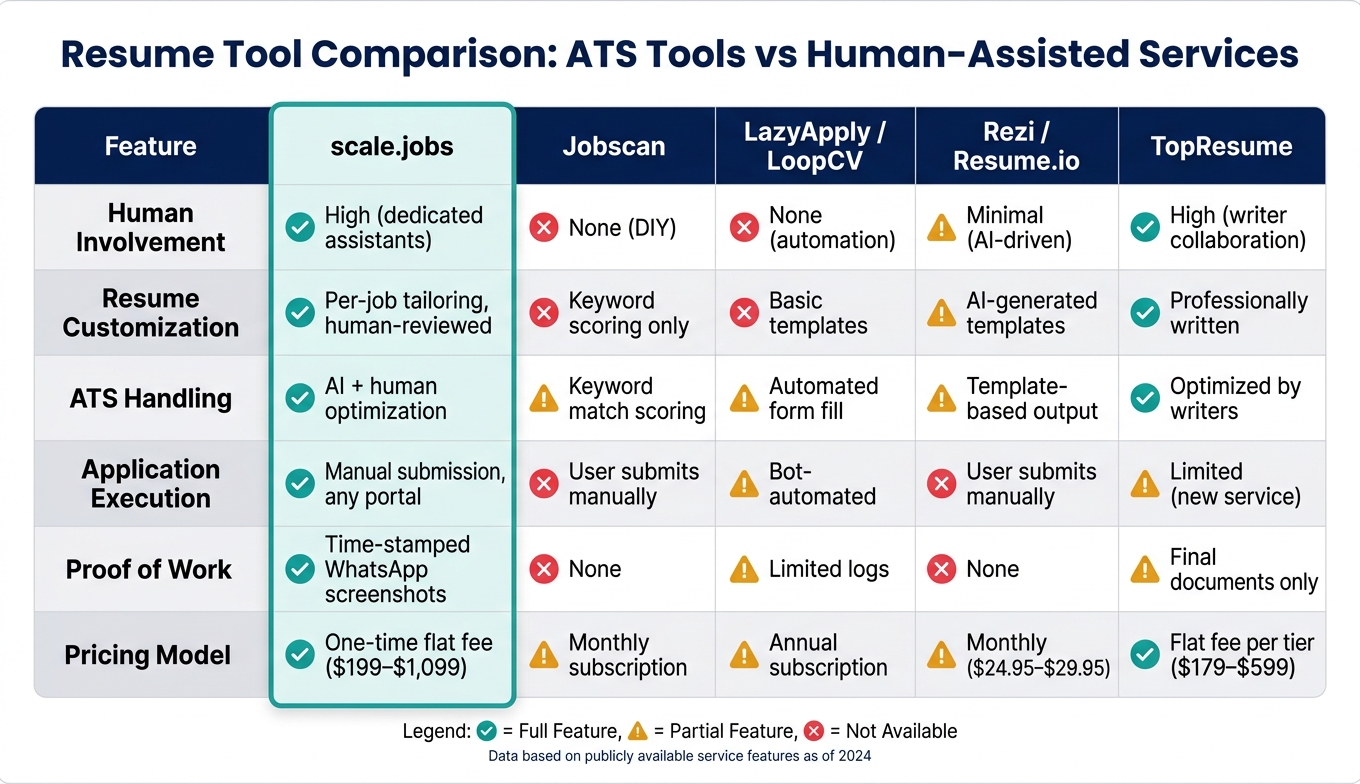
ATS Tools vs Human-Reviewed Resume Services: Feature Comparison
When it comes to ensuring your resume stands out and your job applications are handled effectively, it's crucial to understand how different platforms compare. Here's how scale.jobs measures up against popular alternatives like Jobscan, Rezi, LazyApply, and others.
Jobscan vs scale.jobs: Keyword Scanning vs Human-Assisted Positioning
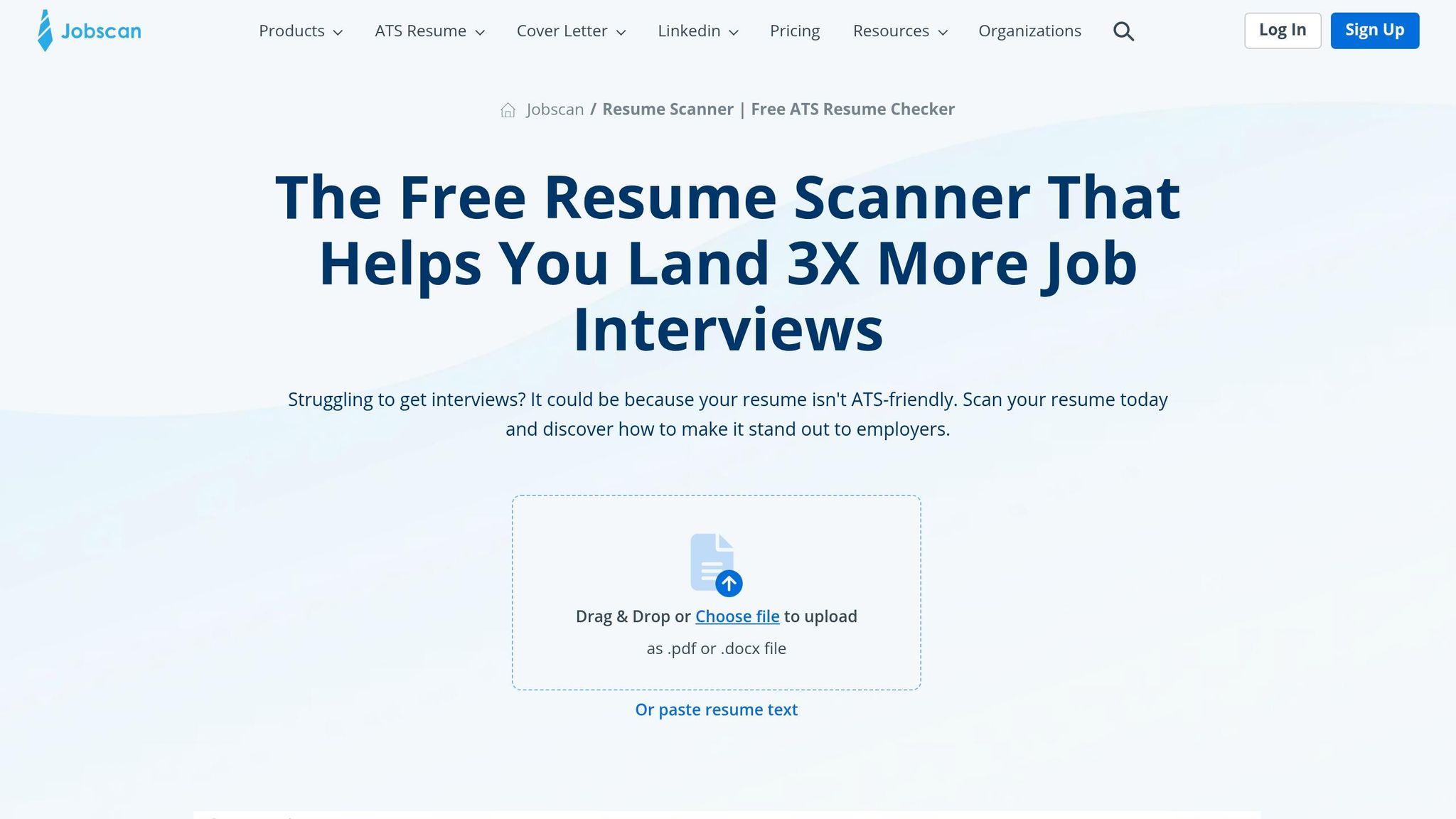
Jobscan focuses on analyzing keyword overlap between your resume and a job description, offering a quick way to check ATS compatibility. However, it doesn't evaluate whether your achievements are impactful, your career narrative is clear, or your summary strikes the right chord with hiring managers. It identifies gaps but leaves you to fill them.
Why scale.jobs stands out:
- Human assistants tailor your resume to each specific job posting, not just to a list of keywords.
- Applications are manually submitted, complete with time-stamped WhatsApp screenshots as proof.
- Offers a one-time flat fee starting at $199 - no recurring subscriptions.
Who benefits from Jobscan: Those who want to perform a self-guided ATS check and are comfortable rewriting their own resumes based on the feedback.
Who benefits from scale.jobs: Candidates looking for tailored resume positioning and verified, manual application submissions without the hassle of doing it themselves.
Rezi, Resume.io, and Resume Genius vs scale.jobs: AI Builders vs Human-Assisted Apply
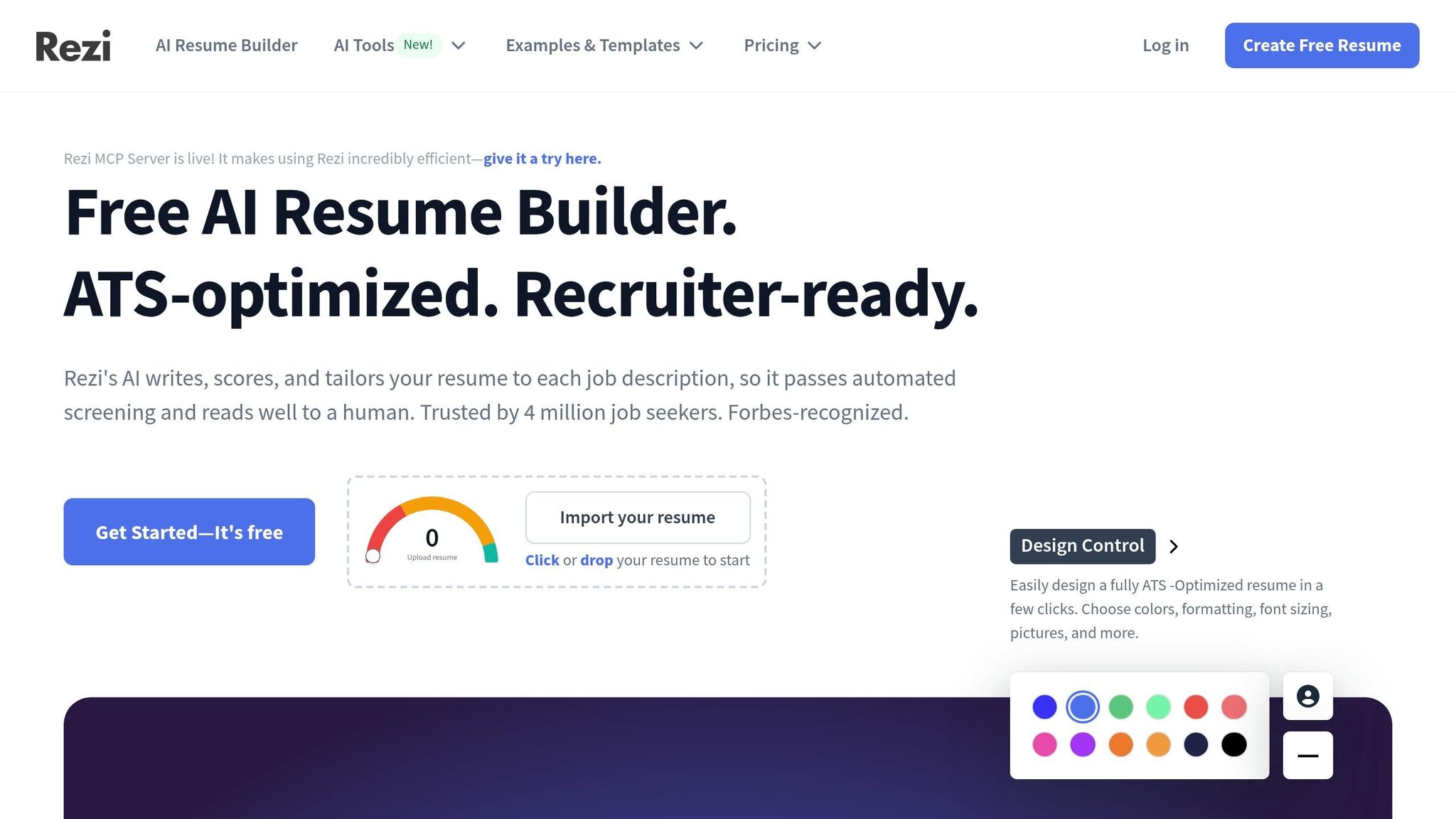
Platforms like Rezi, Resume.io, and Resume Genius are great for creating quick, polished resumes using AI. While Resume.io is praised for its clean templates, these tools often lack the ability to customize resumes for specific roles.
Why scale.jobs stands out:
- Human reviewers add job-specific nuances that generic AI templates can't achieve.
- Combines ATS optimization with hands-on human review, ensuring both form and function.
- Tailors resume adjustments to individual job postings, avoiding a generic, one-size-fits-all approach.
- Provides ongoing support via WhatsApp to keep you informed throughout the process.
Who benefits from these AI tools: Job seekers needing a well-formatted resume quickly and who are comfortable handling tailoring and submissions themselves.
Who benefits from scale.jobs: Those who want their resumes customized for each role and submitted accurately - without managing the process alone.
LazyApply, LoopCV, and Sonara vs scale.jobs: Mass Automation vs Manual Apply
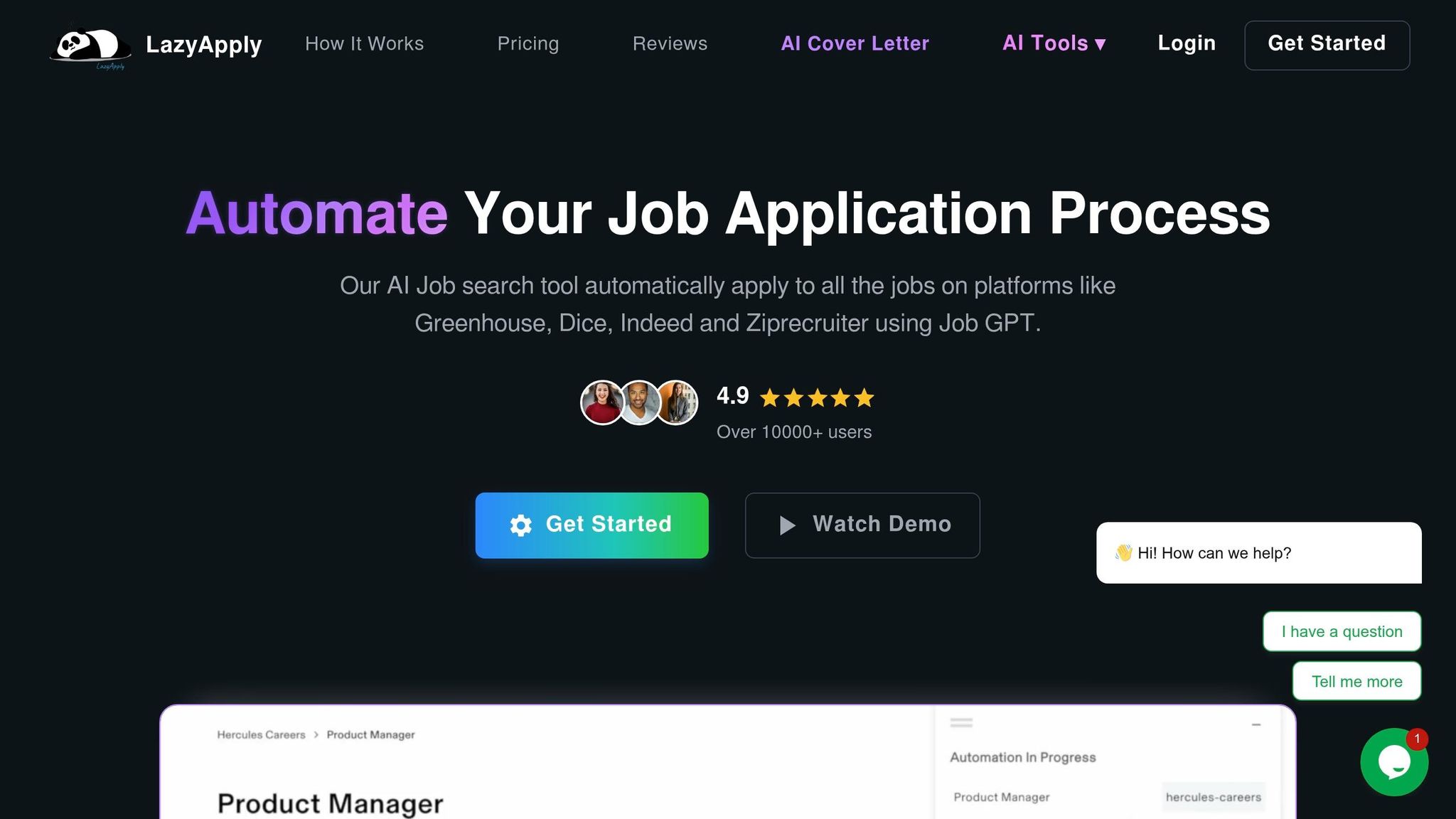
LazyApply, LoopCV, and Sonara focus on automating high-volume application submissions. While this speeds up the process, it often sacrifices accuracy. Automated bots can misinterpret form fields, skip critical questions, or submit mismatched resumes, leading to incomplete or incorrect applications.
Why scale.jobs stands out:
- Applications are manually submitted by human assistants - up to 30 per day - across various platforms, including job boards and ATS systems.
- Every submission is documented with time-stamped WhatsApp screenshots for full transparency.
- Manual execution eliminates errors and avoids bot-related risks.
- Offers a one-time payment model, covering the entire application process without annual fees.
Who benefits from these automation tools: Candidates who prioritize speed over precision and are comfortable with high-volume, low-customization outreach.
Who benefits from scale.jobs: Job seekers who want every application completed accurately, with proof of submission and role-specific resume adjustments.
TopResume and ResumeSpice vs scale.jobs: Resume Writing Only vs Full Job Search Execution
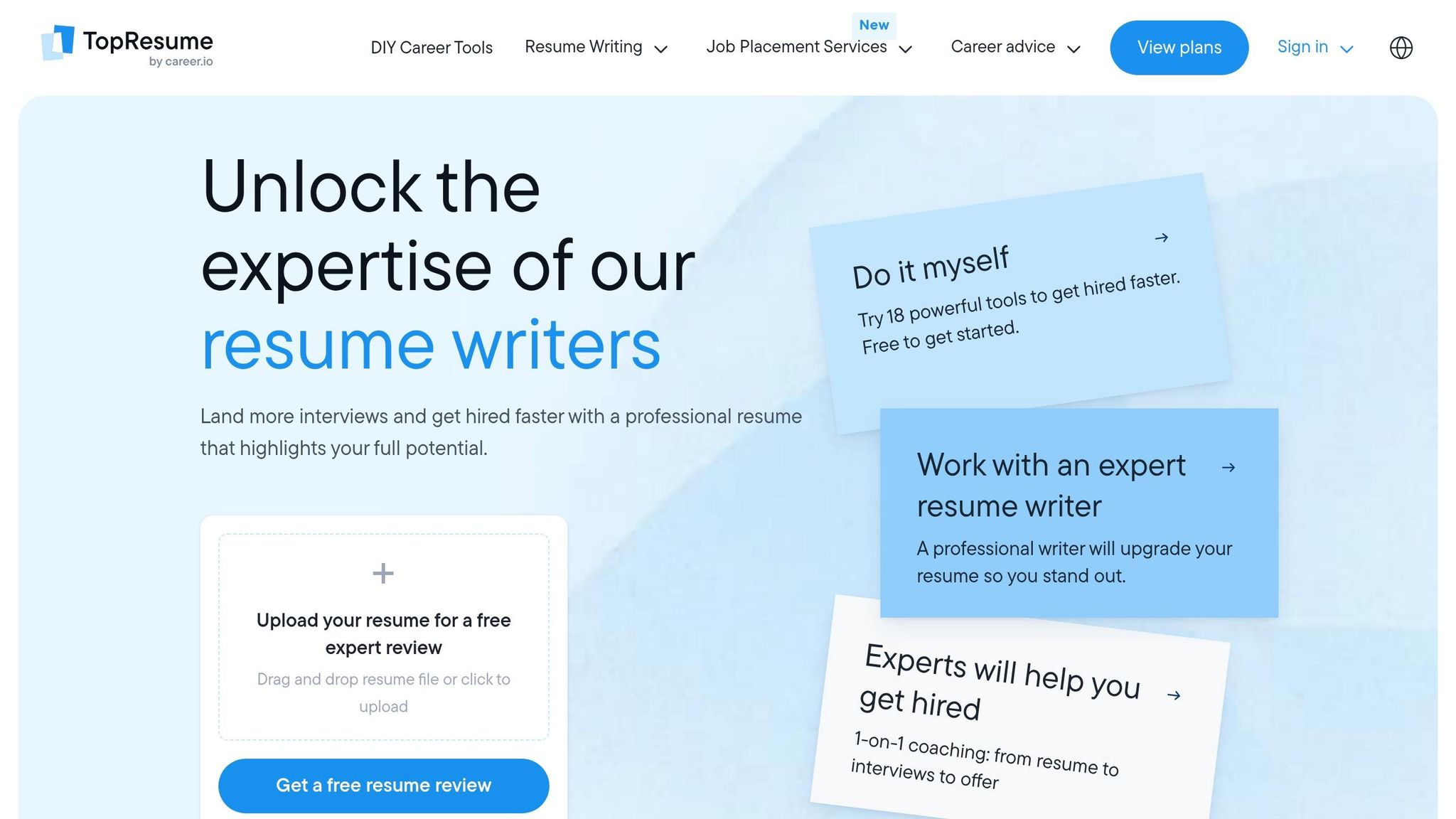
TopResume and ResumeSpice focus on professional resume writing, with human writers improving the overall quality of your resume. For example, TopResume's Career Confidence package (~$349) includes a rewritten resume, LinkedIn profile updates, and interview coaching. However, these services stop short of managing your job search or submitting applications.
Why scale.jobs stands out:
- Combines resume tailoring and application submission into one seamless service.
- Human assistants adjust resumes for each job posting and handle the submissions.
- Provides proof of work via WhatsApp screenshots for every application.
- Offers a one-time flat fee that covers both resume customization and application execution.
Who benefits from these alternatives: Those who need a professionally polished resume and are prepared to manage their job search independently.
Who benefits from scale.jobs: Candidates who want both an optimized, job-specific resume and someone to handle the entire application process.
| Feature | scale.jobs | Jobscan | LazyApply / LoopCV | Rezi / Resume.io | TopResume |
|---|---|---|---|---|---|
| Human Involvement | High (dedicated assistants) | None (DIY) | None (automation) | Minimal (AI-driven) | High (writer collaboration) |
| Resume Customization | Per-job tailoring, human-reviewed | Keyword scoring only | Basic templates | AI-generated templates | Professionally written |
| ATS Handling | AI + human optimization | Keyword match scoring | Automated form fill | Template-based output | Optimized by writers |
| Application Execution | Manual submission, any portal | User submits manually | Bot-automated | User submits manually | Limited (new service) |
| Proof of Work | Time-stamped WhatsApp screenshots | None | Limited logs | None | Final documents only |
| Pricing Model | One-time flat fee ($199–$1,099) | Monthly subscription | Annual subscription | Monthly subscription ($24.95–$29.95) | Flat fee per tier ($179–$599) |
When to Switch to scale.jobs
Decision Summary
If you're applying for well-defined roles, tools like Jobscan, Rezi, or Resume.io can be effective. However, when you’ve submitted 50–100 applications over 60–90 days with less than a 5% callback rate, it's not just about keywords anymore - it’s about how your experience is positioned. That’s when the human expertise of scale.jobs becomes invaluable.
| Your Situation | Better Fit |
|---|---|
| Applying to common roles in your current field | Self-serve tools (Jobscan, Rezi, Resume.io) |
| Receiving 1+ recruiter reply per 15–20 targeted applications | Self-serve tools |
| Career pivot, hybrid background, or leadership transition | scale.jobs |
| Searching for 3+ months with few interviews despite strong ATS scores | scale.jobs |
| Working full-time with limited hours for tailoring applications | scale.jobs |
| Targeting roles above $100,000/year where narrative and scope matter | scale.jobs |
The table highlights typical scenarios, but let's dive into specific conditions that indicate it’s time to consider scale.jobs.
When automated tools fail to generate interviews, a human-driven approach becomes critical.
Switch to scale.jobs If...
Your background doesn’t align neatly on paper, or you’ve applied to 50+ jobs with little response. For individuals with non-linear career paths or career switchers, automated systems often miss the mark. For instance, a U.S. military veteran transitioning to project management might have extensive leadership experience managing multimillion-dollar projects, but if their resume reads like a technical report, hiring managers won’t see the connection. Similarly, if high-volume applications aren’t yielding results, the issue lies in how your experience is framed. scale.jobs addresses this by auditing your strategy, cutting out low-probability applications, and focusing on roles that match your true potential.
You’re working full-time and can’t spend hours tailoring applications. Imagine a senior software engineer clocking 50+ hours a week - time is better spent preparing for interviews than rewriting resumes. scale.jobs takes over the heavy lifting, managing everything from sourcing roles to tailoring resumes and submitting applications - up to 30 per day. And if your resume needs a complete overhaul, scale.jobs' resume writing services integrate seamlessly into their full-service application workflow.
Your resume has gaps or short stints that need careful explanation. Automated tools can’t effectively address how a 9-month caregiving break or a 4-month layoff appears to recruiters. Human experts at scale.jobs craft narratives that present these gaps transparently and professionally, ensuring they hold up under scrutiny.
You’re aiming for director-level or senior roles over $150,000/year. At this level, hiring managers focus on measurable outcomes, leadership scope, and strategic impact. Prolonged unemployment in this salary bracket can be costly. scale.jobs’ expertise in positioning and manually submitting applications can significantly reduce your time-to-hire, potentially saving you thousands in lost income.
Conclusion: Start Getting More Responses with scale.jobs
Your resume needs to do more than just pass an ATS - it must also grab the attention of hiring managers in a matter of seconds. Most rejections happen during this initial review, not because of the algorithm.
Common mistakes like using irrelevant keywords, relying on duty-focused bullet points, submitting generic resumes, having a cluttered layout, or leaving gaps unexplained can cost you opportunities. To tackle these challenges, scale.jobs provides a streamlined solution that blends human expertise with AI efficiency. Their approach includes ATS-friendly resumes, personalized assistance, a one-time payment model, dedicated WhatsApp support, and transparency through proof-of-work updates.
The secret to standing out lies in tailoring your resume to each role and incorporating insights from hiring professionals. If you’re ready for a complete resume transformation, scale.jobs offers resume writing and job search services that handle everything - from crafting your first draft to submitting polished applications.
Unlike tools that mass-apply with generic templates or scanners that only focus on keywords, scale.jobs combines AI technology with human insight to customize every application. They rewrite bullet points to highlight measurable achievements, align resumes with specific job postings, and manually submit your applications - all while keeping you informed through WhatsApp updates.
You can start with 5 free applications - no upfront payment required. Simply sign up, upload your resume, and provide 3–5 job postings from platforms like LinkedIn or Indeed. scale.jobs will refine your resume for each role, human-proof your application, and handle submissions for you. Claim your 5 free applications at scale.jobs and see how quickly your response rate improves.
FAQs
Why was my resume rejected after passing ATS?
Even if your resume makes it through the ATS (Applicant Tracking System) screening, it can still fall short if it doesn't demonstrate relevance, clarity, or impact. Resumes filled with generic phrases, unclear wording, or lacking specific accomplishments tied to the role often fail to grab the attention of hiring managers. On top of that, a cluttered design, overuse of graphics, or a poor match with the job's requirements can make it challenging for recruiters to evaluate your skills effectively, increasing the chance of rejection during manual reviews.
What changes most improve my resume in a 7-second recruiter scan?
To make your resume stand out during a recruiter's quick 7-second scan, prioritize clean and simple formatting, use keywords directly from the job description, and highlight quantifiable accomplishments. These strategies help immediately demonstrate your fit for the position.
How should I explain employment gaps or short job stints on my resume?
When addressing employment gaps or short stints, keep your explanation straightforward and positive. For instance, you might say, "Took a career break for family responsibilities" or "Completed a contract role." If applicable, mention any skills or accomplishments gained during that time, such as freelance projects, certifications, or volunteer work. You can include this information within your experience section or create a separate section to showcase it, framing the gap as a period of growth or skill-building relevant to the job you're pursuing.