
Recommended Career Coaching Services 2026: Honest Reviews

Sarah Mitchell
August 6, 2026

If you want the short answer: pick the service based on your bottleneck. If you need help to Apply for jobs in high volume, a done-for-you option sits in a different class than resume-only tools. If your issue is matching resume keywords to job descriptions, resume tools can be enough. If you want coaching, pick a coach-led service.
Here’s the article in one view:
- Best for done-for-you applications: scale.jobs
- Best for senior coaching: Find My Profession
- Best for auto-apply volume: LazyApply
- Best for keyword matching: Jobscan
- Best for DIY tracking: Teal
- Best for resume rewrite only: TopResume, ResumeSpice
- Best for DIY ATS resume building: Rezi
The core takeaway is simple: resume prep and job search execution are not the same thing. In a market where 75% of resumes can get filtered out before a person reads them, and many roles draw 2,000+ applicants in 48 hours, the best choice depends on whether you need writing help, search help, or someone to handle submissions.
When a career coach is (actually) worth it
sbb-itb-564272e
Quick Comparison
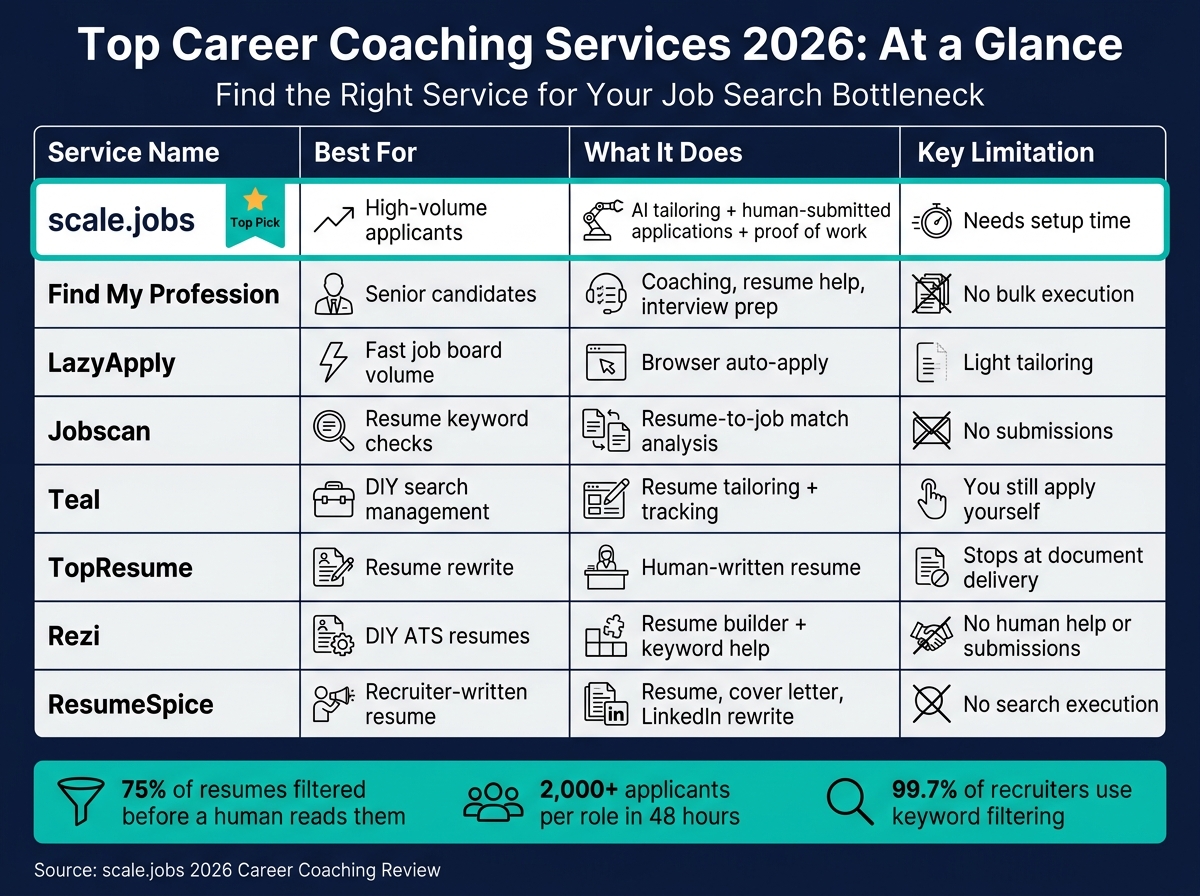
Top Career Coaching Services 2026: Side-by-Side Comparison
| Service | Best for | What it mainly does | Main limit |
|---|---|---|---|
| scale.jobs | High-volume applicants | AI tailoring + human-submitted applications + proof of work | Needs setup time |
| Find My Profession | Senior candidates | Coaching, resume help, interview prep | No bulk execution |
| LazyApply | Fast job board volume | Compare job search tools | Light tailoring |
| Jobscan | Resume keyword checks | Resume-to-job match analysis | No submissions |
| Teal | DIY search management | Resume tailoring + tracking | You still apply yourself |
| TopResume | Resume rewrite | Human-written resume | Stops at document delivery |
| Rezi | DIY ATS resumes | Resume builder + keyword help | No human help or submissions |
| ResumeSpice | Recruiter-written resume | Resume, cover letter, LinkedIn rewrite | No search execution |
What I’d focus on before choosing
I’d use this 4-step filter:
-
Check the bottleneck
Is your problem ATS fit, low volume, weak interview prep, or too much admin work? -
Pick the service type
- Use a job search coach if you need direction and positioning
- Use a job application service if you need submissions handled
- Use an ai resume builder if you only need resume help
-
Look for proof, not claims
If someone applies for you, ask for logs, screenshots, and dates. -
Match price to output
A one-time fee can make more sense than stacking monthly tools if you’re applying hard for full time jobs.
My read on the list
I’d place scale.jobs first for people who want actual job search execution, not just prep. It combines AI tools, human help, and receipts for each submission. That makes it a fit for people who are tired of doing portal forms over and over.
I’d look at Find My Profession if I were a senior candidate who wanted close coaching and interview help.
I’d consider LazyApply only if my goal was pure volume and I was fine with less tailoring.
I’d use Jobscan, Teal, or Rezi if I wanted a DIY stack for resume work, tracking, or version control.
I’d pick TopResume or ResumeSpice only if I needed a cleaner resume and planned to run the rest of the search myself.
FAQ-style answers
What’s the best choice for job seekers who are short on time?
Usually a Virtual Assistant for Job Applications or a job search virtual assistant, because the biggest time drain is often form-filling.
What if I only need resume help?
Use a resume tool or writer. You might also consider virtual assistants vs. career coaches to see which support model fits your budget. Rezi, Teal, TopResume, and ResumeSpice fit that use case.
What if I’m applying across many roles?
You’ll likely need tailoring plus execution. That’s where a job search platform with human support can help more than a resume-only product.
Should I compare auto-apply bots?
Only if you accept the tradeoff. They can save time, but they can also hit login checks and CAPTCHA issues on some of the best job boards.
If you want the clearest rule: use prep tools for prep problems, and use done-for-you help for execution problems.
Why do job seekers need career coaching services in 2026?
A polished resume used to be enough. In 2026, it’s just the starting point. Most applications now hit ATS filters before a recruiter ever sees them, which means resumes that aren’t technically tuned for those systems often get screened out early.
High application volume makes that even harder. 99.7% of recruiters use keyword filtering systems to shortlist candidates. If your resume doesn’t reflect the language in the job description, it may not make it past the first screen. That pressure alone is a big reason many people now turn to a job search coach or a Virtual Assistant for Job Applications.
In practice, job seekers get only a few seconds to show a match. That’s not much room for error.
Hiring has changed in other ways too. Employers want proof of skills, measurable results, and better interview performance, not just a clean layout. Resumes with quantified metrics and data-backed achievements are 40% to 58% more likely to get interview callbacks. That’s why modern coaching goes well beyond basic editing.
Today’s support often includes:
- Resume tailoring for ATS and role fit, sometimes with an ai resume builder
- LinkedIn alignment, application tracking, and outreach support through a job application service
- Interview prep, mock interviews, and search planning from a job search virtual assistant
For many people trying to Apply for jobs, the hard part isn’t effort. It’s knowing where the process breaks down and fixing it fast.
The next section breaks those problems into the exact areas coaching services solve.
What problems do modern career coaching services solve?
Modern career coaching services deal with four pain points that trip up most job seekers: ATS filters, weak tailoring, low application volume, and interview gaps. If you're trying to compare a job search platform, a job search coach, or a job application service, these are the failure points worth watching.
ATS rejection. Many coaching services fix formatting issues first. They use single-column layouts and map resume language to the job posting so applicant tracking systems can read the document cleanly.
Generic resumes. A broad resume often falls flat. Modern services build role-specific versions with measured achievements and a tighter keyword match. Resumes with role-specific achievements are 40% to 58% more likely to secure interview callbacks than generic versions.
Low application volume. This is where tools and support can save a lot of time. Automated workflows or a Virtual Assistant for Job Applications can handle form-filling and submissions at scale. Some services also act like a virtual assistant for job seekers, adding tracking, proof-of-work logs, and ATS-ready documents so the process doesn't turn into a black hole.
Weak interview performance. Good coaching tightens how candidates answer. Instead of rambling through Situation and Task, it pushes answers toward Action and Result. That shift matters because hiring teams want to hear what you did and what changed.
| Problem | Fix | Why it matters |
|---|---|---|
| ATS rejection | Single-column formatting + keyword mapping | Addresses the 75% to 80% first-pass rejection rate |
| Generic resumes | AI tailoring + 3–5 role-specific versions | 40% to 58% more interview callbacks |
| Low volume | Automated workflows + human-assisted applications | More applications submitted with less manual effort |
| No accountability | Submission logs + screenshots | Clear audit trail of search activity |
| Weak interviews | STAR method training + mock sessions | Structured answers over unstructured conversation |
That table gets to the point fast: the best services don't just offer advice. They fix the parts of the process that block people from landing interviews, whether you're trying to Apply for jobs for full time jobs or juggling a search for Part time jobs near me.
With these problems defined, the next question is which features actually solve them.
What should job seekers look for in a career coaching service?
Not every service that calls itself "career coaching" gives you the same level of help. Some guide you. Some hand you software. A smaller group actually takes work off your plate.
If you're trying to decide whether to switch, focus on one question: does this service remove manual work, or does it just give you one more dashboard to manage? That filter helps you separate tools that assist from services that actually submit applications.
Automation depth is the first thing to check. Simple keyword-swapping bots don't do much. What matters is whether the service uses agentic AI or trained human assistants who can move through job portals, fill out multi-step forms, and deal with the messy parts of real submissions. If the tool only edits a PDF, it won't help you Apply for jobs at higher volume.
ATS optimization quality is where many services take shortcuts. ATS fit matters only if the service improves parsability, not if it gives you a vendor-made score. No vendor's ATS score is the same as the employer's actual ATS result. The better standard is simple: can the resume be parsed cleanly? That usually means a single-column layout, plain section headers like "Work Experience", and bullets that show results with numbers. If you're also weighing an ai resume builder or ai cover letter builder, judge them by output quality, not by flashy scoring.
Transparency and proof-of-work isn't optional when someone is applying on your behalf. You should be able to see time-stamped screenshots and submission logs. If a service can't show what was submitted and when, walk away. It's the same standard you'd expect from a solid job application service: clear records, not vague updates.
Pricing model and value comes down to what you get for each dollar. Flat-fee bundles are easier to compare than monthly subscriptions because the deliverables are spelled out. If you're also considering professional resume writing, look for a package that includes tailored documents and actual application execution, not just a polished PDF sent back to you. The same logic applies whether you're hiring a job search coach or a virtual assistant for job seekers: the scope should be clear before you pay.
| Criterion | What "Good" Looks Like in 2026 | Red Flag |
|---|---|---|
| Automation depth | Human assistants or agentic AI handling full application workflows | A tool that only reformats or keyword-stuffs |
| ATS optimization | Single-column layout, standard headers, quantified bullets | Proprietary "ATS score" with no connection to employer systems |
| Transparency | Time-stamped screenshots, submission logs | Vague summaries with no proof of what was submitted |
| Pricing model | Flat-fee bundles with defined deliverables | Recurring subscriptions with unclear scope |
These criteria stand out even more when you look at how people use career services in 2026, especially across high-volume searches for full time jobs and targeted local searches like Part time jobs near me.
How are job seekers using career coaching and job search services in 2026?
Those pain points don’t look the same for everyone. A laid-off manager has one problem. A new grad has another. Someone switching roles while still employed is dealing with a different kind of friction.
That’s why job seekers are mixing support in different ways in 2026. Some use a job search platform to keep applications moving. Others lean on a job search coach for positioning, or a Virtual Assistant for Job Applications to take repetitive work off their plate. The goal is the same across the board: cut manual work, improve ATS fit, and get the right level of help without overpaying for services they don’t need.
- Laid-off professionals often need speed and volume
- Recent graduates need proof of skills, not just a cleaner resume
- Job hoppers need many tailored versions, not one static file
- Visa-sensitive candidates need clear logistics near the top
- DIY users want help with the parts that eat up time
Laid-off professionals: rapid impact translation
Laid-off candidates usually don’t have the luxury of a slow rewrite process. They need fast edits that turn duty-heavy resumes into result-driven documents with numbers, scope, and business impact.
Scale.jobs uses human assistants to rewrite resumes around measurable outcomes and submit applications across a high volume of openings. That matters because form-filling can drain hours every week. For someone trying to Apply for jobs at scale, that time savings can make a big difference.
A simple example: instead of “managed client accounts,” the resume gets reframed into something closer to revenue growth, retention, or account size. That shift helps recruiters see value faster.
Recent graduates: skills-first evidence building
Recent graduates often have decent experience on paper, but it’s scattered. Class projects, internships, coursework, student org work - it’s there, but it doesn’t always read like hiring-ready proof.
So the job here isn’t just formatting. It’s building a bank of interview stories and resume bullets tied to skills. Scale.jobs supports this with AI-driven tailoring that pulls relevant terms from a job description and reshapes the resume around competencies.
This is where tools like an ai resume builder can help surface the right skills for each role. Paired with a job application service, that can give new grads a cleaner path into full time jobs when they don’t yet have a long work history.
Strong projects can do a lot of heavy lifting when they’re framed the right way.
Employed job hoppers: multiple tailored resumes without repeated rewrites
People moving into a new role while still employed usually face a volume problem. They’re not sending one resume. They’re sending many versions for related but different openings.
That’s why one master resume often falls short. Rewriting from scratch every time is a slog, and it’s easy to end up with weak tailoring after the third or fourth edit late at night.
Scale.jobs’ AI Assistant Pro supports unlimited ATS-ready resume versions, each aimed at a specific role type. For job seekers targeting several lanes at once, that can remove a lot of drag. A product manager applying to platform roles, growth roles, and operations roles may need three different emphasis points even if the base experience stays the same.
This is also where a job search virtual assistant can help keep the process moving without turning every evening into admin work.
Visa-sensitive candidates: logistical transparency up front
For visa-sensitive candidates, small omissions can slow everything down. If a recruiter can’t tell work authorization, location, or notice period at a glance, review may stall before skills even enter the picture.
Scale.jobs helps place visa status, current location, and notice period near the top of the resume. That kind of front-loaded clarity can reduce back-and-forth and make the application easier to process.
It sounds simple, but it matters. In many searches, the first scan is fast. If a detail is buried, it may as well be missing.
DIY users: selective outsourcing of the hard parts
Not every job seeker wants full-service help. A lot of people want to run their own search and outsource only the parts that slow them down most.
That’s where selective support comes in. Scale.jobs offers free ATS checks, tracking, and limited tailoring, with optional professional writing or human-assisted submission for higher volume. For someone balancing a search with contract work, family obligations, or even a hunt for Part time jobs near me, that setup gives them room to stay in control without doing every tedious step themselves.
You can think of it like this: some people want a coach, some want a doer, and some just want a second set of hands for the annoying stuff.
FAQ-style takeaways
What kind of job seeker uses career coaching in 2026?
Usually someone who needs help with positioning, interview stories, or figuring out target roles. Coaching is less about pushing buttons and more about making better decisions.
Who uses job search services instead of doing everything alone?
People who are short on time, applying at high volume, or stuck on repetitive tasks like resume tailoring and application forms.
Are these services only for laid-off workers?
No. They’re also used by grads, career switchers, employed candidates, and people who want a mix of DIY and outsourced help.
How do the top career coaching services compare in 2026?
The biggest divide in 2026 is pretty simple: some tools help you get your materials ready, while others help you send applications at scale.
That matters more than ever. A polished resume is useful, but if you're trying to Apply for jobs across dozens or even hundreds of roles, execution starts to matter just as much as prep. This comparison looks at the filters that count most in 2026: automation depth, ATS fit, proof of work, and pricing.
| Tool | Best fit | Automation depth | Strengths | Limitations | Pricing |
|---|---|---|---|---|---|
| scale.jobs | High-volume applicants and career switchers | High: trained human assistants plus AI support | ATS-ready tailored resumes, human-submitted applications across any portal, time-stamped proof-of-work screenshots, real-time WhatsApp support | Requires onboarding time to brief assistants on preferences | Free software tier; AI Assistant Pro $9/month (launch) / $19/month standard; human assistant bundles $199–$1,099 one-time |
| Find My Profession | Senior professionals and executives | Low: fully human-led, no automation layer | High-touch strategy, experienced career consultants | Not built for bulk submission; no proof-of-work screenshots | Quote-based premium pricing |
| LazyApply | Volume-focused applicants | High: fully automated, minimal human review | Fast submission across many job boards | Limited tailoring depth; automation flags risk on some portals | Monthly subscription |
| Jobscan | Applicants optimizing resume-to-job keyword match | Low: user-led, AI-assisted analysis | Strong ATS keyword gap analysis and resume scoring | Does not submit applications; no human support layer | Free tier; paid plans from $29.95/month |
| Teal | Active seekers managing multiple applications | Low: user-led with AI assistance | Resume tailoring, keyword guidance, application tracking | Users submit manually; no proof-of-work layer | Free tier; paid plans available |
| TopResume | Professionals wanting a polished resume | None: document service only | Certified resume writers, strong formatting | No application execution or ATS submission support | One-time project pricing from ~$149 |
| Rezi | DIY applicants building ATS-compliant resumes | Low: AI-assisted, user-led | ATS-optimized templates, real-time content scoring | No human review or application submission | Free tier; Pro from $29/month |
| ResumeSpice | Professionals wanting recruiter-written resumes | None: document service only | Recruiter-written resumes, cover letters, LinkedIn profiles | No automation, no application execution | One-time project pricing from ~$479 |
A few patterns stand out right away.
- scale.jobs sits in a different lane because it mixes AI with trained human help and handles actual submissions. For people targeting full time jobs, switching fields, or using a job application service, that blend can save a lot of time.
- Find My Profession is geared more toward senior-level candidates who want hands-on guidance from a job search coach, not bulk application output.
- LazyApply leans hard into speed. If your main goal is volume across the best job boards, it fits that use case, though the lighter tailoring can be a tradeoff.
- Jobscan, Teal, and Rezi are better seen as prep tools. They help with resume matching, tracking, and writing, but you still do the submitting yourself.
- TopResume and ResumeSpice are document-first services. They can help you look sharper on paper, but they don't act like a job search platform or a Virtual Assistant for Job Applications.
If you're comparing these tools side by side, the main question isn't just "Which one is best?" It's where do you get stuck?
If your problem is resume quality, tools like Rezi, TopResume, or an ai resume builder may be enough. If your problem is follow-through - finding roles, tailoring materials, and submitting on time - a virtual assistant for job seekers or done-for-you service starts to make more sense.
The next section breaks down each service one by one, starting with the strongest option for active job seekers.
1. scale.jobs
scale.jobs combines AI resume tailoring, trained human assistants, and live application submission in one workflow. It’s the only option in this group that brings together human submission, AI tailoring, and proof-of-work in one place. If you’re comparing prep-only tools against a done-for-you service, scale.jobs stands out because it handles the workflow end to end, not just the resume.
Summary of company
scale.jobs is a job application service built for active applicants who need applications submitted at scale, not just polished documents. The model is simple: one-time pricing, trained human assistants for submissions, and AI tools for tailoring.
If your main goal is to apply for jobs faster without spending hours inside employer portals, that setup makes a lot of sense.
Automation depth
The human assistant tier uses trained virtual assistant for job seekers support to manually fill out and submit applications across corporate ATS platforms, niche job boards, and direct company career pages. That matters because many applicants don’t just need a better resume. They need someone to do the repetitive work.
Since submissions are human-executed, they can avoid automation flags on some portals. That’s a big deal if you’re applying across systems that don’t play nicely with browser bots or bulk tools.
ATS optimization quality
Submission speed is one side of the equation. ATS readiness is the other.
ATS screening is the first filter for most corporate applications, and scale.jobs handles this with AI-tailored resumes matched to each posting. The free software tier includes an ATS-compliant base resume builder, which works well if you want to start with a clean foundation.
If you need more than a base draft, the resume writing services plan includes a professionally written resume and a 45-minute 1-on-1 Zoom call. That gives applicants two paths: use the built-in ai resume builder for speed, or get a professionally written version if the stakes are higher.
Transparency and proof of work
This is where scale.jobs feels different from many tools in the job search platform space.
Every application submission comes with time-stamped proof-of-work screenshots delivered through WhatsApp support. You can see which roles were applied to and when. There’s no guessing, no vague dashboard activity, and no “trust us” layer in the middle.
Unused credits are refunded after purchase, which adds another level of clarity to the pricing model.
Pricing model and value
Pricing matters here because the model is one-time, not subscription-based.
| Plan | Applications | Price | Human Assistants |
|---|---|---|---|
| Basic | 250 | $199 one-time | 1 |
| Standard | 500 | $299 one-time | 2 |
| Best Value | 1,000 | $399 one-time | 2 |
| Ultimate Bundle | 1,000 + full career kit | $1,099 one-time | 2 + recruiter |
| AI Assistant Pro | Unlimited AI tools | $9/month launch offer, $19/month standard | None |
The human assistant plans are one-time purchases, and unused credits are refunded after purchase. The free software tier includes a job board, ATS resume builder, application tracker, and limited daily AI tools.
That structure fits active applicants who want their search executed, not just tuned up. For someone juggling full time jobs and side searches, or even checking Part time jobs near me, paying once can feel a lot easier than adding another monthly bill.
Pros: Human-submitted applications; time-stamped proof of work; flat-fee pricing with refund policy; WhatsApp support; free toolkit included
Cons: Requires a setup brief to align assistant preferences; custom resumes and cover letters take about 24 hours
Who should choose scale.jobs
scale.jobs is a strong fit for job seekers who are applying in high volume and need the submission work handled for them. It also makes sense for people who want documented proof of each application, especially if they’re tracking activity closely or working with a job search coach. And if recurring software fees are getting old, the one-time pricing model is easier to plan around.
Switch to scale.jobs if…
- You are submitting more than 20 applications per week and manual form-filling is eating your time
- You need time-stamped proof of work to track search activity
- You want human-executed submissions to avoid automation flags on employer portals
- You prefer a one-time payment over an ongoing subscription
2. Find My Profession
Find My Profession is a fit for job seekers who want human-led coaching, resume help, and search guidance, especially at the senior, director, or manager level. The main choice here is pretty simple: do you want advice, or do you want someone to handle the application work for you?
If your focus is positioning yourself better, sharpening your story, and getting ready for interviews, this service makes sense. If you need help to Apply for jobs in high volume, it’s a different story.
Key features:
- Senior-level and executive career coaching
- Resume writing and LinkedIn profile support
- Job search strategy and targeting guidance
- Interview preparation and mock sessions
Job search automation offerings:
- Limited to none; support is coach-led rather than automated
- Human-guided search management instead of bulk application execution
Automation depth
Find My Profession is built around coaching, not automation. That makes it a better match for candidates who want feedback, review, and direction instead of a team pushing out applications across many portals.
This is an important line to draw. Some people need a job search coach. Others need a job application service that takes the repetitive work off their plate. Find My Profession leans hard toward the first group.
ATS optimization quality
Use this service if you need resume help for one target role and want a more hands-on review process. Choose scale.jobs instead if you want ATS-focused documents plus AI-assisted tailoring across many applications.
That difference matters more than it sounds. A polished resume is useful, but if you're applying across a broad set of roles, you may also want an ai resume builder and an ai cover letter builder tied to a live submission workflow.
Transparency and proof of work
If a company says it is handling your search, reporting matters just as much as resume quality. Ask for time-stamped proof, submission logs, and a clear record of what was done.
scale.jobs handles this with time-stamped screenshots and WhatsApp updates tied to each submission. That kind of paper trail is hard to ignore. If you’ve ever wondered whether your applications were actually sent, you already know why this matters.
If the service is handling the search for you, reporting matters as much as resume quality.
Pricing model and value
Compare quote-based pricing with scale.jobs' one-time bundles before you buy. Look closely at what is included across coaching, resume work, and application support. That’s the only way to judge whether the service level lines up with the price.
A quote-based model can work fine for senior candidates who want custom coaching. But if you want a more direct, fixed-cost setup, especially for full time jobs, flat-fee application support may be easier to budget for.
Find My Profession vs Scale.jobs
The split between these two services is clear.
Find My Profession helps guide your search. scale.jobs handles the application workflow.
If you want interview prep, career positioning, and one-on-one guidance, Find My Profession is the better fit. If you want a virtual assistant for job seekers who can submit applications across company portals and track the work, scale.jobs is the stronger option.
Who should use Find My Profession:
- Senior or manager-level candidates who want hands-on coaching and guided search strategy
- Job seekers who care more about positioning, interview prep, and one-on-one guidance than application volume
Who should choose scale.jobs:
- Job seekers who need applications submitted at scale with documented proof of each submission
- Candidates who want ATS-focused documents, human assistants, and flat-fee pricing without a recurring subscription
Why scale.jobs wins:
- Human assistants submit applications directly across any portal, including corporate ATS systems
- Every submission includes time-stamped proof-of-work screenshots
- ATS-optimized resume tailoring is built into the workflow, not a separate engagement
- Dedicated WhatsApp support keeps you updated in real time
- One-time pricing with unused credit refunds, no recurring subscription
Is Find My Profession Worth It?
Yes, if you want coaching first.
No, if your biggest problem is volume.
That’s the cleanest way to look at it. Find My Profession can be worth the cost for senior candidates who want help with strategy, messaging, and interview prep. It makes less sense for people who need a job search virtual assistant or a system that can move through many applications fast and show proof along the way.
Decision summary:
- Find My Profession: best for guided coaching and hands-on strategy
- scale.jobs: best for human execution, receipts, and flat-fee application support
Pros: Human-led coaching; strong fit for senior candidates; covers resume writing, strategy, and interview prep
Cons: Not built for high-volume application execution; proof-of-work and reporting details vary by plan; quote-based pricing requires direct inquiry
3. LazyApply
LazyApply is the speed-first option compared with scale.jobs. It automates submissions, but it does not include human execution, proof-of-work receipts, or per-role tailoring. In plain English: LazyApply is the automation pick in this list, while scale.jobs is the human-powered option built around proof-of-work and ATS tailoring.
Summary of company
LazyApply is a browser-based automation tool that submits applications with very little customization. It’s built for people who want to Apply for jobs across job boards without handling every form by hand.
Key features
- Browser-based application automation across major job boards
- Auto-fill for standard application forms using your existing profile
- Dashboard to track submitted applications
- One-click apply across supported job sites
Job search automation offerings
LazyApply runs through form-filling and submission inside your browser session. It can save time on repeat tasks, which is the main appeal for high-volume applicants using best job boards.
That said, it pauses at logins and CAPTCHAs, so you still need to step in. On some sites, the automation can also trigger CAPTCHAs, login checks, or portal limits. It also does not include per-role resume tailoring or keyword changes, which matters if you’re targeting competitive full time jobs.
Automation depth
LazyApply works well for people who want to cut down on manual clicking. It moves through websites, clicks buttons, and fills out forms using your existing browser session. That can make the process feel much lighter, especially if you’re sending a high number of applications each week.
The trade-off is simple: it’s not a hands-off system. Once logins or CAPTCHAs show up, you’re back in the driver’s seat.
ATS optimization quality
LazyApply submits the resume you upload. It does not tailor bullets or keywords for each role.
If you need that layer, a job application service or a tool paired with an ai resume builder may be a better fit.
Transparency and proof of work
LazyApply shows software execution, not human submission receipts. If you want assistants handling applications and a clearer paper trail, scale.jobs is the closer match.
This is the split that matters most in the LazyApply vs Scale.jobs comparison. One tool helps with speed. The other leans into human handling, tracking, and receipts.
Pricing
LazyApply is a fit when your main goal is low-friction submission automation. Plans start at about $49/month, with higher tiers for more application volume.
Choose scale.jobs if you want human submissions, ATS-tuned docs, proof-of-work, WhatsApp support, and one-time pricing. That setup can make more sense for people who want a Virtual Assistant for Job Applications instead of browser automation alone.
Pros:
- Fast browser automation across multiple job boards
- Less manual clicking for standard application forms
Cons:
- No per-role resume tailoring or keyword optimization
- Manual handling still needed for logins and CAPTCHAs
Who should use LazyApply: Job seekers focused on weekly application volume who are comfortable managing their own resume tailoring and stepping in when login or CAPTCHA interruptions happen.
Who should choose scale.jobs: Candidates who need tailored resumes, human execution, and proof-of-work receipts.
LazyApply vs Scale.jobs
The easiest way to think about it is this:
- LazyApply helps automate clicks and submissions
- Scale.jobs leans on people to handle the work, tailor applications, and show receipts
If you want speed and don’t mind doing your own document prep, LazyApply can work. If you want a more done-for-you path, closer to a job search virtual assistant setup, scale.jobs lines up better.
Is LazyApply Worth It?
Yes, if your main goal is sending more applications in less time.
Maybe not, if your bottleneck isn’t clicking. For many applicants, the hard part is tailoring resumes, matching keywords, and keeping quality high. In that case, a job search coach or human-led support may do more than simple automation.
If your priority is keyword matching rather than auto-submission, the next comparison is Jobscan.
4. Jobscan
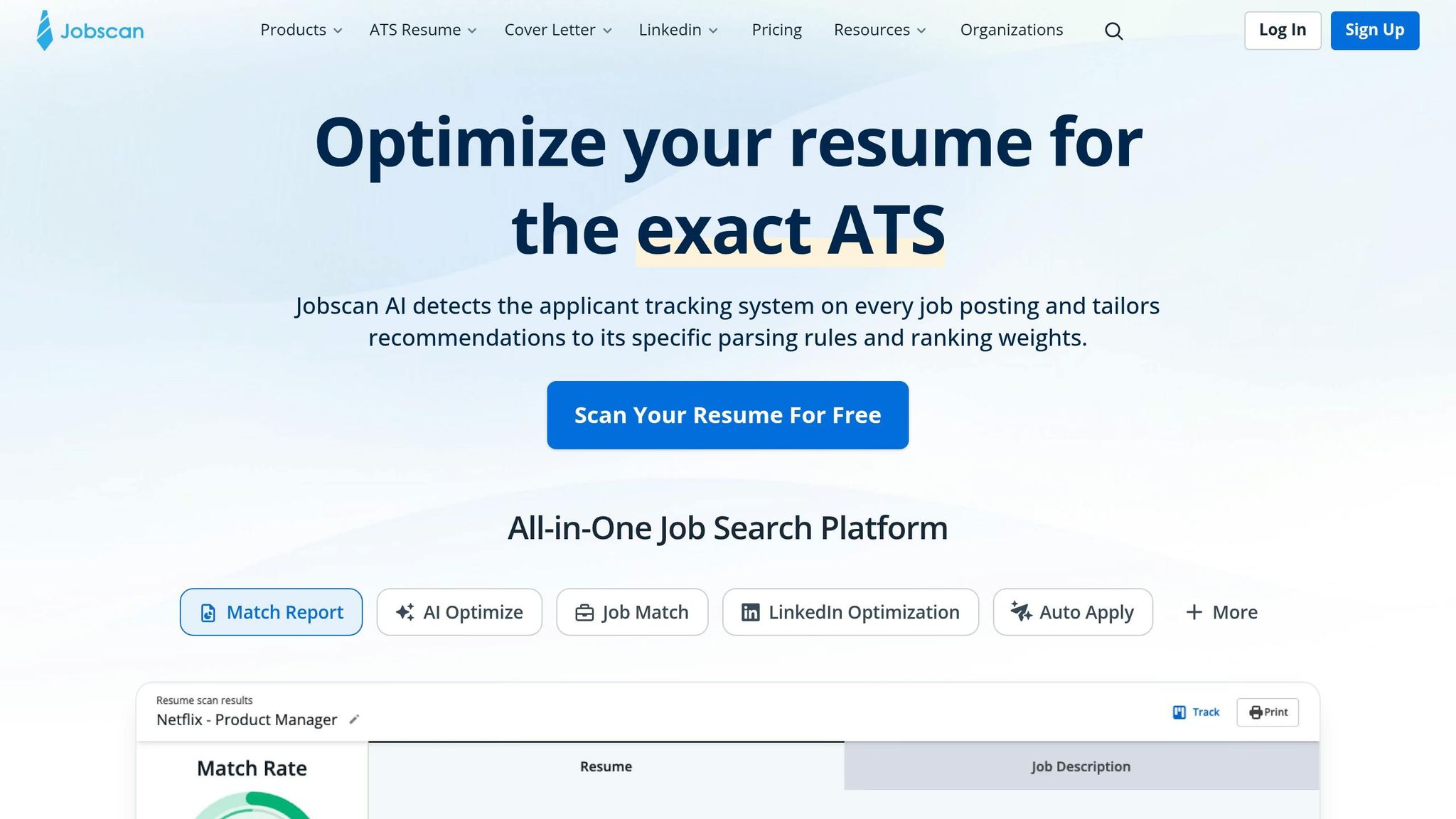
Jobscan checks how well your resume lines up with a job description. It does not apply for jobs. So the main point is simple: this is a prep tool, not a full workflow tool.
Summary of company
Jobscan is a resume optimization tool built for keyword matching. It helps job seekers compare a resume to a job description before they apply.
If you're using an ai resume builder or updating resumes for different roles, Jobscan can help you tighten the wording before sending anything out.
Automation depth
Jobscan reviews your resume against a job description and gives keyword suggestions. It does not submit applications.
That matters because many job seekers don't just need better documents. They also need help to Apply for jobs at scale without getting buried in forms, portals, and repeat data entry.
ATS optimization quality
This is where Jobscan is most useful. It helps balance keyword fit with readable writing and gives you a signal on how well a resume lines up with a specific job description.
Still, there’s a catch. Modern 2026 ATS platforms do more than scan for keywords. They parse structure, read context, weigh job history, and use systems that Jobscan cannot fully mirror from the outside. So its score is best used as a direction, not as a guarantee.
Jobscan does not copy the private parsing logic inside actual ATS systems. That makes it useful as a pre-apply check, but not a replacement for a full ATS-ready workflow.
If you want more than resume matching - if you want actual submissions through a job application service - Scale.jobs handles the next part.
Transparency and proof of work
Jobscan shows how its match score works, but it does not give submission proof. You can see the output, but there is no application record because no application is sent.
That’s a big gap for people who want a full job search platform or a done-for-you process. Seeing a score is one thing. Seeing proof that an application went out is another.
Pricing model and value
Jobscan uses a subscription model, with paid plans starting at $29.95/month. That can make sense if your main problem is resume wording.
But if the bigger issue is execution, Jobscan stops short. It won’t fill out forms, upload files, answer screening prompts, or help manage high-volume outreach for full time jobs or other roles.
Jobscan improves the resume; Scale.jobs handles the application.
Pros:
- Clear keyword alignment against specific job descriptions
- Useful for pre-apply resume checks
Cons:
- No application submission or execution
- Match score is a keyword comparison, not a full ATS simulation
Why scale.jobs wins
Here’s the main difference: Jobscan helps you get your resume closer to the target. Scale.jobs helps you finish the job.
- Human assistants handle submissions directly across any portal
- ATS-focused resume tailoring is built into the workflow
- Every submission includes time-stamped proof-of-work screenshots
- Dedicated WhatsApp support keeps you updated in real time
- One-time pricing instead of a recurring subscription
If you want a Virtual Assistant for Job Applications instead of another dashboard, that gap becomes pretty obvious.
Jobscan vs Scale.jobs
Jobscan is a document-prep product. Scale.jobs is an execution service.
Jobscan is a fit for people who want to tune their resume, review keywords, and manage each application on their own. Scale.jobs is a fit for people who want human help, submission support, and proof that the work got done.
This is the difference between getting advice before the race and having someone help you through every lap.
Is Jobscan Worth It?
Yes - if your main problem is resume-to-job-description matching.
No - if your bottleneck is actually sending applications out. In that case, a job search virtual assistant or virtual assistant for job seekers solves a different, and often bigger, problem.
Who should use Jobscan: Self-directed applicants who want to optimize their resume before applying and handle submissions on their own.
Who should choose scale.jobs: Candidates who want human assistants, ATS-optimized docs, proof-of-work screenshots, and done-for-you submissions.
If keyword alignment is only part of the problem, Teal adds tracking and resume management in the next comparison.
5. Teal
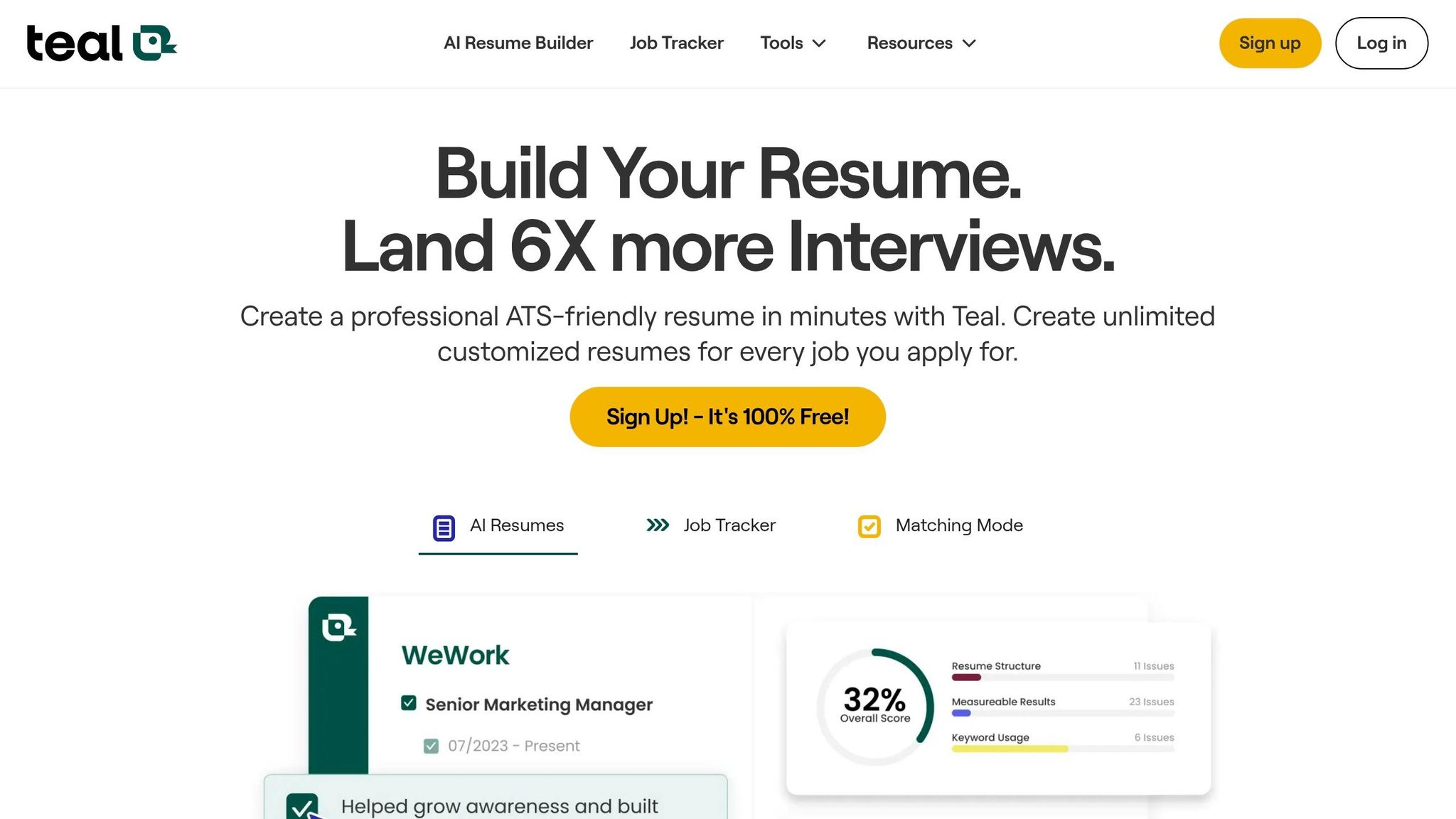
Teal fits people who want more than a simple keyword scan but still prefer a DIY process. It works as an AI job search platform for resume tailoring and application tracking. In plain terms, it helps you get your materials ready. It does not act like a done-for-you job application service.
Automation depth
Teal automates the document-prep side of the job hunt. Its AI Resume Builder reviews job descriptions, looks for implied requirements and missing keywords, and then helps you adjust headlines, summaries, and bullet points so they line up better with the role.
Job search automation offerings:
- AI resume tailoring from job descriptions
- Resume Stack for managing multiple resume versions
That’s where the automation ends. You still have to Apply for jobs yourself.
ATS optimization quality
Teal is at its best when it comes to ATS-style resume matching. Its checker points out keyword gaps and parsing problems, like tables or text boxes that can trip up applicant tracking systems. That makes it useful for prep work.
If your main problem is, “Does my resume match this job posting?” Teal can help. If your problem is, “Can someone handle submissions for me?” you’ll need a Virtual Assistant for Job Applications or a service with execution support.
Transparency and proof of work
Teal gives you a match score for each application, so you can see how closely your resume aligns before you submit. That kind of visibility is helpful during prep.
But it stops there. Teal does not submit applications, so there’s no submission log, no time-stamped receipt, and no proof-of-work trail. For job seekers who want clear records of what was sent and when, that gap matters.
Pricing model and value
Teal has a free tier for basic resume building and tracking. Paid plans unlock deeper AI features. The tradeoff is simple: you get prep tools, but the execution stays manual.
Pros:
- Strong ATS keyword analysis and resume tailoring
- Free tier available for basic use
Cons:
- No application submission or execution support
- No proof-of-work documentation
Why scale.jobs wins
Teal helps with resume prep. Scale.jobs handles the actual submission workflow.
That includes human assistants, ATS-optimized documents, one-time pricing, dedicated WhatsApp support, and proof-of-work receipts. For someone who wants less clicking, less copy-pasting, and less admin work, that difference is hard to ignore.
Teal vs Scale.jobs
Teal is a fit for self-serve users who want an ai resume builder and tracking tools. Scale.jobs is built for people who want help getting applications out the door.
A simple way to think about it:
- Teal = prep
- Scale.jobs = prep + execution
If you're targeting full time jobs and sending a high number of applications each week, manual submission can become a bottleneck fast.
Is Teal Worth It?
Yes - if you want resume tailoring and tracking, and you’re fine doing the rest yourself.
If you want a tool to organize your search, tune your resume, and check ATS fit, Teal does that well. If you want a more hands-off setup, a job search virtual assistant will be a better fit.
Who should use Teal: Self-directed job seekers who want AI resume tailoring and application tracking only.
Who should choose scale.jobs: Candidates who want human-submitted applications, ATS-optimized documents, WhatsApp support, and proof-of-work receipts.
Next: TopResume, for users focused on document writing rather than workflow support.
6. TopResume
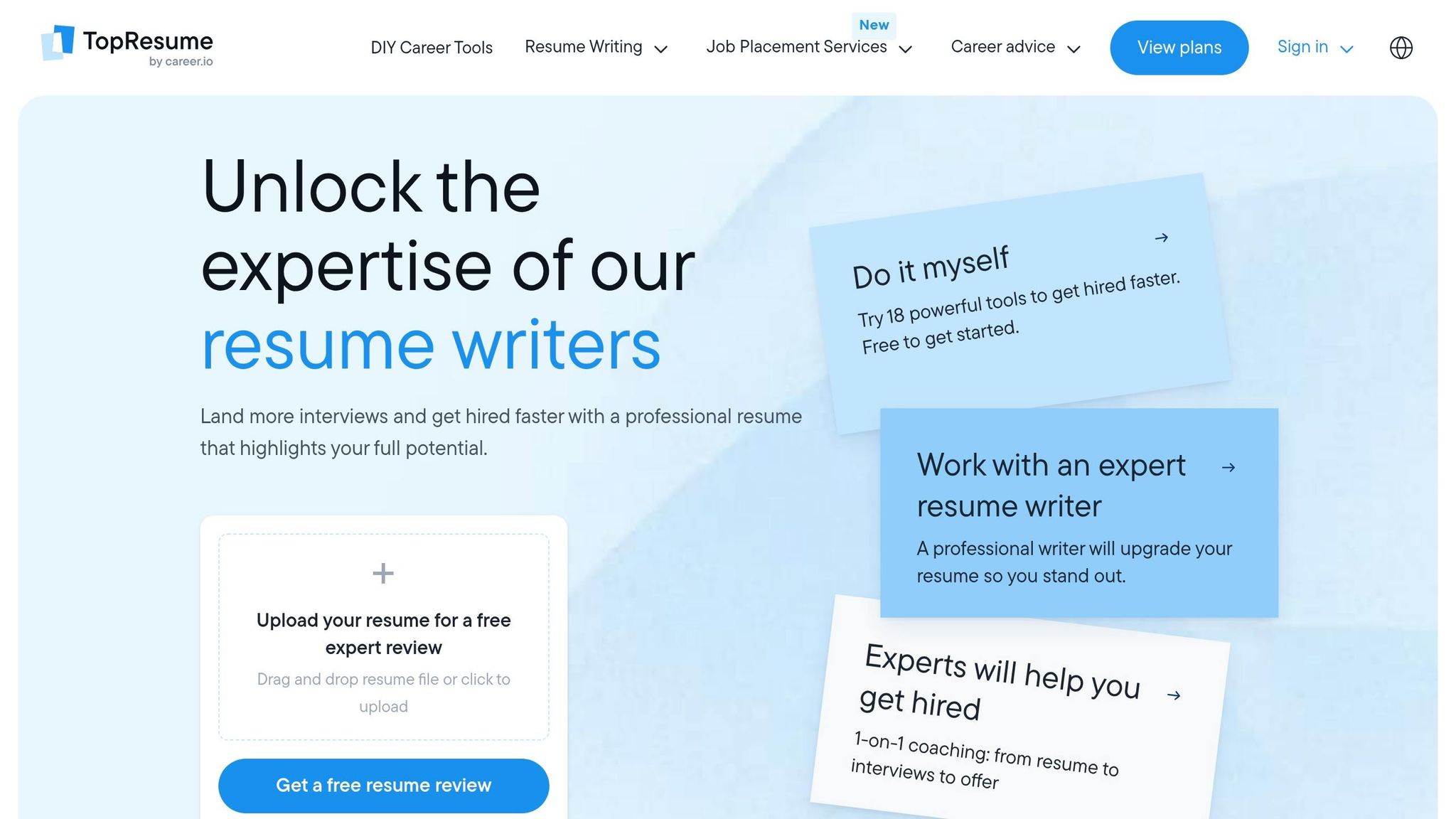
TopResume is a resume-writing service for people who want a done-for-you resume. But it stops there. It does not help you Apply for jobs, tailor each application, or manage the day-to-day grind of a search.
If you need more than a polished document, that gap matters fast.
Summary of company
TopResume is a professional resume writing service that matches job seekers with human writers. The writer rewrites your resume based on your background and the kind of role you want.
Key features
- Human writer handles the full resume rewrite
- Cover letter and LinkedIn profile writing available as add-ons
- Built for professionals across many industries and seniority levels
Job search automation offerings
TopResume does not function as a job search platform. There’s no job board connection, no application submission, and no built-in workflow for ongoing edits.
Once your document is delivered, the service is done.
Service depth
TopResume is a writing service, not a job application service. It can improve one resume, but it won’t tailor that resume for each opening or submit applications on your behalf.
That’s a big deal in a market where one polished resume often isn’t enough. A finance role, a product role, and an operations role may all need different keyword alignment. If you’re applying across several targets, one rewrite can only take you so far.
TopResume also does not provide ATS scoring, keyword-gap feedback, or proof-of-work logs. So if you want to know why a resume was changed, how it lines up with a job post, or whether work was done for each role, you won’t get that visibility.
You’re paying for a single project, not an active search system. For job seekers who want a Virtual Assistant for Job Applications or a job search virtual assistant, that’s the main mismatch.
Pros:
- Human writer handles the rewrite
- Resume, cover letter, and LinkedIn support in one package
Cons:
- No application submission or execution help
- No ATS scoring, keyword-gap feedback, or proof-of-work logs
- One resume rewrite instead of role-by-role tailoring
Pricing: Per-project pricing starts at about $149. That can make sense for one resume, but it gets expensive if you need repeated edits across many roles, whether you're targeting full time jobs or switching between job types.
Why scale.jobs wins
TopResume helps at the document stage. scale.jobs keeps going after that.
That’s the difference.
scale.jobs adds ATS-ready tailoring, proof-of-work screenshots, and actual application execution. So instead of handing you a file and wishing you luck, it supports the workflow that comes next.
TopResume vs Scale.jobs
If your main problem is “my resume needs a rewrite,” TopResume can help.
If your main problem is “I need to get more applications out, with better tailoring and clear tracking,” Scale.jobs is the better fit. It works more like an active search partner than a one-time writing vendor.
Is TopResume Worth It?
Yes, if you only need a rewritten resume and plan to handle the rest yourself.
Probably not, if you want help beyond the document. In that case, a service with tailoring, tracking, and submission support will be a better match.
TopResume is best for job seekers who want a polished resume.
Scale.jobs is better for people who want help all the way through the application process.
Who should use TopResume: Job seekers who mainly need a professionally rewritten resume and are comfortable managing applications themselves.
Who should choose scale.jobs: Candidates who want an active workflow with tailored resumes, application submission, and proof-of-work logs.
7. Rezi
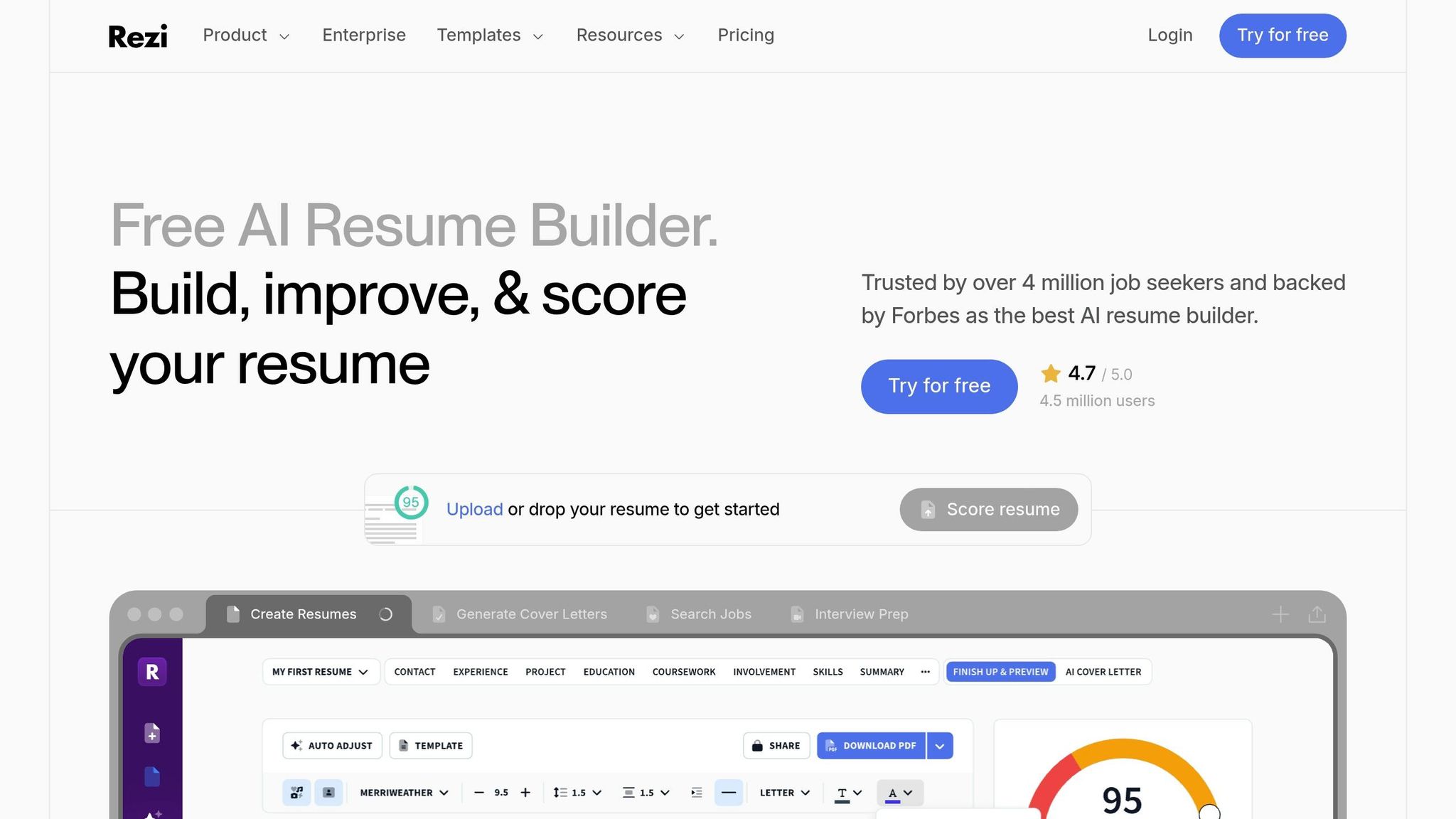
Rezi is an ATS-first resume tool for job seekers who want to write and format their own resume with keyword help. If Jobscan shows keyword gaps and Teal helps you track, Rezi is the next step for people who want a clean ATS-ready resume without moving to a managed job application service. It works well for DIY resume writing. It’s less useful for job seekers who want human submission help, receipts, and one-time pricing.
Summary of company
Rezi is a self-serve resume builder built around ATS compatibility. It helps users format resumes and match resumes to job descriptions. It does not submit applications or run the rest of your search workflow.
Key features
- ATS-friendly resume formatting with single-column layouts and standard section headers
- Keyword alignment pulled from job descriptions
- Resume versioning to manage multiple role-specific drafts
Job search automation offerings
- ATS-friendly resume builder
- Resume versioning for different roles
- Keyword guidance from job descriptions
Rezi can improve resume quality, but it does not take the application workload off your plate. You still need to fill forms, upload files, track deadlines, and apply for jobs on your own.
Why scale.jobs wins
- Human assistants handle application submission from start to finish
- ATS-ready documents are tailored for each role, not only formatted
- Proof-of-work screenshots show what was submitted and when
- Dedicated WhatsApp support keeps updates visible in real time
- One-time pricing avoids another recurring subscription
Rezi vs Scale.jobs
The gap is pretty simple. Rezi helps you build the document. scale.jobs helps you build it and get it out the door.
If you’re doing a targeted search and want full control over every line, Rezi can be a good fit. But if you’re applying at volume, the bottleneck usually isn’t the resume builder. It’s the hours spent on portals, uploads, repeated questions, and follow-up tracking. That’s where a Virtual Assistant for Job Applications changes the day-to-day experience.
Pros:
- ATS-focused resume formatting and keyword alignment
- Resume versioning for multiple role targets
- Full user control over every resume edit
Cons:
- No application submission or execution support
- No human-assist layer or proof-of-work visibility
- Deeper tailoring still falls on the user
Pricing: Free tier available; Pro from $29/month. Compare that with scale.jobs' one-time bundles if you want human-assisted execution instead of another software bill.
Is Rezi Worth It?
Yes, if you only need a resume builder with ATS formatting and keyword help.
No, if your main problem is getting applications submitted fast and keeping your search organized. In that case, a job search virtual assistant or a virtual assistant for job seekers makes more sense than another tool you still have to operate yourself.
Who should use Rezi
Rezi fits self-directed applicants who only need resume formatting and keyword guidance. It’s a good match for people who want full control over each resume version and plan to handle submissions on their own.
It can also work well if you already use an ai resume builder and just want cleaner ATS formatting without adding broader search support.
Who should choose scale.jobs
scale.jobs is a better fit for candidates who want tailored resumes plus submission execution and tracking. It adds human assistants, proof-of-work, and application submission - the parts Rezi does not cover.
That matters even more if you’re chasing full time jobs across multiple portals and don’t want manual form-filling to eat up your week.
Switch to scale.jobs if…
- You need applications submitted across portals, not just a formatted resume
- You want time-stamped proof of what was sent and when
- You are applying at high volume and manual form-filling is slowing you down
- You prefer one-time pricing over a monthly software subscription
If you want document prep plus broader workflow support, the next comparison matters more than Rezi alone.
8. ResumeSpice
ResumeSpice sits in the same document-first bucket as TopResume. The difference is simple: it stops at the documents.
ResumeSpice is a resume writing service, not a full job application service. It helps polish resumes, LinkedIn profiles, and cover letters, but it does not submit applications or run your search. ResumeSpice handles the resume. Scale.jobs handles the resume and the application process.
Automation depth
ResumeSpice offers no automation.
It gives you resume writing, LinkedIn rewrites, and cover letter help, but there’s no job board automation, no portal form-filling, and no application tracking. It follows a standard intake-and-draft process, not an active workflow like a job search virtual assistant. That’s the full scope of the service.
If you want someone to help you Apply for jobs at scale, ResumeSpice won’t do that part.
ATS optimization quality
ResumeSpice produces clean, ATS-friendly resumes with role-based keyword alignment. That’s the good news.
The tradeoff is that it leans on writer judgment instead of tailoring each version to a specific job post. So yes, ResumeSpice can give you an ATS-friendly resume. No, it does not customize every resume version for each role the way a hands-on virtual assistant for job seekers or execution-focused service might support.
Pricing model and value
ResumeSpice uses one-time package pricing for documents only. You pay for the deliverables, and that’s it.
That setup makes sense if your main issue is resume quality. But if your bottleneck is sending applications, tracking them, and staying on top of volume, you’ll need more than polished documents. In that case, compare ResumeSpice against Scale.jobs as a broader job search platform.
Pros:
- Human-written resumes with clean ATS-friendly formatting and role-relevant keyword alignment
- One-time service model
- Includes LinkedIn profile rewrite and cover letter support
Cons:
- No application submission, automation, or portal execution
- No application tracking
- Document-only workflow with no per-job tailoring
Pricing: One-time package pricing starting from ~$479.
Who should use ResumeSpice
ResumeSpice fits job seekers who want a polished resume and are fine managing the rest themselves.
This is a decent fit if you already know where to apply, have time to handle submissions, and just want stronger documents. It can also work if you’re pairing it with your own tools, like an ai resume builder, but want a human rewrite before you start applying.
Who should choose scale.jobs
Scale.jobs is the better fit for job seekers who want document prep plus application execution, proof-of-work, and human support.
If volume is the problem, ResumeSpice only covers the document side. Scale.jobs helps with the part that usually eats up the most time: actually sending applications through portals and keeping the process moving.
ResumeSpice vs Scale.jobs
ResumeSpice is for polished resume documents. Scale.jobs is for people who want help with the work that comes after the resume too.
Is ResumeSpice Worth It?
Yes, if your only need is a cleaner resume, LinkedIn rewrite, or cover letter help.
If you need someone to handle submissions, track progress, or act like a Virtual Assistant for Job Applications, ResumeSpice will feel limited fast.
The next section shows how these eight services were scored.
Why is scale.jobs ranked #1 for career coaching services in 2026?
Scale.jobs ranks #1 because it does a few things better than most options: deeper automation, stronger ATS coverage, clear proof-of-work, and flat-fee pricing. That mix matters when you want to Apply for jobs at scale without turning your week into a second job.
The big difference shows up in how the work gets done. Scale.jobs pulls from 2M+ monthly job postings across 50,000+ career pages and 15+ ATS platforms. Then human assistants submit forms by hand, which helps cut down CAPTCHA headaches and login issues. In plain English, the workflow matters more than the dashboard. A slick interface is nice. Getting applications out the door is better.
Pricing is also simple. Plans start at $199 for 250 applications, $299 for 500, and $399 for 1,000. There’s also a free software tier, plus time-stamped proof-of-work on human-assistant plans. That matters if you’ve ever paid for a service and wondered, Did anything actually get done?
If you’re comparing options, this is where Scale.jobs starts to separate itself from a typical job application service comparison or a basic job search platform. Many tools help you track openings. Fewer help you push through the messy part: filling out forms across many employer systems, over and over, without burning hours.
It also sits in a different lane from a standard job search coach. Coaching can help with direction, interview prep, and search strategy. But if your main problem is volume, follow-through, or form fatigue, a hands-on virtual assistant for job seekers often solves the bottleneck faster.
Use the next section to match the service to your job search volume and support needs.
How to choose the right career coaching service for your situation
Pick the service based on your main bottleneck: ATS fit, application volume, senior-level positioning, or resume-only help.
Use the same three filters from the comparison above: ATS handling, execution depth, and proof of work.
If your resume isn’t getting past ATS filters, start with Teal or Jobscan. These tools compare your resume against job description keywords and point out missing terms before a recruiter ever sees it. They’re a good match for entry-level candidates and career changers who need tighter keyword alignment fast. They help with the prep stage. If you want prep and done-for-you submission, a job application service like Scale.jobs goes further.
If ATS fit isn’t the main issue, look at application volume and execution support next. Once you’re trying to Apply for jobs across 50+ roles, manual work often becomes the choke point. Filling out forms one by one eats time, drains focus, and slows your search. Human assistants can submit applications by hand across different portals, which helps cut down on CAPTCHA issues and portal blocks. That’s where Scale.jobs stands out, especially with time-stamped proof of work so you can see what was actually sent.
If your search is senior-level, shift from keyword matching to positioning and coaching. Keyword scores alone don’t do much for director, VP, or executive candidates. At that stage, what matters is how your impact is framed and how your story comes across. A service with resume writing and 1-on-1 coaching is usually a better fit than another ATS checker. If you need that mix, a job search coach paired with resume support can make more sense. Scale.jobs also offers resume writing packages with a dedicated Zoom call and an optional LinkedIn makeover for candidates who need positioning, not just formatting.
If you only need resume help, stick with a resume-only service or an ai resume builder. That’s often enough when your search process is fine and your document just needs work. But if the bigger problem is volume, follow-through, or plain old portal fatigue, a job search platform with managed support can cover both DIY and hands-off full time jobs searching in one place.
| Your situation | Best fit |
|---|---|
| ATS keyword gaps | Teal, Jobscan |
| Resume writing + coaching | Scale.jobs Resume Services, TopResume |
| High-volume applications | Scale.jobs Human Assistant plans |
| Executive-level positioning | Premium coaching or Scale.jobs Ultimate Bundle |
| Entry-level / budget DIY | Rezi, Teal free tier |
The FAQs below answer the most common switching questions about ATS risk, execution, and support depth.
Frequently asked questions about career coaching services
Is career coaching worth paying for in 2026?
Yes - if it fixes the thing that's slowing you down.
If your main issue is ATS fit, resume positioning, or interview prep, coaching can make sense. If the problem is that you don't have the time or energy to Apply for jobs at scale, a done-for-you job application service is often a better fit.
One stat matters here: candidates with quantified achievements are 58% more likely to get a callback. That helps with resume quality. But resume quality alone doesn't solve a low-volume search. When volume is the problem, human assistants can handle submissions while tailored resumes go out with each application.
What's the difference between career coaching and reverse recruiting?
Career coaching helps you improve how you present yourself. That usually means resume edits, LinkedIn feedback, interview prep, and search advice.
Reverse recruiting handles the execution side. It includes finding roles, managing the search, and submitting applications across portals. If you want help with the work itself, not just advice, you're looking for a job search virtual assistant or a Virtual Assistant for Job Applications.
Scale.jobs fits the reverse recruiting category. Its trained human assistants submit forms across any portal, send real-time WhatsApp updates, and provide time-stamped proof of work.
Are auto-apply bots safe to use on LinkedIn and other job boards?
Usually, they're the risky option, as automated job applications often fail due to lack of personalization.
Bot-based tools can trigger account checks and CAPTCHA blocks on platforms like LinkedIn and other best job boards. That's the tradeoff: less manual work, but more platform risk.
Scale.jobs takes a different route. It uses trained human assistants who fill out forms by hand, which lowers that risk.
What's the best career coaching service for recent grads or recently laid-off professionals?
It depends on where you are in your search.
Recent grads often need help turning class projects, internships, and campus work into job-ready resume bullets. On a tight budget, Teal and Rezi can work well, especially if paired with an ai resume builder to tighten wording.
Recently laid-off professionals usually face a different problem: speed and volume. If you need high-output submissions fast, scale.jobs Human Assistant plans are a better match. Plans start at $199 for 250 applications, which makes more sense than coaching alone when momentum matters.
Why does scale.jobs rank above other career coaching and job search services in 2026?
The ranking comes down to three review factors: execution depth, proof of work, and flat-fee pricing.
Scale.jobs leads on all three. It doesn't stop at advice. It handles search execution, shows time-stamped proof, and keeps pricing simple. If you're comparing a job search platform or a job search coach against a service that also gets the applications out the door, that's the split that matters.
Conclusion
After looking at each option side by side, the choice comes down to one thing: what’s slowing down your job search?
If you need help with keyword matching, use prep tools. If you want a writer-built resume, use a document service. If you need someone to handle the work of sending applications, use Scale.jobs. The gap here is execution, not advice.
Scale.jobs brings together human-assisted submissions, proof-of-work screenshots, and one-time pricing that starts at $199 for 250 applications. That makes it a practical fit for people who want a job application service instead of another tool that stops at drafts and suggestions. And if you also need resume help, the bundled option usually makes more sense than paying for a separate document service.
The rule is pretty simple:
- If the problem is matching, use a matching tool.
- If the problem is writing, use an ai resume builder or ai cover letter builder.
- If the problem is execution, use Scale.jobs.
For job seekers trying to Apply for jobs at volume without turning it into a second full-time job, that difference matters. It’s the line between getting tips and getting the work done.