
Tested 10 Job Tracker Apps Reviewed for 2026

Sarah Mitchell
August 4, 2026

If you’re sending a lot of applications in 2026, a basic tracker is often not enough. After reviewing the article, I’d sort these 10 tools into three groups: tracking tools, resume/ATS tools, and apply-at-scale tools.
Here’s the short version:
- Scale.jobs ranks first for people who want tracking plus submission help, ATS-safe docs, and proof of work.
- Teal and Huntr fit best if you want to track your own pipeline by hand.
- Jobscan and Rezi fit best if your main problem is resume/ATS match.
- Simplify, LoopCV, and LazyApply focus more on form-fill or bulk apply volume.
- Jobright and Resume Worded are more useful for discovery, scoring, and resume feedback than full workflow control.
A few numbers in the article explain why this matters:
- 75% of resumes may get filtered out before a human sees them
- 99.7% of recruiters use keyword filtering
- Some roles get 2,000+ applications in 48 hours
So the main question is simple: do you need a tool to track, to tune, or to submit?
Quick comparison
| Tool | Best use | Best for |
|---|---|---|
| Scale.jobs | Tracking + submission help | High-volume searches |
| Teal | Resume versions + tracking | DIY applicants |
| Huntr | Visual pipeline board | Small, manual pipelines |
| Simplify | Browser autofill | Faster form filling |
| Jobscan | Keyword and ATS checks | Resume tuning |
| Rezi | ATS resume writing | Resume-only help |
| Jobright | Job matching | Early-stage search |
| LoopCV | Bulk auto-apply | Volume-first outreach |
| Resume Worded | Resume + LinkedIn feedback | Pre-apply review |
| LazyApply | One-click bulk apply | Speed-first users |
If I were choosing, I’d match the tool to the bottleneck: organization, ATS fit, or execution. If your problem is getting applications out the door, a tracker alone won’t fix it, and you might need to automate your job search instead. In that case, a tool closer to a job application service or a job search platform makes more sense.
sbb-itb-564272e
My takeaway
I wouldn’t treat all 10 tools as direct substitutes. They solve different problems.
- For manual tracking vs automated tools: Teal, Huntr
- For resume tuning: Jobscan, Rezi, Resume Worded
- For volume: Simplify, LoopCV, LazyApply
- For hands-off help: Scale.jobs, with a setup closer to a Virtual Assistant for Job Applications
If you’re trying to Apply for jobs every week and keep quality high, I’d start by asking one question: What part of my search keeps slowing me down?
That answer usually points to the right tool faster than any feature list.
Why do job seekers need a job tracker app in 2026?
In 2026, a job tracker matters for one simple reason: job hunting is no longer just about sending resumes. You need to tailor each application, track every version, and follow up across many roles at the same time. That’s hard to do in a spreadsheet.
ATS filters now screen resumes before a recruiter ever looks at them. And spreadsheets can log a date or company name, but they can’t score, match, or help you sort which roles need attention first. Up to 75% of resumes get filtered out by algorithms because of formatting problems or missing keywords, not because the candidate wasn’t qualified. That shifts the problem. It’s not just “Did you apply?” It’s “Did you apply the right way, with the right version, at the right time?”
The keyword issue is even tougher than most people think. 99.7% of recruiters use keyword filtering to shortlist candidates. If your resume doesn’t mirror the exact wording in the job description, including acronyms, full terms, and exact job-title phrasing, it may never show up in search. That means a good job search platform has to help you keep track of which resume version went to which role, not just store a list of applications.
Speed matters too. A single corporate posting can pull in 2,000+ applications within 48 hours. In that kind of rush, people who get callbacks often tailor each application instead of sending the same resume everywhere. That’s where a tracker starts pulling its weight. It helps you stay on top of deadlines, follow-ups, resume versions, and role priority without losing the thread.
The right tool does more than show “applied” or “interviewing.” It keeps each application searchable, tailored, and on schedule. For people trying to Apply for jobs at scale, that can make the difference between a messy search and one that actually moves. Tools like Scale.jobs go a step further by pairing tracking with application handling, which helps when hiring cycles move fast and volume gets out of hand. If you’re using a job application service or working with a Virtual Assistant for Job Applications, a tracker also gives you one place to see what’s been sent, what still needs edits, and what needs a follow-up.
That’s the real job a tracker app needs to do in 2026.
What problems does a job tracker app solve?
A job tracker app puts every application in one place. That alone fixes a lot of the mess people run into when they apply for jobs. Instead of checking spreadsheets, email threads, saved tabs, and notes apps, you can see the full picture in one view.
It solves six common problems:
- Lost application status - It logs each stage of the process, so you’re not left wondering if a role is still pending, rejected, or waiting on a reply.
- Resume version tracking - It shows which resume version you sent to each company. That matters when you’re tailoring resumes with an ai resume builder or making small edits for different roles.
- ATS formatting errors - It points out layouts that may break parsing before you submit. That can save you from sending a resume that looks fine to you but fails in an ATS.
- Keyword gaps - It shows missing terms, so you can line up each resume with the job post. If you also use an ai cover letter builder, this makes it easier to keep your full application in sync.
- Scattered job details - It keeps recruiter contact info, job post URLs, company notes, and interview details next to each application instead of spread across different tools.
- Follow-up tracking - It adds reminders to each application, which helps you stay on top of outreach without relying on memory.
This sets up the next section’s criteria: automation depth, ATS handling, and how much manual work the tool still leaves on your plate. If you’re using a job search platform or working with a job application service, this part matters even more, because the tracker should cut busywork - not add to it.
What to look for in a job tracker app
Use these criteria to tell whether a tracker solves the six problems above or simply stores applications. Job hunting gets messy fast. ATS rules are tight. A good tool should cut down manual work at each step, not give you one more dashboard to manage. The comparison below uses this same rubric.
Automation depth should be the first check. Some trackers only let you log applications by hand. Better tools can auto-fill forms. The top options in 2026 go further: they can open job sites, move through each step, and fill forms with little to no manual input. If you plan to Apply for jobs at scale, this part matters a lot.
ATS coverage is a must. A tracker can look polished and still fail where it counts. You want to know whether your resume parses cleanly in Greenhouse, Lever, Workday, and iCIMS. If a tool skips that, you're guessing. That's a problem whether you're chasing full time jobs or more targeted roles.
Resume customization and cover letter generation should work as a pair. It’s not enough to have one generic resume and a template letter with swapped company names. Look for tools that support 3–5 resume versions for different role types and can produce letters that reflect the job post’s keywords. That’s where an ai resume builder or ai cover letter builder can help, but only if the output matches the posting instead of sounding canned.
Proof of work, support model, and pricing finish the review. If a service sends applications for you, you need receipts: time-stamped screenshots and a clear activity log. Otherwise, how do you know what was done? Fast support also matters. WhatsApp help is useful when a posting changes, a field breaks, or a form behaves strangely. On pricing, subscriptions fit long searches. Flat-fee bundles fit a fixed application push. If you're using a job application service or working with a Virtual Assistant for Job Applications, this is where the difference shows.
Use these criteria to compare each tool below.
| Criteria | What to check |
|---|---|
| Automation depth | Does it auto-fill forms, or just save job links? |
| ATS coverage | Does it test parsing in Greenhouse, Lever, Workday, and iCIMS? |
| Resume customization | Can you maintain multiple targeted versions per role type? |
| Cover letter generation | Does it mirror job description keywords, not just fill a template? |
| Proof of work | Are there time-stamped screenshots and an activity log? |
| Support model | Is real-time support available, or only async help docs? |
| Pricing model | Subscription vs. flat-fee - which fits your search timeline? |
The rankings that follow apply this rubric to each app.
How job seekers are using job tracker apps in real searches
The five patterns below show how people use tracker apps to deal with volume, tailoring, follow-up, and ATS fit. These aren’t edge cases. They show up in day-to-day search workflows, especially when someone is trying to Apply for jobs at scale without losing track of what happened where.
1. Managing active applications across dozens of roles
Many active job seekers are juggling dozens of open applications at the same time. That gets messy fast. A tracker gives you one place to see status, dates, and next steps instead of digging through email, notes, and browser tabs.
Scale.jobs’ built-in job application tracker keeps that workflow in one view. If you’re applying across multiple teams, titles, or cities, that kind of setup helps you stay on top of deadlines and follow-ups after applying.
2. Tailoring documents per role without starting from scratch
Most serious applicants don’t use one resume for everything. A better approach is to keep 3–5 resume versions based on role type, then tweak each one for the posting in front of you.
Scale.jobs’ ai resume builder and ai cover letter builder through AI Assistant Pro create a tailored resume and cover letter for each job. The point isn’t to rewrite your whole background every time. It’s to match the wording in the job description instead of sending the same generic file over and over.
Think of it like using a base recipe and adjusting the seasoning. You’re not cooking from zero each time, but you’re also not serving the exact same dish to everyone.
3. Delegating submissions to trained human assistants
A growing group of job seekers - especially people dealing with visa limits, packed schedules, or plain old application fatigue - hand off repetitive form filling to human assistants. That saves time on the lowest-value part of the process.
Scale.jobs offers a Virtual Assistant for Job Applications setup where human VAs submit applications by hand and send time-stamped screenshots in WhatsApp as proof of work. For people who want a more hands-off system, this is where a job search virtual assistant can make the search easier to manage.
4. Tracking recruiter replies and interview stages
Getting applications out is only half the job. After that, you need to know which resume version got a reply, which recruiter wrote back, and where each process slowed down.
A tracker makes that visible. Scale.jobs combines job and interview tracking so you can see movement across the funnel in one place. That matters a lot when you’re balancing screening calls, take-home tasks, and follow-up messages for full time jobs or even more location-based searches like Part time jobs near me.
5. Running high-volume searches while staying ATS-compliant
More applications don’t help if your resume gets mangled by an applicant tracking system. Volume without quality is just noise.
Scale.jobs keeps submissions ATS-compliant across Greenhouse, Lever, Workday, and iCIMS. That matters when you’re using a job search platform to move fast but still want each submission to stay readable on the employer side.
The comparison table below shows which tools handle each workflow best.
Comparison of the 10 best job tracker apps for 2026
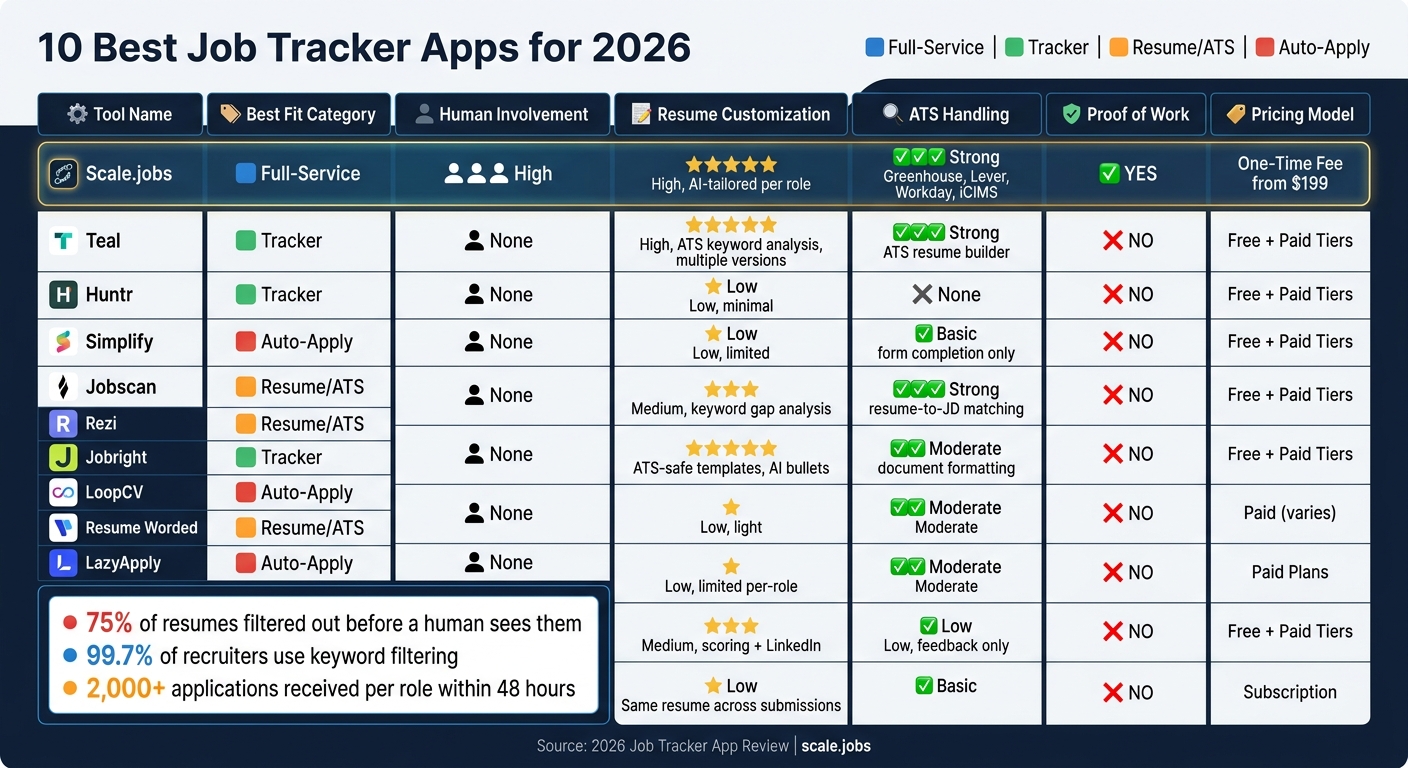
10 Best Job Tracker Apps for 2026: Side-by-Side Comparison
Not all job search tools do the same job. Some help you tune your resume. Some act like a pipeline dashboard. Others try to send applications at scale. That’s why it helps to sort them by workflow before you dig into the ranked reviews.
If your goal is to Apply for jobs with less manual work, this table makes the split clear: trackers, optimizers, and auto-apply tools each solve a different part of the process.
| Tool | Best Fit | Human Involvement | Resume Customization Depth | ATS Handling | Application Execution Method | Transparency / Proof of Work | Pricing Model |
|---|---|---|---|---|---|---|---|
| Scale.jobs | Full-service, hands-off search | High - trained human assistants manage submissions | AI-tailored resume and cover letter per role; multiple versions supported | Tested across Greenhouse, Lever, Workday, iCIMS | Human-assisted submission through any portal | Time-stamped screenshots and WhatsApp activity log | Free tracker; AI Assistant Pro $9/month (launch) or $19/month; Human Assistant plans from $199 for 250 applications |
| Teal | Resume tailoring and pipeline tracking | None | ATS keyword analysis; multiple resume versions | ATS-focused resume builder with JD matching | Manual - user submits | No submission layer | Free and paid tiers |
| Huntr | Visual pipeline tracking | None | Minimal | None | Manual - user submits | No submission layer | Free and paid tiers |
| Simplify | Fast autofill for application forms | None | Limited | Basic | Browser autofill | No proof layer | Free and paid tiers |
| Jobscan | ATS keyword optimization | None | Keyword gap analysis against JD | Strong - resume-to-JD matching | Manual - user submits | No submission layer | Free and paid tiers |
| Rezi | ATS-formatted resume building | None | ATS-safe templates and AI content suggestions | Moderate - document formatting focus | Manual - user submits | No submission layer | Free and paid tiers |
| Jobright | AI job discovery | None | Light | Moderate | Manual - user submits | No proof layer | Pricing varies |
| LoopCV | Automated bulk applications | None | Limited per-role customization | Moderate | Automated bulk apply | No proof layer | Paid plans available |
| Resume Worded | Resume and LinkedIn feedback | None | Detailed resume and profile scoring | Feedback only | Manual - user submits | No submission layer | Free and paid tiers |
| LazyApply | Bulk auto-apply on job boards | None | Limited per-role customization | Basic | Automated form submission; requires manual monitoring on some platforms | No proof layer | Paid plans available |
The biggest divide here is simple: some tools help you prepare better applications, while others help you send more of them.
Tools like Teal and Jobscan are stronger on optimization. They help with resume matching, keyword checks, and version control, but they stop short of submission. That makes them useful if you want to stay hands-on and manage your own pipeline through a job search platform workflow.
LoopCV and LazyApply go in the other direction. They focus on volume. That can help if speed matters, but there’s a tradeoff: less role-by-role tailoring and, on some platforms, more manual checking after the fact. If you've ever blasted out 100 applications and then wondered what actually got sent, you already know the problem.
Scale.jobs stands apart because it combines three things in one place: human-managed submissions, AI tailoring, and proof of work. In plain English, that means a Virtual Assistant for Job Applications helps submit the application, your resume and cover letter can be adjusted for each role, and you get time-stamped screenshots plus a WhatsApp log showing what was done. For job seekers who want a job application service instead of another DIY tool, that’s a very different setup.
This also makes the table useful for different kinds of searches:
- If you want help improving materials, look at tools with deeper ATS and resume support, such as an ai resume builder workflow.
- If you want help getting applications out the door, focus on execution method, proof of work, and whether a virtual assistant for job seekers is involved.
The ranked reviews below break down each app by fit, execution, proof, and pricing.
1. Scale.jobs
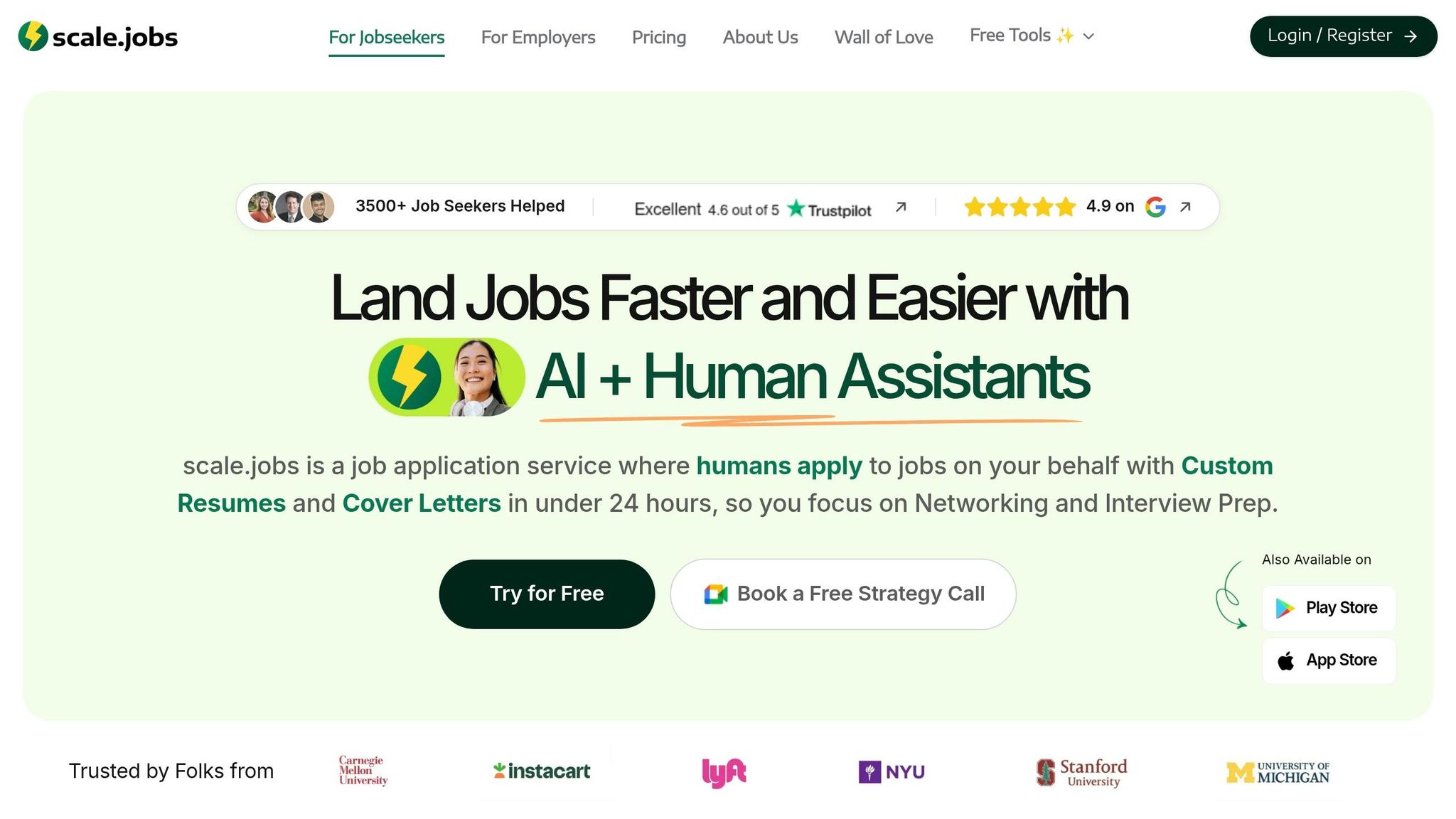
Scale.jobs takes the top spot because it brings job tracking, ATS-safe documents, and human-assisted submissions into one place. That matters if you don't want to bounce between a tracker, an ai resume builder, and a separate job application service. You get one workflow for finding roles, tailoring documents, and sending applications.
Human-assisted automation and portal coverage
This is where Scale.jobs stands out. Instead of relying only on bots, trained human virtual assistants submit forms by hand. That helps cut down on bot flags and CAPTCHA issues on stricter job portals.
It also works across company career pages and niche boards, not just a narrow set of listings. On top of that, users get access to a job search platform with 2M+ monthly job postings. If you're trying to Apply for jobs across many sources without getting stuck in portal friction, that's a big deal.
Resume and cover letter tailoring
Scale.jobs also covers document tailoring. The AI Assistant Pro plan costs $9/month at launch, then $19/month. It includes unlimited AI-tailored resumes and cover letters, plus interview answers.
If you want to test things first, the free plan gives you two tailored resumes and one cover letter per day. For many job seekers, that's enough to get a feel for how the system works before paying for a bundle or using a Virtual Assistant for Job Applications.
Tracking transparency and pricing
When people compare tools for full time jobs or high-volume outreach, speed isn't enough. You also want proof that the work happened.
Scale.jobs leans into that. Each human-assisted submission comes with time-stamped screenshots and WhatsApp proof of work. So instead of guessing whether an application was sent, you can see what was submitted and when. Human-assisted plans start at $199 for 250 applications and go up to $399 for 1,000 applications.
Here’s the pricing breakdown:
| Plan | Price | What's included |
|---|---|---|
| Free | $0 | Job tracker, 2 AI resumes/day, 1 AI cover letter/day |
| AI Assistant Pro | $9/month launch price; then $19/month | Unlimited AI resumes, cover letters, and interview answers |
| Human Assistant – Basic | $199 one-time | 250 applications, 1 human VA, proof-of-work screenshots |
| Human Assistant – Best Value | $399 one-time | 1,000 applications, 2 human VAs, AI custom resumes |
| Ultimate Bundle | $1,099 one-time | 1,000 applications, personal recruiter, LinkedIn makeover |
Pros:
- Human-assisted submissions cut down on bot flags and CAPTCHA failures on stricter portals
- AI tailoring creates role-specific resumes and cover letters at volume
- Time-stamped screenshots and WhatsApp proof logs show what was submitted and when
Cons:
- The strongest value is in the human-assisted bundles, not the free tracker by itself
- Bundle pricing is paid upfront before results come in
2. Teal
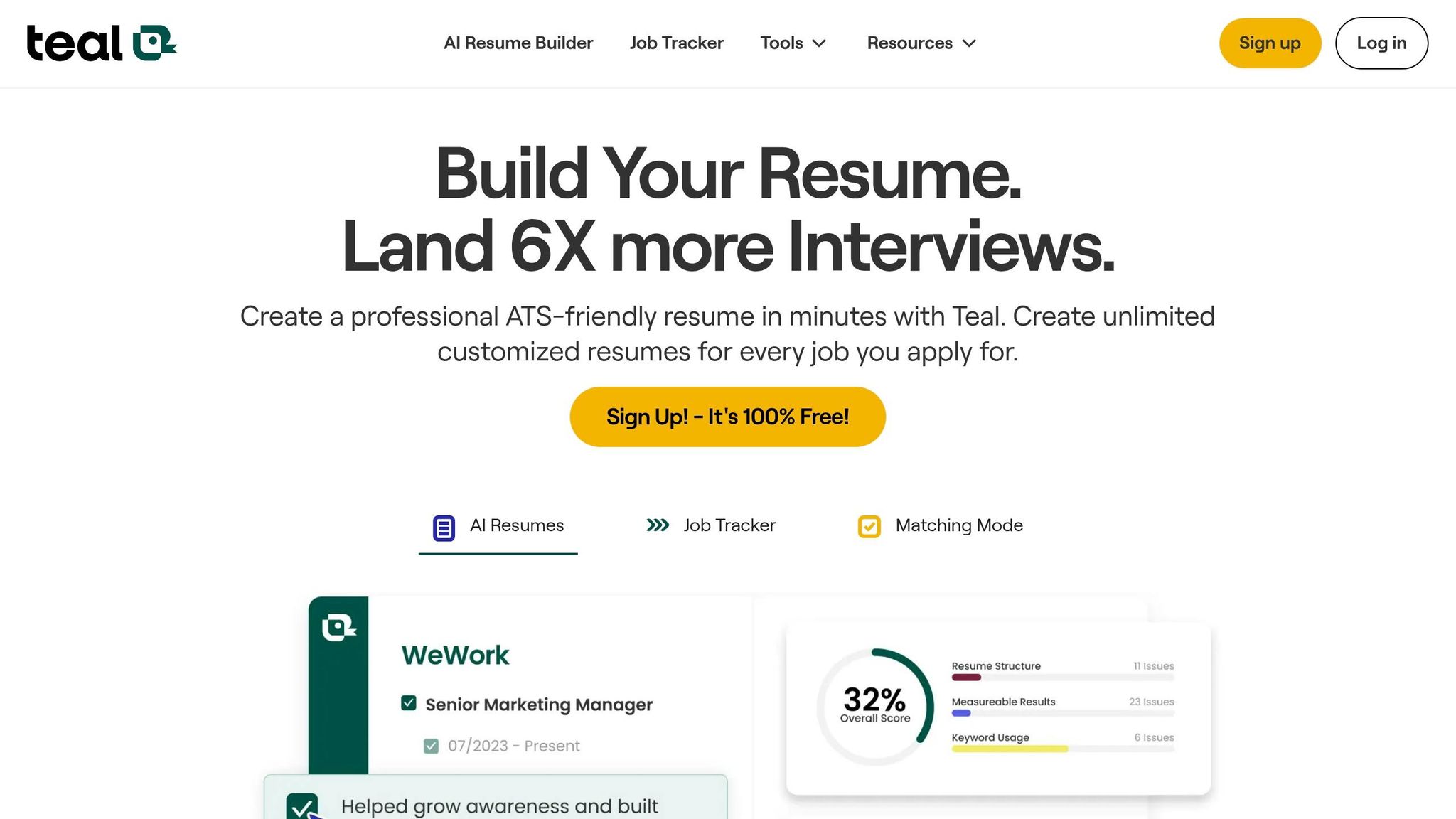
Teal fits job seekers who like to run their own process. If you want to track applications, tweak resumes, and stay on top of each step yourself, it does that well. But there’s a clear tradeoff: Teal is built more for planning than for sending applications out the door.
Job tracking and resume management
Teal focuses on two main jobs: application tracking and resume version control.
Its Resume Stack connects each resume version to a specific application, which makes it easier to keep your materials straight. That matters when you’re applying to several roles and don’t want to mix up resumes.
The ATS Resume Checker looks for formatting problems that can mess up ATS parsing before you apply. In plain English, it helps you catch issues before your resume hits a company portal.
That said, Teal helps you get ready. It does not help you submit.
Where Teal falls short
This is where the gap shows up.
Teal has no automated submission and no human-assisted submission. It also lacks WhatsApp support and proof-of-work records. So you won’t get screenshots, activity logs, or submission receipts.
That means the user still has to do the heavy lifting:
- submit each application
- follow up on their own
- track results manually
At low volume, that may be fine. At high volume, it becomes the choke point.
This is where Scale.jobs moves into a different lane. Instead of stopping at prep, it handles execution. Trained human assistants submit applications by hand, and each one comes with time-stamped screenshots plus a WhatsApp activity log. On top of that, resumes and cover letters are tailored for each role with ATS-safe formatting.
Why Scale.jobs wins over Teal:
- Human assistants submit applications by hand, which helps cut bot flags and CAPTCHA failures
- Time-stamped screenshots and WhatsApp proof logs show what was sent and when
- Tailored resumes and cover letters are produced at volume, not just checked for missing keywords
- Dedicated WhatsApp support helps with portal issues in real time
- One-time bundle pricing covers execution, not just prep
If you’re looking for a DIY tracker, Teal makes sense. If you need a job application service that actually gets applications submitted, the difference is pretty obvious.
Who should use Teal
Teal is a good fit for job seekers who want to manage their own pipeline, build targeted resumes, and track different resume versions across applications.
It works best for low-to-mid volume searches where manual submission isn’t a big problem. If you’re only sending a modest number of applications each week, a self-serve job search platform like this can be enough.
Who should choose Scale.jobs
Scale.jobs is the better pick for job seekers who need help with the part that usually eats the most time: submission.
If you’re applying at scale and need proof of work, human review, and help dealing with broken portals or odd employer forms, this is closer to a Virtual Assistant for Job Applications than a simple tracker. It’s also a fit for people who want a virtual assistant for job seekers instead of another dashboard they have to manage alone.
Teal vs Scale.jobs
Teal and Scale.jobs solve different parts of the same problem.
Teal helps you prepare applications. Scale.jobs helps you prepare and submit them. That distinction matters a lot when you’re trying to Apply for jobs in volume and don’t want your process to stall after the resume is ready.
Here’s the short version:
| Feature | Teal | Scale.jobs |
|---|---|---|
| Application tracking | Yes | Yes |
| Resume versioning | Yes | Yes |
| ATS checks | Yes | Yes |
| Human-assisted submission | No | Yes |
| Screenshots and proof logs | No | Yes |
| WhatsApp support | No | Yes |
Is Teal Worth It?
Yes - if you want a self-serve tool.
Teal is worth it for organized job seekers who want help managing resumes and tracking applications without handing off execution. It’s a solid option if your search volume is moderate and you don’t mind doing every submission yourself.
It’s less useful if your main pain point is time. In that case, a job search virtual assistant or a more hands-on job search coach setup will likely do more for you than another tracker.
Pros:
- AI-driven resume tailoring based on job descriptions
- Resume Stack links each resume version to a specific application
- ATS checker flags formatting issues that break ATS parsing before you apply
Cons:
- No automated or human-assisted application submission
- No screenshots, activity log, or submission receipts
- Users still submit, follow up, and log outcomes themselves
For anyone comparing workflow cost, that’s the key point: Teal stays in the DIY lane, while Scale.jobs adds execution. If you need help getting applications out, proof of work, and human oversight, Scale.jobs fills that gap.
Pricing: Teal offers a free plan with limited features and paid tiers starting at $29/month. Scale.jobs starts free, with Human Assistant plans from $199 for 250 applications.
3. Huntr
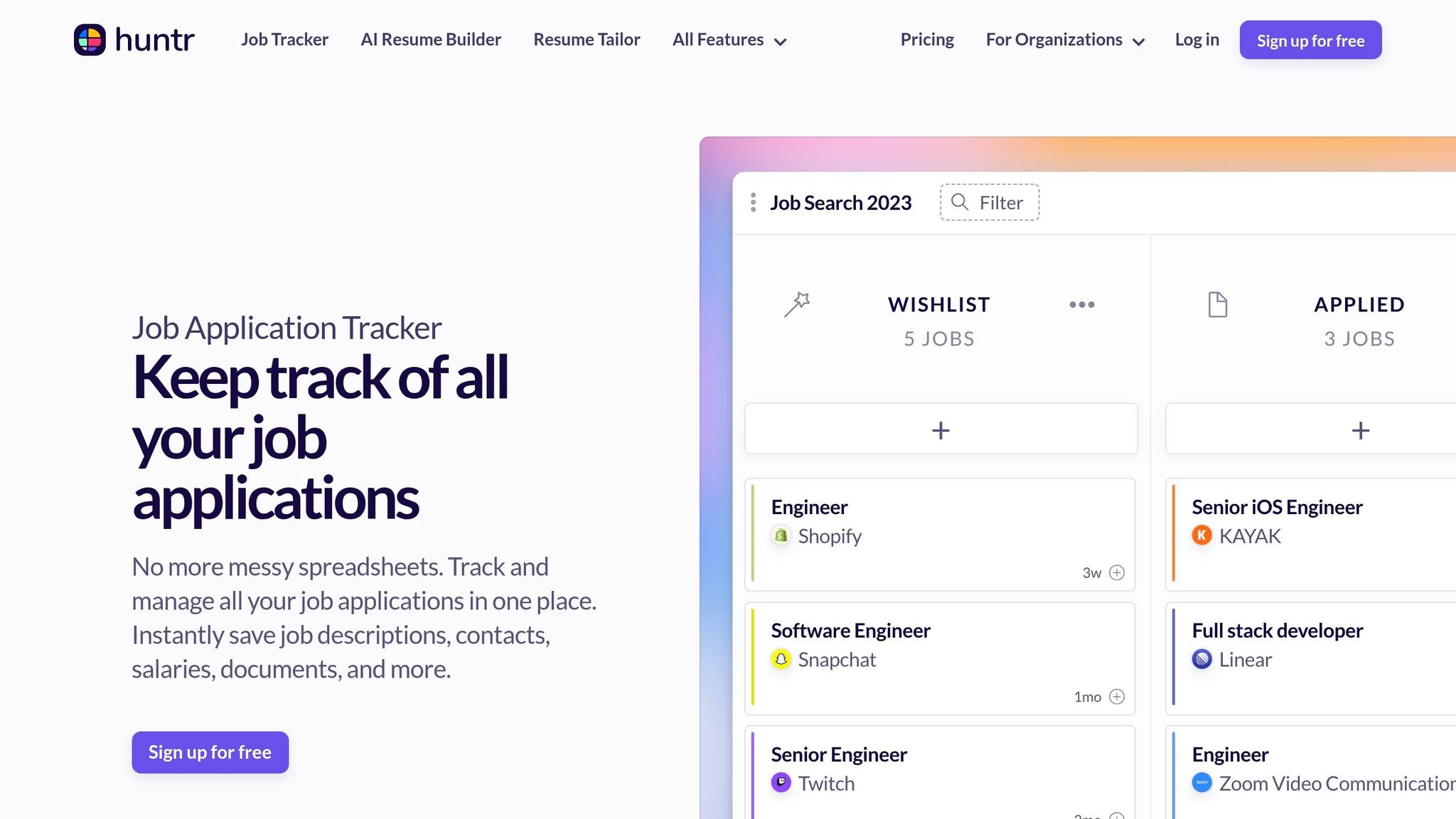
Huntr is a job tracking app built for manual pipeline management. It uses a kanban-style board that lets you drag applications through custom stages like "Wishlist", "Applied", "Interview", "Offer", and "Rejected." If you like seeing your search laid out visually, that setup feels clean and easy to scan.
Each application card stores the job description, company details, salary, and original posting URL. That makes Huntr a tracking tool, not an execution tool. It helps you stay organized, but you still have to apply for jobs on your own.
What Huntr does well
The tradeoff is pretty simple: Huntr helps you organize the search, but it does not help you submit applications.
Key features:
- Kanban board with drag-and-drop pipeline stages
- Application cards that store job descriptions, company details, salary data, and posting URLs
- Custom stages to match your workflow
- One place to view every active application
- Notes and contact fields attached to each application card
What Huntr does not offer:
- No automated or human-assisted application submission
- No ATS resume checking or keyword gap analysis
- No proof-of-work receipts or activity logs
- No WhatsApp support or live help
- No resume or cover letter tailoring tools
Huntr does not offer human-assisted submissions, proof-of-work receipts, or WhatsApp support - the exact gaps that separate a tracking tool from a full job application service. It sits at the DIY baseline: organize your search yourself, submit every application yourself, and follow up yourself.
Where Huntr stops short
Huntr is built for careful, targeted pipelines. That works fine when you're handling a small batch of roles each week. But once volume picks up, manual tracking can turn into one more task sitting on your plate.
There is no submission layer, no ATS handling, and no way to verify what was sent or when. So if you're looking for help with output, not just organization, Huntr won't cover that part of the process. A Virtual Assistant for Job Applications is built for that kind of bottleneck.
Tie this back to the article's core rubric: Huntr scores low on automation depth, ATS coverage, proof of work, and human support. It scores well only on organization.
Who should use Huntr
Huntr fits job seekers who want full manual control over a small, targeted pipeline. If you're applying to a handful of roles per week, prefer to submit every application yourself, and don't need submission proof or ATS help, Huntr is a clean, low-friction tracker.
It's a decent fit for someone who already has their resume ready, knows how to decode job descriptions, and just wants a visual system to avoid losing track of interviews and follow-ups.
Who should choose Scale.jobs
Scale.jobs fits higher-volume searches that need submission help, not just tracking. If your bottleneck is execution - getting applications out the door, keeping resumes ATS-safe, and confirming what was sent - Scale.jobs fills that gap with trained human assistants, time-stamped screenshots, and a WhatsApp activity log.
This matters even more if you're applying across many roles, juggling full time jobs and contract options, or trying to move faster without doing every repetitive step yourself. If you also need better documents before sending applications, tools like an ai resume builder and ai cover letter builder can help tighten that part of the process.
The right choice depends on whether your bottleneck is organization or execution.
Huntr organizes applications; Scale.jobs executes them. Use the table below to compare tracking-only workflows with human-assisted execution.
| Huntr | Scale.jobs | |
|---|---|---|
| Primary use | Visual organization and manual pipeline control | Human-assisted submission with tracking and document tailoring |
| Best for | Small, targeted application pipelines | Higher-volume searches that need execution support |
| Human-assisted submission | No | Yes |
| ATS-safe documents | No | Yes |
| Proof of work | No | Yes - time-stamped screenshots and WhatsApp log |
| WhatsApp support | No | Yes |
Huntr vs Scale.jobs
Huntr is for people who want to manage their own pipeline by hand. Scale.jobs is for people who want help getting applications submitted.
That difference sounds small on paper, but in practice it's huge. One tool helps you watch the process. The other helps move it forward. If you're choosing between a tracker and a job search platform, that's the line to focus on.
Is Huntr Worth It?
Yes - if you want a visual tracker and you're fine doing all the work yourself.
No - if you need help with submitting applications, ATS-safe resumes, proof of work, or direct support during your search. In that case, a job search virtual assistant makes more sense than another dashboard.
Pros:
- Intuitive drag-and-drop kanban board
- Application cards centralize job details, salary, and posting URLs in one place
- Custom pipeline stages to match any workflow
Cons:
- No submission automation or human-assisted application handling
- No proof-of-work receipts or activity logs
- Limited value at high volume when manual tracking slows the search
Pricing: Free plan available; paid plans add more tracking and organization features.
4. Simplify
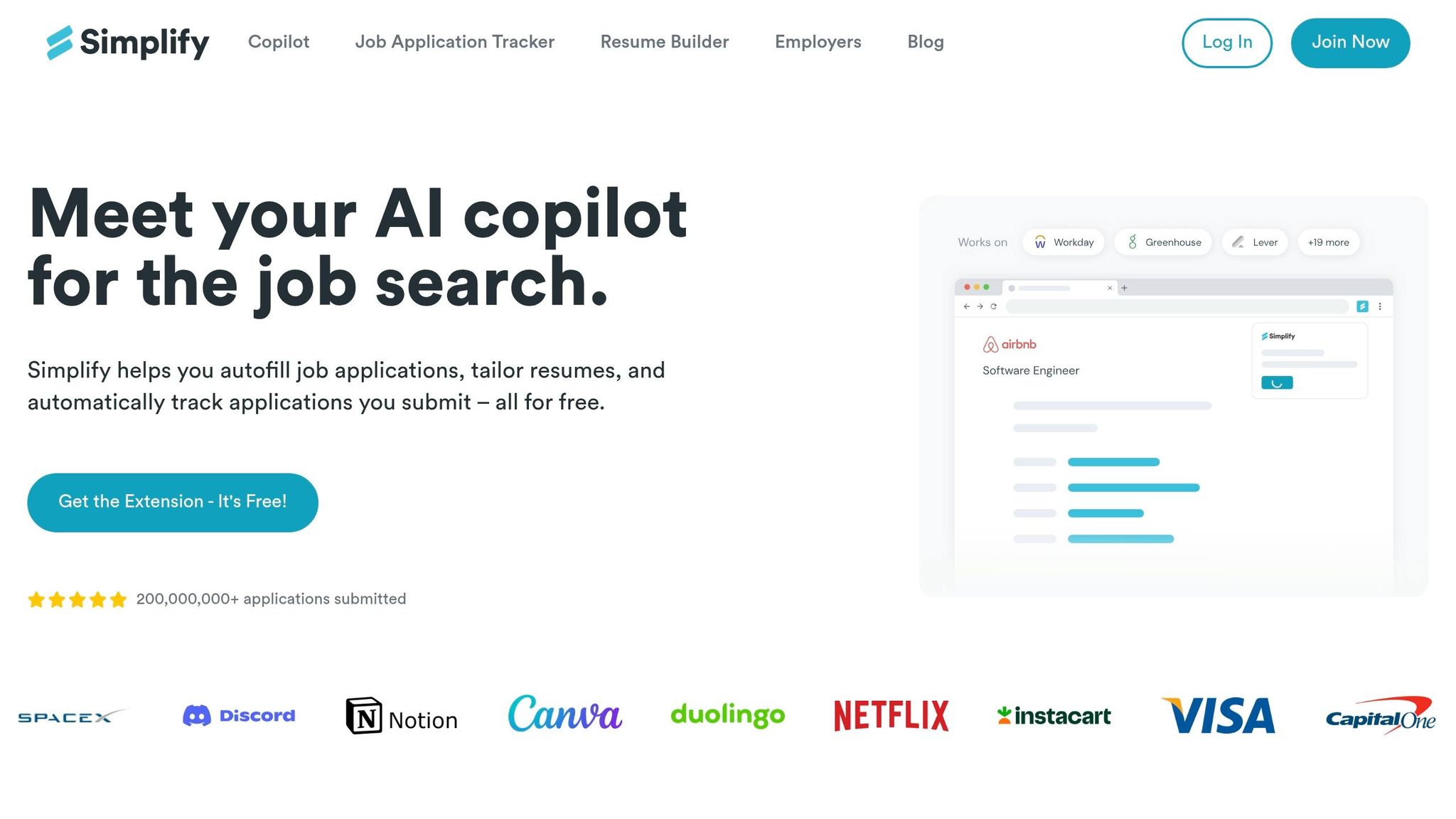
Simplify sits in the autofill lane. It helps with speed, but it’s light on tailoring and proof of work—a common trade-off when comparing human-assisted vs. automated job applications. The tool works as a browser extension that auto-fills job applications across many company career pages. You set up your profile once, and it fills in standard fields like your name, contact info, work history, and education when you open an application form.
If your main goal is to apply for jobs faster, that can save time. But speed alone doesn’t solve the whole problem.
What Simplify does well
Simplify handles standard form fields well and gives you a basic pipeline view by logging applications inside the same browser workflow.
That makes it useful for people who spend a lot of time copying the same details into application forms. It cuts down on repetitive work and keeps things moving.
Where Simplify falls short
Auto-fill is not the same as tailored applications. Simplify does not customize your resume for each role, check keyword gaps, or optimize your resume for ATS. So while it helps with form completion, it doesn’t do much for deeper application quality.
It also depends on an active browser session. On multi-step portals, the extension may stall at logins or CAPTCHAs, which can leave submissions unfinished. If you’re aiming for a more hands-off job application service, that limitation matters.
This is the big trade-off: Simplify helps with entry, not execution.
Who should use Simplify
Simplify makes sense for job seekers who want faster form-filling and are still fine submitting applications manually.
It can also work for people testing a few full time jobs each week and who don’t mind checking every step themselves.
Who should choose Scale.jobs
Scale.jobs fits job seekers who want human submission, ATS-safe tailoring, proof-of-work screenshots, and WhatsApp support. In plain terms, it covers the parts that usually slow people down or create doubt after you hit submit.
Scale.jobs adds human assistants, ATS-safe tailoring, proof-of-work screenshots, and WhatsApp support. Simplify does not offer those. If you want a Virtual Assistant for Job Applications or a job search virtual assistant that goes beyond browser autofill, this is where the difference shows up fast.
Simplify vs Scale.jobs
| Simplify | Scale.jobs | |
|---|---|---|
| Application method | Browser extension auto-fill | Workflow with human oversight |
| Resume tailoring per role | No | Yes |
| ATS handling | Limited to form completion | ATS-safe documents plus human-assisted submission |
| Handles complex/multi-step forms | Partial - may stall at logins or CAPTCHAs | Yes |
| Proof of work | No | Yes |
| Pricing | Free / paid tiers | One-time payment |
Is Simplify Worth It?
Yes, if your main pain point is repetitive data entry and you still want to manage the full application process yourself.
No, if you want tailored submissions, help with ATS issues, or proof that each application was fully completed. In that case, a more hands-on job search platform will likely fit better.
Bottom line: Simplify speeds up data entry, but it stops short of tailored submission.
The next tools move from autofill to deeper tracking or execution.
5. Jobscan
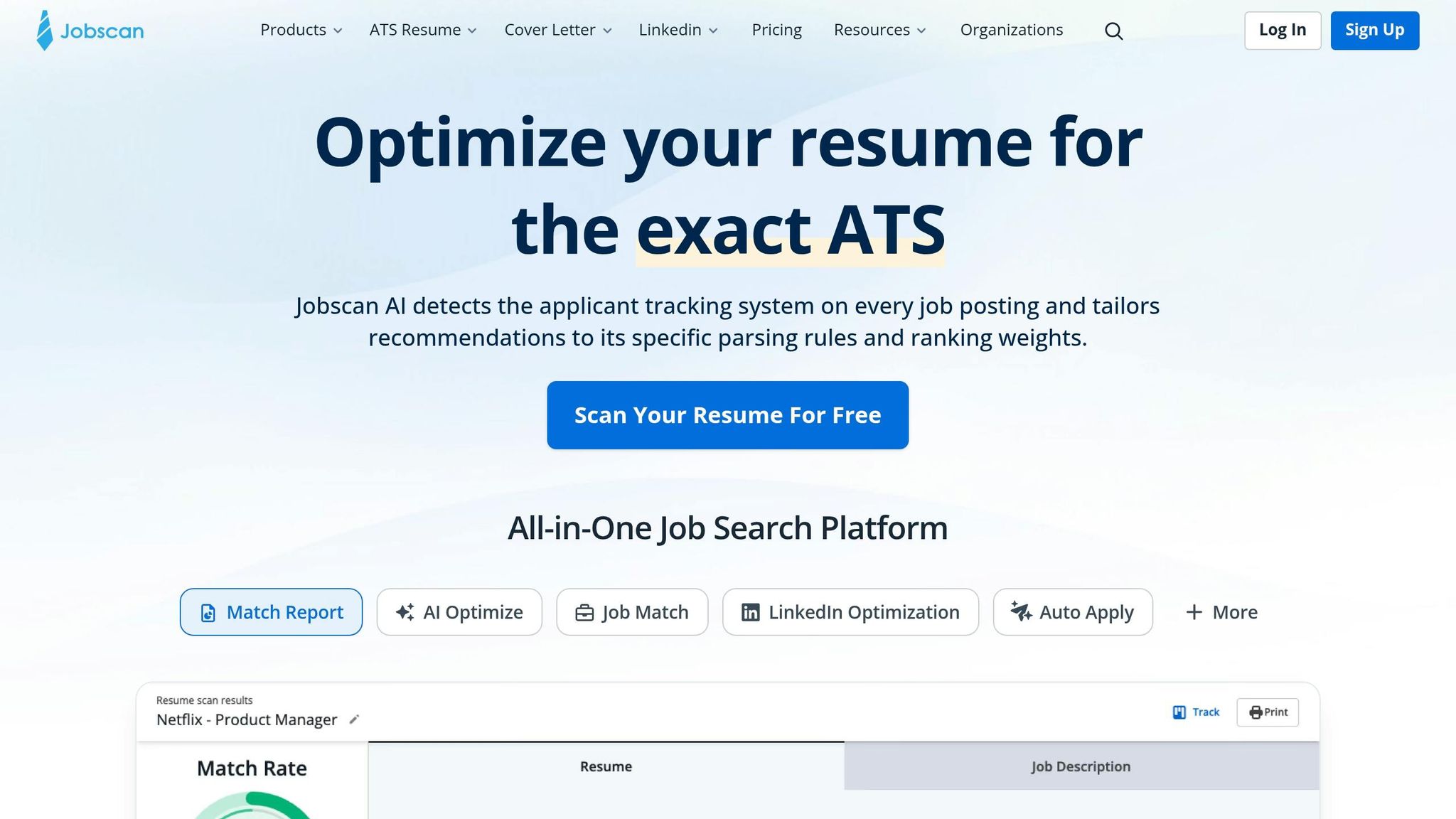
Jobscan is a resume-to-job-description matcher that spots keyword gaps and ATS formatting problems. In plain English, it helps you see why your resume may not line up with a role before you hit submit. That makes it a diagnosis tool, not a tracker or a job application service. Jobscan helps before applications go out; Scale.jobs helps before, during, and after submission.
What Jobscan does well
Jobscan is good at catching missing terms before you apply. That matters because keyword filtering still shapes early screening, and many ATS systems look for exact wording. If a job post says “stakeholder management” and your resume says “cross-functional coordination,” that gap can hurt even when the work is similar.
It also flags formatting issues that can trip up ATS parsing, such as complex tables, text boxes, and content placed in headers or footers. On top of that, it gives formatting and keyword suggestions for major platforms.
That’s useful if your main problem is screening. But it stops short of resume rewriting or submission. So if you want a Virtual Assistant for Job Applications or help to Apply for jobs, Jobscan won’t cover that part.
Where Jobscan falls short
Jobscan tells you what to fix, but it does not rewrite your resume or submit applications. The score is only a text match. It is not a submission signal, and it does not tell you where you rank against other applicants. You still have to edit the resume yourself and apply by hand.
That’s the split between diagnosis and execution.
Scale.jobs handles the gaps Jobscan leaves open: tailored resumes, human-assisted submission, proof-of-work screenshots, and WhatsApp updates. For people who want a done-with-you or done-for-you flow, that can feel a lot closer to a job search virtual assistant than a stand-alone scanner.
Who should use Jobscan
Jobscan fits self-directed candidates who want a repeatable keyword check before applying, especially for corporate roles.
It makes sense if you already have a process, don’t mind editing your own resume, and just want a screening pass before each application. It can also pair well with an ai resume builder if you want help drafting but still plan to do the final tuning yourself.
Who should choose Scale.jobs
Scale.jobs fits job seekers who want keyword tuning and execution: tailored resumes per role, human-assisted submission, and time-stamped proof-of-work screenshots.
If your bottleneck is not knowing what to change, Jobscan may be enough. If your bottleneck is time, follow-through, or application volume, Scale.jobs is the better fit. That’s especially true if you want a virtual assistant for job seekers instead of one more tool to manage.
Jobscan vs Scale.jobs
| Jobscan | Scale.jobs | |
|---|---|---|
| Resume-to-JD keyword matching | Yes | Yes |
| ATS formatting checks | Yes | Yes |
| Resume rewriting | No | Yes, human-assisted |
| Application submission | No | Yes, human-assisted |
| Proof of work | No | Yes, screenshots and dashboard |
| Pricing | Subscription-based | One-time flat fee |
Is Jobscan Worth It?
Yes - if resume tuning is your main issue.
Jobscan is worth it for people who want to tighten resume-to-job match quality before they apply. It gives you a repeatable way to check wording and formatting, which can help with ATS screening.
But if you also need drafting, submission help, or a system that works more like a job search platform, it won’t go far enough.
Bottom line: Jobscan diagnoses resume gaps. Scale.jobs diagnoses, rewrites, and submits.
If resume tuning is the bottleneck, compare this next with the tools that also handle drafting and execution.
6. Rezi
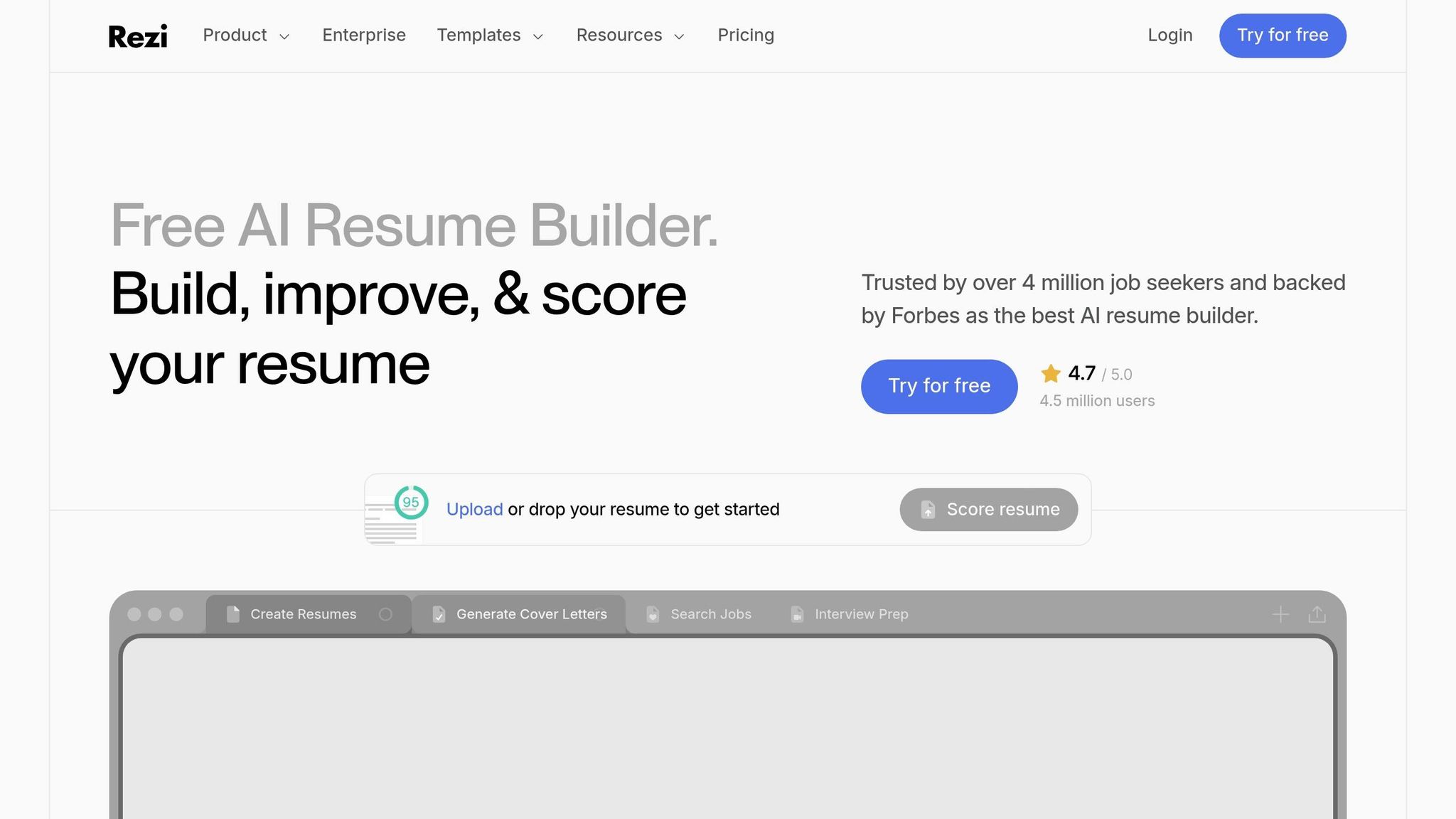
Rezi is an ATS-focused ai resume builder, not a job tracker. It helps with resume quality, but it does not manage submissions or follow-ups. For active candidates trying to Apply for jobs at scale, that gap matters.
What Rezi does well
Rezi's main strength is resume creation. It helps users build ATS-friendly resumes and rewrite job duties into impact-focused bullets with AI. That matters because ATS filters still look for keywords and clean formatting before a recruiter ever opens the file.
It also supports achievement-based bullet formatting, which can make a resume read more clearly. If your main problem is, "My resume needs work", Rezi can help.
Think of Rezi as a document tool, not a search command center.
Where Rezi falls short
If you're comparing Rezi to a tracker or a job application service, the missing piece is workflow control. It does not track applications, submit forms, or show proof of work.
That means you still need your own system for things like:
- where you applied
- when you applied
- which version of your resume you used
- whether a follow-up is due
For someone juggling several full time jobs or even Part time jobs near me, that can get messy fast.
Rezi vs. Scale.jobs
Use the table below to compare Rezi's resume focus with Scale.jobs' full-search workflow.
| Rezi | Scale.jobs | |
|---|---|---|
| ATS-friendly resume creation | Yes | Yes |
| AI resume writing | Yes | Yes, with human oversight |
| Application tracking | No | Yes |
| Application submission | No | Yes, human-assisted |
| Proof of work | No | Yes |
Who should use Rezi
Use Rezi if you only need a resume builder and plan to submit manually.
This makes sense for people with a short target list, a simple search process, or enough time to handle each step on their own.
Who should choose Scale.jobs
Choose Scale.jobs if you need tracking, submission, and proof of work. It's a better fit when your search has moved past resume drafting and into day-to-day execution.
Switch to Scale.jobs if you are managing multiple live applications and need one place to track submissions. If you want more hands-on help, a virtual assistant for job seekers setup can save hours and cut down on missed follow-ups.
Is Rezi Worth It?
Yes, if your only need is resume building.
No, if you want help running the full job search. Rezi improves the document. It does not run the workflow. If you need a job search platform that helps you stay on top of active applications, Rezi will feel limited pretty fast.
7. Jobright
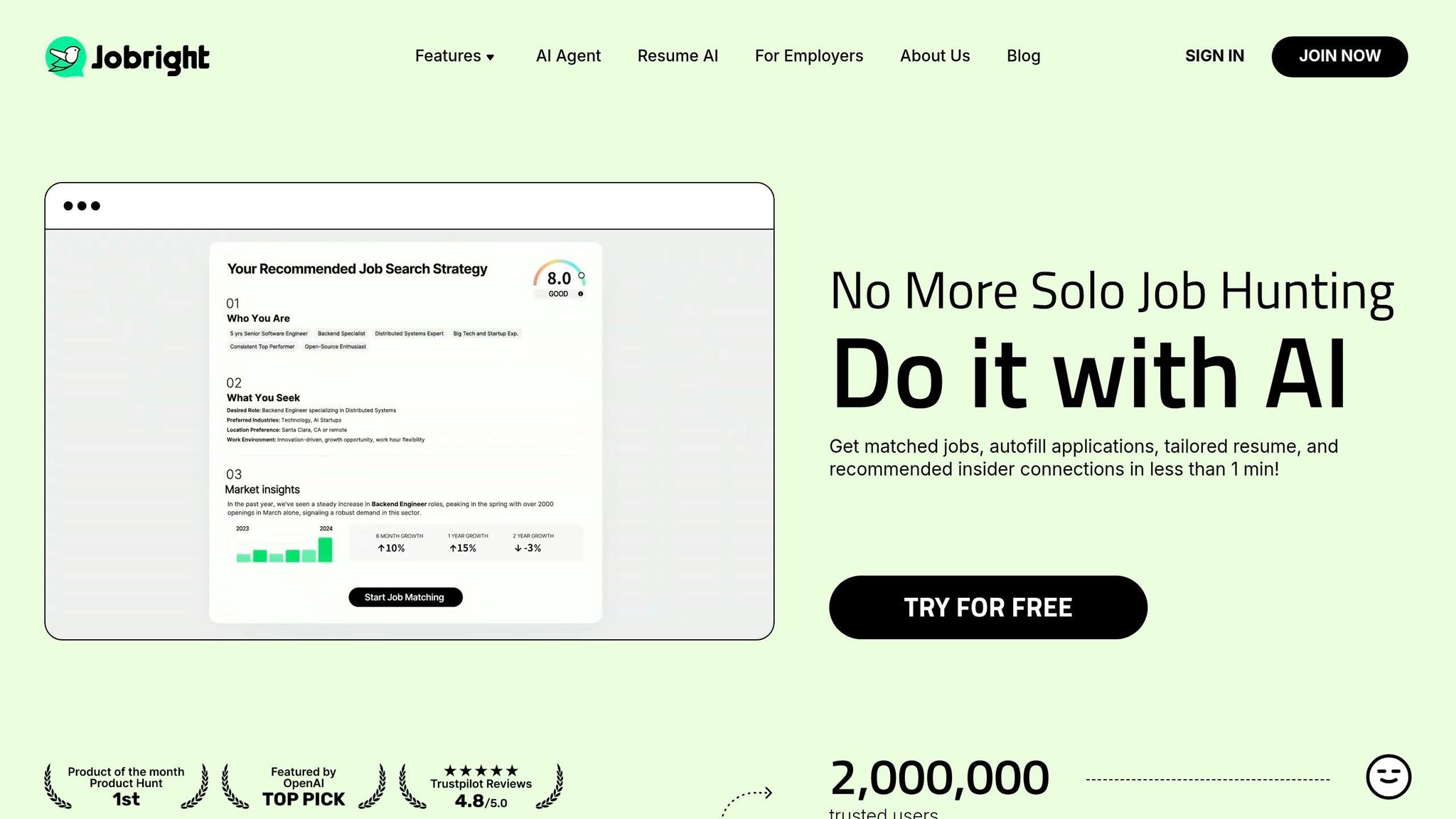
After Rezi sharpens your resume, Jobright helps with the next step: narrowing your list. But it stops short of sending applications. Jobright is an AI-powered matching and tracking tool built for early-stage search. It helps you find roles that fit. It does not handle end-to-end execution.
Summary of company
Jobright is an AI-driven job discovery tool that scores job posts against your resume and surfaces roles that fit your background. It is built for the research and targeting phase of a search, not the execution phase.
If your main goal is to find better-fit openings before you apply for jobs, Jobright can help. If your goal is to get applications out the door at scale, you’ll need more than a tracker.
What Jobright does well
Jobright’s main strength is resume-to-job scoring. It compares your resume with job descriptions and points out keyword gaps before you apply. That’s useful when you’re trying to avoid wasting time on poor-fit roles.
It also lets you save different resume versions and track which version went to which company. For basic organization, that’s handy. Think of it as a sorting and prep tool, not a done-for-you workflow.
Where Jobright falls short
Jobright covers discovery and light tracking. It does not cover automation depth, ATS handling, proof of work, or human support. Those four things are what separate a tracker from a full job application service.
You still have to submit each application yourself, handle follow-ups, and keep your own records current. Jobright helps you decide what to apply to. Scale.jobs helps get the application submitted and logged.
Key features
- AI resume-to-job scoring that surfaces roles matching your background
- Keyword gap flags before you apply
- Multiple resume version storage
- Basic application log tied to each resume version
- Job discovery feed filtered by fit score
Job search automation offerings
Jobright focuses on the front end of the search process. That includes AI-powered role matching, fit scoring, keyword gap checks against job descriptions, and light tracking by resume version.
That makes it a decent add-on for people still building a target list. It is not a full job search platform for execution if you want help with submissions, tracking, and follow-through.
Jobright vs. Scale.jobs
| Feature | Jobright | Scale.jobs |
|---|---|---|
| AI job matching | Yes | Yes |
| Resume-to-job scoring | Yes | Yes, with human assistance |
| Application execution | Manual tracking only | Human-assisted apply workflow |
| Application tracking | Light | Full |
| Proof of work | No | Yes |
| Dedicated support | No | Yes, via WhatsApp |
Why Scale.jobs wins:
- Human assistants submit applications by hand, which cuts bot flags and CAPTCHA failures that often block automated tools
- ATS-safe tailoring gives you a role-specific resume and cover letter for each submission, not just a keyword score
- Time-stamped screenshots and a WhatsApp activity log show what was sent and when
- Dedicated WhatsApp support helps with portal issues in real time
- One-time flat-fee pricing covers execution, not just discovery
If discovery is done and execution is next, Scale.jobs adds submission, tracking, and proof of work in one workflow.
Is Jobright Worth It?
Yes - if you are still in the discovery phase.
Jobright is worth using when you’re trying to narrow your list, compare openings, and spot resume gaps before sending anything out. It’s less useful once your focus shifts from research to volume and consistency. At that point, a Virtual Assistant for Job Applications or hands-on support tends to matter more than another scoring dashboard.
Who should use Jobright
Jobright fits candidates who are still choosing target roles and want AI help narrowing the list. It works well for early-stage searches where discovery matters more than execution.
This can be useful for people testing direction across industries, comparing full time jobs, or trying to clean up their targeting before they commit to a higher-output process.
Who should choose Scale.jobs
Choose Scale.jobs when you are past the discovery phase and need applications moving on a steady schedule. If you’re juggling many roles and want human-assisted submission, ATS-safe documents, and proof of work, Scale.jobs provides the execution layer Jobright does not.
It makes more sense for job seekers who don’t just want leads - they want action. If you’ve ever thought, “I know what I want to apply to, I just need help getting it done,” that’s where a virtual assistant for job seekers becomes far more useful than light tracking alone.
Pros:
- Resume-to-job scoring helps filter out poor-fit roles before you apply
- Keyword gap flags give an early signal on resume alignment
- Multiple resume versions can be stored and tracked per application
Cons:
- No automated or human-assisted application submission
- No ATS document handling or cover letter tailoring
- No proof-of-work receipts, activity logs, or WhatsApp support
- Light tracking only - no full pipeline management
Pricing: Paid plans are available; check Jobright’s site for current tier details. Scale.jobs starts free, with Human Assistant plans from $199 for 250 applications.
Decision Summary: Use Jobright if you are still mapping target roles and want AI-driven fit scoring to narrow your list. Move to Scale.jobs when you are ready to execute. Human-assisted submissions, ATS-safe documents, and time-stamped proof of work are where Jobright stops and Scale.jobs starts.
8. LoopCV
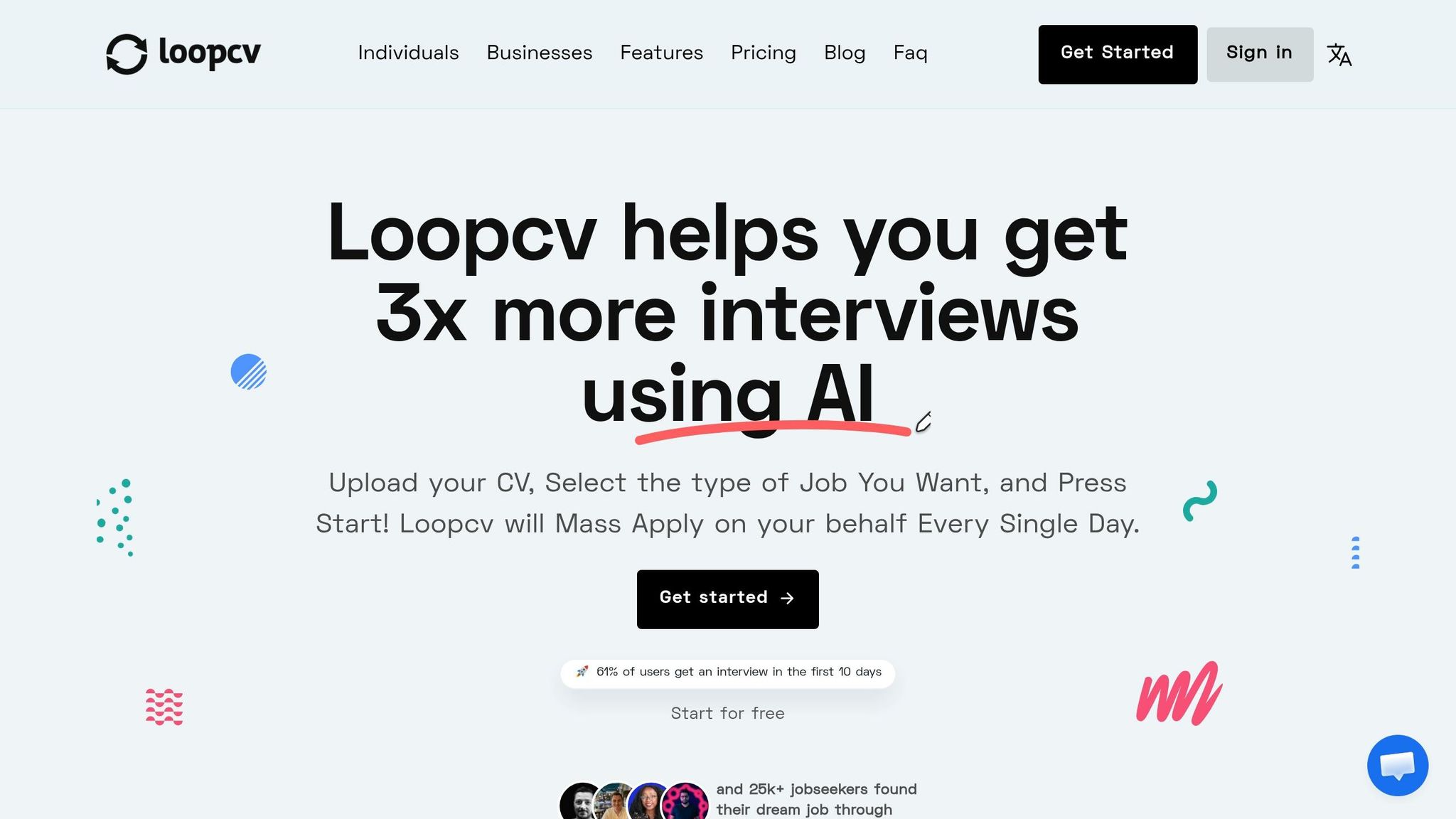
After discovery tools like Jobright, LoopCV shifts the focus to high-volume job applications. It’s built for people who want to send a lot of applications fast. Scale.jobs is the better pick when you want human review, ATS-safe documents, and clear proof that each application was sent.
Summary of company and what LoopCV does well
LoopCV automates bulk applications by moving through job boards and filling out forms for you. That makes it useful for job seekers who want to test fast, high-volume outreach without doing every step by hand.
If your goal is simple - send more applications in less time - LoopCV does that job well.
Where LoopCV falls short
The main issue is reliability during the application process. Login prompts, CAPTCHAs, and other security checks can stop an automated run midway, which may leave applications incomplete.
There’s also the tailoring problem. LoopCV is built for throughput, not careful role-by-role edits. So if you’re targeting jobs where resume fit, cover letter fit, and portal accuracy matter, a human-supported job application service is often a better route.
Key features
- Automated bulk application submission across job boards
- Auto-fill for standard application form fields
- Queue-based workflow to process multiple roles in sequence
- Basic application log to track submitted roles
Job search automation offerings
LoopCV handles the repetitive part of the process by navigating job boards and filling standard fields without manual input for each role. It can work through an application queue and move across many openings fast.
That makes it a decent option for people who care more about volume than per-job edits. But if you want a job search virtual assistant that adds review and execution support, this is where LoopCV starts to feel limited.
LoopCV vs. Scale.jobs
This comparison is less about automation vs. manual work and more about volume vs. control.
| Feature | LoopCV | Scale.jobs |
|---|---|---|
| Human involvement | None - fully automated | High - trained human assistants manage submissions |
| Resume customization depth | Limited per-role customization | AI-tailored resume and cover letter per role |
| ATS handling | Basic | Tested across Greenhouse, Lever, Workday, iCIMS |
| Application execution method | Automated bulk apply | Human-assisted submission through any portal |
| Transparency / proof of work | No proof layer | Time-stamped screenshots and WhatsApp activity log |
| Pricing model | Paid subscription | One-time flat fee from $199 for 250 applications |
Why Scale.jobs wins:
- Human assistants submit applications by hand, which helps avoid bot flags and CAPTCHA failures
- ATS-safe tailoring gives you a role-specific resume and cover letter for each submission instead of one profile sent everywhere
- Time-stamped screenshots and a WhatsApp activity log show what was sent and when
- Dedicated WhatsApp support helps with portal issues as they happen
- One-time flat-fee pricing covers execution without a recurring subscription
If you’re comparing a bulk apply tool with a Virtual Assistant for Job Applications, the difference is pretty clear: one is built for speed, the other is built for accuracy and oversight.
Who should use LoopCV
LoopCV fits job seekers who want to test high-volume outreach fast and don’t mind giving up some control on each application. It works best when speed matters most and tailoring is not the main concern.
This can make sense for broad searches across entry-level roles, full time jobs, or situations where you simply want to get into more funnels fast.
Who should choose Scale.jobs
Choose Scale.jobs when you want role-by-role submissions that are checked by humans, plus ATS-safe resumes and proof of work. It’s a stronger fit for job seekers who want oversight, not just output.
That matters even more if you’re applying through messy portals, switching between job boards, or trying to improve quality while you Apply for jobs. If you also need better documents before submission, tools like an ai resume builder and ai cover letter builder can help tighten your application package before a human assistant sends it.
Is LoopCV Worth It?
Yes, if your main goal is volume.
LoopCV is worth a look for job seekers who want to move fast, test broad outreach, and reduce repetitive form filling. But if your search depends on accuracy, tailoring, and proof that every application went through, Scale.jobs gives you more control.
Pros:
- Submits many applications with limited manual input
- Reduces repetitive form-filling across job boards
Cons:
- Login prompts, CAPTCHAs, and security checks can interrupt automated runs
- Limited per-role customization
- Automation-first workflows favor speed over oversight
Pricing: Check LoopCV's site for current pricing. Scale.jobs starts free, with Human Assistant plans from $199 for 250 applications.
Decision Summary: Choose LoopCV for volume; choose Scale.jobs for controlled execution, receipts, and human oversight.
9. Resume Worded
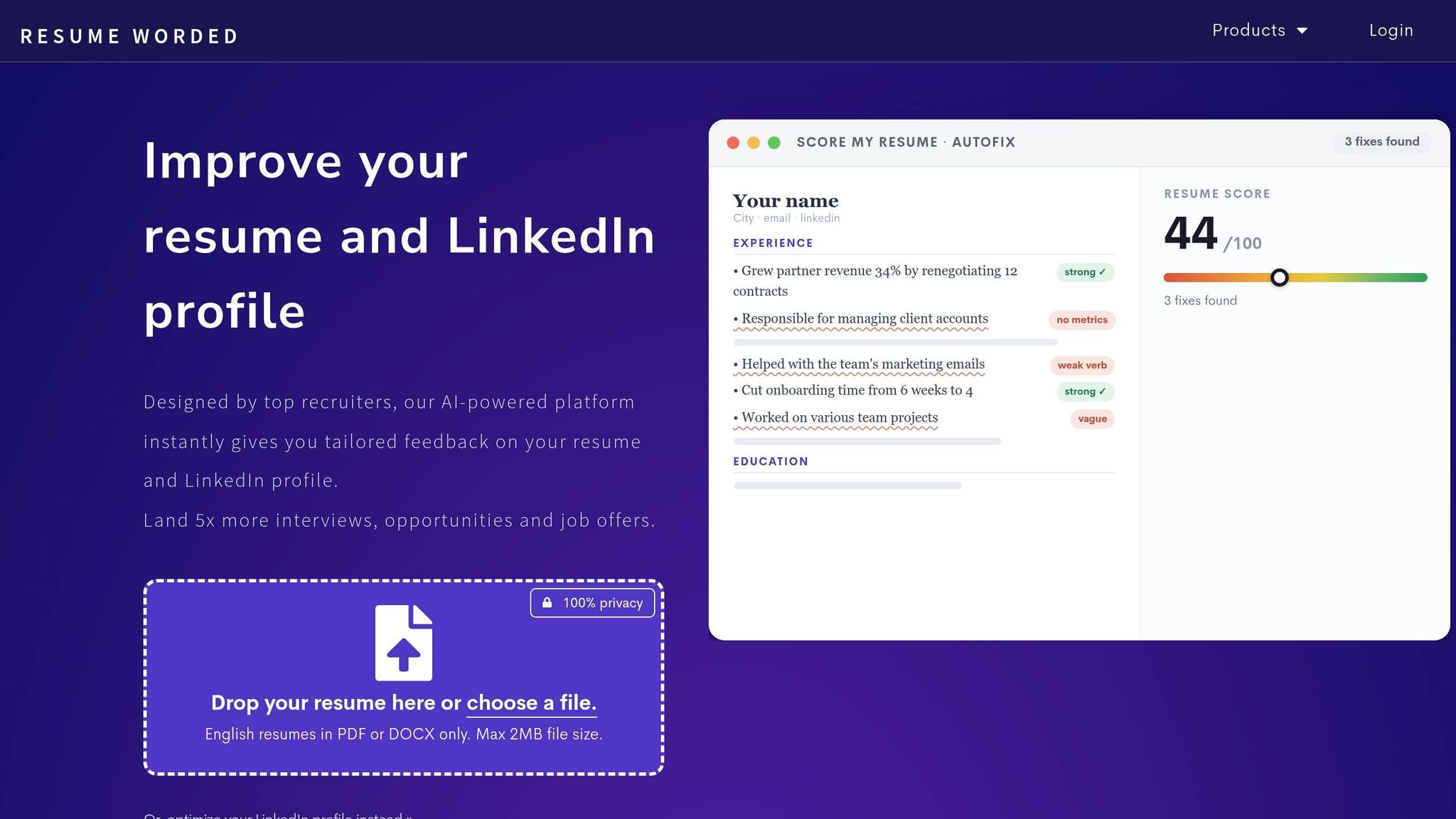
Resume Worded is a resume and LinkedIn feedback tool. It is not a tracker and it does not help you apply for jobs. If you’ve already used tools like Rezi or another ai resume builder, Resume Worded works best as a second pass before you start sending applications.
Its main job is simple: it scores your resume against job descriptions and helps optimize your LinkedIn bio for recruiters so they can find you more easily.
What Resume Worded does well
Resume Worded is good at spotting keyword gaps in your resume. That matters because many job seekers write a solid resume, then miss the exact terms employers use in postings.
Its LinkedIn optimization tool is also a big part of the appeal. It focuses on your headline and “About” section so they line up better with recruiter search terms. If inbound recruiter messages matter in your search, that feature can help.
That LinkedIn focus is what sets Resume Worded apart from many other resume tools. Most tools stay locked on resume edits. Resume Worded also looks at how you show up in LinkedIn search, which can matter just as much as your resume in some hiring markets.
Where Resume Worded falls short as a job tracker
This is where the limits show up fast.
Resume Worded does not track applications, submit forms, or handle follow-ups. So while it can help polish your documents, it does not function like a job search platform built for execution.
Its scoring is also text-based. That means it reviews content and keyword match, but it is not the same as live ATS testing. A high score may look good on screen, but it does not mean your resume will pass every hiring system.
Once your resume is in decent shape, many job seekers need a different kind of help: submission, tracking, and proof that applications were actually done. That’s the gap Scale.jobs tries to fill with job application service support.
Resume Worded vs. Scale.jobs
| Feature | Resume Worded | Scale.jobs |
|---|---|---|
| Human involvement | None | Application execution support |
| Resume and LinkedIn feedback | Keyword scoring and LinkedIn suggestions | AI-tailored resume and cover letter per role |
| ATS handling | Text-based scoring only | Tested across Greenhouse, Lever, Workday, iCIMS |
| Application execution | None - optimization only | Human-assisted submission through any portal |
| Transparency / proof of work | No | Time-stamped screenshots and WhatsApp activity log |
If you want a quick way to think about it, Resume Worded helps you prepare. Scale.jobs helps you execute.
Who should use Resume Worded
Resume Worded fits job seekers who are still in the review stage.
Use it when your main goal is diagnostic work: finding keyword gaps, tightening your resume, and lining up your LinkedIn profile with recruiter search terms before you begin a serious application push. It can be a useful checkpoint before a high-volume search across the best job boards.
Who should choose Scale.jobs
Choose Scale.jobs when you’re past resume review and need help with the actual workload.
That usually means you want application submission, tracking, and proof-of-work receipts. If you’re trying to manage dozens of roles across portals and keep up with deadlines, that starts to look less like resume editing and more like process management. In that case, a Virtual Assistant for Job Applications or a job search virtual assistant setup makes more sense than a scoring tool alone.
Pros:
- LinkedIn profile optimization targets recruiter search visibility, not just resume formatting
- Resume scoring flags keyword gaps before you apply
- Useful as a pre-application review pass before committing to a high-volume search
Cons:
- No application tracking, submission, or follow-up management
- Scoring is text-based, not live ATS testing
- No proof-of-work receipts or WhatsApp support
Pricing: Free and paid plans available.
Decision Summary: Use Resume Worded to diagnose and refine your resume and LinkedIn profile before applying. Switch to Scale.jobs when you are ready to move from optimization to submission and tracking.
The next tool moves from diagnosis to application speed.
10. LazyApply
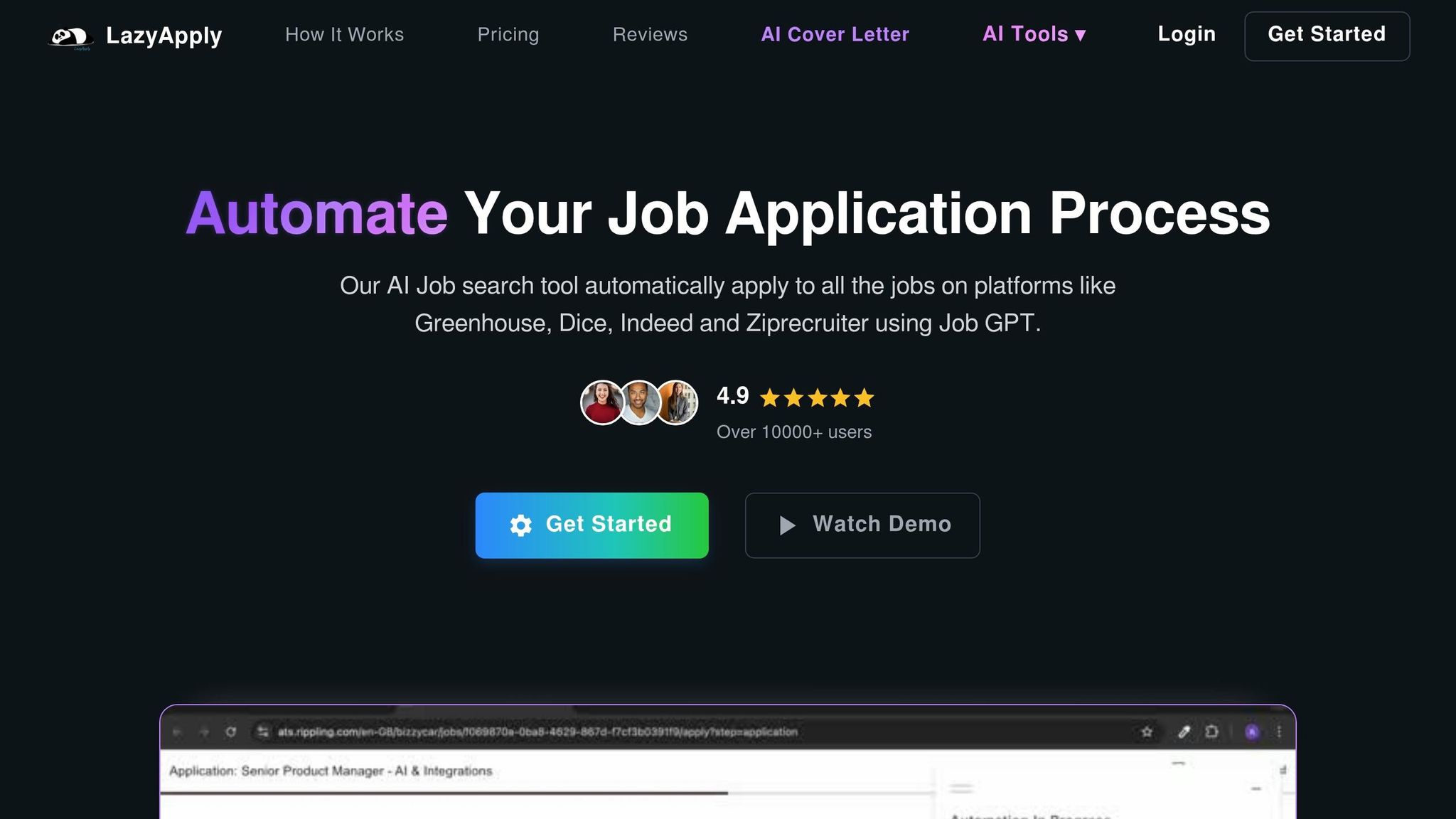
LazyApply is a browser extension built for speed. Its main pitch is simple: use a one-click bulk-apply setup to move through a lot of openings fast.
If your main goal is to Apply for jobs at high volume, that can sound appealing. But speed alone doesn’t always get results.
Summary of company
LazyApply is built to automate repetitive form-filling and submission steps. It’s aimed at job seekers who want broad market coverage and don’t want to spend hours clicking through the same job-board fields again and again.
In plain English, it tries to turn the job hunt into a numbers game.
What LazyApply does well
LazyApply works best when speed matters more than precision.
- One-click bulk applications save time on repetitive job-board forms.
- It can help with broad market coverage when your focus is volume over customization.
For someone scanning best job boards and trying to push out a large batch of applications in one sitting, that shortcut can help.
Where LazyApply falls short
This is where things get tricky.
Automation stops at login screens and CAPTCHAs, so you still need to step in manually. That alone cuts into the “set it and forget it” idea. On top of that, automated actions can create account-risk concerns on platforms like LinkedIn.
The bigger issue is fit. Applications go out with the same resume and no ATS-specific tailoring. That matters because up to 75% of resumes are rejected by ATS filters before a recruiter ever sees them. If you’re using one generic resume across many roles, you may be saving time while lowering your odds.
Tracking is also basic, with no proof-of-work receipts. So if you want a clear record of what was submitted, when it was sent, and how it was handled, LazyApply leaves a gap.
That’s the gap Scale.jobs fills with human-assisted submission, ATS-safe documents, and proof-of-work receipts. If you want more control than a browser extension can give, a job application service setup makes a lot more sense.
LazyApply vs. Scale.jobs
While LazyApply automates submission, Scale.jobs adds oversight.
| Feature | LazyApply | Scale.jobs |
|---|---|---|
| Human involvement | None | Human-in-the-loop support |
| Resume customization depth | Same resume across submissions | AI-powered tailoring for each role |
| ATS handling | No ATS-specific tailoring | ATS-optimized documents |
| Application execution method | One-click bulk automation | Human-assisted application execution |
| Transparency and proof of work | No proof-of-work receipts; basic tracking | Time-stamped screenshots and WhatsApp activity log |
| Pricing model | Subscription-based | One-time payment |
Why Scale.jobs wins here
The difference comes down to execution.
- It adds human oversight instead of relying only on browser automation.
- It tailors documents for each role instead of reusing the same resume.
- It provides clear proof of work through time-stamped screenshots and a WhatsApp activity log.
That matters a lot if you’re applying to crowded roles. When one posting gets 2,000+ applications in 48 hours, a generic blast approach can feel like tossing your resume into a black hole.
Scale.jobs also pairs better with tools like an ai resume builder and an ai cover letter builder, since the goal isn’t just to send more applications. It’s to send better ones.
Who should use LazyApply
LazyApply fits job seekers who care most about speed and volume. It makes the most sense if you’re comfortable with automation limits, manual interruptions at login screens, and account-risk concerns tied to bulk actions.
It may also work for people applying across a very broad range of roles, where getting as many submissions out as possible is the main target.
Who should choose Scale.jobs
Scale.jobs is the better fit if you’re targeting competitive roles, especially when a single posting attracts 2,000+ applications in 48 hours. It also makes more sense when you need ATS-optimized documents and human-assisted execution instead of fully automated bulk submission.
If you’d rather have a virtual assistant for job seekers than a browser bot doing blind bulk sends, Scale.jobs is the stronger option.
Pros:
- Fast bulk application submission
- Saves time on repetitive forms
Cons:
- Stops at login screens and CAPTCHAs
- No ATS-specific tailoring
- Automated actions create account-risk concerns on platforms like LinkedIn
- No proof-of-work receipts; basic tracking
Pricing: Subscription-based plans available. Scale.jobs starts free, with Human Assistant plans from $199 for 250 applications.
Decision Summary: Use LazyApply if raw volume is your main goal. Switch to Scale.jobs if you want human oversight, ATS-optimized documents, and a transparent proof-of-work workflow. That execution gap is why Scale.jobs ranks higher in the final comparison.
Why Scale.jobs is ranked No. 1
The table shows the feature split. That’s why Scale.jobs ranks first.
Scale.jobs takes the top spot because it puts tracking, ATS-safe documents, and human-assisted submission into one workflow. It also scores highest on the same points used in the comparison table: automation depth, ATS coverage, proof of work, and pricing.
Here are the three main reasons behind that ranking:
- ATS-safe docs plus human-assisted submission. Scale.jobs combines ATS-optimized resumes and cover letters with human-assisted submission. That lowers the risk that fully automated browser flows run into issues on stricter portals like LinkedIn. If you want a setup that helps you Apply for jobs with less friction, that matters.
- 50,000+ career pages and 15+ ATS platforms. That includes Workday and Greenhouse. Because trained assistants handle submissions, the process keeps moving even when browser extensions get stuck at logins or CAPTCHAs. For job seekers using a job application service, this is a big difference in day-to-day use.
- Time-stamped screenshots and WhatsApp updates with every application. Scale.jobs doesn’t just tell you something was done. It shows what was submitted and when. That proof is a big step up from tracker-first and automation-first tools. It’s one reason many people look at it as more than a basic job search platform.
Pricing is another reason it lands at No. 1. Scale.jobs uses one-time campaign pricing:
- $199 for 250 applications
- $299 for 500 applications
- $399 for 1,000 applications
Unused credits are refundable, which makes planning a lot simpler than dealing with monthly plans. For people targeting full time jobs or running a broad search across many roles, that kind of pricing is easier to map to a clear application goal.
At that point, the choice comes down to search style: do you want tracking only, or do you want tracking plus execution? If you’re comparing tools the way a busy applicant would, that’s the fork in the road. And if you’d rather have support closer to a virtual assistant for job seekers than a simple tracker, Scale.jobs has the stronger case.
How to choose the right job tracker app for your search
Pick the tool based on the part of your search that keeps slowing you down: organization, ATS fit, application volume, or execution. That’s the simplest way to avoid paying for software that looks nice but doesn’t fix the actual problem.
If you need better organization, use Teal for resume version control and keyword checks, or Huntr for visual pipeline tracking. Both are built for people who want to manage their own process and submit every application themselves.
Who should use Teal or Huntr?
- Job seekers who want to manage their own pipeline
- Candidates who want manual control over each submission
If your callback rate is low even though your background is strong, ATS match is often the issue. In that case, tools like Jobscan and Rezi make more sense. They compare your resume to a job description, point out missing keywords, and flag formatting problems that can hurt parsing. If you're also updating your documents from scratch, pairing that with an ai resume builder or an ai cover letter builder can save time before you start to Apply for jobs.
Who should use Jobscan or Rezi?
- Candidates targeting competitive roles
- Job seekers who need stronger ATS alignment before applying
If speed matters more than tailoring, look at LoopCV or LazyApply. These tools are built for volume. But there’s a catch: both can get stuck on login screens and CAPTCHAs, so they’re not as hands-off as they sound. That matters if you’re trying to push through a high number of full time jobs or hunt for Part time jobs near me without babysitting the process.
Who should use LoopCV or LazyApply?
- Users who prioritize volume over customization
- Candidates comfortable with automation limits
When execution is the bottleneck, the answer shifts. Scale.jobs combines ATS-safe documents, human submissions, proof of work, and WhatsApp support. That’s a different model from a standard job search platform. Instead of giving you tools and leaving the rest to you, it helps get the applications out the door.
Who should choose Scale.jobs?
- Users who want end-to-end execution, not just tracking
- Candidates who want human oversight instead of pure automation
- Job seekers who want time-stamped proof that applications were sent
- Users who prefer a one-time fee over a recurring subscription
The table below maps each bottleneck to the best-fit tool.
| Tool | Best Fit | Automation Depth | Strengths | Limitations | Pricing |
|---|---|---|---|---|---|
| Teal | Resume version control and keyword checks | None - manual submission | ATS keyword analysis; resume versioning | No submission layer | Free and paid tiers |
| Huntr | Visual pipeline tracking | None - manual submission | Kanban board; centralized job details | No ATS handling or submission | Free and paid tiers |
| Jobscan | ATS keyword optimization | None - manual submission | Resume-to-JD matching; formatting flags | Diagnosis only; no drafting or submission | Free and paid tiers |
| Rezi | ATS-safe resume building | None - manual submission | ATS-safe templates; AI bullet suggestions | No tracking or submission | Free and paid tiers |
| LoopCV | High-volume bulk applications | Automated bulk apply | Fast multi-board submission | Stalls at logins/CAPTCHAs; limited tailoring | Paid plans |
| LazyApply | Speed-first bulk applications | Automated form fill | Broad job-board coverage | No ATS tailoring; no proof of work | Subscription |
| Scale.jobs | End-to-end execution | Human-assisted submission | ATS-safe docs, proof of work, WhatsApp support | Higher upfront cost | One-time fee from $199 |
Switch to Scale.jobs if…
- You are spending too much time tailoring and submitting each role manually
- You are applying across multiple ATS portals and want human help with execution
- You want time-stamped proof that applications were actually sent
- You want to avoid recurring subscriptions
A simple way to think about it: Teal, Huntr, Jobscan, and Rezi help you prepare. LoopCV and LazyApply help you push for volume. Scale.jobs helps with execution. If you’ve already tried tools and still feel stuck, a job application service or a virtual assistant for job seekers may be a better fit than another dashboard.
Frequently asked questions about job tracker apps
The questions below get to the heart of why people stick with one tool or move to Scale.jobs.
Which job tracker app is best for active applicants submitting dozens of applications each week?
If you're sending out a high volume of applications every week, the best fit depends on how hands-on you want to be.
Scale.jobs works best for people who want more than a tracker. It combines human-assisted submissions, ATS-focused documents, and time-stamped proof of work. That matters when you're trying to apply for jobs at scale without spending hours buried in forms.
Teal is a better fit if you want a do-it-yourself setup for tracking, organizing roles, and managing resume versions. Put simply, it's the same split shown in the comparison table: DIY tracking vs. human-assisted execution.
Can a job tracker replace spreadsheets entirely?
No. Not fully.
A tracker is great for day-to-day logging, follow-ups, and keeping your search from turning into chaos. But spreadsheets still help when you want a master record across tools or when you're running A/B tests on resumes, titles, or outreach.
A lot of job seekers end up using both: a job search platform for daily work and a spreadsheet for the bigger picture.
Are there limits to using AI-generated resumes and cover letters in ATS-heavy searches?
Yes. AI can speed up tailoring, but it doesn't fix poor formatting.
In ATS-heavy searches, parse quality still comes down to structure. Stick with single-column layouts, avoid tables in the body, and place keywords in the main text. If you're using an ai resume builder or ai cover letter builder, treat the draft as a starting point, not the final answer.
Think of it this way: AI can help write the words, but the ATS still has to read them cleanly.
When does human submission make sense?
Human submission makes sense when job portals start fighting back.
If you're dealing with broken logins, long multi-step forms, or CAPTCHAs, manual support can save a lot of time and frustration. That's where a Virtual Assistant for Job Applications can help. Scale.jobs also adds WhatsApp updates and submission receipts for each application, which gives you a clear paper trail.
Human submission makes sense when portals stall on logins, multi-step forms, or CAPTCHAs.
Is a subscription or a flat-fee service better for a serious job search?
It depends on how you want to run your search.
Subscriptions make sense for steady self-service help, especially if you're managing your own process and want tools for tracking and optimization over time. A flat-fee job application service like Scale.jobs makes more sense when you want a fixed batch of applications handled by humans without a recurring charge.
This is also where the "X vs Scale.jobs" comparison becomes useful. If a tool gives you tracking but not execution, you're still doing the heavy lifting yourself. If you need help with volume, follow-through, and admin work, Scale.jobs covers that gap.
Is X Worth It? Usually yes, if you only need organization. If you need actual submission support, that's when many users switch.
That framing leads directly into the final recommendation: choose the tool that matches your search volume, ATS risk, and need for human oversight.
Conclusion
After the comparison, the choice comes down to three clear lanes. Teal and Huntr work best for manual tracking. Jobscan and Rezi are better for ATS tuning. Scale.jobs stands out for execution.
What makes Scale.jobs different is simple: it brings tracking, tailoring, and human-assisted submission into one flat-fee model. That’s why it ranks first in this review.
If you want scale without losing visibility, Scale.jobs gives you a direct path. Plans start at $199 for 250 applications, and the service includes time-stamped proof of work. That matters when you want to apply for jobs in volume without wondering what was done, when it was done, or where your applications went.
For job seekers who don’t just want advice, but want the submission work handled, Scale.jobs is the clear pick. It’s built for people who need a hands-on job application service, not just another dashboard. And if you’re comparing tools before making a move, it helps to look at a job search platform that covers the part most tools leave on your plate: the actual applying.
If submission is the bottleneck, switch to Scale.jobs.